
华润啤酒

Search documents
“打通全国统一大市场堵点卡点”热点问题探析:破局“内卷” 开拓蓝海
Jing Ji Ri Bao· 2025-12-15 03:27
Core Viewpoint - The article discusses the challenges of "involution" in various industries, highlighting the detrimental effects of irrational competition and price wars on quality, innovation, and market stability. It emphasizes the need for a unified national market to promote high-quality development and break free from this cycle of competition [1][2][3]. Group 1: Industry Challenges - The washing powder industry is facing severe issues due to low-quality products with less than 5% active ingredient content capturing market share through low prices, putting quality products at a disadvantage [1]. - Industries from steel to solar energy are experiencing intensified price wars, leading to compressed profit margins and reduced innovation investments, which in turn increases quality and safety risks [1][2]. - Over 20 national and local industry associations have publicly called for a "反内卷" (anti-involution) movement, indicating a widespread recognition of the problem across sectors such as steel, automotive, solar, catering, finance, and logistics [3]. Group 2: Solutions and Strategies - To address the structural issues of involution, a collaborative approach between government and market forces is necessary, focusing on supply-side structural reforms [3]. - Companies like China Resources Beer have closed 40 factories and reduced over 5 million tons of redundant capacity, demonstrating a shift from a "scale-first" mentality to prioritizing quality and brand development [3]. - Innovation is crucial for traditional manufacturing to break free from path dependence and scale limitations, with companies encouraged to collaborate with research institutions and invest in new technologies [4][5]. Group 3: Brand and Market Positioning - The article highlights the importance of rebuilding trust in quality and value, as low-quality products often mislead consumers in an information-asymmetric market [6]. - Companies are urged to focus on user experience and brand value, shifting from a transactional approach to one that emphasizes emotional and meaningful connections with consumers [6]. - The narrative of "Chinese manufacturing" is evolving, with domestic brands gaining recognition and demand both locally and internationally, reflecting a shift in consumer perception [6]. Group 4: Global Expansion - The construction of a unified national market is seen as a means to create a fairer and more efficient competitive environment, encouraging companies to expand globally to alleviate domestic competition pressures [7]. - Companies like Jack Technology are establishing production bases in various regions to cater to local markets, while Miniso emphasizes cultural integration in its global strategy [7]. - The article concludes that companies must focus on innovation, brand strength, and global outreach to escape internal competition and contribute to high-quality economic development [8].
茅台价格回涨来年推“市场化”;华润嘉士伯推电商定制|观酒周报
2 1 Shi Ji Jing Ji Bao Dao· 2025-12-15 03:23
Core Viewpoint - Moutai is implementing significant reforms in product, channel, and pricing strategies, including a temporary halt in product shipments and a shift towards market-oriented pricing to alleviate pressure on distributors and enhance consumer access [1][4][6]. Short-term Policies - Moutai has decided to suspend the shipment of its products this month, delaying the execution of its first-quarter plans until further notice [1][3]. - This decision is aimed at reducing the financial burden on distributors during a period of tight cash flow, preventing panic selling of inventory [2]. Price Dynamics - Following Moutai's announcements, prices for its products have seen a rapid increase, with the price of 53-degree 500ml Flying Moutai rising to 1570 yuan, reflecting a daily increase of 70 yuan [3]. - Retail prices have also surged, with local liquor stores quoting prices between 1754 yuan and 1799 yuan for Moutai products [3]. Long-term Policies - Moutai plans to reduce the production volume of several products, including Moutai Chen Nian 15 Year and Moutai Zodiac Wine, while lowering the sales requirements for non-standard products [5]. - The company is considering a "fully market-oriented" pricing strategy, where products will be sold at market prices, starting with select non-standard Moutai products [6]. Distribution Strategy - Moutai may relax the recruitment criteria for distributors, which would mark a significant change in its distribution strategy after years of stability [9]. - The company is encouraging distributors to explore online sales channels, as evidenced by successful e-commerce initiatives by some distributors [9]. Industry Trends - Other companies in the industry, such as Kweichow Moutai and Wuliangye, are also announcing mid-term dividend distributions, indicating a trend of financial returns to shareholders [22][23]. - The beer industry is projected to experience growth in production, revenue, and profit by 2025, with an expected production volume of 37 million kiloliters and a revenue increase of 4% [18].




年终盘点|果味化、奶茶化、功能化,啤酒行业增长虽稳但竞争已入深水区
Di Yi Cai Jing· 2025-12-15 03:21
Core Insights - The beer industry is experiencing significant changes driven by self-consumption trends, with a shift towards high-end products and innovative flavors expected to continue into 2025 [1][4]. Industry Growth - The beer sector is one of the few categories maintaining growth amidst a broader adjustment in the alcoholic beverage market, with domestic production and sales of white and wine sectors declining [3]. - The China Beer Association forecasts a continued single-digit revenue growth for the beer industry in 2025, with profits expected to grow in double digits [3]. High-End Product Trends - The beer industry's rapid growth in recent years has been attributed to a shift towards high-end products, although overall growth rates have slowed this year due to various market pressures [4]. - The proportion of mid-to-high-end beer products has increased to over 40%, indicating a structural upgrade in product offerings [4]. New Market Entrants - The stable growth and high-end prospects of the beer market have attracted significant interest from outside capital, with various companies from different sectors, including liquor and food, entering the beer industry [4][5]. Flavor Innovation - The high-end phase of beer is evolving into a quality and experience upgrade, with innovative flavors such as fruit and tea-infused beers gaining popularity [6]. - The emergence of fruit-flavored beers has positioned them among the top three categories outside traditional beer, appealing to younger consumers [6]. Changing Consumer Preferences - The Z generation's participation in drinking is increasing, with beer and wine being their top choices, driven by emotional value and a focus on taste, health, and aroma [7]. - There is a notable rise in low-alcohol, non-alcoholic, low-sugar, and functional beers, reflecting changing consumer demands [7]. Retail Channel Evolution - The rise of instant retail channels is reshaping the beer industry, with significant growth in online sales, particularly through platforms like Meituan, which reported a 100% year-on-year increase in alcohol sales [8]. - Major domestic beer companies are accelerating partnerships with new retail channels to better understand consumer needs and enhance product development [8].



深圳再添总部企业,华润啤酒全国总部迁入宝安
Sou Hu Cai Jing· 2025-12-15 02:23
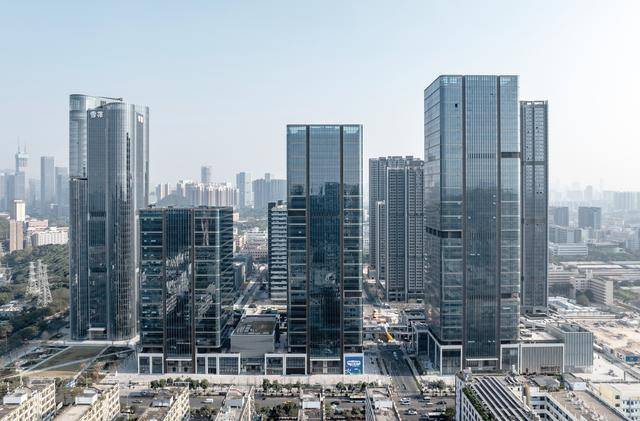
Group 1 - China Resources Beer has officially relocated its headquarters from Beijing to the Snowflake Innovation City in Bao'an, Shenzhen, with the new 180-meter headquarters building now in operation [1] - Established in 1993, China Resources Beer is a subsidiary of China Resources (Group) Company, focusing on the production, sales, and distribution of beer products, with a total of 60 breweries across the country and an annual production capacity of approximately 19.2 million kiloliters by June 30, 2025 [3] - The company has developed a high-end brand matrix that includes four domestic brands and four international brands, catering to various market segments [3] Group 2 - The Snowflake Innovation City project, co-developed by China Resources Land and China Resources Snow Beer, spans approximately 1.15 million square meters and integrates headquarters offices, R&D, high-end manufacturing, and technology experiences [5] - The project aims to create an innovative industrial ecosystem focused on information technology and intelligent manufacturing, attracting over 80 well-known companies, including 9 listed companies and 49 national high-tech enterprises [5] - Additionally, the project features the Snow Beer Town, a commercial space of nearly 50,000 square meters that combines retail, dining, and entertainment, with over 120 brands already established, more than 40% of which are city or regional first stores [5]
交银国际_消费行业2026年展望:新常态下的消费新动能_
2025-12-15 02:13
Summary of the Conference Call Transcript Industry Overview - **Industry**: Consumer Sector - **2025 Performance**: The consumer market in mainland China has shown a mild recovery, with a year-on-year growth of 4.3% in retail sales from January to October 2025, indicating a steady recovery path [1][6][29]. - **2026 Outlook**: The consumer market is expected to continue its moderate growth, characterized by slower overall demand growth but increasing rational consumption and demand tiering, which will drive structural differentiation and become a key growth driver in niche markets [1][6][7]. Key Insights Consumer Behavior - **Consumer Confidence**: The consumer confidence index has gradually improved but remains below the neutral level of 100, indicating cautious consumer sentiment regarding future income and employment [7][13]. - **Spending Trends**: Consumers are increasingly focused on value for money and emotional value, with a high willingness to pay for emotional experiences, which is reshaping brand competition [26][31][32]. Market Dynamics - **Segment Performance**: Different segments are recovering at varying paces. Categories like home appliances, jewelry, and food staples have shown strong growth, while others like dining and personal care have seen slight declines [23][62]. - **Channel Evolution**: The integration of online and offline channels is deepening, with online growth slightly outpacing offline. New retail formats are emerging, focusing on consumer-centric approaches [37][28]. Technological Impact - **AI Integration**: Artificial intelligence is increasingly being integrated into various industry segments, enhancing operational efficiency and potentially reshaping competitive dynamics [49][50]. Investment Strategy - **2026 Investment Focus**: A balanced strategy is recommended, combining defensive sectors with stable cash flows and high-growth potential opportunities. Key sectors to focus on include: - Defensive companies benefiting from supply-demand improvements, such as Shenzhou (2313 HK) and Yili (600887 CH) [56]. - Fast-growing niche leaders like Pop Mart (9992 HK) and Miniso (9896 HK) [56]. - Industry leaders with strong growth foundations and resilience, such as Anta (2020 HK) and China Resources Beer (291 HK) [56]. Risks - **Macro Uncertainties**: Potential risks include macroeconomic uncertainties, commodity inflation exceeding expectations, international trade uncertainties, and insufficient consumer stimulus policies [57]. Additional Insights - **Emerging Trends**: The rise of emotional consumption is driving growth in categories like trendy toys and cultural products, with brands leveraging IP ecosystems for rapid revenue growth [68][70]. - **Global Expansion**: Chinese consumer brands are increasingly looking to expand internationally, particularly in Southeast Asia, to tap into new growth opportunities [35][36]. This summary encapsulates the key points from the conference call, highlighting the current state and future outlook of the consumer sector, along with strategic investment recommendations and associated risks.
小眼球“转动”大产业——中国眼谷打造科技创新新“视”界
Ke Ji Ri Bao· 2025-12-15 00:26
全球首个经鼻眼底显微手术导航系统、全国首家人工视网膜医学芯片公司、全球首款0.01%低浓度阿托 品……这一系列突破性的"第一",全部与一个硬核园区息息相关——中国眼谷。 近日,记者跟随中国残联走基层活动,来到位于浙江温州的中国眼谷小镇。2020年6月,由温州医科大 学附属眼视光医院(以下简称"眼视光医院")与温州市龙湾区共同建设的中国眼谷正式开园。作为全球 首个眼健康科创、产业综合体,近年来,中国眼谷以科技创新带动产业升级,以成果转化促进产业壮 大,在"小眼球"上作出产业发展"大文章"。 在眼谷之瞳的展厅内,一台高分辨率视觉脑机接口设备吸引了投资者们注目。这台设备来自暖芯迦科技 (温州)有限公司,其搭载的脑机连接人工视网膜系统融合了多学科技术,包括脑机接口、人工智能和 工程仿生学等,适用于因各种原因导致的后天性视网膜严重器质性病变而失明者。 2022年,杭州暖芯迦电子科技有限公司董事长杨佳威带领团队入驻中国眼谷。目前,暖芯迦与中国眼谷 合作项目已于2024年下半年完成医疗器械型式检验。数据显示,该技术的移植分辨率超过1000像素,成 功移植后能够有效补偿患者视觉功能,帮助失明者生活自理。 眼视光装备、视觉光学 ...
智通港股沽空统计|12月15日
智通财经网· 2025-12-15 00:24
Core Insights - The article highlights the top short-selling stocks in the market, indicating significant investor sentiment and potential market movements [1][2]. Short-Selling Ratios - Anta Sports (82020) has the highest short-selling ratio at 100.00%, followed by China Mobile (80941) at 86.71% and BYD Company (81211) at 82.34% [1][2]. - Other notable companies with high short-selling ratios include China Resources Beer (80291) at 74.99% and JD.com (89618) at 71.60% [2]. Short-Selling Amounts - Xiaomi Group (01810) leads in short-selling amount with 2.798 billion, followed by Tencent Holdings (00700) at 1.686 billion and Ping An Insurance (02318) at 1.465 billion [1][2]. - Alibaba (09988) and Meituan (03690) also feature prominently with short-selling amounts of 1.424 billion and 1.253 billion respectively [2]. Deviation Values - China Sanjiang Chemical (02198) has the highest deviation value at 41.73%, indicating a significant difference from its average short-selling ratio over the past 30 days [1][2]. - Other companies with high deviation values include Television Broadcasts (00511) at 38.56% and China Mobile (80941) at 38.41% [2].




【“打通全国统一大市场堵点卡点”热点问题探析⑦】破局“内卷” 开拓蓝海
Jing Ji Ri Bao· 2025-12-14 22:51
Core Viewpoint - The article highlights the detrimental effects of "involution" competition across various industries, leading to price wars, reduced profit margins, and increased quality and safety risks. It emphasizes the need for a unified national market to promote high-quality development in enterprises and industries [1][3][7]. Group 1: Industry Challenges - The washing detergent industry is facing severe competition from low-quality products with less than 5% active ingredient content, which are capturing market share through low pricing, putting quality products at a disadvantage [1]. - "Involution" competition is characterized by irrational competition due to market mechanism failures, where companies resort to price wars instead of leveraging differentiation or technological advantages, resulting in "increased production without increased revenue" [2]. - Various industries, including steel, photovoltaics, automotive, and catering, are experiencing similar challenges due to intense price competition, leading to a consensus among over 20 industry associations to advocate for "anti-involution" measures [3]. Group 2: Solutions and Strategies - To enhance market efficiency, it is essential to eliminate barriers to fair competition, which is a key aspect of building a unified national market. This will help stabilize the commercial ecosystem and address supply-demand imbalances [3]. - Companies are encouraged to abandon the outdated "scale-first" mentality and focus on creating value through quality products and strong brands. For instance, China Resources Beer closed 40 factories and reduced over 5 million tons of redundant capacity to focus on value creation [3]. - Innovation is crucial for traditional manufacturing to break free from path dependence and scale bottlenecks. Companies like Weiqiao Venture Group are collaborating with research institutions and adopting new technologies to transform their business models [4]. Group 3: Brand and Market Positioning - In a market characterized by information asymmetry, low-quality products often mislead consumers, necessitating a shift towards rebuilding trust in "quality for price" mechanisms and enhancing user experience and brand value [5]. - The home appliance industry has maintained a relatively rational approach due to years of system development, with a shift in market power from companies to consumers, who now seek personalized and emotionally resonant experiences [5]. - Companies like Hisense are witnessing a reversal in consumer behavior, with domestic brands gaining recognition for quality, indicating a shift towards "Chinese manufacturing" being associated with technological premium [5]. Group 4: Global Expansion - The construction of a unified national market is not a closed "internal cycle" but an open market that encourages both domestic and international engagement. Companies are urged to expand globally to alleviate domestic competition pressures and enhance competitiveness [6]. - Jack Technology has entered a global leadership phase, establishing production bases tailored to regional markets, while Miniso emphasizes cultural integration in its global strategy, showcasing the importance of local insights in international expansion [6]. Group 5: Future Outlook - Building a unified national market aims to create fairer, more efficient, and more valuable competition. Companies must focus on innovation, brand strength, and global presence to escape internal strife and contribute to China's high-quality economic development [7].

破局“内卷” 开拓蓝海——企业界人士建言全国统一大市场建设
Jing Ji Ri Bao· 2025-12-14 22:34
Core Viewpoint - The letter from the chairman of Guangdong Youkai Technology highlights the detrimental effects of vicious competition in the detergent industry, where low-quality products with less than 5% active ingredients are capturing market share through low prices, putting quality products at a disadvantage [1] Group 1: Industry Challenges - The phenomenon of "involution" is causing severe price wars across various industries, leading to compressed profit margins, reduced innovation investment, and increased quality and safety risks [1][2] - Over 20 national and local industry associations have publicly called for a "counter-involution" approach, addressing issues in sectors such as steel, automotive, photovoltaic, catering, finance, and logistics [3] Group 2: Market Efficiency and Fair Competition - The construction of a unified national market aims to eliminate barriers to fair competition, addressing the imbalance between supply and demand and enhancing overall market stability [3] - Companies are encouraged to abandon the outdated "scale supremacy" mindset and focus on creating value through quality products and brands, as demonstrated by China Resources Beer, which closed 40 factories and reduced over 5 million tons of redundant capacity [3] Group 3: Innovation as a Key Driver - Traditional manufacturing must break free from path dependence and scale bottlenecks by leveraging technology and innovation, as emphasized by Weiqiao Chuangye Group's collaboration with research institutions and the establishment of an industrial technology research institute [4] - New Hope Group has utilized cold chain logistics and AI to innovate in the dairy industry, achieving same-day production and delivery to over 1 million stores [4] Group 4: Brand Value and Consumer Trust - In a market characterized by information asymmetry, low-quality products often mislead consumers, necessitating a shift towards rebuilding trust in high-quality products and enhancing user experience [5] - The home appliance industry has maintained a rational approach due to years of systemic development, with a focus on creating emotional and meaningful connections with consumers [5] Group 5: Global Expansion and Market Opportunities - The unified national market is seen as an open market that encourages companies to expand globally, alleviating domestic competition pressures and enhancing competitiveness in international markets [6] - Companies like Jack Technology and Miniso are adopting global strategies that integrate local insights and cultural fusion, demonstrating the importance of global perspectives in business expansion [6] Group 6: Future Directions for Companies - Companies are urged to focus on innovation, brand building, and global outreach to escape internal competition and contribute to high-quality economic development in China [7]
国泰君安期货能源化工短纤、瓶片周度报告-20251214
Guo Tai Jun An Qi Huo· 2025-12-14 07:44
国泰君安期货·能源化工 短纤、瓶片周度报告 国泰君安期货研究所 钱嘉寅 投资咨询从业资格号:Z0023476 贺晓勤 投资咨询从业资格号:Z0017709 日期:2025年12月14日 Guotai Junan Futures all rights reserved, please do not reprint Special report on Guotai Junan Futures 瓶片(PR) 短纤:短期震荡市,中期偏弱 估值与利润 基本面运行情况 供需平衡表 03 短纤(PF) 估值与利润 基本面运行情况 CONTENTS 01 观点小结 上游观点汇总 瓶片:震荡偏弱 2 02 观点小结 01 本周短纤观点:下游逐渐负反馈,加工费压缩 供应 工厂开工维持高位,平均开工95.5%,纺纱用直纺涤短开机率回落至96.8%(恒逸高新25万吨检修至月底) 需求 12月后,内需终端订单加速走弱,纱线、织造、坯布继续累库,后续需求预期较弱部分下游可能考虑1月中旬提前放假,因而纱线、织造环节 开工部分加速下行,实物库存偏高但距离极限仍有距离,原料备库中性偏低,后续下游预计保持刚需补库节奏,等待低位。短纤小幅去库, ...