布鲁可

Search documents
港股新消费概念股普跌,名创优品跌3%
Ge Long Hui A P P· 2025-10-02 03:53
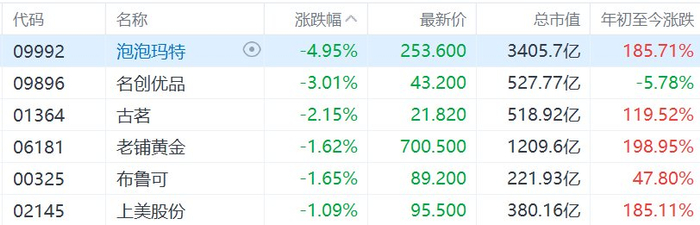
Group 1 - The Hong Kong stock market saw a decline in new consumption concept stocks, with notable drops in companies such as Pop Mart, Miniso, and Gu Ming [1] - Pop Mart experienced a decline of 4.95%, with a latest price of 253.600 and a total market capitalization of 340.57 billion, while year-to-date growth stands at 185.71% [2] - Miniso's stock fell by 3.01%, with a latest price of 43.200 and a market cap of 52.777 billion, reflecting a year-to-date decline of 5.78% [2] Group 2 - Gu Ming's stock decreased by 2.15%, with a latest price of 21.820 and a market cap of 51.892 billion, showing a year-to-date increase of 119.52% [2] - Lao Pu Gold saw a drop of 1.62%, with a latest price of 700.500 and a market cap of 120.96 billion, while year-to-date growth is at 198.95% [2] - Bluco's stock fell by 1.65%, with a latest price of 89.200 and a market cap of 22.193 billion, reflecting a year-to-date increase of 47.80% [2]


IP运营的长期主义:从奥特曼版权乱局看授权管理的生死线
第一财经· 2025-09-30 10:14
Core Viewpoint - The article discusses the complexities of Ultraman's copyright situation in China, highlighting the ongoing disputes between two companies, Xinchuanhua and Qiaotianzun, both claiming rights to the Ultraman IP, which affects consumer perception and the commercial future of this iconic franchise [1][5][8]. Group 1: Ultraman's Market Presence - Ultraman has evolved from a children's franchise to a beloved IP among adults, generating a total revenue of $7.4 billion in 2024, ranking it as the 53rd most profitable IP globally [5]. - The Ultraman IP has significantly benefited Xinchuanhua's partners, with KAYOU achieving revenues of 10.057 billion yuan in 2024, where Ultraman card series contributed 8.2 billion yuan, accounting for 81.5% of its total revenue [5]. - In 2023 and the first half of 2024, Bruco's revenue was heavily reliant on Ultraman products, making up 63.5% and 57.4% of its total revenue, respectively [5]. Group 2: Copyright Disputes - The copyright landscape for Ultraman in China is complicated, with Xinchuanhua recognized as the official copyright agent by Tsuburaya Productions, while Qiaotianzun claims rights based on a historical copyright transfer from the 1970s [8]. - The ongoing copyright disputes have led to confusion among consumers regarding which exhibitions and products are officially licensed, impacting the overall consumer experience [9][10]. Group 3: Quality and Consumer Experience - The fragmented copyright situation has resulted in varying quality of Ultraman-related products and experiences, leading to consumer dissatisfaction and questions about authenticity [9][10]. - Xinchuanhua has not authorized Ultraman performances in cinemas, which has raised concerns about the quality of non-officially licensed events, potentially harming the brand's reputation [9][10]. Group 4: Successful IP Management - Xinchuanhua employs a comprehensive operational strategy focusing on "content co-creation, community marketing, and breaking through scenarios," which has helped maintain Ultraman's enduring appeal [11]. - The "Chasing Light Journey: Looking Forward to the 60th Anniversary of Ultraman" exhibition exemplifies high-quality curation and adherence to the original spirit of the IP, showcasing rare props and immersive experiences [12][14]. - The long-term operational focus of Xinchuanhua contrasts with short-term profit-seeking strategies, emphasizing the importance of continuous content evolution and quality management for sustaining IP value [20].

叶国富复制「泡泡玛特」
3 6 Ke· 2025-09-30 10:13
Core Insights - TOP TOY, a潮玩 brand under Miniso, has officially initiated its IPO process by submitting its prospectus to the Hong Kong Stock Exchange, aiming to achieve the goal set by founder Ye Guofu to go public within three years [1][2] - The潮玩 market has been rapidly growing, with competitors like Pop Mart creating significant market presence, and TOP TOY's entry is expected to intensify the competition [1][2] Company Performance - TOP TOY has shown remarkable growth, with revenue jumping from 6.79 billion RMB in 2022 to 19.09 billion RMB in 2024, reflecting a compound annual growth rate (CAGR) of 67.7% [3] - The company transitioned from a loss in 2022 to profitability in 2023, with net profit projected to reach 2.94 billion RMB in 2024, and gross margin increasing from 19.9% in 2022 to 32.7% in 2024 [3][4] - The number of stores has expanded from 117 in 2022 to 293 in 2024, supported by Miniso's extensive retail network [3] Market Position and Challenges - Despite rapid growth, TOP TOY remains heavily reliant on Miniso, with 45.5% of its revenue coming from the Miniso ecosystem as of mid-2025, raising concerns about its independence post-IPO [4] - The潮玩 industry is increasingly competitive, with self-owned IP becoming a critical differentiator. TOP TOY's reliance on licensed IPs poses risks, as evidenced by its lower revenue from self-owned IP compared to competitors like Pop Mart [5][7][10] International Expansion - TOP TOY has begun to focus on international markets, aiming for overseas sales to exceed 50% within five years and planning to open 1,000 stores globally [9] - Initial success has been noted in Southeast Asia, with profitable openings in Thailand and Malaysia, but overall overseas revenue remains low compared to competitors [9][10] Industry Outlook - The潮玩 market is projected to grow significantly, with estimates suggesting a market size of 825 billion RMB by 2025 and 2,133 billion RMB by 2030, indicating a CAGR of 20.9% [11] - The competition is shifting towards IP ecosystem development and global strategies, emphasizing the need for brands to cultivate their own successful IPs to thrive in the market [11]

背靠名创优品的TOP TOY闯关港股:IP之困与毛利率之殇
Sou Hu Cai Jing· 2025-09-30 09:53
Core Viewpoint - Miniso (09896.HK) plans to spin off its toy brand TOP TOY for an independent listing on the Hong Kong Stock Exchange, aiming to better reflect TOP TOY's value and attract investors interested in the high-growth opportunities within the toy industry [1][2]. Company Overview - TOP TOY was incubated by Miniso in 2020, with Miniso holding approximately 86.9% of TOP TOY's issued share capital, making it the controlling shareholder [4]. - Unlike its competitor Pop Mart, which focuses on blind box products, TOP TOY offers a broader product range, including figurines, 3D models, and plush toys [4]. IP Strategy - TOP TOY's IP strategy relies heavily on a combination of licensed and proprietary IP, with licensed IP currently dominating. The company aims to creatively redevelop licensed IP to unlock new commercial potential [6]. - The company has increased its proprietary IP from 8 to 17 through acquisitions, while maintaining 43 licensed IPs, indicating room for growth in its overall IP portfolio [7]. Market Position and Growth - As of June 30, 2023, TOP TOY operated 293 stores globally, significantly fewer than Pop Mart's 571 stores. TOP TOY's registered membership exceeded 10 million, while Pop Mart added 13.04 million new members in the same period [8]. - TOP TOY's revenue for 2022, 2023, and 2024 is projected to be 679 million, 1.461 billion, and 1.909 billion RMB, respectively, with a notable increase in revenue in the first half of 2023 reaching 1.36 billion RMB [11][12]. Financial Performance - TOP TOY's gross margin for the first half of 2023 was 32.4%, significantly lower than Pop Mart's 70.3% and Blok's 48.4%, indicating limited pricing power due to a lack of strong proprietary IP [13]. - The company reported a net profit of 180 million RMB in the first half of 2023, following profits of 212 million RMB in 2022 and 294 million RMB in 2024 [12]. Industry Context - The Chinese toy market is projected to grow from 20.7 billion RMB in 2019 to 58.7 billion RMB by 2024, with a compound annual growth rate (CAGR) of 23.2% [10]. - Despite the rapid growth of TOP TOY, it faces challenges in IP development and profitability compared to established players like Pop Mart, which has demonstrated stronger growth through its successful IP and fan economy [14].
IP运营的长期主义:从奥特曼版权乱局看授权管理的生死线
第一财经· 2025-09-29 10:12
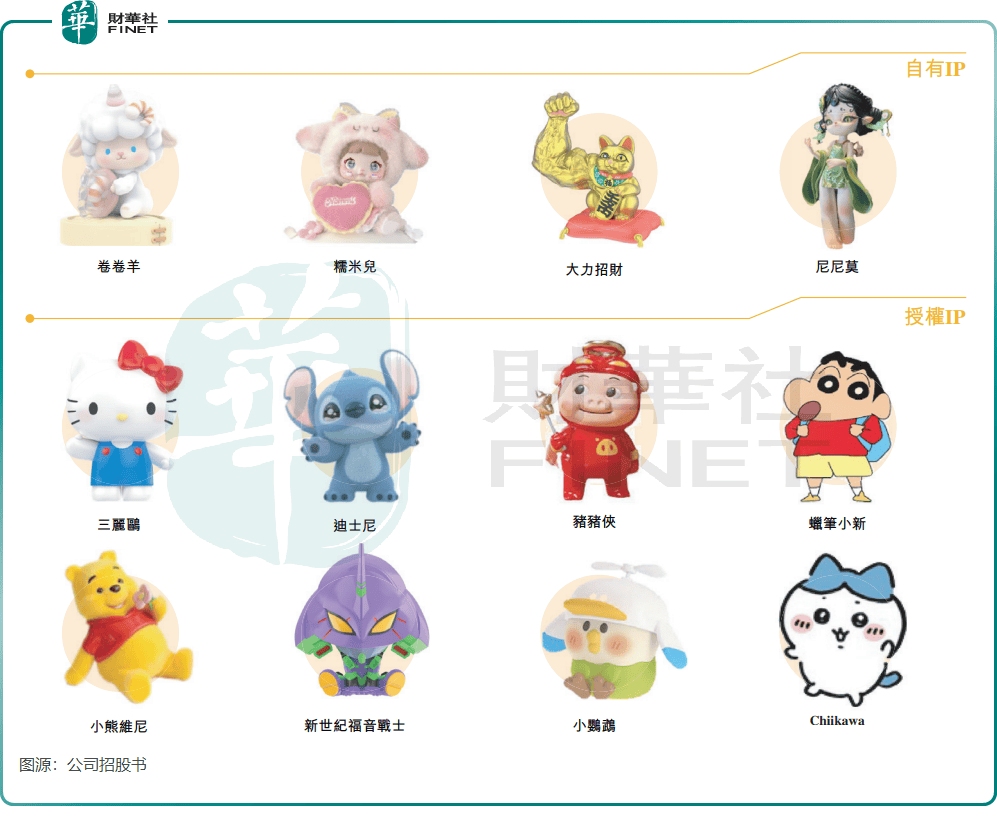
Core Viewpoint - The article discusses the complexities of Ultraman's copyright situation in China, highlighting the ongoing disputes between two companies, Xinchuanhua and Qiaotianzun, both claiming rights to the Ultraman IP, which affects consumer perception and the commercial future of this iconic franchise [1][9][10]. Group 1: Ultraman's Market Presence - Ultraman has evolved over 60 years, expanding from children's entertainment to a beloved IP among adults, generating a total revenue of $7.4 billion in 2024, ranking it as the 53rd most profitable IP globally [7]. - The Ultraman IP has significantly benefited Xinchuanhua's partners, with Kayo achieving revenues of 10.057 billion yuan in 2024, where Ultraman card series contributed 8.2 billion yuan, accounting for 81.5% of its total revenue [7]. - In 2023 and the first half of 2024, Buluko's revenue was heavily reliant on Ultraman products, making up 63.5% and 57.4% of its total revenue, respectively [7]. Group 2: Copyright Disputes - The copyright landscape for Ultraman in China is complicated, with both Xinchuanhua and Qiaotianzun claiming rights, but Xinchuanhua is recognized as the official copyright agent by Tsuburaya Productions [9][10]. - The historical context of the copyright dispute dates back to 1976 when Tsuburaya transferred overseas rights to a Thai individual, leading to a long-standing legal controversy over the rights held by Qiaotianzun [10]. Group 3: Consumer Experience and Market Confusion - The confusion among consumers regarding which Ultraman exhibition is officially sanctioned reflects the broader issues of copyright fragmentation, leading to varying quality in products and services [12]. - There have been over 700 Ultraman performances across 121 cities in China in the first seven months of 2025, with many claiming authorization, yet audience feedback has raised concerns about the authenticity and quality of these performances [12][13]. Group 4: Quality and Brand Management - Xinchuanhua's operational strategy focuses on "content co-creation, community marketing, and breaking through scenarios," enhancing the Ultraman IP's longevity and value [15]. - The "Chasing Light Journey: Looking Forward to the 60th Anniversary of Ultraman" exhibition showcases high-quality curation, adhering to Tsuburaya's original settings and spirit, which has been well-received by fans [16][18]. - The exhibition features unique props and immersive experiences, reinforcing the emotional connection between the IP and its audience, as evidenced by testimonials from attendees [21]. Group 5: Sustainable IP Management - The sustainability of IP like Ultraman relies on continuous updates and iterations of its core products, ensuring that the brand remains relevant and engaging [24]. - Long-term operational strategies, as opposed to short-term profit-seeking approaches, are essential for maintaining the IP's value and consumer trust [24].

中金:国庆出游景气度同比提升 消费有望延续回暖趋势
智通财经网· 2025-09-29 09:07
Group 1 - The report indicates that the 2025 National Day and Mid-Autumn Festival holiday will last for 8 days, while the 2024 holiday will last for 7 days, leading to a more active consumption window due to flexible holiday arrangements [1] - According to the report, the total number of flights in China during the 2025 National Day period is expected to reach 139,000, a year-on-year increase of 5.7%, with international flights recovering to 94% of 2019 levels, and an average daily passenger volume of 2.247 million, up 6.4% year-on-year [1] - The report highlights a trend of multi-destination travel among tourists, with significant growth in mixed travel modes combining flights and high-speed trains, which is expected to boost per capita consumption during the holiday [1] Group 2 - The report notes that as of September 22, 62% of bookings on Meituan were made by post-00s young tourists, indicating a shift in preferences towards cultural tourism, including museum visits and music festivals [1] - The Ministry of Culture and Tourism has announced that over 480 million RMB in consumption subsidies will be distributed during the consumption month, which is expected to enhance consumer willingness and drive holiday consumption [1] - The company recommends long-term investment in self-indulgent consumption sectors, including trendy toys and e-cigarettes, as well as domestic beauty and personal care brands, reflecting the rise of domestic products [2]
【IPO前哨】背靠名创优品的TOP TOY闯关港股:IP之困与毛利率之殇
Sou Hu Cai Jing· 2025-09-29 08:16
Group 1 - Miniso (09896.HK) plans to spin off its toy brand TOP TOY for an independent listing on the Hong Kong Stock Exchange, aiming to better reflect TOP TOY's value and attract investors interested in the high-growth toy industry [2] - TOP TOY was incubated by Miniso in 2020 and is currently 86.9% owned by Miniso, positioning it as a significant player in the toy market [4] - The toy market in China is projected to grow from RMB 207 billion in 2019 to RMB 587 billion by 2024, with a compound annual growth rate (CAGR) of 23.2% [11] Group 2 - TOP TOY's product focus differs from that of its competitor Pop Mart, as it covers a full range of products including blind boxes, figurines, and 3D models, while Pop Mart primarily focuses on blind boxes [4] - The company relies heavily on licensed IP, with 43 licensed IPs and 17 proprietary IPs, which limits its profit margins due to revenue sharing with IP owners [6][7] - TOP TOY's revenue for 2022, 2023, and 2024 is projected to be RMB 6.79 billion, RMB 14.61 billion, and RMB 19.09 billion respectively, with significant growth in the first half of 2023 reaching RMB 13.60 billion [11][12] Group 3 - Despite its growth, TOP TOY's profitability is challenged by its reliance on licensed IP, leading to lower gross margins compared to Pop Mart, which has a gross margin of 70.3% compared to TOP TOY's 32.4% [13] - The company has seen a decrease in the proportion of revenue from self-developed products, which accounted for 47.2% in the first half of 2023, down from 53.6% in 2024 [13] - TOP TOY's store count reached 293 globally by mid-2023, significantly lower than Pop Mart's 571 stores, indicating slower expansion [8]
泡泡玛特的玩具收入,超过迪士尼了,成年人才是玩具的最佳消费者
Founder Park· 2025-09-27 02:37
Core Insights - The article discusses the significant changes in the global toy industry, highlighting the revenue rankings of toy companies for the first half of 2025, which reflect evolving consumer trends and business models in the post-pandemic era [5][6]. Group 1: Market Overview - The global toy market showed a notable recovery in the first half of 2025, with an average year-on-year sales growth of 7% across 12 major markets excluding China [6]. - Specific categories such as "games and puzzles" and "collectibles" experienced explosive growth, with increases of 36% and 35% respectively [7]. Group 2: Revenue Rankings - The top toy companies by revenue for the first half of 2025 include: - LEGO Group: 38.45 billion RMB - Pop Mart: 13.88 billion RMB - Disney: 13.86 billion RMB - Bandai Namco: 14.44 billion RMB - Hasbro: 13.34 billion RMB - Mattel: 13.18 billion RMB - Sega Sammy: 6.64 billion RMB - Asmodee: 5.77 billion RMB - Tomy: 5.55 billion RMB - Pokémon: 5.50 billion RMB - Spin Master: 5.21 billion RMB - MGA Entertainment: 3.93 billion RMB - Sanrio: 3.91 billion RMB - Ravensburger: 3.04 billion RMB - VTech: 2.89 billion RMB - Funko: 2.74 billion RMB - Simba Dickie Group: 2.71 billion RMB - Moose Toys: 2.68 billion RMB - JAKKS Pacific: 1.66 billion RMB - Blokees: 1.34 billion RMB - Dream International Limited: 1.21 billion RMB [12][11]. Group 3: Key Trends - The article identifies three major trends driving profitability and growth in the toy industry: 1. The rise of IP collectible toys and trading card games. 2. The increasing importance of adult consumers in the toy market. 3. The necessity for brands to excel in IP development and cross-platform value amplification [15][19]. Group 4: Company Strategies - Disney continues to leverage its strong content ecosystem to drive sales, with its consumer products division generating 13.86 billion RMB in revenue, a 3.5% increase year-on-year [21][26]. - Bandai Namco's toy sales are closely tied to its content, with significant contributions from popular franchises like "One Piece" and "Dragon Ball" [27][30]. - Mattel is transitioning from a traditional toy company to a content-driven entity, establishing Mattel Studios to enhance its IP narrative capabilities [39][42]. - Pop Mart has emerged as a leading player in the global trend toy market, achieving 13.88 billion RMB in revenue, with its core IP "THE MONSTERS" contributing significantly to its success [48][50]. Group 5: Trading Card Games - Trading card games (TCGs) have become one of the fastest-growing and most profitable segments in the toy market, with the global TCG market projected to reach $7.8 billion (approximately 55.5 billion RMB) in 2025 [56][59]. - Hasbro's "Magic: The Gathering: Final Fantasy" set a record for single-day sales, highlighting the potential of TCGs in driving revenue growth [61][66]. Group 6: Distribution and Market Dynamics - Asmodee has established itself as a major distributor in the TCG market, with approximately 64% of its revenue coming from card games [69][76]. - Bandai Namco has also made significant strides in the TCG space, with multiple titles dominating sales charts in Japan [77][80].



布鲁可(00325) - 2025 - 中期财报
2025-09-25 11:00
Financial Performance - Revenue for the six months ended June 30, 2025, was RMB 1,338.0 million, a year-on-year increase of 27.9% compared to RMB 1,046.2 million in 2024[14] - Gross profit for the same period was RMB 647.5 million, reflecting a 16.9% increase from RMB 553.7 million in 2024[14] - Profit for the period turned positive at RMB 296.5 million, compared to a loss of RMB 254.9 million in the previous year[14] - Adjusted profit for the period was RMB 320.3 million, representing a year-on-year increase of 9.6%[18] - Adjusted net margin decreased to 23.9% from 27.9% in the previous year[14] - Basic earnings per share for the period was RMB 1.22, compared to a loss per share of RMB 1.73 in 2024[14] - Revenue during the reporting period was primarily generated from toy sales, including assembly character toys and brick-based toys, net of discounts and rebates[47] - Revenue increased by 27.9% from RMB1,046.2 million in the six months ended June 30, 2024 to RMB1,338.0 million in the six months ended June 30, 2025, primarily driven by a significant increase in sales volume of assembly character toys[51] - Revenue from assembly character toys increased by 29.5% from RMB1,023.1 million to RMB1,325.2 million, with sales volume rising 96.8% from 56.2 million units to 110.7 million units[52] - Revenue from brick-based toys decreased by 45.5% from RMB23.0 million to RMB12.5 million, due to a 42.9% decrease in sales volume from 0.2 million units to 0.1 million units[55] Sales and Distribution - Revenue from assembly character toys amounted to RMB 1,325.2 million, accounting for 99.1% of total revenue, while brick-based toys generated RMB 12.5 million, or 0.9%[27] - The company launched 273 new SKUs during the reporting period, contributing to 53.1% of total revenue[27] - Revenue from online sales channels increased from RMB 74.6 million to RMB 107.9 million, a year-on-year growth of 44.6%[33] - Sales from China increased by 18.5% to RMB 1,226.6 million, while overseas sales surged by 898.6% to RMB 111.4 million[34] - Offline distribution sales reached RMB 1,211.9 million, accounting for 90.6% of total revenue, a year-on-year increase of 26.5% from RMB 957.9 million[35] - Online channel revenue grew to RMB 107.9 million, a 44.6% increase from RMB 74.6 million, representing 8.1% of total revenue[36] Research and Development - R&D expenditure was RMB 128.8 million, accounting for 9.6% of total revenue, with a year-on-year increase of 69.5%[26] - The R&D team expanded to 599 employees, representing 67.1% of total employees, with an increase of 81.0% year-on-year[26] - The company plans to enhance R&D capabilities and expand its IP portfolio to provide quality toys, with further investments in sales and marketing in both domestic and international markets[46] - Investments in R&D capabilities were substantially increased to meet growing market demand, including high accuracy and multi-cavity molds[92][97] Corporate Governance - The Group is committed to high standards of corporate governance, complying with applicable code provisions during the reporting period[134] - The roles of chairman and chief executive officer are held by Mr. Zhu, which deviates from code provision C.2.1 of the Corporate Governance Code[135] - The Board believes that the current practice of quarterly reporting by management is sufficient for discharging their duties, despite a deviation from code provision D.1.2[138] - The company continues to enhance its corporate governance practices to ensure compliance with the Corporate Governance Code[142] - The Board comprises two non-executive Directors and three independent non-executive Directors, ensuring a balance of power and authority[138] Intellectual Property and Licensing - The company commercialized 19 intellectual properties (IPs) with a total of 925 stock-keeping units (SKUs) available for sale as of June 30, 2025[17] - The company has increased its licensed IPs from approximately 63 as of June 30, 2025, to approximately 72 as of the Latest Practicable Date[148] - Major IP renewals include licenses for Pokémon, Star Wars, and Marvel, enhancing the company's portfolio[153] - The licensed territories for the ULTRAMAN and EVANGELION IPs have been extended to a global scale, while TRANSFORMERS now covers more than 190 countries[150] - The Pokémon IP licensing area has been extended to regions including Hong Kong, Macau, Taiwan, and Southeast Asia[153] Employee and Shareholder Information - The Group had 893 full-time employees as of June 30, 2025, with approximately 96.4% based in China[127] - Personnel expenses increased significantly due to recruitment across various departments to support business scale expansion[91][97] - As of June 30, 2025, Mr. Zhu Weisong holds approximately 44.39% of the company's shares, totaling 110,639,460 shares[157] - Major shareholders include Wit Bright Limited and Next Bloks, each holding approximately 110,639,460 shares, representing 44.39% of the total issued share capital[168] Share Incentive Scheme - The Share Incentive Scheme was approved on January 12, 2023, and amended on March 29, 2024, allowing for flexible retention and incentivization of Directors and employees[175][180]. - The total number of Shares underlying all Options granted under the Share Incentive Scheme shall not exceed 21,321,255 Shares, equivalent to 8.55% of the Shares of the Company in issue as of June 30, 2025[179][184]. - The exercise price for options granted is set at RMB 0.2, with a total of 12,577,685 shares granted to Mr. Zhu Weisong[199] - The Share Incentive Scheme aims to provide a structured approach to reward and retain key personnel, enhancing overall Group performance and shareholder value[176][181].
2025年第37周:跨境出海周度市场观察
艾瑞咨询· 2025-09-25 00:03
Group 1: Long Video Overseas Expansion - The Southeast Asian streaming market is intensifying, with an expected market size of $6.8 billion by 2030. Chinese platforms like iQIYI, WeTV, and Youku are challenging Netflix through differentiated strategies, such as high-budget local original content and flexible subscription models [3][4] - iQIYI focuses on high-budget local original content and flexible subscription models, while WeTV emphasizes idol cultivation to enhance user engagement. Youku exports mature variety show formats [3] - Chinese platforms are leveraging low subscription prices, deep localization, and local payment advantages to capture market share, particularly in Thailand where their share exceeds 40% [3][4] Group 2: New Energy Heavy Trucks Going Global - The global new energy heavy truck sector is undergoing significant transformation, with Chinese manufacturers making breakthroughs in overseas markets. The year 2025 is seen as a "breakout year" for Chinese new energy heavy trucks, with exports increasing by 200% from January to July this year [5] - Companies like DeepWay and Weitu Technology have successfully entered markets in the Middle East, Europe, and Southeast Asia through technological innovation and flexible mechanisms [5] - Key competitive advantages include technological breakthroughs and customized products, such as DeepWay's battery swap system and high-temperature resistant models [5] Group 3: Home Furnishing Industry Going Global - The Chinese home furnishing industry is shifting towards a "strategic deep cultivation" approach, with the global furniture retail market expected to reach $800 billion by 2025. North America remains the primary target market, while emerging markets like Southeast Asia and the Middle East are also gaining attention [7][8] - Companies face challenges from trade changes and supply chain adjustments, making traditional price competition unsustainable. Key strategies include supply chain integration, R&D investment, and precise marketing to enhance competitiveness [7][8] Group 4: Chinese Brands Globalization - Chinese tea brands are rapidly rising in Southeast Asia, with Mixue Ice City as a standout performer. The region's cultural proximity and young population make it an ideal market for tea brands [9] - Mixue Ice City has become a leading brand in Southeast Asia within five years, achieving revenue of 14.87 billion yuan in the first half of 2025 and over 50,000 global stores [9] - The success of Mixue's strategy includes supply chain cost reduction, localized IP, and refined operations, with its coffee brand also leveraging the same approach for global expansion [9] Group 5: Robotics Industry Going Global - Chinese robotics products are rapidly expanding in overseas markets, with some leading companies achieving over 50% of their revenue from abroad. However, data security and privacy issues pose significant challenges for startups [10] - Companies are adopting AI tools for vulnerability scanning and traffic monitoring to enhance security. Emphasis is placed on "entering the sea" rather than merely "going out," integrating into international ecosystems [10] Group 6: Xiaomi's Globalization Strategy - Xiaomi has transitioned from product export to "model export," covering over 100 markets since its global journey began in 2014. The company plans to open 10,000 Xiaomi Home stores overseas in the next five years [11][12] - Xiaomi's strategy includes high-end positioning in Europe and maintaining market share in emerging markets, with significant growth in high-end smartphone sales [11][12] Group 7: Domestic Beauty Brands Accelerating Global Expansion - Domestic beauty brands are seeking new growth through multi-brand matrices and overseas investments, with top companies like Proya and Shiseido leading the way [13] - The beauty industry is shifting focus from domestic competition to international collaboration, with brands needing to enhance their brand power and supply chain capabilities for successful globalization [13] Group 8: Flying Book's Globalization Efforts - Flying Book, a global office platform, integrates AI and collaboration capabilities to assist companies in their overseas expansion. It addresses organizational management and compliance challenges for multinational enterprises [14] Group 9: iFLYTEK's AI Global Strategy - iFLYTEK achieved a revenue of 10.911 billion yuan in the first half of 2025, with a 38% growth in C-end business. The company emphasizes the importance of self-control in its strategic direction [15][16]