九毛九

Search documents
中国必选消费品10月成本报告:包材价格上行,啤酒现货成本指数同比上涨
Haitong Securities International· 2025-10-28 15:13
Investment Rating - The report provides various investment ratings for companies in the consumer staples sector, with "Outperform" ratings for companies like China Feihe, Haidilao, and China Resources Beer, while Budweiser APAC is rated as "Neutral" [1]. Core Insights - The report highlights a rise in packaging material prices and an increase in the beer spot cost index by 2.96% year-on-year, indicating upward pressure on costs in the consumer staples sector [1][35]. - The cost indices for six categories of consumer goods monitored by HTI mostly increased, with notable changes in spot and futures indices across beer, frozen food, soft drinks, instant noodles, dairy products, and condiments [35]. Summary by Category Beer - The beer spot cost index is at 116.32, down 0.06% from last week, while the futures index is at 115.68, up 1.2% [13]. - Year-to-date, the spot index has decreased by 0.86%, and the futures index has decreased by 7.13% [14]. Condiments - The condiments spot cost index is at 100.51, down 0.1%, and the futures index is at 101.3, up 1.55% [17]. - Year-to-date, the spot index has decreased by 2.66%, and the futures index has decreased by 7.47% [17]. Dairy Products - The dairy products spot cost index is at 101.25, down 0.13%, and the futures index is at 91.04, up 0.69% [20]. - Year-to-date, the spot index has decreased by 2.89%, and the futures index has decreased by 3.28% [20]. Instant Noodles - The instant noodles spot cost index is at 103.62, down 0.23%, and the futures index is at 102.53, up 0.88% [23]. - Year-to-date, the spot index has decreased by 2.29%, and the futures index has decreased by 5.47% [24]. Frozen Food - The frozen food spot cost index is at 120.39, up 1.02%, and the futures index is at 119.44, up 1.72% [28]. - Year-to-date, the spot index has decreased by 0.17%, and the futures index has decreased by 1.35% [28]. Soft Drinks - The soft drinks spot cost index is at 109.39, up 0.22%, and the futures index is at 109.26, up 0.72% [31]. - Year-to-date, the spot index has decreased by 3.04%, and the futures index has decreased by 9.54% [31].




市占率仅0.5%,品控问题频发,“中式面馆第一股”拿什么撑起30亿估值?
凤凰网财经· 2025-10-23 09:00
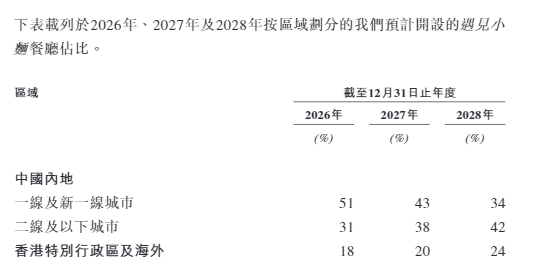
Core Viewpoint - The article discusses the rapid growth and challenges faced by "Yujian Xiaomian," a leading Chinese noodle brand, as it prepares for its IPO in Hong Kong, highlighting its impressive valuation increase and the controversies surrounding its operations and management [1][26]. Group 1: Company Overview - "Yujian Xiaomian" started as a small noodle shop in Guangzhou and has grown to achieve an annual revenue of 1.1 billion yuan, attracting significant investments from major firms like Lenovo and Country Garden [1][3]. - The company has seen its valuation soar from 13 million yuan to 3 billion yuan, marking a nearly 230-fold increase over ten years [1][4]. - As of mid-2025, the company plans to operate 451 restaurants, with a goal of surpassing 500 by the end of the year [6][11]. Group 2: Financial Performance - The company reported a revenue increase from 418 million yuan in 2022 to 1.154 billion yuan in 2024, with a significant rise in the number of orders from 14.16 million to 42.09 million during the same period [6][15]. - Despite the revenue growth, the average daily sales per store decreased from 13,900 yuan in 2023 to 12,400 yuan in 2024, indicating a decline of approximately 10.8% [15]. - The company's net profit margin has also been squeezed, with average net profit per store dropping from 182,000 yuan to 169,000 yuan [15]. Group 3: Market Position and Competition - "Yujian Xiaomian" ranks fourth in the Chinese noodle market with a total transaction value of 1.348 billion yuan in 2024, holding a market share of 0.5% [14]. - The market is highly fragmented, with the top five companies collectively holding only 2.9% of the market share, suggesting significant room for consolidation [14]. Group 4: Challenges and Controversies - The company faces scrutiny over food safety issues, with multiple complaints reported on consumer platforms regarding food quality and safety [18][19]. - A recent controversy arose when a public relations executive received a layoff notice at home, raising concerns about the company's internal management practices [25]. - The company has also been criticized for its dividend payouts, which amounted to over 34 million yuan, representing 56% of its projected net profit for 2024, leading to questions about its financial strategy [26][29].


零售周报|LVMH三季度亚洲增2%;遇见小面、自然堂等拟港股上市
Sou Hu Cai Jing· 2025-10-23 02:03
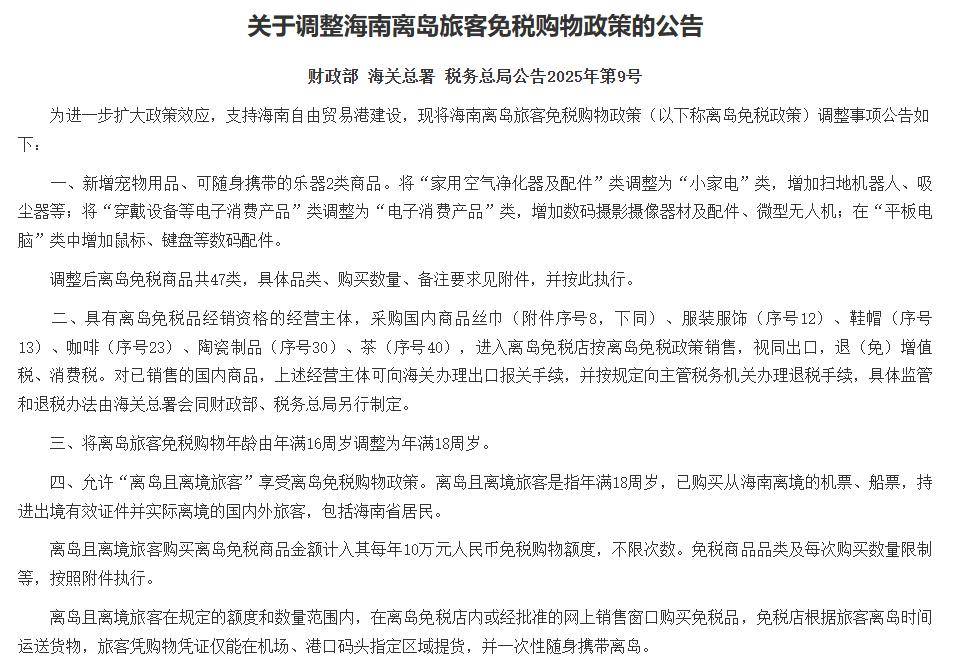
Group 1 - The Ministry of Finance, General Administration of Customs, and State Taxation Administration announced adjustments to Hainan's duty-free shopping policy, effective November 1 [2] - The range of duty-free goods will expand from 45 to 47 categories, including pet supplies, portable musical instruments, drones, and small appliances [2] - Domestic products such as clothing, ceramics, and tea will be allowed for sale in duty-free shops, with VAT and consumption tax exemptions [2] - The age limit for duty-free shopping will be raised from 16 to 18 years [2] - Travelers leaving the island can enjoy duty-free shopping, with purchases counting towards an annual limit of 100,000 RMB [2] - Local residents with island departure records can purchase duty-free items without limit within the same calendar year [2] Group 2 - Michelin Guide will include Shenzhen and Ningde for the first time, with the Shenzhen guide set to launch in 2026 [3] - The 2026 Michelin Guide for Shenzhen will be published alongside the Guangzhou guide [3] - A Michelin food festival will be held in Shenzhen from October 24 to 26, featuring chefs from Michelin-starred restaurants [3] Group 3 - ZARA plans to open a large flagship store in Shanghai on Huaihai Road, featuring five retail floors and innovative technology for consumer experience [6] - The flagship store is scheduled to open in the first half of 2026, following ZARA's global store optimization strategy [6] Group 4 - The brand PhiiB opened its first store in mainland China at Qingdao's Aeon Mall, focusing on high-quality wool fabric [8] - PhiiB promotes a philosophy of luxury based on comfort and structure rather than external symbols [8] Group 5 - The ancient gold brand Baowangfu plans to open its second store in Shanghai's IFC by the end of 2025 [9] - The new store will be the seventh luxury store for Baowangfu nationwide [9] Group 6 - Liverpool FC's official store opened its first location in Guangdong at K11, featuring a wide range of club merchandise [11] - The store design integrates Liverpool's club culture with Shenzhen's innovative spirit [11] Group 7 - LVMH reported a 1% increase in Q3 organic revenue to €18.28 billion, ending two consecutive quarters of decline [11] - The fashion and leather goods segment saw a 2% decline, while perfumes and cosmetics grew by 2% [11] - Revenue in the Asia region, including China, grew by 2% in Q3 [11] Group 8 - The beauty store JIANG TUN BEAUTY by Wushang Group achieved over 1,000 transactions within ten days of opening [15] - The store focuses on high-end cosmetics and aims to create an integrated shopping and experience space [15] Group 9 - Jiu Mao Jiu Group announced plans to exceed 200 new model restaurants by the end of the year, with positive sales trends [16] - The new model restaurants have received favorable responses since their launch [16] Group 10 - The tea brand Bawang Chaji opened its eighth store in Hong Kong within a year, continuing its expansion in the region [17] - The brand aims to cover more areas in Hong Kong with additional store openings planned [17] Group 11 - The bakery brand 85°C is closing over 40 stores in mainland China this year, marking its largest adjustment in five years [20] - The current number of operational stores stands at 659, with approximately 440 in mainland China [20] Group 12 - The Chinese beauty brand Natureroad submitted its IPO application to the Hong Kong Stock Exchange, aiming for a public listing [22] - Natureroad is the third-largest domestic cosmetics group in China based on projected 2024 retail revenue [22] Group 13 - Hailan Home announced plans to issue H-shares and list on the Hong Kong Stock Exchange to enhance its global strategy [25] - The company aims to accelerate overseas business development and improve its international brand image [25] Group 14 - Meili Tianyuan announced a strategic acquisition of 100% of Shanghai Siyuanli for 1.25 billion RMB, expanding its beauty service network [27] - After the acquisition, the total number of stores will reach 734, enhancing the company's market presence [27]
中式面馆第一股“遇见小面”的上市竞速考题
Sou Hu Cai Jing· 2025-10-21 01:50
Core Viewpoint - The company "Yujian Xiaomian" is accelerating its IPO process amid significant growth in revenue and net profit, but faces multiple financial and operational challenges that could jeopardize its future stability and market position [2][7]. Group 1: Financial Performance - Revenue has nearly doubled over three years, with a net profit increase of 131.56% year-on-year in the first half of 2025 [2]. - Despite a surge in total orders to 42.09 million in 2024, same-store sales fell by 4.2% in 2024, indicating a decline in customer spending [3]. - The company reported a net profit of 52.18 million in the first half of 2025, but this improvement is largely attributed to high-margin stores in Hong Kong and cost control measures [6]. Group 2: Pricing Strategy and Market Position - The company has adopted a pricing strategy that has led to a decline in average customer spending, with direct restaurant prices dropping from 36.2 yuan in 2022 to 31.8 yuan in the first half of 2025, a decrease of 12.15% [3]. - The company is positioned in the mid-range market with a focus on price cuts, but this has not translated into sustainable growth, as evidenced by a drop in table turnover rates [3][4]. Group 3: Operational Challenges - The company operates over 451 stores, with more than 90% being direct-operated, contributing nearly 90% of revenue, but high rental and labor costs have negatively impacted profit margins [4]. - The company has a negative net working capital for three consecutive years, with a deficit that has grown from 149 million yuan in 2022 to 255 million yuan in the first half of 2025 [5]. Group 4: Debt and Liquidity Issues - The company has maintained a high debt ratio of around 90%, significantly exceeding the industry standard of 40%-60% [6]. - Cash reserves are critically low, with only 42.19 million yuan available against current liabilities of 490 million yuan, resulting in a current ratio of 0.5 [5]. Group 5: Market and Competitive Landscape - The company faces pressure from early-stage financing agreements that require it to go public by March 2028, or risk significant financial penalties [7]. - The competitive landscape is fragmented, with the top five brands in the Chinese noodle market holding only 2.9% of the market share, indicating a lack of absolute competitive advantage [8].
海底捞“火拼”儿童餐,要和西贝抢生意
3 6 Ke· 2025-10-20 23:48
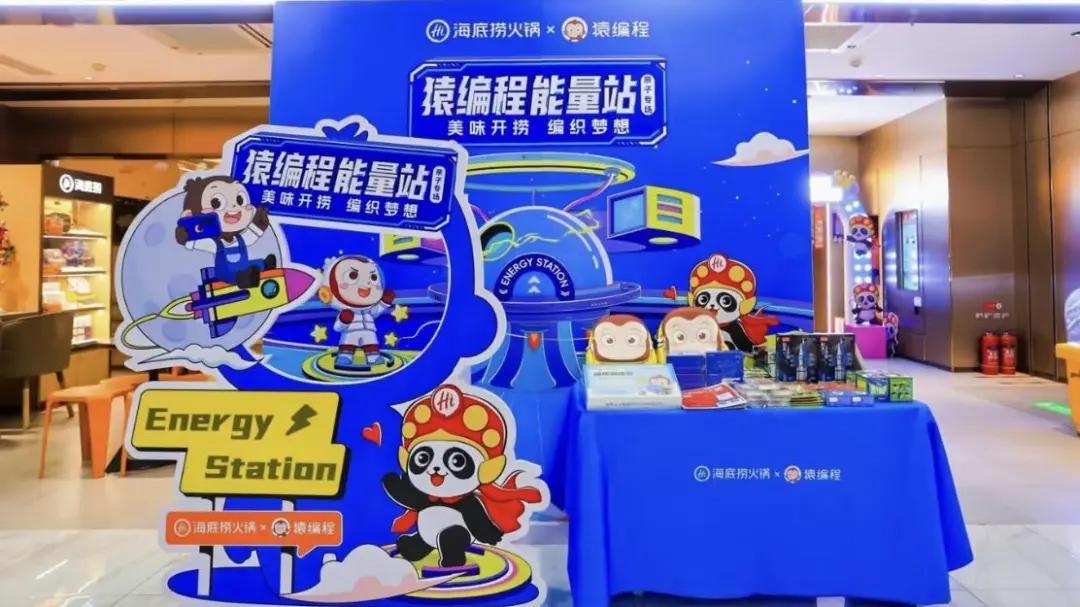
Core Insights - The children's meal market is becoming a significant focus for restaurants, with companies like Haidilao and Xibei investing heavily in this segment to attract family customers [1][4][11] - Xibei has seen a remarkable growth of 415% in children's meal revenue from 2019 to 2022, indicating strong consumer demand [1][8] - Haidilao has launched its first "baby restaurant" in Xi'an, offering a dedicated dining area for children aged 3 to 12, which reflects the growing trend of family-oriented dining experiences [1][2] Company Strategies - Haidilao has been enhancing its children's meal offerings since 2013, introducing various facilities and interactive experiences to attract families [2][4] - The company aims to create a unique dining experience by integrating play areas and educational activities, such as a collaboration with Yuan Programming for coding lessons during meals [2][10] - Xibei has focused on the nutritional aspect of children's meals, promising no additives and emphasizing healthy ingredients, which has helped build trust among parents [4][16] Market Dynamics - The children's meal market in China reached a size of 3,623.27 billion yuan in 2022 and is projected to exceed 5,000 billion yuan by 2025, highlighting its lucrative potential [11][13] - The frequency of dining out among children aged 6 to 12 is significant, with 44.4% of this demographic regularly eating out, making it an attractive segment for restaurants [11] - Competition in the children's meal sector is intensifying, with various brands like Jiumaojiu and others also entering the market, indicating a race for market share [13][19] Consumer Behavior - Parents are increasingly prioritizing healthy and safe dining options for their children, which influences their restaurant choices [4][10] - The average family spends a significant portion of their budget on children's needs, with children's expenditures accounting for 30% to 50% of total family spending [13] - The shift in dining preferences reflects a broader trend where children's meals are no longer seen as an afterthought but as a critical component of family dining experiences [10][19]
太二翻台率领先但销售额下滑9.3%,九毛九多品牌战略承压
Xi Niu Cai Jing· 2025-10-20 12:50
Core Insights - The well-known restaurant group Jiumaojiu (09922.HK) reported that same-store sales for its main brands continue to decline as of Q3 2025 [2] Group 1: Same-Store Sales Performance - The same-store daily sales changes for major brands as of September 30, 2025, show declines: Tai Er (self-operated) -9.3%, Chong Hot Pot -19.1%, and Jiumaojiu (self-operated) -14.8% [3] - Despite the declines, Tai Er's same-store sales drop has been narrowing for three consecutive quarters, with positive growth in key markets like Beijing and Shanghai [3] Group 2: Strategic Initiatives - The improvement in Tai Er's performance is closely related to the "5.0 Fresh Model" restaurants, which focus on fresh ingredients like live fish, fresh chicken, and fresh beef [3] - As of the announcement date, Tai Er has established 106 new model restaurants in mainland China and plans to accelerate this rollout, expecting to exceed 200 by the end of 2025 [3] Group 3: Operational Efficiency - The table turnover rate, a key indicator of restaurant operational efficiency, shows differentiation: Tai Er's self-operated stores have a turnover rate of 3.3, compared to Chong Hot Pot's 2.4 and Jiumaojiu's 2.5 [4] - Customer average spending has remained relatively stable across major brands, indicating a strategic shift from short-term promotions to enhancing product quality and customer experience [4] Group 4: Challenges and Competition - Chong Hot Pot, anticipated to be the "third growth curve," has not met expectations, with a 3.5% decline in revenue and a significant 59.6% drop in segment profit in the first half of the year [4] - The competitive hot pot market presents challenges for Chong Hot Pot, particularly in product differentiation, as its youthful atmosphere has not effectively translated into sustained consumer attraction [4]
10月17日港股回购一览
Zheng Quan Shi Bao Wang· 2025-10-20 01:45
Summary of Key Points Core Viewpoint - On October 17, 42 Hong Kong-listed companies conducted share buybacks, totaling 46.36 million shares and an aggregate amount of HKD 621 million [1][2]. Company-Specific Summaries - **Xiaomi Group-W**: - Repurchased 10.70 million shares for HKD 494 million, with a highest price of HKD 46.760 and a lowest price of HKD 45.900. The total buyback amount for the year reached HKD 1.537 billion [1][2]. - **Sihuan Pharmaceutical**: - Repurchased 15 million shares for HKD 21.76 million, with a highest price of HKD 1.470 and a lowest price of HKD 1.430. The total buyback amount for the year reached HKD 143.32 million [1][2]. - **Mengniu Dairy**: - Repurchased 1.20 million shares for HKD 16.97 million, with a highest price of HKD 14.250 and a lowest price of HKD 14.070. The total buyback amount for the year reached HKD 433.54 million [1][2]. - **AAC Technologies**: - Repurchased 300,000 shares for HKD 11.60 million, with a highest price of HKD 38.800 and a lowest price of HKD 38.480. The total buyback amount for the year reached HKD 84.64 million [1][2]. - **Vitasoy International**: - Repurchased 1.02 million shares for HKD 8.20 million, with a highest price of HKD 8.040 and a lowest price of HKD 8.020. The total buyback amount for the year reached HKD 27.54 million [1][2]. Overall Market Activity - The highest buyback amount on October 17 was from Xiaomi Group-W at HKD 494 million, followed by Sihuan Pharmaceutical at HKD 21.76 million. Other notable companies included Mengniu Dairy and AAC Technologies [1][2]. - In terms of share quantity, Sihuan Pharmaceutical led with 15 million shares repurchased, followed by Xiaomi Group-W with 10.70 million shares and Anton Oilfield Services with 4.49 million shares [1][2].

智通港股回购统计|10月20日
Zhi Tong Cai Jing· 2025-10-20 01:19
Core Viewpoint - Multiple companies in China conducted share buybacks on October 17, 2025, with Xiaomi Group-W leading in terms of buyback amount and quantity [1][2] Group 1: Buyback Details - Xiaomi Group-W (01810) repurchased 10.70 million shares for a total of 494 million yuan, with a year-to-date total of 27.30 million shares, representing 0.110% of its total share capital [2] - Four Seasons Pharmaceutical (00460) repurchased 15 million shares for 21.76 million yuan, with a year-to-date total of 59.60 million shares, representing 0.647% of its total share capital [2] - Mengniu Dairy (02319) repurchased 1.20 million shares for 16.97 million yuan, with a year-to-date total of 18.52 million shares, representing 0.473% of its total share capital [2] Group 2: Other Notable Buybacks - VITASOY International (00345) repurchased 1.02 million shares for 8.20 million yuan, with a year-to-date total of 566.60 million shares, representing 0.540% of its total share capital [2] - Zhongtong Express-W (02057) repurchased 445,000 shares for 8.41 million yuan, with a year-to-date total of 5.07 million shares, representing 0.630% of its total share capital [2] - Huazhong Media (00685) repurchased 500,000 shares for 50,000 yuan, with a year-to-date total of 225.60 million shares, representing 0.139% of its total share capital [2]
餐饮、潮玩及家电行业周报-20251019
Haitong Securities International· 2025-10-19 14:35
Investment Ratings - The report assigns an "Outperform" rating to multiple companies including Pop Mart, Anta Sports, Huazhu Group, and Haidilao, while Budweiser APAC is rated "Neutral" [1]. Core Insights - The report highlights the strong performance of the F&B sector, particularly noting the 10.7% increase in the stock price of Guoquan [4][7]. - It also mentions the strategic partnership between Haier Group and Alibaba, focusing on AI and digital innovation [3][6]. - Jiumaojiu's operational data for Q3 shows a decrease in same-store sales, but improvements in operational metrics are noted [3][6]. Weekly Performance Summary - Key performers in the F&B sector include Guoquan (+10.7%) and Xiaocaiyuan (+3.0%), while underperformers include ECOVACS (-11.8%) and ROBOROCK (-12.5%) in the home appliances sector [4][7]. - The report provides detailed stock price changes and PE ratios for various companies, indicating market trends and investor sentiment [5].

门店数量狂奔 单店盈利能力却下滑!“遇见小面”冲刺港股上市|港美股看台·IPO观察
Zheng Quan Shi Bao· 2025-10-17 14:48
Core Viewpoint - The company "Yujian Xiaomian" is preparing for an IPO in Hong Kong, aiming to become the first publicly listed Chinese noodle restaurant chain, despite facing challenges such as declining same-store sales and profitability concerns [1][2][12]. Company Overview - Founded in 2014, Yujian Xiaomian has expanded from a single store in Guangzhou to 451 locations across over 23 cities in 11 years [1]. - The company is targeting to raise funds through its IPO to support its expansion and digital transformation efforts [2][3]. IPO Details - The company plans to issue up to 235 million shares, with the exclusive sponsor being CMB International [2]. - The IPO proceeds will be allocated for store expansion, digital upgrades, brand building, and strategic investments in food suppliers [3]. Financial Performance - Yujian Xiaomian's revenue is projected to grow from 418 million yuan in 2022 to 1.154 billion yuan in 2024, representing a compound annual growth rate (CAGR) of 66.2%, significantly higher than the industry average of 15%-20% [4][12]. - The net profit is expected to turn from a loss of 35.973 million yuan in 2022 to a profit of 60.7 million yuan in 2024 [4]. Expansion Strategy - The company plans to open 520 to 610 new stores from 2026 to 2028, focusing on first-tier and new first-tier cities [3]. - The number of stores increased from 170 to 451 in three years, with a notable expansion in the Hong Kong market, where the number of stores grew to 10 within a year [6]. Market Position - Yujian Xiaomian ranks fourth among Chinese noodle restaurants, holding a market share of 0.5% based on total transaction value [9][12]. - The overall market for Chinese noodle restaurants is expected to reach 510 billion yuan by 2029, but the industry remains fragmented with intense competition [12]. Challenges Ahead - Despite rapid growth, the company faces declining single-store profitability, with average daily sales per store dropping from 13,880 yuan in 2023 to 12,402 yuan in 2024 [10]. - The average order value has also decreased, indicating potential issues with customer retention and pricing strategy [10][12].