天合光能

Search documents
光伏行业动态点评:国内反内卷+马斯克太空光伏扩产共振,关键仍在设备、材料
Bank of China Securities· 2026-01-29 10:57
Investment Rating - The report maintains an "Outperform" rating for the photovoltaic industry, indicating that the industry index is expected to perform better than the benchmark index over the next 6-12 months [11]. Core Insights - The report highlights that Elon Musk has announced plans to build 100GW of photovoltaic capacity, which may extend upstream to silicon materials and wafers, benefiting core equipment in silicon materials, wafers, batteries, and modules. Long-term, material companies are expected to have market expansion opportunities [1][3]. - The Ministry of Industry and Information Technology of China has clarified the "anti-involution" theme for the photovoltaic industry, suggesting that the industry is likely to self-limit production, optimizing the battery and module landscape [1][3]. - The acceleration of the industrialization of space photovoltaic technology in China is noted, with multiple technological routes progressing simultaneously [1][3]. Summary by Sections Industry Dynamics - The report discusses the "anti-involution" strategy as a key theme for the photovoltaic industry, aiming to prevent monopolistic risks and promote rational development through capacity control and market-oriented measures. This is expected to lead to a self-limiting production scenario within the industry [5]. - The potential for Musk's integrated photovoltaic capacity expansion is emphasized, with expectations for increased orders for domestic photovoltaic equipment manufacturers as overseas manufacturers clarify their expansion plans [5]. Investment Recommendations - The report recommends several companies for investment, including Foster, JinkoSolar, JinDa Co., Maiwei, and others, while suggesting to pay attention to companies like Aotewi, Shuangliang Energy, and Dongfang Risen [3].
2.4GWh项目落地!7MWh+大容量储能系统迎关键节点
行家说储能· 2026-01-29 10:40
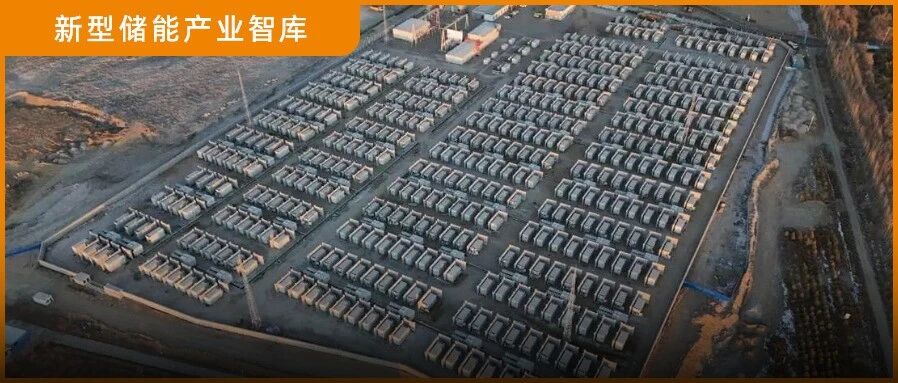
Core Insights - The article highlights the acceleration of large-capacity energy storage systems, particularly focusing on the deployment of 7MWh+ modular systems, which are expected to become mainstream by 2026 [4][9]. Group 1: Project Developments - A 400MW/2400MWh energy storage project utilizing 587Ah super-large capacity cells has been officially put into operation, marking a significant milestone for large-capacity storage systems in China [3][4]. - The project, located in Inner Mongolia, features a 6-hour long-duration storage design and incorporates an AI panoramic perception system for stable operation under extreme conditions [6][8]. - Two additional projects in Inner Mongolia, with capacities of 500MW/2000MWh and 500MW/3000MWh, have also commenced operations, bringing the total capacity of large storage systems by the company to over 7GWh [8]. Group 2: Industry Trends - The industry is shifting towards large-capacity energy storage systems to reduce costs and improve efficiency, as larger cells allow for more compact systems, thereby lowering costs per unit of electricity [9]. - By 2025, several leading energy storage companies are expected to achieve mass production and delivery of large-capacity systems, with 2026 projected to be a peak period for production [9]. Group 3: Technical Specifications - The new energy storage systems are designed to enhance efficiency, with some systems achieving over 90% grid connection efficiency and online rates exceeding 99.5% [8]. - Various manufacturers are developing systems with capacities ranging from 6.25MWh to 20MWh, featuring advanced technologies such as modular designs and improved energy density [10][11]. Group 4: Challenges Ahead - The industry faces challenges in mass production, certification, transportation, and practical implementation of large-capacity energy storage systems, which require consistent performance and safety verification [13][14]. - The need for standardized global and regional certifications adds complexity to the development and deployment of these systems, increasing research and compliance costs [15].

东吴证券:商业航天迎多重共振 聚焦火箭端卫星端等四大赛道
Zhi Tong Cai Jing· 2026-01-29 02:44
智通财经APP获悉,东吴证券发布研报称,长期以来,我国商业航天的核心痛点在于"星多箭少"——海 量卫星组网需求受制于极度稀缺的投送能力。2025年12月3日,朱雀三号遥一成功入轨,标志着国产商 业火箭成熟的大规模入轨能力。建议关注SpaceX相关标的、火箭端卫星端、以及太空算力/太空光伏四 大赛道。 东吴证券主要观点如下: 太空算力与太空光伏(前瞻赛道):太空算力:顺灏股份;太空光伏设备:晶盛机电、高测股份、捷佳 伟创、连城数控、宇晶股份、双良节能、拉普拉斯;太空光伏产品:云南锗业、中来股份、乾照光电、 东方日升、钧达股份、明阳智能、上海港湾、琏升科技、天合光能、晶科能源、蓝思科技、凯盛科技。 风险提示:技术验证不及预期、订单兑现不及预期、地缘政治波动风险、市场波动风险等。 战略重要性:发星保轨、防御升维与地外矿权 当前商业航天的竞争本质上是一场关于空间主权与资源份额的"圈地运动"。(1)发星保轨:受限于 ITU"先到先得"的分配准则,近地轨道相位与频谱资源正被星链等超大规模星座迅速挤占,加速提升发 射通量已成为捍卫中国空间生存权的底线。(2)军事维度:商业航天已演变为地月态势感知与天基防 御体系的核心底座, ...

商业航天为何会成为2026年的主线?
Soochow Securities· 2026-01-29 00:20
Investment Rating - The report maintains an "Overweight" rating for the commercial aerospace industry, indicating a positive outlook for the sector in the coming months [1]. Core Insights - The commercial aerospace industry is expected to undergo a significant transformation by 2026, driven by advancements in launch capabilities and the successful deployment of domestic rockets, which will remove previous constraints on industry growth [8][9]. - The competition in commercial aerospace is fundamentally a "land grab" for space sovereignty and resource allocation, emphasizing the need for increased launch frequency to secure China's position in low Earth orbit [10]. - The report highlights the strategic importance of commercial aerospace in national defense and resource acquisition, particularly in the context of lunar resources like Helium-3, which could reshape global energy dynamics [12]. - Key catalysts for the industry include domestic policy support and capital market developments, with significant IPOs expected from leading aerospace companies in 2026 [13][15]. Summary by Sections 1. Why has the domestic commercial aerospace industry reached a qualitative change? - The industry has transitioned from a limited payload capacity to a robust launch capability, marked by the successful launch of the Zhuque-3 rocket, which signifies a shift from speculative themes to a narrative driven by operational capacity [8]. 2. How to understand the importance of commercial aerospace? - The scarcity of low Earth orbit resources has made the commercial aerospace race a critical national strategy, with the need to enhance launch frequency to secure space assets and maintain competitive advantages [10][11]. 3. What subsequent catalysts are worth paying attention to in commercial aerospace? 3.1. Domestic: Accelerated release of policy and capital dividends - The report anticipates significant policy support and capital market activity, with major aerospace companies expected to enter the IPO market in 2026, reflecting the strategic importance of the sector [13]. 3.2. International: Clear policy framework and tight planning timeline - The U.S. has shifted from a public to a private ownership model for space resources, establishing a legal framework that encourages commercial investment in space resource development [15][16]. 4. Investment Recommendations 4.1. SpaceX Concept - Companies that could potentially enter the SpaceX supply chain are highlighted, indicating a strong future in commercial aerospace [17]. 4.2. Rocket Sector: "Many Stars, Few Rockets" Expected to Breakthrough - The report suggests that advancements in large-capacity reusable rocket technology will lead to significant changes and valuation adjustments in the sector [19]. 4.3. Satellite Sector: Certainty in Implementation - The urgency to secure low Earth orbit resources is driving domestic satellite constellations from planning to large-scale deployment [20]. 4.4. Space Computing and Space Photovoltaics: Next-Generation Core Tracks - The report identifies space computing and space photovoltaics as critical future sectors, emphasizing their role in supporting lunar economies and global intelligence ecosystems [22].



东吴证券晨会纪要2026-01-29-20260129
Soochow Securities· 2026-01-29 00:02
Macro Strategy - The core viewpoint is that the reform of the public housing fund can release significant consumption potential by lowering housing costs, thereby saving more funds for consumption. Three specific paths are proposed to reduce housing costs: expanding rental withdrawals, broadening the usage scope of the fund, and further lowering loan interest rates. The total potential release of funds is estimated at approximately 515.1 billion yuan, which could theoretically stimulate consumption by about 360.6 billion yuan, increasing the growth rate of resident consumption by 0.7 percentage points [1][15]. Fixed Income Strategy - The report discusses the "see-saw" relationship between stocks and bonds, emphasizing that this relationship is not stable or universal. The direction of stock and bond pricing is determined by the interplay between the numerator (earnings) and the denominator (interest rates). When the economy performs well, stock prices may rise due to improved earnings, but rising interest rates can suppress bond prices and increase stock discount rates, leading to uncertain stock index directions. Conversely, in a weak economic environment, stock prices may decline even if bond prices rise [2][18]. Industry Insights - The commercial aerospace sector is highlighted as a key investment area for 2026, driven by the successful launch of domestic rockets, which has removed previous operational bottlenecks. The report suggests focusing on four main areas: SpaceX-related stocks, rocket and satellite sectors, and space computing/solar power. Specific companies to watch include Maimai Co., Anhui Helit, and others in the rocket and satellite sectors [3][21]. Water Conservancy Investment - The report indicates that the "northward shift of the rain belt" since 2021 has led to increased rainfall and flooding in northern China, prompting a focus on enhancing water conservancy infrastructure. It is projected that water-related investments in 2026 could see significant growth, contributing to a recovery in overall fixed asset investments by approximately 1.1 percentage points [2][16][17]. Electric Power Equipment - The report emphasizes the potential for rapid development in space solar power due to the acceleration of commercial aerospace and low-orbit satellite advancements. Companies involved in space power supply and equipment are recommended for investment, including Jun Da Co. and Ming Yang Smart Energy [6][21]. Food and Beverage Industry - The report discusses the potential of AKK bacteria as a beneficial symbiotic organism in gut health, with applications in obesity and diabetes management. The market for AKK is expected to grow significantly, with a focus on leading companies in the probiotic sector [3][23].
光伏行业月报:全年新增装机超300GW,关注太空光伏商业化进展
Zhongyuan Securities· 2026-01-28 13:25
Investment Rating - The report maintains an "Outperform" rating for the power equipment and new energy sector [1] Core Insights - The photovoltaic industry index rebounded strongly in January, influenced by space photovoltaic themes, with an increase of 15.65%, significantly outperforming the CSI 300 index, which had a return of -0.26% during the same period [3][10] - The total newly installed photovoltaic capacity exceeded 300GW in 2025, with a year-on-year growth of 13.67% [4][20] - The cancellation of the export VAT rebate for photovoltaic products is expected to accelerate the exit of high-cost production capacity [7][19] - The rise in silver prices has significantly increased the production costs of photovoltaic cells, leading to price hikes in battery and component prices [7][40] Industry Performance Review - The photovoltaic industry index showed a strong performance in January, with a daily average transaction amount of 89.662 billion yuan, a significant increase compared to previous months [10] - All sub-sectors within the photovoltaic industry experienced growth, with conductive silver paste and photovoltaic equipment leading the gains [13] - Notable stock performances included companies like Aotewi, Dike, and Maiwei, which saw substantial increases in their stock prices [16][18] Industry and Company Dynamics - The cancellation of the export VAT rebate for photovoltaic products is set to take effect on April 1, 2026, which may lead to accelerated exports before the policy change [7][19] - SpaceX plans to build 200GW of photovoltaic capacity in the U.S. over the next three years, primarily for powering satellites and data centers [19] - The domestic photovoltaic market saw a total export volume of approximately 246.2GW in 2025, with a slight decrease in December [22] Key Segment Data - In December 2025, the newly installed photovoltaic capacity reached 40.18GW, a month-on-month increase of 82.47%, although it showed a year-on-year decline of 43.30% [20] - The average price of polysilicon increased to 54 yuan/kg, reflecting a slight upward trend in the market [39] - The price of N-type solar cells has significantly increased, with prices reaching 0.42 yuan/W, driven by rising silver prices [40][43] New Technology Iteration and Commercialization Progress - A new solid-state molecular imprint annealing strategy has been proposed to enhance the stability of perovskite solar cells, achieving efficiencies of up to 26.6% in small devices [53] - The launch of the world's first rollable photovoltaic curtains at CES 2026 represents a significant technological breakthrough in flexible photovoltaic products [53]
工厂屋顶正成为华南工厂绿色转型“新战场”
Xin Lang Cai Jing· 2026-01-28 12:35
不止格兰仕一例,在中山,国泰染整3.1MW项目使用天合至尊600W+组件,年减碳2890吨;在佛山, 美的32MW屋顶项目自2014年投运后,不仅年均发电3054万千瓦时,更助力工厂海外销量当年增长 20%;在江门,中刀精密833KW项目2024年6月并网,首年预计发电87.6万千瓦时,节约成本74.8万元。 据悉,从家电制造到纺织印染,从金属加工到新材料研发,天合光能已为华南地区数十个行业提供定制 化解决方案。天合光能相关负责人表示,在绿色发展浪潮中,每一家企业都是参与者、受益者,将以安 全为保障,以技术为支撑,让更多屋顶都能创造生态价值。 在广东中山格兰仕生产基地,60万平方米的屋面不再是单调的灰色,而是被一片片蓝色光伏板覆盖,十 年来稳定运行,每年为企业"生产"出5000万千瓦时清洁电力。 按当前工业电价计算,仅电费节省就达数千万元,相当于每年减少1.69万吨标准煤消耗,减排4.3万吨二 氧化碳。 (来源:千龙网) 1月28日,记者了解到,时下工厂屋顶这个被忽视的空间正成为企业绿色转型的"新战场",越来越多的 华南工厂主开始关注屋顶光伏这一"沉睡资产"的开发利用。 ...

马斯克的“太空光伏梦”,离不开中国供应链
3 6 Ke· 2026-01-28 11:06
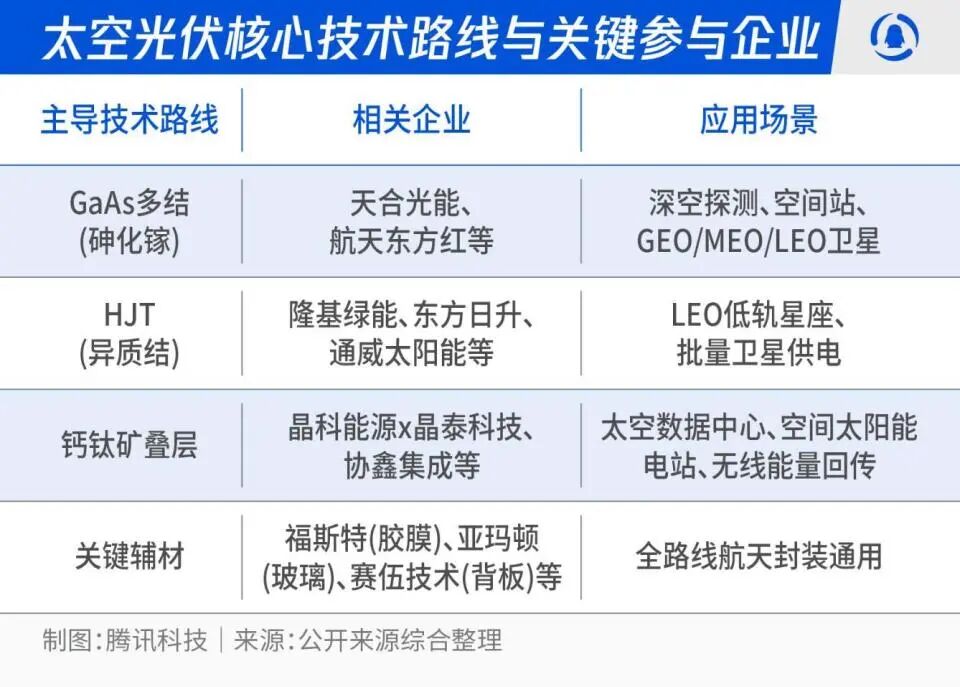
Core Viewpoint - The emergence of "space photovoltaics" is reshaping the value proposition for Chinese solar companies, positioning them as essential players in Elon Musk's space energy vision [1][4]. Group 1: Market Dynamics - The recent surge in the A-share market for solar stocks is driven by Musk's announcement at the Davos Forum about SpaceX and Tesla's plan to establish a solar production base with an annual capacity of 200GW, which is projected to meet nearly a quarter of the U.S. electricity demand [1][3]. - The excitement in the capital market is not merely speculative; it reflects a structural shift in the global energy landscape, with China having a significant role due to its established solar manufacturing capabilities [4][6]. Group 2: Industry Challenges and Opportunities - The solar industry has faced significant challenges over the past two years, including overcapacity and price wars, leading to widespread losses among companies, with projected losses totaling around 400 billion yuan [7]. - Musk's focus on space photovoltaics offers a new growth narrative for the industry, potentially alleviating some of the pressures from the current overcapacity situation [7][8]. Group 3: Technological Advancements - The global space photovoltaic market is expected to reach between $500 billion and $1 trillion by 2030, driven by the removal of traditional constraints faced by ground-based solar [3]. - The technology roadmap for space photovoltaics is anticipated to evolve through three phases, starting with GaAs cells for high-value applications, followed by HJT technology for low Earth orbit satellites, and eventually transitioning to perovskite tandem cells for large-scale deployments [9][10]. Group 4: Chinese Supply Chain Advantage - Chinese companies dominate over 70% of the global solar manufacturing supply chain, making them indispensable for any large-scale space photovoltaic initiatives, regardless of where the production is localized [5][11]. - The integration of space photovoltaics into China's existing energy infrastructure and policy frameworks positions the country favorably for future developments in this sector [5][12]. Group 5: Competitive Landscape - Various companies are exploring different technological pathways in the space photovoltaic sector, with some focusing on efficiency breakthroughs and others leveraging existing aerospace supply chain experience [11][12]. - The competition in space photovoltaics will involve not only technological advancements but also the ability to meet stringent aerospace certification requirements, which can create significant barriers to entry for new players [11][12].


[热闻寻踪]股价暴涨,订单成谜:太空光伏概念股究竟谁在“裸泳”?
Quan Jing Wang· 2026-01-28 06:33
Core Viewpoint - The A-share space photovoltaic concept stocks are gaining market attention due to Elon Musk's ambitious plan for "100 GW space photovoltaics" by early 2026 and the exposure of 200,000 low-orbit satellite applications in China, raising demand expectations from "billion-level" to "trillion-level" [1] Industry Overview - The space photovoltaic industry traces back to the mid-20th century space race and is now moving towards industrialization with the rise of commercial aerospace [1] - The global space photovoltaic industry is still in its introduction phase, with emerging technology paths and market structures [1] Technology Pathways - The technology landscape shows a "three generations coexist" trend: - Short-term: GaAs batteries dominate (approximately 1000 RMB/W), suitable for high-value communication satellites - Mid-term: P-type HJT heterojunction batteries are penetrating the low-orbit satellite market due to lower costs and lightweight advantages - Long-term: Focus on perovskite tandem batteries, with theoretical efficiency exceeding 45% and costs only 1/10 of GaAs, though stability and radiation resistance need verification [1] Market Potential - The satellite launch volume is expected to surge, with an estimated 50,000 launches annually by 2040, leading to a projected space photovoltaic battery market size of 328.8 billion RMB by 2035, over 30 times current levels [2] Company Insights - **Lens Technology**: The company has matured its UTG flexible glass manufacturing process and is in deep technical validation with clients for space photovoltaic applications, aiming to become a new growth driver [2] - **JinkoSolar**: The company sees potential in perovskite and TOPCon/perovskite tandem batteries for space applications, with a record battery conversion efficiency of 34.76% [4] - **GCL-Poly**: The company has significant technical reserves in HJT technology and has delivered over 10 GW of ultra-low carbon HJT products, which are suitable for space applications due to their lightweight and radiation resistance [5] - **Trina Solar**: The company has a long-term layout in crystalline silicon batteries, perovskite tandem batteries, and III-V GaAs multi-junction batteries, achieving leading R&D results [10] - **Canadian Solar**: The company has solid production capabilities in HJT and perovskite tandem technologies and is tracking opportunities in the commercial aerospace market [11] Research and Development - Companies are actively exploring R&D plans for space photovoltaic applications, with some already conducting tests on flexible glass for space solar cells [8] - The industry is focusing on developing high-conductivity silver pastes and lightweight, flexible, and tandem battery structures to meet aerospace demands [6]
A股超500家公司年报预亏
第一财经· 2026-01-28 04:01
2026.01. 28 本文字数:2709,阅读时长大约4.5分钟 作者 | 第一财经 周楠 当前正值上市公司年报预告披露期,不同于以往的绩优股抢先发布业绩,今年财报季里,一批亏损公司正在 密集"交卷"。 1 月 26 日 晚 间 , 百 余 家 A 股 公 司 披 露 了 2025 年 业 绩 预 告 , 多 家 亏 损 公 司 在 列 。 其 中 , 大 禹 生 物 (920970.BJ)、ST英飞拓(002528.SZ)等续亏;二六三(002467.SZ)、恒基达鑫(002492.SZ)等首 亏。 另据Wind统计,截至1月26日,共计1165家A股公司已披露2025年业绩预告,业绩下滑的有709家,占比约 六成,当期预计亏损的有500多家。从行业来看,预亏幅度较大的企业扎堆房地产、建筑行业,涉及华夏幸 福(600340.SH)、绿地控股(600606.SH)等。华夏幸福预计去年亏损160亿元至240亿元,暂时成为"亏 损王"。 一些业绩"滑坡"的公司,遭遇投资者"用脚投票"。至纯科技(603690.SH)预计去年亏损3亿元至4.5亿元, 或出现上市以来的首次归母净利润亏损,消息披露后公司股票一度跌停。 ...