奈雪的茶

Search documents
预见2025:《2025年中国轻食行业全景图谱》
Sou Hu Cai Jing· 2025-11-01 21:14
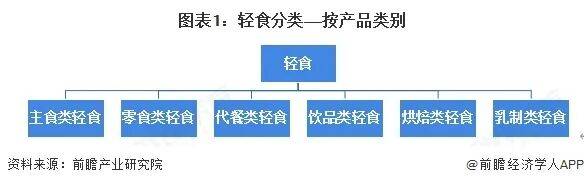
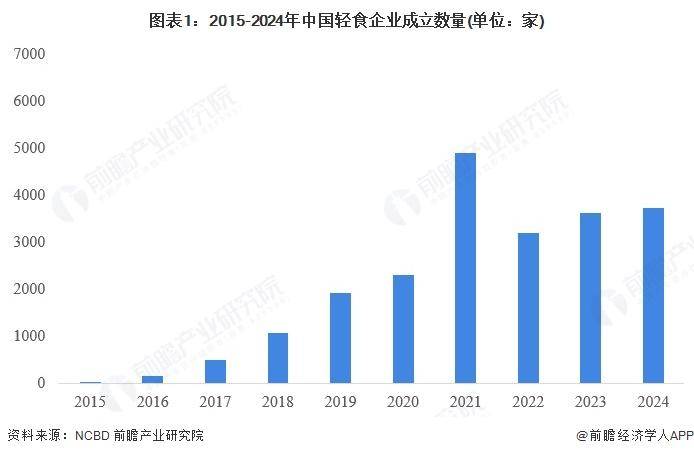
Core Insights - The light food industry in China is experiencing significant growth, with the market size projected to reach approximately 1.76 trillion yuan in 2024, up from over 1.6 trillion yuan in 2023 [12][15][29] - The industry has evolved from a niche concept to a broader category encompassing various healthy food options, driven by changing consumer preferences towards healthier eating habits [12][29] Industry Overview - Light food is defined as low in sugar, fat, and salt, while being high in fiber and nutrient density, categorized into six types: staple foods, snacks, meal replacements, beverages, baked goods, and dairy products [1][2] - The supply chain consists of upstream suppliers (packaging, equipment, and raw materials), midstream product suppliers (various light food categories), and downstream sales channels (e-commerce, delivery platforms, own stores, and supermarkets) [4][6] Industry Development History - The light food concept entered the Chinese market in 2013, gaining traction from 2015 to 2017 due to significant capital investment, followed by a period of consolidation from 2018 to 2019 due to market challenges [9] - Post-2020, the industry saw a resurgence driven by increased consumer demand for healthy eating, influenced by the COVID-19 pandemic [9] Policy Environment - Since the introduction of the "Healthy China 2030" initiative in 2016, the government has implemented various policies to promote healthy eating, including guidelines on food pairing, calorie control, and nutritional intake [11][12] - The Chinese Culinary Association has established standards for light food and is supporting businesses in the sector, with further initiatives planned for 2025 [11][13] Market Dynamics - The number of light food-related restaurants peaked in 2021 at 4,905, with a more rational growth phase expected, projecting 3,738 new establishments in 2024 [15] - Zero-sugar diets are particularly popular, accounting for nearly 50% of the product consumption structure in the light food sector by 2024, followed by low-sugar diets at approximately 35% [17] Competitive Landscape - The top five brands in the light food sector by store count as of 2025 include Jinshi Fitness Nutrition Meal, Shaye Light Food, Manwei Light Food, Chaoneng Deer Battle Team, and Shiye SAYYEAH Creative Light Food [22][24] - The distribution of light food enterprises is concentrated in economically developed regions with active consumer markets and well-established supply chains [26] Future Outlook - The light food market is expected to exceed 3 trillion yuan by 2030, driven by policy support and increasing consumer health awareness [29] - Trends indicate a diversification of product offerings, with innovations in flavors and ingredients, as well as a growing emphasis on functional light food products tailored to specific nutritional needs [33]

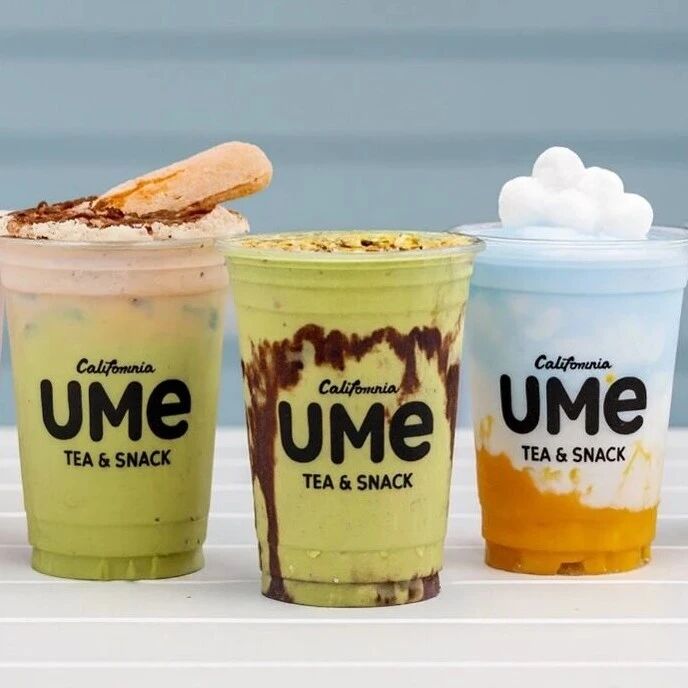
「UMe Tea优米茶铺」完成1000万美元A轮融资,华人工程师在北美开奶茶店|早起看早期
36氪· 2025-11-01 01:16
Core Insights - UMe Tea has completed a $10 million Series A funding round led by Conductive Ventures, with plans to enhance team structure and expand store presence in the Bay Area [2] - The brand has grown from 9 to 27 stores in two years, with a target of 33 stores by the end of 2025, primarily focusing on direct ownership [4][5] - UMe Tea's customer base is predominantly non-Asian, with 60% of customers being from diverse backgrounds, indicating a successful localization strategy [5] Business Strategy - UMe Tea's product offerings cater to local tastes, with a focus on richer flavors preferred by American consumers, such as spicy mango smoothies [6] - The menu is designed to accommodate various dietary preferences, with clear categorization for lactose intolerance and caffeine-free options [6] - The brand has seen a 30% increase in same-store sales year-over-year, unaffected by competitive pressures from other Chinese tea brands entering the market [5] Marketing and Brand Positioning - UMe Tea employs emotional marketing strategies targeting younger consumers, leading to viral social media campaigns, such as card-collecting promotions that significantly boosted sales [9] - The company aims to establish a strong brand presence in California, with plans to open more stores in the San Francisco Bay Area, where the average distance between stores is about 3 miles [11] Future Plans - The company plans to focus on team development, digitalization, and supply chain improvements while continuing to expand its store network in the Bay Area [11] - UMe Tea aspires to become a local brand in California, emphasizing the importance of mastering regional operations before considering broader expansion [11]
【前瞻分析】2025年中国轻食行业区域竞争及上市企业对比分析
Sou Hu Cai Jing· 2025-10-30 08:35
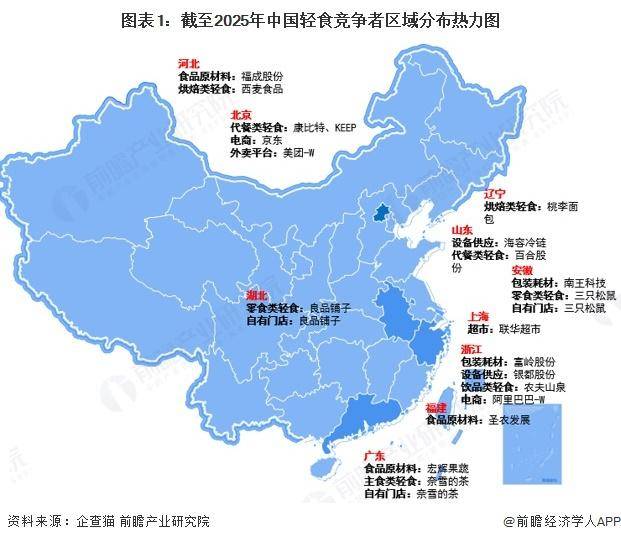
Group 1: Industry Overview - The Chinese light food industry is characterized by a competitive landscape concentrated in economically developed regions with active consumer markets and well-established supply chains [1] - Major listed companies in the light food sector include Nayuki Tea (02150.HK), Three Squirrels (300783.SZ), and others [1] Group 2: Brand Rankings - The top ten brands in the "2025 CNPP Weight Loss Meal Brand List" include Wagas, gaga Fresh Language, and others, indicating a diverse range of offerings in the light food market [3] - The popularity ranking of weight loss meal brands highlights the competitive positioning of various companies, with Wagas and gaga Fresh Language being notable mentions [4][5] Group 3: Company Profiles - Wagas, founded in 1999, is a pioneer in the light food industry, focusing on healthy eating with over 100 stores across major cities [4] - gaga Fresh Language, established in 2010, emphasizes a combination of food and social space, with over 100 locations primarily in first-tier cities [4] - Super Bowl FOODBOWL, launched in 2015, offers a self-service model catering to urban consumers, with a presence in major cities [5] Group 4: Sales Channels - Nayuki Tea has a balanced sales strategy with over 30 dedicated light food stores and a significant number of offline and online outlets [7][8] - Three Squirrels primarily focuses on online sales, while other companies like Liuyuan and KEEP also emphasize online channels [7][8] - Companies like Nayuki Tea and Good Products have a balanced approach, utilizing both online and offline sales channels effectively [7][8] Group 5: Financial Comparison - The light food industry shows significant variation in company performance, with Nongfu Spring leading in revenue at 42.896 billion yuan for 2024, while Baihe shares reported the lowest at 800 million yuan [6]



【行业前瞻】2025-2030年中国轻食行业市场发展现状分析
Sou Hu Cai Jing· 2025-10-30 03:05
Group 1 - The number of light food-related restaurants in China reached a record high of 4,905 in 2021, followed by a rational development phase with 3,738 establishments projected for 2024 [1] - The top five brands in the Chinese light food industry by store count as of August 2025 are Jinshi Fitness Nutrition Meal, Shaye Light Food, Manwei Light Food, Chaoneng Deer Battle Team, and Shiye SAYYEAH Creative Light Food [4] - The market size of the grain-based light food sector in China is expected to reach approximately 19 billion yuan in 2024, reflecting an 8% year-on-year growth and a CAGR of 7% from 2022 to 2024 [5] Group 2 - By 2030, the market size for grain-based light food in China is projected to be around 32.5 billion yuan, supported by government policies promoting functional agriculture and health foods, including subsidies of up to 15% for related enterprises in provinces like Shandong [7]
阿迪达斯,在华要重回前三?丨消费参考
2 1 Shi Ji Jing Ji Bao Dao· 2025-10-30 02:27
Group 1 - Adidas has shown a strong performance in Q3 2025, with global revenue increasing by 12% year-on-year to €6.6 billion (approximately ¥546.41 billion) excluding Yeezy factors, and operating profit rising by 23% to €736 million (approximately ¥60.93 billion) [1] - The Greater China region has been a key driver for Adidas, with revenue in Q3 2025 growing by 10% year-on-year to €947 million (approximately ¥78.40 billion) [1] - For the first three quarters of 2025, Adidas reported global revenue of €18.735 billion (approximately ¥155.11 billion), a 14% increase year-on-year, with Greater China revenue at €2.774 billion (approximately ¥229.66 billion), up 12% [1] Group 2 - Despite the growth, Adidas faces challenges as its revenue growth rate in Q3 was lower than in the first three quarters, indicating ongoing growth pressures in China [2] - Competitors like Anta and Li Ning have reported mixed results, with Anta showing low single-digit growth and Li Ning experiencing a decline in sales [2] - Nike's revenue in Greater China has also declined by 10%, highlighting the competitive landscape [2] Group 3 - Adidas's market share in China has dropped significantly from 15% in 2021 to 8.7% in 2024, while Nike's market share decreased from 18.1% to 16.2%, maintaining its leading position [3] - Anta's market share increased from 9.8% to 10.5%, ranking second, while Li Ning's market share slightly rose from 9.3% to 9.4% [3] - In 2024, Adidas ranked fourth in market share in China, trailing Li Ning by 0.7 percentage points [4] Group 4 - Given Li Ning's sales decline, there is a possibility that Adidas could surpass Li Ning in market position in China [5] - However, Adidas still has a long way to go in terms of self-positioning compared to its competitors [6]


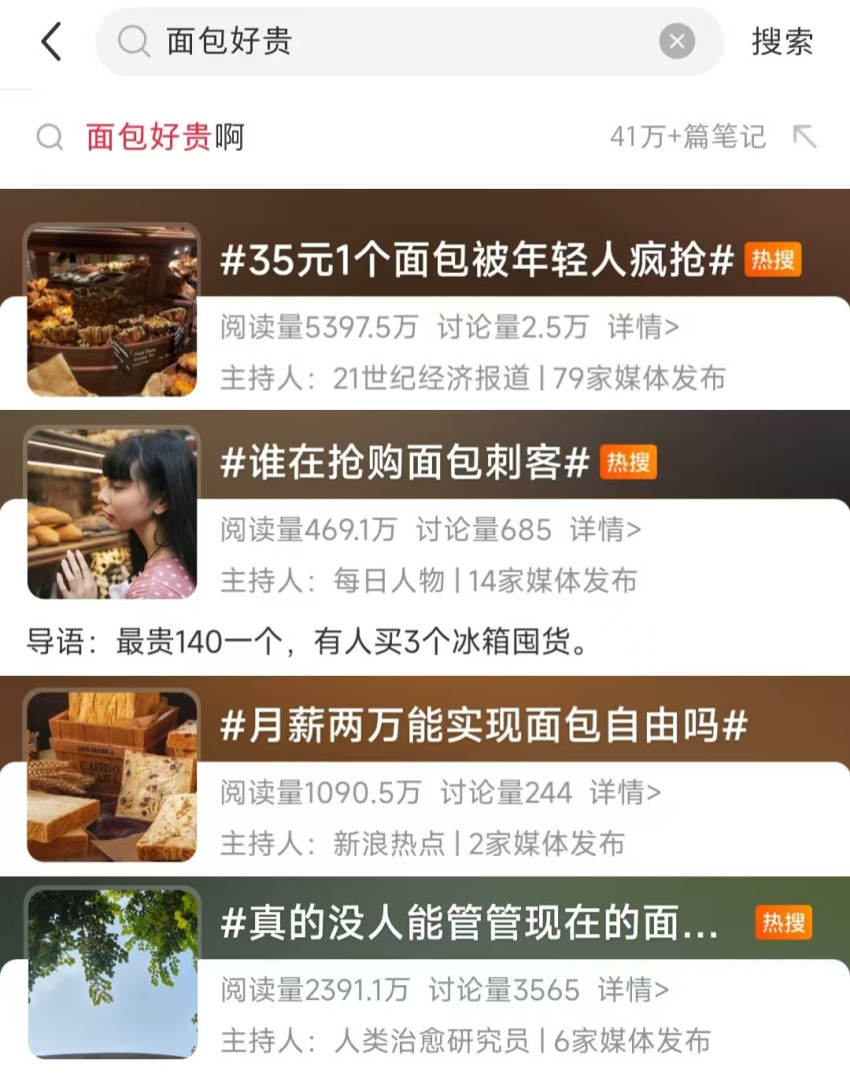
单价35元遭吐槽,面包跻身 “当代奢侈品三巨头”
3 6 Ke· 2025-10-29 09:43
Core Viewpoint - The trend of high-priced bread is becoming the norm in the market, with many consumers expressing surprise at the rising prices of bakery products, leading to discussions on social media platforms [1][4]. Group 1: Market Trends - High-priced bakery brands are rapidly expanding, with brands like "祐禾" (Youhe) opening over 100 stores nationwide, focusing on high-quality, visually appealing products with an average transaction value of 60 yuan [4]. - The online discourse around expensive bread has gained significant traction, with over 41,000 posts on Xiaohongshu and discussions on Weibo reaching over 50 million views [1]. Group 2: Industry Dynamics - The baking industry is undergoing a "high open, high close" dynamic adjustment period, with opening and closing rates for bakery brands projected at 37.1% and 34.2% respectively for 2024, indicating a rapid market reshuffle [5]. - Several traditional bakery brands are facing operational difficulties, with notable closures such as "静安面包房" (Jingan Bakery) reducing from over 80 stores to just 4, and "85度C" closing over 40 stores in mainland China this year [8]. Group 3: Cross-Industry Integration - The integration of baking with other sectors is accelerating, as tea, coffee, and hot pot brands are entering the baking market, altering the competitive landscape [9][12]. - Supermarkets are increasingly offering short-shelf-life baked goods, with products like "大润发" (RT-Mart) potato bread and "山姆" (Sam's Club) mochi and Swiss rolls achieving significant sales [12].
新茶饮出海:提速也需提质
Zhong Guo Zhi Liang Xin Wen Wang· 2025-10-28 04:47
Core Insights - Nayuki's Tea has successfully entered the U.S. market, opening its first store in Flushing, New York, and achieving sales of 13,000 products and revenue of $87,000 in just three days, setting a record for the brand [1] - The expansion of Chinese tea brands into international markets is becoming a significant growth point, as domestic markets reach saturation [2][3] Industry Trends - The Chinese tea beverage market has shifted from incremental competition to stock competition, with first- and second-tier cities reaching market saturation, prompting brands to seek new growth opportunities [2] - Global consumer demand for fresh experiences and the increasing influence of Chinese culture are facilitating the internationalization of tea brands [2] Challenges in Internationalization - Cultural differences pose a significant challenge for tea brands entering Western markets, where coffee culture is dominant [2][3] - Supply chain management is complex for new tea beverages, which require fresh ingredients and timely production, complicating the establishment of efficient global supply chains [2] Strategies for Market Entry - Brands are adopting various strategies for international expansion, with some focusing on cost-effectiveness in emerging markets, while others emphasize high-end cultural output in developed markets [3] - Balancing localization and standardization is crucial; brands must adapt to local tastes without losing their unique identity [3] Future Directions - For successful global expansion, tea brands need to enhance their cultural storytelling, digital operational capabilities, and integrate sustainable development principles into their business models [4] - The ultimate goal for these brands is not just to open stores abroad but to establish a global narrative around Chinese tea culture [4][5]
一周关闭61家门店,永辉、奈雪、静安面包房持续调整
3 6 Ke· 2025-10-27 10:53
Core Insights - The recent wave of store closures has significantly impacted the supermarket sector, with a total of 8 stores shutting down across various brands, including Yonghui Supermarket, CR Vanguard, and Daitonghua Supermarket [2][4] Supermarket Sector - Daitonghua Supermarket has closed two long-standing stores, with the Tai Xing store operating for 14 years and the Dan Yang Development Zone store for 19 years, primarily due to long-term losses [3][4] - CR Vanguard's store in Hangzhou, which was previously a Tesco store, closed due to lease expiration after operating since 2005 [3] - The newly opened Dehong Supermarket, which had been in operation for less than a year, closed due to lease expiration and increased competition from a nearby Hema store [3][4] - The closure of the Jiatailai Supermarket is part of an upgrade and renovation plan, with a new store expected to open in January 2026 [3] Restaurant Sector - A total of 11 restaurant locations have closed, including notable brands such as Hailofang, Penggengji, and Shanghai Old Restaurant, which has a history dating back to 1875 [4][5] - The Shanghai Old Restaurant closed two locations after 6 years of operation each, leaving only the original location still in business [4] - The tea beverage sector also saw closures, with brands like Nayuki and Peach Uncle closing stores due to lease expirations [4] Bakery Sector - The Jing'an Bakery has undergone significant downsizing, closing at least 33 out of 36 locations, while retaining only three stores [5] - The company is facing bankruptcy proceedings due to an inability to settle debts, although it claims that its direct operations remain unaffected [5] Education Sector - The education sector has also been affected, with the Bell Robot Programming Center closing at least 5 locations due to poor management [6] Other Sectors - Various other sectors, including retail, apparel, and entertainment, have seen 1-2 store closures each, indicating a broader trend of market optimization and restructuring [6]
奈雪生活全国首店闭店
Nan Fang Du Shi Bao· 2025-10-26 23:11
Core Insights - The closure of Nayuki's first store in Shenzhen marks a significant shift in the tea beverage industry, highlighting the challenges of innovation and transformation within the sector [2][3] - Nayuki's international expansion continues, with its first store in the U.S. opening in October 2025, indicating a new direction for the brand [3][5] Company Overview - Nayuki's first store, Nayuki Dream Factory, opened in 2018 and was a multi-functional space that became a popular destination in Shenzhen [2] - In 2022, Nayuki rebranded to Nayuki Life, shifting its focus from a product experience store to a brand co-creation platform, featuring multiple brands under one roof [3] - Despite initial success, Nayuki has faced ongoing financial struggles, with cumulative net losses of nearly 1.5 billion yuan since its IPO, and has closed 132 stores in the first half of this year [3][4] Industry Context - The tea beverage industry is undergoing a deep adjustment phase, with leading brands facing challenges in balancing scale expansion and single-store profitability [4][5] - Nayuki's strategic shifts, including moving from a fully-owned model to a franchise model, reflect the pressures of rising operational costs and the need for efficiency [5] - The closure of Nayuki Life's first store serves as a warning for the industry, emphasizing the need for more focused and sustainable innovation rather than merely relying on novelty [6]

金十数据全球财经早餐 | 2025年10月27日
Jin Shi Shu Ju· 2025-10-26 22:54
男生普通话版 下载mp3 女声普通话版 下载mp3 粤语版 下载mp3 东北话版 下载mp3 上海话版 下载mp3 今日优选 美国9月CPI全线低于预期,白宫:下个月可能无法公布通胀数据 加州州长纽森承认:考虑角逐2028年总统大选 上周五,低于预期的CPI数据提振了市场降息预期,美元指数短线下跌,随后稍有回升,最终收涨0.02%,报98.94,结束三连跌。基准的10年期美债收益率 收报4.0230%,对美联储政策利率敏感的2年期美债收益率收报3.4860%。 现货黄金全日震荡下行,在美国公布通胀数据后跌幅收窄,最终收跌0.34%,收报4112.1美元/盎司,录得十周以来首度周线收跌;现货白银最终收跌 0.47%,报48.61美元/盎司。 美国的制裁促使石油巨头在短期内暂停购买俄罗斯石油,WTI原油最终收跌0.5%,报61.43美元/桶;布伦特原油最终收跌0.41%,报65.68美元/桶。 美股道指收涨1.02%,标普500指数涨0.79%,纳指涨1.15%,均创历史新高。福特汽车(F.N)大涨12%。芯片股走强,英特尔(INTC.O)涨0.31%, AMD(AMD.O)涨7.6%,Alphabet(GOOG ...