蓝色光标

Search documents
2026AI入口争夺战打响第一枪 互联网大厂火拼两大核心维度
Zheng Quan Shi Bao· 2026-01-18 21:38
Core Insights - Alibaba's latest Qianwen APP integrates AI functionalities for food delivery, flight booking, and hotel reservations, marking the beginning of the competition for AI entry points in 2026 [1][2] - The competition among major players like Alibaba, ByteDance, and Tencent is intensifying, focusing on the integration of AI into consumer-facing applications [2][5] - The shift from traditional internet entry points to AI-driven interfaces signifies a fundamental change in the logic of traffic distribution and business ecosystems [5][6] Group 1: AI Application Developments - Alibaba's Qianwen APP has achieved over 10 million downloads within seven days of its launch, surpassing records set by ChatGPT and DeepSeek, making it the fastest-growing AI application [2] - ByteDance's Doubao has reached over 100 million daily active users, becoming a leading AI application in China, and has integrated shopping functionalities within Douyin [3] - Tencent's Yuanbao, launched in May 2024, has seen significant user growth due to its integration with DeepSeek and substantial marketing investments [3] Group 2: Competitive Landscape - The competition for AI entry points is characterized by a focus on "traffic control rights" and "data and ecosystem construction rights," with the ultimate goal of establishing a sustainable business model [5][6] - The AI entry point battle is not just about user acquisition but also about creating a habitual reliance on AI for consumer needs [6][7] - The positioning of AI applications varies among companies: Alibaba aims for an "AI shopping assistant," ByteDance focuses on "video entertainment," and Tencent explores "social AI" [7] Group 3: Emerging Trends - The emergence of Generative Engine Optimization (GEO) indicates a shift from traditional search engine optimization to AI-driven content adaptation, emphasizing the importance of AI in user interaction [8][9] - The AI application sector has seen a significant increase in stock prices, with some companies experiencing over 100% growth, driven by the GEO concept [9] - Despite the competitive landscape, the commercialization of AI applications remains uncertain, with companies primarily focused on user experience rather than immediate monetization [9]

商贸零售周报:千问接入阿里生态,AI应用提速-20260118
NORTHEAST SECURITIES· 2026-01-18 13:24
Investment Rating - The report rates the industry as "Outperforming the Market" [6] Core Insights - The integration of Qianwen into Alibaba's ecosystem marks a significant advancement in AI applications, enabling complex functionalities such as ordering food, shopping, and booking flights, thus creating new application scenarios and traffic entry points for Alibaba's AI applications [1][20] - The AI application industry is experiencing a productization inflection point due to supportive policies and advancements in AI hardware and infrastructure, with a focus on integrating AI with supply chains and service consumption [2][16] - The AIGC (AI-Generated Content) market is projected to grow significantly, with independent device penetration expected to reach 4.83 billion units by October 2025, indicating a strong demand for AI applications [3][23] Summary by Sections Section 1: Qianwen's Integration into Alibaba Ecosystem - Qianwen App's full integration into Alibaba's ecosystem allows for AI-driven shopping functionalities, enhancing user experience and operational efficiency [1][20] - The AI application landscape is rapidly evolving, with Qianwen achieving a compound growth rate of 37% over the past nine months, positioning it as a strong competitor in the market [3][25] Section 2: Policy and Supply Development - The Chinese government is actively promoting AI applications through various policies, including the establishment of a 60 billion RMB national fund aimed at supporting the AI industry across its entire value chain [14][15] - AI infrastructure is maturing, with decreasing costs and continuous model iterations, setting the stage for significant advancements in AI application productization by 2025-2026 [2][16] Section 3: Market Potential and Competitive Landscape - The global and Chinese GEO (Generative AI Output) market is expected to grow from 11.2 billion USD and 2.9 billion RMB in 2025 to 100.7 billion USD and 24 billion RMB by 2030, indicating vast future market opportunities [3][28] - Companies within the Alibaba ecosystem, such as AI agents in various sectors (e.g., SaaS, advertising, and offline retail), are expected to benefit from the integration of AI capabilities, enhancing their operational efficiencies and market reach [4][32][36] Section 4: Key Company Announcements - Notable company announcements include Chongqing Department Store's revenue forecast of 14.7 billion RMB for 2025, a decrease of 14.2%, and a net profit of 1.02 billion RMB, down 22.4% [5][38] - Focus on companies like Weimeng Group, which has launched its GEO solution, indicating a shift towards AI-enhanced visibility and performance in the market [5][39]
AI应用爆发前夜,大模型等待黎明
Tai Mei Ti A P P· 2026-01-18 12:01
Core Insights - The AI industry continues to gain momentum in 2026, with significant stock performance in the A-share market, particularly in AI application sectors [1] - Minimax has successfully launched on the Hong Kong stock market, achieving a market capitalization exceeding 100 billion [2] - Major tech companies are preparing for an AI application battle, with Alibaba, ByteDance, and Tencent all investing heavily in AI applications [4] Industry Trends - The rapid iteration of large models is evident, with 29 versions released by 11 tech companies in just 206 days, averaging a new version every 7.1 days [7][8] - User demand for AI applications is surging, with Doubao's monthly active users surpassing 200 million and Qianwen APP reaching 30 million in just 23 days [9] - The AI market in China is projected to grow to 993 billion by 2030, with a compound annual growth rate of 35.5% from 2024 to 2030 [10] Investment and Financials - Major companies are significantly increasing their capital expenditures on AI, with Baidu planning 30 to 50 billion, Tencent 70 to 100 billion, and Alibaba potentially increasing its 380 billion investment due to high demand [11] - AI companies are accelerating their IPOs, with multiple firms, including Zhiyuan AI and Minimax, recently listing on the Hong Kong Stock Exchange [12][14] - AI talent is in high demand, with salaries reaching up to one million and companies offering competitive packages to attract top talent [15] Challenges and Market Dynamics - Despite the growth, profitability remains a challenge, with Zhiyuan AI reporting losses exceeding 6.2 billion from 2022 to mid-2025, and Minimax over 8.7 billion from 2023 to Q3 2025 [18] - The competitive landscape remains unchanged as all major internet platforms integrate AI, leading to a potential homogenization of services [19][22] - The cost of using large models is decreasing rapidly, with significant price reductions observed in 2024, which is essential for the explosion of AI applications [27] Future Outlook - The AI industry is expected to experience an application explosion, with companies believing that revenue growth will eventually cover model costs [36] - The survival of companies in the AI sector will determine who defines the future, emphasizing the importance of endurance in the current challenging environment [37]
招商策略:A股在创出前期新高后,有望转为震荡走势
Xin Lang Cai Jing· 2026-01-18 11:25
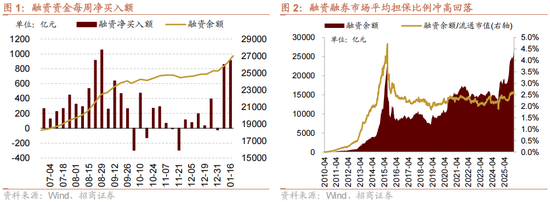
Core Viewpoint - Recent regulatory measures have been implemented to prevent rapid increases in leverage, including raising the margin requirement for financing, which has led to a cooling of market sentiment and a rational return of investor emotions [1][2][7][24]. Market Analysis - The A-share market has shown signs of volatility after reaching new highs, with a shift towards a more oscillatory trend expected as earnings disclosures approach [1][2][24]. - The market experienced a significant drop in trading volume from over 3.9 trillion to below 3 trillion after the margin requirement was raised to 100% [3][26]. - The technology sector, particularly AI applications and semiconductor equipment, remains a key focus for investment in January, alongside resource products represented by industrial metals [2][24]. Fund Flow - There was a net inflow of 913 billion in financing funds over the first four trading days, with a total financing balance reaching 2.7 trillion, marking a historical high [9][41]. - The stock market saw a net outflow of 1.296 trillion from ETFs, with the CSI 300 ETF accounting for a significant portion of this outflow [11][20][41]. Industry Performance - The semiconductor industry showed a notable increase in exports, with December exports rising by 47.72% year-on-year, indicating a strong demand for integrated circuits [29][30]. - The industrial metals sector has seen price increases, with copper, nickel, and tin prices rising, while aluminum and cobalt prices have decreased [39]. Investment Recommendations - The investment strategy for January emphasizes large-cap growth stocks, with recommended index combinations including CSI 300 and STAR Market 50 [8][25]. - Key sectors for investment include technology, industrial equipment, non-bank financials, and cyclical industries, with a focus on sectors that are expected to benefit from upcoming earnings reports [2][24][25]. Emerging Trends - The GEO (Generative Engine Optimization) concept is gaining traction in the market, with several stocks experiencing significant price increases as companies explore this new marketing paradigm [53][54]. - Companies involved in GEO are primarily focused on digital marketing and content services, with many still in the early stages of developing related business models [54][56].

创业板人工智能ETF(159363)周线八连阳!算力+AI应用双驱动,标的指数本轮累涨超34%跑赢同类
Xin Lang Cai Jing· 2026-01-18 11:14
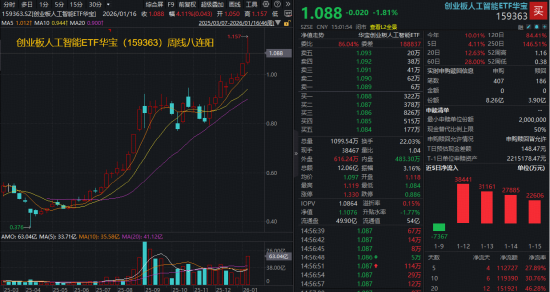
Core Viewpoint - The article discusses the recent performance of the ChiNext AI sector, highlighting a 2% decline in the ChiNext AI index while significant capital inflows continue, particularly into the AI application and computing power sectors [1][7]. Group 1: Market Performance - The ChiNext AI sector experienced a 2% drop, with AI application stocks like Hand Information, BlueFocus, and Kunlun Wanwei falling over 10% [1][7]. - Despite the decline in AI application stocks, computing power stocks such as LianTe Technology, TaiChen Guang, and ZhiShang Technology saw gains of over 5% [1][7]. - The ChiNext AI ETF (159363) recorded a 1.81% decrease, with a trading volume exceeding 1.2 billion yuan and a net subscription of 436 million units on that day [1][7]. Group 2: Fund Inflows and ETF Performance - The ChiNext AI ETF (159363) has seen a total inflow of approximately 1.678 billion yuan over the week, with 1.2 billion yuan added in the previous four days [1][9]. - As of January 15, the ChiNext AI ETF reached a record size of 5.527 billion yuan, with an average daily trading volume of nearly 800 million yuan over the past six months, leading among eight ETFs tracking the ChiNext AI index [3][11]. Group 3: Sector Outlook and Investment Strategy - The article emphasizes the ongoing high demand for computing power driven by AI applications, with the light module sector expected to be a key area for investment during the current market correction [3][11]. - The light module industry is in a high prosperity cycle, with significant growth in demand for high-end light modules anticipated due to AI computing needs [3][11]. - The ChiNext AI ETF is positioned to benefit from the commercialization of AI technology, with approximately 60% of its portfolio allocated to computing power and 40% to AI applications [5][11].

站上2.7万亿元,杠杆资金最新动向曝光!下周这些板块获投资者看好
Xin Lang Cai Jing· 2026-01-18 10:09
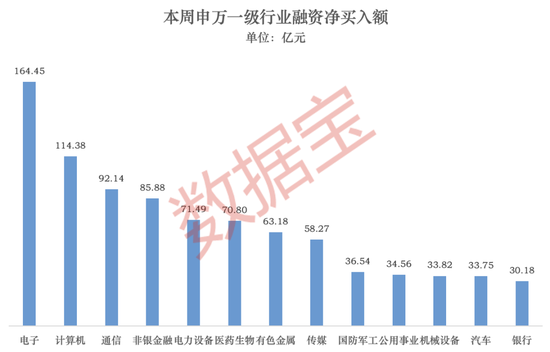
Group 1 - A-shares financing balance has reached a new high of 27,012.4 billion yuan, with a net buy of 1,006.51 billion yuan this week [2][20] - The electronics and computer sectors saw net purchases exceeding 10 billion yuan, with amounts of 16.445 billion yuan and 11.438 billion yuan respectively [2][20] - The power equipment sector is expected to benefit from increased fixed asset investments by the State Grid Corporation, projected to reach 400 billion yuan during the 14th Five-Year Plan, a 40% increase from the previous plan [4][21] Group 2 - Notable stocks with significant net purchases include China Ping An (3.343 billion yuan), TBEA (2.279 billion yuan), and Zhongji Xuchuang (1.979 billion yuan) [4][24] - The storage chip sector is experiencing a "super bull market," with DDR5 memory prices rising over 300% since September 2025, and DDR4 prices increasing over 150% [23] - Investors are optimistic about the power sector, with 9% of surveyed investors expressing confidence in this area, driven by the anticipated investments in the power grid [15][33]






策略点评:AI应用行情未完
Bank of China Securities· 2026-01-18 08:50
Core Insights - The report emphasizes that the AI application market is not yet over, with a shift from broad-based gains to a focus on stocks with strong fundamentals expected to occur [2][4]. - Three key factors are identified as catalysts for the continuation of the AI application market: macroeconomic conditions, industry trends, and performance validation [4][5]. Macroeconomic Background - A relatively abundant liquidity environment in the A-share market supports high-growth software applications, with expectations for continued loose monetary policy in 2026 [4]. - The Chinese yuan has been appreciating, and increased geopolitical tensions abroad have heightened global interest in Chinese assets, creating favorable conditions for the stock market [4]. Industry Trends - The underlying technology framework for AI applications is rapidly maturing, with significant improvements in computing efficiency and cost-effectiveness supporting commercialization [5]. - AI application business models are transitioning from concept validation to revenue generation, with some vertical models entering the performance validation phase [5]. Performance Validation - The third-quarter performance of AI applications shows a notable recovery, with revenue growth accelerating from 0.74% in the mid-2025 report to 1.55% in the third quarter, marking the highest level since 2023 [5][6]. - Specific AI vertical companies have demonstrated impressive performance, such as 360's net profit growth increasing from 17.43% in the mid-year report to 78.88% in the third quarter [6]. Focus on Strong Fundamentals - The software application market is expected to shift from broad gains to a focus on stocks with strong fundamentals, similar to trends observed in the 2013-2015 mobile internet boom [9]. - Companies with strong fundamentals in AI applications are concentrated in sectors like "AI + entertainment," "AI + office," "AI + gaming," and "AI + marketing," indicating potential investment opportunities in these niches [10].
图解牛熊股存储芯片概念涨幅居前,AI应用概念股持续活跃
Sou Hu Cai Jing· 2026-01-18 02:48
Market Performance - The A-share market showed mixed performance this week, with the Shanghai Composite Index declining by 0.45%, while the Shenzhen Component Index and the ChiNext Index increased by 1.14% and 1.00% respectively [1] - Trading volume significantly increased, with the total turnover approaching 4 trillion yuan on January 14 [1] Sector Performance - The precious metals, semiconductor, and power grid equipment sectors saw notable gains, while AI applications and storage chip concept stocks were particularly active [1] - The storage chip concept stocks performed well, with Blue Arrow Electronics rising by 57.66% and Baiwei Storage increasing by 45.85% [1] Supply and Demand Dynamics - Major companies such as Samsung, SK Hynix, and Micron announced that their DRAM and HBM products for AI servers are sold out until 2026, with inventory levels dropping below 8 weeks, indicating a short-term supply-demand gap [1] - Domestic packaging and testing leaders announced plans to expand their entire product lines, and new rounds of 3D NAND and DRAM capacity tenders were initiated by Yangtze Memory Technologies and Changxin Memory Technologies [1] AI Application Sector - AI application concept stocks remained active, with Zhitex New Materials increasing by 65.84% and Tongda Hai rising by 39.73% [1] - The Ministry of Industry and Information Technology and eight other departments issued implementation opinions for the "Artificial Intelligence + Manufacturing" initiative, aiming for an AI application penetration rate of over 60% in key industries by 2026, with financial support measures included [1] Capital Flow - Major capital inflows were observed in companies like Zhaoyi Innovation and Changdian Technology, with net inflows exceeding 2 billion yuan [1] - Conversely, companies such as Goldwind Technology, BlueFocus Communication Group, TBEA, and Aerospace Electronics experienced net outflows exceeding 6 billion yuan, with Goldwind Technology alone seeing over 10 billion yuan in net outflows [1]

开年最热赛道突然刹车
Ge Long Hui· 2026-01-17 02:34
Core Viewpoint - The AI application sector has recently experienced a significant downturn, despite being one of the hottest areas at the beginning of the year, driven by the recent performance of large model companies and the introduction of new technologies [1][2][5][6]. Group 1: Market Dynamics - The recent surge in AI applications was fueled by the successful listings of large model companies like MiniMax and Zhipu, which improved market sentiment and expectations for AI application growth [5]. - The acquisition of the AI application company "Butterfly Effect" by Meta for billions of dollars has increased the recognition of AI applications in China [5]. - The introduction of domestically developed inference chips has drastically reduced AI invocation costs, leading to price reductions by large model companies [5]. Group 2: Marketing and GEO - The marketing and media sector has been the primary focus of the AI application boom, particularly following Elon Musk's announcement to open-source the latest content recommendation algorithm for the X platform [6][10]. - Generative Engine Optimization (GEO) has emerged as a new trend, aiming to enhance brand content visibility in AI-generated responses, with a projected market size of $11.2 billion globally and ¥2.9 billion in China by 2025 [8][14]. - The shift from traditional SEO to AI-driven marketing strategies is transforming the marketing landscape, with AI expected to replace 50% of search engine traffic by 2028 [11][12]. Group 3: Company Performance - BlueFocus has shown impressive performance, with a 12.5% year-on-year revenue growth to ¥51.098 billion in the first three quarters of 2025, and a significant 85.53% increase in net profit [15]. - AI-driven revenue for BlueFocus surged by 310%, although it still represents less than 5% of total revenue, indicating potential for future growth if the company can establish a self-sustaining marketing model [15][16]. - The competitive landscape for BlueFocus includes major players like ByteDance and Alibaba, which have developed their own marketing tools, necessitating BlueFocus to demonstrate the unique capabilities of its self-developed AI [17]. Group 4: Future Outlook - The year 2026 is anticipated to be pivotal for AI applications, with advancements in model capabilities and supportive policies driving demand [20][21]. - The marketing sector is expected to benefit significantly from AI, with companies like AppLovin reporting a 71% increase in advertising revenue due to AI integration [22]. - The rise of AI-generated content, such as AI manga, is creating new market opportunities, with significant production and consumption potential [23][25]. - The integration of AI into traditional industries like manufacturing and finance is expected to yield substantial efficiency gains, enhancing companies' willingness to invest in AI solutions [29].

爆火的GEO,到底是个啥?
吴晓波频道· 2026-01-17 00:29
Core Viewpoint - The rise of AI assistants is transforming consumer behavior and advertising strategies, leading to the emergence of a new business model known as Generative Engine Optimization (GEO) [3][30]. Group 1: Understanding GEO - GEO (Generative Engine Optimization) is a new advertising strategy that focuses on ensuring products are positively mentioned by AI when users ask questions, contrasting with traditional SEO which aims for high click-through rates [10][12]. - The shift from traditional advertising mediums like television and search engines to AI platforms reflects a significant change in how brands reach their audiences [26][28]. Group 2: Market Trends and Growth - The GEO market is experiencing rapid growth, with China's GEO service market exceeding 4.2 billion RMB and a compound annual growth rate of 38% [33]. - Globally, the GEO market is projected to surpass $33.6 billion by 2034, indicating a substantial opportunity for businesses to adapt to AI-driven consumer behavior [33]. Group 3: Consumer Behavior Changes - Over 80% of Chinese consumers now seek shopping information through AI, with nearly 35% consulting AI multiple times daily [34]. - Despite the high engagement with AI, the actual conversion from AI recommendations to purchases remains low, suggesting significant potential for growth in this area [34][35]. Group 4: Strategies for Effective GEO - Effective GEO strategies include using authoritative endorsements, incorporating statistics, and optimizing content for clarity and structure to appeal to AI preferences [22][23]. - Companies are increasingly creating websites specifically designed for AI consumption, bypassing traditional user experience considerations to enhance AI visibility [23]. Group 5: Industry Implications - The emergence of GEO signifies a shift in advertising paradigms, where companies must learn to optimize their content for AI to remain competitive [40]. - As AI continues to proliferate, the competition for visibility and recommendation by AI will become a standard practice across industries [41].