荣昌生物

Search documents
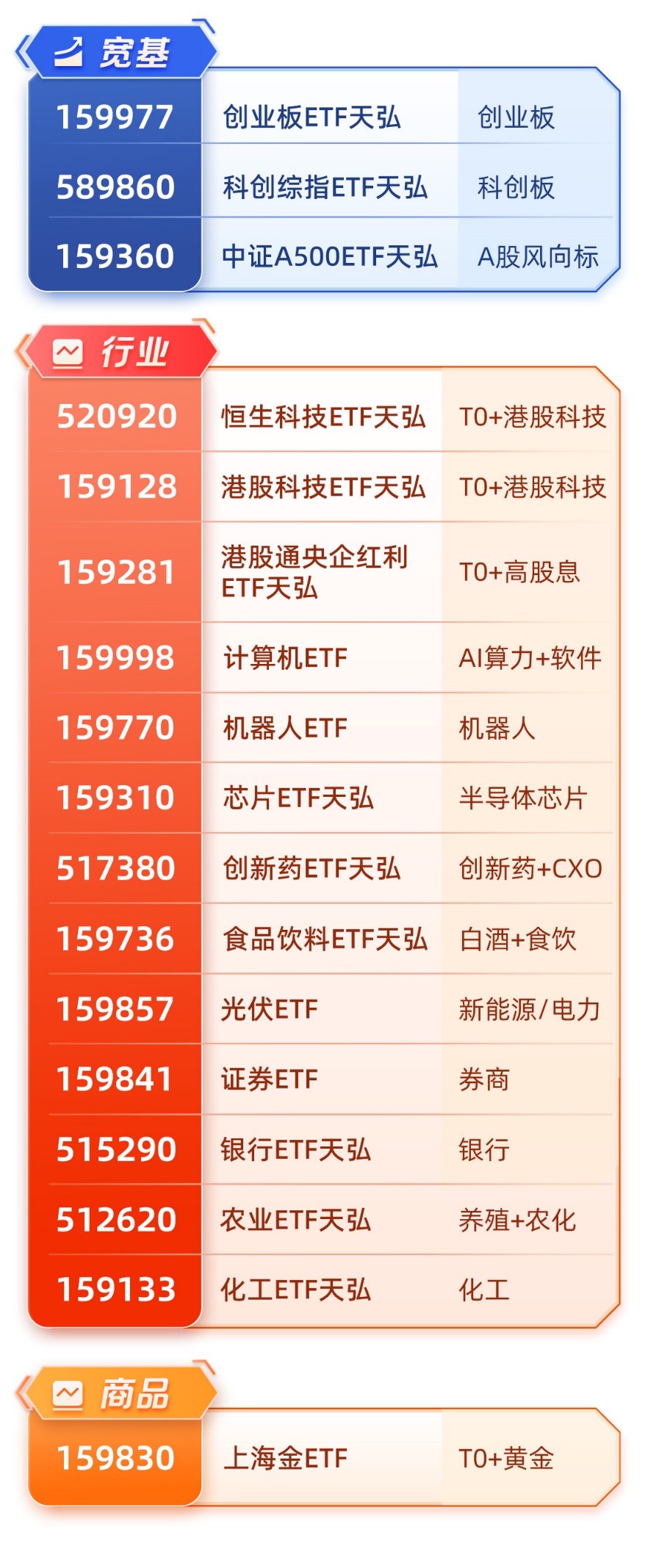
强脑科技冲刺港股IPO!医疗设备ETF(159873)标的指数昨日逆市收涨超1%,创新药ETF天弘(517380)连续6日“吸金”2.64亿元
Xin Lang Cai Jing· 2026-01-14 02:03
Core Insights - The medical device ETF (159873) has shown strong trading activity with a turnover of 26.84% and a transaction volume of 36.34 million yuan, while the underlying index, the CSI All Share Healthcare Equipment and Services Index (H30178), increased by 1.09% [1] - The innovative drug ETF Tianhong (517380) also performed well, with a turnover of 5.36% and a transaction volume of 95.97 million yuan, tracking the Hang Seng Shanghai-Shenzhen-Hong Kong Innovative Drug Select 50 Index (HSSSHID), which rose by 2.21% [1] - Both ETFs reached new highs in terms of scale and shares as of January 13, 2026, with the medical device ETF achieving a record scale and share, while the innovative drug ETF reached a scale of 1.807 billion yuan and 2.162 billion shares [2][3] Fund Flows - The medical device ETF (159873) has seen a net inflow of 26.50 million yuan over the past four days [1] - The innovative drug ETF Tianhong (517380) experienced a net inflow of 264 million yuan over the last six days [3] Product Highlights - The medical device ETF (159873) has a high concentration in brain-computer interface technology, accounting for over 19%, with nearly 80% of its components from the Sci-Tech Innovation Board and the Growth Enterprise Market [4] - The innovative drug ETF Tianhong (517380) targets opportunities in the innovative drug sector, benefiting from the concentration of top component stocks like WuXi AppTec and Hengrui Medicine, alongside the growth in BD transactions and breakthroughs in AI drug development [4] Industry Events - Qiangnao Technology, a brain-computer interface company, has submitted a confidential IPO application for listing on the Hong Kong Stock Exchange, potentially becoming the first listed company in China's brain-computer interface sector [4] - The company has completed approximately 2 billion yuan in financing, marking the second-largest financing event globally in the brain-computer interface field, excluding Neuralink [4][5] Institutional Perspectives - Analysts from Changcheng Guorui Securities view brain-computer interfaces as a forward-looking direction under the 14th Five-Year Plan, with several recommended industry standards being established to promote technological standardization and clinical registration processes [5]

中泰国际每日晨讯-20260114
ZHONGTAI INTERNATIONAL SECURITIES· 2026-01-14 02:02
Market Overview - The Hong Kong stock market showed a narrowing upward trend, with the Hang Seng Index and the Hang Seng China Enterprises Index closing at 26,848 points and 9,285 points, up 0.9% and 0.7% respectively, indicating sustained investor confidence as the total turnover reached HKD 315.2 billion, slightly higher than the previous day's HKD 306.2 billion [1] - In sector performance, materials, energy, and healthcare indices rose by 1.9%, 1.6%, and 1.6% respectively, while consumer staples, telecommunications, and information technology sectors saw declines of 0.4%, 0.3%, and 0.1% [1] Real Estate Sector - The Hong Kong real estate sector continued its upward trend, with major companies such as Henderson Land (12 HK), Sun Hung Kai Properties (16 HK), and New World Development (17 HK) rising by 3.0%, 1.2%, and 7.2% respectively [2] - Recent adjustments in housing price forecasts by financial institutions support the view of an improving real estate market, driven by declining interest rates and a projected decrease in new housing supply [2] - The anticipated government announcement at the end of January regarding new housing supply statistics for 2025 is expected to further confirm this trend, with a projected 61.9% year-on-year decrease in private residential construction units for the first three quarters of 2025 [2] Macro Dynamics - The U.S. Consumer Price Index (CPI) for December showed a year-on-year growth of 2.7%, consistent with November's figure and market expectations [3] Automotive Sector - The automotive sector is experiencing changes due to a government announcement that will reduce battery export tax rebates from 9% to 6% starting in April, with a complete elimination by 2027, prompting downstream battery manufacturers to accelerate production and order placements [4] - This policy is expected to lead to a short-term surge in demand for lithium resources, with companies like CATL (3750 HK), Tianqi Lithium (9696 HK), Ganfeng Lithium (1772 HK), and BYD (1211 HK) showing stock price increases of 0.9%, 0.8%, 3.9%, and 1.6% respectively [4] Healthcare Sector - The Hang Seng Healthcare Index rose by 1.7%, with WuXi AppTec (2359 HK) announcing a positive earnings forecast, projecting a 15.8% year-on-year revenue increase to RMB 45.46 billion and a 102.7% increase in net profit to RMB 19.15 billion for 2025 [5] - WuXi AppTec's core business profitability, as measured by Non-IFRS adjusted net profit, is expected to rise by 41.3% to RMB 14.96 billion, exceeding Bloomberg's forecasts, which contributed to an 8.3% increase in its stock price [5] - WuXi Biologics (2269 HK) is also expected to report strong 2025 results, while Rongchang Biologics (9995 HK) signed an exclusive licensing agreement with AbbVie (ABBV US) for its new PD-1/VEGF dual-specific antibody drug, RC148, which includes an upfront payment of USD 650 million and potential milestone payments of up to USD 4.95 billion [5] Energy Sector - The new energy and utilities sectors displayed mixed performance, lacking significant new developments, while the thermal power sector generally rose, benefiting from stable coal prices despite colder weather in some regions [6] - Companies such as Huaneng International (902 HK), Datang International (991 HK), and Huadian International (1071 HK) saw stock price increases ranging from 1.4% to 2.2% [6]
华泰证券今日早参-20260114
HTSC· 2026-01-14 01:38
Group 1: Macroeconomic Insights - In December, the core CPI in the US increased by 0.2% month-on-month, which was below the expected 0.3%, indicating a weaker inflation rebound than anticipated [2] - The overall CPI for December also rose by 0.3% month-on-month, aligning with expectations, while the year-on-year CPI remained steady at 2.7% [2] Group 2: Real Estate Industry Analysis - The C-REIT market in China is entering a full-category development era, with significant potential for commercial real estate REITs due to ample stock, high adaptability for securitization, and strong market recognition [3] - The land market in 2025 is showing signs of marginal improvement in supply and demand, with a reduction in the year-on-year decline in both supply and transaction volume [3] - The focus on quality over quantity in land supply is becoming mainstream, and leading real estate companies are expected to strengthen their advantages in a competitive environment [3] Group 3: Company-Specific Insights - Longfor Group (960 HK) reported continued growth in commercial operations, with a focus on quality land acquisition, indicating potential undervaluation due to the repricing of commercial real estate and growth in service business driven by technology [4] - Rongchang Biopharmaceutical (688331 CH) announced a significant deal for its PD-1/VEGF dual antibody RC148, with an upfront payment of $650 million, highlighting its potential as a global blockbuster [4]
八部门鼓励养老服务机器人产业发展,机器人ETF(159770)跟踪指数近17日反弹涨超18%,昨日成交额超6.4亿元居深市同标的第一
Sou Hu Cai Jing· 2026-01-14 01:31
Group 1 - The A-share market experienced a collective adjustment, with the CSI Robot Index falling by 1.15% and the Sci-Tech Innovation Index declining by 2.66% on January 13 [1] - The Robot ETF (159770) saw a trading volume exceeding 640 million yuan, maintaining its position as the top product in the Shenzhen market, with a latest circulation scale of over 11 billion yuan as of January 12 [1] - The Sci-Tech Innovation ETF Tianhong (589860) had a turnover rate exceeding 8% and continued to trade at a premium, with a premium/discount rate of 0.09% [1] Group 2 - The CSI Robot Index and Sci-Tech Innovation Index rebounded significantly in the recent A-share market rally, with increases of 18.27% and 19.83% respectively over 17 trading days [2] - Recent policy support for the robot industry includes measures from multiple government departments to promote the development of elderly care service robots, addressing the needs for daily care and emotional support for the elderly [2] - The Jiangsu provincial government has issued an action plan to promote the development of embodied intelligent robots, focusing on the research and development of intelligent operating systems and application frameworks [2] Group 3 - Guotai Junan Securities expresses optimism about the robot sector, anticipating strong catalysts and marginal changes in Q1 2026, indicating a favorable outlook for the industry [3]

四大证券报精华摘要:1月14日
Xin Hua Cai Jing· 2026-01-14 00:19
Group 1: Emerging Industries and Market Trends - In 2026, several companies in emerging industries such as intelligent robotics and low-altitude economy announced production targets, indicating a shift from technical validation to mass production delivery, marking a "year of scale" for these sectors [1] - The low-altitude economy is expected to maintain rapid growth in 2026, transitioning from early-stage applications to deeper market penetration, leading to intensified competition [1] - The industrial internet sector is projected to exceed 1.6 trillion yuan by 2025, with significant growth in connected industrial devices and platform adoption [10] Group 2: Stock Market Performance - Southbound capital has seen a record net inflow of 140.48 billion HKD in 2025, continuing into 2026 with an additional net inflow of 41.296 billion HKD, contributing to a strong performance in the Hong Kong stock market [2] - The Hang Seng Index rose over 4% and the Hang Seng Tech Index over 6% in 2026, with more than 60% of stocks with a market cap over 1 trillion HKD experiencing gains [2] - A-share market saw a record daily trading volume exceeding 30 billion yuan for three consecutive days, with significant activity in AI applications and pharmaceutical stocks [7] Group 3: Company Performance and Forecasts - Several gold mining companies have reported significant earnings growth for 2025, driven by rising gold prices, with Goldman Sachs predicting gold prices to reach approximately 4,900 USD per ounce by the end of 2026 [3] - Over 140 companies in the A-share market have disclosed annual performance forecasts, with 63 companies expecting profit increases and 19 companies projecting a doubling of net profits [9] - Guizhou Moutai is accelerating its market-oriented transformation, implementing a new operational plan to adapt to market and consumer trends [13] Group 4: Regulatory and Market Developments - The Beijing Stock Exchange is experiencing an "accelerated" listing review process, particularly benefiting specialized and innovative small and medium enterprises [4] - Securities firms are increasingly engaging in capital increases and acquisitions to enhance their control over public fund companies, aiming for deeper integration of various financial services [12][13]





荣昌生物拿下56亿美元大单 双抗技术缘何频获跨国巨头追捧?
2 1 Shi Ji Jing Ji Bao Dao· 2026-01-13 23:12
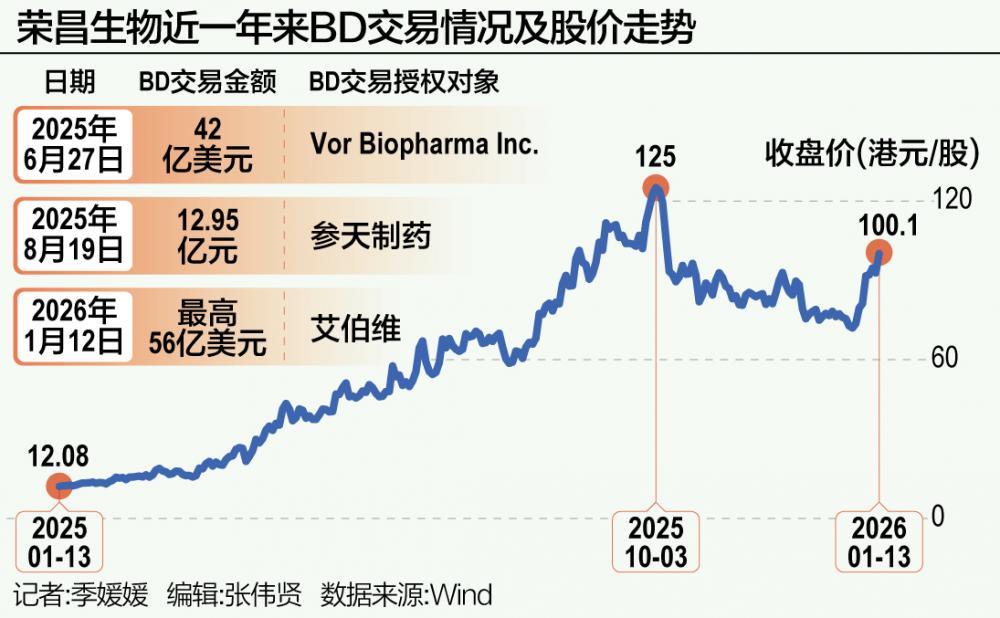
Core Insights - The collaboration between AbbVie and Rongchang Biopharma marks a significant shift in the global oncology treatment landscape, highlighting the trend of "Chinese innovation + global market" in drug development [1][2] Group 1: Collaboration Details - AbbVie and Rongchang Biopharma signed an exclusive licensing agreement for the development, production, and commercialization of RC148, a bispecific antibody targeting PD-1 and VEGF [1] - Rongchang Biopharma will receive an upfront payment of $650 million and is eligible for up to $4.95 billion in milestone payments, along with a tiered royalty on net sales outside Greater China [1][2] Group 2: Market Implications - The deal allows Rongchang Biopharma to accelerate clinical trials for RC148 in China and globally, while also supporting the development of other pipelines [2] - AbbVie aims to enhance its product portfolio in immuno-oncology, particularly in the emerging PD-1/VEGF bispecific antibody space, which could improve its competitiveness in solid tumor treatments [2] Group 3: Industry Trends - The PD-1/VEGF bispecific antibody represents a new class of cancer therapies that may overcome tumor resistance mechanisms by simultaneously blocking PD-1 and VEGF [3][5] - Chinese companies are leading in this field, with significant advancements and approvals, such as the launch of Ak112/Ivonescimab by Kangfang Biopharma, which is the first bispecific antibody combining tumor immunity and anti-angiogenesis mechanisms [3] Group 4: Broader Market Dynamics - The global interest in PD-1/VEGF bispecific antibodies is rising, with several Chinese firms successfully engaging in business development (BD) transactions, reflecting the increasing recognition of Chinese innovative drug assets by multinational pharmaceutical companies [6][7] - In 2025, the total value of Chinese innovative drug licensing transactions exceeded $130 billion, accounting for 49% of the global total, indicating a significant shift in the global pharmaceutical landscape [7][8] Group 5: Future Outlook - The increasing number of approved innovative drugs in China, along with the growing bargaining power of Chinese companies in licensing agreements, suggests a transition from a "follow" to a "lead" position in global pharmaceutical innovation [8][10] - The ability of Chinese companies to negotiate favorable terms in BD transactions is becoming crucial, emphasizing the importance of pipeline strength, data quality, and structured deal design [9][10]


荣昌生物频获跨国巨头追捧
2 1 Shi Ji Jing Ji Bao Dao· 2026-01-13 23:08
Core Insights - The collaboration between AbbVie and Rongchang Biopharma marks a significant shift in the global oncology treatment landscape, focusing on the development of the bispecific antibody RC148 targeting PD-1 and VEGF [1][2] Group 1: Collaboration Details - AbbVie and Rongchang Biopharma signed an exclusive licensing agreement for RC148, granting AbbVie rights outside Greater China for development, production, and commercialization [1] - Rongchang Biopharma will receive an upfront payment of $650 million and is eligible for up to $4.95 billion in milestone payments, along with a tiered royalty on net sales outside Greater China [1][2] Group 2: Market Implications - This deal exemplifies the "China innovation + global market" model, providing Rongchang Biopharma with substantial cash flow to accelerate clinical trials for RC148 and support other pipeline developments [2] - The partnership with a top-tier oncology company like AbbVie enhances Rongchang Biopharma's brand and bargaining power in international markets, while AbbVie benefits from expanding its immuno-oncology product portfolio [2] Group 3: Bispecific Antibody Landscape - RC148 represents a new class of cancer therapies aimed at simultaneously blocking PD-1 and VEGF, potentially overcoming tumor resistance mechanisms [5] - The PD-1/VEGF bispecific antibody field is gaining traction, with several Chinese companies, including Kangfang Biopharma and Junshi Biosciences, making significant advancements and entering clinical trials [6][7] Group 4: Industry Trends - The Chinese innovative drug sector is experiencing a surge in licensing deals, with over $130 billion in total transaction value in 2025, surpassing the U.S. for the first time [10] - Factors driving this trend include the impending patent cliff for major drugs and declining R&D efficiency among multinational pharmaceutical companies, leading them to seek external innovations [10][11] Group 5: Future Outlook - The Chinese pharmaceutical industry is transitioning from a follower to a leader in innovation, with a clear direction for future development [14] - Companies are focusing on building a comprehensive value creation logic recognized by international partners, enhancing their negotiation power in licensing agreements [12][13]
BD大单扎堆、龙头业绩预增翻倍,港A创新药掀起暴涨浪潮
Ge Long Hui· 2026-01-13 20:52
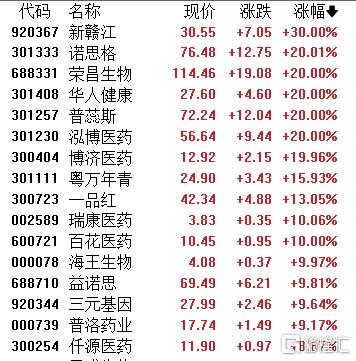
Core Viewpoint - The pharmaceutical sector in Hong Kong and A-shares experienced a significant surge, driven by various sub-sectors including innovative drugs, CRO, bioproducts, and medical services, leading to a wave of stock price increases [1][2][3] Group 1: Market Performance - A-shares saw a surge with stocks like Xin Gan Jiang, Nuo Si Ge, and Rong Chang Bio hitting the daily limit, while others like San Yuan Gene and Qian Yuan Pharma also reported substantial gains [1][2] - In the Hong Kong market, leading stocks such as WuXi AppTec and others also experienced notable increases, with WuXi AppTec rising over 7% [2][3] Group 2: Business Development (BD) Collaborations - The recent JPMorgan Healthcare Conference served as a key platform for Chinese innovative pharmaceutical companies to showcase their core products and advance overseas BD collaborations [5][6] - A series of significant BD deals were announced, including a $6.5 billion upfront payment agreement between Rong Chang Bio and AbbVie, with potential total payments reaching $5.6 billion [7] - Other notable collaborations included a $5.7 billion deal between Yilian Bio and Roche, and a nearly $1.7 billion agreement between Sino Neuro and Novartis [7] Group 3: Financial Performance - WuXi AppTec projected a revenue of approximately 45.456 billion yuan for 2025, marking a year-on-year increase of about 15.84%, with a net profit expected to reach 19.151 billion yuan, reflecting a significant growth of approximately 103% [9] - BeiGene also reported strong revenue expectations for 2025, estimating between 36.2 billion to 38.1 billion yuan, indicating substantial growth compared to the previous year [12] Group 4: Industry Outlook - Analysts are optimistic about the long-term prospects of the innovative drug sector, with expectations of continued BD activity and a peak in data disclosures in early 2026 [14] - The trend of Chinese innovative drugs entering overseas markets is expected to persist, with a focus on clinical progress and data realization [14] - The ADC (Antibody-Drug Conjugate) sector is highlighted as a rapidly developing treatment modality, with high technical barriers and strong customer loyalty in the CDMO (Contract Development and Manufacturing Organization) industry [16]

24家中国创新药企JPM大会“秀”实力
Shang Hai Zheng Quan Bao· 2026-01-13 18:34
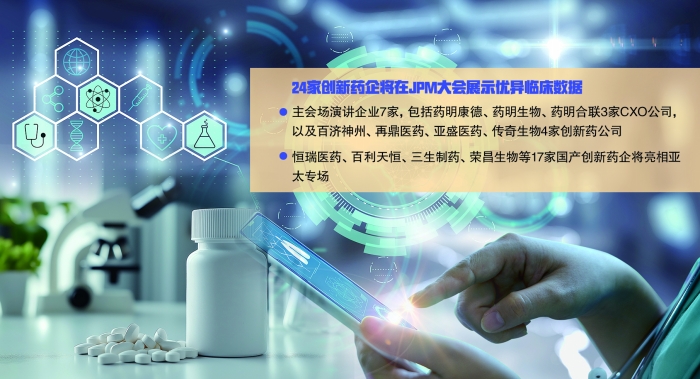
Core Insights - The 44th JPMorgan Healthcare Conference (JPM 2026) took place from January 12 to 15 in San Francisco, focusing on biotechnology, biopharmaceuticals, and AI in medicine, serving as a significant investment and trading window for the global biopharmaceutical industry [2] Group 1: Market Reactions - Following the announcement of the JPM conference, both A-shares and Hong Kong stocks in the pharmaceutical sector saw a collective surge, with companies like Rongchang Biopharmaceutical, Hongbo Pharmaceutical, and Boji Pharmaceutical hitting the daily limit up in A-shares [2] - In Hong Kong, companies such as Cornerstone Pharmaceuticals, Qiming Medical, and Rongchang Biopharmaceutical also performed notably well [2] Group 2: Clinical Research and Innovations - A total of 24 domestic innovative pharmaceutical companies are set to showcase their clinical data at the JPM conference, with seven companies presenting in the main session, including WuXi AppTec and BeiGene [3] - BeiGene will discuss the progress of its core products, including the widely approved BTK inhibitor, Brukinsa, and its new BCL2 inhibitor, which is the first of its kind approved in China for treating certain lymphomas [3] - Ascentage Pharma will present advancements in its apoptosis pipeline, focusing on inhibitors targeting key proteins involved in cancer treatment [4] Group 3: Business Development and Collaborations - The JPM conference is expected to be a hotspot for business development (BD) transactions, with five BD deals already announced in January, showcasing China's leading position in various technological fields [6] - Rongchang Biopharmaceutical signed an exclusive licensing agreement with AbbVie for its new PD-1/VEGF dual-specific antibody drug, potentially worth up to $5.6 billion [6] - Yilian Biopharmaceutical reached a licensing agreement with Roche for its YL201 project, securing an upfront payment of $570 million and additional milestone payments [6] Group 4: AI in Pharmaceuticals - The rapid development of AI has made it a focal point for many innovative pharmaceutical companies, with firms like Hengrui Medicine and BeiGene integrating AI technologies into their drug development processes [5] - NVIDIA and Eli Lilly announced a $1 billion investment to establish a joint research lab in the San Francisco Bay Area to accelerate AI applications in the pharmaceutical industry [5]


A股成交额连续3日超3万亿元 医药股集体走强
Shang Hai Zheng Quan Bao· 2026-01-13 18:34
Group 1: Market Overview - The A-share market experienced an overall adjustment, with the Shanghai Composite Index closing at 4138.76 points, down 0.64%, and the Shenzhen Component Index down 1.37% [2] - The trading volume in the Shanghai and Shenzhen markets reached 36,988 billion, marking the third consecutive trading day exceeding 30 trillion, setting a new record for daily trading volume in A-shares [2] Group 2: AI and Pharmaceutical Sector Performance - The AI application sector remained active, with the GEO (Generative Engine Optimization) direction leading the gains, and several stocks like Ingrity Media and Tianlong Group achieving multiple consecutive gains [2] - Pharmaceutical stocks collectively surged, particularly in AI healthcare and innovative drugs, with companies like Nossger and Rongchang Bio hitting the 20% daily limit [5][6] Group 3: Pharmaceutical Sector Catalysts - Leading companies in the pharmaceutical sector reported positive earnings forecasts, with WuXi AppTec expecting a net profit of approximately 19.15 billion, a year-on-year increase of about 102.65% for 2025 [6] - Rongchang Bio signed an exclusive licensing agreement with AbbVie for its new PD-1/VEGF dual-specific antibody drug, receiving an upfront payment of $650 million and potential milestone payments up to $4.95 billion [6] - A new AI joint innovation lab is being established by NVIDIA and Eli Lilly in the San Francisco Bay Area, with a planned investment of up to $1 billion over five years, focusing on AI-enabled drug discovery and development [6] Group 4: Market Sentiment and Future Outlook - The market is expected to maintain a slow upward trend, with structural differentiation intensifying, as highlighted by the ongoing policy catalysts and industry rotations [8] - Analysts suggest that the A-share market will continue to experience a slow growth pattern in 2026, with technology and resource sectors identified as core investment themes [9]