
中国商飞

Search documents
乘风起飞!低空经济上演“群雄逐鹿”
Qi Lu Wan Bao· 2025-07-14 04:28
Group 1 - The low-altitude economy is emerging as a new competitive arena for cities, with both large and small cities participating in the "linkage power" index [1][2] - In the "linkage power" index, cities like Zhuhai, Shaoxing, and Wuhu have entered the top 50, indicating that small cities can also thrive in the low-altitude economy [1][2] - Shandong province aims to achieve a low-altitude economy scale exceeding 100 billion yuan by 2027, with cities like Qingdao, Jinan, and Yantai ranking in the top 50 [2][3] Group 2 - Shandong's industrial foundation supports the entire low-altitude economy supply chain, allowing for an "internal circulation" model that can drive growth [3][4] - The province has significant potential in low-altitude logistics, cultural tourism, and smart agriculture, leveraging its strengths in agriculture and manufacturing [3][5] - The establishment of the Lianshan Low-altitude Economy Industrial Park in Rizhao, with a 1.5 billion yuan investment, highlights the region's commitment to developing the low-altitude economy [4] Group 3 - Binzhou has developed a comprehensive low-altitude economy industrial chain, with multiple parks and leading companies in the drone sector [6][8] - The city has become a hub for drone manufacturing and services, including the first nationwide drone rapid design and testing center [6][7] - The approval of low-altitude flight airspace in Binzhou and Rizhao positions these cities as leaders in airspace resource utilization in East China [7][8] Group 4 - The agricultural sector in Shandong, particularly in Weifang, is leveraging low-altitude technology for crop protection, which is a key application area for the low-altitude economy [10][11] - The rise of new job roles such as drone pilots and smart agricultural machinery operators indicates the expanding employment opportunities within the low-altitude economy [11] - Government subsidies are being emphasized to support the purchase and application of agricultural drones, facilitating the growth of the low-altitude economy [11]
央企消费帮扶聚力行动再次启动 中核集团消费帮扶超5亿元
Xin Lang Ke Ji· 2025-07-14 02:18
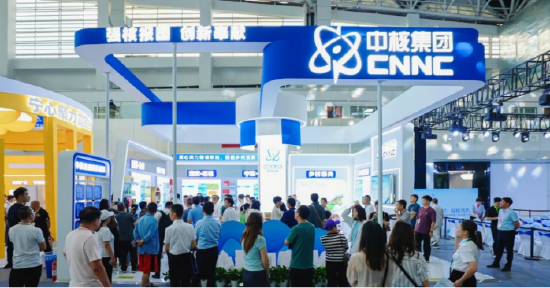
Core Viewpoint - The central enterprises, including China Nuclear Group, China Resources Group, and COMAC, are actively participating in the "Consumption Assistance for Rural Revitalization in Ningxia" initiative, demonstrating their commitment to supporting local development and poverty alleviation efforts [1][3]. Group 1: Actions and Contributions - The initiative aims to build a bridge for "production, supply, and sales" connections between central enterprises and local businesses in Ningxia [1]. - China Nuclear Group has invested over 4.3 billion yuan in unconditional assistance and over 67 billion yuan in conditional assistance to four designated poverty alleviation counties in Ningxia [1]. - The group has also contributed more than 5 billion yuan in consumption assistance and trained over 150,000 individuals in various skills [1]. Group 2: Economic Impact - China Nuclear Group's 36 subsidiaries in Ningxia have established a strong foundation with assets totaling 23 billion yuan, creating nearly 2,000 jobs and generating annual tax revenues of approximately 240 million yuan [3]. - The company has built 3.1 million kilowatts of clean energy capacity and has initiated projects that are completed within the same year of approval [3]. - The investment in the Zhongke (Ningxia) Tongxin Protection Company has empowered over 300 local women, allowing them to work while managing their households, and has received national recognition for its contributions to poverty alleviation [3]. Group 3: Event Overview - The "Central Enterprises Consumption Assistance Action" is a brand initiative developed by the State-owned Assets Supervision and Administration Commission (SASAC), successfully hosting 18 events over two years [3]. - The recent event lasted three days offline and will continue online for thirteen days, featuring exhibitors from six central ministries, 43 central enterprises, and over 50 local businesses [3].

为低空经济“高飞”培养复合人才(育见·新专业)
Ren Min Ri Bao Hai Wai Ban· 2025-07-13 22:20
Core Viewpoint - The establishment of the "Low Altitude Technology and Engineering" major in response to the national low-altitude economic development strategy aims to cultivate interdisciplinary talents for the rapidly growing low-altitude economy [7][10]. Group 1: Low Altitude Economy Overview - The low-altitude economy is defined as a comprehensive economic form relying on low-altitude airspace, utilizing various manned and unmanned aircraft for diverse low-altitude flight activities, with a broad radiation scope and strong growth potential [8][9]. - The market size of China's low-altitude economy is expected to exceed 1 trillion yuan by 2026, driven by increasing low-altitude flight activities [10]. Group 2: New Major Introduction - The "Low Altitude Technology and Engineering" major is one of 29 new undergraduate programs added to the 2025 directory, with six universities offering it [7][11]. - The major focuses on practical talent cultivation, emphasizing interdisciplinary knowledge integration, including aircraft design, artificial intelligence, and airspace management [12][15]. Group 3: Curriculum and Training - The curriculum includes project-based learning, with a significant emphasis on practical experience, accounting for nearly 30% of the total credits [13][14]. - The program aims to prepare students for various sectors, including research and development, operations, regulation, and innovation within the low-altitude economy [15][16]. Group 4: Career Prospects - Graduates of the low-altitude technology and engineering major have diverse employment opportunities in government agencies, research institutions, and private companies related to low-altitude services [15][16]. - The major also provides pathways for further studies in related fields, with several universities establishing similar programs to enhance academic progression [16][17].

民机火灾科学与安全工程四川省重点实验室优化重组成功获批
Zhong Guo Min Hang Wang· 2025-07-11 09:22
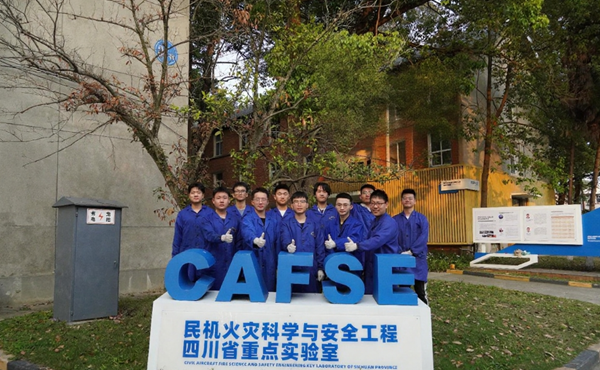
Core Viewpoint - The Sichuan Provincial Key Laboratory of Civil Aircraft Fire Science and Safety Engineering, led by the Civil Aviation Flight University of China, has been successfully approved as part of the optimization and restructuring of key laboratories in Sichuan Province, focusing on innovative research in aircraft fire prevention and rescue technologies [1][2]. Group 1: Laboratory Approval and Objectives - The laboratory is part of a restructuring initiative by the Sichuan Provincial Science and Technology Department, which evaluated 137 key laboratories, approving 121 and eliminating 16 [1]. - The laboratory aims to build a strong research team with independent innovation capabilities, collaborating with Sichuan University and COMAC Shanghai Aircraft Design and Research Institute to tackle core technical challenges in aircraft fire prevention and rescue [1][2]. Group 2: Research Achievements and Funding - The laboratory has focused on core areas of civil aircraft fire prevention and safety engineering, achieving significant breakthroughs in fire dynamics, efficient extinguishing technologies, and new energy aviation power [2]. - It has undertaken 41 provincial and ministerial-level research projects, including 16 national-level projects, and has secured a total of 150 million yuan in research funding [2]. - The laboratory has received 7 awards at the provincial and ministerial levels and published over 190 high-level academic papers, along with applying for more than 50 national invention patents [2]. Group 3: International Leadership - Research outcomes such as typical fire dynamics during aircraft flight, new water-based extinguishing technologies, and the domestication and engineering application of airport fire trucks have reached international leading levels [2].
吉林化纤,增长65%
DT新材料· 2025-07-08 15:32
Core Viewpoint - The article highlights the significant growth and transformation of China's carbon fiber industry, particularly focusing on Jilin Chemical Fiber's impressive sales increase and the shift towards a more integrated and responsive manufacturing model [3][5][10]. Group 1: Industry Growth and Performance - In the first half of 2025, China's carbon fiber industry surpassed previous expectations of "structural oversupply," with Jilin Chemical Fiber's sales increasing by 65% year-on-year, exceeding 25,000 tons, and projected to surpass 56,000 tons for the year [3]. - The production of downstream composite materials and products has grown by 5.9 times, indicating rising capacity utilization and internal absorption capabilities [3]. - Jilin Chemical Fiber's growth is attributed to a product structure adjustment focused on end-user scenarios, moving away from the previous "production determines sales" strategy [3]. Group 2: Manufacturing and Technological Advancements - The choice of technological pathways and internal structural adjustments are crucial for Jilin Chemical Fiber to move beyond the "cyclical carbon fiber manufacturing" paradigm [5]. - The company has achieved a high self-use rate of 91% for precursor materials and 50% for carbonized products, indicating a closed-loop manufacturing capability from raw materials to composite products [5]. - This manufacturing model ensures performance consistency during bulk delivery and provides flexibility to adjust to market fluctuations [5]. Group 3: Industry Collaboration and Policy Support - The article notes that Jilin Chemical Fiber's success is not isolated, as multiple industrial clusters across the country are forming around the vertical integration of carbon fiber production [6]. - Companies like Zhongfu Shenying and Guangwei Composites are establishing integrated platforms from precursor manufacturing to structural design, enhancing their competitive edge [6]. - Local governments are establishing special funds and pilot platforms to support the carbon fiber industry, aligning with the "14th Five-Year Plan" to promote advanced materials [8]. Group 4: Market Trends and Future Outlook - The focus of industry competition is shifting from "single performance indicators" to "system integration adaptability," emphasizing the need for companies to adapt to user processes and provide stable supply [10]. - Chinese carbon fiber is moving away from a "low-end substitution" mindset, developing capabilities to compete with international leaders in mid-modulus and mid-stress composite components [10]. - The carbon fiber industry is entering a "system engineering" phase, requiring companies to focus on core technologies and industry chain integration rather than just capacity and cost [10].


尝到被中方拒绝的苦果,特朗普有些坐不住,连签3道对华让步命令
Sou Hu Cai Jing· 2025-07-07 09:22
Group 1 - China has not imported any U.S. crude oil for three consecutive months, marking the longest streak since 2018, which significantly impacts U.S. shale oil producers already struggling with falling oil prices [1][3] - The U.S. oil exports have dropped to a two-year low, exacerbating the challenges faced by shale oil companies that rely on overseas orders to manage excess capacity [3] - The recent U.S. government actions, including lifting export restrictions on ethane and key aviation components, indicate a shift in strategy as the U.S. seeks to ease tensions with China amid ongoing trade disputes [5][7] Group 2 - The U.S. has allowed General Electric to resume exports of LEAP-1C engines to China, which are essential for the C919 aircraft, reflecting a significant concession in the ongoing trade conflict [5][9] - The lifting of restrictions on ethane exports to China is crucial as the Chinese market previously accounted for nearly half of U.S. ethane exports, highlighting the importance of this trade relationship [7] - The progress of China's CJ-1000A engine development for the C919 aircraft demonstrates China's commitment to achieving self-sufficiency in critical technologies, potentially undermining U.S. dominance in the aviation sector [9][12]

交通运输行业周报:关注东南亚电商快递,民航迎暑运旺季-20250707
Hua Yuan Zheng Quan· 2025-07-07 07:06
Investment Rating - The investment rating for the transportation industry is "Positive" (maintained) [4] Core Views - The report highlights the strong growth in Southeast Asia's e-commerce logistics, particularly benefiting from TikTok Shop's significant GMV growth in Q2 2025, with increases of 93% in Thailand, 145% in Indonesia, 191% in Vietnam, 245% in the Philippines, 211% in Malaysia, and 30% in Singapore [4] - The report notes that the civil aviation sector is entering a peak travel season, with over 21.01 million domestic flight tickets booked in the first month of the summer travel period, indicating a 5.2% increase in flight numbers compared to the previous year [6][7] - The report emphasizes the ongoing demand resilience in the express delivery sector, with major players like SF Express and JD Logistics expected to benefit from cyclical recovery and cost reduction efforts [15] Summary by Sections Express Logistics - TikTok Shop's Q2 2025 GMV growth indicates a robust demand for Southeast Asian express delivery services, with Jitu's market share reaching 28.6% [4] - Shentong plans to deploy 2,000 unmanned vehicles in 2025 to enhance delivery capabilities [5] - JD Logistics has launched a self-developed VAN unmanned light truck, which can save approximately 60% in costs compared to traditional transport [5] Civil Aviation - The civil aviation sector is experiencing a peak in passenger flow, with a significant increase in ticket bookings and expected price hikes for popular routes [6] - The Civil Aviation Administration has established a leadership group to promote the development of general aviation and low-altitude economy [7] - The resumption of aircraft engine exports from the US to China signals a thaw in trade tensions [7] Shipping and Ports - OPEC+ plans to increase oil production by 548,000 barrels per day in August, aiming to regain market share [8] - China Shipbuilding's merger with China Shipbuilding Heavy Industry has been approved, indicating consolidation in the industry [9] - The Shanghai export container freight index has decreased by 5.3%, while oil tanker freight rates have also declined [10][11] Road and Rail - The report notes a slight decrease in toll revenue for Shenzhen Expressway in May, while the overall logistics operations remain stable [14] - National railway freight transport has shown a slight increase, indicating steady logistics performance [14] Overall Market Performance - The A-share transportation index decreased by 0.33% during the week, underperforming the Shanghai Composite Index, which increased by 1.40% [20] - The report provides a detailed breakdown of various sub-sectors, highlighting the performance of express delivery, aviation, shipping, and logistics [22][25][49][55]
中方连续3个月拒买美石油,特朗普等不及访华,8艘船只开往中国
Sou Hu Cai Jing· 2025-07-07 04:02
Group 1 - The core issue is the significant decline in U.S. crude oil exports to China, marking the longest period of zero purchases since 2018, which poses a survival threat to U.S. shale oil producers [1] - The price of West Texas Intermediate (WTI) crude oil has fallen below $70 per barrel due to dual pressures, with OPEC considering increasing production, further squeezing market space [1] - The crisis is extending from oil fields to the job market, as refineries are forced to cut production and the throughput at Gulf Coast ports is shrinking [1] Group 2 - China is diversifying its energy sources, securing oil from Russia, Canada, and the Middle East, while exploring de-dollarization in oil transactions with Iran, thereby reducing U.S. influence over the global energy market [3] - The U.S. government has responded to the situation by easing restrictions in key sectors, including allowing General Electric to resume supplying engines to Chinese companies, indicating a potential thaw in trade tensions [3][5] - The trade standoff reflects a clash of international order perspectives, with China's actions demonstrating a break from zero-sum thinking in resource management [6] Group 3 - The 90-day tariff suspension period poses a critical challenge for the U.S. shale oil industry, as failure to negotiate energy and technology exchanges could trigger systemic crises due to accumulated debts [8] - The movement of eight ethane ships to China symbolizes a potential breakthrough in trade relations, but a genuine resolution requires moving beyond resource competition to mutual benefit [8]
激浊扬清,周观军工第126期:93阅兵是新域新质力量的大舞台
Changjiang Securities· 2025-07-06 14:01
Investment Rating - The report maintains a "Positive" investment rating for the defense and military industry [3] Core Insights - The report emphasizes the importance of new equipment showcased in military parades since the 18th National Congress, which is expected to drive independent market trends in the sector [8] - The mid-term investment strategy for the defense and military industry in 2025 focuses on long-term profitability while also considering thematic investments [22] - The deep-sea technology sector, particularly Unmanned Underwater Vehicles (UUVs), is highlighted as a leading area for new equipment development, with the U.S. military market projected to exceed $50 billion over the next decade [56] - The commercial aerospace sector is experiencing intense competition for quality frequency resources, with domestic satellite constellations expected to accelerate deployment [84] Summary by Sections Military Parades and National Defense Achievements - Military parades since the 18th National Congress have showcased national defense achievements, with new equipment expected to drive independent market trends [10][13] - The 2019 National Day parade featured 580 pieces of equipment, 40% of which were making their debut [16] Investment Strategy for 2025 - The report outlines a mid-term investment strategy that emphasizes profitability and thematic investments, including commercial aerospace, low-altitude economy, deep-sea technology, and controlled nuclear fusion [22][26] Deep-Sea Technology - The report notes that deep-sea technology was first mentioned in the 2025 government work report, indicating its emerging importance as a new industry [63] - UUVs are highlighted for their cost-effectiveness and operational flexibility, with the U.S. military's UUV market projected to exceed $50 billion over the next decade based on demand for intelligence, surveillance, and reconnaissance (ISR) [74] Commercial Aerospace - The report discusses the growing demand for satellite constellations in the commercial aerospace sector, with over 20,000 satellites expected to be launched by 2030 [84]
新材料产业周报:中国头部光伏玻璃企业计划7月起集体减产30%,GE再被获准向中国商飞出口喷气发动机-20250706
Guohai Securities· 2025-07-06 12:31
Investment Rating - The report maintains a "Recommended" rating for the new materials industry [1]. Core Viewpoints - The new materials sector is a crucial direction for the future development of the chemical industry, currently experiencing rapid growth in downstream demand. With policy support and technological breakthroughs, domestic new materials are expected to accelerate their long-term growth. The new materials industry serves as a foundational industry, providing the material basis for other sectors. The report emphasizes the importance of identifying and tracking companies with strong core supply chains, research capabilities, and excellent management in key areas such as electronic information, new energy, biotechnology, and environmental protection [4][16]. Summary by Relevant Sections 1. Electronic Information Sector - Focus areas include semiconductor materials, display materials, and 5G materials [5]. - Recent developments include the lifting of U.S. export restrictions on chip design software to China, allowing companies like Siemens and Synopsys to resume full access for Chinese clients [6][24]. - Samsung Display and LG Display have begun procurement for the iPhone 17 series, with an expected production of approximately 110 million OLED panels [7][25]. 2. Aerospace Sector - Key materials of interest are PI films, precision ceramics, and carbon fiber [9]. - GE Aerospace has been granted permission to export jet engines to COMAC, which will supply engines for the C919 aircraft [10]. 3. New Energy Sector - Focus areas include photovoltaics, lithium-ion batteries, proton exchange membranes, and hydrogen storage materials [11]. - Major photovoltaic glass manufacturers plan to collectively reduce production by 30% starting in July, which is expected to improve the supply-demand balance in the domestic market [11]. 4. Biotechnology Sector - Key areas of focus include synthetic biology and scientific services [12]. - A new synthetic biology research platform has been established to integrate AI with synthetic biology, aiming to enhance innovation and technology development [14]. 5. Energy Conservation and Environmental Protection Sector - Focus areas include adsorption resins, membrane materials, and biodegradable plastics [15]. - The Ministry of Ecology and Environment has initiated inspections in several provinces to enhance environmental protection efforts [16]. Key Companies and Earnings Forecast - The report highlights several key companies with their respective stock prices and earnings per share (EPS) forecasts for 2024 to 2026, indicating a mix of "Buy" and "Hold" ratings based on their projected performance [17].