瑞幸咖啡

Search documents
即时零售大会战:谁失血 谁生长?
Zhong Guo Jing Ying Bao· 2026-01-02 19:35
文 李立 吴清 2025年,中国互联网商业舞台的中心,被一场前所未有、代价高昂的战役——"即时零售"大战牢 牢占据。 以阿里巴巴、美团、京东为代表的三大巨头,从年初的外卖补贴燃起战火,迅速蔓延至覆盖餐饮、生 鲜、商超、数码乃至美妆服饰的全品类展开近场零售争夺。 这场战争规模之大、卷入之深,几乎重新定义了电商与本地生活的边界,也向市场抛出了一系列尖锐问 题:天量投入换来了什么?这是一个真实可持续的新大陆,还是资本催生的海市蜃楼?血流不止的战 局,2026年又将走向何方? 账单:战损严重 当三大巨头相继交出2025年第三季度(自然年Q3)的财务成绩单时,市场预期被冰冷的数字证实:这 是一场代价惨烈的消耗战,目前看"没有赢家"。 阿里巴巴以利润换规模,生态协同初显效。阿里2026财年第二季度(对应自然年2025年Q3)营收 2477.95亿元,同比增长5%,但净利润同比下滑53%,经营利润更是同比暴跌85%。核心原因直指对"淘 宝闪购"(即时零售业务)的巨额投入。该季度阿里销售和市场费用高达665亿元,同比激增104.8%。 高投入带来了高增长:即时零售收入达229亿元,同比暴涨60%;淘宝闪购日订单峰值在8月曾达 ...





便宜到不像美国!蜜雪冰城价格暴击北美市场,星巴克慌了?
Sou Hu Cai Jing· 2026-01-02 11:52
Core Insights - The opening of the first store of Mixue Ice City in Hollywood, Los Angeles, marks a significant step in its global expansion strategy, responding to previous market entries by competitors like Luckin Coffee [3][5]. Group 1: Market Entry and Strategy - Mixue Ice City’s overseas expansion is a well-planned strategic move rather than a spontaneous decision, leveraging insights gained from intense domestic competition [5]. - The company has successfully replicated its business model in the U.S. market, utilizing competitive pricing and a robust supply chain to create a significant market impact [5][19]. - The pricing strategy in Los Angeles includes a combo package priced at $3.99, which is significantly lower than local competitors, thus reshaping consumer value perception [7][9]. Group 2: Consumer Preferences and Product Offering - Mixue Ice City has tailored its product offerings to meet local consumer preferences, introducing sugar levels of 120%, 150%, and even 200% to cater to American tastes for sweetness [12]. - The brand has transformed its image from a typical tea drink provider to a trendy lifestyle brand, attracting customers with unique product offerings and engaging marketing strategies [14]. Group 3: Supply Chain and Operational Efficiency - The company’s ability to offer low-priced products is supported by a strong global supply chain, which includes a significant agreement with Brazil for sourcing coffee beans worth no less than 4 billion RMB [21][22]. - This strategic supply chain development allows Mixue Ice City to maintain competitive pricing while ensuring product quality, positioning it favorably against competitors [19][24]. Group 4: Broader Implications for Chinese Brands - The success of Mixue Ice City signifies a structural shift in the global market position of Chinese brands, showcasing their ability to compete effectively against established international players [25][31]. - The evolution of Chinese brands in highly competitive domestic markets has led to faster product iterations and more refined marketing strategies, enabling them to outperform less organized overseas markets [31][32].


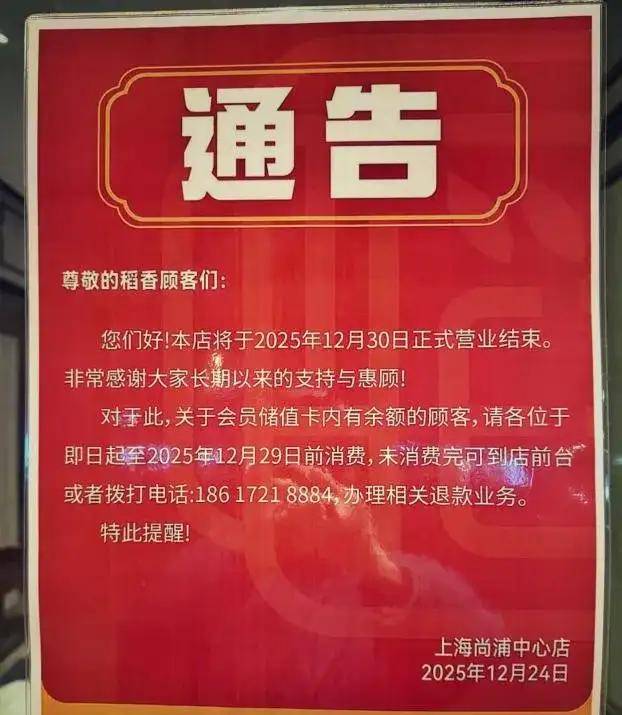
最后一壶港式早茶凉了:稻香退出上海,一线城市场景“清零”
Sou Hu Cai Jing· 2026-01-02 09:49
Core Insights - The departure of the last "Dai Xiang" sign in Shanghai marks the end of an era for Hong Kong-style tea houses in first-tier cities, indicating a significant shift in the dining landscape and consumer preferences [1][32] Group 1: Closure of Dai Xiang - Dai Xiang's closure is part of a prolonged survival crisis, with 11 stores shutting down in just one year across cities like Guangzhou, Huizhou, and Shanghai [3][4] - The closure of key locations in Shanghai, including Jing'an and Tie Shi Men, highlights the brand's retreat from the market [4] Group 2: Collective Retreat of Hong Kong Brands - The exit of Dai Xiang reflects a broader trend of Hong Kong dining brands facing challenges, with major players like "Da Jia Le" and "Tsui Wah" also closing multiple locations in mainland China [6] - "Da Jia Le" has shut down all 11 of its stores in East China, while "Tsui Wah" has closed four stores without opening new ones, indicating a significant contraction in their market presence [6] Group 3: Emergence of Local Brands - As traditional Hong Kong dining establishments withdraw, local brands are rapidly filling the void, with "Xing Hua Lou" expanding its national presence and "Xiao Bing Sheng" gaining popularity through innovative dining experiences [7] - New tea brands like "Luckin" and "Kudi" are also entering the market, offering high-value beverages that attract younger consumers [7] Group 4: Challenges Faced by Traditional Brands - Traditional Hong Kong tea houses are struggling with product quality, relying heavily on pre-made items that have received negative feedback from consumers [9] - Rising operational costs, particularly in rent and labor, are further straining these businesses, with many unable to sustain their operations in high-rent areas like Shanghai [13] - A lack of marketing innovation has led to an aging brand image, causing a disconnect with younger consumers who prefer dining experiences that emphasize social interaction and aesthetic appeal [14][15] Group 5: Underlying Industry Dynamics - Changing consumer demands are driving a shift away from traditional dining models, as younger generations prioritize authenticity, social experiences, and value for money [17][18] - The competitive landscape has evolved, with local brands innovating in product offerings and dining experiences, while traditional brands struggle to adapt [20] - The transition from outdated business models to new ecosystems is evident, with successful brands leveraging digital supply chains and experiential marketing to thrive [22] Group 6: Strategies for Brand Revival - Traditional brands can revitalize by maintaining core competencies while innovating their offerings, as seen with "Quanjude" and "Lian Xiang Lou" [25][27] - Cost control and efficient operations are crucial for improving profitability, with brands encouraged to optimize supply chain management and reduce reliance on pre-made dishes [27][29] - Targeted marketing strategies that resonate with specific consumer segments can help brands differentiate themselves and attract diverse customer bases [29]
2026消费前瞻:为“活人感”买单
虎嗅APP· 2026-01-02 09:36
Core Viewpoint - The consumption market in 2025 cannot be simply categorized as "recovery" or "weakness," as it reflects a transformation in consumer behavior, emphasizing "human feeling" as a core element of consumption [4][24]. Group 1: Eating - A Fine Calculation of Experience - The offline dining industry faces significant challenges, with a decline in foot traffic, as evidenced by a 0.66% decrease in average monthly customer visits in the first eight months of 2025, which worsened to a 4.1% decline after June [6][12]. - To attract customers, many dining brands are resorting to price reductions, with self-service hot pot and street food becoming representative categories of this strategy [7]. - A new approach to finding growth is the "dining + performance" model, which enhances the dining experience through entertainment, creating a compelling reason for customers to visit [8][12]. - Street vending has gained popularity since July 2025, with well-known brands setting up stalls, offering affordable home-style dishes priced between 10 to 30 yuan, thus broadening revenue channels [9][10][12]. Group 2: Drinking - Adding More Sweetness to Life - The new tea beverage market in 2025 is stabilizing, with a market size of 374.93 billion yuan, reflecting a growth rate of 5.7%, down from 6.4% in 2024 [14]. - The total number of tea beverage stores exceeded 415,000, but the net number of new openings was lower than closures, resulting in a decrease of 39,000 stores [14]. - The market is witnessing a shift in consumer preferences towards healthier options, with products like fresh fruit teas gaining popularity [15][17]. - The competition in the new tea beverage sector will increasingly focus on creating perceived value for consumers, as loyalty to specific brands diminishes [17][24]. Group 3: Entertainment - Experience Over Arrival - The cultural tourism market is thriving, with domestic travel reaching 4.998 billion trips in the first three quarters of 2025, a year-on-year increase of 18% [19]. - This surge in travel has stimulated significant consumer spending, with total expenditures reaching 4.85 trillion yuan, up 11.5% from the previous year [19]. - Innovative experiential offerings, such as city walks and interactive theme parks, are emerging to attract tourists, emphasizing engagement and participation [20][21]. Group 4: Summary - The overall consumption market in 2025 is stable, with retail sales expected to exceed 50 trillion yuan, maintaining a contribution rate of around 60% to GDP growth [23]. - Consumers are increasingly selective, rejecting products that lack emotional resonance, indicating a shift from accumulating assets to seeking meaningful experiences [24][25]. - The focus on "human feeling" reflects a collective return to valuing real experiences and immediate feedback in an uncertain economic environment [26].

聚力投资沃土 温馨春城取得新成效
Xin Lang Cai Jing· 2026-01-01 22:55
Core Viewpoint - Kunming is focusing on high-level investment attraction and creating a favorable business environment to drive economic growth during the 14th Five-Year Plan period, with significant increases in project signings and industrial investments [1][2][3]. Group 1: Investment and Project Growth - The number of newly signed projects in Kunming increased by 16.4% year-on-year in the first 11 months of 2025, with the number of projects over 100 million yuan ranking first in the province [1]. - The number of projects over 100 million yuan in Kunming increased from 211 in 2021 to 533 in 2024, with industrial project funding rising from 7.2% in 2021 to 58.5% in 2024 [1]. - The average annual growth rate of projects over 1 billion yuan from 2021 to 2024 was approximately 22.75%, with 56 additional projects in 2024 compared to 2021 [2]. Group 2: Industrial Structure and Investment Quality - The investment structure of primary, secondary, and tertiary industries shifted from 8.3:39.7:52 in 2021 to 5.2:59:35.8 in 2024, indicating a significant change in investment focus [3]. - Industrial investment accounted for 39.5% of total investment in 2024, doubling from 16.2% in 2020, with industrial investment reaching its highest level in 25 years at 26.3% [3]. - The contribution rate of Kunming's industrial output to the province reached 59.4%, an increase of nearly 50 percentage points since 2020 [3]. Group 3: Investment Attraction Mechanisms - Kunming's leadership has actively engaged in investment attraction, with city leaders conducting multiple trips to key regions and countries to promote investment opportunities [4]. - A cross-regional industrial cooperation mechanism was established to enhance collaboration and resource allocation among different districts, leading to the successful landing of several key projects [5]. - The city has implemented a series of policies to improve the quality and efficiency of investment attraction, including a comprehensive management system for the entire project lifecycle [5]. Group 4: Business Environment Improvement - Kunming has made significant strides in improving its business environment, achieving a transition from "good" to "excellent" in national evaluations [7]. - The city has introduced a "clear service" government initiative, ensuring that government services are responsive to business needs, with a high online service availability rate of 97.75% [8]. - The establishment of a "director's consultation" window allows direct engagement with business concerns, addressing 255 issues from 179 companies in 2024 [9]. Group 5: Community and Collaborative Efforts - Kunming has set up 69 business environment observation points and established a supervisory system to enhance community involvement in improving the business climate [10]. - The city has developed a collaborative model involving government, enterprises, and research institutions to optimize the business environment, ensuring that policies reach businesses effectively [10]. - The focus on attracting significant projects and optimizing the business environment aims to support high-quality development and regional economic integration [10].
短剧造富折叠:顶流年入千万,群演时薪不到9元
凤凰网财经· 2026-01-01 12:37
Core Insights - The short drama industry has seen a significant transformation in its ability to create stars, with over 130 short dramas on the Hongguo platform achieving over 1 billion views this year, and several hitting over 20 billion views, indicating a booming market for short dramas and their actors [3][4] - The financial dynamics of the industry have shifted, with top short drama actors earning substantial incomes, with some potentially reaching annual earnings of 10 million yuan, reflecting a new wealth distribution within the entertainment sector [10][11] Group 1: Industry Dynamics - The short drama sector has established a new ecosystem distinct from traditional long dramas, creating opportunities for actors to rise from background roles to leading positions [5][6] - The pay structure for actors varies significantly, with background actors earning around 80-100 yuan per day, while leading roles can command daily rates of 3,000 to 5,000 yuan, showcasing a steep income gradient within the industry [9][10] - The competition for roles is intense, particularly for female actors, with a reported ratio of 400 female to 1 male actor in certain markets, leading to downward pressure on wages [15][16] Group 2: Actor Earnings and Market Trends - Top-tier actors in the short drama industry can earn between 3,000 to 5,000 yuan per day, with some achieving annual incomes exceeding 10 million yuan through a combination of acting fees and brand endorsements [10][11] - The cost of producing short dramas is rising, with actor salaries now accounting for approximately 45% of total production costs, and in some cases, exceeding 50% [12] - The market for short dramas is becoming increasingly saturated, with many aspiring actors facing challenges in securing roles and often having to pay for training or entry fees to production companies [16]

2025年十四大事件
Xin Lang Cai Jing· 2025-12-31 16:02
Core Insights - The year 2025 marks a significant "paradigm shift" in the global business landscape, transitioning from visions of AI, consumption, and geopolitics into practical industrial applications [1][40]. Group 1: AI and Technology Developments - DeepSeek's emergence and Manus's $1 billion sale to Meta signify a pivotal moment in China's AI technology sector, reducing reliance on foreign models and initiating a trend towards open-source large models [2][41]. - The rapid competition in the AI field has led to numerous emerging competitors for DeepSeek, including Doubao, Qianwen, Lingguang, and Antifufu, alongside established players like Baidu and Kimi [4][43]. - AI models have evolved from mere chat tools to autonomous decision-making agents, with companies shifting from "buying models" to "nurturing agents" for task execution [6][45]. Group 2: Economic and Market Trends - The low-altitude economy in China is projected to exceed 1.5 trillion yuan, with cities like Shenzhen and Guangzhou pioneering eVTOL urban routes and drone deliveries becoming standard for logistics giants [8][46]. - The year 2025 is recognized as the year of humanoid robots entering factories, with significant orders surpassing 10,000 units, indicating a shift from experimental technology to industrial-grade products [10][49]. - Global trade dynamics are shifting, with the normalization of tariff battles between the US and Europe against Chinese electric vehicles and solar industries, prompting a "global localization" strategy among Chinese firms [12][51]. - The introduction of solid-state batteries in China, including the first national standards, addresses electric vehicle charging anxieties and strengthens China's position in the global renewable energy value chain [13][52]. Group 3: Consumer Behavior and Cultural Shifts - The establishment of the Hainan Free Trade Port marks a critical step in China's institutional openness, attracting global capital and talent [15][54]. - The rise of the "silver economy" in response to China's aging population is expected to create a trillion-yuan market for elder care products and services [28][67]. - The backlash against high-priced pre-made dishes, highlighted by public figures like Luo Yonghao, reflects a growing consumer demand for transparency and value, signaling the end of the "arrogant brand era" [24][63]. - The decline of the Labubu toy series from a speculative investment to a more accessible product illustrates a shift in consumer sentiment towards value-driven purchases [29][72]. Group 4: Capital and Investment Trends - The focus of global capital is shifting from generic large models to investments in "sovereign AI" infrastructure, with data centers becoming strategic national assets [16][57]. - Starbucks' decision to sell part of its Chinese operations to local investors signifies the end of the era where foreign brands dominated the market solely through globalization [34][73].

2025年十四大事件
首席商业评论· 2025-12-31 13:49
Core Insights - The year 2025 marks a significant paradigm shift in China's and the global business landscape, transitioning from vision to industrial implementation of AI, consumption, and geopolitical changes [3][4]. Group 1: AI and Technology Developments - DeepSeek's emergence in early 2025 signifies a pivotal moment for China's AI technology sector, reducing reliance on foreign models and initiating a trend towards open-source large models [5]. - The rapid competition in the AI field has led to the emergence of numerous competitors, including Doubao, Qianwen, and Lingguang, alongside established players like Baidu and Kimi [7]. - AI has evolved from a simple chat tool to a productivity employee, marking the beginning of an era of automated decision-making [10]. Group 2: Economic and Market Trends - The low-altitude economy is projected to exceed 1.5 trillion yuan in 2025, with cities like Shenzhen and Guangzhou leading the way in eVTOL operations and drone deliveries becoming standard for logistics giants [11]. - The year 2025 is recognized as the year of humanoid robots entering factories, with significant orders surpassing 10,000 units, indicating a shift from experimental technology to industrial applications [14][16]. - Global trade dynamics are shifting, with the normalization of tariff battles between the US and Europe against Chinese electric vehicles and solar industries, prompting a move towards localized global strategies [18][20]. - The introduction of solid-state batteries in China is set to revolutionize the electric vehicle market, addressing energy storage concerns and enhancing safety [21][23]. Group 3: Consumer Behavior and Cultural Shifts - The "silver economy" is emerging as a key driver of domestic demand, with policies targeting the aging population leading to a surge in consumption in this sector [38][40]. - The rise of GLP-1 drugs is reshaping health and lifestyle industries, significantly impacting consumer habits and the broader economic landscape [41]. - The decline of speculative trends in collectible toys, such as Labubu, reflects a shift in consumer sentiment towards value-driven purchases rather than hype [42][44]. - The backlash against high-priced pre-made dishes, highlighted by public figures like Luo Yonghao, indicates a growing demand for transparency and value in branding [35][37]. Group 4: Corporate Strategies and Capital Trends - Starbucks' decision to sell part of its Chinese operations to local investors marks the end of the era where foreign brands dominated solely through globalization, necessitating a more localized approach [45][46]. - The capital landscape is shifting towards investments in sovereign AI infrastructure, with data centers becoming critical national assets [27]. Group 5: Overall Business Landscape - The events of 2025 illustrate a transition to a new business paradigm where technology, market efficiency, consumer sovereignty, and localized capital strategies are paramount [48][49][52][54].

十年一觉新消费:从病痛到醒悟,一个创业者的生命课
新消费智库· 2025-12-31 13:03
Group 1 - The article reflects on the past ten years of the "New Consumption Think Tank," emphasizing that the initial passion for the project has evolved into a deeper understanding of its significance [2][4][5] - The author highlights that surviving without debt is a significant achievement in entrepreneurship, suggesting that longevity and self-sufficiency are more important than grand ambitions [7][8][9] - The narrative critiques the glorification of entrepreneurship, arguing that the journey itself holds more value than the end results, and that true wealth comes from daily experiences [10][14][15] Group 2 - The article posits that happiness is derived from the ability to be present and engaged in daily life, rather than from material wealth [17][18] - It discusses the importance of focusing on personal growth and self-acceptance, rather than seeking external validation or societal approval [25][26][27] - The author emphasizes the need for clarity in direction after reconciling with oneself, shifting focus from acquiring to contributing [29][30] Group 3 - The article mentions health challenges faced by the author, which served as a wake-up call to appreciate the fleeting nature of time and the importance of living meaningfully [31][33][34] - It suggests that true fulfillment comes from internal alignment and the pursuit of personal passions, rather than conforming to external expectations [38][40] - The narrative concludes with a commitment to a future focused on personal values and helping others, rather than chasing conventional success [49][51]


餐饮企业出海:从“开门店”到“打系统战”
Jing Ji Guan Cha Wang· 2025-12-31 04:25
Core Viewpoint - Chinese restaurant chains are accelerating their overseas expansion, but the success of this endeavor heavily relies on the establishment of a suitable digital operation system for international markets [2] Group 1: Digital Operation Challenges - Companies face significant challenges in building a unified POS system, global supply chain data integration, and cross-border team collaboration management as they scale internationally [2] - The complexity of unifying the POS system includes compliance adaptation across regions, hardware and software compatibility, currency and payment integration, dynamic loading of multi-language UIs, and interconnectivity of membership systems [2] - The existing domestic digital operation systems are not directly transferable to overseas markets, necessitating a complete reconstruction of supply chain management, membership management, financial management, and employee management systems [2] Group 2: Supply Chain Management Issues - A recent incident in North America highlighted the inadequacies of the existing supply chain digital management system, which failed to account for local delivery cost variations, leading to delivery fees consuming 30% of revenue in remote areas [3][4] - The company has decided to invest several million yuan to reconstruct its supply chain digital management system, focusing on local demand analysis, multi-language interface adaptation, cross-border compliance reviews, and real-time logistics monitoring [5][6] - The restructuring aims to create a "central warehouse + third-party cooperation" model to reduce logistics costs and develop alternative suppliers to mitigate risks associated with supplier concentration [6] Group 3: Financial Management System Gaps - The absence of a global financial management system has created challenges in providing real-time cash balance and profitability data for overseas operations, hindering decision-making for business expansion [7][8] - Current financial management systems can only aggregate revenue data from three weeks prior, making it difficult to provide timely insights into overseas operations [8] - Many companies have faced issues with payment recognition and reconciliation due to the complexity of local payment channels, leading to inefficiencies in financial management [9] Group 4: Membership Management System Adaptation - Rising customer complaint rates in overseas markets indicate that the domestic membership marketing management system is not effectively adapted to local consumer behaviors [12] - Companies are exploring the need for a global membership marketing management system to address localization issues, data fragmentation, and the reliance on online marketing [13] - The development of such a system must comply with local data privacy regulations, such as the EU's General Data Protection Regulation [13]