
零跑

Search documents
裁员计划逼近 10 万,海外车企集中 “瘦身”
晚点Auto· 2025-05-27 15:44
Core Viewpoint - The global automotive industry is facing significant challenges, including a slowdown in electrification trends, shrinking demand, intensified market competition, and an unstable international trade environment, leading to widespread layoffs among major overseas automotive brands [2][7]. Group 1: Layoff Trends - Major overseas automotive companies have announced layoffs affecting nearly 100,000 employees across key markets such as China, North America, Europe, and Japan [2]. - Volkswagen Group plans to cut approximately 35,000 jobs by 2030, with 7,000 already laid off, aiming to save €1.5 billion annually in labor costs [3][4]. - Other companies like Ford, General Motors, and Nissan are also implementing significant layoffs, with Ford cutting 4,000 jobs in Europe and Nissan planning to lay off 20,000 employees due to weak sales and trade uncertainties [3][5][6]. Group 2: Reasons for Layoffs - The layoffs are primarily driven by the need for cost reduction, increased competition, and the impact of tariffs and trade policies [3][5][6]. - Companies are restructuring to improve efficiency and adapt to changing market conditions, with many citing the need to streamline operations and reduce overhead costs [4][5][6]. Group 3: Comparison with Chinese Brands - In contrast to the layoffs among overseas brands, Chinese automotive companies are experiencing growth, with brands like BYD, Geely, and NIO increasing their workforce [7]. - The expansion of Chinese brands highlights a divergence in market performance, as they continue to capitalize on opportunities while traditional automakers face contraction [7].


加大技术研发投入,推动汽车企业高质量竞争
2 1 Shi Ji Jing Ji Bao Dao· 2025-05-26 17:18
Group 1 - The core viewpoint of the articles highlights the recent decline in A-shares and Hong Kong stocks, particularly in the automotive sector, driven by significant price cuts from major players like BYD and the potential for a price war affecting industry profits [1][2] - BYD's price reduction strategy is aimed at clearing out older inventory lacking new driving assistance features, while the company still maintains a strong market position despite increased competition from other new energy vehicle manufacturers [1][2] - The Chinese automotive market is experiencing a transition characterized by slowing overall growth and increasing penetration of new energy vehicles, which poses challenges such as potential overcapacity and rising inventory levels [2][3] Group 2 - As of April 2025, the inventory of passenger vehicles in China reached a historical high, indicating potential market saturation and increased pressure on sales [3] - The ongoing price war could lead to financial losses for both new energy and traditional fuel vehicle manufacturers, as evidenced by the significant revenue and profit figures of major companies like Toyota [3] - The industry is urged to move away from "involution" competition, which focuses on price wars, and instead prioritize innovation, quality, and service improvements to enhance long-term competitiveness [4]

方正电机:从汽车电驱到机器人关节的产业跃迁
Quan Jing Wang· 2025-05-26 12:02
Core Viewpoint - The company is transforming from a traditional manufacturing entity into a core supplier in the intelligent equipment sector by leveraging technological synergies in the dual waves of the new energy vehicle and robotics industries [1][2]. Group 1: Company Developments - The company has established a dedicated subsidiary in 2023 for the development of robotic joints and motors, with several products already developed and samples sent to clients [1]. - The company has a leading market position in various segments, including micro-special motors and controllers, new energy vehicle drive assemblies, and automotive engine control systems, with a global market share of approximately 75% in multifunctional household sewing machine motors [1][2]. - The company is actively responding to national initiatives to develop "new quality productivity" by expanding into robotic joints and electric aircraft drive systems [2]. Group 2: Financial and R&D Investments - The company's R&D expenses are projected to reach nearly 178 million yuan in 2024, accounting for 7.2% of its revenue [2]. - The company has applied for 33 patents related to humanoid robot joints, with 2 already granted [2]. - The company is expanding its production capacity, with plans for 1.8 million units at its Lishui base and 3 million units at its Deqing base, currently achieving 1 million and 800,000 units of actual production capacity, respectively [2]. Group 3: Strategic Partnerships and Market Position - The company has established partnerships with several leading domestic and international automotive manufacturers, including SAIC-GM Wuling, SAIC Group, and Volkswagen, for its new energy drive motor series [2]. - The company's subsidiary, Shanghai Haineng, is expected to see significant revenue and profit growth in 2024 from its automotive engine control system business, which is a core area in automotive electronics with high technical barriers [3]. - The company aims to leverage its proprietary technology and brand advantages in the engine controller field to tackle challenges related to clean low-carbon energy sources, supporting national "dual carbon" strategies [3].

这届国产AI真的可以!20分钟生成万字报告,附带可视化网页,可直接下载食用
量子位· 2025-05-26 05:27
Core Viewpoint - The article discusses the efficiency and capabilities of the AI tool "Wen Xiaobai," particularly its "Xiao Bai Research Report" feature, which significantly aids in analyzing financial reports and generating comprehensive industry analyses in a short time frame [6][65]. Group 1: AI Tool Features - "Xiao Bai Research Report" is based on a self-developed model that simulates human thinking to generate reports, industry research, and trend analyses through multiple rounds of reasoning and tool utilization [6]. - The tool can produce various types of reports, including industry reports, academic papers, and investment decision analyses, making it suitable for tasks that involve large amounts of data and complex analysis [7][8]. - The report generation process takes about 20 minutes, during which the AI gathers and analyzes relevant data from multiple sources, ensuring a comprehensive output [12][14]. Group 2: Practical Applications - The AI tool has proven effective in interpreting Q1 financial reports, allowing users to receive well-structured reports with visual aids like tables and charts, enhancing clarity and usability [23][65]. - In a recent example, the AI was tasked with creating a buying guide for cameras, demonstrating its ability to conduct market research and provide tailored recommendations based on user needs [40][41]. - The AI's search capabilities are enhanced by its ability to switch between different models and search modes, allowing for efficient retrieval of information from authoritative sources without the clutter of advertisements [46][47]. Group 3: User Experience and Adoption - The article highlights the growing user base of "Wen Xiaobai," with over 6 million users reported in April, indicating its effectiveness and popularity among users [63]. - The AI's ability to assist in various tasks, from financial analysis to personal shopping, showcases its versatility and potential to save time and improve productivity [61][65]. - The article emphasizes the importance of AI tools in redefining efficiency, suggesting that those who effectively utilize such tools can significantly enhance their productivity compared to traditional methods [62].

小米YU7“冲击波”来了,中高端价格带“凡尔登战役”开启
3 6 Ke· 2025-05-25 02:45
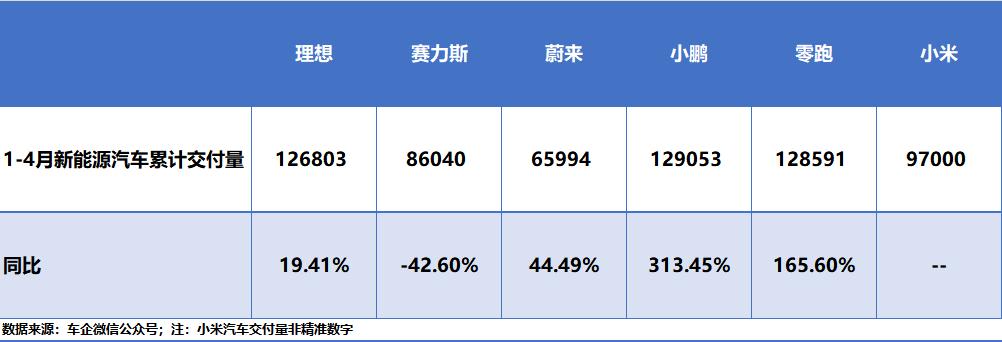
Core Viewpoint - The Chinese electric vehicle (EV) market is undergoing significant changes, with new entrants and established players facing intense competition, particularly in the mid-to-high-end SUV segment, as exemplified by the upcoming launch of the Xiaomi YU7 [1][6]. Group 1: Market Dynamics - In the first four months of 2024, the cumulative delivery of new energy vehicles reached 4.3 million units, marking a year-on-year increase of 46.2% [3]. - The competitive landscape is shifting, with companies like Xiaopeng and Leapmotor gaining traction through cost reduction and scale effects, while traditional leaders like Li Auto and Seres are struggling with stagnant growth [3][5]. - The introduction of multiple new models in July is expected to intensify competition, particularly in the mid-to-high-end SUV market, where Xiaomi YU7 will compete against established models like the Tesla Model Y [6][8]. Group 2: Competitive Strategies - Xiaomi YU7 aims to disrupt the market by offering performance comparable to the Model Y at a slightly lower price, potentially leading to a price war among competitors [6][9]. - Companies are adopting various strategies to maintain market share, such as Li Auto's "more features without price increase" approach and BYD's aggressive pricing strategies [7][10]. - The focus is shifting from "conceptual excitement" to "practical survival," with an emphasis on cost control and safety in the wake of recent incidents affecting consumer trust in smart driving technologies [8][12]. Group 3: Global Expansion - The export of Chinese EVs reached 642,000 units in the first four months of 2024, reflecting a year-on-year growth of 52.6% [16]. - BYD's sales in Europe have surpassed those of Tesla for the first time, indicating a significant shift in the global EV market dynamics [16]. - Chinese automakers are increasingly adopting "reverse joint ventures" to navigate trade barriers and enhance their global presence, focusing on technology licensing and local partnerships [17][19]. Group 4: Future Outlook - The industry is expected to enter a phase where companies must either enhance their technological capabilities or risk being left behind, as the competition becomes more about technical prowess and cost efficiency [14][21]. - The narrative of Chinese EVs is evolving from mere product exports to establishing a comprehensive ecosystem, emphasizing the importance of local R&D and market adaptation [18][20]. - The upcoming launches and strategic moves by companies like Xiaomi and Leapmotor will be critical to watch as they navigate the challenges of both domestic and international markets [21].




从深渊爬出来的小鹏,要杀回高端市场了
3 6 Ke· 2025-05-22 07:32
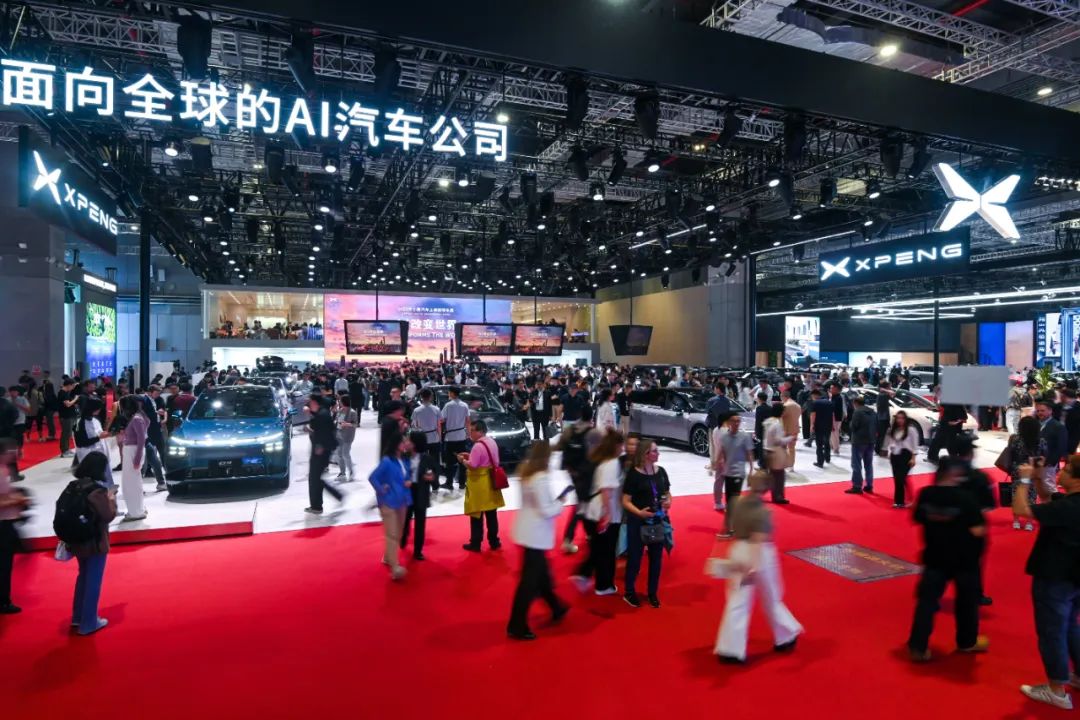
Core Insights - Xiaopeng Motors has reported impressive first-quarter results, driven by strong sales of its popular models, P7+ and MONA M03, which have significantly contributed to the company's revenue growth [1][2][4] - The company aims to re-enter the mid-to-high-end market with upcoming models such as G7 and a new generation of P7, alongside an extended-range vehicle [1][8][11] Financial Performance - Xiaopeng's total revenue for Q1 2025 reached 158.1 billion yuan, marking a year-on-year increase of 141.5% [2] - Automotive sales revenue was 143.71 billion yuan, with a staggering growth rate of 159.2% year-on-year [2] - The automotive gross margin improved to 10.5%, up 5 percentage points from the previous year [2] - The company reported a net loss of 6.6 billion yuan for the quarter, a reduction from 13.3 billion yuan in the previous quarter [7] Sales and Market Position - In Q1 2025, Xiaopeng delivered over 30,000 vehicles each month, nearly doubling the delivery volume compared to the same period last year [2][4] - The MONA M03 achieved an average monthly sales volume of over 15,000 units, while the P7+ maintained around 8,000 units per month [4] - Xiaopeng's sales strategy has shifted to reduce the number of vehicle configurations (SKUs), simplifying the purchasing process for consumers [5] Future Outlook - Xiaopeng plans to launch several new models in the second half of 2025, including the G7 and a new version of the P7, targeting the 20-30 million yuan price range [8][11] - The company anticipates Q2 2025 deliveries to be between 102,000 and 108,000 units, with total revenue projected between 175 billion and 187 billion yuan [7] - Xiaopeng's chairman, He Xiaopeng, expressed confidence in achieving profitability by Q4 2025, following a period of restructuring and strategic adjustments [13][15] Strategic Initiatives - The company is focusing on integrating AI technologies into its products, including AI-assisted driving and smart cockpit features, aiming for breakthroughs in multiple areas [16] - Xiaopeng is also exploring partnerships and technological advancements to enhance its competitive edge in the rapidly evolving automotive market [16]
和谐汽车(3836.HK):聚焦豪华汽车渗透率提升机会,积极拥抱电动化浪潮
Ge Long Hui· 2025-05-22 02:15
Core Viewpoint - The luxury car dealership industry has experienced significant growth over the past two years, driven by price increases and a strong performance in luxury vehicle sales, particularly amidst supply chain disruptions. The penetration rate of luxury cars in China still has substantial room for growth, and leading luxury car dealers are expected to maintain considerable growth moving forward [1][2]. Group 1: Market Opportunities - The luxury car penetration rate in China reached 16% in 2021, compared to approximately 27% in developed countries, indicating significant potential for growth [2]. - The compound annual growth rate (CAGR) for luxury car sales in China is projected to be 6% from 2021 to 2030, supported by a focus on vehicle replacement and upgrades [2]. - The company, Harmony Auto, is positioned as a leading luxury car dealer with a portfolio of 14 brands, including major luxury and super-luxury brands [1][2]. Group 2: Electric Vehicle Strategy - Harmony Auto has proactively engaged in the electric vehicle (EV) market, establishing partnerships with leading EV companies such as Tesla and NIO, and has received service authorizations from brands like Xpeng and Li Auto [3]. - The electric vehicle penetration among luxury brands in China remains low, with Porsche, Volvo, and BMW having electric vehicle ratios of 10.3%, 6.2%, and 6% respectively in 2021, but upcoming models are expected to focus on electric vehicles [3]. - Harmony Auto plans to expand its electric vehicle product line significantly, with BMW expected to offer 25 new energy models by 2023 and to fully utilize a new electric vehicle platform by 2025 [3]. Group 3: Performance and Market Confidence - Despite challenges from the pandemic and economic pressures, the demand for luxury cars remains stable and manageable, with notable growth in super-luxury brands like Ferrari and Rolls-Royce during the first half of the year [4][5]. - The company has initiated a share buyback plan of 200 million HKD, reflecting confidence in its long-term value and addressing current undervaluation [6].
14.9%的毛利率,让零跑触发“第二跳”
Sou Hu Cai Jing· 2025-05-21 06:19
Core Viewpoint - Leapmotor reported a significant increase in revenue and gross margin, indicating a strong operational improvement despite a net loss, positioning the company favorably in the competitive EV market [2][5][19] Financial Performance - Revenue for Q1 2025 reached RMB 100.2 billion, a 187.1% increase from RMB 34.9 billion in Q1 2024 [13] - Gross margin improved to 14.9%, up 13.5 percentage points year-on-year and 1.6 percentage points quarter-on-quarter, reflecting enhanced operational efficiency [5][18] - The company delivered 87,552 vehicles, marking a 162.1% year-on-year increase, which significantly boosted production capacity utilization [13] Market Context - The Chinese EV market is currently experiencing intense price competition, with many brands sacrificing short-term profits for delivery volume [3][19] - In contrast to competitors like Tesla and NIO, which have seen declines in gross margins, Leapmotor's performance stands out as it has maintained a high gross margin amidst market challenges [3][5] Strategic Advantages - Leapmotor's gross margin reflects its strong capabilities in technology accumulation, brand recognition, cost control, supply chain efficiency, and strategic alignment [2][5] - The company has shifted focus from low-price competition to high-value users, with its C-series models accounting for 77.5% of sales, enhancing product structure and market acceptance [11][19] - Leapmotor's commitment to vertical integration and self-research has led to a significant reduction in production costs, with 70% of vehicle costs being self-developed [15][19] Future Outlook - Despite a projected slight decline in gross margin for Q2 2025 due to product transition and promotional activities, the company aims to maintain an annual gross margin target of 10% to 12% and achieve breakeven [18][19] - The successful navigation of current challenges could position Leapmotor as a model for achieving both high growth and high profitability in the EV sector [19]
TrendForce:一季度全球新能源车合计销量达402万辆 同比增长39%
智通财经网· 2025-05-21 05:54
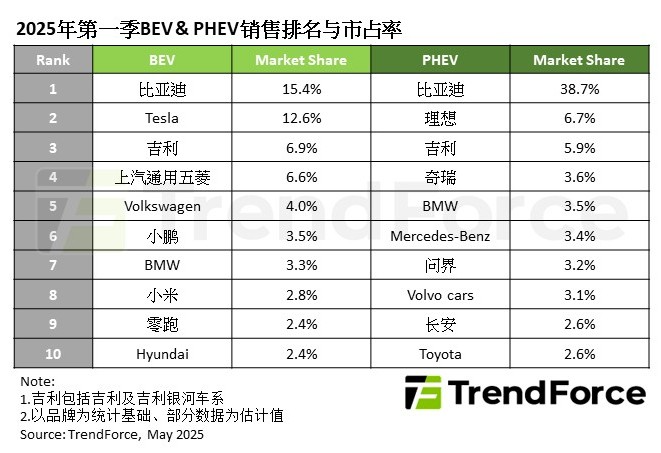
Group 1 - The global sales of new energy vehicles (NEVs), including BEVs, PHEVs, and hydrogen fuel cell vehicles, are projected to reach 4.02 million units in Q1 2025, representing a year-on-year increase of 39%, with NEVs accounting for 18.4% of total global car sales in the same period [1] - The estimated total sales of NEVs for the entire year of 2025 is 19.47 million units, reflecting a year-on-year growth of 19.6% [1] Group 2 - In Q1 2025, the sales of BEVs reached 2.67 million units, marking a year-on-year increase of 45%, with BYD maintaining the top position in sales with a market share of 15.4%, followed by Tesla at 12.6% [3] - Geely's sales saw a significant increase of 443% year-on-year, aided by the launch of new models, while Xiaopeng's sales were largely driven by its affordable model, the Mona M03 [3] - Volkswagen ranked fifth in BEV sales, with a year-on-year growth of 41%, driven by its strategy "In China, For China" to enhance its product offerings in the Chinese market [3] Group 3 - The sales of PHEVs in Q1 2025 totaled 1.35 million units, showing a year-on-year increase of 28%, with BYD leading the market with a share of approximately 38.7% [4] - Geely's PHEV sales benefited from the strong performance of the Galaxy series, achieving a 158% year-on-year increase and securing the third position in the market [4] - Some Chinese brands, such as Aito, experienced a decline in sales, with a 47% drop compared to the same period last year, indicating increased competition in the market [4]
得邦照明:车载开发将通过CNAS实验室认证 关税风险对业务影响可控
Zheng Quan Shi Bao Wang· 2025-05-21 02:51
Core Viewpoint - The company is focusing on both general lighting and automotive lighting as its primary growth drivers, with strategic investments in R&D and production capacity to enhance its market position and address potential tariff impacts from the U.S. [1][2] Group 1: Business Strategy - The company positions general lighting and automotive lighting as its first and second growth curves, respectively, aiming to solidify its leadership in general lighting while developing automotive lighting capabilities [1] - In the automotive sector, the company emphasizes "safety + electrification/intelligence" in its R&D focus, with a complete software and hardware development team [1][2] Group 2: R&D and Product Development - R&D investments in general lighting are concentrated on "intelligence + environmental protection + cost optimization," leveraging synergies between automotive and general lighting businesses [2] - The company has secured over 1 billion RMB in new project designations for automotive lighting in 2024, with additional projects in Q1 2025, covering various product categories [3] Group 3: Tariff Impact and Market Response - The company's U.S. business accounts for approximately 20% of its operations, and it has proactively established production capacity in Vietnam and Indonesia to mitigate tariff risks [2] - The impact of tariffs on the automotive business is limited, as the proportion of products exported to the U.S. is small, and the company is accelerating domestic substitution efforts [2]
