361度

Search documents
全球体育用品品牌2025年二季度跟踪深度报告:专业功能品牌彰显韧性,Nike拐点将至
Shenwan Hongyuan Securities· 2025-09-19 02:41
Investment Rating - The report maintains a "Positive" outlook on global sportswear brands, highlighting resilience in specialized functional brands while noting cautious performance in general sports brands [4][5]. Core Insights - Specialized functional brands like Lululemon and Deckers continue to show growth, while Nike's revenue decline is better than expected. The latest fiscal quarter saw revenue changes for various brands: Deckers +17%, Lululemon +7%, Adidas +2%, Nike -12%, VF -8%, and Puma -8% [5][18]. - The performance guidance from companies is generally cautious, with Nike expected to see a narrowing revenue decline in the next fiscal quarter. Deckers anticipates revenue of $1.38-1.42 billion, Adidas expects high single-digit growth for FY25, Lululemon forecasts a 2-4% increase, and Puma predicts a low double-digit decline for FY25 [5][18]. - Regional sales show pressure in North America and significant declines in Greater China, with Nike's revenue down 21% in that region. Lululemon, however, achieved a 24% increase in Greater China through new store openings and brand awareness efforts [5][19]. Summary by Sections Overview - The report indicates that specialized functional brands are demonstrating resilience, while general sports brands face sales pressure. Nike's revenue decline is better than expected, and inventory levels are stabilizing [5][18]. Nike - Nike's FY25Q4 revenue was $11.1 billion, a 12% year-over-year decline, with a net profit of $210 million, down 85.9%. The company expects a mid-single-digit revenue decline for FY26Q1, with inventory levels showing a slight decrease [28][30]. Adidas - Adidas maintained its full-year performance guidance despite ongoing tariff disruptions, with a revenue increase of 2.2% in the latest quarter [5][18]. Lululemon - Lululemon's revenue growth was 6.5%, but it fell short of expectations, leading to a downward adjustment in its guidance for FY25 [5][18]. Puma - Puma's revenue declined by 8.3%, with significant pressure from discounts and tariffs, prompting a substantial downward revision in its performance guidance [5][18]. VF Corporation - VF Corporation's performance exceeded expectations, with a projected improvement in revenue decline for the next fiscal quarter [5][18]. Deckers - Deckers reported a 16.9% revenue increase, driven by strong performance from its UGG and HOKA brands, with a positive outlook for the upcoming quarters [5][18]. Domestic Sports Brands - Domestic brands like Anta, Li Ning, and Xtep showed resilience with revenue growth of 14%, 3%, and 7% respectively in the first half of 2025, indicating strong domestic demand recovery [19][20].

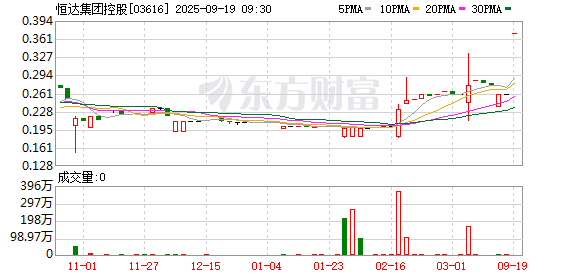
恒达集团控股9月19日复牌
Zheng Quan Shi Bao Wang· 2025-09-19 01:22
Group 1 - Hengda Group Holdings announced that its shares will resume trading on September 19, 2025, at 9:00 AM [2]

体育外卖,究竟能火多久?
3 6 Ke· 2025-09-18 11:16
Core Insights - The core viewpoint of the articles is that sports brands are shifting their focus from merely selling equipment to becoming "sports lifestyle service providers" by entering the instant retail market, which is rapidly growing in China [1][9]. Group 1: Market Trends - Over 1,000 stores of 361 Degrees have launched a "30-minute delivery" service on Meituan, while Anta has over 1,200 stores on Meituan Flash Purchase, and Xtep has over 2,500 stores on JD Instant Delivery [1]. - Instant retail for sports categories has shown significant growth, with running shoes and sports T-shirts seeing over 200% year-on-year sales growth since June, and swimming and cycling gear sales increasing by over 100% [1][2]. - Decathlon's collaboration with Meituan resulted in a nearly 120% month-on-month sales increase [1]. Group 2: Sales Channel Innovations - Sports brands primarily rely on a combination of online and offline sales channels, with a significant number of physical stores, such as Anta with over 13,000 stores globally and Li Ning with 7,534 stores [2]. - The growth of offline stores has slowed, leading brands to explore innovative channel strategies, including instant retail, to tap into new sales growth points [2][3]. Group 3: Operational Efficiency - Instant retail can enhance the efficiency of sports brands' offline resources by converting stores into "front warehouses," reducing delivery times from 1-3 days to around 30 minutes [3]. - This model allows for the circulation of idle inventory, improving space utilization and overall operational efficiency [3]. Group 4: Marketing and Consumer Engagement - Marketing costs are significant for sports brands, with Xtep spending 12.6% of its revenue on marketing, 361 Degrees at 10.1%, Li Ning at 9%, and Anta at 6.6% [4]. - Instant retail platforms are intensifying competition, allowing brands to reach more consumers at lower costs, thus achieving dual benefits of sales and marketing [4]. Group 5: Consumer Behavior and Challenges - Price differences between instant retail and physical stores pose a challenge for sports brands, as consumers may be sensitive to pricing discrepancies [6]. - The potential for high return rates in instant retail, particularly for sports footwear, is a concern, as the lack of fitting opportunities may lead to dissatisfaction [7]. Group 6: Future Outlook - The integration of instant retail into sports brands' strategies is still in its early stages, with a focus on delivery speed and inventory management [9]. - As the relationship between sports brands and instant retail matures, the focus may shift from speed to creating a comprehensive service ecosystem, potentially offering value-added services alongside products [9].
匹克深陷降薪传闻,但许志华仍想坚持“长期主义”
Guan Cha Zhe Wang· 2025-09-18 09:57
Core Viewpoint - The recent salary cuts at Peak, a former leading Chinese sports brand, have drawn significant media attention, highlighting the company's struggles in a competitive market and the challenges it faces in the basketball category [1][2]. Company Performance - Peak's chairman acknowledged salary reductions of up to 50% for high-salary positions and loss-making departments, indicating financial pressure [1]. - The company has not publicly disclosed its operational status since going private in 2016, making it difficult to assess its current performance accurately [1]. - In 2015, Peak's revenue was 3.11 billion yuan, significantly lower than competitors like Anta, Li Ning, and Xtep, which reported revenues exceeding 5 billion yuan [2]. Market Challenges - The disappearance of channel profits has led to intense competition across both online and offline sales channels, with no clear advantages remaining [1][3]. - Peak's CEO admitted that the company is facing substantial pressure due to a downturn in the basketball segment and the overall competitive landscape [1][3]. Strategic Initiatives - Since 2018, Peak has attempted to embrace e-commerce, including live streaming on platforms like Douyin and Tmall [3]. - The company is focusing on enhancing its direct retail management and distribution systems to tap into the potential of first- and second-tier markets [3]. Product Development - Peak has introduced innovative technologies, such as the "Taiji" midsole, which has received positive market feedback and has become a significant product line, surpassing basketball shoes in sales [4][5]. - The company is expanding into various product categories, including outdoor gear, badminton rackets, and sports watches, with the latter achieving significant sales [6]. Long-term Vision - Peak aims to establish a strong foothold through competitive pricing while investing time in technological advancements [8]. - The company is exploring opportunities for international expansion, with overseas revenue consistently accounting for about 20% of total income [6]. Industry Context - The domestic sports brand market has seen substantial growth, with competitors like Anta and Xtep achieving significant revenue milestones [9]. - Despite setting a target of over 10 billion yuan in revenue, Peak has yet to publicly report progress towards this goal, indicating a lack of a clear growth strategy [9]. Philosophical Approach - The CEO emphasizes a "long-termism" and "deep cultivation" strategy, advocating for sustained investment in specific areas to build brand recognition over time [10].
全球产业链供应链质量发展与协作(专题会议二部分嘉宾发言集锦)
Zhong Guo Zhi Liang Xin Wen Wang· 2025-09-18 09:36
Core Viewpoint - The news highlights the importance of quality development and collaboration in global supply chains, emphasizing various regional strategies and initiatives aimed at enhancing quality standards and competitiveness across industries [1]. Group 1: Quality Development Strategies - Fujian's Jinjiang city focuses on quality innovation, leveraging government support to enhance supply chain resilience and competitiveness through a collaborative ecosystem involving chain leaders and enterprises [3][4]. - Shanxi province implements a "Quality Strong Chain" initiative, launching 29 projects to address quality bottlenecks, resulting in a 16.2% year-on-year revenue growth in key industries [4][5]. - Guangdong province integrates quality improvement into its high-quality development agenda, identifying 52 key industrial chains and addressing over 10,500 quality issues [7][8]. Group 2: Innovation and Technology Integration - Jinjiang promotes innovation by developing tailored quality maps and integrating AI and low-carbon initiatives into production processes, enhancing overall quality control [3][4]. - Procter & Gamble emphasizes high standards across its supply chain, utilizing a comprehensive quality assurance system to ensure product safety and stability from raw materials to finished goods [6]. - Companies like Infinite and Dongchao Technology adopt international standards and digital platforms to enhance quality management and traceability throughout the production lifecycle [14][16]. Group 3: Collaborative Ecosystems - Jinjiang fosters a collaborative quality ecosystem by encouraging enterprises to participate in standard-setting and brand creation, enhancing the overall business environment [4]. - Guangdong's initiatives include forming quality technology innovation alliances and integrating resources from the Greater Bay Area to boost competitiveness [8]. - Companies like China Automotive Engineering Research Institute focus on international standardization and collaboration to enhance quality across the automotive supply chain [13]. Group 4: Global Supply Chain Integration - Herbalife's "seed to table" quality management system exemplifies a comprehensive approach to global supply chain efficiency, ensuring high standards across all production stages [10][11]. - Dongchao Technology leverages its core technology to enhance quality control and establish a significant presence in the global supply chain, ensuring compliance with international standards [16][17]. - 361 Degrees promotes Chinese quality management practices internationally, establishing a digital quality monitoring system across multiple countries to enhance cross-border collaboration [18].

山西证券研究早观点-20250917
Shanxi Securities· 2025-09-17 00:45
Market Trends - The domestic textile and apparel export from January to August 2025 saw a 1.6% increase in yarn, fabric, and products, while clothing and accessories experienced a 1.7% decline [3] - Major Taiwanese textile manufacturers reported a general revenue decline in August 2025, with specific companies like Yuanyuan Group and Fengtai Enterprises showing declines of 9.7% and 3.66% respectively [3][4] Company Analysis - **博威合金 (601137.SH)**: In H1 2025, the company achieved a revenue of 10.22 billion yuan, a 15.2% increase year-on-year, with net profit reaching 680 million yuan, up 6.0% [7] - **蜜雪集团 (02097.HK)**: The company is projected to have EPS of 1.82, 1.94, and 2.38 for 2025-2027, with corresponding PE ratios of 13.5, 12.7, and 10.3, indicating a "Buy-A" rating [10][11] - **汉得信息 (300170.SZ)**: The company reported a revenue of 15.75 billion yuan in H1 2025, a 3.54% increase, with net profit slightly up by 1.90% [21][23] Industry Insights - The textile manufacturing sector is experiencing cautious order placements due to tariff disturbances, with companies like Shenzhou International and Kairun Co. showing strong performance certainty for the year [4][5] - The REITs market in China is expanding, with 68 listed REITs and a total market value of 205.5 billion yuan as of H1 2025, indicating significant growth potential [14][16] Investment Recommendations - For the apparel sector, brands like 361 Degrees and Anta Sports are recommended due to their strong online growth and effective cost management [4][5] - In the textile manufacturing sector, companies such as Shenzhou International and Kairun Co. are highlighted for their stable performance and low valuations [5] - In the gold and jewelry retail sector, companies like Laopuyin and Chaohongji are recommended due to the rising gold prices and upcoming consumption peaks [5]
纺织服装2025中报总结暨三季报前瞻品牌趋势企稳,制造订单预期改善
Guoxin Securities· 2025-09-16 15:02
Investment Rating - The investment rating for the textile and apparel industry is "Outperform the Market" [2] Core Insights - The textile manufacturing sector shows growth while the apparel and home textile sectors face performance pressure. In the first half of 2025, textile manufacturing and apparel/home textile revenues grew by 7.8% and declined by 6.4% year-on-year, respectively. The gross margin for textile manufacturing remained stable at 19.4%, with a net margin increase of 2.2% to 8.5%. In contrast, the apparel/home textile sector saw a slight gross margin increase of 0.1% to 46.1%, but a net margin decline of 1.1% to 8.5% [3][12][15] Summary by Sections 1. Sector Summary: Textile Manufacturing Growth, Apparel/Home Textile Performance Pressure - In the first half of 2025, textile manufacturing revenue increased by 7.8% while apparel/home textile revenue decreased by 6.4%. The gross margin for textile manufacturing was 19.4%, and the net margin improved to 8.5%. The apparel/home textile sector's gross margin was 46.1%, with a net margin of 8.5% [3][12][15] 2. Sports Apparel: Industry Maintains Growth, Brand Differentiation - Sports brands continued to see revenue growth around 10%, while non-sports apparel brands mostly experienced revenue declines. The online channel outperformed offline, with some brands maintaining growth in direct sales [3][5] 3. Casual Home Textiles: Demand Under Pressure, Online Channels and New Business Models Leading Growth - The casual home textile sector continues to face demand pressure, but online channels and new business models are driving some growth [3][5] 4. Contract Manufacturing: Revenue Steady Amid Tariff Policy Impact, Profitability Stable - The textile manufacturing sector maintained steady revenue growth despite tariff policy disruptions. Major contract manufacturers like Huayi and Shenzhou reported full orders, with revenue growth exceeding 10% [3][5][20] 5. Textile Materials: Tariff Policy Affects Client Order Caution, Profitability Varies - The textile materials sector is experiencing varied profitability due to cautious ordering from clients influenced by tariff policies [3][5] 6. Q3 Report Outlook: Brand Trends Stabilizing, Manufacturing Order and Shipment Improvement - The apparel/home textile sector is expected to see improved revenue growth in Q3 compared to Q2, while the textile manufacturing sector anticipates better order and shipment performance following tariff policy stabilization [3][5] 7. Investment Recommendations - Focus on fundamentally sound, undervalued leaders in the market. For sports apparel, brands like Anta Sports, Xtep International, Li Ning, and 361 Degrees are recommended. In textile manufacturing, companies like Shenzhou International and Huayi Group are highlighted for their resilience and potential for profit improvement [5][6]



纺织制造台企公布2025年8月营收数据,8月营收普遍下滑
Shanxi Securities· 2025-09-16 09:11
Investment Rating - The report maintains an investment rating of "Synchronize with the market - A" for the textile and apparel industry [1]. Core Insights - The textile and apparel industry has shown mixed performance in recent months, with a slight increase in textile exports but a decline in clothing exports. Specifically, from January to August 2025, China's textile yarn, fabric, and products exports increased by 1.6%, while clothing and accessories exports decreased by 1.7% [2][18]. - Major Taiwanese textile manufacturers reported a decline in revenue for August 2025, with significant year-on-year decreases for companies like Yuanyuan Group and Laiyixing, while some companies like Laiyixing still showed growth in the first eight months of the year [19][20]. Summary by Sections 1. Recent Observations - Taiwanese textile manufacturers reported a general decline in revenue for August 2025, with Yuanyuan Group's revenue down by 9.7% year-on-year, and Laiyixing down by 23.11% [19][20]. 2. Market Performance - The SW textile and apparel sector rose by 0.67% this week, lagging behind the SW light industry sector, which increased by 1.88% [20][21]. - The PE-TTM for SW textile manufacturing is 22.05 times, while for SW apparel and home textiles, it is 30.57 times, indicating varying levels of valuation across sub-sectors [24]. 3. Industry Data Tracking - From January to August 2025, China's textile and apparel exports totaled $945.13 billion and $1,027.61 billion, respectively, with a slight increase in textile exports and a decrease in clothing exports [48]. - The domestic retail sales in July 2025 reached 3.88 trillion yuan, showing a year-on-year growth of 3.7% [55]. 4. Industry News - Stone Island opened a new flagship store in Hangzhou, showcasing its commitment to innovation and sustainability [67][68]. - Jiangnan Buyi Group reported a 4.6% increase in revenue for the fiscal year ending June 30, 2025, driven by online sales growth and an expansion of its offline store network [70][71].
山西证券研究早观点-20250916
Shanxi Securities· 2025-09-16 00:43
Market Overview - In August 2025, the domestic retail sales (社零) totaled 3.97 trillion yuan, with a year-on-year growth of 3.4%, slightly below market expectations of 3.82% [6][5] - For the first eight months of 2025, total retail sales reached 32.39 trillion yuan, reflecting a year-on-year increase of 4.6% [6] - The consumer confidence index in July 2025 was reported at 89.0, showing a month-on-month increase of 1.1 [6] Retail Sector Insights - Online retail channels continued to outperform the overall retail market, with physical stores like convenience stores and supermarkets showing stable performance [6] - In August 2025, the year-on-year growth for cosmetics was 5.1%, while gold and silver jewelry saw a significant increase of 16.8% [6] - The sports and entertainment goods sector maintained rapid growth, with a year-on-year increase of 16.9% in August [6] Textile and Apparel Sector - The textile and apparel retail sales in August 2025 showed marginal improvement, with a cumulative year-on-year growth of 2.9% for the first eight months [7] - The sports apparel segment experienced a robust growth rate of 20.6% year-on-year for the same period [7] - Major brands like 361 Degrees reported double-digit growth, while other brands like Li Ning and Anta showed low to mid-single-digit growth [7] Coal Industry Analysis - In August 2025, coal supply showed a marginal decrease, with cumulative production of 3.165 billion tons for the first eight months, reflecting a year-on-year increase of 2.8% [10] - The demand for coal was supported by manufacturing and infrastructure investments, with fixed asset investment growing by 0.5% [10] - Coal prices experienced an unexpected rebound in August, driven by supply-demand tensions, with significant increases in both coking coal and thermal coal prices [11] Investment Recommendations - For the textile manufacturing sector, companies like Shenzhou International and Kairun Co. are recommended due to their strong performance outlook [9] - In the gold and jewelry retail sector, companies such as Laopuyin and Chaohongji are recommended, with expectations of sustained demand due to rising gold prices [9] - The coal sector suggests focusing on companies like Huayang Co. and Jinkong Coal Industry, anticipating improvements in production and sales ratios in the upcoming quarters [11]
纺织服装社零数据点评:8月国内社零同比增长3.4%,黄金珠宝单月增速环比显著提升
Shanxi Securities· 2025-09-15 10:24
Investment Rating - The report maintains an investment rating of "Synchronize with the market" for the textile and apparel industry [2][27]. Core Insights - In August 2025, domestic retail sales (社零) grew by 3.4% year-on-year, slightly below market expectations, with a total retail sales amounting to 3.97 trillion yuan [5][6]. - The retail sales growth for the textile and apparel sector in the first eight months of 2025 was 2.9%, with a notable increase in sports and entertainment products, which saw a growth of 20.6% [8][10]. - The online retail channel continues to outperform the overall retail market, with a year-on-year growth of 6.4% in physical goods online sales [6][10]. Summary by Sections Retail Performance - In August 2025, the year-on-year growth rates for dining and goods retail were 2.1% and 3.6%, respectively [5]. - The consumer confidence index in July 2025 was 89.0, reflecting a 1.1 point increase [5]. Channel Analysis - Online channels showed a year-on-year growth of 6.4% in physical goods, while offline channels like convenience stores and supermarkets demonstrated stable performance [6]. - For the first eight months of 2025, retail sales in convenience stores, supermarkets, department stores, specialty stores, and brand stores grew by 6.6%, 4.9%, 1.2%, 5.2%, and 1.7%, respectively [6]. Sector-Specific Insights - The jewelry sector saw a significant year-on-year growth of 16.8% in August 2025, with gold prices reaching an average of 775.92 yuan per gram, up 36.7% year-on-year [7][11]. - The textile and apparel sector's year-on-year growth was 3.1% in August 2025, with a marginal improvement compared to previous months [7][10]. Investment Recommendations - The report recommends focusing on brands like 361 Degrees, with a noted increase in revenue growth among major sports brands [8][10]. - For the textile manufacturing sector, it suggests tracking the recovery of Nike, which could positively impact overall sector valuations [10].