米哈游

Search documents
机构称2025年前三季度中国游戏市场展现出较好韧性,聚焦游戏ETF(159869)低位布局窗口
Mei Ri Jing Ji Xin Wen· 2025-12-09 06:21
Group 1 - The A-share market showed mixed performance on December 9, with the Shanghai Composite Index slightly down by 0.1% and the ChiNext Index rising over 1% [1] - The gaming sector experienced a pullback during the midday session, with the gaming ETF (159869) showing a slight decline. However, it attracted significant capital, accumulating 230 million yuan over the past five trading days, reaching a total scale of 11.47 billion yuan as of December 5 [1] - The mobile game "Goose Duck" announced its public beta in China, scheduled for January 7, 2026, aiming to enhance the gaming experience with local adaptations and server improvements [1] Group 2 - According to Huatai Securities, the Chinese gaming market demonstrated resilience in the first three quarters of 2025, with total revenue reaching 256 billion yuan, a year-on-year increase of 7.11% [2] - There is a noticeable performance disparity among A-share gaming companies, with leading firms achieving significant revenue and net profit growth through blockbuster new games [2] - The gaming sector is expected to see a dual trend of "stronger getting stronger" and "niche breakthroughs," with major players like Tencent, NetEase, and miHoYo focusing on high-value segments such as open-world, shooting, and simulation games [2]
2025全球鲁商百富榜发布:首次关注全球知名鲁商 300企业家身家超两万亿
Sou Hu Cai Jing· 2025-12-09 05:09
Core Insights - The 2025 Global Shandong Business Billionaires List was released, featuring 300 Shandong entrepreneurs with a total wealth valuation of 2.05 trillion yuan, an average wealth of 6.834 billion yuan, and a minimum threshold of 345 million yuan to be included on the list [1][3]. Group 1: Top Billionaires - The richest individual on the list is Zhang Bo from Weiqiao Venture, with a wealth valuation of 77.53 billion yuan [3]. - Cai Haoyu, co-founder of Mihayou, ranks second with a wealth of 73.8 billion yuan, having created popular games like "Honkai Impact" and "Genshin Impact" [5]. - Other notable billionaires in the top ten include the Niu Yishun family from Huqin Group, Wang Weixiu family from Zhongji Xuchuang, and Zhang Gang from Xinfeng Group, all with wealth exceeding 40 billion yuan [7]. Group 2: Wealth Distribution - There are 51 entrepreneurs with wealth exceeding 10 billion yuan, collectively generating 790.944 billion yuan, accounting for 38.58% of the total wealth created by the listed entrepreneurs [7]. - The list includes 40 individuals with wealth between 5 billion and 10 billion yuan, and 144 individuals with wealth between 1 billion and 5 billion yuan [7]. Group 3: Geographic and Demographic Insights - Among the listed entrepreneurs, 56 have their core enterprises headquartered outside Shandong, collectively creating approximately 328.987 billion yuan in wealth [7]. - The oldest entrepreneur is Li Guangtai, aged 84, while the youngest are three individuals born in the 1990s, all aged 35 [8]. - Entrepreneurs aged 60 to 69 represent the largest age group, comprising 35% of the total [8]. Group 4: Industry Representation - A significant majority, 231 entrepreneurs, are engaged in the manufacturing sector, making up 77% of the group [8]. - Key industries include basic chemicals, machinery, pharmaceuticals, information technology, petroleum, and food and beverage, contributing over 60% of the total number of entrepreneurs on the list [8]. Group 5: Global Expansion - Increasingly, Chinese enterprises are expanding internationally, with North America and the Guangdong-Hong Kong-Macau Greater Bay Area becoming crucial hubs for Shandong entrepreneurs [9].

数智赋能文化产业新征程 中国文化产业投资年会在深圳举办
Nan Fang Du Shi Bao· 2025-12-09 03:04
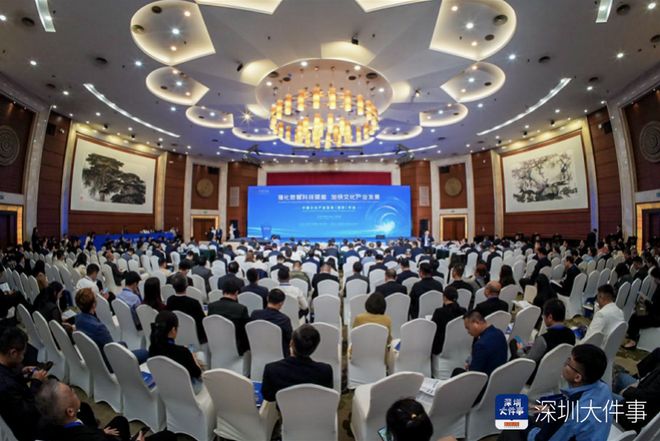
Group 1 - The annual conference on cultural industry investment in Shenzhen focuses on the theme of "empowering cultural industry development through digital technology" and aims to create a high-end platform for policy, capital, projects, and technology integration [1] - The cultural industry in China is projected to achieve a revenue of over 19 trillion yuan by 2024, marking a 37% increase from 2020, with new cultural business models generating 5.9 trillion yuan, a 90% growth [3] - Key players in the cultural industry, such as ByteDance and Tencent, are driving significant growth in sectors like short videos and gaming, reshaping content dissemination and consumer behavior [3][4] Group 2 - The conference highlighted the successful signing of 9 sub-funds totaling 33 billion yuan, with a total of 565 billion yuan in cooperative fund scale, indicating effective resource aggregation and strategic planning [5] - New cultural enterprises, supported by technology, are emerging as the backbone of the industry, with Tencent's cultural sector exceeding 300 billion yuan and ByteDance reaching 1 billion overseas users [4] - The event facilitated discussions on key topics such as the deep application of digital technology, innovation in cultural tourism integration, and the global expansion of culture, aiming to accelerate the industry's embrace of the digital era [5]



2025中国文化产业投资(深圳)年会举行
Shen Zhen Shang Bao· 2025-12-08 17:16
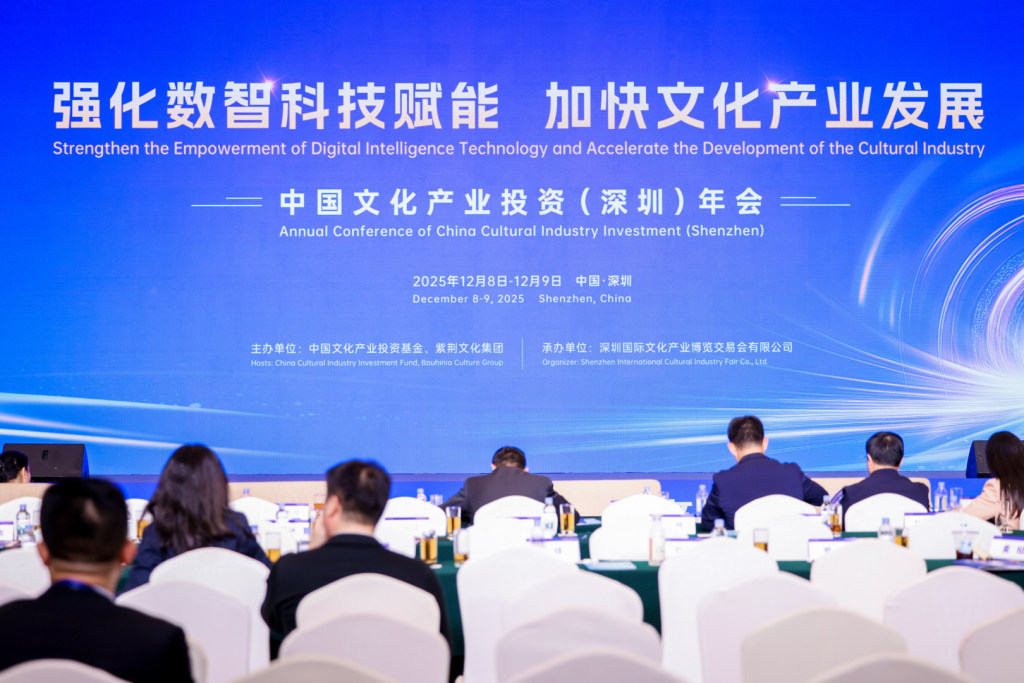
【深圳商报讯】(首席记者魏沛娜)12月8日,以"强化数智科技赋能,加快文化产业发展"为主题的2025 中国文化产业投资(深圳)年会在深圳举行。 科技赋能推动文化产业形态重构,一批新型文化企业强势崛起,有效拓展了文化产业的概念范畴。在权 威发布环节,清科集团、清华大学五道口金融学院、界面智通财经分别发布相关名单与行业报告,系统 回顾"十四五"发展成效、前瞻"十五五"发展趋势,为文化产业投资发展提供重要数据支撑与趋势指引。 诸多过去未被纳入文化产业范畴的企业,如今已成为新型文化产业的中坚力量,字节跳动、腾讯、中国 移动(600941)、上海报业、芒果TV、小红书、米哈游等企业均在此列。 中文投扎实的签约成果与清晰的发展规划成为会议焦点。会议期间,中文投签约合作再攀新高,共签约 9只子基金,总规模330亿元,中文投合计认缴出资60.7亿元;启动8只合作基金,总规模235亿元,中文 投拟认缴出资67亿元;共推动合作子基金总规模达565亿元,中文投拟出资规模合计127.7亿元,实现产 业资源的高效聚合与精准对接,在既有发展基础上实现新跨越。 本次年会由中国文化产业投资基金(简称"中文投")与紫荆文化集团联合主办,深圳国 ...
中文投年会深圳召开:数智科技赋能下,文化产业发展如何提速
Xin Lang Cai Jing· 2025-12-08 15:40
Core Insights - The article discusses the transformative impact of technology on the cultural industry, emphasizing the integration of digital intelligence and cultural development as a key to national strength [3][10]. Group 1: Event Overview - The China Cultural Industry Investment (Shenzhen) Annual Conference was held on December 8, focusing on "Strengthening Digital Intelligence Empowerment and Accelerating Cultural Industry Development" [3]. - The conference featured the release of the "2025 Influential New Cultural Enterprises" list, which included companies like ByteDance, Tencent, and MiHoYo [3][10]. Group 2: Industry Trends - The cultural industry is at a crossroads, with technology and culture increasingly intertwined, necessitating a shift from cultural soft power to industrial hard power [3]. - Companies are encouraged to leverage AI and technology to drive both technological breakthroughs and business transformations [5]. Group 3: Case Study - Shanghai Media Group - Shanghai Media Group has initiated a systemic transformation, optimizing its structure to adapt to the digital age, achieving a "three-in-one" model for its major publications [6]. - The group reported over 11 million active users for its financial media platform, demonstrating its competitive edge in the market [6]. Group 4: Investment Strategies - The article highlights the importance of cultural investment that focuses on technology-driven opportunities while showcasing the cultural value of technology [9]. - The China Cultural Industry Investment Fund has signed agreements for nine sub-funds with a total scale of 33 billion yuan, aiming to enhance collaboration with local governments and cultural units [16]. Group 5: Future Outlook - The emergence of new cultural enterprises is expected to reshape the industry, with technology becoming a core asset alongside cultural creativity [12]. - The article suggests that the cultural industry is entering a golden development period, driven by renewed investment interest and the activation of social capital [16].
一场游戏圈赛博围猎后,没有人是赢家
3 6 Ke· 2025-12-08 11:32
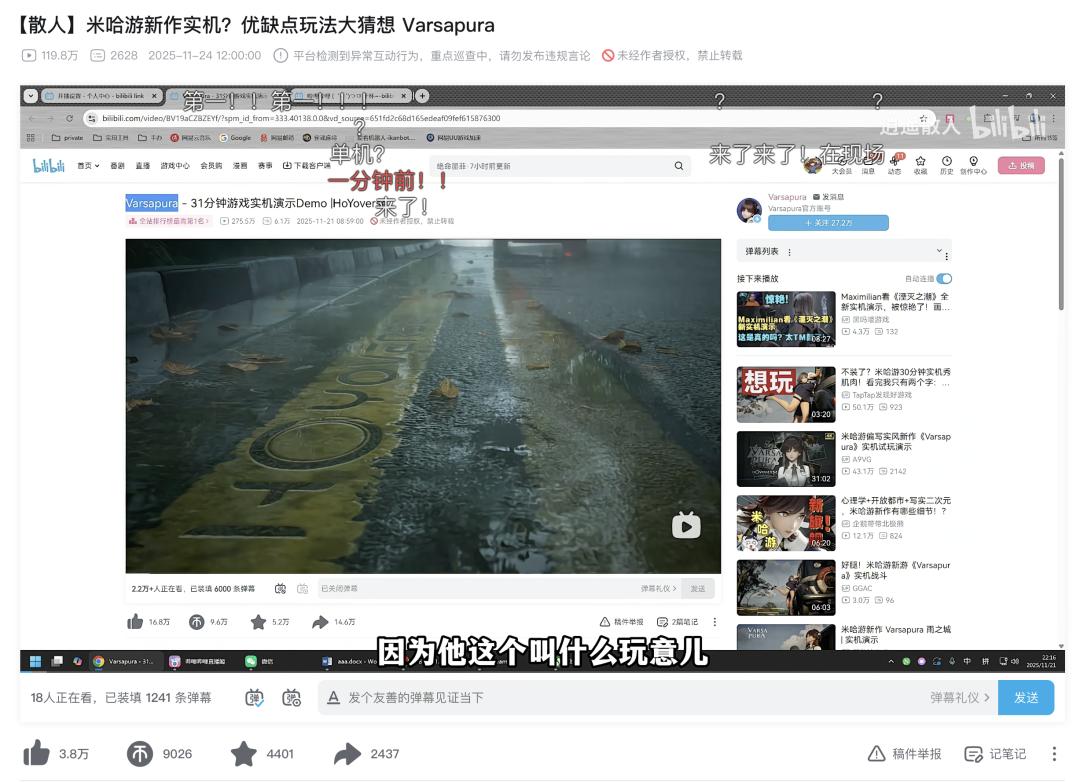
Group 1 - The article discusses a recent controversy in the gaming industry involving miHoYo's new game "Varsapura" and the backlash against a character named "Dahlia" from "Honkai: Star Rail," which some players believe exploits a historical murder case [5][8][22] - The controversy escalated when a prominent Bilibili content creator, known as "Xiaoyao Sanren," faced criticism for his video on the game, leading to accusations of indirectly supporting miHoYo during a sensitive time [8][15] - Players expressed their dissatisfaction with miHoYo's silence on the issue, which intensified the backlash, resulting in some content creators severing ties with the company [11][13][21] Group 2 - The backlash against miHoYo and Xiaoyao Sanren reflects a broader trend in the gaming community where issues of political correctness and gender representation are increasingly scrutinized [22][36] - The article highlights that this controversy is not isolated, as miHoYo has faced similar issues in the past, but the current situation is marked by a more severe focus on political correctness [22][31] - The gaming community is becoming more polarized, with players prioritizing identity politics over the enjoyment of the games themselves, leading to a fragmented environment [39][41]
Soul港股IPO:“灵魂社交”缘何成了“杀猪盘”和“消费陷阱”的温床?AI伴侣能挽回用户的心吗?
Xin Lang Cai Jing· 2025-12-08 06:22
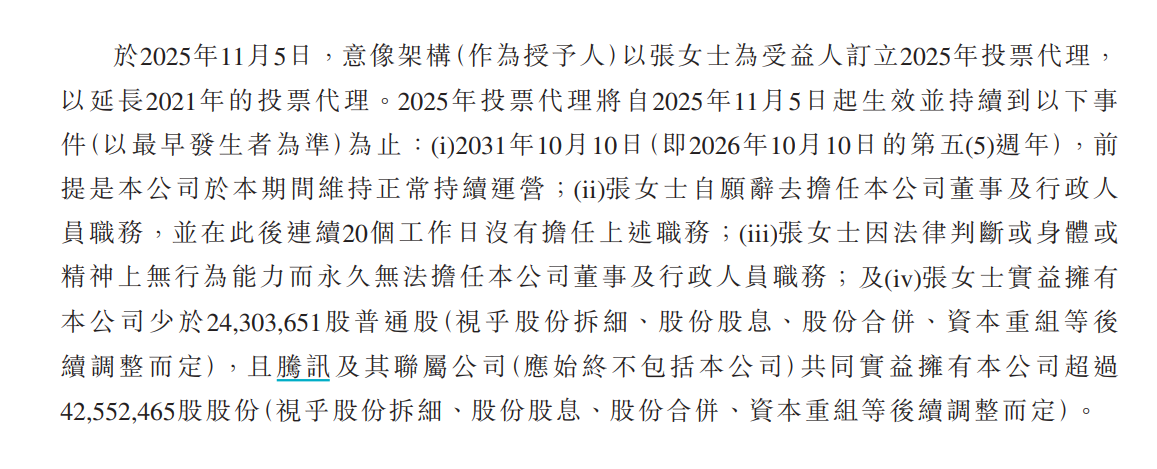
Core Viewpoint - Soulgate Inc. has submitted its third IPO application to the Hong Kong Stock Exchange after two previous failures, accumulating over 12.4 billion yuan in redemption liabilities, which could lead to financial instability if the IPO does not succeed [1][24]. Group 1: Company Overview - Founded in 2015 in Shanghai, Soul is a social app aimed at alleviating loneliness among young people by allowing users to create virtual identities [2][25]. - The company has completed seven rounds of financing from 2017 to 2021, raising approximately $402 million, with major investors including Tencent and MiHoYo [2][25]. - Tencent is the largest shareholder with a 49.90% stake, but only holds 28.50% of the voting rights, while the founder Zhang Lu controls about 49.90% of the voting rights through a special voting rights agreement [2][26]. Group 2: Financial Performance - Soul's revenue for the reporting periods was 16.67 billion yuan, 18.46 billion yuan, 22.11 billion yuan, and 16.83 billion yuan, with net profits of -21.89 million yuan, 361 million yuan, 337 million yuan, and 286 million yuan, respectively [8][31]. - The gross profit margin has consistently remained above 80%, with figures of 86.30%, 85.50%, 83.70%, and 81.50% [8][31]. - The company has reduced its sales and marketing expenses significantly, which were 8.44 billion yuan, 7.52 billion yuan, 8.89 billion yuan, and 6.45 billion yuan, representing a decreasing percentage of revenue [10][33]. Group 3: User Engagement and Risks - Monthly active users have declined from a peak of 31.6 million in 2021 to 26.2 million in 2024, indicating a slowdown in user growth [10][33]. - The platform's anonymity has led to issues with soft pornography and safety risks, making it a hotspot for scams, particularly "pig-butchering" schemes [12][35]. - Complaints against Soul have surged, with over 6,000 complaints reported on various platforms, raising concerns about business compliance and user trust [19][21][42]. Group 4: Regulatory and Compliance Challenges - Soul has faced scrutiny from regulatory bodies due to the prevalence of scams on its platform, prompting the company to implement stricter content review processes [12][36]. - Despite efforts to enhance risk management through AI models, incidents of fraud continue to occur, highlighting ongoing vulnerabilities in the platform [39][40]. - The introduction of AI virtual companions has sparked controversy, with users questioning the authenticity of interactions and alleging manipulative practices to induce spending [22][46].
年入22亿,Z世代的社交神器要IPO了
首席商业评论· 2025-12-08 05:01
Core Insights - Soul, a social platform targeting Gen Z, has submitted its IPO application to the Hong Kong Stock Exchange for the fourth time, with 2024 revenue projected to exceed 2.2 billion yuan and 78.7% of users being from the Z generation [4][19]. Company Background - Founded by Zhang Lu, Soul was created to address the lack of platforms for genuine emotional expression, distinguishing itself from existing photo-centric social apps [5][7]. - The platform's unique features include anonymous interactions and a focus on "soul communication," which quickly attracted users feeling constrained by traditional social media [7][9]. Financial Performance - Soul initially adopted a "burn money for growth" strategy, with marketing expenses reaching 289.1%, 124.9%, and 118% of total revenue from 2019 to 2021, leading to a revenue increase from 70.7 million yuan in 2019 to 1.28 billion yuan in 2021 [9][10]. - In 2023, Soul shifted its strategy to focus on existing user value, achieving an adjusted net profit of 361 million yuan, with projected profits of 337 million yuan in 2024 and 286 million yuan in the first eight months of 2025 [9][12]. Revenue Model - The primary revenue source for Soul is "emotional value services," which account for approximately 90% of total revenue, including virtual gifts and membership privileges [9][10]. - The average monthly spending per paying user increased from 75.3 yuan in 2022 to 104.4 yuan by August 2025 [12]. IPO Journey - Soul's IPO attempts began in 2021 with a plan to list on NASDAQ, but faced setbacks due to regulatory pressures and legal issues, leading to a shift towards the Hong Kong market [14][17]. - After multiple failed attempts, the company is now better positioned for its fourth IPO attempt, having achieved profitability and developed a clearer AI strategy [17][19]. Challenges Ahead - Soul's revenue structure is heavily reliant on a single business model, with 90.8% of revenue coming from emotional value services, making it vulnerable to fluctuations in user spending [19]. - User growth has plateaued, with monthly active users declining from a peak of 29.4 million in 2022 to 28 million by August 2025 [19]. - The platform faces governance challenges, including issues related to scams and content moderation, as well as potential debt risks from financial obligations totaling between 11 billion to 12.4 billion yuan [19][21].

Sensor Tower:11月共33个中国厂商入围全球手游发行商收入榜TOP100 合计吸金19.5亿美元
智通财经网· 2025-12-08 03:54
Core Insights - In November 2025, 33 Chinese companies made it to the global mobile game publisher revenue TOP 100, collectively generating $1.95 billion, accounting for 35.8% of the total revenue of the top 100 publishers [1] - Tencent maintained its position as the top global mobile game publisher, driven by strong performance from its flagship titles [1] - The mobile game market is witnessing significant revenue growth, with several companies reporting substantial increases in income due to new game releases and innovative gameplay [4][5] Group 1: Tencent's Performance - Tencent's "Delta Force" new season "Asala" launched on November 13, achieving a record high daily revenue, with a month-over-month increase of 12%, nearing $80 million in global mobile revenue [1] - "Delta Force" has become one of Tencent's highest-grossing mobile games, second only to "Honor of Kings" [1] Group 2: Point Point Interactive's Growth - Point Point Interactive ranked second among global mobile game publishers, with its flagship SLG "Whiteout Survival" contributing 54% of its revenue in November, totaling over $3.8 billion [2] - The new title "Kingshot" also performed well, accounting for 36% of revenue, while the casual merge game "Tasty Travels: Merge Game" saw a 10% revenue increase, ranking fourth in the global merge game revenue chart [2] Group 3: Lemon Microfun's Success - Lemon Microfun ranked third in publisher revenue, with three titles in the top ten of the global merge game revenue chart [3] - "Gossip Harbor" saw a 211% year-over-year revenue increase, while "Seaside Escape" maintained a strong position in the market [3] - The new title "Flambé: Merge & Cook" achieved a 20% revenue increase in November, further solidifying Lemon Microfun's dominance in the merge game sector [3] Group 4: Ice Age Network's Breakthrough - Ice Age Network's new game "X-Clash" experienced a 200% month-over-month revenue surge, contributing 45% to the publisher's total revenue [4] - The company returned to the revenue ranking at 26th place, showcasing its strength in gameplay innovation and overseas expansion [4] Group 5: Other Notable Performers - BeHeFun Games debuted at 30th place in the revenue ranking with "Top Tycoon: Coin Theme Empire," which saw a 30% revenue increase in November, nearing $30 million in total revenue [4] - Other Chinese mobile game publishers in the global TOP 100 include Xindong Network and Chaoxi Guangnian, among 32 companies [4] Group 6: Chinese App Store Rankings - Tencent's "Honor of Kings" and "Delta Force" topped the Chinese App Store revenue chart [5] - "Delta Force" experienced a 38% revenue increase following the launch of a new limited-time gameplay feature [5] - miHoYo's "Honkai: Star Rail" saw a 460% revenue surge in November, returning to the top 8 in the iOS market [5][6]
阿里系 App 禁止豆包手机登录;库克被曝出现“不明原因手部颤抖”;众擎T800人形机器人一脚踹倒自家CEO | AI周报
AI前线· 2025-12-07 05:33
Group 1 - Doubao mobile assistant faces login restrictions from Alibaba apps, including Taobao and Xianyu, due to security measures [3][4] - Doubao assistant claims it does not bypass authentication for sensitive operations and plans to adjust AI capabilities in certain scenarios [4][5] - The initial release of Doubao mobile assistant sold out quickly, with second-hand prices significantly higher than the official price, indicating strong market interest [5] Group 2 - The T800 humanoid robot from Zhongqing Robotics gained attention after a video showed it kicking the CEO, highlighting the robot's capabilities [6][9] - T800 is priced starting at 180,000 yuan and features advanced joint modules and sensory technology for various tasks [9] Group 3 - Jiuyue Automotive is undergoing bankruptcy restructuring, with plans to introduce new investors while Baidu seeks to exit its investment [10][11] - The restructuring faces challenges due to significant debt, estimated at 7 billion yuan, with major stakeholders like Geely and Baidu involved [11] Group 4 - Apple CEO Tim Cook reportedly experiences hand tremors, raising concerns among employees amid significant executive turnover at the company [12][13] Group 5 - New Oriental employee expresses dissatisfaction with the company's overtime culture, leading to internal repercussions [14][15] - The employee's complaints highlight issues with work-life balance and management practices within the company [14][15] Group 6 - Canon's Zhongshan factory announced generous severance packages for laid-off employees, with compensation reaching up to 400,000 yuan [16] - The factory's closure is part of a broader trend of production capacity shifting to Southeast Asia [16] Group 7 - A controversy arose when the chairman of Aibisen rejected the position due to dissatisfaction with a salary of 4.35 million yuan, which was later attributed to a clerical error [17] Group 8 - Meta's CEO Mark Zuckerberg plans to shift focus away from the metaverse, with the division having incurred losses exceeding 70 billion dollars [18][19] Group 9 - Microsoft denies reports of lowering AI sales targets, clarifying the distinction between growth goals and sales quotas [20][21] Group 10 - Nvidia launched the Alpamayo-R1 model, aimed at advancing autonomous driving technology through a new visual language model [28][29] Group 11 - Li Auto introduced its first AI smart glasses, Livis, with a starting price of 1,699 yuan after subsidies, aiming to integrate AI capabilities into daily life [30][31] Group 12 - MiHoYo's co-founder launched an AI chat model, AnuNeko, which aims to create interactive NPCs for gaming, reflecting a unique approach to AI integration in games [33][34] Group 13 - SenseTime released the NEO architecture for multimodal models, marking a significant advancement in AI capabilities [35]