高鑫零售

Search documents
马云大撤退,阿里出售旗下资产,套现4亿走人
Sou Hu Cai Jing· 2025-07-29 01:48
Core Viewpoint - Alibaba is strategically divesting from non-core retail assets, particularly in physical retail, to streamline operations and mitigate losses associated with underperforming investments [1][10][18]. Summary by Sections Alibaba's Divestment Strategy - Alibaba has been actively reducing its stake in non-core assets over the past two years, particularly in physical retail, to lighten its operational load [1]. - The recent announcement from Red Star Macalline indicates that Alibaba's subsidiary, Hangzhou Haoyue, plans to reduce its holdings by up to 130,641,979 shares, representing 3% of the total share capital [3][4]. Financial Implications - The planned divestment will occur between September 1, 2025, and November 30, 2025, with a maximum of 43,547,326 shares sold through open bidding and 87,094,653 shares through block trading [3][4]. - At a closing price of 3.11 CNY per share, the total cash raised from this divestment could be approximately 400 million CNY [5]. Performance of Red Star Macalline - Red Star Macalline is projected to incur losses between 1.59 billion to 1.92 billion CNY in the first half of 2025, adding to previous losses of 2.216 billion CNY in 2023 and 2.983 billion CNY in 2024, totaling over 6.7 billion CNY in losses over two and a half years [5][7]. - The company attributes its poor performance to dual pressures of supply fluctuations and declining demand, exacerbated by a sluggish real estate market [7]. Management Changes and Market Impact - Red Star Macalline has experienced significant management upheaval, with the resignation of key executives, which has further undermined investor confidence and contributed to a stock price decline of 86% from historical highs [9][10]. - As of July 25, 2025, Red Star Macalline's market capitalization is approximately 13.5 billion CNY [9]. Strategic Shift for Alibaba - Alibaba's divestment from Red Star Macalline reflects a broader strategy to exit underperforming investments and focus on its core e-commerce and technology businesses [18]. - The company aims to enhance operational efficiency by shedding non-core assets, thereby reducing management layers and fostering innovation [18][19].



超市集体低迷 社区团购倒逼行业变革
Bei Jing Shang Bao· 2025-07-28 03:04
Core Insights - The community group buying model has significantly impacted the supermarket industry, leading to a decline in performance for many supermarkets in the first quarter [1][2] - Despite the challenges posed by community group buying, there is a recognition that it can complement physical supermarkets if managed correctly [1][6] - The rapid expansion of community group buying, fueled by capital investment, has led to a price war that undermines its original purpose of serving consumers and suppliers [3][6] Supermarket Performance - In the first quarter, 12 out of 13 supermarkets reported a year-on-year decline in revenue, with four experiencing double-digit declines [2] - Some supermarkets have noted a stabilization in sales performance compared to previous periods, despite the overall downturn [2] - The decline in foot traffic has been observed, although the average transaction value has increased, indicating a shift in consumer behavior [2][4] Community Group Buying Impact - Community group buying has introduced competitive advantages such as lower inventory and higher turnover rates, but the price differences between community group buying and supermarkets can be exaggerated due to capital influence [2][6] - The model has evolved into a low-price competition arena, which has led to conflicts with traditional supermarkets [3][6] - Regulatory interventions have started to bring some stability back to the community group buying sector [6] Consumer Behavior Changes - The pandemic has accelerated the shift towards online shopping, with consumers developing new purchasing habits [4][5] - Certain products, particularly those requiring sensory evaluation, continue to drive consumers to physical stores, highlighting the need for supermarkets to enhance their offerings [4][6] - Supermarkets are increasingly recognizing the importance of online sales and are adapting their strategies accordingly [4][6] Industry Adaptation - Supermarkets are adjusting their operations in response to the challenges posed by community group buying and e-commerce [5][6] - There is a focus on improving product offerings and service quality to better meet consumer needs [6][7] - The future of physical retail lies in differentiation rather than direct competition with e-commerce on standardized products [7]


大润发宣传标语被指“内涵”山姆!客服称系个别门店营销举措
Nan Fang Du Shi Bao· 2025-07-25 06:34
Core Viewpoint - The controversy surrounding the marketing strategies of RT-Mart, which some perceive as targeting Sam's Club, has sparked discussions among consumers and prompted official responses from both companies [1] Group 1: RT-Mart's Marketing Strategy - RT-Mart has been accused of using promotional slogans that imply competition with Sam's Club, such as "similar membership store products" and "we are cheaper" [1] - Official customer service from RT-Mart clarified that these slogans are specific to individual stores and not part of a company-wide marketing strategy, denying any intention to target Sam's Club [1] - The company stated that it does not manage individual store promotions but will record consumer feedback for potential action regarding the slogans [1] Group 2: Sam's Club's Product Offering - Sam's Club has faced backlash from members for stocking various brands, including Good Friend, Panpan, Xu Fu Ji, and Liu Liu Mei, leading to trending discussions on social media [1] - In response to member concerns, Sam's Club confirmed that some products are currently out of stock, while Liu Liu Mei products remain available for sale [1] - The company indicated that member feedback will be considered in future product selection strategies [1]
GPT-5将在8月正式推出,AI应用有望进一步加速,线上消费ETF基金(159793)盘中蓄势
Xin Lang Cai Jing· 2025-07-25 03:31
Group 1 - OpenAI is set to officially launch GPT-5 in early August, along with mini and nano versions for API use [1] - An open-source language model, described as "similar to o3 mini," is expected to be released by OpenAI before GPT-5, marking the first public weight model since GPT-2 in 2019 [1] - The open-source model will be available for download through major cloud platforms like Azure and Hugging Face [1] Group 2 - As of July 25, 2025, the CSI Hong Kong-Shenzhen Online Consumption Theme Index (931481) has decreased by 0.80%, with mixed performance among constituent stocks [2] - Leading gainers include Yidian Tianxia (301171) up 5.15%, and Gao Xin Retail (06808) up 3.35%, while Kuaishou-W (01024) leads the decline at 4.40% [2] - The Online Consumption ETF (159793) has fallen by 0.92%, with a recent price of 0.97 yuan, but has seen a cumulative increase of 2.40% over the past week [2] Group 3 - As of June 30, 2025, the top ten weighted stocks in the CSI Hong Kong-Shenzhen Online Consumption Theme Index account for 52.54% of the index, including Tencent Holdings (00700) and Alibaba-W (09988) [3]
山姆也没能逃过“千亿魔咒”
Sou Hu Cai Jing· 2025-07-24 06:41
Core Viewpoint - The article discusses the challenges faced by Sam's Club in China, particularly after surpassing the 100 billion yuan revenue mark, highlighting issues related to product quality and selection that could jeopardize member loyalty and retention [4][5][36]. Group 1: Industry Context - The retail industry in China has seen a trend where companies reaching the 100 billion yuan revenue threshold often experience a decline or strategic missteps shortly thereafter [4][12]. - Both Yonghui and RT-Mart, once leading players, have faced significant revenue drops and losses after reaching similar milestones, indicating a potential "100 billion curse" in the retail sector [14][15][12]. Group 2: Sam's Club's Performance - Sam's Club achieved over 100 billion yuan in revenue in 2024, marking a significant milestone, yet it has faced criticism for product quality and selection issues [17][18]. - Complaints regarding product safety and quality have surged, with a reported 65% increase in complaints in 2024, indicating a decline in consumer trust [20]. Group 3: Membership Strategy - Sam's Club's strategy focuses heavily on member retention and renewal rates, with a reported 92% renewal rate among its "excellent members," contributing significantly to its revenue [29]. - The company has been expanding its presence in lower-tier cities while struggling to maintain its market share in first-tier cities, where competition from other membership-based retailers is intensifying [31][33]. Group 4: Competitive Landscape - The competitive environment is becoming increasingly challenging for Sam's Club, with rivals like Costco and local platforms gaining traction and market share [33][35]. - The unique selling proposition of Sam's Club, which has been its stringent quality control and unique product offerings, is at risk as similar products become available at competing retailers [36].

全渠道数据复盘:2025上半年消费市场底层变化与增长变量
3 6 Ke· 2025-07-24 04:02
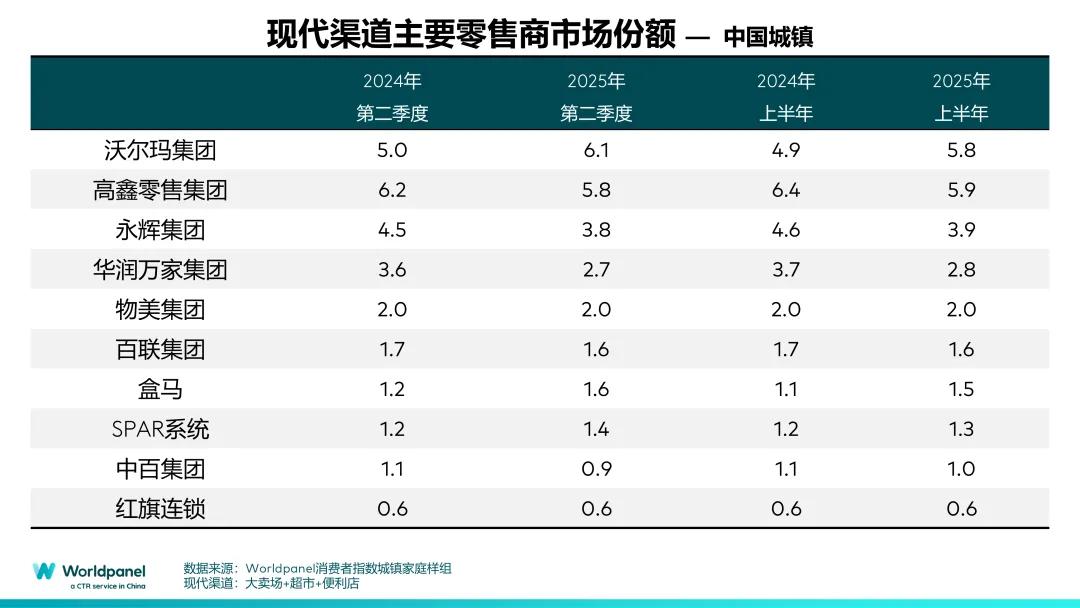
Group 1: Market Overview - The consumer goods market in urban China is expected to grow by 2.5% year-on-year in the first half of 2025, indicating a stable upward trend [1] - Beverage sales remain the main driver of the fast-moving consumer goods market, with a year-on-year growth of 5.6%, particularly in juice and functional drinks [1] - The retail sales of consumer goods increased by 5.0% year-on-year in the first half of this year, with final consumption expenditure contributing over 50% [1] Group 2: Out-of-Home Consumption - The out-of-home consumption market saw a year-on-year increase of 8.7% in customer traffic across cities [2] - The demand for emotional value, social needs, and entertainment experiences is driving the rapid adoption of new scenarios and technologies [2] Group 3: Offline Channels - Convenience store sales decreased by 3.6% year-on-year, while small supermarkets grew by 7.3%, indicating a stable performance in modern channels [3] - Major retailers showed a mixed performance, with Walmart leading in the second quarter, while the top ten retailers' market share declined by 1.1 percentage points [4][7] Group 4: Membership Stores - Membership stores have seen a year-on-year penetration rate increase of 3.6%, with Sam's Club showing significant growth in the East and South regions [8] - Sam's Club plans to open its largest store in Beijing by the end of 2025, aiming to attract customers with a "shopping + micro-vacation" model [8] Group 5: Discount Retail - Discount retailers are exploring new formats, with a focus on leisure food stores achieving a penetration rate exceeding 25% [10] - Traditional supermarkets are accelerating their transformation into hard discount formats, with regional players like "小百惠" and "家家悦" showing rapid growth [11] Group 6: Online Channels - E-commerce sales grew by 6.9% year-on-year in the first half of 2025, with Douyin's penetration rate increasing by 5.6 percentage points [12] - The 618 shopping festival saw a 2.9 percentage point increase in online channel penetration, with Douyin performing particularly well [14] Group 7: Conclusion - The fast-moving consumer goods market is experiencing a mild recovery, with consumers being price-sensitive while also valuing experiential and quality aspects [15] - The integration of online and offline channels is reshaping the consumer landscape, with a focus on product value, experiential value, and brand differentiation [16]

赢了沃尔玛“一毛钱”,却输掉一个时代,“广东超市三巨头”崩塌退市
创业邦· 2025-07-22 03:02
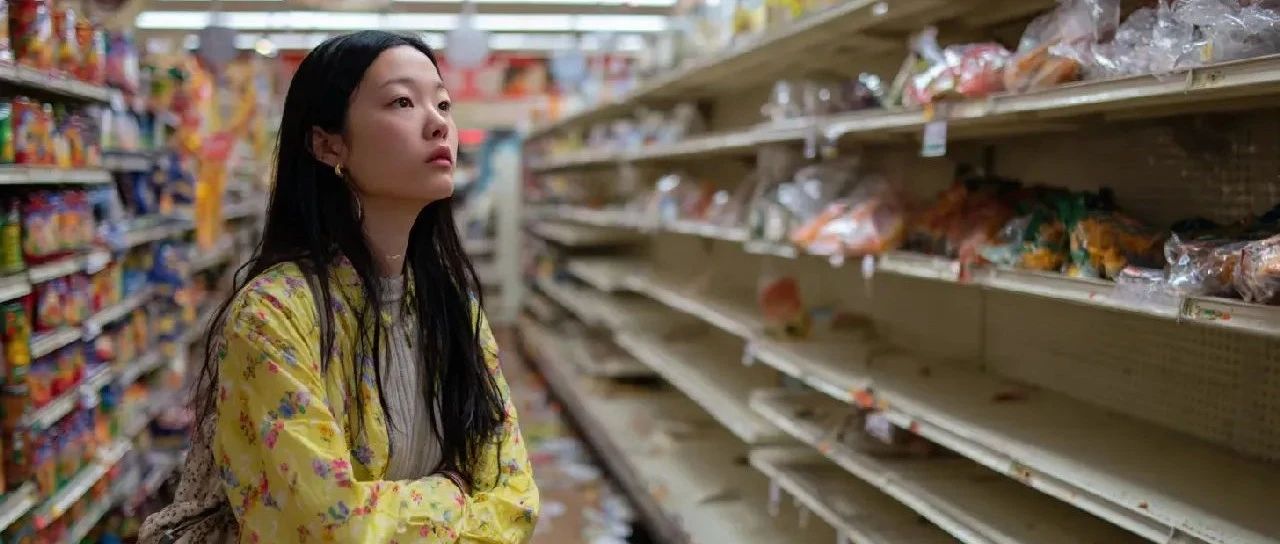
Core Viewpoint - The article discusses the decline of Renrenle Supermarket, highlighting its historical significance in the Chinese retail market and the factors leading to its eventual delisting from the Shenzhen Stock Exchange, marking the end of an era for traditional large-scale chain supermarkets in China [5][12]. Group 1: Historical Context - Renrenle Supermarket was established in 1996 and quickly became a significant player in the Chinese retail market, competing successfully against international giants like Carrefour and Walmart [4][8]. - At its peak in 2010, Renrenle's market capitalization reached approximately 13.668 billion yuan, but by its delisting in July 2023, its market value had plummeted to about 15.8 million yuan, a 99% decrease [4][12]. Group 2: Competitive Strategies - Renrenle initially thrived by adopting competitive strategies against foreign competitors, such as focusing on local consumer needs and implementing aggressive promotional tactics [9][10]. - The company successfully increased its daily sales to 600,000 yuan by outmaneuvering Carrefour and Walmart through strategic pricing and promotional timing [11]. Group 3: Expansion and Missteps - After going public, Renrenle pursued an aggressive expansion strategy, aiming to open 10,000 stores within five years, but this led to significant operational challenges and financial losses [14][15]. - The company failed to adapt its successful business model from Shenzhen to other regions like Xi'an, resulting in lower profit margins and unsustainable operations [14][15]. Group 4: Industry Trends and Challenges - The rise of e-commerce and changing consumer behaviors significantly impacted traditional supermarkets, with Renrenle unable to pivot effectively to online sales, which remained below 5% of its total revenue [25]. - The overall supermarket industry in China is facing severe challenges, with competitors like Yonghui and RT-Mart also experiencing significant declines in revenue and store closures [21][27]. Group 5: Management and Cultural Issues - Renrenle's internal management issues, including a lack of strategic direction and high turnover among executives, contributed to its decline [26][28]. - The company's leadership, primarily controlled by the founder and his family, led to a culture that prioritized personal interests over effective corporate governance [28].
KKR操刀,大窑也要卖了
首席商业评论· 2025-07-19 03:31
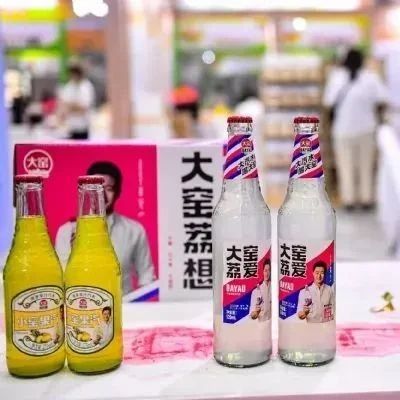
Core Viewpoint - The article discusses the acquisition of Guominsoda by KKR, highlighting the competitive landscape of private equity in the beverage sector and the potential implications for the market [3][5][19]. Group 1: Acquisition Details - KKR has received approval for the acquisition of Vista International Inc., which is linked to Guominsoda, with the deal expected to close soon [3][5]. - The acquisition involves KKR indirectly acquiring 85% of Vista International, which operates primarily in the beverage sector in China [5][8]. - The beverage market in China is experiencing significant changes, with KKR's move marking a notable entry of US private equity into the Chinese consumer space after several years [9][19]. Group 2: Market Context - The beverage industry is currently witnessing a wave of mergers and acquisitions, with KKR's interest in Guominsoda coinciding with other high-profile deals, such as the bidding for Starbucks China [21][22]. - The competitive landscape is characterized by a decline in carbonated beverage consumption, prompting companies like Guominsoda to seek new opportunities through acquisitions [19][23]. - The article notes that many consumer brands are becoming attractive targets for acquisition due to their stable cash flows and the current market conditions, which favor buyers with cash reserves [23][24]. Group 3: Company Background - Guominsoda, founded in the 1980s, has evolved from a regional player to a national brand, with significant market presence and a diverse product line [15][18]. - The company has faced challenges from major competitors like Coca-Cola and Pepsi, leading to strategic decisions that have shaped its growth trajectory [16][19]. - Recent reports suggest that Guominsoda's profits could reach between 1.5 to 2 billion yuan, indicating a strong financial position as it enters this acquisition phase [12].

高鑫零售(06808) - 2025 - 年度财报
2025-07-18 08:30
Financial Highlights [Annual Performance Summary](index=4&type=section&id=%E5%B9%B4%E5%BA%A6%E6%A5%AD%E7%B8%BE%E6%91%98%E8%A6%81) The company achieved a significant turnaround this fiscal year, with operating profit shifting from a loss to a gain and profit attributable to owners reaching a positive figure, despite a slight revenue decrease, driven by effective cost control - Annual Performance Summary (For the Year Ended March 31) | Metric | For the Year Ended March 31, 2025 (RMB million) | For the Year Ended March 31, 2024 (RMB million) | Percentage Change | | :--- | :--- | :--- | :--- | | Revenue | 71,552 | 72,567 | (1.4)% | | Gross Profit | 17,236 | 17,958 | (4.0)% | | Operating Profit / (Loss) | 1,425 | (1,009) | N/A | | Profit / (Loss) Attributable to Owners of the Company | 405 | (1,605) | N/A | | Basic Earnings / (Loss) Per Share | RMB 0.04 | RMB (0.17) | N/A | - Financial Position Summary (As of March 31) | Metric | 2025 (RMB million) | 2024 (RMB million) | Percentage Change | | :--- | :--- | :--- | :--- | | Total Assets | 55,973 | 60,715 | (7.8)% | | Total Liabilities | 35,545 | 38,921 | (8.7)% | | Net Assets | 20,428 | 21,794 | (6.3)% | | Net Cash | 12,529 | 16,504 | (24.1)% | - Financial charts show that despite slight declines in revenue and gross profit over the past two years, operating profit and net profit achieved a **V-shaped reversal** this fiscal year, indicating a significant recovery in the company's profitability after last year's low point[12](index=12&type=chunk)[14](index=14&type=chunk)[15](index=15&type=chunk) Chairman's Statement [Chairman's Statement](index=6&type=section&id=%E4%B8%BB%E5%B8%AD%E8%87%B4%E8%A9%9E) The Chairman positions 2025 as a pivotal year for strategic transformation, emphasizing a return to retail fundamentals with a mission to be the preferred fresh food basket, focusing on product, price, experience, and service to reconstruct retail value - The strategic core focuses on the "vegetable basket project," prioritizing high-frequency, essential categories like fresh produce and cooked food, while ensuring the **lowest regional prices** and **zero tolerance for safety issues**[18](index=18&type=chunk) - The company will enhance customer memory points by redesigning store layouts and creating "peak-end experiences," and promote digital transformation across the marketing and procurement value chain to optimize inventory turnover and out-of-stock rates[18](index=18&type=chunk) - Facing the impact of new retail formats, the company adheres to a long-term development path, differentiating its formats: hypermarkets strengthen one-stop shopping, community supermarkets deepen community essential needs, and membership stores focus on "selection + experience"[19](index=19&type=chunk) CEO's Statement [CEO's Statement](index=7&type=section&id=%E9%A6%96%E5%B8%AD%E5%9F%B7%E8%A1%8C%E5%AE%98%E8%87%B4%E8%A9%9E) The CEO emphasizes returning to business fundamentals and long-term value, focusing on differentiated formats, upholding quality, price competitiveness, and service, while optimizing talent development to create value for all stakeholders - The company has clearly differentiated its three major formats: - **Hypermarkets**: Transforming into community living centers integrating shopping, experience, and services - **Mid-sized Supermarkets**: Focusing on efficiency improvements with a streamlined and efficient model for fast-paced needs - **Membership Stores**: Dedicated to enhancing customers' quality of life and shopping experience[24](index=24&type=chunk) - The company views employees as its most valuable asset, and will enable employees to realize personal value, achieve a sense of accomplishment and belonging by optimizing talent development mechanisms, providing scientific incentives, and clear career paths[22](index=22&type=chunk) Management Discussion and Analysis [Financial Review](index=8&type=section&id=%E8%B2%A1%E5%8B%99%E5%9B%9E%E9%A1%A7) This fiscal year, the company achieved a significant profitability turnaround, with operating profit shifting from loss to gain, primarily due to substantial reductions in selling and marketing and administrative expenses, offsetting revenue and gross profit declines - Revenue Composition and Change | Revenue Category | FY2025 (RMB billion) | FY2024 (RMB billion) | Year-on-Year Change | | :--- | :--- | :--- | :--- | | Sales of Goods | 68.482 | 69.431 | -1.4% | | Membership Fees | 0.036 | 0.016 | +125.0% | | Rental Income | 3.034 | 3.120 | -2.8% | - Same-store sales growth (excluding supply chain business) was **0.6%**, primarily driven by a steady increase in average transaction value due to enhanced price competitiveness[26](index=26&type=chunk) - Online sales revenue achieved **mid-single-digit growth**[26](index=26&type=chunk) - Profitability Indicators | Metric | FY2025 | FY2024 | Change | | :--- | :--- | :--- | :--- | | Gross Profit | RMB 17.236 billion | RMB 17.958 billion | -4.0% | | Gross Profit Margin | 24.1% | 24.7% | -0.6pp | | Operating Profit / (Loss) | RMB 1.425 billion | RMB (1.009) billion | Turnaround to Profit | | Operating Profit Margin | 2.0% | -1.4% | +3.4pp | | Profit / (Loss) for the Year | RMB 0.386 billion | RMB (1.668) billion | Turnaround to Profit | | Net Profit Margin | 0.5% | -2.3% | +2.8pp | - Significant achievements in cost control: - **Sales and Marketing Expenses**: Decreased by **16.2%** to **RMB 15.232 billion**, mainly due to reduced personnel expenses and impairment losses[30](index=30&type=chunk) - **Administrative Expenses**: Decreased by **24.1%** to **RMB 1.709 billion**, mainly due to reduced goodwill impairment and headquarters organizational optimization[33](index=33&type=chunk) [Liquidity, Financial Resources and Gearing Ratio](index=12&type=section&id=%E6%B5%81%E5%8B%95%E8%B3%87%E9%87%91%E3%80%81%E8%B2%A1%E5%8B%99%E8%B3%87%E6%BA%90%E5%8F%8A%E6%AC%8A%E7%9B%8A%E8%B2%A0%E5%82%B5%E6%AF%94%E7%8E%87) The Group's net cash position decreased, while net cash inflow from operating activities significantly increased due to an accounting reclassification of restricted deposits, with improved inventory and trade payables turnover days indicating enhanced operational efficiency - Key Liquidity and Efficiency Indicators | Metric | March 31, 2025 | March 31, 2024 | Change | | :--- | :--- | :--- | :--- | | Net Cash Inflow from Operating Activities | RMB 3.549 billion | RMB 0.926 billion | +283.3% | | Net Cash | RMB 12.529 billion | RMB 16.504 billion | -24.1% | | Gearing Ratio | 0.61 | 0.76 | Decrease | | Inventory Turnover Days | 50 days | 53 days | Improvement | | Trade Payables Turnover Days | 67 days | 72 days | Improvement | - The significant increase in net cash inflow from operating activities is misleading, primarily stemming from a **RMB 3.144 billion** change in restricted deposits[40](index=40&type=chunk) - To earn higher interest, the company reclassified some short-term restricted deposits to long-term, which appears as cash inflow from operating activities and cash outflow from investing activities on the books[40](index=40&type=chunk) [Investing and Financing Activities](index=13&type=section&id=%E6%8A%95%E8%B3%87%E8%88%87%E8%9E%8D%E8%B3%87%E6%B4%BB%E5%8B%95) This fiscal year, net cash outflow from investing activities sharply increased, primarily for restricted fixed deposits, while net cash outflow from financing activities also significantly rose due to higher bank loan repayments and increased dividend payments - Net cash outflow from investing activities was **RMB 4.913 billion**, a significant year-on-year increase, primarily reflecting: - Net investment of **RMB 3.459 billion** in restricted fixed deposits with maturities exceeding three months - Capital expenditure of **RMB 0.985 billion** for new store development and existing store renovation[42](index=42&type=chunk) - Net cash outflow from financing activities was **RMB 3.750 billion**, a **176.1%** year-on-year increase, mainly due to: - Repayment of bank borrowings exceeding proceeds from new borrowings - Increased dividends paid[43](index=43&type=chunk) [Business Review and Outlook](index=14&type=section&id=%E6%A5%AD%E5%8B%99%E5%9B%9E%E9%A1%A7%E8%88%87%E5%B1%95%E6%9C%9B) Amidst moderate economic growth and low consumer prices, the company executed a "low price, good quality" strategy, focusing on fresh produce standardization, optimizing supply chain efficiency through digitalization, and adjusting its store network by opening new M Member Stores while closing hypermarkets, aiming for a "daily low price + community living center" model - The core business strategy is "low price, good quality," reshaping price perception, vigorously developing the "standardization" of fresh produce categories, and accelerating the development of its private label "Super Save" series, emphasizing value for money[49](index=49&type=chunk) - Store Network Status (As of March 31, 2025) | Store Type | Number | Total GFA (million sq.m.) | | :--- | :--- | :--- | | Hypermarkets | 465 | 1,300.8 | | Mid-sized Supermarkets | 33 | 23.4 | | M Member Stores | 7 | 25.2 | | **Total** | **505** | **1,349.4** | - This fiscal year, new store openings included **1 hypermarket**, **4 mid-sized supermarkets**, and **4 M Member Stores**; concurrently, **8 hypermarkets** and **1 mid-sized supermarket** were closed, indicating the company is actively adjusting its format mix and increasing investment in the membership store model[52](index=52&type=chunk) - The future outlook is to build a "daily low price + community living center" model, combining enhanced product strength and optimized store layouts to improve customer experience and achieve a balance of cost, efficiency, and service[56](index=56&type=chunk) Directors' Report [Dividends](index=22&type=section&id=%E8%82%A1%E6%81%AF) The Board recommends a final dividend of HKD 0.17 per share, bringing the total annual distribution to HKD 0.34 per share, significantly higher than the previous year, with shareholders having currency options - Annual Dividend Distribution | Dividend Type | Amount Per Share (HKD) | Total Amount (approx. HKD million) | | :--- | :--- | :--- | | Interim Dividend (Paid) | 0.17 | 1,622 | | Proposed Final Dividend | 0.17 | 1,622 | | **Total Annual Dividend** | **0.34** | **3,244** | [Share Schemes](index=32&type=section&id=%E8%82%A1%E4%BB%BD%E8%A8%88%E5%8A%83) The Group utilizes share option and employee trust benefit schemes for talent retention, with no new options granted this fiscal year but some vesting, and plans to repurchase subsidiary equity held by employee trusts to achieve 100% control - As of March 31, 2025, **35,000,000 share options** remained unexercised under the share option scheme, of which **6,250,000** had vested and were exercisable[136](index=136&type=chunk) - No new options were granted during the reporting period, but **10,000,000 options** lapsed[136](index=136&type=chunk) - The employee trust benefit schemes (RT-Mart Scheme and Auchan Scheme) allow employees to hold equity in operating subsidiaries (Sun Art Retail Group Limited and Auchan Investment)[138](index=138&type=chunk)[140](index=140&type=chunk) - As of March 31, 2025, the trusts held approximately **2.015%** and **1.3834%** equity in Sun Art Retail Group Limited and Auchan Investment, respectively[138](index=138&type=chunk)[140](index=140&type=chunk) - On May 20, 2025, the Group entered into equity transfer agreements with the trustee, proposing to acquire the **2.015%** and **1.3834%** shares held by the trusts in Sun Art Retail (China) and Auchan (China) Investment, respectively, for a total consideration not exceeding **RMB 599 million** and **RMB 34 million**[165](index=165&type=chunk)[166](index=166&type=chunk) - Upon completion, the Group will achieve **100% control** over these two core operating subsidiaries[165](index=165&type=chunk)[166](index=166&type=chunk) [Continuing Connected Transactions](index=46&type=section&id=%E6%8C%81%E7%BA%8C%E9%97%9C%E9%80%A3%E4%BA%A4%E6%98%93) The Group maintains multiple continuing connected transaction agreements with Alibaba Group affiliates for services like delivery, platform, and merchandise, with all transactions within annual caps and reviewed for fairness and shareholder interest - Major Continuing Connected Transactions with Alibaba Affiliates (For the Year Ended March 31, 2025) | Transaction Type | Annual Cap (RMB million) | Actual Transaction Amount (RMB million) | | :--- | :--- | :--- | | **Procurement** | | | | Procurement of Delivery Services | 2,400 | 1,269.7 | | Procurement of Platform Services | 525 | 246.5 | | Procurement of Merchandise | 320 | 73.9 | | Procurement of Payment Services | 100 | 48.3 | | **Provision** | | | | Provision of Joint Business Promotion Services | 595 | 292.9 | | Provision of Merchandise | 320 | 72.2 | | Provision of Delivery Services | 60 | 54.7 | - Independent non-executive directors have reviewed these continuing connected transactions and confirmed that they were conducted in the ordinary course of the Group's business, on normal commercial terms, fair and reasonable, and in the overall interests of the shareholders[210](index=210&type=chunk)[211](index=211&type=chunk) - The auditor also issued an unqualified opinion letter[210](index=210&type=chunk)[211](index=211&type=chunk) Risk Factors [Risks Related to the Group's Business](index=62&type=section&id=%E8%88%87%E6%9C%AC%E9%9B%86%E5%9C%98%E6%A5%AD%E5%8B%99%E6%9C%89%E9%97%9C%E7%9A%84%E9%A2%A8%E9%9A%AA) The company faces key business risks including challenges in expansion strategy execution, new store profitability, accurately meeting evolving consumer demands, and potential adverse impacts from product quality or health issues - Expansion capability is constrained by multiple factors, including the ability to find suitable locations, secure sufficient funding, attract and retain management talent, and effectively manage the costs of an expanded network[226](index=226&type=chunk)[227](index=227&type=chunk) - The profitability of new hypermarkets is uncertain, influenced by market positioning, supplier negotiations, marketing effectiveness, and competitive environment, and may not reach profitability within the expected timeframe[231](index=231&type=chunk)[232](index=232&type=chunk) - Business success depends on the ability to predict and timely respond to rapidly changing customer needs and preferences[233](index=233&type=chunk) - Failure to accurately select products that meet consumer demands could significantly and adversely affect the business[233](index=233&type=chunk) [Risks Related to the Industry in China](index=65&type=section&id=%E8%88%87%E4%B8%AD%E5%9C%8B%E8%A1%8C%E6%A5%AD%E6%9C%89%E9%97%9C%E7%9A%84%E9%A2%A8%E9%9A%AA) The company faces industry and macroeconomic risks in China, including the impact of infectious diseases on consumption, macroeconomic conditions affecting consumer spending, and RMB exchange rate fluctuations and foreign exchange controls impacting dividend payments - Any outbreak of severe infectious diseases in China (such as COVID-19) could lead to a contraction in consumption and may require temporary suspension of store operations due to employee or customer infections, significantly and adversely affecting performance[235](index=235&type=chunk) - The company's performance is closely linked to China's economic conditions[237](index=237&type=chunk) - An economic slowdown or recession could lead to reduced consumer spending, thereby significantly and adversely affecting the company's business, financial condition, and prospects[237](index=237&type=chunk) - Most of the company's revenue and expenses are denominated in RMB, which is not freely convertible[238](index=238&type=chunk) - Exchange rate fluctuations and foreign exchange controls could significantly and adversely affect the company's ability to pay foreign currency dividends to shareholders[238](index=238&type=chunk) Corporate Governance Report [Corporate Governance Report](index=66&type=section&id=%E4%BC%81%E6%A5%AD%E7%AE%A1%E6%B2%BB%E5%A0%B1%E5%91%8A) The company maintains high corporate governance standards, complying with all code provisions, detailing its governance structure, board and committee functions, board diversity policy, and practices in risk management, internal control, and shareholder communication - The Board of Directors comprises **seven directors**, including one executive director, three non-executive directors, and three independent non-executive directors, meeting the Listing Rules' requirements for the number and professional qualifications of independent non-executive directors[249](index=249&type=chunk)[256](index=256&type=chunk) - The company has adopted a Board Diversity Policy, and as of the reporting date, there are **three female members** on the Board, with at least one female member on each of the three Board committees, achieving gender diversity targets[273](index=273&type=chunk)[276](index=276&type=chunk) - The Board has established an Audit Committee, a Remuneration Committee, and a Nomination Committee, each with clear written terms of reference and chaired by an independent non-executive director[264](index=264&type=chunk) - The company has established a **three-tier ESG governance structure**, with the Board bearing ultimate responsibility, supported by an ESG Committee and an ESG Working Group, to effectively manage ESG risks[283](index=283&type=chunk) Independent Auditor's Report [Audit Opinion](index=84&type=section&id=%E5%AF%A9%E8%A8%88%E6%84%8F%E8%A6%8B) The auditor, PricewaterhouseCoopers, issued an unqualified opinion on the consolidated financial statements for the year ended March 31, 2025, confirming they fairly reflect the Group's financial position, performance, and cash flows in accordance with Hong Kong Financial Reporting Standards - The auditor issued a standard **unqualified audit opinion**, indicating that the financial statements fairly present the company's financial position in all material respects[314](index=314&type=chunk) [Key Audit Matters](index=85&type=section&id=%E9%97%9C%E9%8D%B5%E5%AF%A9%E8%A8%88%E4%BA%8B%E9%A0%85) The auditor identified three key audit matters involving significant management judgment and estimates: recognition of purchase rebates and discounts, valuation of non-returnable inventories, and impairment assessment of store assets, for which detailed audit procedures were performed - Key audit matters primarily focus on areas requiring significant management estimates and judgments: - **Recognition of purchase rebates and discounts**: Due to their large volume, complex arrangements, and volume-based rebates involving estimates of future purchases - **Valuation of non-returnable inventories**: Assessing the net realizable value of inventories involves significant estimates of future sales, selling prices, and costs - **Asset impairment assessment**: Determining the recoverable amount of store assets (property, plant, and equipment) involves significant judgments regarding future cash flows and discount rates[322](index=322&type=chunk) Consolidated Financial Statements [Consolidated Statement of Profit or Loss and Other Comprehensive Income](index=94&type=section&id=%E7%B6%9C%E5%90%88%E6%90%8D%E7%9B%8A%E5%8F%8A%E5%85%B6%E4%BB%96%E5%85%A8%E9%9D%A2%E6%94%B6%E7%9B%8A%E8%A1%A8) This statement presents the Group's financial performance, including profit or loss and other comprehensive income, for the reporting period [Consolidated Statement of Financial Position](index=95&type=section&id=%E7%B6%9C%E5%90%88%E8%B2%A1%E5%8B%99%E7%8B%80%E6%B3%81%E8%A1%A8) This statement details the Group's assets, liabilities, and equity as of the reporting date, providing a snapshot of its financial position [Consolidated Statement of Changes in Equity](index=97&type=section&id=%E7%B6%9C%E5%90%88%E6%AC%8A%E7%9B%8A%E8%AE%8A%E5%8B%95%E8%A1%A8) This statement illustrates the changes in the Group's equity during the reporting period, reflecting transactions with owners and other comprehensive income [Consolidated Statement of Cash Flows](index=99&type=section&id=%E7%B6%9C%E5%90%88%E7%8F%BE%E9%87%91%E6%B5%81%E9%87%8F%E8%A1%A8) This statement provides information on the Group's cash inflows and outflows from operating, investing, and financing activities during the reporting period Five-Year Summary [Five-Year Financial Summary](index=209&type=section&id=%E4%BA%94%E5%B9%B4%E8%B2%A1%E5%8B%99%E6%91%98%E8%A6%81) Five-year financial data indicates a downward trend in Group revenue since its FY2021 peak, though FY2025 saw the first positive growth in operating and net profit since FY2023, reversing prior losses, while total assets and equity continued to contract - Five-Year Financial Data Summary (RMB million) | Fiscal Year | 2025 | 2024 | 2023 | 2022 | 2021 (15 months) | | :--- | :--- | :--- | :--- | :--- | :--- | | Revenue | 71,552 | 72,567 | 83,662 | 88,134 | 124,612 | | Operating Profit / (Loss) | 1,425 | (1,009) | 1,177 | 18 | 5,757 | | Profit / (Loss) for the Year | 386 | (1,668) | 78 | (826) | 3,771 | | Total Assets | 55,973 | 60,715 | 64,118 | 65,746 | 69,227 | | Total Liabilities | 35,545 | 38,921 | 39,921 | 40,680 | 41,373 |
一件19000,「羽绒服一哥」要被卖了
36氪· 2025-07-15 13:33
Core Viewpoint - Canada Goose Holdings Inc. is considering selling part or all of its shares held by Bain Capital, attracting interest from private equity firms amid declining sales and stock prices [4][14][15]. Company Overview - Canada Goose was founded in 1957 in Toronto and initially focused on functional cold-weather gear before transforming into a global luxury brand with the help of Bain Capital, which acquired it in 2013 [4][7][9]. - The brand gained significant recognition through product placements in films and sponsorships of major film festivals, leading to sales exceeding $100 million by 2013 [8]. Financial Performance - Canada Goose's sales growth has been declining, with revenue growth rates of 21.54%, 10.84%, and 9.6% for fiscal years 2022, 2023, and 2024, respectively, and a projected drop to 1.1% for fiscal year 2025 [14]. - The company's market value has decreased from a peak of $7.8 billion to approximately $1.36 billion, losing over $6.4 billion in value [14][15]. Market Challenges - The brand's performance in China has been disappointing, facing issues such as fines for false advertising and criticism over return policies, while local competitors like Bosideng are gaining market share [14][15]. - Canada Goose's revenue in China for fiscal year 2025 was CAD 427 million, showing only a 1% increase year-over-year, with a decline of 1.7% when adjusted for fixed exchange rates [15]. Management Changes - The company has undergone multiple changes in its China leadership, with the recent appointment of Celine Xie as the new president for the region, marking the third leadership change since 2022 [15]. Investment Landscape - The potential sale of Canada Goose reflects a broader trend in the consumer market, where private equity firms are actively seeking opportunities amid high inflation and interest rates, particularly in luxury and essential goods [18][20]. - Notable recent acquisitions in the consumer sector include 3G Capital's $9.4 billion purchase of Skechers and various deals involving Starbucks China and other brands, indicating a robust environment for mergers and acquisitions [18][19].