长江存储

Search documents
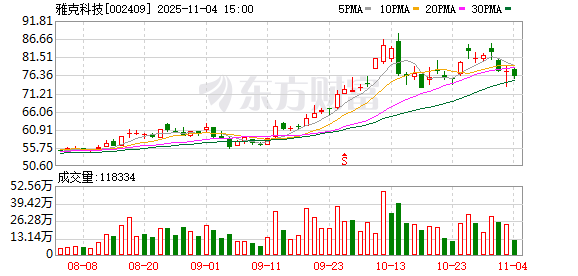
雅克科技:公司与长鑫、长江存储等存储厂商均有合作
Mei Ri Jing Ji Xin Wen· 2025-11-05 00:55
Core Viewpoint - The demand for precursors is expected to increase by over 25% due to the expansion of major storage manufacturers, while the domestic production rate remains below 20. The company, Yake Technology, has confirmed collaborations with these storage manufacturers [2]. Group 1 - Major storage manufacturers such as Changxin, Yangtze Memory, Samsung Xi'an, and SK Hynix Wuxi are expanding production [2]. - The growth in precursor demand is projected to exceed 25% as a result of this expansion [2]. - Yake Technology has established partnerships with the aforementioned storage companies [2].


民生证券:受益AI需求拉动 25Q4存储价格有望持续看涨
智通财经网· 2025-11-04 07:04
Core Viewpoint - The report from Minsheng Securities indicates that due to limited allocation of advanced process capacity to high-end server DRAM and HBM, the overall DRAM prices are expected to continue rising in Q4. Trendforce forecasts a 8-13% quarter-on-quarter increase in general DRAM prices by Q4 2025. Additionally, the shortage of HDD supply and extended lead times are driving CSPs to rapidly shift storage demand towards QLC eSSD, leading to significant market fluctuations and an anticipated 5-10% increase in NAND Flash contract prices across all product categories by Q4 2025 [1]. Demand Side - The transition from HDD to SSD/DRAM is accelerated by the AI era, where data volume is rapidly expanding from MB to EB/ZB levels. Applications like Sora 2 are further driving this growth. AI is transforming "cold data" into frequently accessed "warm/hot data," which enhances storage needs. The core of inference is shifting towards "storage-based computing," optimizing throughput and energy efficiency through a layered storage system involving HBM/DRAM+CXL+SSD [1]. Supply Side - The introduction of CBA and HBF technologies aims to overcome the limitations imposed by the "memory wall" on computing power. CBA technology significantly increases storage density per unit area and optimizes internal interconnect paths, being applied in next-generation DRAM and NAND technologies. Domestic leaders like Hefei Changxin and Yangtze Memory Technologies are also accelerating their advancements. HBF technology, inspired by HBM packaging design, offers 8-16 times the storage capacity and non-volatile storage advantages, alleviating heat management and energy cost pressures in AI data centers [2]. Equipment - The storage industry is expected to face a tight supply-demand situation, benefiting from increased capital expenditure (Capex) driven by AI demand and ongoing storage price increases. According to SEMI, the global NAND equipment market is projected to reach $13.7 billion and $15 billion in 2025 and 2026, respectively, representing year-on-year growth of 42.5% and 9.7%. Innovations in storage architectures like 4F2 DRAM and 3D NAND are creating new opportunities for etching, deposition, and bonding equipment [3]. Investment Targets - Suggested companies to focus on include: 1) Demand side: Demingli (001309.SZ), Jiangbolong (301308.SZ), Shannon Semiconductor (300475.SZ), and Zhaoyi Innovation (603986.SH) 2) Logic die foundry driven by CBA: Jinghe Integration (688249.SH) and Huahong (688347.SH) 3) Storage manufacturers benefiting from increased Capex: Tuojing Technology (688072.SH), Northern Huachuang (002371.SZ), Zhongwei Company (688012.SH), Huahai Qingke (688120.SH), Jingzhida (688627.SH), Huafeng Measurement and Control (688200.SH), and Changchuan Technology (300604.SH) [4].
全球顶级投资机构:从补短板到体系重构,中国企业出海全新机遇来临
Sou Hu Cai Jing· 2025-11-04 01:57
Core Insights - The forum highlighted that China's industrial upgrade is shifting from merely addressing shortcomings to a comprehensive system reconstruction, creating numerous investment opportunities in automation, green technology, and intelligence [1][24][30] Group 1: Investment Opportunities - The focus areas for investment include automation, where China has developed competitive advantages, particularly in motor product exports [6][10] - Green technology is emphasized as a long-term focus, despite current supply-demand imbalances in the renewable energy sector [6][10] - The intelligence sector is witnessing significant growth in demand for technology and new components, indicating a long-term trend for investment [6][10] Group 2: Market Dynamics - The Chinese market is characterized by a significant unmet consumer demand, which is a key area for future investment [7][10] - The Hong Kong stock market has shown positive performance, with increased IPO activity and a complex investor structure, indicating a favorable investment environment [10][12] - The overall sentiment in the market is cautious yet optimistic, with a focus on cash flow and policy certainty [24][30] Group 3: Global Expansion - Chinese companies are increasingly looking to expand overseas, with a focus on integrating into local markets and building brand recognition [12][14] - The shift in China's outward direct investment (ODI) is moving from infrastructure and raw materials to technology, brand, and high-end manufacturing [25][26] - The importance of local integration and building ecosystems is highlighted as critical for successful overseas expansion [14][20] Group 4: Sector-Specific Insights - The technology sector is identified as a key area for future investment, with a focus on companies that continuously invest in R&D and possess core technological advantages [30][31] - The cultural and entertainment industries are also seen as promising for overseas expansion, leveraging mature IP operations and user management capabilities [30][31] - The advanced manufacturing and AI application sectors are noted for their resilience and global competitiveness, providing unique investment opportunities [31][34]

全球顶级投资机构:从补短板到体系重构,中国企业出海全新机遇来临
中国基金报· 2025-11-04 01:39
Core Viewpoint - The article discusses the transformation of China's industrial upgrade from merely filling gaps to a comprehensive system reconstruction, creating numerous investment opportunities in automation, greening, and intelligence within the manufacturing sector [2][32]. Group 1: Investment Opportunities - The focus is on three key areas for investment: automation, green production, and intelligence. Automation has shown a competitive advantage in China's manufacturing, with motor product exports growing faster than overall exports by about 2 percentage points [8]. - Green production is emphasized as a long-term focus, despite current supply-demand imbalances in the renewable energy sector, with potential for mean reversion through supportive policies [9]. - The intelligence sector is highlighted as a long-term trend, with significant growth in demand for technology and new components, although many industries are still in the exploratory phase [9]. Group 2: Market Dynamics - The article notes a significant divergence in market performance, with new economy sectors outperforming traditional ones, reinforcing the investment logic based on industrial upgrades [8]. - The Hong Kong stock market has seen increased activity, particularly in IPOs, with a complex investor structure that includes both long-term and trading strategies [13]. Group 3: Global Expansion - The article emphasizes the importance of understanding local markets for Chinese companies looking to expand internationally. Successful overseas ventures require local market experience and a sound value system [8][20]. - The shift from traditional exports to global operations is noted, with a focus on brand building, ecosystem development, and localization as key barriers to entry in foreign markets [21][20]. Group 4: Industry Insights - The article highlights the systemic advantages of Chinese manufacturing, particularly in new energy, electric vehicles, and AI, where Chinese companies are rapidly advancing [14][11]. - The need for companies to integrate into local ecosystems and achieve "common prosperity" is stressed, as many firms face challenges in local market integration [28][26]. Group 5: Economic Outlook - The article presents a cautiously optimistic view of the Chinese market, with signs of recovery and a shift towards a more rational investment approach focusing on cash flow and policy certainty [31]. - The transition from a follow-up model to a systematic reconstruction of the industry is seen as a significant historical shift, supported by China's talent pool and innovation capabilities [34][32]. Group 6: Future Trends - The article identifies three trends for future investment: industrial collaboration, diversification of overseas markets, and enhanced risk management capabilities [35]. - It also points to the importance of focusing on hidden champions in the industry, specialized consumer products, and new infrastructure opportunities in green and digital sectors [35]. Group 7: Technology Focus - The article underscores the critical role of technology in future investments, particularly in advanced manufacturing, AI applications, and the development of a robust talent ecosystem [44]. - It emphasizes the need for long-term value and global scarcity in technology investments, advocating for a deep understanding of industry dynamics to capture growth opportunities [44].

存储行业深度报告:新周期,新机遇
Minsheng Securities· 2025-11-04 01:26
Investment Rating - The storage industry is expected to enter a "prosperity cycle" with a recommendation to focus on specific companies such as Demingli, Jiangbolong, and Zhaoyi Innovation [4][72][74]. Core Insights - The demand for storage is driven by AI, with a significant shift from HDD to SSD/DRAM due to the increasing data volume and the need for faster access [2][18][72]. - The supply side is innovating with CBA and HBF technologies to overcome the limitations of traditional memory, enhancing storage density and performance [3][40][52]. - The semiconductor equipment market is projected to benefit from increased capital expenditure by storage manufacturers, with NAND equipment market size expected to reach $13.7 billion in 2025 [4][61][72]. Summary by Sections Storage Cycle - The storage industry exhibits clear cyclical characteristics, with the current cycle driven by AI demand and supply optimization from major manufacturers [9][12]. Demand Side - The transition from cold data to warm data is accelerating the replacement of HDDs with SSDs, as AI applications require more frequent data access [2.2][28]. - The data generated by AI applications is expected to grow exponentially, with projections indicating a shift from megabytes to exabytes and zettabytes [2.1][21]. Supply Side - CBA technology is crucial for achieving high density and performance in storage solutions, with applications in next-generation DRAM and NAND technologies [3.1][40]. - HBF technology offers significant advantages in capacity and energy efficiency, positioning it as a key solution for AI applications [3.2][52]. Semiconductor Equipment - The semiconductor equipment market is anticipated to grow significantly, with NAND equipment sales projected to increase by 42.5% in 2025 [4.1][61]. - Innovations in etching and deposition equipment are essential for advancing storage density and performance [4.2][68]. Investment Recommendations - The report suggests focusing on companies that are well-positioned to benefit from the storage industry's growth, including Demingli, Jiangbolong, and Zhaoyi Innovation [4][72][74].




反转竟然如此之快!ASML突然改口,外媒:这风格太欧洲了
Sou Hu Cai Jing· 2025-11-03 08:51
Core Insights - ASML reported a significant revenue from China, reaching €10.195 billion in 2024, accounting for 36.1% of total revenue, surpassing South Korea, the US, and Taiwan [1] - The company plans to upgrade its existing maintenance center in Beijing, which will enhance its service capabilities and reduce repair times from weeks to days [3][5] - The geopolitical landscape, particularly US restrictions on chip technology, heavily influences ASML's operations and strategy in China [5][10] Group 1: Financial Performance - ASML's revenue from China is critical, with projections indicating that 2024 will see the delivery of 418 machines, including 44 EUV and 374 DUV, with China consuming a significant portion [10] - The company's Q1 report showed China contributing 36% of revenue, which increased to 42% in Q3, highlighting the importance of the Chinese market [10][12] - Despite strong performance, ASML anticipates a 25% reduction in demand from China by 2026 due to the rise of domestic competitors [10] Group 2: Strategic Developments - The upgrade of the Beijing center is part of a broader strategy to localize supply chains and mitigate risks associated with US sanctions [10][12] - ASML's cautious approach reflects the delicate balance it must maintain between serving the Chinese market and adhering to US regulations [5][12] - The company is investing €12 million in the Beijing center, which is expected to generate €200 million in services in its first year [10] Group 3: Market Dynamics - The competitive landscape is shifting, with Chinese companies like SMIC and Yangtze Memory Technologies advancing in domestic chip production, posing a long-term threat to ASML's market share [5][10] - ASML's after-sales service contributes significantly to its revenue, with a profit margin exceeding 60%, making maintenance a crucial aspect of its business model [5] - The geopolitical tensions and the need for local alternatives in China are driving ASML to adapt its strategies while trying to maximize profits [12][14]


一周概念股:被动元器件开启涨价,存储市场面临长周期缺货
Ju Chao Zi Xun· 2025-11-02 15:49
Group 1: Price Increases in Passive Components - Kemet, a subsidiary of Yageo Group, announced a price increase for tantalum capacitors due to a surge in demand driven by AI applications, with price hikes ranging from 20% to 30% effective November 1 [3][4] - The price increase marks Kemet's second adjustment this year, expanding the customer base from distributors to direct sales [3] - The electronic industry is experiencing an "inflation" trend in upstream components, with supply shortages and rising prices in storage, passive components, and high-end CCL [3][4] Group 2: Storage Market Dynamics - The global memory industry is facing a structural, long-term shortage driven by AI applications, with major DRAM manufacturers like SK Hynix, Samsung, and Micron reporting full capacity utilization [5][6] - The anticipated shortage has led to a doubling of the market gap, with expectations that the supply issue will not resolve until the second half of 2027 [5][6] - The demand for storage is shifting dramatically due to the explosive growth of AI training and inference architectures, leading to increased prices for both DRAM and NAND products [5][6] Group 3: Impact on Supply Chain and Pricing - The rapid expansion of AI server demand is causing significant delays and cost pressures for downstream clients, with server DRAM module prices expected to rise by 50% by Q4 2025 [6][7] - The complexity of capacity allocation is increasing due to customers placing early and duplicate orders, potentially leading to resource waste and market confusion [7] - Major memory chip manufacturers and data center operators are the biggest beneficiaries of this supply chain reshuffle, while smaller module manufacturers may struggle with increased costs and reduced procurement power [7] Group 4: Growth in Electric Vehicle Sales - Changan Automobile reported a record high in new energy vehicle sales, with October sales reaching 119,000 units, a 36% year-on-year increase [8][9] - Chery Group also saw significant growth in new energy vehicle sales, with a 54.7% increase in October, marking a breakthrough in monthly sales [9] - NIO delivered 40,397 vehicles in October, a 92.6% year-on-year increase, highlighting strong growth in the electric vehicle sector [9]
AI应用带动需求 慧荣:存储器恐缺货一整年
Jing Ji Ri Bao· 2025-11-01 23:29
Group 1 - The demand for memory chips is driven by the application of artificial intelligence (AI), leading to concerns about how long the shortage will last [1] - The general manager of Wisdom Technology predicts that the AI-driven shortage may last an entire year, indicating a structural shortage rather than a result of production cuts by suppliers [1] - It is expected that DRAM will experience a shortage throughout 2026, but with new factories from Samsung, SK Hynix, and Micron coming online, the situation may improve by 2027 [1] Group 2 - TrendForce's latest survey indicates that due to strong server demand, DDR5 contract prices are expected to rise throughout 2026, particularly in the first half of the year [1] - The price gap between HBM3e and DDR5 is currently over four times, but as DDR5 prices continue to rise, the profit from DDR5 is expected to surpass that of HBM3e starting from Q1 2026 [2]
美媒怒批特朗普:贸易战“神操作”,美国输麻了!
Sou Hu Cai Jing· 2025-10-31 15:06
Core Insights - The article critiques the trade war initiated by Trump, highlighting that it has worsened the U.S. trade deficit and failed to achieve its intended goals [1][5]. Trade Deficit and Economic Impact - The U.S. goods trade deficit is projected to reach $1.21 trillion in 2024, a 50% increase compared to pre-trade war levels in 2017 [1]. - The trade war has led to increased inflation, with the inflation rate rising to 3% in September, the highest since May [1]. - Tariffs have added approximately $1,500 in annual expenses for American households, disproportionately affecting low- and middle-income families [1]. Employment and Manufacturing - The manufacturing sector has lost 42,000 jobs in 2024, marking the longest decline since early 2020 [1]. - The U.S. automotive industry has seen a decrease in export value by $10.8 billion compared to the previous year, impacted by competition from Chinese automakers and domestic strikes [1]. Agricultural Sector - U.S. soybean exports to China have plummeted from over $10 billion annually to just $2.5 billion in the first half of 2024, while costs for fertilizers and farming equipment have risen due to tariffs [2]. - Many farmers are relying on government subsidies to cope with the financial strain caused by the trade war [2]. Trade Agreement Analysis - The recent ceasefire agreement between the U.S. and China has not resolved core issues, as the U.S. still maintains a 47% tariff on Chinese goods [2]. - The agreement is seen as a temporary measure that does not address deeper conflicts such as intellectual property and market access [2]. Shifts in Trade Dynamics - China's reliance on the U.S. market has decreased significantly, with exports to the U.S. dropping from 20% in 2018 to below 10% [3]. - China has diversified its markets, with exports to Africa increasing by 56.4% and to Southeast Asia by 15.6% [3]. Technological Competition - The U.S. efforts to restrict technology exports to China have not succeeded, as Chinese companies have increased their self-sufficiency in chip production, raising the self-sufficiency rate from 16% in 2020 to 40% [3]. - U.S. companies like Nvidia and Intel have faced significant revenue declines in China, indicating a failure in the U.S. technology strategy [3]. Conclusion on Trade War - The article concludes that the trade war has not benefited the U.S. and has instead weakened its economic position and global influence [4][5].
【点金互动易】PCB+超硬材料,子公司布局PCB微钻材料,产品供货鼎泰高科、中钨高新等客户,这家公司产品包括航空航天材料
财联社· 2025-10-31 00:46
Group 1 - The article emphasizes the importance of timely and professional information interpretation in investment decision-making [1] - It highlights the investment value of significant events, industry chain companies, and key policy interpretations [1] - The company has a subsidiary focused on PCB micro-drill materials, supplying products to clients such as DingTai High-Tech and ZhongTung High-New [1] - The company is also involved in HBM storage chip products, with clients including Yangtze Memory Technologies and SMIC [1]