丸美股份

Search documents
品牌工程指数 上周涨1.39%
Zhong Guo Zheng Quan Bao· 2025-07-06 20:28
Market Performance - The market experienced an upward trend last week, with the CSI Xinhua National Brand Index rising by 1.39% to 1649.96 points [1][2] - The Shanghai Composite Index increased by 1.40%, the Shenzhen Component Index by 1.25%, the ChiNext Index by 1.50%, and the CSI 300 Index by 1.54% [2] Strong Stock Performances - Notable strong performers included Anji Technology, which rose by 7.98%, and WuXi AppTec, which increased by 7.58% [2] - Other significant gainers included Yiling Pharmaceutical, Tiger Med, and AVIC Shenyang Aircraft, all rising over 6% [2] - The overall trend showed many stocks in the index gaining over 1%, indicating broad market strength [2] Year-to-Date Performance - Since the beginning of 2025, notable stock performances include: - Xintai rising by 55.34% - Anji Technology increasing by 45.75% - WuXi AppTec and Marubi both rising over 30% [3] Market Outlook - Analysts from Xing Shi Investment suggest that the market will continue to perform positively due to strong trading sentiment and sector rotation opportunities [4] - The overall risk premium in the A-share market remains at historically low levels, indicating high value [4] - The macroeconomic environment is expected to remain stable, with ongoing domestic policy support and emerging opportunities in sectors like artificial intelligence and new consumption [4][5] Investment Strategy - Wangzheng Asset maintains a strategy focused on "technology blue chips + innovative growth," emphasizing quality of business operations and undervalued stocks in sectors such as internet, electronics, and automotive [5] - The focus is also on high-potential innovative growth sectors as they mature and enter rapid growth phases [5]



化妆品医美行业周报:25H1收官国货表现分化,毛戈平等领衔增长-20250706
Shenwan Hongyuan Securities· 2025-07-06 11:44
Investment Rating - The report maintains a "Positive" outlook on the cosmetics and medical beauty industry [2]. Core Insights - The cosmetics and medical beauty sector underperformed the market during the week of June 27 to July 4, 2025, with the Shenwan Beauty Care Index declining by 0.6% and the Shenwan Cosmetics Index down by 1.5% [3][4]. - Domestic brands such as Maogeping and others showed significant growth, with some achieving over 50% growth in June, which is expected to positively impact Q2 performance [3][9]. - The report highlights a strong performance from leading domestic brands during the 618 shopping festival, with a notable increase in sales momentum post-event [9][10]. Summary by Sections Industry Performance - The Shenwan Beauty Care Index decreased by 0.6%, while the Shenwan Cosmetics Index fell by 1.5%, indicating weaker performance compared to the Shenwan A Index [4]. - The personal care products index saw a slight increase of 0.7%, but still lagged behind the Shenwan A Index by 0.4% [4]. Key Company Performance - Expected performance for major companies in Q2 includes: - Upbeauty: Revenue and net profit expected to grow by 16% and 25% respectively [11]. - Marubi: Anticipated revenue and net profit growth of 22% and 28% [11]. - Proya: Projected revenue and net profit growth of 10% and 15% [11]. - Maogeping: Expected revenue and net profit growth of 38% and 35% [11]. - Ruifeng: Anticipated growth of 70% and 75% in revenue and net profit respectively [11]. - Juzhibio: Expected growth of 25% and 20% in revenue and net profit [11]. Market Trends - The report notes a robust recovery in consumer demand, with a 4.1% year-on-year increase in retail sales for cosmetics in the first five months of 2025 [20]. - The domestic market is seeing a shift with local brands gaining market share, as evidenced by the performance of brands like Proya and Maogeping during major shopping events [34]. Investment Recommendations - Recommended stocks include: - Upbeauty, Proya, and Marubi for their comprehensive brand matrices and growth potential [15]. - Maogeping and Juzhibio for their strong positioning in niche markets [15]. - Attention is advised for Shanghai Jahwa, Betaini, and Huaxi Biological for potential growth [15]. E-commerce Insights - Data from Douyin indicates significant growth for domestic brands, with Han Shu achieving a GMV of 7.2 billion yuan, reflecting a 53% year-on-year increase [16]. - The overall GMV for domestic brands in June reached over 50% growth, indicating a strong market presence [9][16].




比毛戈平、林清轩门店还多的美妆品牌要上市了
Ge Long Hui· 2025-07-05 01:59
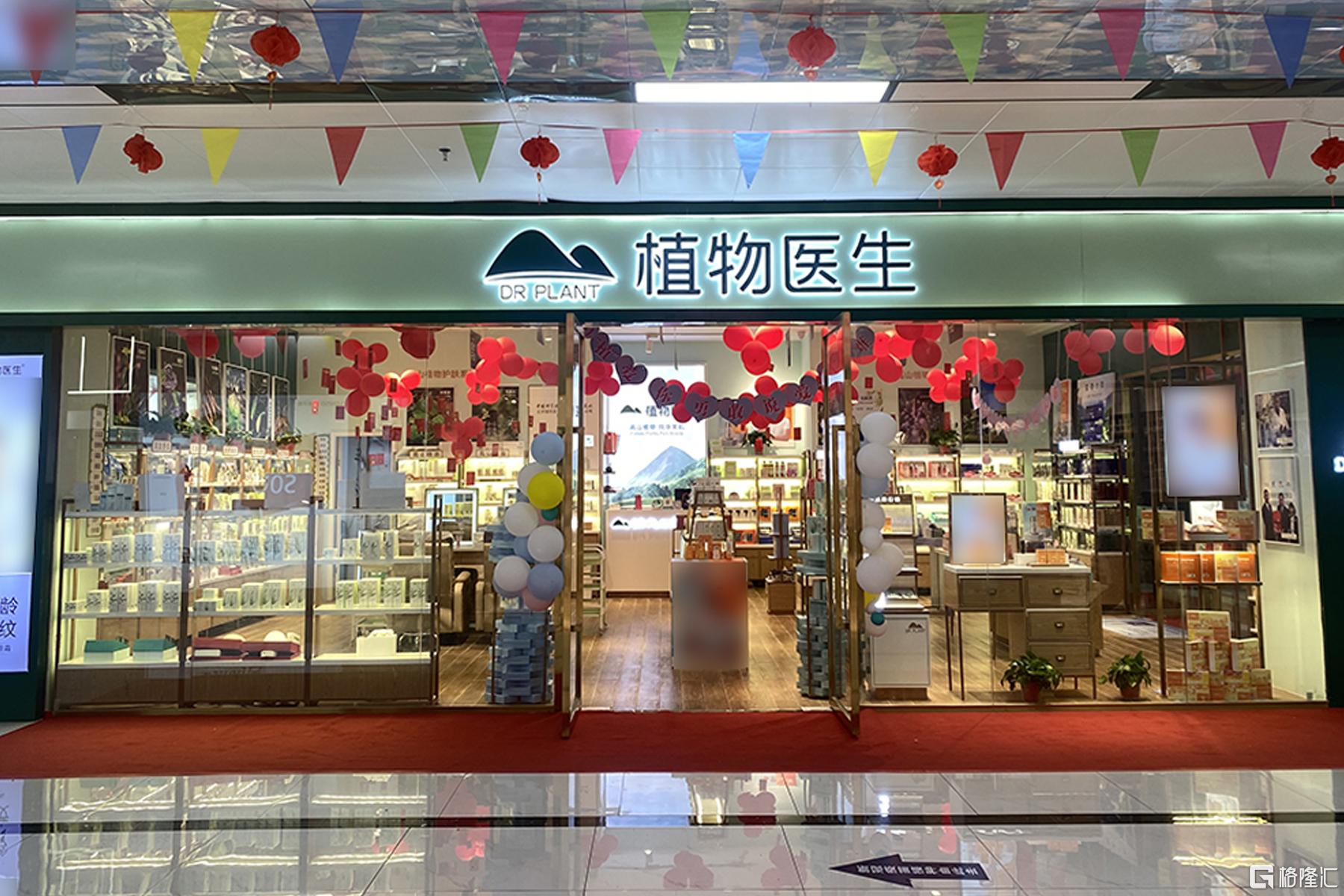
Core Viewpoint - Beijing Plant Doctor Cosmetics Co., Ltd. is preparing for an IPO, with plans to issue up to 26.67 million shares, accounting for at least 25% of the total share capital post-issue [2] Financial Performance - The company projects revenue of 2.116 billion yuan, 2.150 billion yuan, and 2.155 billion yuan for the years 2022, 2023, and 2024 respectively, with net profits of 168 million yuan, 229 million yuan, and 242 million yuan for the same years [2] - The gross profit margins for the years 2022, 2023, and 2024 are expected to be 55.22%, 60.34%, and 58.90% respectively [2] Product Segmentation - The main revenue driver is the water and lotion cream segment, projected to generate 1.218 billion yuan in 2024, accounting for 56.52% of total revenue [3] - The essence and essence oil segment is expected to contribute 465 million yuan, representing 21.59% of total revenue, while face masks account for 16.28% [4] Sales Channels - The company employs a mixed sales model, primarily through distribution (66.72%) and supplemented by direct sales (33.28%) [8] - As of the end of 2024, the company operates 4,328 offline chain stores, with 3,830 authorized specialty stores and 498 direct stores [4] Market Position - Plant Doctor holds a 0.8% market share in the Chinese cosmetics market, ranking 9th among domestic brands [8] - The company’s revenue from the distribution model in 2024 is projected to be 1.366 billion yuan, accounting for 63.37% of total revenue [8] R&D and Competitive Edge - The company maintains a stable R&D expense ratio of 3% to 3.5% over the past three years, which is higher than several listed competitors [9] - Collaboration with the Kunming Institute of Botany has led to the development of a star product featuring Dendrobium orchid [9] Challenges - The company faces inventory pressure, with stock increasing from 192 million yuan at the end of 2023 to 223 million yuan at the end of 2024 [9] - Regulatory penalties on some stores due to violations have raised concerns about potential impacts on sales and performance [9]

“整容大国”要因职场男性“易主”了
Sou Hu Cai Jing· 2025-07-04 06:27
Core Insights - Japan's beauty medical industry has reached a market size of approximately 594 billion yen, surpassing South Korea to become the new "cosmetic powerhouse" [2] - The growth of Japan's medical beauty market has been significant, with a 120% increase in 2021 and a continued rise in demand for various treatments [3] - Male consumers have become a major driving force in the industry, with the number of male clients increasing 16 times over the past decade [4] Market Growth - The medical beauty market in Japan expanded 2.39 times from 2009 to 2023, indicating a robust growth trajectory [4] - In 2023, the market size reached over 500 billion yen, reflecting a growth of 108.8% compared to the previous year [3] Consumer Behavior - Approximately 70% of surveyed men express concern about their appearance, with 43% considering some form of beauty medical treatment [5] - The pressure of workplace competition and the desire for self-confidence are significant motivators for men seeking cosmetic procedures [5][6] Economic Context - Japan's employment rate for new graduates reached a historic high of 98.1% in 2024, but the country faces a demographic challenge with a declining birth rate and an increasing death rate [5] - The economic downturn has led individuals to invest in their appearance as a strategy to enhance job security and competitiveness [9] Industry Comparison - Japan's medical beauty culture is evolving, with a notable increase in public acceptance and participation in cosmetic procedures [11] - The country aspires to replicate South Korea's successful model of integrating medical beauty with tourism and consumption, although challenges remain [12][13] Regulatory Environment - Japan's medical beauty industry currently lacks stringent regulatory oversight, leading to a rise in complications from procedures performed by non-specialist doctors [19] - The increase in reported complications highlights the need for improved regulatory measures to ensure patient safety [19] Investment Trends - Global beauty companies are increasingly investing in the medical beauty sector, with major brands like L'Oréal and Estée Lauder expanding their offerings [21][22] - Despite the growth potential, there are concerns about the sustainability of the medical beauty market, as evidenced by declining average spending per customer and increased competition [27]

逾30亿元投资锦波生物,钟睒睒布局千亿重组胶原蛋白市场
Xin Jing Bao· 2025-07-04 02:31
Core Viewpoint - The strategic investment actions by Jinbo Biotechnology have attracted significant attention, particularly due to the involvement of Zhong Shanshan, China's richest man, who is investing a total of 34.03 billion yuan through his companies [1][2]. Group 1: Investment Details - Jinbo Biotechnology will issue shares to Yangshengtang Co., Ltd., representing 6.24% of its total shares before the issuance, with a financing amount not exceeding 2 billion yuan [2]. - The share transfer agreement between Jinbo's controlling shareholder Yang Xia and Hangzhou Jiushi involves the transfer of 5,753,267 shares at a price of 243.84 yuan per share, totaling 1.403 billion yuan [2][3]. - After the transfer, Yang Xia will hold 50.73% of Jinbo, while Hangzhou Jiushi and Yangshengtang will hold 4.71% and 5.87%, respectively, making Zhong Shanshan the second-largest shareholder of Jinbo with 10.58% ownership [3]. Group 2: Company Overview - Jinbo Biotechnology focuses on the research, development, production, and sales of high-end implantable medical devices made from recombinant human collagen, primarily used in aesthetic medicine and skin repair [4]. - The company achieved significant revenue growth, with sales increasing from 233 million yuan in 2021 to 1.443 billion yuan in 2024, and net profit rising from 57.39 million yuan to 732 million yuan during the same period, reflecting a year-on-year growth rate of over 79% [4]. Group 3: Market Potential - The collaboration between Jinbo and Yangshengtang is expected to leverage their respective strengths in large-scale industrial production and market channel development, addressing the urgent need for a comprehensive production and sales system [5]. - The market for collagen-based skin care products is projected to surpass that of hyaluronic acid by 2026, with the overall market size for collagen in China expected to reach 173.8 billion yuan by 2027, of which recombinant collagen products will account for 1.083 billion yuan, representing 62.3% of the market [5].
人货场重构消费生态,聚焦新消费机遇
HTSC· 2025-07-03 12:27
Group 1 - The consumer industry is undergoing a profound transformation from scale expansion to quality upgrading, driven by policy incentives, technological iterations, and changes in consumer preferences and habits [1][14]. - The new consumer groups represented by Generation Z, the elderly, and women are pushing consumption demand towards personalization and quality [1][17]. - Domestic brands are experiencing sustained growth, with sensory experiences becoming the core touchpoint linking consumers and products [1][29]. Group 2 - The importance of domestic demand has been reaffirmed, with a shift in focus from short-term demand stimulation to systematically enhancing consumer willingness, supported by policies such as employment and entrepreneurship initiatives [2][50]. - From January to May 2025, the total retail sales of consumer goods increased by 5.0% year-on-year, indicating a recovery in domestic demand [2]. Group 3 - Four major consumption trends are identified: the rise of domestic brands, emotional consumption, the silver economy, and AI+ consumption [3][4]. - The silver economy is driven by an aging population, with the proportion of individuals aged 65 and above exceeding 14% in 2021, and expected to surpass 30% by 2035 [21][23]. - Emotional consumption is characterized by a shift from functional to self-rewarding and social value, with consumers willing to pay for emotional value [3][20]. Group 4 - The report recommends focusing on structural opportunities in the consumer sector, highlighting four core investment themes: the rise of domestic brands, high-growth emotional consumption, the burgeoning silver economy, and AI+ consumption [4][18]. - Specific companies are recommended for investment, including domestic brands like Lao Pu Gold, Shangmei Co., and Midea, as well as emotional consumption leaders like Pop Mart and Heytea [5][4]. Group 5 - The integration of AI into the consumer chain is emphasized, with a focus on companies that demonstrate strong product innovation capabilities [3][4]. - The rise of online sales driven by live streaming and e-commerce is reshaping the retail landscape, with online retail sales reaching 6.0 billion in the first five months of 2025, reflecting an 8.5% year-on-year growth [41][40]. Group 6 - The sensory experience is becoming a core value of brands, with consumers increasingly demanding high-quality sensory interactions [32][39]. - The marketing landscape is shifting towards decentralized models, with KOL and KOC marketing gaining prominence, allowing brands to achieve precise targeting and higher ROI [49][40].
平安证券晨会纪要-20250703
Ping An Securities· 2025-07-03 01:05
Group 1: Core Insights - The new generation of consumers, raised in the internet and mobile internet era, emphasizes experience, authenticity, self-focus, and personalization, driving changes in travel, retail, beauty, and pet sectors [2][6][8] - The tourism consumption potential is continuously being released, with a focus on broad beneficiaries in the OTA platform sector, particularly in domestic travel and inbound tourism [6][7] - Retail is returning to consumer demand itself, with traditional retail showing differentiated performance across categories, and recommendations include Alibaba and Yonghui Supermarket [7][8] Group 2: Industry Recommendations - In the beauty and pet sectors, domestic brands are thriving, with significant growth rates of 20-30% or more in specific segments like skincare and pet food [8] - The bond market is experiencing wide fluctuations due to policy uncertainties, with U.S. Treasury yields showing a downward trend in early months and an overall increase in May [3][9] - The credit spread in the credit bond market has slightly increased, but the overall increase is manageable due to stable hard data from the U.S. economy [9][11] Group 3: Market Trends - The commodity market shows varied performance, with crude oil prices down by 12.12% over the past week, while gold prices increased by 1.87% [4] - The U.S. labor market is showing signs of slowing down, with a surprising decrease in private sector employment in June, raising concerns about economic momentum [16][17] - The second-hand car market in China remains in a downturn, with the manager index at 42.3%, indicating a lack of demand and increased risks in transactions [19]
社会服务行业2025年中期策略报告:新世代、新需求、新消费-20250702
Ping An Securities· 2025-07-02 08:30
Group 1: Core Insights - The new generation of consumers, raised in the internet and mobile internet era, emphasizes experiential consumption, authenticity, and personalization, driving changes in travel, retail, beauty, and pet sectors [3][12] - The tourism sector is expected to continue its recovery, with domestic travel projected to reach 5.75 trillion yuan in 2024, a 17.1% increase year-on-year, and 56.15 billion domestic trips anticipated, marking a 14.8% growth [18][21] - The retail sector is returning to consumer demand, with traditional retail showing growth in essential goods and cultural consumption, while e-commerce platforms are focusing on optimizing consumer experiences [42][45] Group 2: Tourism Sector - Domestic tourism is recovering, with urban residents expected to make 43.7 billion trips in 2024, a 16.3% increase, and rural residents 12.45 billion trips, a 9.9% increase [18] - International travel is rebounding, with 1.23 billion outbound trips in 2024, a 41% increase, and inbound tourism expected to grow by 60.8% to 1.32 billion visitors [21][26] - OTA platforms like Ctrip and Tongcheng are benefiting from the recovery in travel demand and are expanding their inbound tourism services [27] Group 3: Retail Sector - The retail market is experiencing steady growth, with social retail sales expected to rise, and online retail growth slowing down as platforms focus on consumer needs [42][45] - Traditional retailers like Yonghui Supermarket are undergoing significant transformations to meet consumer demands, with a focus on quality and customer experience [57] - The cross-border e-commerce sector is adapting to changing tariff policies, with companies like Yiwu Market playing a crucial role in global supply chains [58][62] Group 4: Beauty and Pet Industries - The beauty and pet sectors are witnessing rapid growth, with domestic brands achieving revenue growth rates of 20-30% in niche markets [68][72] - The pet industry in China has surpassed 300 billion yuan in market size, reflecting the growing trend of pet ownership and related consumption [68] - Companies in the beauty sector, such as Aimeike, are expected to see growth due to lower base effects and strategic acquisitions [75]
化妆品医美行业25Q2业绩前瞻:新消费长坡厚雪,美护板块强者恒强
Shenwan Hongyuan Securities· 2025-07-01 14:55
Investment Rating - The report rates the cosmetics and medical beauty industry as "Positive" [2][3] Core Viewpoints - The cosmetics retail sales growth for January to May 2025 is 4.1%, an increase of 2 percentage points compared to the same period last year, indicating a steady recovery in demand [3] - The performance of leading brands remains strong, with double-digit growth, supported by the theme of self-care in new consumption trends, leading to a positive outlook for the first half of 2025 [3] - The 618 shopping festival saw strong performances from domestic brands, with notable rankings on platforms like Tmall and Douyin [3] Summary by Sections Cosmetics Industry Outlook - The report anticipates significant revenue and net profit growth for major companies in Q2 and H1 2025, with specific forecasts: - Up Beauty Co. is expected to see a revenue increase of 16% and a net profit increase of 25% [3] - Marubi is projected to grow revenue by 22% and net profit by 28% in Q2 2025 [3] - Proya is expected to achieve a revenue growth of 10% and net profit growth of 15% in Q2 2025 [3] Key Companies Performance - Notable companies and their expected performance include: - Mao Geping is projected to have a revenue increase of 38% and net profit increase of 35% in H1 2025 [3] - Ruibin is expected to see a revenue increase of 15% and net profit increase of 15% in Q2 2025 [3] - Huaxi Biological is expected to maintain stable performance with a 0% revenue growth and a 10% net profit increase in Q2 2025 [3] Investment Recommendations - The report recommends focusing on companies with strong brand matrices and comprehensive product layouts, such as Up Beauty Co., Marubi, and Proya, which are expected to benefit from the live e-commerce traffic [3] - It also highlights the importance of niche market players like Ruibin and Mao Geping, who are positioned to capitalize on the rise of personal care and domestic beauty trends [3] - For the medical beauty sector, the report suggests focusing on companies with high R&D barriers and strong profitability, recommending companies like Aimeike and Langzi [3] E-commerce and Other Segments - The report suggests monitoring e-commerce companies like Ruibin, which is expected to see significant growth in revenue and net profit [3] - In the maternal and infant sector, Kid King is projected to exceed market expectations with a revenue increase of 10% and a net profit increase of 70% in Q2 2025 [3]

植物医生冲击主板,单店模式能否撑起未来?
Zhong Guo Ji Jin Bao· 2025-07-01 13:55
Core Viewpoint - Beijing Plant Doctor Cosmetics Co., Ltd. has been accepted for IPO on the Shenzhen Stock Exchange, aiming to raise approximately 9.98 billion yuan, but faces challenges due to its heavy reliance on offline channels and declining online sales [2][3][4]. Group 1: IPO Details - The IPO application was accepted on June 27, 2025, with CITIC Securities as the sponsor [3]. - The company has been preparing for the IPO since 2023, indicating a long-term strategy to enter the public market [3]. Group 2: Business Model and Performance - Plant Doctor operates over 4,000 offline stores but has seen a decline in total store count from 4,664 to 4,328 in 2024, losing 336 stores [4][7]. - In 2024, online direct sales accounted for only 9.3% of total revenue, with the revenue from the "Xiaozhi Mall" declining from 843.9 million yuan in 2022 to 623.3 million yuan in 2024 [6][7]. - The company’s revenue growth has been minimal, increasing from 215.5 billion yuan to 215.57 billion yuan despite store optimization efforts [8]. Group 3: Financial Metrics - The comprehensive gross margin for 2024 was 58.9%, down from 60.35% in 2023, indicating pressure on profitability [9]. - The company’s inventory turnover efficiency decreased from 4.96 times in 2022 to 4.27 times in 2024, with inventory balance at 223 million yuan, representing 16% of current assets [10][11]. Group 4: Market Position and Competition - Plant Doctor's reliance on a high proportion of the distribution model (over 63% of revenue) has negatively impacted its gross margin compared to competitors like Proya and Marubi, which have higher margins due to a focus on direct sales [9]. - The online market share in China's cosmetics sector reached 52.45% in 2024, highlighting the risk of falling behind in digital transformation [8]. Group 5: Future Outlook - The company emphasizes the importance of private traffic and plans to integrate online and offline channels through its "Xiaozhi Mall" platform, although recent revenue trends suggest challenges in achieving this goal [12][14]. - The effectiveness of the private traffic strategy and its potential to drive sustainable revenue growth remains uncertain, requiring further data and strategic clarity from the company [14].