
宏源期货

Search documents
换月叠加基本面博弈正套走扩:黑色金属周报-钢材-20251124
Hong Yuan Qi Huo· 2025-11-24 11:15
Report Title - Black Metal Weekly Report - Steel Products [1] Report Date - November 24, 2025 [3] Report Author - Bai Jing [3] Industry Investment Rating - Not provided Core Viewpoints - Currently, the investment - end data is still weak, and domestic demand is underperforming. High - frequency data shows that exports maintain strong resilience, and the advantage of trading at lower prices for higher volumes still exists. The steel industry is in a production - cut stage, but due to the lack of significant losses in ton - steel profits, production reduction is not smooth. The current fundamentals lack driving force, with intense long - short game. The main contract is in the roll - over stage, short - term positive spreads are widening and volatility has increased. Attention should be paid to the integer thresholds and off - peak electricity costs for the unilateral fluctuation range of rebar, and operations should be cautious [7] Summary by Directory 1. Supply and Demand Fundamentals - **Price**: Last week, domestic steel spot prices showed mixed trends. As of Friday, the price of rebar in East China's Shanghai was 3190 yuan (+30), and the price of hot - rolled coil was 3200 yuan (-60) [6] - **Production and Inventory**: On November 20, the overall output of five major steel products increased by 15.53 tons. The factory inventory of the five major products decreased by 12.27 tons week - on - week, and the social inventory decreased by 31.98 tons. The apparent demand was 894.16 tons, a week - on - week increase of 33.56 tons [6] - **Profit**: As of November 21, in the long - process spot market in East China, the cash - inclusive cost of rebar was 3212 yuan, with a point - to - point profit of about - 22 yuan, and the profit of hot - rolled coil was about - 6 yuan. For electric furnaces in East China, the flat - rate electricity cost was about 3253 yuan, and the off - peak electricity cost was about 3122 yuan. The flat - rate electricity profit of rebar was about - 153 yuan, and the off - peak electricity profit was about - 22 yuan [6] - **Scrap Steel**: As of November 20, the price of scrap steel in Zhangjiagang was 2130 yuan/ton, unchanged from the previous week. The capacity utilization rate of 89 independent electric arc furnace enterprises was 34%, a 0.2 - percentage - point decrease. The daily consumption of 255 sample steel mills was 50.8 tons, a 0.11 - ton decrease. Among them, the daily consumption of 132 long - process steel mills was 23.5 tons/day, a 0.19 - ton increase, and the daily consumption of short - process steel mills was 16.8 tons, a 7.1% increase. The average daily arrival of 255 steel mills was 49.5 tons, a 1.5% increase. The total scrap steel inventory of 255 steel enterprises was 502.9 tons, a 2.1% increase. Overall, the iron - scrap price difference continued to strengthen, short - process steelmaking remained in a loss state, and the overall demand was still weak. Scrap steel prices may fluctuate slightly following steel prices [7] 2. Macroeconomic Data - **Steel Production**: In 2024, the national crude steel output was 1.005 billion tons, a 1.7% decrease from 2023; the pig iron output was 852 million tons, a 2.3% decrease. From January to October 2025, the cumulative pig iron output was 711 million tons, a 1.8% decrease from the same period in 2024, and the cumulative crude steel output was 818 million tons, a 3.9% decrease [17] - **PMI**: In October 2025, the PMI was 49%, indicating a slowdown in manufacturing expansion [21] - **Investment Data**: From January to October 2025, the national fixed - asset investment (excluding rural households) was 4.08914 trillion yuan, a 1.7% year - on - year decrease. In October, infrastructure investment (excluding electricity, heat, gas, and water production and supply) decreased by 8.91% year - on - year, manufacturing investment decreased by 6.67%, and real estate development investment decreased by 23.22% [25] - **Real Estate Data**: From January to October, the floor area under construction of real estate development enterprises was 6.52939 billion square meters, a 9.4% year - on - year decrease; the new construction area was 490.61 million square meters, a 19.8% decrease; the completed area was 348.61 million square meters, a 16.9% decrease [28] 3. Arbitrage Strategy Tracking - **Spread between Hot - Rolled Coil and Rebar**: The spread between hot - rolled coil and rebar narrowed this week [37] 4. Supply - Side Data - **Long - Process Supply**: As of November 21, the blast furnace capacity utilization rate of 247 steel enterprises was 88.6%, a 0.25% decrease from the previous week; the average daily pig iron output was 236.3 tons, a 0.25% decrease [41] - **Short - Process Supply**: As of November 20, the capacity utilization rate of 89 domestic electric arc furnace plants was 34%, a 0.2 - percentage - point decrease. As of November 21, the iron - scrap price difference was 66.02 yuan, a 30.39 - yuan increase [44] - **Rebar Production**: This week, the original sample rebar output was 207.96 tons, an increase of 7.96 tons. Among them, the long - process output was 181.17 tons, an increase of 9.26 tons, and the short - process output was 26.79 tons, a decrease of 1.3 tons [56] 5. Demand - Side Data - **Building Materials Transactions**: Data on building materials transactions in different regions are presented, but specific demand trends are not clearly summarized [58] - **Cement Mill Operating Rate**: The average operating load of cement mills this period was 38.55%, a 0.62 - percentage - point increase from the previous week, turning from a decline to an increase. Although the market has entered the off - season, there is some rush - construction demand in some provinces, driving up the mill operating rate [67] - **Real Estate Sales**: High - frequency sales data of 30 major cities in the real estate market are presented, but specific demand trends are not clearly summarized [68] 6. Inventory Data - **Rebar Inventory**: The original sample rebar factory inventory was 153.32 tons, a decrease of 7.1 tons; the social inventory was 400.02 tons, a decrease of 15.73 tons; the total inventory was 553.34 tons, a decrease of 22.83 tons [73] - **Hot - Rolled Coil Inventory**: This week, the hot - rolled coil output was 316.01 tons, a 2.35 - ton increase. The apparent demand was 324.42 tons, a 10.83 - ton increase. The factory inventory increased by 0.5 tons, the social inventory decreased by 8.91 tons, and the overall inventory decreased by 8.41 tons [76] 7. Export Data - As of November 21, the FOB export price of China was 445 US dollars, a 5 - dollar increase; the export profit was - 19.1 US dollars, a 4.2 - dollar increase. The outbound volume from 32 major domestic ports was 305.3 tons, an 8% decrease [87]
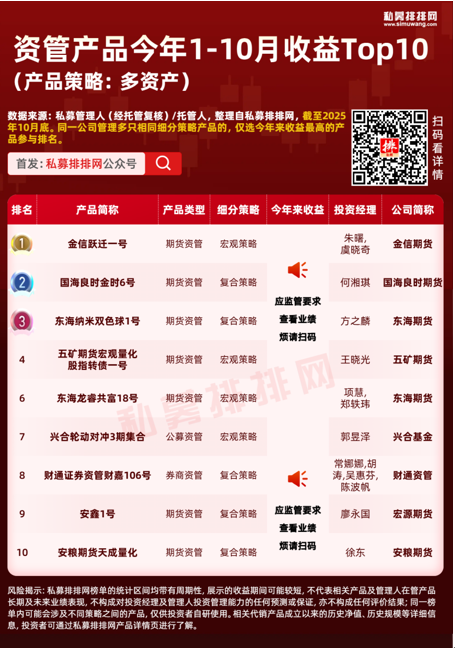
资管产品最新10强出炉!金信跃迁一号业绩持续领跑!
Qi Huo Ri Bao Wang· 2025-11-21 05:16
Core Insights - The asset management market is highly competitive, with 352 products showcasing performance as of October 2025, according to data from Private Placement Network [1] - Jin Xin Futures' "Jin Xin Jump One Asset Management Plan" has emerged as the top performer in the multi-asset product strategy category, outperforming various public funds and licensed financial institutions [1][4] Performance Rankings - As of October 2025, Jin Xin Jump One is ranked first among multi-asset strategies, demonstrating exceptional performance in a crowded market [2] - The product has consistently ranked in the top three of its category since October 2024, indicating stable returns and effective asset allocation strategies [4] Investment Strategy - The core investment philosophy of Jin Xin Jump One revolves around "macro game," focusing on macroeconomic analysis and market dynamics for asset and strategy allocation [6] - The product team aims to discover investment opportunities in complex market environments, utilizing a dynamic approach to adjust allocations across stocks, bonds, and commodities [6]

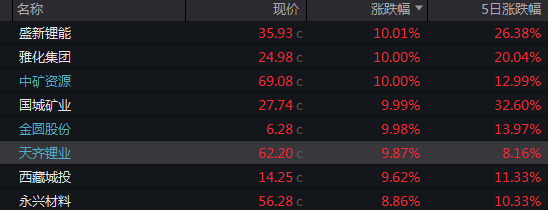
碳酸锂价格再创新高,行业龙头重返千亿市值
2 1 Shi Ji Jing Ji Bao Dao· 2025-11-17 15:13
Core Viewpoint - Lithium carbonate futures experienced a significant surge, with multiple contracts hitting the daily limit, driven by strong demand and market sentiment, leading to a new annual high in prices [1][5][11]. Group 1: Market Performance - As of November 17, the main 2601 contract rose by 9%, reaching 95,200 yuan/ton, surpassing the previous high in August [1]. - Lithium mining stocks, such as Tianqi Lithium and Shengxin Lithium Energy, saw substantial gains, with several stocks hitting the daily limit [1][2]. - The average price of battery-grade lithium carbonate in the domestic market reached 86,200 yuan/ton, marking an increase of 980 yuan/ton from the previous trading day [11]. Group 2: Supply and Demand Dynamics - Demand for lithium salts is expected to grow significantly, with projections indicating a potential increase of 30% to 40% in demand, which could lead to prices exceeding 150,000 yuan/ton [5][16]. - The lithium salt inventory has been declining for 13 consecutive weeks, indicating a tightening supply situation [3][6]. - The production of lithium carbonate remained stable, with a slight increase in demand from downstream applications, contributing to the overall market improvement [6][7]. Group 3: Price Trends and Market Sentiment - The recent price increases in lithium carbonate are attributed to rising prices in related sectors, such as electrolyte materials, which have seen dramatic price hikes [7][9]. - The trading volume for lithium carbonate futures doubled, with a total open interest reaching a historical high, reflecting increased market participation [9][12]. - Despite the recent price surges, there are concerns about the sustainability of these trends, as the market may face corrections due to the widening gap between futures and spot prices [16][17].
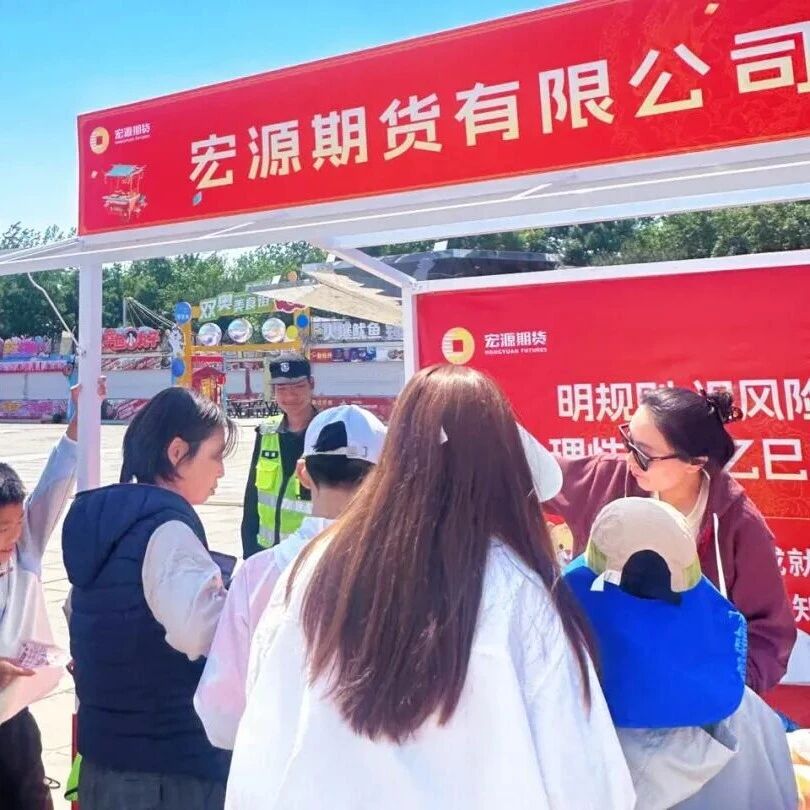
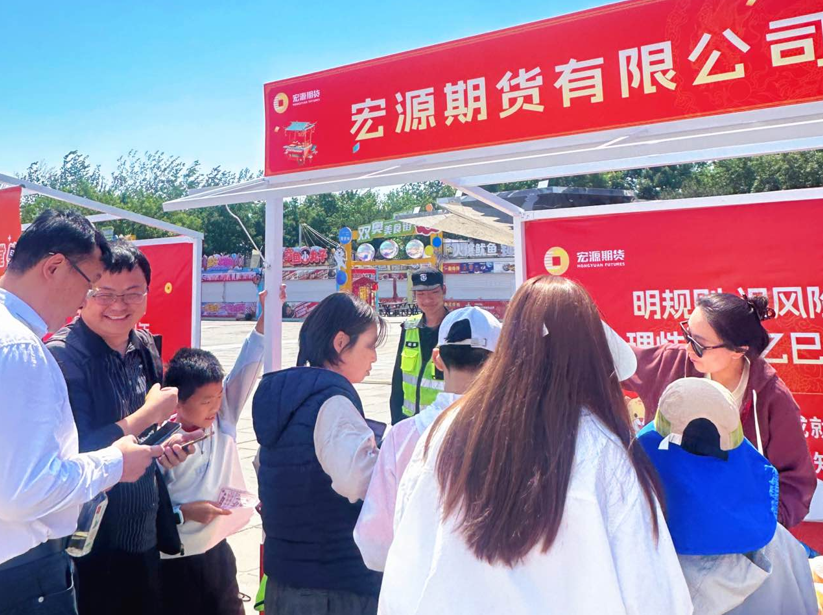
宏源期货:为参赛者提供更优质更专业的服务
Qi Huo Ri Bao Wang· 2025-11-17 01:31
Core Insights - Hongyuan Futures has been a designated trading partner for the national futures (options) trading competition for over a decade, focusing on providing high-quality and professional services to participants [1] Company Overview - Hongyuan Futures has a registered capital of 1 billion RMB and is headquartered in Beijing, being a council member of the China Futures Association [1] - The company holds licenses for commodity futures brokerage, financial futures brokerage, futures investment consulting, asset management, and fund sales, with over 20 branches nationwide [1] - The company is wholly owned by Shenwan Hongyuan Group Co., Ltd., which is controlled by Central Huijin Investment Ltd., providing strong backing for Hongyuan Futures [1] Competition Goals and Achievements - The competition has allowed Hongyuan Futures to achieve three main goals: creating a dedicated channel for trading learning and experience exchange, enhancing the service system for clients, and promoting investor education [2] - The competition has become a benchmark event in the domestic futures industry, with increasing participation and serving as a practical classroom for investor education [3] Performance and Market Insights - This year, the number of participating clients from Hongyuan Futures reached a new high, with profitable trading concentrated in stock index futures, precious metals, and the new energy sector [4] - The company emphasizes that identifying potential trading varieties is key to achieving profitability, and encourages traders to maintain a rational mindset while waiting for future opportunities [4] Technological and Research Focus - Hongyuan Futures recognizes the importance of information technology and research consulting in serving traders, with a long-term focus on investment in these areas [5] - The company has developed a comprehensive service system to support clients in algorithmic trading, including providing access to algorithmic trading software and dedicated server services to reduce latency and enhance trading speed [5]
金融赋能强国路 投资助力新发展——申万宏源2025年前三季度投资业务亮点纷呈
申万宏源证券上海北京西路营业部· 2025-11-14 02:07
Core Viewpoint - The article emphasizes the proactive role of Shenwan Hongyuan Group in supporting national strategies through diversified financial services, focusing on technology finance, inclusive finance, green finance, pension finance, and digital finance, thereby contributing to high-quality economic development [1][19]. Group 1: Technology Finance - Shenwan Hongyuan Group has invested in high-end engine development for commercial aviation, supporting the C919 aircraft's engine projects, which ensures long-term funding for domestic aviation engine independence [3]. - The group is also involved in low-altitude economy initiatives, financing the W5000 unmanned cargo aircraft, which sets a benchmark in low-altitude logistics with its payload and range capabilities [3]. - Additional investments include support for Tianbing Technology, which has achieved significant milestones in commercial spaceflight, enhancing China's capabilities in satellite launches [5]. Group 2: Inclusive Finance - The group has partnered with Shanghai Construction Group to develop over 1,400 affordable rental housing units in Shanghai, benefiting new citizens and young people [10]. - Collaborations in urban renewal projects in Beijing and Chengdu aim to improve living conditions and upgrade old neighborhoods, aligning with the "housing for all" commitment [10]. - Financial support for small and micro enterprises has been emphasized, with investments aiding truck drivers and the logistics sector, as well as healthcare initiatives to support the aging population [12]. Group 3: Green and Digital Finance - Shenwan Hongyuan Group's futures division has implemented risk management strategies for various industries, including a notable case in the food sector that received media recognition for its effectiveness in stabilizing operations [14]. - Investments in companies like Xijing Technology focus on smart and green solutions, enhancing operational efficiency in global logistics [16]. - The group has also engaged in financing projects that align with national carbon neutrality goals, contributing to the development of new energy solutions [16]. Group 4: Consumer and Regional Development - The group participated as a strategic investor in consumer REITs, achieving a record subscription rate, indicating a deepening of the REITs market in China [17]. - Investments in regional development projects, such as the establishment of high-standard factories in Suzhou, support the growth of intelligent manufacturing in the Yangtze River Delta [17]. - The collaboration with e-commerce and offline resources aims to unlock consumer potential in the southwest region [17].

从产业链到生态圈——申万宏源以期货业务打开实体经济转型升级新空间
申万宏源证券上海北京西路营业部· 2025-11-13 02:09
Core Viewpoint - The article emphasizes the role of Shenwan Hongyuan Group in supporting the transformation and upgrading of the real economy through its futures business, highlighting its commitment to providing deep and warm financial services in line with national strategies [1]. Group 1: Financial Services and Support - Shenwan Hongyuan Group focuses on enhancing the real economy by leveraging its futures and derivatives capabilities, aiming to provide "hard power" for service by 2025 [1]. - In the green finance sector, the company acts as a "risk protection shield" for new energy enterprises, utilizing tools like hedging and basis trading to help businesses withstand price fluctuations [1]. - In the inclusive finance sector, the company has reduced costs for nearly 100 small and micro enterprises by 1.1791 million yuan and injected 149 million yuan into the spot trade of various sectors [2]. Group 2: Elderly and Technological Financial Services - In the pension finance sector, the company focuses on protecting elderly investors' funds by enhancing product suitability management and providing easy-to-understand investment education [2]. - The company has established a robust technological foundation by deploying comprehensive trading platforms and accelerating AI development to enhance customer service experiences [4]. Group 3: Industry Recognition and Future Plans - Shenwan Hongyuan has been recognized in the top 10 for its effectiveness in serving small and micro enterprises for two consecutive years and has a case study included in the "2024 Annual Outstanding Cases of Futures Operating Institutions Serving the Real Economy" [4]. - The company plans to continue prioritizing service to the real economy, integrating resources to create a comprehensive financial service system that meets diverse risk management needs [4].

从产业链到生态圈——申万宏源以期货业务打开实体经济转型升级新空间
Qi Huo Ri Bao· 2025-11-07 03:32
Core Viewpoint - The company is committed to supporting the national strategy and building a strong financial nation by providing in-depth and warm financial services, focusing on the transformation and upgrading of the economy [1] Group 1: Financial Services and Support - Hongyuan Futures, a subsidiary of Shenwan Hongyuan Group, aims to empower the real economy with high-quality futures products and services, contributing to high-quality economic development and the construction of a financial powerhouse [1] - In the field of green finance, Hongyuan Futures acts as a "risk protection shield" for new energy enterprises, utilizing tools like hedging and basis trading to help companies withstand price fluctuations [1] - The company has reduced costs for nearly 100 small and micro enterprises by 1.1791 million yuan and injected 149 million yuan into the spot trade of small enterprises in sectors like cotton and industrial silicon [1] Group 2: Elderly Financial Services - In the pension finance sector, Hongyuan Futures serves as a "caring steward" for elderly investors, focusing on product suitability management and enhancing investment education to protect and grow retirement funds [2] Group 3: Technology and Digital Finance - Hongyuan Futures has established a robust technological foundation by deploying comprehensive trading platforms and accelerating AI development to enhance customer service experiences [4] - The company has been recognized in the industry for its effective services to small and micro enterprises, ranking in the top 10 for two consecutive years in evaluations by the China Futures Association [4] Group 4: Future Directions - The company plans to continue focusing on serving the real economy, integrating resources to create a comprehensive financial service system that meets diverse risk management needs for enterprises [5]
黑色金属月报:钢材宏观预期改善遇阻产业矛盾,钢价低位震荡-20251103
Hong Yuan Qi Huo· 2025-11-03 11:34
1. Report Industry Investment Rating No relevant content provided. 2. Core Views of the Report - In October, steel prices were slightly repaired at a low level boosted by the warming of macro - expectations. However, industrial contradictions have not been completely eliminated. Although the structural contradictions have slightly improved, the supply - demand gap in the steel sector remains at a relatively high level. The total inventory shows a seasonal decline. At the end of the month, under the background of production restrictions in Hebei, the output of the five major steel products continued to increase, weakening the driving force for price rebound. From a valuation perspective, the upside space of rebar is under pressure near the off - peak electricity cost. In November, the driving force is limited, and it is expected that the volatile pattern will be difficult to change. [6] 3. Summaries According to Related Catalogs 3.1 Supply - Demand Fundamentals - **Price and Production Data**: In October, domestic steel spot prices fluctuated slightly. As of the end of October, the price of rebar in East China's Shanghai was 3200 yuan, unchanged from the end of September; the price of hot - rolled coil was 3350 yuan, up 20 yuan/ton from the end of September. On October 30, the total output of the five major steel products increased by 9.97 tons, the factory inventory of the five major products decreased by 18.49 tons month - on - month, and the social inventory decreased by 22.62 tons. The apparent demand was 916.4 tons, an increase of 23.69 tons month - on - month. [5] - **Profit Data**: As of October 31, in the long - process spot end, the cash - inclusive cost of long - process rebar in East China was 3196.5 yuan, with a point - to - point profit of about 3.5 yuan, and the long - process cash - inclusive profit of hot - rolled coil was about 33.5 yuan. In the electric - arc furnace end, the flat - rate electricity cost of electric - arc furnaces in East China was about 3331 yuan, and the off - peak electricity cost was about 3189 yuan. The flat - rate electricity profit of rebar in East China was about - 171 yuan, and the off - peak electricity profit was about - 29 yuan. [5] - **Scrap Steel Data**: As of October 30, the price of scrap steel in Zhangjiagang was 2160 yuan/ton, up 20 yuan/ton month - on - month. The capacity utilization rate of 89 independent electric - arc furnace enterprises was 33.6%, up 0.6 percentage points month - on - month. The daily consumption of 255 sample steel mills was 51.2 tons, down 0.15 tons month - on - month. Among them, the daily consumption of 132 long - process steel mills was 25 tons/day, up 0.04 tons month - on - month; the daily consumption of short - process steel mills was 16.7 tons, up 0.18 tons month - on - month, an increase of 1.1%. In terms of supply, the average daily arrival of 255 sample steel mills was 47.3 tons, down 1.26 tons month - on - month, a decrease of 2.6%. In terms of inventory, the total scrap steel inventory of 255 steel enterprises was 469.7 tons, down 3.7 tons month - on - month, a decrease of 0.8%. [6] 3.2 Macroeconomic Data - **Steel Production**: In 2024, the national crude steel output was 1.005 billion tons, a decrease of 13.99 million tons or 1.7% compared with 2023; the pig iron output was 852 million tons, a decrease of 13.27 million tons or 2.3% compared with 2023. From January to September 2025, the cumulative output of pig iron was 646 million tons, a decrease of 1.1% compared with the same period in 2024, and the cumulative output of crude steel was 746 million tons, a decrease of 2.9% compared with the same period in 2024. [14] - **PMI Index**: In October 2025, the PMI was 49%. Compared with September 2025, multiple sub - indicators showed declines, such as the production index decreased by 2.2, the new order index decreased by 0.9, etc. [19] - **Investment Data**: From January to September 2025, the national fixed - asset investment (excluding rural households) was 3,715.35 billion yuan, a year - on - year decrease of 0.5%. In September, infrastructure investment (excluding electricity, heat, gas, and water production and supply industries) decreased by 4.65% year - on - year; manufacturing investment decreased by 1.92% year - on - year; real estate development investment decreased by 21.28% year - on - year. [23] - **Real Estate Data**: From January to September, the floor area under construction of real estate development enterprises was 6,485.8 million square meters, a year - on - year decrease of 9.4%. The new construction area was 453.99 million square meters, a year - on - year decrease of 18.9%. The completed floor area was 311.29 million square meters, a year - on - year decrease of 15.3%. [26] 3.3 Product - Specific Data - **Rebar**: This week, the original sample rebar output was 212.59 tons (+5.52 tons), including 183.08 tons of long - process output (+3.94 tons) and 29.51 tons of short - process output (+1.58 tons). The factory inventory was 171.71 tons (-12.92 tons), the social inventory was 430.81 tons (-6.67 tons), and the total inventory was 602.52 tons (-19.59 tons). [55][72] - **Hot - Rolled Coil**: This week, the hot - rolled coil output was 323.56 tons, a month - on - month increase of 1.1 tons; the apparent demand was 331.89 tons, a month - on - month increase of 5.16 tons. In terms of inventory, the factory inventory increased by 0.31 tons, the social inventory decreased by 8.64 tons, and the total inventory decreased by 8.33 tons. [75] - **Export**: As of October 24, the FOB export price in China was 440 US dollars, and the export profit was - 32.3 US dollars (-4.8 US dollars). The outbound volume of 32 major domestic ports was 342.19 tons, a month - on - month increase of 109.98 tons, a growth rate of 37.5%. [86]
破解三大“适配”堵点 推动期货市场深度服务实体经济
Zhong Guo Zheng Quan Bao· 2025-11-01 02:09
Core Viewpoint - The increasing geopolitical conflicts, differentiated economic recovery, and rising protectionism have led to significant volatility in commodity prices, creating unprecedented uncertainty for businesses. In this context, the futures market is becoming a crucial anchor for companies to stabilize costs and manage operational expectations [1][2]. Group 1: Futures Market Functions - The futures market provides three core functions: price discovery, risk management, and resource allocation, which help businesses cope with uncertainty by transforming unpredictable absolute price risks into relatively controllable basis risks or cost-defined business models [2][3]. - A case study involving a large state-owned cable company illustrates how customized solutions, such as a "floating quantity, fixed price" copper trading scheme, can stabilize production costs and enhance operational predictability amid market fluctuations [2][4]. Group 2: Challenges in Risk Management - Companies face significant challenges in utilizing futures tools for risk hedging, including mismatched price structures where some agricultural products exhibit a "spot premium, futures discount" scenario, leading to potential losses for producers [3][5]. - The lack of professional teams and the inability to grasp hedging opportunities further complicate the situation, as standardized futures contracts often do not meet the specific needs of businesses regarding quality, delivery location, and procurement timing [3][5]. Group 3: Service Model and Solutions - Hongyuan Futures has developed a service model centered on "standardized systems + professional manuals + scenario-based implementation," facilitating the transition from risk avoidance to risk management for enterprises [4][6]. - The company has successfully implemented full-process services, such as "options + delivery" for ethylene glycol and "circuit breaker cumulative put options" for cotton, demonstrating effective risk mitigation strategies [4][6]. Group 4: Market Adaptation and Recommendations - There are three main areas where the futures market needs to improve its adaptability to better serve the real economy: 1. Addressing the gap between available futures products and actual business needs, particularly in emerging sectors like renewable energy [5][6]. 2. Enhancing the market ecosystem to increase participation from industrial clients and improve the integration of futures and spot markets [5][6]. 3. Transitioning futures companies to become "risk management intermediaries" by investing in research and talent to better meet the diverse needs of businesses [6][7]. Group 5: Education and Perception - Many companies still perceive the futures market as high-risk due to misunderstandings about trading mechanisms, the amplification of negative speculative cases, and insufficient investor education [6][7]. - Hongyuan Futures is addressing these issues by enhancing educational initiatives, focusing on positive case studies, and improving the understanding of risk management value in futures trading [7].
有色金属周报:镍与不锈钢:成本不支撑价格上行-20251028
Hong Yuan Qi Huo· 2025-10-28 11:00
1. Report Industry Investment Ratings - Electrolytic nickel: Hold [4][91] - Stainless steel: Sell on rallies [5][117] 2. Core Views of the Report - For electrolytic nickel, the supply - side shows rising nickel ore prices, decreased port arrivals and inventory, reduced domestic ferronickel production and increased Indonesian production, and rising domestic refined nickel production and export profits. The demand - side has increasing production of ternary materials and precursors, rising stainless - steel mill production, and stable alloy plating demand. With increasing social inventory and decreasing bonded - area inventory, the fundamentals are loose, inventory pressure is high, and the price is expected to fluctuate at a low level [4][91]. - For stainless steel, the production of stainless - steel mills is rising while the 300 - series production is falling, and the terminal demand is weak. The cost support is weakening with falling nickel pig iron and high - carbon ferrochrome prices. With inventory reduction, the upward driving force is expected to be insufficient [5][117]. 3. Summary by Relevant Catalogs 1.1 Nickel Market Review - Last week, SHFE nickel fluctuated at a low level with a weekly increase of 0.67%. The trading volume decreased to 442,200 lots (- 44,100), and the open interest increased to 121,400 lots (+ 60,900). LME nickel rose 1.32% weekly, and the trading volume decreased to 27,100 lots (- 7,500). The basis premium was 750 yuan/ton [10][12] 1.2 Supply - side Nickel Ore - Last week, the prices of 0.9%, 1.5%, and 1.8% nickel ores rose by 1 dollar/wet ton each, and the shipping price from the Philippines to China remained flat. In September, Philippine nickel ore exports decreased, and China's imports reached 6.11 million tons, a 3.7% month - on - month decrease and a 33.9% year - on - year increase. Last week, the arrival volume decreased by 818,000 tons, and the port inventory decreased by 290,000 wet tons [16][23][25] Nickel Pig Iron - The price of 8 - 12% high - nickel pig iron fell by 9 yuan/nickel point, and that of 1.5 - 1.7% nickel pig iron fell by 200 yuan/ton. The negative premium of nickel pig iron to electrolytic nickel widened, and the premium to scrap stainless steel remained flat. In September, China's nickel pig iron imports were 1.085 million tons, a 24.2% month - on - month and 47.2% year - on - year increase, and the imports in October are expected to decline. In October, domestic production and operation rates decreased, while those in Indonesia increased, and nickel pig iron inventory decreased [30][33][41] Electrolytic Nickel - In October, the production and operation rates of refined nickel increased. The export profit of electrolytic nickel expanded. In September, imports increased and exports decreased [47][51][55] 1.3 Demand - side Stainless Steel - In October, stainless - steel production increased while 300 - series production decreased. In September, exports decreased by 6.6% month - on - month and 8.7% year - on - year, and imports increased by 2.7% month - on - month and 0.4% year - on - year, and the imports and exports in October are expected to be similar to those in September [60][64] New Energy - The premium between nickel sulfate and pure nickel shrank, and the proportion of pure nickel used to produce nickel sulfate was very small. In October, the production schedules of ternary precursors, ternary materials, and nickel sulfate increased, with month - on - month increases of 16.2%, 4.3%, and 5.1% respectively, and year - on - year increases of 2.8%, 33.7%, and 24.3% respectively. In September, new - energy vehicle production was 1.617 million units, a 16.3% month - on - month and 23.7% year - on - year increase, and sales were 1.604 million units, a 15.0% month - on - month and 24.6% year - on - year increase [70][73][81] 1.4 Inventory - Last week, SHFE and LME nickel inventories increased. Shanghai bonded - area pure nickel inventory decreased by 300 tons, and the six - region social inventory increased by 1,094 tons [82][87] 1.5 Electrolytic Nickel Cost - The cost of producing electrolytic nickel from externally purchased nickel sulfate remained unchanged, while the costs from high - grade nickel matte and MHP increased. MHP integrated production has a significant cost advantage over high - grade nickel matte integrated production [90] 2.2 Cost and Profit - High - nickel pig iron and high - carbon ferrochrome prices fell, weakening cost support. The 200 - series turned profitable, and the losses of the 300 - series and 400 - series narrowed [97][102] 2.3 Fundamental - In October, stainless - steel production increased while 300 - series production decreased. In September, exports decreased and imports increased, and the imports and exports in October are expected to be similar to those in September [106][109] 2.4 Inventory - The domestic stainless - steel social inventory decreased. The 200 - series inventory remained flat, while the 300 - series and 400 - series inventories decreased [115]