三星

Search documents
马斯克:向中国学习
投资界· 2026-02-09 07:19
Core Viewpoint - Space is predicted to become the preferred location for AI infrastructure within 30 to 36 months, with annual AI computing power in space expected to exceed the cumulative total on Earth within five years [1][12][20]. Group 1: AI and Space Infrastructure - The total intelligence of AI may surpass human intelligence within five to six years, with human intelligence potentially constituting less than 1% of all intelligence [2][25]. - Companies entirely composed of AI and robots are expected to outperform any company with human involvement [2][31]. - The energy supply is a critical factor for building data centers in space, as energy production outside of China is stagnating while chip production is rapidly increasing [3][6]. Group 2: Energy and Cost Efficiency - Solar panels in space can generate power at five times the efficiency of those on Earth, eliminating the need for batteries, thus reducing costs significantly [4][9]. - The cost of solar panels is currently around $0.25 to $0.30 per watt in China, and costs could decrease by up to tenfold when deployed in space [9][23]. - The average electricity consumption in the U.S. is about 500 GW, and achieving 1 TW of power generation in space would require significant advancements in energy production [5][20]. Group 3: Challenges in Energy Production - Building power plants is complex, requiring extensive infrastructure and facing regulatory hurdles, which slows down the process [6][10]. - The demand for electricity for data centers is underestimated, with actual needs being much higher due to cooling and maintenance requirements [10][21]. - The U.S. is facing a bottleneck in energy production, which could hinder the launch of large-scale AI chip operations [21]. Group 4: Manufacturing and Supply Chain - The manufacturing of chips is constrained by existing foundries, which are unable to meet the growing demand for AI chips [19][18]. - There is a significant backlog in turbine orders, which complicates the establishment of new power generation facilities [11][12]. - SpaceX and Tesla aim to produce 100 GW of solar panels annually, controlling the entire supply chain from raw materials to finished products [8][34]. Group 5: Competitive Landscape - Without breakthrough innovations in the U.S., China is poised to dominate the AI and manufacturing sectors [2][37]. - China's energy production is projected to exceed that of the U.S. by three times, indicating its industrial capabilities [37]. - The U.S. faces challenges in maintaining a competitive edge due to lower birth rates and a declining workforce, making advancements in robotics and AI crucial [36][37].



2026年是“别样”牛市!盘京庄涛最新小范围交流,乐观布局AI带来的产业机遇
聪明投资者· 2026-02-09 07:05
Group 1 - The core viewpoint is that 2026 is expected to be a bull market, characterized by significant trading volume, a surge in new account openings, and ample liquidity due to low interest rates and maturing deposits [7][10][11] - The market structure is described as "unconventional," with a lack of incremental funds for actively managed products, leading to extreme liquidity and a one-sided market performance [3][15][16] - The current market resembles early 2007, where small-cap stocks are performing well while large-cap stocks lag, indicating a potential structural shift may be needed [4][17] Group 2 - The investment strategy emphasizes the importance of understanding the fundamentals, especially in a market with extreme volatility, and suggests a balanced portfolio approach [5][40] - The article highlights the necessity of recognizing the growth potential in AI, arguing that AI investments should not be evaluated solely on immediate revenue but rather as a survival imperative for companies [18][28] - The discussion includes the need for a diversified investment strategy across different markets, including A-shares, Hong Kong stocks, and international markets, to capture growth opportunities [41][42] Group 3 - The article points out that while macroeconomic conditions may be weak, the AI industry presents significant growth opportunities, and companies must invest in AI to avoid being left behind [19][20] - It is noted that major tech companies are increasing their investments in AI, reinforcing the trend's certainty and potential for growth [27][31] - The importance of focusing on the supply chain and production capabilities in the semiconductor sector is emphasized, as domestic companies are expected to drive growth in related industries [30][48]
招商证券:LCD面板价格2月涨幅扩大 供需共振释放业绩弹性
智通财经网· 2026-02-09 07:01
Supply Side - The oligopoly structure has formed, with mainland Chinese manufacturers achieving absolute dominance in the LCD sector, leading to stable profitability due to cyclical weakening [2] - The reduction in supply from panel manufacturers during the Spring Festival will further support the upward trend in panel prices [3] Demand Side - The World Cup events in North America and Mexico are driving demand, while rising storage costs are accelerating the trend towards larger TV sizes, with BOM cost for storage in TVs expected to rise from 2.5-3% to 6-7% [3] - TCL Electronics' acquisition of Sony's TV division poses a challenge to Samsung's global TV leadership, with projected shipments in 2025 showing only a 1 million unit difference between TCL+Sony and Samsung [3] Upstream Panels - Mainland China's LCD panel global market share is 72%, with TCL Huaxing and BOE holding over 50% market share [4] - The depreciation peak for TCL Huaxing's panel lines has passed, releasing profit elasticity, with overall depreciation expected to decline from 2026 onwards [4] Downstream TVs - The global shipment of MiniLED TVs is expected to exceed 20 million units by 2026, with a penetration rate surpassing 10%, which will indirectly reduce panel cost proportions [5] - The combination of MiniLED technology and larger sizes is expected to alleviate cost pressures, with TCL Electronics and Hisense Visual continuing to be favored for their global strategies and technological leadership [5]



集体涨价!一晚就涨了600多元 专家称“现在是未来两年内的最低点”
Zhong Guo Jing Ying Bao· 2026-02-09 06:51
Core Insights - The global PC market is experiencing a significant price increase due to rising upstream storage costs and profit considerations from major manufacturers like Lenovo, HP, Dell, Asus, and Acer [1][2][3] Price Adjustments - Major PC brands have implemented price adjustments, with mid to high-end laptops seeing price increases ranging from 500 to 1500 yuan, and some models experiencing price hikes of up to 20% [2][4] - Lenovo has raised prices on multiple laptop models by 500 to 1500 yuan, while Dell has increased commercial computer prices by 10% to 30% since late 2025 [2][3] Storage Market Dynamics - The surge in storage prices is primarily driven by a severe imbalance in supply and demand, particularly due to the booming AI data center construction, which has redirected memory production towards high-bandwidth memory (HBM) [4][5] - The price of standard DDR5 DRAM has significantly increased, with reports indicating that prices have more than doubled compared to previous years [4][5] Long-term Supply Constraints - Major DRAM suppliers like Samsung, SK Hynix, and Micron have shifted over 40% of their production capacity to HBM, leading to a drastic reduction in the supply of consumer-grade memory [5][6] - New production facilities for DRAM are expected to take over two years to complete, meaning that supply shortages will likely persist until at least late 2027 [6] Consumer Behavior and Market Sentiment - The ongoing price increases are dampening consumer purchasing enthusiasm, with many potential buyers opting to delay purchases [7][8] - Some consumers are engaging in "downward replacement" strategies, selling high-priced memory components in the second-hand market to switch to more affordable options [8] Industry Adjustments - Companies are adjusting their strategies in response to the changing market dynamics, with Lenovo reportedly holding a higher-than-normal inventory of memory to navigate the shortage [8] - The semiconductor industry's resource allocation is being fundamentally altered by the unprecedented demand for AI computing power, impacting the availability of consumer electronics like PCs and smartphones [9]
一周概念股:多家硬科技企业冲刺IPO 半导体并购热度再起
Ju Chao Zi Xun· 2026-02-09 06:18
本周内,科技领域迎来密集的资本运作信号:从多家硬科技企业冲刺IPO,到半导体产业链并购浪潮再起,再到全球智能手机核心芯片市 场格局面临重塑,一系列动态深刻揭示了在当前技术变革与市场周期交汇的关键节点,产业正通过资本的力量加速整合、转型与升级。 硬科技企业加速拥抱资本市场 本周,多家半导体与新材料领域的硬科技企业密集披露上市辅导备案或上市计划,展现出资本市场对高端制造与国产替代赛道的持续关 注。其中,瑞发科半导体、福建德尔科技及河北鼎瓷电子等公司正式启动A股上市进程,而已登陆科创板的澜起科技则计划在香港二次上 市,拟募资约70亿港元。 天津证监局网站信息显示,天津瑞发科半导体技术有限公司已于近日完成上市辅导备案,正式启动A股IPO进程,辅导机构为华泰联合证 券。 瑞发科成立于2009年,是一家专注于高速模拟与混合信号芯片设计的公司,其核心产品为车载SerDes(串行器/解串器)芯片。公司由具 备海外背景的技术团队创立,已建立完整的车规级质量管理体系。据公司介绍,瑞发科是全球仅有的三家可提供12G Automotive SerDes 芯片产品的企业之一,也是国内唯一实现该技术量产的公司,技术领先性与国产化地位显著 ...
日本芯片,“复仇”韩国?
3 6 Ke· 2026-02-09 05:13
Group 1 - The global storage industry has undergone a significant power shift over the past thirty years, with Japan losing its dominance in the DRAM market to South Korean manufacturers [1][2][10] - In the 1980s, Japanese companies held over 50% of the global DRAM market share, benefiting from a strong manufacturing base and government support for semiconductor development [3][4][8] - The decline of Japanese DRAM dominance began in the 1990s due to economic challenges, structural changes in the DRAM industry, and increased competition from South Korean firms like Samsung and SK Hynix [8][9][10] Group 2 - High Bandwidth Memory (HBM) has emerged as a critical component in AI computing, with South Korean manufacturers capitalizing on their expertise in DRAM technology to dominate this market [12][13] - Japan's current presence in the HBM market is minimal, primarily limited to materials and equipment, lacking significant production capacity or technological advancements [13][14] - The introduction of SAIMEMORY, a subsidiary of SoftBank, aims to innovate in memory technology with the development of Z-Angle Memory (ZAM), which seeks to overcome limitations of current memory architectures [15][16][18] Group 3 - Japan's semiconductor strategy has shifted from attempting to regain past dominance to focusing on securing positions in key technological areas, such as advanced logic processes and packaging technologies [19][20][30] - The establishment of Rapidus represents Japan's effort to maintain a foothold in advanced semiconductor manufacturing, collaborating with IBM and ASML to ensure technological relevance [19][20] - Japanese companies are also investing in AI chip development, with firms like PFN and EdgeCortix leading initiatives to create specialized AI processors for various applications [21][26][28] Group 4 - The overall strategy for Japan's semiconductor industry is to avoid direct competition with South Korea and the U.S. by focusing on niche markets and innovative technologies rather than scale [30][31] - Japan's renewed focus on semiconductor technology reflects a strategic re-evaluation of its position in the global market, aiming to redefine its role in the evolving landscape of AI and memory technologies [29][30]
最新电子元器件涨价函汇总
芯世相· 2026-02-09 04:35
Core Viewpoint - The article discusses the ongoing price increases across the semiconductor industry, driven by rising costs of raw materials and increased demand for various electronic components, particularly in the context of AI and automotive applications [3][4][10]. Price Increases in the Semiconductor Industry - Numerous companies in the semiconductor supply chain are implementing price hikes, including major players like TSMC, Infineon, and various domestic manufacturers [3][4]. - The price adjustments are attributed to factors such as tight supply chains, increased production costs, and heightened demand for specific products [10][21]. Specific Company Actions - **Infineon**: Announced price increases for power switches and integrated circuits (ICs) effective April 1, 2026, due to surging demand from AI data centers and rising raw material costs [10][14]. - **TE Connectivity**: Will raise prices globally starting March 2, 2026, citing ongoing inflation and rising metal costs as the primary reasons [16]. - **Omron**: Implemented price increases ranging from 5% to 50% for various automation products effective February 7, 2026, due to high raw material costs [7]. - **Multiple Domestic Manufacturers**: Companies like 应广 and 必易微 have also announced price hikes due to rising production costs and supply chain challenges [21][23]. Market Trends and Implications - The demand for MLCCs (Multi-Layer Ceramic Capacitors) has surged, with prices increasing by 10%-20% due to the rapid growth of AI applications and automotive electronics [31]. - The semiconductor market is experiencing structural imbalances, with certain segments like DDR3/4 and SLC NAND seeing increased demand and price appreciation [32]. - The overall trend indicates a challenging environment for manufacturers and consumers alike, as rising costs and supply constraints continue to impact pricing strategies across the industry [3][4][10].

【买卖芯片找老王】260209 华邦/金士顿/GD/TI/POWER
芯世相· 2026-02-09 04:35
算笔账 一批十万的呆料压在库存 每月仓储费➕资金成本至少5k 放半年就亏3万 有料单不知道怎么推广? 芯片超人已经 累计服务2.2万用户 ,打折清库存,最快半天完成交易! 找不到,卖不掉,价格还想再好 点 ,都可以来找我们! 优势物料,特价出售 | 品牌 | 型号 | 年份 | 数量 | | --- | --- | --- | --- | | 华邦 | W25Q40CLWI | 22+ | 30K | | 金士顿 | EMMC16G MW28-GA01 | 两年内 | 3040 | | | W25Q512JVFJQ21+ | | 15000 | 华邦 | GDQ3BFAM GD/兆易创新 | 25+ | 5120 | | --- | --- | --- | | CJ | | | | ST | STM32F030F4P6TR 22+ | 2500 | | TOSHIBA/东 | TMPM470FZFG22+ | 9900 | | 芝 | | | | POWER LNK3294G-TL | 24+ | 1000 | | TI/德州仪器 | ADS8548SRGCT22+ | 80 | | INFINEON/英 I ...

多家PC厂商被传考虑采用中国存储芯片 接近长鑫存储人士否认
Zhong Guo Jing Ying Bao· 2026-02-09 04:33
Core Viewpoint - Major PC manufacturers such as HP, Dell, Acer, and Asus are in discussions with Changxin Storage (CXMT) to certify its DDR5 memory modules in response to global DRAM supply shortages and rising prices [1][2] Group 1: Market Dynamics - The supply of consumer-grade DRAM has been tight due to major international storage companies prioritizing production for high-value AI server markets, leading to rapid price increases [1] - Changxin Storage is currently the only IDM (Integrated Device Manufacturer) in mainland China capable of large-scale DRAM production, filling a long-standing gap in the global market [2] - According to Omdia, Changxin Storage has become the largest DRAM manufacturer in China and the fourth globally, with a market share of 3.97% projected to grow further by Q2 2025 [2] Group 2: Financial Performance - Changxin Technology reported revenue of 32.084 billion yuan for the first nine months of 2025, a 97.79% increase compared to the same period in 2024 [4] - The company experienced a significant revenue increase of 148.80% in Q3 2025 due to rising DRAM prices and increased production scale, with a gross margin of 35.00% [4] - Despite a net loss of 9.05 billion yuan in 2024, the company expects to turn a profit in 2025, with losses narrowing to 5.28 billion yuan by September 2025 [4] Group 3: Customer Base and Market Expansion - Changxin Storage's primary customers are domestic Chinese companies, including major players in the semiconductor and consumer electronics sectors such as Alibaba Cloud, ByteDance, Tencent, Lenovo, and Xiaomi [3] - The company is expanding its market reach, with some products being sold overseas through downstream customer channels [3] Group 4: Industry Insights - Analysts suggest that the discussions between PC manufacturers and Changxin Storage could provide leverage in negotiations with existing suppliers like Samsung and SK Hynix, although current engagements may still be in the inquiry phase [5] - There are concerns regarding Changxin Storage's capacity to meet the demands of PC manufacturers, as domestic demand from mobile phone manufacturers is already high [6]
前飞书表格技术负责人创业:用AI表格嵌入一切,“喂养”AI丨涌现新项目
3 6 Ke· 2026-02-09 04:26
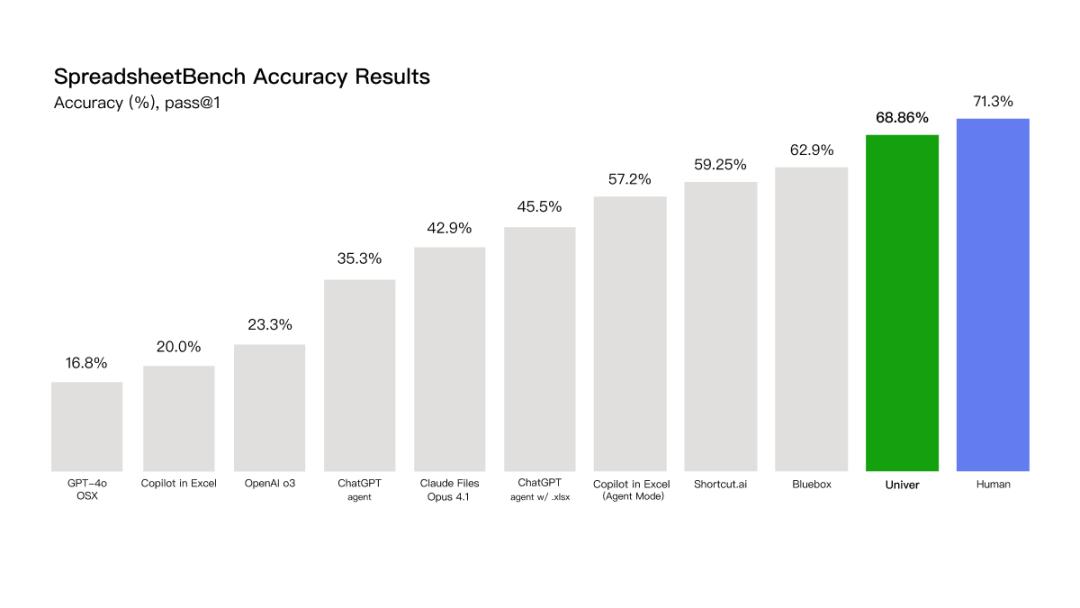
Core Insights - Univer transforms electronic spreadsheets from complex and inefficient tools into an AI-native universal computing engine, relying entirely on its self-developed spreadsheet SDK [2][5][36] Financing Progress - Univer has secured seed round financing, primarily from individual investors [3] Team Introduction - The founder and CEO, Liu Yang, previously led the technology for Feishu's electronic spreadsheets and developed the open-source project Luckysheet, which has over 16,000 stars on GitHub [4] - The server technology lead, Shen Weimin, has a background in Huawei's core network development and was among the first 20 employees at Feishu, contributing to significant user growth [4] - Spreadsheet technology expert, Min Chengcheng, has eight years of experience in spreadsheet development and has held key roles in various projects [4] Product and Business - Univer's product matrix consists of the core Univer engine and various SDK plugins aimed at engineers, along with AI applications like the spreadsheet editing and analysis product "Biao Da" [5][21] - In December 2025, Univer achieved a score of 68.86% in the SpreadsheetBench global evaluation, surpassing ChatGPT Agent and Excel Copilot [5] Product Structure - Univer's product is structured in two layers: the self-developed spreadsheet engine at the bottom and a plugin architecture (SDK) at the top, providing over 100 plugins for core functionalities [17][18] AI Integration - Liu Yang emphasizes that the goal of AI spreadsheet products should be to automate data import, cleaning, and analysis, allowing AI to generate insights directly [9][29] - Univer's self-developed engine allows for better handling of complex data structures, providing more context and accuracy compared to traditional large models [22][34] Market Positioning - Univer aims to position itself as a leader in the AI-native spreadsheet market, with the belief that spreadsheets will become the next major battleground for AI applications [27][35] - The company has already attracted paying customers from North America, Europe, East Asia, and China, including major firms like Novartis and Samsung [26] Future Outlook - The company believes that as AI becomes more integrated into spreadsheets, the role of spreadsheets will shift from being a tool for humans to a tool for AI agents [29][30]