蜜雪冰城

Search documents
2025河南省民营经济高质量发展系列新闻发布会 金融活水精准浇灌解民营经济之渴
He Nan Ri Bao· 2025-12-10 23:08
Core Viewpoint - The healthy development of the private economy relies on precise financial support, as highlighted in the recent press conference by the Henan Provincial Government regarding financial support for high-quality development of the private economy [1] Financial Service Expansion - The financial system in Henan has maintained a trend of "increasing volume, expanding coverage, improving quality, and reducing costs" in support of the private economy [2] - As of the end of October, loans to the private economy reached 2.35 trillion yuan, a year-on-year increase of 2.32% [2] - 55.6% of new corporate loans this year were directed towards private enterprises, an increase of 1.3 percentage points compared to the end of 2024 [2] - The weighted average interest rate for new loans to private enterprises has continued to decrease [2] Financial Integration and Service Quality - A total of 449 financial service specialists have been deployed across provincial, municipal, and county levels to enhance service quality through various initiatives [3] - Over 4,500 government-enterprise financing matchmaking events were organized in the first ten months, covering 59,000 enterprises, with over 80% being private enterprises, resulting in financing of 220 billion yuan [3] - The comprehensive financing cost for corporate loans has stabilized and decreased, with innovative financing service models being developed [3] Monetary Policy Tools Utilization - The People's Bank of China, Henan branch, has effectively utilized various monetary policy tools to channel more quality financial resources into key areas of the private economy [4] - By the end of October, loans supported by these tools totaled 106.2 billion yuan, with the average interest rate for new corporate loans at 3.26%, down 0.51 percentage points year-on-year [4] Support for Small and Micro Enterprises - A coordination mechanism for supporting small and micro enterprises has been efficiently operational, with 7.32 million visits to small businesses conducted, ranking second nationally [5] - The mechanism has achieved a credit and loan issuance rate exceeding 95%, effectively addressing financing difficulties [5] Tailored Financial Products - Financial institutions are innovating personalized financing solutions to meet the diverse needs of private enterprises across different industries and regions [7] - The Industrial and Commercial Bank of China in Henan has developed 343 unique loan scenarios to address common financing challenges [7] - The "PuHui LaiLe" app by SPD Bank integrates various functions to create a convenient and efficient service system for private enterprises [7]
品牌运营:2026内容消费趋势白皮书:凡人至上
Sou Hu Cai Jing· 2025-12-10 16:39
Core Insights - The report highlights a shift from grand narratives to the rise of ordinary people's voices, indicating a democratization of storytelling in various industries, particularly in entertainment and content consumption [1][4][7] Group 1: Entertainment and Content Industry - The film industry is witnessing a narrative shift where stories focus on ordinary individuals rather than heroic figures, exemplified by films like "Nanjing Photo Studio" and "Nezha 2" [16][20] - Short dramas and variety shows are becoming emotional "quick fixes" for audiences, with short dramas evolving into significant investments, as seen with "Zhuque Hall" [25][33] - Music and podcasts are experiencing a bifurcation, with a demand for both instant gratification through catchy tunes and deeper, meaningful content through long-form discussions [37][39] Group 2: Business, Retail, and Consumption - Consumers are increasingly rejecting brands that maintain a "grand" image, favoring those that engage in genuine interactions, as seen with innovative marketing strategies like using receipts for storytelling [49][50] - The trend of "micro-touch" marketing is emerging, where brands create unique consumer experiences through everyday interactions, such as personalized receipts and relatable narratives [52][53] - The consumption trend reflects a preference for "humble aesthetics" and "practical wisdom," indicating a shift towards authenticity and relatability in brand representation [48][49] Group 3: Technology and Internet - AI tools are empowering ordinary individuals to create and share content, making it easier for their voices to be heard in the digital landscape [8][10] - The integration of technology into daily life is shifting focus towards health and companionship, emphasizing the importance of personal experiences over grand technological achievements [8][10] Group 4: Social and Political Context - Public discourse is increasingly centered around empathy and personal experiences, with ordinary people's lives becoming a benchmark for evaluating broader societal issues [8][10] - The narrative power is shifting from elite institutions to everyday individuals, reflecting a growing desire for relatable and authentic stories in public discussions [7][10] Group 5: Health and Sports - The health and wellness sector is moving towards systematic optimization and cost-effective care, while grassroots sports events are gaining recognition, emphasizing local identity [8][10] - The focus on ordinary people's experiences in sports is reshaping the narrative around athleticism, moving away from elite-centric views [8][10] Group 6: Brand Marketing Revolution - The marketing landscape is undergoing a "people's revolution," transitioning from top-down communication to a more empathetic, two-way interaction with consumers [1][10] - Brands are encouraged to abandon the notion of leading and instead focus on companionship and understanding consumer emotions [10][11]


海南大力推进探索建设“两个基地” 上市公司董秘共话出海新机遇
Mei Ri Jing Ji Xin Wen· 2025-12-10 14:05
海南自贸港即将迎来全岛封关运作。面临新一轮开放机遇,上市公司正抢先"跑步入场"。 在此背景下,每日经济新闻联合海南国际经济发展局,于12月11日至13日在海口举办"2025第十四届上 市公司发展年会暨海南自贸港开放机遇交流大会",将有超过400家上市公司和20多家机构参会,共话封 关新局下的政策路径、全球化机遇。 作为本次系列活动的首场重要活动,"2025第九届上市公司董秘年会暨海南自由贸易港政策沟通会"于12 月11日率先举行。此次董秘年会以"共享机遇·链接全球"为主题,吸引政府机构、投资机构、有意向出 海的企业和众多上市公司董秘及高管齐聚一堂,共话出海新机遇。 中企出海 全球化深度运营 从会前征集的问题来看,企业家们对封关政策尤为关切,包括如何把握封关运作初期的政策红利,以及 封关后各项配套政策将如何持续为企业发展提供助力等。因此,本次董秘年会的一大亮点正是为企业了 解、落地海南自贸港搭建一个政企交流平台。本次董秘年会将邀请海南深改办、财政厅、海口海关等部 门相关负责人到场,深度解读有关自贸港封关最新政策。不仅如此,针对封关后海关监管、税收制度、 投资政策、人才配套等一系列高关注度话题,政企双方还将展开深 ...
河南民营上市企业达77家 总市值1.42万亿元
Zhong Guo Xin Wen Wang· 2025-12-10 09:38
通报称,"十四五"期间,该省新增民营上市企业26家,占新增上市企业数量超89%,公开发行募资总额 137.95亿元;新增新三板挂牌企业33家,均为民营企业;54家民营挂牌企业定向发行融资累计18.33亿 元。 今年以来,知名茶饮豫企蜜雪冰城赴港上市,募资34.55亿元,创港股新股发行冻结资金纪录,获市场 高度认可;新增民营新三板挂牌企业5家,其中嘉维轴承为河南首家通过"绿色通道"登陆新三板的民营 企业。 中新社郑州12月10日电 (阚力 王佳宁)中国证券监督管理委员会河南监管局副局长韩文旦10日在河南省 政府新闻办举行的2025河南省民营经济高质量发展系列新闻发布会上通报,截至今年10月底,该省民营 上市企业已达77家,总市值达1.42万亿元(人民币,下同)。 通报称,今年以来,河南民营上市企业业绩稳中向好,经营质量显著提升。59家民营上市企业现金分红 327.19亿元,21家民营上市企业回购增持40.57亿元。 其中,洛阳钼业、牧原股份等4家民营上市企业市值超500亿元,双汇发展等6家民营上市企业上榜"2025 民营企业500强",龙佰集团等13家民营上市企业股票被纳入A股重要指数成份股。 统计显示,今年前 ...
专项基金又要热起来了
母基金研究中心· 2025-12-10 09:30
Core Viewpoint - The recent surge in the Hong Kong IPO market and steady progress in A-share listings, particularly among leading technology companies on the Sci-Tech Innovation Board, has reignited interest in specialized funds among investors [2][4]. Group 1: Market Dynamics - The popularity of specialized funds has increased due to the underperformance of blind pool funds and a growing focus on underlying assets by LPs [2][3]. - Specialized funds are characterized by smaller scales and targeted investments, making them more appealing to LPs seeking lower commitment amounts and higher certainty [2][6][7]. - The IPO market has seen significant activity, with a total of 191 IPOs in A-shares and Hong Kong from January to November 2025, involving 1,114 investment institutions and an average IRR of 47.14% [4]. Group 2: Characteristics of Specialized Funds - Specialized funds emphasize certainty by pre-defining investment projects, primarily targeting mature companies with growth potential [6]. - They provide LPs with more control and project selection options compared to blind pool funds, which enhances decision-making participation [6]. - The establishment and initiation of specialized funds are quicker due to simplified documentation and reduced due diligence requirements [6]. Group 3: Challenges and Considerations - Despite their advantages, specialized funds face challenges in fundraising, particularly due to the scarcity of quality projects and the competitive nature of popular sectors [9]. - The inability to expand funds or redeem investments post-formation limits the flexibility of specialized funds, potentially increasing operational costs [7][10]. - The risk profile of specialized funds can be higher in certain sectors, as they are more susceptible to market shocks compared to blind pool funds, which can diversify their investments [8][10].

蜜雪冰城早餐“前哨战”:5元平价策略背后的全时段野心与供应链大考
Xin Lang Cai Jing· 2025-12-10 02:40
Core Insights - The article discusses the strategic entry of Mixue Ice City into the breakfast market, targeting China's 1.35 trillion yuan breakfast sector with a new product line priced at 5 yuan [1][15][16] Group 1: Market Entry Strategy - Mixue Ice City has launched a breakfast series in several cities, including Hangzhou, Dalian, Xi'an, and Nanning, featuring four milk products priced uniformly at 5 yuan [1][14][15] - The company conducted a comprehensive breakfast survey through WeChat to gauge consumer preferences and price sensitivity before launching the breakfast products, indicating a cautious approach to market entry [2][16] - The breakfast initiative is currently in a testing phase, with no plans for large-scale promotion yet, reflecting a careful rollout strategy [2][16] Group 2: Operational Efficiency and Profitability - The introduction of breakfast items aims to optimize existing business models by utilizing idle morning hours in stores, thereby reducing fixed costs and enhancing overall profitability [3][18] - With over 53,000 stores, even a small increase in revenue from breakfast sales can lead to significant aggregated gains for the company [3][18] - The choice to offer dairy products for breakfast leverages existing supply chain capabilities, allowing for cost-effective product development and market testing [3][19] Group 3: Industry Trends and Competition - Mixue Ice City is part of a broader trend in the beverage industry, where brands like Gu Ming, Kudi, and Nayuki are also entering the breakfast market, indicating a shift towards all-day, multi-category operations [5][20][21] - The competitive landscape is characterized by increasing homogenization among tea brands, making it challenging to attract customers during limited afternoon tea hours [6][21] Group 4: Challenges in Localization and Standardization - The company faces significant challenges in catering to diverse regional breakfast preferences across China, which complicates the standardization of breakfast offerings [8][22][23] - Breakfast consumption behavior differs from tea consumption, emphasizing the need for quick service and efficient operations, which may require adjustments in store processes [9][24] - Balancing resource allocation between breakfast and core tea products poses an operational challenge for Mixue Ice City [9][24] Group 5: Supply Chain Considerations - Mixue Ice City's established supply chain, with five production bases and 29 warehouses, supports its distribution capabilities across over 300 cities [10][25][26] - The breakfast business will test the supply chain's adaptability, especially as many breakfast items require higher freshness and quicker turnaround than tea products [10][26] - The company's recent acquisition of a stake in a fresh beer brand indicates a strategy to diversify and create a full-day consumption experience [10][26]
梦龙上市,重塑高端?
Bei Jing Shang Bao· 2025-12-09 12:25
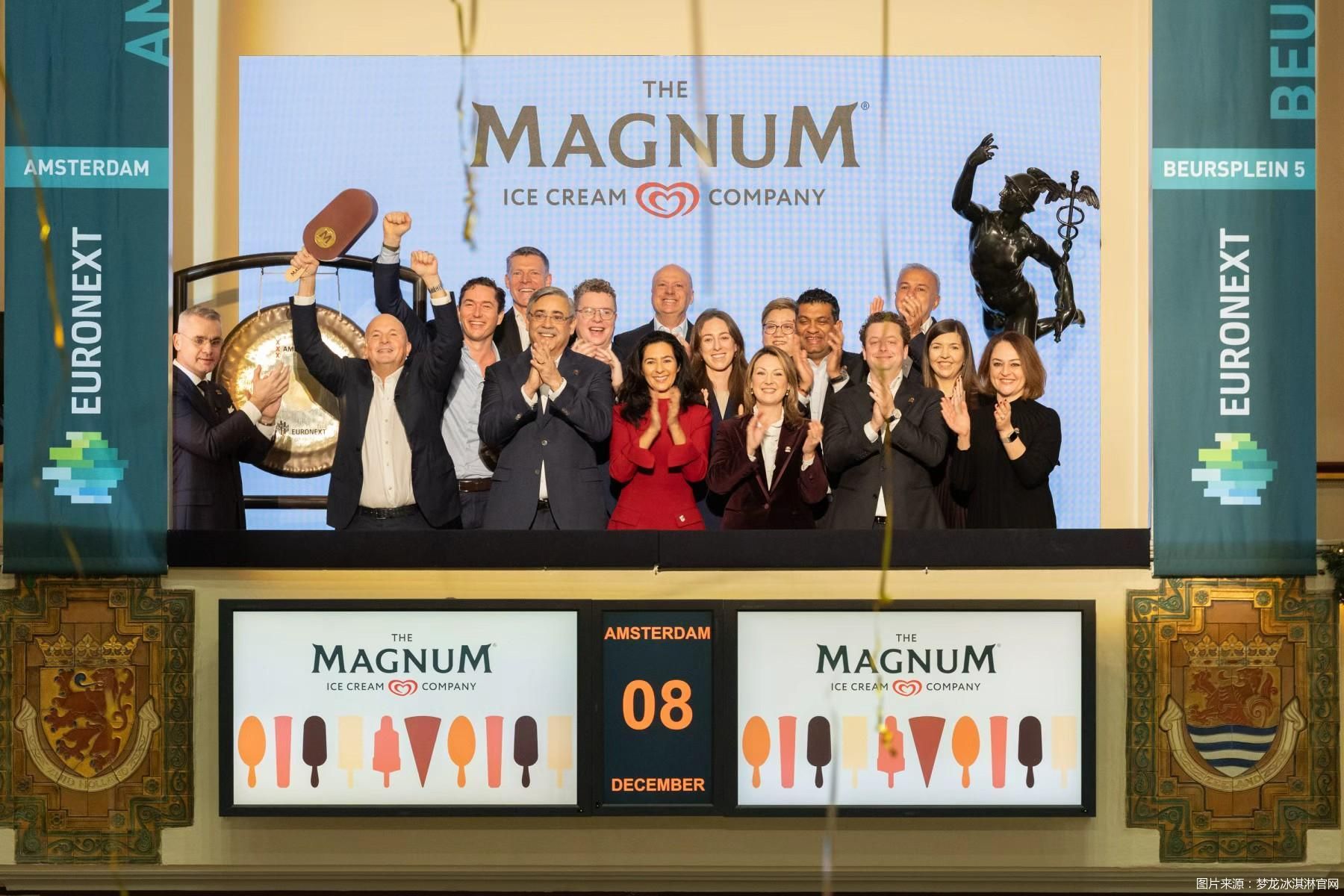
Core Insights - The article discusses the recent IPO of the Magnum ice cream company, which has a market capitalization of €7.8 billion and is now listed on exchanges in Amsterdam, London, and New York, marking a new phase of development after its spin-off from Unilever [2] - The company aims to be more agile and focused as an independent entity, with a clear strategy for growth and productivity improvement [2] - The high-end ice cream market is becoming increasingly competitive, with local brands and fresh-made stores posing significant challenges to Magnum's market position [5] Company Overview - Magnum ice cream, part of the Unilever family since its inception in 1989, has established itself as a leading brand in the premium ice cream segment, particularly in China [3] - Following Unilever's divestment of non-core businesses, Magnum has been positioned as the "largest pure ice cream company globally," with operations in 80 countries and a substantial cold chain asset base [5] Market Position and Financials - Magnum is projected to achieve revenues of €7.9 billion in 2024, capturing 21% of the global market share, followed by Froneri at 11% and other companies like Mengniu and Yili collectively holding 12% [2] - In China, Magnum's revenue is expected to be €317 million in 2024 and €270 million in the first half of 2025, with double-digit growth reported in the first half of the current year [4] Competitive Landscape - The ice cream market in China has seen a decline in sales volume and revenue over the past two years, with competitors like Yili and Mengniu gaining market share [5] - New entrants in the fresh-made ice cream segment, such as "Mr. Wildman," are rapidly expanding, posing a threat to established brands like Magnum [7] Strategic Initiatives - Post-IPO, Magnum plans to accelerate its product development, penetrate the food service and bakery sectors, and strengthen its supply chain to enhance efficiency [4] - The company has increased its marketing efforts, particularly in digital and social media, to adapt to changing consumer preferences and market dynamics [7] Challenges and Trends - The premium ice cream segment is facing pressure as consumers shift towards lower-priced options, impacting Magnum's sales and market share [8] - Analysts suggest that the ice cream market is entering a phase of diversification, with brands needing to balance speed and quality to remain competitive [9]
广州小店港股上市,遇见小面,如何用一碗面敲开国际资本大门?
Sou Hu Cai Jing· 2025-12-09 09:58
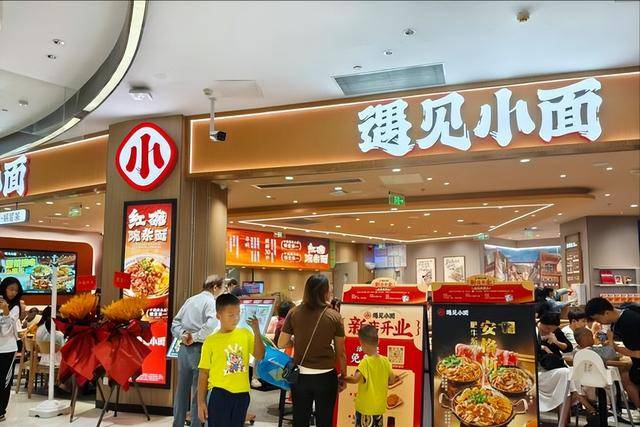
Core Viewpoint - Guangzhou Yujian Xiaomian Restaurant Co., Ltd. has officially listed on the Hong Kong Stock Exchange, becoming the first noodle restaurant to go public, marking a significant milestone for the Chinese dining industry [2][15]. Company Overview - The company issued 97.36 million H-shares at an offering price of HKD 7.04, raising a total of HKD 685 million [4]. - The public offering was oversubscribed by 426 times, with over 60,000 valid applications, indicating strong interest from both local and international investors [4][6]. - Notable cornerstone investors include Hillhouse Capital and Haidilao, which collectively invested USD 22 million, accounting for 25% of the total fundraising [4][6]. Business Performance - Yujian Xiaomian has expanded rapidly from 133 stores in 2022 to 465 stores across 22 cities [8]. - The company’s revenue increased from HKD 418 million to HKD 1.154 billion over three years, nearly doubling [10]. - Adjusted net profit for the first half of the year reached HKD 52.175 million, a 131% increase year-on-year, showcasing strong growth in the restaurant sector [10]. Expansion Strategy - The company plans to open 520 to 610 new stores between 2026 and 2028, focusing on lower-tier cities and international markets [12]. - Investment in the upstream supply chain is crucial, as food costs represent a significant portion of expenses, allowing the company to control quality and costs [12][14]. Industry Context - The listing of Yujian Xiaomian is part of a broader trend in the Hong Kong market, where several Chinese food brands have gone public, indicating a growing interest in the sector [6][15]. - The company’s approach of combining regional flavors with standardized operations serves as a model for other local dining brands aiming for expansion [14][15]. - The successful listing is seen as a milestone for the standardization and capitalization of Chinese fast food, potentially paving the way for more regional brands to enter the market [18][20].
打工人的早餐,被餐饮品牌们卷成了“兵家必争之地”
东京烘焙职业人· 2025-12-09 08:33
Core Viewpoint - The breakfast scene has become a new battleground for tea drinks, chain coffee, and light meal brands, with companies like Mixue Ice City exploring various breakfast options to leverage their extensive store network and supply chain advantages [1][4]. Group 1: Market Dynamics - The competition for "breakfast scene definition" has begun, revealing strategic blind spots in the baking industry [1][3]. - Cross-industry players are entering the breakfast market with different business logic, creating innovative scenarios [3]. - The breakfast market is characterized by high frequency, necessity, and low customer spending, with consumers typically willing to spend under 10 yuan for breakfast [16][19]. Group 2: Company Strategies - Mixue Ice City's breakfast strategy focuses on utilizing its large store scale and supply chain to create low marginal cost incremental business, offering pre-packaged breakfasts delivered from a central factory [4][19]. - Starbucks and M Stand are pursuing an "experience upgrade" strategy, extending their coffee offerings to include breakfast, thus increasing customer spending [6][8]. - M Stand's combination of beef pancakes and salty coffee demonstrates that breakfast can be a high-margin market rather than a low-margin one [8]. Group 3: Challenges for Bakeries - Many bakeries do not primarily focus on breakfast as a consumption scene, which is contrary to the perception that they are naturally suited for it [10][18]. - There is a clear mental separation among consumers between breakfast and bakery scenes, with breakfast associated with quick, cheap options and bakeries linked to leisurely consumption [12][13]. - The cost and pricing challenges in the breakfast market create a "trilemma" for bakeries, making it difficult to cover operational costs while maintaining brand integrity [15][16]. Group 4: Recommendations for Bakeries - Bakeries need to reconstruct their business logic to compete in the breakfast market, focusing on local, quick-to-prepare options that can be served efficiently during peak hours [20][22]. - Regional chains should develop a standardized breakfast matrix that combines universal items with local specialties to appeal to consumers [23][24]. - Boutique bakeries should create signature breakfast items that enhance brand recognition and customer loyalty, transforming breakfast into a brand entry point [28][30]. Group 5: Operational Insights - The success of breakfast offerings relies more on operational rhythm than on new product development, with precise timing and efficiency being crucial [30][31]. - Implementing a structured approach to breakfast service can help bakeries manage peak demand and reduce waste, while a dual pricing strategy can attract a broader customer base [31][34].

0糖0脂后,下一个健康食品风口是低GI?
新消费智库· 2025-12-08 13:04
Core Viewpoint - The article discusses the rapid growth of the low Glycemic Index (GI) food market in China, driven by increasing health awareness among urban consumers and the introduction of various low GI products by established and new brands [4][22]. Group 1: Market Trends - The low GI food market in China reached a scale of 176.2 billion yuan in 2024, with an annual growth rate exceeding 10% [22]. - The search popularity for low GI food and beverages increased by 56% year-on-year, indicating a significant rise in consumer interest [6]. - The low GI food category is expanding beyond traditional baked goods to include staple foods, snacks, and beverages, reflecting a diversification of consumer choices [12]. Group 2: Consumer Behavior - Urban consumers are increasingly shifting towards low GI foods as part of a healthier lifestyle, with a notable rise in the consumption of these products among not just diabetics but also fitness enthusiasts and health-conscious individuals [12][22]. - The popularity of low GI foods is supported by social media, with the 低GI topic on Douyin receiving over 360 million views, and related content on Xiaohongshu exceeding 10 million views [6][8]. Group 3: Brand Innovations - Traditional food brands like Junlebao, Kangshifu, and Wangwang are reformulating their high GI products to include low GI alternatives, utilizing ingredients like chickpeas and barley [10][12]. - New players in the market, such as Masisala, are leveraging their expertise in specialized medical foods to gain consumer trust and expand their product offerings [14][16]. - Retailers like Hema and Dingdong are not only selling low GI products but are also actively involved in the supply chain, promoting the development of these products [17][19]. Group 4: Policy Influence - The Chinese government's "Healthy China 2030" strategy promotes low GI diets, encouraging companies to develop low sugar or sugar-free products and to label them with low GI certifications [12][22]. - Recent guidelines from the National Health Commission have further emphasized the importance of low GI diets in managing weight and preventing obesity [12].