零跑

Search documents
蔚来交了巨额学费后,李斌承认误判欧洲市场
阿尔法工场研究院· 2025-03-27 13:01
Core Viewpoint - The article discusses NIO's recent organizational changes, quarterly profit targets, and strategies for market expansion, particularly focusing on the concept of "Chinese large SUVs" and the company's approach to international markets and partnerships [2][4][11]. Group 1: Organizational Changes and Market Strategy - NIO's CEO Li Bin emphasized the success of extended-range SUVs in China, attributing it to favorable tax regulations that do not restrict the market for these vehicles [4]. - The concept of "Chinese large SUVs" is central to NIO's product design, focusing on family usage scenarios, seating capacity, quality, and SUV classification [5]. - NIO's approach to building battery swap stations involves partnerships with local enterprises to reduce capital expenditure and enhance operational efficiency [9][10]. Group 2: International Expansion and Market Insights - NIO plans to enter 25 countries and regions this year, learning from past experiences in Europe where initial strategies led to misjudgments regarding market dynamics [11][12]. - The company acknowledges the importance of local partnerships for efficient market entry, moving away from direct operations in multiple European countries [12][15]. - NIO's previous reliance on remote management for European operations has been criticized, highlighting a lack of understanding of local market conditions [14][15]. Group 3: Manufacturing and Supply Chain Innovations - NIO is adopting a platform-based approach to manufacturing, allowing for shared components across different models to improve cost efficiency [17][18]. - The company has recognized the need for a more sophisticated procurement strategy to ensure profitability and quality in its supply chain [19][20]. - NIO's service model has evolved to focus on providing high-quality, paid services rather than free offerings, leading to improved customer satisfaction and profitability in after-sales services [19][20]. Group 4: Leadership and Management Challenges - The article critiques the management capabilities of NIO's president, highlighting issues in operational execution and strategic decision-making [25][26]. - Li Bin's leadership is praised for navigating financial challenges, but concerns are raised about the president's experience and understanding of critical operational areas [25][26].


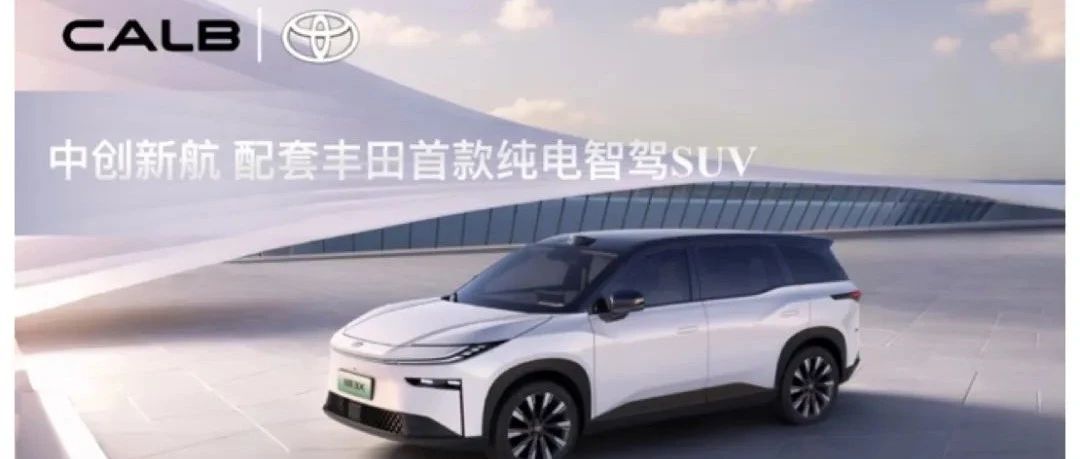
装机铂智3X 中创新航赋能广汽丰田全球电动化转型
高工锂电· 2025-03-27 12:23
Core Viewpoint - Toyota is adapting to the electrification pace in China, launching the GAC Toyota Platinum 3X, its first fully electric SUV, with a high localization rate in its supply chain [2][4]. Group 1: Product Launch and Market Response - The GAC Toyota Platinum 3X received over 10,000 orders within the first hour of its launch, indicating strong market demand [3]. - The vehicle features a supply chain composed of top global and domestic companies, including Qualcomm, NVIDIA, and leading Chinese firms in autonomous driving and lidar technology [3][4]. Group 2: Battery Technology and Partnerships - The Platinum 3X utilizes battery technology from CATL, which is recognized for its scale and cost-effectiveness, crucial for meeting the demands of the Chinese market [4][5]. - CATL has previously collaborated with other Japanese automakers, showcasing its established reputation in battery technology [6]. Group 3: Global Expansion and Market Strategy - CATL's battery shipments are projected to reach 20 GWh in Q1 2025, with a year-on-year increase of nearly 150%, indicating significant growth in both domestic and international markets [7]. - The partnership with GAC Toyota allows CATL to enhance its international brand image and penetrate other global markets, moving beyond merely selling products to deeper brand collaborations [9]. Group 4: Supply Chain Integration and Competitive Advantage - The collaboration between GAC Toyota and CATL is expected to provide both companies with technological and cost advantages, facilitating Toyota's electrification transition [8]. - The integration of global supply chains is becoming increasingly important for companies to enhance their competitive edge in the market [9].
比亚迪如何赚钱? | 电厂
Jie Mian Xin Wen· 2025-03-26 10:21
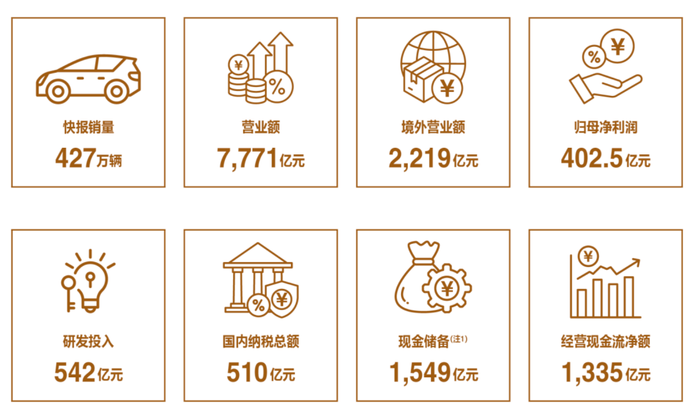
Core Viewpoint - BYD's profitability is driven by a combination of increased sales volume, cost reduction through scale effects and supply chain integration, and strategic pricing in the competitive automotive market [1][3][10]. Financial Performance - In 2024, BYD achieved a revenue of 777.1 billion yuan, a year-on-year increase of 29%, and a net profit of 40.25 billion yuan, up 34% from the previous year [1][9]. - The automotive business maintained a gross margin of 21.02%, which is higher than competitors like Li Auto (19.8%) and Xpeng (14.3%) [5][6]. Pricing Strategy - The average selling price of BYD vehicles decreased to 144,500 yuan in 2024, down approximately 15,000 yuan from 2023 [3]. - BYD has engaged in aggressive pricing strategies, including launching models at significantly lower prices, which has influenced the entire industry [3][8]. Cost Management - BYD's scale effect allowed it to reduce costs significantly, achieving a global sales volume of 4.27 million vehicles, a 41% increase year-on-year [6][10]. - The company emphasizes vertical integration in its supply chain, producing a majority of critical components in-house, which enhances its bargaining power and reduces costs [7][10]. R&D Investment - BYD's R&D expenditure reached 54.16 billion yuan in 2024, a 36% increase, significantly exceeding its net profit [10][11]. - The company has consistently invested more in R&D than its net profits over the years, with a cumulative investment exceeding 180 billion yuan [10][12]. Product Development and Market Position - BYD has launched several advanced technologies, including the fifth-generation DM and high-level intelligent driving systems, contributing to its competitive edge in electric and smart vehicle markets [12]. - The company aims to enhance its product matrix with new models and improve its pricing power in the high-end segment [8][12]. Future Outlook - BYD's sales target for 2023 is set at 5.5 million vehicles, with a significant focus on expanding its overseas market [13]. - The company anticipates that government policies promoting vehicle upgrades and the integration of artificial intelligence in automotive technology will further boost demand for its products [13].

宝马牵手阿里巴巴!
券商中国· 2025-03-26 04:26
Core Viewpoint - BMW Group announced a deepened strategic cooperation with Alibaba Group to jointly develop an AI engine based on Alibaba's Tongyi AI model, aimed at the Chinese market for BMW's new generation series vehicles, expected to be delivered in 2026 [1][2]. Group 1: Strategic Cooperation - The collaboration focuses on cutting-edge technologies such as AI models and intelligent voice interaction, with the new BMW Intelligent Personal Assistant integrating the jointly developed AI engine [2]. - The AI engine will support smart cockpit and smart travel interaction scenarios, which will debut at the Shanghai Auto Show in April [3]. Group 2: Industry Trends - The automotive industry is rapidly embracing AI, with BMW emphasizing the importance of understanding local consumer needs in China through its Skylab human-computer interaction research center [4]. - BMW's CEO in Greater China highlighted the partnership with Alibaba as a testament to the benefits of collaboration in creating prosperity and growth, aiming to enter a new era of cooperation in the fields of intelligence and electrification [4]. Group 3: AI Investment and Growth - Alibaba has been a pioneer in AI technology research and application in China, with other automotive companies like Xpeng and Zeekr also integrating the Tongyi series models [5]. - As demand for AI technology grows across various industries, Alibaba Cloud's revenue is experiencing accelerated growth, with a significant recruitment drive for AI talent from top global universities [6]. - Alibaba's financial performance shows a return to double-digit growth in external commercial revenue from Alibaba Cloud, with AI-related product revenue achieving triple-digit year-on-year growth for six consecutive months [6].


李斌最需要为蔚来解释什么
和讯· 2025-03-25 10:14
不仅没能完成目标,对比2023年,净亏损额还多出了近17亿元。这大概就是财报发布后,李斌迎来诸多质疑的核心原因。 无论对于投资者还是对于消费者,造车11年的李斌和蔚来整个高管团队确实都需要用行动给出具体的解释。 3月21日,蔚来汽车发布2024年财报。根据财报,蔚来全年销售22.20万辆车,净亏损224亿元,粗略计算,蔚来每卖出一台车,大约净亏10万 元。 去年年初,蔚来确定的全年销量目标为23万辆,比2023年目标低了1.5万辆。当时蔚来创始人、董事长李斌对外宣称,这是一个相对理性的目标。 但24年财报显示,蔚来没能完成年初确定的销量目标,实际缺口约为8000辆。 乐道"折戟"暴露管理问题 业绩公布当天,蔚来美股股价应声下跌,收盘跌4.46%。港股表现也不尽如人意,财报发布后的两个工作日,该股股价持续下跌,截至发稿,报 33.8港元,当日跌2.59%。 这与去年9月份蔚来半年业绩发布后,美股大涨14.39%形成鲜明对比。 彼时,蔚来销量稳定,乐道还没正式上市,管理层也在电话会上强调换电业务已经等到了盈利的曙光。一时间资本纷纷看好,在理想、小鹏、比亚 迪、零跑不约而同地在财报发布后遭遇了股价下跌之后,反而是亏 ...

小鹏规划了5款增程车,包含轿车和SUV|36氪独家
36氪· 2025-03-25 09:37
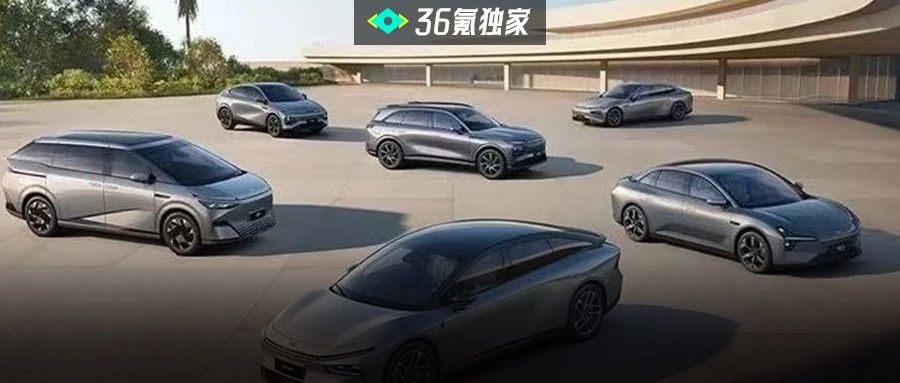
Core Viewpoint - Xiaopeng Motors is fully embracing range-extended electric vehicles (REEVs), planning at least five new models, including sedans and SUVs, with a significant shift towards dual power modes in future models [3][5][6]. Summary by Sections Planning and Strategy - Xiaopeng Motors has decided to reintroduce range-extended models after initially focusing on low-cost vehicles. The first REEV will be based on the X9 and is expected to enter mass production in the second half of this year [3][7]. - The company aims to have most of its new vehicles adopt both REEV and pure electric powertrains in the coming years [3]. Market Context - The REEV market was unstable in 2022, with competitors like Li Auto selling approximately 130,000 units, while the market leader was Neta. However, by 2024, the REEV market has gained traction, with several companies validating the competitiveness of REEVs [4][5]. - Almost all pure electric vehicle manufacturers, except Tesla and NIO, are planning REEV products, prompting Xiaopeng to re-evaluate its strategy [6]. Product Features and Innovations - The new REEV models will feature an 800V platform with 5C ultra-fast charging capabilities and a pure electric range exceeding 400 kilometers, similar to the capabilities of CATL's new hybrid battery [9][10]. Financial Performance - Xiaopeng Motors reported a significant increase in sales, selling 91,500 vehicles in Q4 2024, with revenue reaching 16.11 billion yuan, a 96.6% increase from Q3. The total sales for 2024 were approximately 190,000 vehicles, generating 40.87 billion yuan in revenue, a 33.2% year-on-year growth [12]. - The company also reported a narrowed loss of 5.79 billion yuan, down 44% year-on-year, with expectations to achieve profitability by Q4 2025 [12]. Competitive Landscape - Xiaopeng's recent models, such as the MONA M03 and P7+, have gained significant market traction, with the MONA M03 accounting for nearly half of Xiaopeng's monthly sales in February [11][15]. - However, competition is intensifying, with rivals like BYD launching similar models targeting the same consumer base, which could impact Xiaopeng's market share [15][16]. Challenges and Future Outlook - Xiaopeng faces challenges related to production capacity, which has historically affected its ability to meet demand during peak sales periods. The company is currently addressing supply chain issues to improve production [16]. - The need for continuous product innovation and multiple successful models is critical for Xiaopeng to maintain its competitive edge in a rapidly evolving market [17].

越过电车的定价陷阱
新财富· 2025-03-25 03:27
Core Viewpoint - The article discusses the segmentation and competition within the Chinese automotive market, particularly focusing on the price ranges of 10-20 million, 20-30 million, and 30-40 million yuan, highlighting the unique dynamics and consumer preferences in each segment [5][6][24]. Group 1: Market Size and Sales Data - In 2024, the cumulative sales of new energy passenger vehicles in China reached 1,286.6 thousand units, with the 10-20 million segment selling 559.9 thousand units, the 20-30 million segment selling 212.3 thousand units, and the 30-40 million segment selling 221.1 thousand units [5][7]. - The market sizes for these segments in 2024 are estimated at 839.85 billion yuan for 10-20 million, 530.75 billion yuan for 20-30 million, and 773.85 billion yuan for 30-40 million, indicating that the 30-40 million segment has a larger market size than the 20-30 million segment [6][7]. - The sales figures for 2022-2024 show a consistent trend where the 30-40 million segment has outperformed the 20-30 million segment in terms of sales volume [5][6]. Group 2: Consumer Preferences and Market Dynamics - The article notes that the demand differentiation between fuel and electric vehicles, as well as between sedans and SUVs, is less applicable in the 20-30 million price range, leading to a more complex consumer decision-making process [3][5]. - The competition in the 10-20 million segment is characterized by a focus on cost-effectiveness, with brands like BYD dominating due to their early market entry and strong cost management [9][22]. - The 20-30 million segment is described as having unclear demand segmentation, with consumers seeking higher value and satisfaction without fully transitioning to the premium 30 million and above segment [29][30]. Group 3: Competitive Landscape - Companies that can effectively target both the 10-20 million and 30-40 million markets are likely to achieve the highest profitability, although few companies currently span this price gap [9][24]. - The article highlights that brands like BYD, Geely, Tesla, and Li Auto are well-positioned to capture market share across these segments due to their diverse product offerings [9][24]. - The 30-40 million segment is noted for having a clearer competitive landscape, with established brands like Tesla and Aito having distinct user bases that are difficult to overlap [24][25].

蔚来回应ES6与零跑相撞后起火
证券时报· 2025-03-24 10:56
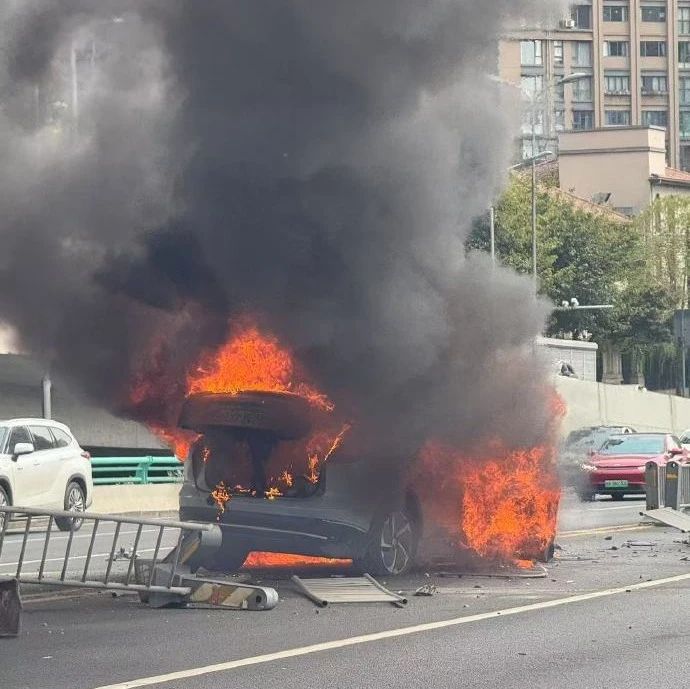
2025年3月23日14时许,成都市三环路桂溪立交路段发生一起道路交通事故。接警后,公安交警、消防、医疗等部门迅速赶赴现场开展救援处置。 经初步调查,罗某某(男,28岁)驾驶川AB****8号牌小型客车,沿科华南路由南向北行驶至桂溪立交上跨桥时,车辆向左偏移,碰撞中心护栏后进入对向 车道,与正常行驶的两辆小型客车相撞并起火燃烧。事故造成3车受损、5名驾乘人员受伤。经送医救治,伤者均无生命危险。 目前,涉事驾驶员罗某某已被公安机关控制,经检测,初步排除酒驾、毒驾嫌疑。事故正在进一步调查处理中。 综 合 自 成 都 公 安 、 " 蔚 来 小 喇 叭 " 官 博 等 责 编:李 丹 校 对: 彭 其 华 3月23日在四川成都一辆蔚来ES6与零跑发生碰撞事故。 24日下午,"蔚来小喇叭"官方发布了成都车辆碰撞事故的说明: 3月23日下午,一辆蔚来ES6在成都天环路撞击路边护栏后冲至对向车道,与对向车辆发生碰 撞后引发火情,事故造成三车受损,5名驾乘人员受伤,经送医治疗,伤者均无生命危险。蔚来事故监测平台发出预警后,蔚来工作人员第一时间赶赴现场协 同处理。消防人员到场快速控制车辆火势,事故现场已于昨日下午清理完毕。蔚 ...
比亚迪们为了这事儿杀红了眼
虎嗅APP· 2025-03-23 03:43
Core Viewpoint - The "Smart Driving Equality" trend in the Chinese automotive industry has gained momentum, with major domestic brands participating, indicating a critical juncture where over 50% of domestic car sales will be involved in this competitive landscape [1][2]. Group 1: Market Dynamics - The urgency for car manufacturers to enter the smart driving market is driven by a narrowing window for smart technology adoption, where strategic positioning will determine future market share [2]. - A price war has intensified, with 28 models, including 20 electric vehicles, experiencing price reductions averaging 30,000 yuan, representing a 13% decrease [4]. - New electric vehicle models have seen significant price cuts, with average reductions of 39,000 yuan and a 17% drop, marking the highest in their respective segments [4]. Group 2: Competitive Strategies - The price reduction strategy is influenced by ongoing promotional tactics and the need for product updates due to the "smart driving" wave, leading to increased market competition [5]. - BYD's dual strategy of promoting both smart and non-smart versions of its vehicles has resulted in sustained sales growth, particularly in lower-tier cities [5][6]. - Other brands, such as Extreme Fox, have also engaged in aggressive pricing, with significant discounts on models to remain competitive [6]. Group 3: Technological Evolution - The "Smart Driving Equality" movement is reshaping the value system of smart driving technologies, with a focus on establishing a new product hierarchy and accelerating the elimination of non-smart vehicles [8][10]. - The emergence of a structured smart driving product hierarchy, akin to a pyramid, is evident, with varying levels of capabilities from basic to advanced features [9]. - The trend indicates a shift where high-level smart driving features are becoming more accessible, with prices for advanced models dropping significantly [13]. Group 4: Challenges and Opportunities - Traditional automakers face challenges in building a sustainable technology cycle for smart driving, requiring both foundational functionality and continuous upgrades to maintain competitiveness [14]. - Collaborations with leading smart driving technology suppliers can provide traditional manufacturers with a balance of efficiency and autonomy, although long-term cost pressures remain a concern [15]. - The transition to a software-driven model poses significant challenges for traditional manufacturers, necessitating organizational restructuring and talent development to adapt to smart driving technology [16].
深度|理想的“中等收入陷阱”
Z Finance· 2025-03-20 08:46
Core Viewpoint - In 2024, Li Auto achieved a mixed performance in the electric vehicle market, with revenue exceeding 144.5 billion yuan and delivery surpassing 500,000 units, but faced declining profits and pressured gross margins due to competitive pricing strategies and the popularity of low-margin models like the L6 [1][2][4]. Group 1: Financial Performance - Li Auto's revenue for 2024 reached 144.5 billion yuan, marking a 16.6% year-on-year growth, but the net profit fell by 31.9% to 8 billion yuan, with a significant decline in Q4 net profit by 38.6% [2]. - The gross margin decreased from 21.5% to 19.8%, primarily due to a shift towards lower-end models and price reductions [2][5]. - Operating cash flow was 15.9 billion yuan, down 69% year-on-year, while cash reserves increased to 112.8 billion yuan, up over 30%, providing a strong financial buffer for future investments [3]. Group 2: Market Dynamics - Li Auto delivered 500,508 vehicles in 2024, a 33.1% increase, with the L6 model accounting for nearly 40% of total sales, priced starting at 249,800 yuan [4][6]. - The high-end market is facing competition from AITO's new models, while the mid-to-low-end segment is being targeted by Leap Motor's C series, which has gained traction with a competitive pricing strategy [7]. - Leap Motor's revenue reached 32.16 billion yuan in 2024, with a gross margin of 8.4%, indicating a strong market presence and profitability [7]. Group 3: Product Strategy and Future Outlook - Li Auto's first pure electric MPV, MEGA, launched in March 2024, did not meet sales expectations, highlighting challenges in transitioning from range-extended vehicles to pure electric models [9][10]. - The company plans to release two new pure electric SUVs in 2025, with the i8 expected to start at around 450,000 yuan, directly competing with Tesla and NIO [10][11]. - Li Auto's focus on AGI technology is ambitious, but the company has reduced R&D spending, raising concerns about its ability to compete effectively in the evolving market [12][14].