
红旗连锁

Search documents
茶饮咖啡业从跑马圈地到售卖体验感,资本重燃信心
Di Yi Cai Jing· 2025-12-03 13:36
Core Insights - The tea and coffee industry has experienced rapid growth, with six brands already listed on the capital market, while many unlisted brands operate thousands of stores, leading to intense competition [1][2] - The industry is transitioning from a phase of market expansion to one focused on value competition and operational efficiency, particularly for tea brands, while coffee brands are expected to focus on scale [2][5] Industry Trends - The market is witnessing a shift from aggressive expansion and price wars to maximizing store resources and consumer engagement during peak hours [2][3] - Brands are exploring new product offerings, such as breakfast items, to enhance store utilization during off-peak hours [3][4] - Companies are increasingly focusing on creating unique consumer experiences through multi-sensory engagement rather than relying solely on taste [3][4] Market Projections - The coffee market in China reached a size of 623.5 billion yuan in 2023, with expectations to exceed 1 trillion yuan by 2025 and 1.39 trillion yuan by 2029 [5][6] - The ready-to-drink tea market is projected to surpass 300 billion yuan by 2025, with hundreds of brands emerging [5] - Industry experts predict that milk tea will become a significant global representative of Chinese culture, with a comprehensive innovation upgrade in the supply chain [5][6] Investment Sentiment - Despite a slowdown in investment activity in recent years, there is renewed confidence in the tea and coffee sectors, with expectations of new listings and market growth [5][6] - The number of investment projects has decreased significantly, but the outlook for the industry remains positive, with predictions of six new listed companies in the next 5-10 years [6]
“投资古茗账面盈利50亿元,最终可能赚到100亿元”
中国基金报· 2025-12-03 11:10
Core Viewpoint - The founder partner of Meituan Longzhu, Zhu Yonghua, predicts that the ready-to-drink beverage industry will see six new listed companies in the next five years, with significant growth potential in the tea and coffee markets [2][5]. Industry Overview - The Chinese coffee and tea market is expected to reach a trillion yuan scale in the next 5 to 10 years, with new entrants like Heytea and Chayan Yuese anticipated to go public [5]. - The third quarter of this year saw the tea market's overall revenue grow by 16.5% year-on-year, while the coffee market's revenue increased by 27.3% year-on-year [7]. Market Dynamics - The number of tea beverage stores decreased by 4% to 408,000, while coffee store numbers increased by 12.8% to 193,000 by the end of the third quarter [8]. - An "M-shaped" ecological structure is forming in the beverage industry, where leading brands expand significantly while new brands emerge rapidly, and mid-sized brands face challenges [11]. Competitive Landscape - The tea industry is shifting towards value competition, focusing on differentiation, brand premium, and operational efficiency, while the coffee sector is leaning towards scale competition [12]. - The coffee market has produced three brands with over 10,000 stores: Luckin Coffee, Kudi Coffee, and Lucky Coffee, with the latter experiencing rapid growth under the support of the Mixue Group [12]. Regional Brand Strategy - Despite the rise of large chain brands, many local brands maintain market space by leveraging unique regional flavors and emotional connections with consumers [14]. - Local brands like Momo Nanlu focus on regional characteristics and consumer preferences to create differentiated products, establishing a strong local presence [16].

2025年第47周:跨境出海周度市场观察
艾瑞咨询· 2025-12-03 00:03
Group 1: Industry Environment - Chinese companies face challenges in compliance, capital flow, and localization when going abroad, with experts suggesting diversified transaction designs and flexible capital reserves as solutions [3][4] - The trend of going abroad will focus on compliance, collaboration, and localization, with RMB settlement and precise layout becoming key priorities [4] - The micro-short drama industry has seen significant growth due to domestic competition and market gaps, emphasizing the importance of localization to avoid cultural misunderstandings [5] - By 2025, China's industrial internet is expected to enter a phase of large-scale harvest, becoming a core engine for enterprise growth through various outbound models [6] - Cultural understanding is crucial for Chinese companies entering the Latin American market, highlighting the need to respect local customs and community awareness [7] Group 2: Market Trends - Chinese AI companies are rapidly entering the Middle East market, driven by domestic financing cuts and increasing AI demand, with significant contributions expected to local GDPs [9] - New tea beverage brands are successfully penetrating Southeast Asia by modernizing traditional tea concepts and appealing to local youth, with significant growth in store openings and sales [10] - The commercial vehicle industry in China is recovering, with a notable increase in exports and a shift towards new energy vehicles, which now account for 24.6% of the market [11] - The semiconductor industry is seeing A-share companies expand globally, with a focus on technology breakthroughs and capacity layout to enhance competitiveness [12] - The Chinese robotics industry is expanding globally, with a complete supply chain and significant growth in service and industrial robots [14] Group 3: Brand Dynamics - Cloud technology is accelerating its global strategy by collaborating with Saudi companies to enhance hotel automation, despite facing financial pressures [22] - Ecovacs has transformed from product export to comprehensive brand and technology output, achieving significant international revenue [23] - Didi's autonomous driving technology is making strides in the Middle East, marking a significant step in the commercialization of autonomous vehicles [26] - Dazhong Dianping is expanding its overseas presence with local dining recommendations, aiming to become a global information platform [27] - E-point Tianxia is partnering with Alibaba Cloud to enhance AI content production and marketing for overseas markets [29] Group 4: Strategic Insights - Longcheng Automobile is showcasing its hydrogen energy technology at COP30, emphasizing its commitment to clean energy and international collaboration [30] - Ningji's overseas strategy involves respecting local market differences and adapting to cultural nuances to succeed in diverse regions [31]

告别烧钱的“疯狂联名” 新茶饮开启轻量化营销
Mei Ri Shang Bao· 2025-12-02 23:35
Core Insights - The new tea beverage industry is experiencing a shift from a "traffic-driven" marketing approach to a "value-driven" one, as exemplified by Heytea's introduction of a "hand-drawn custom cup sticker" feature that allows users to create personalized stickers, enhancing customer engagement and experience [1][2][3] Group 1: Marketing Innovations - Heytea's new feature allows users to upload their designs for cup stickers via a mini-program, which has gained popularity on social media platforms, reflecting a new direction in user-centric marketing [1] - The success of this feature has led to the emergence of related services on second-hand trading platforms, with prices for custom designs ranging from 3 to over 20 yuan, indicating a growing market for personalized products [2] Group 2: Industry Trends - The trend of co-creation between brands and consumers is not unique to Heytea; other brands like Kawan Kawa and Momo Milk Tea have also launched similar initiatives, showing a broader industry movement towards interactive marketing [2] - The frequency of brand collaborations has significantly decreased in 2023, with Heytea's partnerships dropping from 39 last year to just one this year, indicating a cooling off of the previously popular IP collaboration strategy [2][3] Group 3: Financial Implications - The financial reports indicate a significant increase in sales and distribution expenses for new tea brands, with Gu Ming at 480 million yuan (up 42.4%), Cha Bai Dao at nearly 400 million yuan (up 201.6%), and Mi Xue Bing Cheng at nearly 1.6 billion yuan (up 21.3%) [3] - The decline in effective brand collaborations has led to consumer fatigue, reducing the long-term brand recall and effectiveness of these marketing strategies [3]
“中国消费潜力超美国,奶咖赛道将催生新一批世界级公司”
Guan Cha Zhe Wang· 2025-12-02 13:10
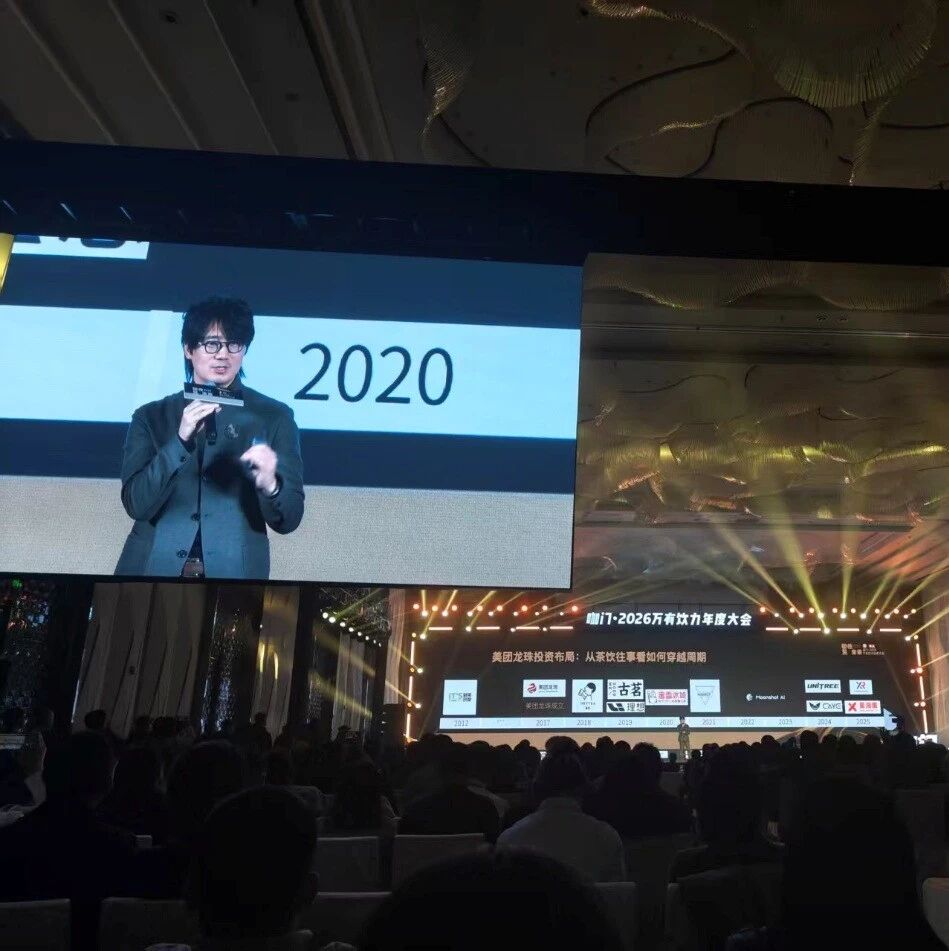
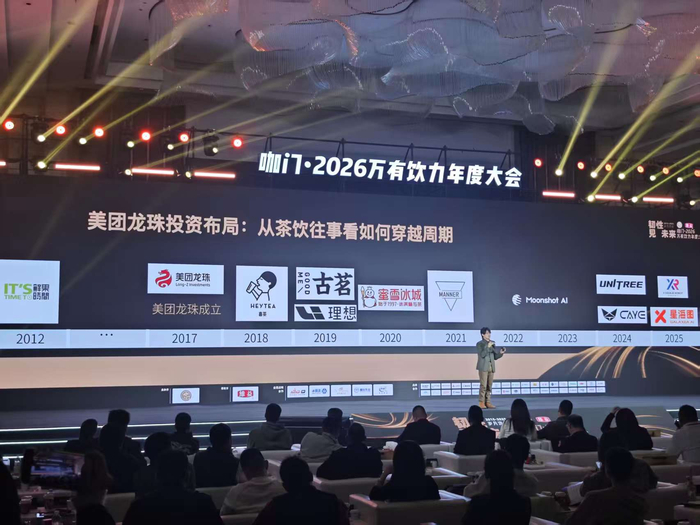
Core Insights - The conference "Kaimen 2026 Annual Conference" focused on the theme "Resilience Meets Future," gathering industry leaders to discuss the beverage sector's path through cycles and towards future growth [1] - Zhu Yonghua, a prominent investor, shared insights on the Chinese consumer market, predicting that the tea and coffee sectors will see the emergence of approximately six new publicly listed companies in the next 5-10 years, with a combined market size potentially reaching trillions [1][3] Investment Landscape - Zhu highlighted a significant decline in the number of investment opportunities, with the team reviewing around 1,000 projects annually but only investing in 2-3 since 2022, indicating a challenging market environment [5] - The market has shown signs of recovery, particularly with successful IPOs of companies like Gu Ming and Mi Xue Bing Cheng, which exceeded expectations and revitalized investor confidence [6] Consumer Behavior - The presentation emphasized changes in consumer spending patterns, particularly among middle-aged consumers (ages 35-50), who are reducing their dining frequency and opting for lower-priced options [8] - Young consumers (ages 18-30) exhibit different spending behaviors, focusing more on spiritual needs rather than traditional consumption, with a notable interest in IP products and experiences like concerts [10][12] Market Opportunities - The tea and coffee markets are identified as having the most significant growth potential, with the current market size for tea nearing 300 billion and coffee projected to reach 600 billion [12] - The combined tea and coffee market is expected to become a trillion-dollar market, with the potential for six additional companies to go public in the next five years [13]



出海无需焦虑错过上一班船,每一波都有新机会!
Sou Hu Cai Jing· 2025-12-02 10:41
Group 1 - The forum aims to explore the concept of globalization for Chinese enterprises, encouraging participants to break cognitive boundaries and gain new perspectives on global strategies [4] - The founder of the Dolphin Society, Li Chengdong, emphasizes the importance of adapting to the changing landscape of the consumer market and the necessity for companies to pivot towards international opportunities as domestic markets become saturated [6][8] - The discussion highlights the need for companies to integrate into existing successful ecosystems when entering foreign markets, rather than starting from scratch [9][11] Group 2 - Historical parallels are drawn between the motivations for exploration in the past and the current drive for Chinese companies to expand internationally due to domestic market constraints [12][14] - The current era of globalization is characterized as a "system output" phase, where companies are not just exporting products but also their supply chains, business models, and talent [18] - Africa is identified as a key growth area for the next few decades, with its vast resources and young population presenting significant opportunities for investment and market development [20][22] Group 3 - Companies are advised to adopt an ecological mindset, focusing on providing unique value within established networks rather than competing directly against them [26] - The importance of professional services in navigating international markets is emphasized, as these can be critical to success and compliance [26] - Engaging with communities like the Dolphin Society can provide valuable insights and reduce the risks associated with international expansion [26]

美团龙珠创始合伙人朱拥华:未来5~10年中国咖啡与茶饮市场规模合计将达万亿元
Mei Ri Jing Ji Xin Wen· 2025-12-02 09:12
Group 1 - The core viewpoint is that 2025 is expected to be the IPO year for China's new tea beverage industry, with a significant slowdown in growth anticipated after reaching a market size of 400 billion yuan [1] - The market size for the tea beverage industry is projected to approach 300 billion yuan this year, driven by the competition in the delivery sector [1] - The coffee market is forecasted to reach a size of 600 billion yuan, with the main challenge being the average transaction price [1] Group 2 - The prediction is made that the combined market size of coffee and tea beverages in China will reach 1 trillion yuan in the next 5 to 10 years, with an expectation of 6 new listed companies in the next 5 years [1] - The investment focus of Meituan Longzhu is shifting towards technology companies, but there is an emphasis on the enduring importance of human involvement in the industry [1] - The company sees significant opportunities in five major dining sectors: milk tea, coffee, fried chicken, hot pot, and hamburgers [1]

壹点调查|奶茶店卖早餐、炒货店卖炸货……餐饮跨界,边在哪?
Qi Lu Wan Bao· 2025-12-02 09:07
Core Viewpoint - The article discusses the trend of food and beverage brands diversifying their product offerings by entering new categories, such as breakfast and coffee, to enhance customer engagement and drive sales growth in a competitive market [1][5][9]. Group 1: New Product Launches - Recently, many consumers reported receiving a breakfast survey from Mixue Ice City, indicating a potential launch of breakfast products, including various milk options priced at 5 yuan each [1][3]. - Other brands, such as Xueji Fried Goods, have also begun to expand their product lines by introducing fried snacks, with items like fried chicken legs priced at 10 yuan each [3][5]. - Currently, Mixue Ice City's breakfast offerings are only being tested in select cities like Dalian and Xi'an, with no plans for widespread rollout yet [3][5]. Group 2: Industry Trends - The food and beverage industry is shifting from expansion to deepening existing market share, leading brands to explore new consumption scenarios to differentiate themselves and increase customer frequency [5][9]. - The "fast food economy" has become a key focus, with brands like M Stand and Tims introducing breakfast and lunch options that combine traditional items with coffee [5][7]. - The introduction of coffee into various food brands has become a common strategy, with many brands reporting significant sales growth from breakfast offerings [7][9]. Group 3: Consumer Insights - Consumer feedback on cross-category innovations has been generally positive, with many expressing excitement about the new offerings, although some caution against prioritizing novelty over quality [7][9]. - The cross-category attempts have helped brands attract younger consumers, expanding their customer base beyond traditional demographics [9][10]. Group 4: Operational Challenges - Despite the potential benefits, brands face challenges in maintaining product quality and operational efficiency when entering new markets, such as breakfast and coffee [9][10]. - Effective cross-category strategies require brands to optimize their operations, control costs, and ensure product quality to sustain competitive advantages [10].

A股开盘速递 | 指数集体调整!AI手机概念延续活跃 龙头走出4连板
智通财经网· 2025-12-02 02:10
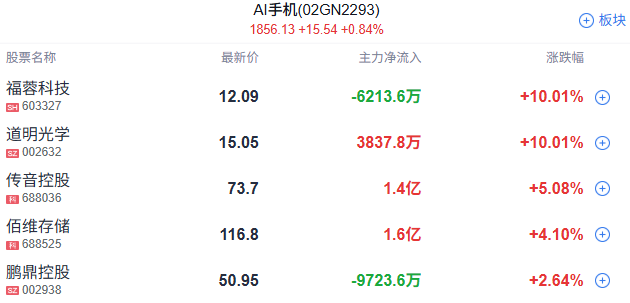
Market Overview - The three major A-share indices opened slightly lower, with the Shanghai Composite Index down 0.33%, the Shenzhen Component Index down 0.48%, and the ChiNext Index down 0.49% [1] Active Sectors - The AI mobile phone concept stocks continued to be active, with Daoming Optics achieving a four-day consecutive rise, and Furong Technology achieving a two-day consecutive rise. Other stocks like ZTE, Transsion Holdings, and Tianyin Holdings also saw gains [1][3] - The retail sector showed localized movements, with Maoye Commercial achieving five rises in six days, and Hebai Group hitting the daily limit. Other stocks like Wenfeng Shares, Baida Group, and Hongqi Chain also rose [1] - Local stocks in Fujian saw gains, with Pingtan Development and Rongji Software both hitting the daily limit, and Haixia Innovation rising over 10% [1] Declining Sectors - The sectors with the largest declines included fisheries, steel raw materials, and energy metals [2] Institutional Insights - Huazhong Securities indicated that the market is expected to maintain high-level fluctuations in December, with a focus on the AI industry chain and sectors showing improvement in prosperity [2][8] - China Galaxy suggested that the market is in a phase of frequent style switching, recommending attention to defensive sector allocation opportunities [5] - CITIC Securities advised to seize opportunities for layout in preparation for the year-end market, particularly after the Federal Reserve's meeting and the Central Economic Work Conference [6] Key Themes for Future Investment - The main reasons for the anticipated year-end market rally include early spring excitement, expected liquidity improvement from potential Federal Reserve rate cuts, and policy expectations for the start of the 14th Five-Year Plan [7] - Key sectors expected to perform well include AI (CPO, AI applications, liquid cooling), new energy (energy storage, solid-state batteries, nuclear power), innovative pharmaceuticals, mechanical equipment (humanoid robots, automation), non-ferrous metals, and chemicals [7] - The AI industry chain remains a core focus, with recent adjustments providing good layout opportunities for the next phase of the market [8]





雅加达年轻人喝的“茉莉奶白”,和上海静安寺那杯有什么不同?
Ge Long Hui· 2025-12-01 13:49
Core Insights - The article highlights the successful entry of the Chinese tea brand Jasmine Milk White into the Indonesian market, achieving significant sales within a short period, indicating a strong demand for high-quality tea beverages in Southeast Asia [1][2] - The brand's strategy focuses on a "high-quality overseas expansion" approach, differentiating itself from competitors by emphasizing value over scale in a rapidly evolving market [1][3] Market Potential - Indonesia, with a population of 280 million and a median age below 30, presents a vast young consumer market that is open to new experiences and has a high frequency of small purchases [2][3] - The Indonesian tea market is undergoing a consumption upgrade, moving away from low-quality, sugary drinks to a demand for premium tea experiences, with a projected 87% growth in the mid-to-high-end tea market in 2024 [3][9] Competitive Landscape - The entry of Jasmine Milk White into Indonesia disrupts the existing low-price competition dominated by brands like Mixue Ice City, which has over 2,500 stores in the country [1][9] - The brand's pricing strategy positions it in the mid-to-high-end market, with an average customer price of 12-18 RMB, three times that of competitors, demonstrating the potential for premium offerings [9][10] Expansion Strategy - Jasmine Milk White employs a "global standard + local integration" model, ensuring quality through a dual supply chain that combines global sourcing with local partnerships [4][5] - The brand's operational model includes a thorough preparation phase of 6-12 months before entering new markets, focusing on supply chain efficiency and local market adaptation [4][11] Product Adaptation - The brand retains its core product offerings while making localized adjustments to cater to Indonesian tastes, such as increasing sweetness and introducing limited edition flavors [6][10] - This strategy of "classic base + local fine-tuning" allows the brand to maintain its identity while appealing to local preferences, enhancing acceptance among diverse consumer groups [6][10] Cultural Marketing - Jasmine Milk White emphasizes cultural resonance in its marketing, creating immersive experiences that connect consumers with Eastern tea culture, rather than relying solely on product promotion [7][12] - The brand's collaboration with local influencers and cultural events has significantly boosted its visibility and consumer engagement in the Indonesian market [7][12] Long-term Vision - The company plans to establish a local processing facility in Indonesia by 2026 to enhance supply chain localization and reduce dependency on imports [11][12] - The overall strategy reflects a shift in the tea industry from price competition to a focus on quality, culture, and sustainable growth in international markets [11][12]