小红书

Search documents
多家企业驰援香港大埔火灾救援,捐款捐物总额超6亿港元
Xin Lang Cai Jing· 2025-11-28 02:02
Group 1: Incident Overview - A major fire occurred in Hong Kong's Tai Po district, resulting in 94 fatalities, including one firefighter, and 76 injuries, with 11 being firefighters [1] - The Hong Kong government established a relief fund with an initial allocation of 300 million HKD to assist affected residents [1] Group 2: Corporate Donations - Alibaba Group announced a donation of 20 million HKD for immediate relief efforts and additional support for affected families [2] - Tencent Charity Foundation pledged a total of 30 million HKD, including an initial 10 million HKD and an additional 20 million HKD to the relief fund [2] - ByteDance (Hong Kong) and Baidu each committed 10 million HKD for emergency relief and community recovery efforts [2] Group 3: Additional Corporate Contributions - Various companies, including NetEase, Xiaomi, and Kuaishou, each donated 10 million HKD to support emergency relief and community recovery [3] - Anta Group and Bosideng Group each contributed 30 million HKD, while Li Ning Group and Xtep Group donated 20 million HKD each for disaster relief [4][5][6] - Other companies like 361°, Chow Tai Fook, and Nongfu Spring also made significant contributions, totaling millions in cash and supplies [7][8] Group 4: Broader Industry Response - Multiple sectors, including automotive, real estate, and finance, participated in the relief efforts, with companies like Chery Automobile and BYD each donating 10 million HKD [9][10] - Financial institutions and logistics companies, such as Didi and SF Express, also pledged substantial amounts for emergency aid and recovery efforts [15]





沪港主要社团第一时间发起募捐 沪上民营企业也纷纷伸出援手 情牵香港 来自上海的爱心正汇集
Jie Fang Ri Bao· 2025-11-28 01:40
Group 1 - A significant fire occurred in Hong Kong's Tai Po district, resulting in major casualties and prompting immediate fundraising efforts from Shanghai's community organizations [1] - The Shanghai Hong Kong Association has raised HKD 2.5 million, while the Shanghai Hong Kong Federation contributed HKD 500,000, and various district-level associations collectively donated approximately HKD 500,000 [1] - ByteDance donated HKD 10 million to support relief efforts [1] Group 2 - Shanghai's private enterprises have also contributed, with Fosun Public Welfare Foundation, along with Fosun International and other individuals, donating HKD 10 million for emergency rescue and post-disaster reconstruction [2] - Ctrip Group and Li Ning Group each donated HKD 10 million and HKD 20 million worth of cash and equipment, respectively, to assist in disaster relief [2] - Pinduoduo announced a donation of HKD 10 million and established a special response team for disaster relief efforts [2]
8点1氪|罗永浩称没有被威胁,会公布录音;宗馥莉卸任娃哈哈董事长;多家手机厂商取消Air机型
3 6 Ke· 2025-11-27 23:52
Group 1 - Luo Yonghao confirmed he was not threatened and will release the recording related to his dispute with Hua Shan [2] - Zong Fuli officially stepped down as chairman of Wahaha, with Xu Simin taking over [2] Group 2 - Multiple smartphone manufacturers, including Xiaomi, OPPO, and vivo, have canceled their Air model projects, reallocating eSIM solutions to regular models [3] Group 3 - A major fire in Hong Kong resulted in 83 confirmed fatalities and 76 injuries, with rescue operations completed [3][4] - The Hong Kong government announced a relief fund of 300 million HKD for affected residents and immediate cash assistance of 10,000 HKD per household [4] Group 4 - HP announced a global layoff plan affecting 4,000 to 6,000 employees, approximately 10% of its workforce, to streamline operations and enhance productivity through AI [10] Group 5 - TSMC accused a former executive of leaking trade secrets to Intel, which Intel denied, asserting strict policies against such actions [7] - Asahi Group reported a data breach affecting over 1.91 million personal records due to a cyberattack [8] Group 6 - Sichuan province extended marriage leave from 5 to 20 days and increased maternity leave to a maximum of 120 days [5] Group 7 - NIO's CEO Li Bin stated that the automotive industry is entering a decisive phase, with a clearer competitive landscape expected by 2030 [13] - Huawei Cloud underwent organizational restructuring, appointing Zhou Yuefeng as CEO [13] Group 8 - Apple is challenging a potential $38 billion fine in India related to new antitrust laws [14] - YouTube is launching a cheaper, music-free subscription service in South Korea following antitrust investigations [14] Group 9 - Soul App submitted its IPO application to the Hong Kong Stock Exchange, with Tencent as a strategic investor [15][16] - Avita Technology also filed for an IPO in Hong Kong [15] Group 10 - DeepSeek launched a new math reasoning model, achieving high performance in competitive evaluations [18] - Alibaba's team won the Best Paper Award at NeurIPS 2025 for their research on attention mechanisms [18]
强制跳转、流量劫持,市场监管总局向手机行业“三宗罪”亮剑
Bei Ke Cai Jing· 2025-11-27 14:32
Core Points - The article discusses the recent compliance guidance issued by the State Administration for Market Regulation in Shenzhen, focusing on unfair competition in the mobile phone and application platform sectors, highlighting the prevalence of irrational competition and the detrimental practices employed by some companies [1][4] Group 1: Unfair Competition Practices - The article identifies three main unfair competition practices in the mobile industry, referred to as the "three sins": traffic hijacking, forced redirection, and malicious incompatibility [1][8] - Traffic hijacking involves companies using technical means to mislead users into downloading apps from their own stores instead of third-party platforms, thereby infringing on user choice and harming competitors [2][6] - Forced redirection is characterized by misleading prompts and technical barriers that prevent users from accessing desired applications, which has been reported as a significant pain point for users [3][8] Group 2: Impact on Users and Market - These unfair practices not only disrupt user experience but also undermine the competitive order in the market, leading to long-term harm to the innovation vitality of the digital economy [4][11] - Users have reported experiencing complex and frustrating download processes due to misleading compatibility warnings and forced redirections, which ultimately benefit the manufacturers' own app stores [2][3] Group 3: Legal and Regulatory Responses - Legal experts indicate that these practices violate various laws, including the Anti-Unfair Competition Law and the Consumer Rights Protection Law, which protect user rights and fair competition [8][9] - The article mentions ongoing efforts by regulatory bodies to establish clearer standards and guidelines to combat these unfair practices, including the introduction of safety requirements for "shake to trigger" advertisements [10][11] Group 4: Industry Reactions and Future Directions - The article notes that major smartphone manufacturers and e-commerce platforms have not yet responded to inquiries regarding compliance with the new guidelines [9] - There is a call for a multi-faceted governance approach involving government enforcement, industry self-regulation, and public awareness to effectively address and mitigate unfair competition behaviors [11]
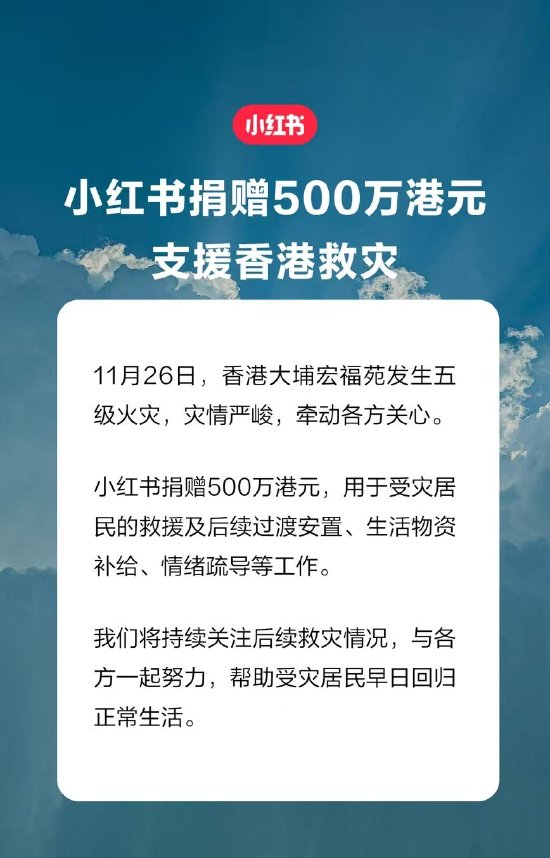
小红书捐赠500万港元,支援香港大埔救灾
Xin Lang Ke Ji· 2025-11-27 08:51
Core Viewpoint - Xiaohongshu announced a donation of 5 million HKD to support residents affected by the severe fire in Tai Po, Hong Kong, highlighting the company's commitment to social responsibility and community support [2] Group 1 - The fire in Tai Po occurred on November 26, classified as a level five fire, indicating a serious situation that has garnered widespread concern [2] - The donation will be used for rescue efforts, transitional housing, supply of living materials, and emotional support for the affected residents [2] - Xiaohongshu expressed its intention to continue monitoring the disaster relief situation and collaborate with various parties to assist residents in returning to normal life [2]

谁是中国科技圈的“七姐妹”?
Sou Hu Cai Jing· 2025-11-26 15:15
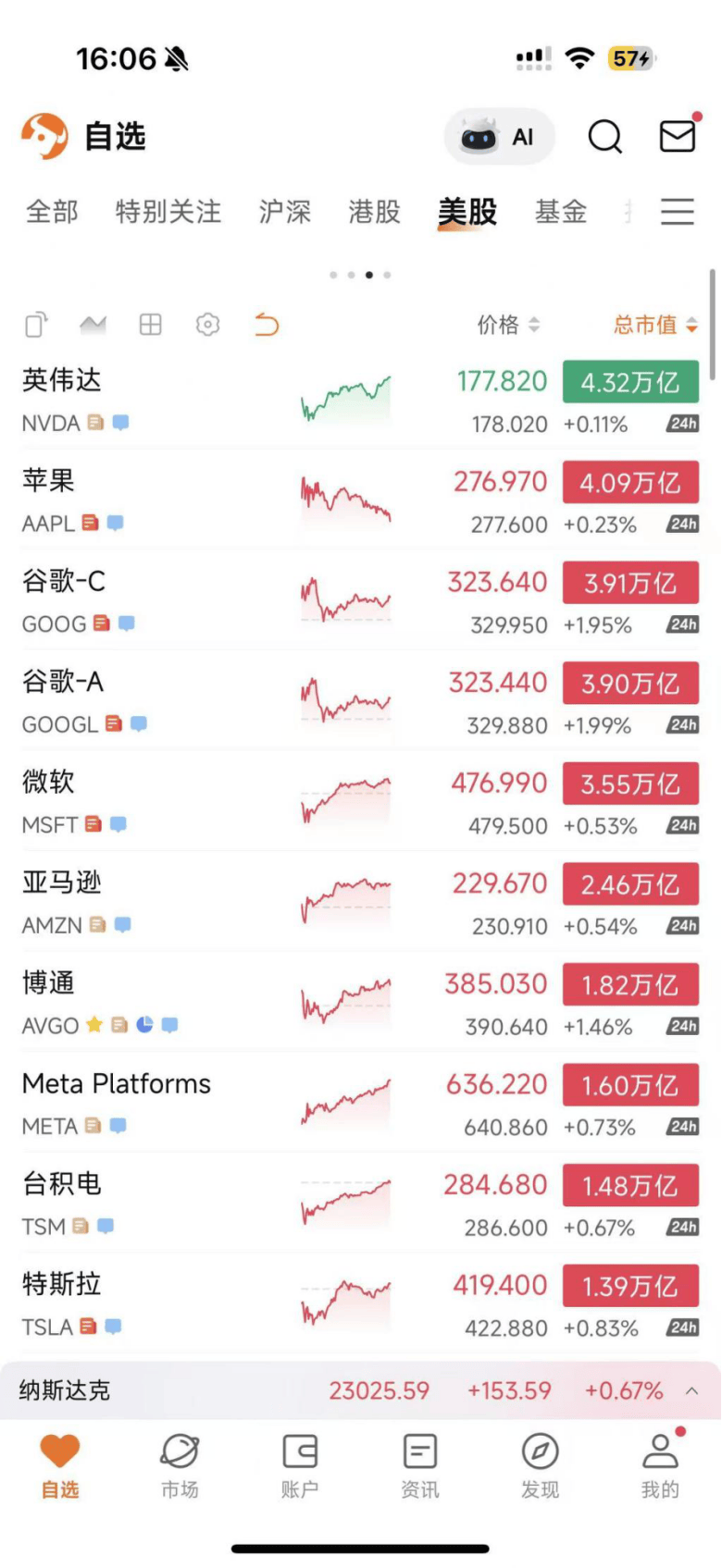
Core Viewpoint - The Federal Reserve's recent interest rate cut and the halt of quantitative tightening have positively impacted the U.S. stock market, particularly the tech sector, leading to significant increases in the market capitalizations of major tech companies [1] Group 1: U.S. Tech Companies Performance - The Nasdaq index reached a new high of 24019.99, with major tech stocks like Nvidia, Apple, Google, and Microsoft collectively valued at approximately $4 trillion, surpassing the total market capitalization of A-shares [1] - Other notable tech companies such as Amazon, Broadcom, Meta, TSMC, and Tesla have also reached market capitalizations of around $2 trillion [1][2] Group 2: Chinese Tech Companies Performance - Chinese tech companies have shown significant stock price increases, with Alibaba's market cap reaching $379.9 billion after a 92.42% rise, while other companies like Xpeng and SMIC have also seen substantial gains [4] - The emergence of the CNQQ ETF, which focuses on high-quality Chinese tech companies, indicates a growing interest from global investors in the Chinese tech sector [5][12] Group 3: Investment Trends and Market Sentiment - The trend of investing in tech sectors rather than individual companies is gaining traction, with the CNQQ ETF allowing global investors to access a diversified portfolio of Chinese tech stocks [16] - Global investors are increasingly optimistic about Chinese tech companies, with significant investments being made in firms like Alibaba, which is transitioning into an AI-focused company [17][18] Group 4: AI and Future Prospects - The AI sector is seen as a key growth driver for Chinese tech companies, with firms like Baidu and Alibaba making significant advancements in AI technologies [19] - The potential for Chinese tech companies to emerge as global leaders in AI is highlighted, with a focus on their ability to innovate and meet real customer needs [19][20]





电商“掼蛋局”,没有人愿意“下牌桌”
3 6 Ke· 2025-11-26 11:23
Core Insights - The e-commerce industry is undergoing a significant restructuring, moving from a phase of rapid growth to a deep adjustment, with traditional players facing increasing competition from new entrants like Douyin and Xiaohongshu [1][4][5] - Major e-commerce platforms are experiencing pressure on profitability despite revenue growth, indicating a shift in market dynamics [8][9][10] Financial Performance - Alibaba reported a revenue of 247.8 billion yuan for Q2 2026, a 5% year-on-year increase, but its adjusted net profit plummeted by 72% to 10.35 billion yuan [8] - JD.com achieved a revenue growth of 14.9% to 299.1 billion yuan in Q3 2025, but its net profit fell by 54.7% [9] - Pinduoduo's revenue growth slowed to 9%, marking a second consecutive quarter of deceleration [9] Market Dynamics - The e-commerce market is seeing a structural change, with the concentration ratio (CR2) dropping from 60% in 2022 to 57% by early 2025, while CR5 surged from 84% to 93% [4] - Online retail penetration has plateaued, with the share of online sales of physical goods stabilizing between 24-27% of total retail sales [5] Competitive Landscape - New players like Douyin and Xiaohongshu are intensifying competition, leading to price wars and increased reliance on traffic subsidies, which undermine long-term profitability [10] - Merchants are facing challenges with diminishing returns on advertising and promotional efforts, indicating a need for more sustainable growth strategies [10] Strategic Adjustments - E-commerce platforms are exploring new growth avenues, such as instant retail and leveraging AI technologies to enhance operational efficiency [12][15] - Alibaba is integrating its platforms and focusing on instant retail, while JD.com is expanding its food delivery services, both of which are impacting their profit margins [14][24] Future Outlook - The e-commerce market is projected to reach approximately $1.5 trillion globally by 2025, with a focus on quality improvement over mere scale expansion [19] - Companies are encouraged to prioritize technological innovation, supply chain optimization, and enhanced user experiences to thrive in the evolving landscape [19][25]



本地生活服务展开“留量”之争
Jing Ji Ri Bao· 2025-11-25 22:02
Core Insights - The local lifestyle service sector, including food delivery and instant retail, has become a key battleground during this year's "Double 11" shopping festival, with platforms like Meituan and JD.com showing significant sales and user growth [1][2] - The competition has shifted from scale expansion to enhancing service quality and user experience, with AI empowerment and credit mechanism reconstruction becoming crucial strategies for platforms [1][2] Industry Competition Dynamics - As internet traffic growth slows, local lifestyle services are seen as critical growth areas for major platforms, leading to intensified competition [2] - Platforms are adopting differentiated strategies to reshape consumer habits and merchant operations, with initiatives like Gaode's "Street Ranking" and Douyin's support plans for small businesses [2][3] - The competition is expected to benefit consumers through more choices and better services, while also providing small merchants with increased exposure and support [2][3] Market Growth Projections - The local lifestyle service market in China is projected to grow to 35.3 trillion yuan by 2025, with a compound annual growth rate of 12.6% [3] - The penetration rate of online services is expected to reach 30.8% by 2025, indicating significant untapped potential in the "to-store" business segment [3] Financial Performance - Meituan's core local business segment reported revenue of 65.3 billion yuan in Q2 2025, a year-on-year increase of 7.7%, with strong growth in "to-store" business orders [4] AI and Trust Mechanisms - AI technology is becoming essential for platforms to optimize decision-making and improve efficiency, with various platforms launching AI-driven features to enhance user experience [5][6] - The shift towards a "trust economy" is evident as platforms work to build healthier commercial ecosystems and improve user trust through initiatives like Gaode's "Street Ranking" [6][7] Small Business Empowerment - The competitive landscape is lowering the digitalization barriers for small businesses, with initiatives like Gaode's waiver of the first-year store opening fee leading to a surge in new merchant registrations [8] - The focus is shifting from merely selling products to providing integrated lifestyle solutions, with platforms expected to support small merchants through digital tools and financial services [8][9] Future Trends - The industry is transitioning from scale expansion to quality improvement, with the core competition now centered on service excellence rather than subsidies [9][10] - Platforms are encouraged to provide effective digital tools to help small merchants enhance their operational capabilities and ensure a fair ranking system [9][10]
小红书搅动投资圈
经济观察报· 2025-11-25 12:27
Core Insights - The article discusses the emergence of Xiaohongshu Venture Capital in Shenzhen's investment scene, highlighting its rapid investment capabilities and unique approach to deal-making [1][3][5]. Investment Strategy - Xiaohongshu Venture Capital has invested in nearly 10 startups within six months, showcasing a preference for quick decision-making and minimal due diligence [5][9]. - The team can complete investments within 24 hours, often bypassing traditional due diligence processes, which has led to a competitive environment among seasoned investors [3][5]. - Xiaohongshu is willing to increase valuations by 20%-30% to secure exclusive investment opportunities, with investments typically ranging from several million to over 10 million USD [5][10]. Market Position - The valuation of Xiaohongshu surged by 19% in just three months, reaching 31 billion USD, indicating a shift in investor perception from a mere traffic platform to a platform giant with a complete business ecosystem [9][10]. - The company aims to build an ecosystem rather than focusing solely on short-term financial returns, as evidenced by its active investment strategy [8][10]. User Engagement - As of August 2025, Xiaohongshu's monthly active users exceeded 350 million, with an average daily usage time of over 74 minutes, reflecting strong user engagement [11]. Strategic Acquisitions - Xiaohongshu's acquisition of Guangdong Oriental Electronic Payment Co., Ltd. for 100% ownership is seen as a strategic move to complete its commercial ecosystem by obtaining a payment license, reducing reliance on third-party payment platforms [10].

小红书搅动投资圈
Jing Ji Guan Cha Wang· 2025-11-25 12:20
Core Insights - The article discusses the rapid investment activities of Xiaohongshu Ventures in Shenzhen's investment landscape, highlighting its aggressive approach to funding startups and its strategic positioning in the market [3][4][10]. Investment Trends - Xiaohongshu Ventures has invested in nearly 10 startups within six months, showcasing a fast-paced investment strategy that can complete deals in as little as 24 hours [4][5]. - The firm is known for its "lightning investment" approach, often skipping due diligence to expedite the investment process, which has raised eyebrows among traditional investors [4][5]. Market Positioning - Xiaohongshu is shifting its perception from a mere traffic platform to a platform giant with a complete business ecosystem, as evidenced by its valuation surge to $31 billion within three months [8][9]. - The company aims to build an ecosystem rather than focusing solely on financial returns, indicating a long-term strategic vision [8][9]. User Engagement - As of August 2025, Xiaohongshu's monthly active users exceeded 350 million, with an average daily usage time of over 74 minutes, reflecting strong user engagement [10]. Strategic Acquisitions - The acquisition of Guangdong Oriental Electronic Payment Co., Ltd. for 100% ownership is seen as a critical move to complete Xiaohongshu's commercial ecosystem by securing a payment license [9].