小米汽车

Search documents
北京经开区接到“零碳KPI”,如何建成零碳园区?
2 1 Shi Ji Jing Ji Bao Dao· 2026-02-11 03:49
Core Insights - The Beijing Economic-Technological Development Area (BDA) aims to establish around 100 national-level zero-carbon parks during the 14th Five-Year Plan, with a focus on the new energy and intelligent connected vehicle industries [1][3] - A significant challenge is the current carbon emission intensity of 1.6 tons of CO2 per ton of standard coal, which is far above the national requirement of 0.2 tons [2][4] - The BDA plans to implement an AI-powered energy-carbon management platform to optimize energy and carbon flow management [1][10] Group 1: Current Challenges - The BDA's carbon emission intensity must decrease from 1.6 to 0.2 tons of CO2 per ton of standard coal, requiring a reduction of approximately 140,000 tons of carbon emissions over three years [2][4] - The energy consumption in the core area is projected to reach 303 million tons of standard coal in 2024, a 4.75% increase from the previous year, primarily due to the production of Xiaomi vehicles [2][3] - The BDA's carbon emissions decreased by 24.61% during the 13th Five-Year Plan, with a current energy structure of 75% electricity and 25% natural gas [2][3] Group 2: Renewable Energy Supply Issues - The BDA faces a critical challenge in sourcing renewable energy, as local generation meets less than 5% of its electricity needs, while the zero-carbon park requires at least 50% direct renewable energy connection [6][7] - Plans to import green electricity from Inner Mongolia and Hebei are complicated by long transport distances and technical challenges [6][7] - Projects such as agricultural solar power bases and biomass waste-to-energy initiatives are being explored to enhance local green electricity supply [6][7] Group 3: Cost and Infrastructure Challenges - The cost of replacing fossil fuels poses a significant challenge, with projected electricity consumption expected to double by 2028 due to expansions by companies like Xiaomi and CATL [7][8] - The BDA aims to reduce natural gas consumption from 27.72% to 10.67% by 2028, but the high costs of electric boilers compared to gas boilers hinder this transition [7][8] - The approval process for large-scale energy storage projects has stalled, impacting the ability to stabilize the grid with renewable energy [8][9] Group 4: Strategic Roadmap - The BDA has outlined a three-step roadmap from 2026 to 2028, focusing on energy efficiency improvements, green electricity initiatives, and the development of an AI-driven energy-carbon management platform [10][11] - The year 2026 will focus on energy-saving preparations and pilot projects, while 2027 will emphasize breakthroughs in green electricity connections [10][11] - By 2028, the goal is to integrate energy-saving and carbon reduction with industrial development, achieving the core carbon emission target [10][11]

崔东树:政策引导与市场驱动 预计2026年新能源乘用车将实现高质量发展
智通财经网· 2026-02-10 09:19
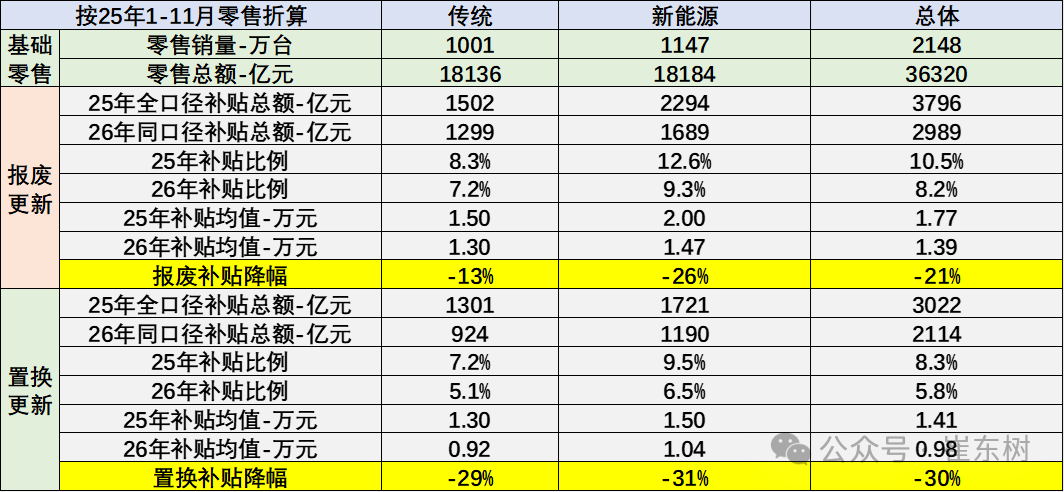
Core Insights - The 2026 vehicle replacement policy is a significant boost for the automotive market, promoting high-end development and enhancing fiscal efficiency through a shift from fixed subsidies to tiered subsidies based on vehicle value [1][3]. Group 1: Policy Impact - The new policy aims to stabilize large-scale consumption and release replacement potential, contributing to steady growth while promoting green and low-carbon initiatives [1][2]. - The average subsidy for passenger vehicle replacements is expected to decrease by approximately 30%, while the average subsidy for scrapping is projected to decline by about 20% [2][3]. - The transition to a tiered subsidy system is designed to improve fiscal efficiency, ensuring better allocation of funds and reducing waste from low-priced vehicles benefiting from subsidies [3][4]. Group 2: Market Trends - In 2025, over 11.5 million vehicles benefited from the replacement subsidy, with nearly 60% being new energy vehicles, indicating a strong market shift towards electrification [3]. - The commercial vehicle sector is expected to perform better in 2026 due to the continuity of favorable policies, while the passenger vehicle segment faces a decline in the number of new models [5][6]. - The number of new passenger vehicle models is decreasing from 92 in 2024 to 83 in 2026, reflecting a trend towards higher-end and larger vehicles [5][6]. Group 3: Product Development - New energy passenger vehicles are increasingly characterized by larger sizes and improved range, with a notable absence of small electric vehicles under 1090 kg in recent releases [8][10]. - The introduction of long-range electric vehicles, particularly those exceeding 700 km, is becoming more common, indicating a shift towards higher performance in the electric vehicle market [10][14]. - The energy density and efficiency of new energy vehicles are improving, with some models achieving a power consumption of around 10 kWh per 100 km [12][15]. Group 4: Tax and Subsidy Structure - The tax exemption directory for commercial vehicles shows growth in new models, particularly in trucks and buses, compared to the previous year [4][6]. - The structure of the subsidy system is evolving to favor higher-priced vehicles, ensuring that funds are allocated to more valuable replacements [3][4]. Group 5: Competitive Landscape - The competitive landscape is shifting as traditional fuel vehicles face increasing pressure from new energy vehicles, which are rapidly advancing in technology and market presence [1][3]. - The introduction of diverse new models in the narrow hybrid segment is establishing a solid foundation for future growth, with many new products featuring lower energy consumption [16].

【新能源周报】新能源汽车行业信息周报(2026年2月2日-2月8日)
乘联分会· 2026-02-10 08:37
Industry Information - Beijing Economic and Technological Development Zone implements intelligent connected vehicle initiatives to enhance AI's role in data-driven technology [2] - Shenzhen releases a three-year consumption action plan focusing on green electricity consumption and charging infrastructure [2] - The largest high-speed supercharging station in China is operational in Hangzhou [2] - NIO achieves a milestone of 100 million battery swaps, with a network covering 8,627 stations nationwide [39] - CATL signs a comprehensive strategic agreement with Yunnan to promote green energy and transportation [10] Policy Information - The 2026 Central Document No. 1 emphasizes expanding rural consumption and supporting the adoption of new energy vehicles [26] - The Ministry of Transport plans to build over 10,000 charging guns in national highway service areas by 2026 [14] - The 2026 action plan for Beijing's traffic governance includes increasing the coverage of charging facilities [25] - Canada plans to abolish mandatory electric vehicle regulations and reintroduce consumer subsidies for electric vehicles [12] Company Information - BYD launches a new brand "Linghui" focused on the mobility market, aiming to provide affordable and advanced electric vehicles [33] - Xpeng Motors announces the launch of its AIOS 6.0 OTA update, featuring the industry's first proactive service cockpit [35] - Li Auto is set to open its 4,000th supercharging station, enhancing its charging network [39] - Xiaomi Motors updates its city driving assistance feature, lowering the mileage threshold for users [37] - NIO collaborates with a local company to enhance battery swapping services during the Spring Festival [39]


2026格局与趋势 |(上):天黑请睁眼
3 6 Ke· 2026-02-10 01:20
Core Viewpoint - The Chinese automotive market is facing significant challenges in 2026, with predictions of a decline in sales due to economic pressures and changing consumer behavior, despite some optimistic forecasts for growth in exports and specific segments like new energy vehicles [1][3][4]. Group 1: Market Trends and Predictions - In 2026, the overall automotive sales in China are expected to range between 34.5 million to 35 million units, with a potential decline in domestic retail sales by over 5% if no significant policy changes occur [3][7]. - January 2026 data shows a dramatic decline in retail sales, with a 28% year-on-year drop, indicating a challenging start to the year [6]. - Various institutions predict a range of outcomes for 2026, with the most pessimistic forecasts suggesting a 7% decline in sales, while the most optimistic predict only a 1% increase [4][7][8]. Group 2: Policy and Economic Influences - Key factors affecting the market include adjustments to subsidy policies for new energy vehicles, which have shifted from full exemptions to partial reductions, impacting consumer purchasing behavior [6][9]. - The decline in consumer confidence and shrinking middle-class income due to economic downturns are expected to further suppress automotive sales [6][9]. Group 3: Competitive Landscape - The automotive industry is experiencing intense competition, with a shift from price wars to a focus on technological advancements and value creation as companies seek to stabilize their market positions [12][16]. - Major players are adjusting their sales targets, with some aiming for significant growth while others adopt more conservative strategies in response to market conditions [18][19]. Group 4: Export Opportunities - Exports are projected to be a key growth area, with expectations of a 12-15% increase, potentially reaching 8 million units, which could help offset domestic market declines [22][26]. - The global supply chain dynamics are pushing Chinese automotive companies to enhance their international presence, with a focus on building global production and R&D capabilities [26][28]. Group 5: Segment-Specific Insights - The new energy vehicle segment is anticipated to grow, with retail sales expected to increase by 12-15%, driven by favorable policies for mid-range models [9][10]. - The large six-seat SUV market is projected to maintain strong growth, with expectations of a 30-50% increase in sales, despite overall market challenges [31][32].


汽车行业周报:市场品牌化发力,政策托底启程
Guoyuan Securities· 2026-02-09 08:24
Investment Rating - The report maintains a "Recommended" investment rating for the automotive industry [6] Core Insights - The automotive market is experiencing a significant shift with new energy vehicle brands showing varied sales performance, highlighting the advantages of brand recognition [1][22] - Over twenty provinces and cities in China have introduced subsidy policies to stabilize the automotive market amid downward pressure [2][26] - Internationally, Canada is opening up to cooperation with Chinese electric vehicle manufacturers, indicating a trend towards collaborative ventures in the automotive sector [3][42] Summary by Sections Market Overview - In January 2026, several new energy vehicle brands reported their delivery volumes, with significant year-on-year growth for some, such as Hongmeng Zhixing, which delivered 57,915 vehicles, a 65.6% increase [1][20] - The overall market is characterized by a "year-on-year increase, month-on-month decrease" trend, with many companies launching attractive financing options to stimulate demand [22][23] Policy Developments - The Chinese government has rolled out various consumer incentives, including trade-in and purchase subsidies, to support automotive consumption [2][26] - The Canadian government is set to announce new fuel efficiency standards and reintroduce purchase subsidies for electric vehicles, reflecting a shift in policy towards supporting the automotive industry [3][42] Investment Recommendations - The report suggests focusing on companies with strong brand recognition and systematic capabilities, as they are likely to present long-term investment opportunities [4] - The anticipated positive impact of government policies on the automotive market is highlighted, along with the potential for Chinese automotive companies to expand internationally [4]




低频的事故车维修缘何这么香?
Zhong Guo Qi Che Bao Wang· 2026-02-09 03:59
Core Viewpoint - The automotive dealership sector is increasingly entering the accident vehicle repair market, traditionally dominated by insurance companies, leading to heightened competition and new service offerings aimed at capturing market share [1][4]. Group 1: Market Dynamics - The accident vehicle repair market is driven by a large vehicle stock, millions of annual accidents, rising repair costs, and evolving automotive technology, with an estimated annual market value of 300 to 500 billion yuan [4]. - Accident vehicle repairs typically involve significant parts replacement and labor, with profit margins generally higher than routine maintenance, accounting for approximately 60% of after-sales profits [4]. - The relationship with insurance companies and the number of retained customers are crucial for profitability in the accident repair sector, as better relationships lead to more repair referrals [4]. Group 2: New Service Offerings - Zhongsheng Automotive has launched an "Accident Vehicle Differential Compensation" service, providing financial incentives for customers to replace vehicles at their dealerships after accidents [5]. - Other companies, including Wanjie, BYD, Xiaomi, and Zeekr, have introduced similar service packages with comparable conditions, emphasizing the need for customers to return to authorized centers for repairs [5][6]. - The introduction of these service packages is seen as a defensive strategy against insurance companies, aiming to reclaim control over repair flow and customer retention [6][10]. Group 3: Consumer Implications - The new service packages, akin to GAP insurance, provide additional financial protection for vehicle owners, particularly beneficial for high-end vehicle customers [7][8]. - While these packages offer immediate benefits to consumers, they may also limit consumer choice, as customers must return to authorized service centers to access the promised benefits [9]. - The potential for increased repair wait times and restrictive service terms may arise as consumers become more dependent on these packages [9]. Group 4: Future Trends - The competition in the accident vehicle repair market is expected to shift from price-based to data and standard-based competition, leading to a polarization where leading manufacturers dominate high-value repairs [10][11]. - Independent repair shops may struggle unless they develop specialized skills or strong community ties, potentially relegating them to lower-margin services [11]. - The trend towards "financialization" of services is anticipated, with standardized repair services evolving into financial products, and subscription-based repair services may emerge in the future [11].

迈入车市微增长从摒弃惯性思维开始
Zhong Guo Qi Che Bao Wang· 2026-02-09 03:43
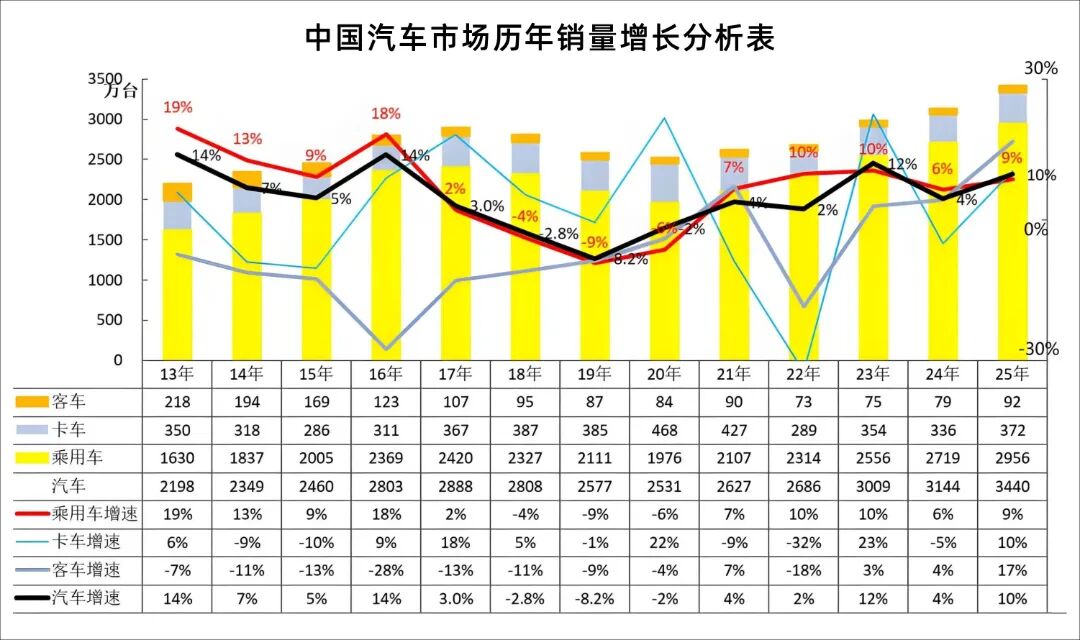
编前:告别了年产销量超3400万辆、再创历史新高的2025年,我国汽车市场在2026年毫无争议地跨入存量时代,如何扭转认知、平衡心态、调整策略、谋 划新篇,与产业在高质量轨道上稳步同行,是每一位汽车从业者必须直面的课题。为此,本报策划了"通往车市微增长的生存之道"系列报道,诚邀行业人士 畅谈深耕存量市场的思考与实践。 2026年或成中国汽车产业分水岭,正在逐渐成为行业共识。近来,行业机构对车市的预判均透露出审慎的信号。中汽协预测,2026年中国汽车市场总销量为 3475万辆,同比增长1%;其中乘用车市场销量为3025万辆,同比增长0.5%。车百会预计,全年国内车市销量约为2820万辆,同比增长2%,其中新能源汽车 销量有望达到2000万辆。 "在汽车行业变革、新旧动能转换加速的背景下,中国车市正在进入一个高销量、微增长的新阶段,给行业及企业带来了一系列新的挑战。"中国汽车流通协 会副秘书长郎学红在接受《中国汽车报》记者采访时认为,不久前的中央经济工作会议确定了2026年"稳中求进、提质增效"的总基调,从行业现实看,如何 在较高的销量基数上、更为激烈的市场竞争压力下破局生存并实现稳健、高质量发展,是整个行业共同 ...

电力设备及新能源周报20260208:预计“十五五”全球光伏市场保持高增,首个重大电网项目获核准
Guolian Minsheng Securities· 2026-02-09 00:40
Investment Rating - The report maintains a "Recommended" rating for key companies in the electric power equipment and new energy sectors, including Ningde Times, Keda Li, and others [6][7]. Core Insights - The global photovoltaic market is expected to maintain high growth during the "14th Five-Year Plan" period, with annual new installations projected to reach 725-870 GW globally and 238-287 GW domestically [3][39]. - The electric power equipment sector is witnessing significant developments, including the approval of a major grid project by the National Development and Reform Commission, marking a new phase of market competition [4][39]. - The new energy vehicle market shows strong momentum, with major manufacturers like BYD and NIO reporting substantial year-on-year delivery increases [2][14]. Summary by Sections New Energy Vehicles - In January 2026, several new energy vehicle manufacturers reported significant delivery growth, with NIO delivering 27,182 units (+96.1% YoY) and BYD leading with 210,051 units [2][14][24]. - The third China All-Solid-State Battery Innovation Development Summit was held, focusing on key materials and technological advancements [2][27]. New Energy Generation - The photovoltaic industry is transitioning from scale expansion to high-quality development, with a focus on technological integration and new application scenarios [39][40]. - The cancellation of export tax rebates for photovoltaic products starting April 1, 2026, will push companies towards innovation and sustainable competitiveness [45]. Electric Power Equipment and Automation - The State Grid's recent tender for ultra-high voltage equipment involved 119 packages, with 115 awarded, indicating robust market activity [4]. - The approval of the first major grid project under the "14th Five-Year Plan" signifies a positive outlook for the electric power sector [4]. Commercial Aerospace - The domestic first "one rocket, 36 satellites" satellite launch technology facility has been accepted, indicating advancements in commercial aerospace capabilities [5]. Market Performance - The electric power equipment and new energy sector saw a weekly increase of 2.20%, outperforming the Shanghai Composite Index, with lithium battery and solar indices showing significant gains [1].



电力设备及新能源周报20260208:预计“十五五”全球光伏市场保持高增,首个重大电网项目获核准-20260208
Guolian Minsheng Securities· 2026-02-08 13:55
Investment Rating - The report maintains a "Recommended" rating for key companies in the electric power equipment and new energy sectors, including Ningde Times, Keda Li, and others [6][7]. Core Insights - The global photovoltaic market is expected to maintain high growth during the "14th Five-Year Plan" period, with annual new installations projected to reach 725-870 GW globally and 238-287 GW domestically [3][39]. - The electric power equipment sector is witnessing significant developments, including the approval of major grid projects and the awarding of contracts for high-voltage equipment [4][39]. - The new energy vehicle market continues to show strong momentum, with major manufacturers reporting significant year-on-year delivery increases [2][14]. Summary by Sections New Energy Vehicles - In January 2026, several new energy vehicle manufacturers reported substantial delivery growth, with NIO delivering 27,182 units (+96.1% YoY) and BYD maintaining a leading position with 210,051 units delivered [2][14][24]. - The third China All-Solid-State Battery Innovation Development Summit was held, focusing on key materials and technological advancements [2][27]. New Energy Generation - The photovoltaic industry is transitioning from scale expansion to high-quality development, with a focus on technological integration and new application scenarios [39][40]. - The cancellation of export tax rebates for photovoltaic products starting April 1, 2026, marks a shift to full market competition, pushing companies towards innovation and sustainable competitiveness [45][48]. Electric Power Equipment and Automation - The State Grid's recent tender for ultra-high voltage equipment involved 119 packages, with 115 awarded, indicating robust demand in the sector [4][39]. - The approval of the first major grid project by the National Development and Reform Commission signifies a positive outlook for infrastructure development in the electric power sector [4][39]. Commercial Aerospace - The domestic first "one rocket, 36 satellites" satellite launch technology facility has been accepted, indicating advancements in commercial aerospace capabilities [5]. Market Performance - The electric power equipment and new energy sector saw a weekly increase of 2.20%, outperforming the Shanghai Composite Index, with lithium battery and solar indices showing significant gains [1].


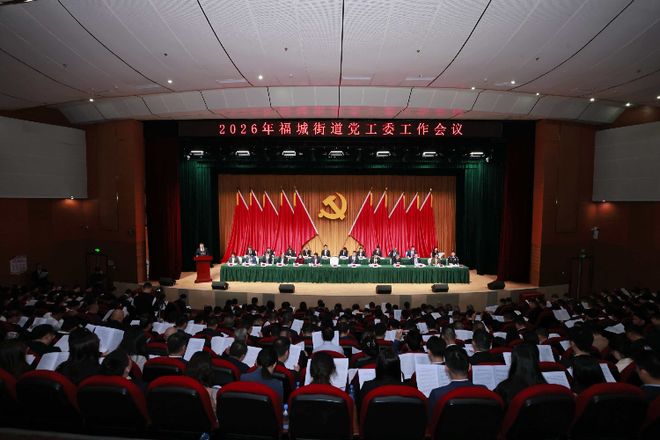
六成工业产值增量看福城 硬核实力赋能北中心战略
Nan Fang Du Shi Bao· 2026-02-08 12:48
Investment Overview - Fixed asset investment in Fucheng Street has accumulated nearly 110 billion yuan over five years, with industrial investment consistently leading the district [2][3] - In 2025, Fucheng Street completed fixed asset investment of 17.9 billion yuan, ranking second in the district [6] Industrial Growth - The total industrial output value of above-scale enterprises reached 197.4 billion yuan in 2025, a year-on-year increase of 6.9%, contributing over 60% of the district's industrial output growth [5][6] - The digital economy's share of total output value increased to 86.3% [6] - The smart connected vehicle industry contributed 46.8 billion yuan in output, growing by 72.2% year-on-year [6] Strategic Development Goals - The 2026 Fucheng Street Party Committee work meeting outlined key tasks for the "14th Five-Year Plan" period, focusing on urban quality improvement and industrial capacity enhancement [2][8] - Fucheng aims to build a modern industrial system by seizing major strategic opportunities, such as the development of a world-class semiconductor technology city [8][10] Urban and Infrastructure Development - Fucheng has transformed into a livable and business-friendly area, with significant infrastructure improvements including the opening of the first large-scale comprehensive sports venue and a national-level library [4] - A total of 31 new or expanded roads were constructed, adding 18.45 kilometers of road length [4] Business Environment and Innovation - The "LONG Enterprise Service" model was established to enhance the business environment, achieving a 95.4% completion rate for over 400 enterprise requests [7] - The number of national high-tech enterprises increased to 129, with 14 national "little giant" enterprises established [7] Future Development Plans - Fucheng aims to achieve an industrial output value of 240 billion yuan in 2026, with a growth target of over 10% [9] - The focus will be on optimizing traditional industries and nurturing emerging sectors, with a goal of exceeding 20 billion yuan in fixed asset investment [9]