
雷鸟创新

Search documents
AI与生物医药“领跑”,慧心医谷A轮融资超亿元|21投融资
2 1 Shi Ji Jing Ji Bao Dao· 2026-01-14 07:49
Core Insights - The technology and manufacturing sectors have seen significant financing activity, particularly in artificial intelligence, semiconductors, and biomedicine, indicating strong investor interest in these areas [1] - The overall financing scale in the domestic primary market from January 5 to January 11 included 35 events, with a total amount of approximately 154.27 billion RMB [1] Financing Overview - The technology and manufacturing sectors led in financing activity, with notable performances in smart vehicles, semiconductors, and advanced technologies [1] - The biomedicine sector completed four financing rounds totaling around 5 billion RMB, while the artificial intelligence sector had three rounds amounting to approximately 0.9 billion RMB [3][4] Regional Distribution - The majority of financing events occurred in Beijing, Zhejiang, and Guangdong, with 9, 6, and 6 events respectively [5][6] Active Investment Institutions - Shunxi Fund and Zhongke Chuangxing were particularly active, each completing two financing rounds focused on technology and manufacturing [7] Notable Company Financing - Huixin Yigu completed over 100 million RMB in Series A financing, led by Jingneng Green Fund, to advance clinical research in cell therapy for neurological diseases [9][10] - Anlong Bio secured nearly 100 million RMB in Series B+ financing, supported by municipal and district-level industry funds, to develop its gene therapy pipeline [11] - Shanghai Ruizhou Bio raised 200 million RMB in Series B financing, led by Ruile Synthetic Biology Fund, to support clinical research for its pneumonia vaccine [12] - Thunderbird Innovation received over 1 billion RMB in financing from China Mobile and China Unicom for its AR smart glasses [14] - Zhizhan Technology completed nearly 300 million RMB in Series C financing, led by Zhejiang State-owned Assets Fund, to enhance its market share in the electric vehicle sector [15] - Mingxin Qirui raised over 100 million RMB in Pre-A financing to advance RRAM technology for AI and data center applications [16] - Zhixing Technology secured 400 million RMB in strategic financing from Huangshi State-owned Capital Investment Group for its autonomous driving technology [17] - Jiukexin completed over 100 million RMB in B2 financing to expand its AI-driven automation solutions for state-owned enterprises [18] - Zhidong Dalu raised nearly 200 million USD in financing to accelerate the development of its advanced intelligent driving solutions [19]


AI与生物医药“领跑”,慧心医谷A轮融资超亿元
2 1 Shi Ji Jing Ji Bao Dao· 2026-01-14 07:45
Core Insights - The technology and manufacturing sectors have seen significant financing activity, particularly in artificial intelligence, semiconductors, and biomedicine, indicating strong investor interest in these areas [1] - The overall financing scale in the domestic primary market from January 5 to January 11 included 35 events, with a total disclosed amount of approximately 154.27 billion RMB [1][2] Financing Activity by Sector - The biotechnology sector completed 4 financing rounds totaling around 5 billion RMB, while the artificial intelligence sector had 3 rounds with disclosed amounts of approximately 0.9 billion RMB [3][4] - Notable companies in the biotechnology sector include: - HuiXin Medical Valley, which raised over 1 billion RMB in Series A funding [7] - Anlong Biopharma, which secured nearly 1 billion RMB in Series B+ funding [9] - Shanghai Ruizhou Biotech, which completed 200 million RMB in Series B funding [10] Regional Financing Distribution - The majority of financing events occurred in Beijing, Zhejiang, and Guangdong, with 9, 6, and 6 cases respectively [5][6] Active Investment Institutions - Shunxi Fund and Zhongke Chuangxing were particularly active, each completing 2 financing rounds focused on technology and manufacturing [7] - Specific financing details include: - HuiXin Medical Valley's funding led by Jingneng Green Fund [7] - Anlong Biopharma's funding from Beijing's medical health industry investment fund [9] - Shanghai Ruizhou Biotech's funding led by Ruili Synthetic Biology Fund [10] Notable Company Financing - Thunderbird Innovation raised over 1 billion RMB, focusing on AR smart glasses [11] - Zhizhan Technology completed nearly 300 million RMB in Series C funding, targeting the electric vehicle market [12] - Mingxin Qirui secured over 100 million RMB in Pre-A funding for RRAM technology development [13] - ZhiXing Technology received 400 million RMB in strategic investment for autonomous driving technology [14] - JiuKe Information raised over 100 million RMB in B2 funding for AI automation solutions [15] - ZhiJia Dalu completed nearly 200 million USD in financing for advanced driving solutions [16]

AI应用催化密集,AI+家电落地加速
Orient Securities· 2026-01-13 12:57
Investment Rating - The report maintains a "Positive" investment rating for the home appliance industry, indicating an expectation of returns exceeding the market benchmark by more than 5% [4][11]. Core Insights - The report highlights that the domestic market's consumption potential is expected to be activated by the continuation of national subsidies, despite a marginal slowdown in their impact. The "Two New" policies are anticipated to further stimulate demand in the home appliance sector [3]. - The report emphasizes the acceleration of AI applications in the home appliance industry, with significant developments expected from AI models and smart hardware products [2][6]. Summary by Sections Domestic Market Outlook - The report notes that the leading companies in the white goods sector have a higher proportion of first-level energy-efficient products and more mature management processes for trade-in programs, positioning them to benefit more significantly from the evolving market dynamics [3]. - The first quarter of 2026 is projected to see stable production schedules for white goods, aligning with domestic market expectations [5]. International Expansion - The report identifies international expansion as a long-term strategy, with companies that diversify their production capacity being favored. A valuation shift is anticipated by 2026 [3]. AI Integration - The report discusses the rapid iteration of AI models and their broad application in the home appliance sector, suggesting that smart hardware products integrated with AI services are becoming a key trend. Companies like Yingzi Network are highlighted for their deep engagement in smart home segments [6].





智能家居2026:停止“概念竞赛”,应用场景向户外延伸
2 1 Shi Ji Jing Ji Bao Dao· 2026-01-13 10:22
Core Viewpoint - In 2026, the Chinese smart home industry is transitioning to high-quality development, focusing on pragmatic innovation and ecological collaboration, moving away from mere concept hype to real-world problem-solving and full-scene applications [1][4]. Industry Trends - The global smart home industry has entered a mature development phase characterized by "pragmatic innovation + ecological collaboration," with a shift from product price competition to technology standard authority and local ecological integration [1]. - At CES, over a thousand Chinese companies showcased products that extend beyond traditional core areas like living rooms and kitchens to include outdoor spaces such as courtyards and swimming pools, emphasizing "pragmatic innovation, ecological collaboration, and green low-carbon" features [2]. Full-Scene Innovation - The industry has shifted from a "concept competition" mindset to a focus on real user needs, with Chinese companies prioritizing practical solutions in their product designs [4]. - Innovations in core living room products, such as Hisense's 110-inch Mini LED TV and TCL's 115-inch giant screen TV, address installation challenges and enhance user experience through optimized designs [4]. Globalization and Market Strategy - Chinese smart home companies are moving beyond simple product exports to compete in high-end technology sectors, leveraging core technological breakthroughs to capture market share [6]. - Hisense has solidified its global leadership in the 100-inch and above TV market, showcasing advanced technologies that outperform competitors in brightness and color accuracy [6]. Policy and Compliance - The high-quality development of the smart home industry is supported by domestic policies that stimulate demand and promote technological innovation, while international regulations push for sustainable practices [9]. - Policies such as the equipment update and trade-in programs are crucial for activating domestic demand and driving industry upgrades, with smart home products included in subsidy programs [9]. Standardization and Interoperability - The establishment of a unified standard system is a key focus of policy efforts, facilitating Chinese companies' participation in global competition and enhancing product compatibility [9][10]. - At CES, products from companies like Hisense, TCL, and Ugreen demonstrated support for major protocols like Matter and OLA, improving user experience and reducing development costs [10].
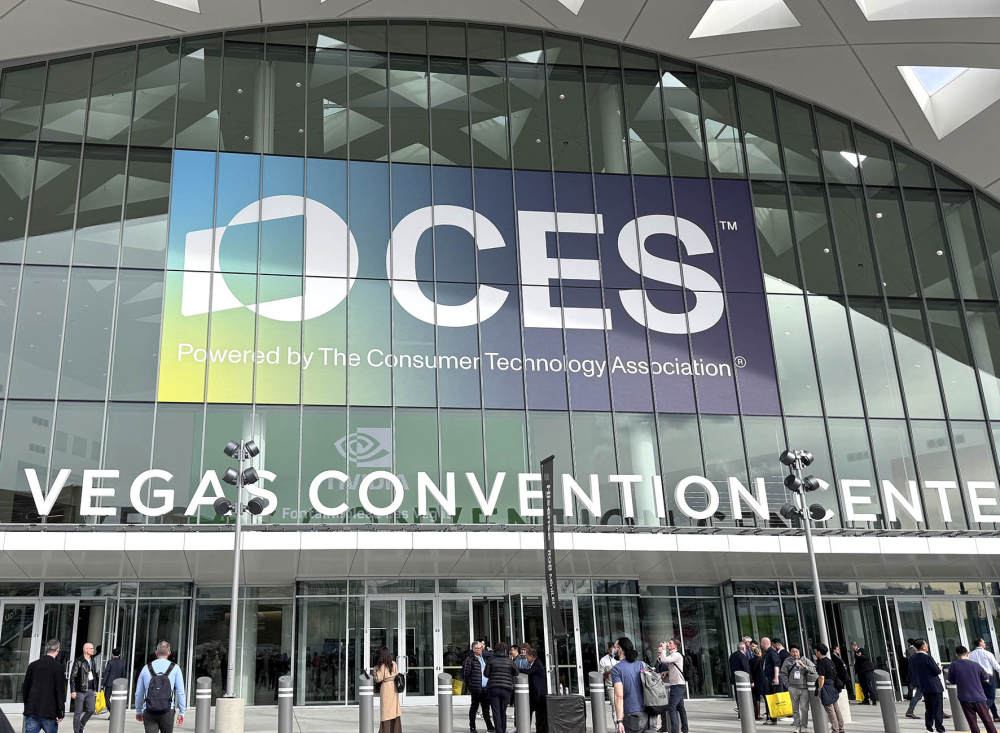
国泰海通:多家中国智能眼镜企业参展CES 全球智能眼镜出货量维持高速增长
Zhi Tong Cai Jing· 2026-01-13 06:25
Group 1 - The core viewpoint of the report highlights the significant presence of Chinese companies at CES 2026, with 16 out of 23 exhibitors in the AI glasses category being from China, indicating a strong market focus and innovation in this sector [1][3] - The CES 2026 event showcased approximately 4,300 companies from over 160 countries, with Chinese exhibitors accounting for about 22% of the total, second only to the United States [2] - The report emphasizes the shift in AI development from "digital intelligence" to "physical AI," marking a trend towards deeper integration of AI with hardware [2] Group 2 - Several Chinese smart glasses companies made notable announcements at CES, including Thunderbird's launch of the X3Pro Project eSIM glasses, which support independent functions like calls and real-time AI translation [3] - ByteDance's "Doubao" AI glasses are set to enter the shipping phase, with plans for multiple configurations, including a no-screen version expected to launch in Q1 2026 [3] - Alibaba's Quark glasses sold out of new inventory by December 23, and an OTA upgrade was implemented on December 31, enhancing features like payment and translation [3] Group 3 - The industry trend indicates a focus on lightweight designs, with mainstream products now weighing between 30-50 grams, aiming to return to everyday accessory status [4] - The integration of multimodal technologies is driving AI from passive responses to proactive services, encompassing audio, visual, and tactile experiences [4] - AI glasses are evolving into independent smart terminals capable of functions like calls, internet connectivity, and complex AI computations [4] Group 4 - Global smart glasses shipments are projected to grow by 110% year-on-year in the first half of 2025, maintaining a high growth trajectory [5] - The inclusion of smart glasses in national subsidy programs is expected to provide additional market growth opportunities [5] - A recent policy announcement by the National Development and Reform Commission and the Ministry of Finance includes smart glasses in a new consumer subsidy initiative, which is anticipated to drive further demand [5] Group 5 - Recommended stocks in the sector include Kangnait Optical (02276), Doctor Glasses (300622), and Aishide (002416), with Tianyin Holdings (000829) also mentioned as a relevant stock [6]




从AI眼镜到脑机接口 智能终端升级大有可为
Shang Hai Zheng Quan Bao· 2026-01-12 18:36
Core Insights - The news highlights the rapid development and investment in AI technologies, particularly in AI glasses, AI phones, and brain-computer interfaces, driven by policy support, technological breakthroughs, and market demand [1][2][4][6] AI Glasses - The 2026 International Consumer Electronics Show (CES) focuses on AI glasses, emphasizing lightweight design, strong interactivity, and full-scene applications as key trends [2] - Major companies are set to launch several AI glasses products in 2026, including Google's Project Aura and Apple's AI glasses, with IDC predicting a shipment volume of 4.508 million smart glasses in China, a 77.7% year-on-year increase [2] - The industry is witnessing increased orders, with companies like Visionary Technology and Huanxu Electronics ramping up production to meet rising demand for AI glasses [3] AI Phones - AI phones are expected to activate a new wave of device upgrades, with multiple Android manufacturers planning to release AI phones in early 2026 [4] - The evolution of AI phones is marked by a shift from mere computational upgrades to a fundamental restructuring of underlying systems, akin to past revolutions in computing and mobile operating systems [4] - The demand for AI phones is driving growth in the upstream supply chain, with companies like Bowei Alloy anticipating significant orders for components needed in high-end AI phone models [4] Brain-Computer Interfaces - The brain-computer interface sector is gaining momentum, with companies like Neuralink planning large-scale production starting in 2026 and Qiangnao Technology recently securing approximately 2 billion yuan in funding [6] - Government policies are increasingly supporting the development of brain-computer interfaces, with initiatives in cities like Beijing and Shanghai aimed at fostering innovation and establishing key enterprises in the sector [6] - Domestic companies are making significant technological advancements, such as Hanwei Technology's breakthroughs in non-invasive flexible brain-computer interface materials and collaborations with medical institutions [6]
AI眼镜迈入独立智能终端时代,开始接管手机核心功能
硬AI· 2026-01-12 15:40
Core Viewpoint - AI glasses are transitioning from smartphone accessories to independent smart terminals, driven by the integration of eSIM technology and multimodal AI capabilities, marking a significant shift in the industry towards standalone functionality [3][4]. Group 1: Industry Trends - The introduction of eSIM technology allows AI glasses to operate independently from smartphones, enabling functionalities such as calls, real-time AI conversations, and online streaming without needing a mobile connection [6]. - The global shipment of smart glasses is projected to see a 110% year-on-year increase in the first half of 2025, with AI glasses accounting for 78% of this growth [4][16]. - Major tech companies, including ByteDance and Alibaba, are accelerating their entry into the AI glasses market, with new products expected to launch soon [8][10]. Group 2: Product Innovations - Rayneo's X3 Pro Project eSIM, the first AI glasses with eSIM support, showcases the ability to function independently, enhancing user experience [6]. - Rokid's new AI smart glasses, Rokid Style, emphasize an open ecosystem, supporting various AI models and maintaining a lightweight design [6]. - ByteDance's "Doubao" AI glasses are set to enter the market with a focus on user-friendly features and competitive pricing [8]. Group 3: Market Dynamics - The market for AI glasses is expected to benefit from government policies, including subsidies for consumers purchasing smart glasses, which will stimulate demand [18]. - The report indicates that Meta holds a leading market share of 73% in the smart glasses sector, with a significant increase in the proportion of AI-enabled glasses [16].

智能眼镜行业跟踪报告:智能眼镜:多厂商发力,走向规模化应用
GUOTAI HAITONG SECURITIES· 2026-01-12 15:23
Investment Rating - The report assigns an "Overweight" rating for the smart glasses industry [4]. Core Insights - The CES 2026 event highlighted the integration of AI with hardware, indicating a shift towards "Physical AI" [2][5]. - The smart glasses sector is experiencing rapid growth, with global shipments increasing by 110% year-on-year in the first half of 2025 [17]. - The inclusion of smart glasses in national subsidy policies is expected to drive further growth [21]. Summary by Sections Industry Overview - The CES 2026 showcased approximately 4,300 exhibitors from over 160 countries, with 942 Chinese exhibitors, representing 22% of total participants [5]. - Major Chinese brands like Thunderbird Innovation and Rokid are making significant advancements in smart glasses technology [5][6]. Product Developments - Thunderbird Innovation launched the X3 Pro Project eSIM, enabling independent communication capabilities [5]. - Rokid introduced the Rokid Style, weighing only 38.5g, featuring an open AI ecosystem [6]. - ByteDance's "Doubao" AI glasses are set to enter the market, with various configurations planned for release [9]. Market Trends - The trend towards lightweight designs is evident, with many products now weighing between 30-50g [15]. - AI glasses are evolving into independent smart devices capable of complex functions like communication and AI processing [15]. - The market is seeing a shift from basic audio glasses to more advanced AI-integrated models, with AI glasses' shipment share rising from 46% to 78% [17]. Investment Recommendations - The report recommends investing in companies such as Kangnait Optical, Doctor Glasses, and Aishide, with Tianyin Holdings also mentioned as a relevant target [21][24].
国泰海通|批零社服:智能眼镜:多厂商发力,走向规模化应用
国泰海通证券研究· 2026-01-12 14:01
Core Insights - The article emphasizes the emergence of "Physical AI," indicating a shift towards the deep integration of AI with hardware, as highlighted by NVIDIA's CEO Jensen Huang at CES 2026 [1]. Group 1: CES 2026 Overview - CES 2026 took place in Las Vegas, featuring approximately 4,300 exhibitors from over 160 countries, with 942 Chinese exhibitors, accounting for about 22% of the total [1]. - Major companies are accelerating their strategies in the smart glasses sector, which is still in a growth phase and maintaining high market vitality [1]. Group 2: Smart Glasses Developments - 23 exhibitors related to AI glasses were present, with 16 from China, including brands like Thunderbird Innovation, Rokid, and ByteDance [2]. - Thunderbird launched the X3 Pro Project eSIM smart glasses, capable of independent functions such as calls and real-time AI dialogue [2]. - Rokid introduced the Rokid Style smart glasses, weighing only 38.5g, supporting an open AI ecosystem [2]. - ByteDance's "Doubao" AI glasses are set to enter the shipping phase, with plans for multiple configurations [2]. - Alibaba's Quark glasses sold out their new inventory by December 23, with an OTA upgrade scheduled for December 31 [2]. Group 3: Industry Trends - The design of smart glasses is shifting towards lightweight models, with mainstream products weighing between 30-50g [3]. - Multi-modal technology integration is driving AI to transition from passive responses to proactive services, encompassing audio, visual, and tactile experiences [3]. - The market is seeing a trend towards vertical scene layouts, leading to a highly segmented product ecosystem focused on specialization and customization [3]. - Smart glasses are evolving into independent smart terminals capable of functions like calls, internet connectivity, and complex AI computations [3]. - Global smart glasses shipments are projected to grow by 110% year-on-year in the first half of 2025, indicating sustained high growth [3]. - The inclusion of smart glasses in national subsidy programs is expected to provide additional market growth [3].


直击CES 2026:中国AI眼镜扎堆“秀肌肉”
Mei Ri Jing Ji Xin Wen· 2026-01-11 12:42
Core Insights - The 2026 International Consumer Electronics Show (CES 2026) showcased AI glasses as a significant highlight, with over 50 exhibitors, including more than 20 Chinese companies, indicating a strong presence in the market [1][2] Industry Trends - The global smart glasses market saw a shipment volume of 4.296 million units in Q3 2025, marking a year-on-year growth of 74.1%, while China's market reached 623,000 units, growing by 62.3% [1] - The AI glasses industry is focusing on lightweight designs, enhanced display technology, and improved AI capabilities, with a strong emphasis on user comfort and practical applications [2][5] - The integration of AI functionalities is becoming more sophisticated, with a trend towards proactive services and multi-modal interactions in product iterations [2][5] Product Innovations - Rokid launched the Rokid Ai Glasses Style, a lightweight model weighing only 38.5g, capable of music playback, translation, navigation, and AI Q&A [2] - The Rokid Glasses, weighing 49g, features advanced diffraction waveguide technology and supports various AI applications, including real-time navigation and translation [3] - Thunderbird Innovation introduced the world's first dual-lens AR glasses with eSIM functionality, allowing independent communication without a smartphone [3] Market Dynamics - The AI glasses market is expected to reach a shipment volume of 23.687 million units globally in 2026, with China's market projected to exceed 4.915 million units, indicating a shift towards large-scale growth [6] - The entry of internet and cloud companies into the AI glasses sector is increasing industry attention and capital activity, leading to resource integration across the supply chain [7] - The competitive landscape is intensifying, with established companies facing pressure while smaller firms seek differentiation in a crowded market [7] Challenges and Future Outlook - The AI glasses industry is still in its early stages, facing challenges in supply chain management and user experience, which could impact market stability [8] - As the market matures, improvements in supply chain coordination and product quality will be essential for retaining users and ensuring stable growth [8]