
极氪

Search documents
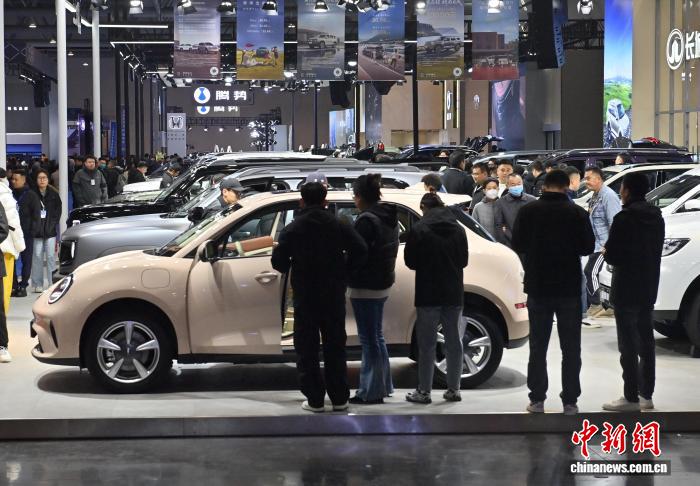
长春车展:新能源汽车加速北上“破冰”高寒市场
Xin Lang Cai Jing· 2025-11-08 12:42
Core Insights - The article highlights the increasing preference for electric vehicles (EVs) among consumers in Northeast China, driven by technological advancements [1] - The competition among automakers is shifting from price-based to technology and user experience [1] - Despite the lower penetration rate of EVs in Northeast China compared to the national average, breakthroughs in technology are expected to improve this situation [1] Industry Trends - The 11th Changchun Auto Trade Fair showcased various automakers focusing on optimizing battery performance for cold weather, addressing the unique challenges of the region [1] - Major brands such as BYD, Hongqi, Li Auto, and Zeekr presented their latest models featuring fast charging, advanced battery technology, and intelligent driving capabilities [1] - Some models claimed to achieve a range of 800 kilometers and the ability to recharge several hundred kilometers in just 10 minutes, attracting significant interest from attendees [1]
长春车展观察:新能源汽车加速北上“破冰”高寒市场
Zhong Guo Xin Wen Wang· 2025-11-08 10:59
Core Insights - The automotive industry in Northeast China is increasingly focusing on electric vehicles (EVs) as consumer preferences shift towards technology and experience rather than just price [1][3]. Group 1: Industry Trends - The 11th Changchun Auto Show featured over 80 brands and nearly 200 new energy vehicle models, marking the largest scale in history with an exhibition area of 30,000 square meters [3]. - Despite the low penetration rate of EVs in Northeast China due to severe cold weather affecting battery performance, advancements in technology are expected to improve this situation [3]. Group 2: Consumer Preferences - Local consumers are shifting their purchasing considerations from price to factors such as smart technology, battery range, and brand experience [5]. - Several brands showcased models with claims of achieving 800 kilometers of range or charging hundreds of kilometers in just 10 minutes, appealing to consumer interest [5]. - Sales representatives noted that stability remains crucial, but features like smart driving are becoming new selling points, particularly among younger consumers who are willing to pay for high-speed charging and autonomous driving capabilities [5].


新能源车市“银十”旺季成色足,多家新势力车企月交付突破4万辆
Zhong Guo Zheng Quan Bao· 2025-11-08 04:07
Group 1 - Multiple automakers reported strong sales performance in October, driven by the peak season of "Golden September and Silver October" [1] - New energy vehicle (NEV) sales are expected to exceed 16 million units in 2025, with the used car replacement policy significantly boosting the market [1][7] - New force brands like Leap Motor, Xpeng Motors, and NIO achieved record monthly deliveries, with Leap Motor delivering 70,289 units, a year-on-year increase of over 84% [2] Group 2 - Xpeng Motors delivered 42,013 units in October, marking a 76% year-on-year increase and entering several international markets [2] - NIO's deliveries reached 40,397 units, a 92.6% year-on-year increase, with significant contributions from its various brands [2] - Xiaomi Motors also surpassed 40,000 units in deliveries, while Li Auto's deliveries decreased slightly [3] Group 3 - Traditional automakers showed strong performance in the NEV sector, with BYD reporting 441,706 NEV sales in October, a 12% year-on-year decline [4] - SAIC Group's sales reached 453,978 units, with NEV sales growing by 31.6% year-on-year [4] - Chery Group's NEV sales exceeded 110,000 units for the first time, reflecting a 54.7% year-on-year increase [4] Group 4 - Industry experts noted that traditional automakers are leveraging their manufacturing scale and brand reputation to excel in the NEV market [5] - The market is expected to remain strong post the peak season, with various automakers launching new promotional activities [6] - The automotive market is anticipated to exceed initial production and sales forecasts, with a projected total of 32.9 million vehicles for the year [7]



购置税调整是对 新能源汽车发展成绩的赞许
Zheng Quan Ri Bao· 2025-11-07 16:27
Core Insights - The adjustment of the vehicle purchase tax policy for new energy vehicles (NEVs) is aimed at ensuring that consumers do not incur additional costs due to tax changes when purchasing vehicles across the year [1] - The new policy, effective from January 1, 2026, will change the current exemption to a 50% reduction, with a maximum tax reduction of 15,000 yuan per vehicle [1] - This policy shift is seen as a recognition of the maturity of the NEV industry in China, which has grown from annual sales of 74,800 units in 2014 to over 11 million units in the first three quarters of 2025 [1] Industry Development - The NEV industry in China has experienced rapid growth, becoming the largest market globally, supported by the previous tax exemption policy that has been extended four times since its inception [1] - The adjustment is expected to enhance the industry's development quality rather than hinder its momentum, providing a buffer period for industry transformation [1] - The strong technological advantages of the Chinese NEV industry, including significant improvements in battery charging efficiency and leading electric motor technologies, underpin the policy change [2] Market Dynamics - The policy adjustment is anticipated to shift the industry from being policy-driven to market-driven, encouraging companies to rely on technological innovation and product quality [3] - Companies lacking core competitiveness may be eliminated from the market, while those with strong capabilities will thrive [3] - Increased market competition is expected to lead to better quality and cost-effective products for consumers in the long run [3] Future Outlook - The policy change is viewed as a new starting point for the Chinese automotive industry on the global stage, with expectations for a brighter future for the NEV sector [3] - Collaborative efforts among the government, enterprises, and consumers are believed to be crucial for the continued success and contribution of China's NEV industry to the global electric vehicle transition [3]

购置税调整是对新能源汽车发展成绩的赞许
Zheng Quan Ri Bao· 2025-11-07 16:13
Core Viewpoint - The adjustment of the new energy vehicle (NEV) purchase tax policy reflects the maturity of the industry and aims to transition from a policy-driven to a market-driven model, promoting higher quality development in the sector [1][3]. Group 1: Policy Changes - Several car manufacturers, including Chery, NIO, Zeekr, and Li Auto, have announced subsidies to offset the impact of the new purchase tax policy, ensuring that users do not incur additional costs due to the timing of invoices [1]. - The Ministry of Industry and Information Technology announced that starting January 1, 2026, the NEV purchase tax will shift from "exemption" to "50% reduction," with a maximum tax reduction of 15,000 yuan per vehicle [1]. - Since the implementation of the NEV purchase tax exemption policy in 2014, the policy has undergone four extensions, significantly supporting the rapid development of the NEV market [1]. Group 2: Industry Development - The NEV industry in China has experienced remarkable growth, with annual sales increasing from 74,800 units in 2014 to over 11 million units in the first three quarters of 2025, establishing China as the largest NEV market globally [1][2]. - The adjustment in the purchase tax policy is expected to enhance the industry's development momentum and push it towards higher quality, avoiding abrupt policy shifts that could disrupt the market [1][3]. Group 3: Technological Advancements - The strong technological advantages of China's NEV industry support the policy adjustment, with significant improvements in battery charging efficiency and leading positions in electric motors and control systems during the 14th Five-Year Plan [2]. - Chinese companies have transitioned from following to leading in core technology areas, exemplified by BYD's blade battery, CATL's Kirin battery, and Huawei's intelligent driving solutions [2]. Group 4: Market Dynamics - The policy change will encourage a shift from reliance on subsidies to a focus on technological innovation and product quality, leading to a natural selection process where only competitive companies will thrive [3]. - Although the adjustment may increase initial purchase costs for consumers, intensified market competition is expected to yield higher quality and cost-effective products in the long run [3]. - The policy adjustment marks a new starting point for the Chinese automotive industry on the global stage, with expectations for significant contributions to the electrification of the global automotive sector [3].
隆利科技(300752) - 投资者关系活动记录表(2025年11月7日)
2025-11-07 09:48
Group 1: LIPO Technology - The company has achieved mass production of LIPO technology products with a smartphone frame thickness reduced to 1.1mm, as seen in the vivo X300 Pro, significantly enhancing drop resistance [2] - According to Omdia, the shipment of small and medium-sized OLEDs is expected to exceed 1 billion units in 2025, covering devices like smartphones and smartwatches, indicating a promising market for LIPO technology [2] - The company is currently in the capacity and yield ramp-up phase for LIPO technology products, with applications in devices such as Xiaomi Mi Band 10 and Meizu 22 [2] Group 2: Automotive Display Business - The trend towards intelligent, large, multi-screen, high-definition, and interactive displays in vehicles is driving the adoption of Mini-LED technology as a standard in smart cockpits [3] - The average price of Mini-LED automotive backlight display modules has been on the rise in Q3, with expectations for further increases as the number and size of Mini-LED screens per vehicle grow [3] - The company successfully mass-produced and delivered Mini-LED display modules for several vehicle models, including the new models from AITO and NIO, indicating rapid growth in the automotive display sector [3]

王楚钦加码赋能,奔驰纯电CLA想和年轻人交个朋友
Guan Cha Zhe Wang· 2025-11-07 07:46
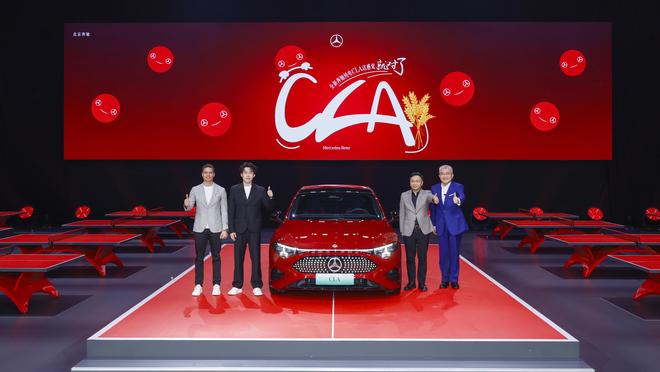
Core Insights - The launch of the new Mercedes-Benz pure electric CLA marks a strategic shift towards engaging younger consumers, with a focus on simplicity and direct communication in its marketing approach [1][14] - The vehicle is positioned competitively in the Chinese electric vehicle market, with a starting price of 249,000 yuan, directly targeting competitors like Tesla Model 3 and local brands [14] Product Launch Details - The CLA is available in three models with prices set at 249,000, 285,600, and 299,900 yuan [1] - The launch event featured a unique approach with minimal product explanation and immediate price disclosure, aiming to resonate with younger audiences [1][5] Brand Ambassador and Social Initiatives - Wang Chuqin, a world champion and representative of the younger generation, has been appointed as the brand ambassador, promoting educational initiatives in rural schools [3][14] - The collaboration aims to enhance the quality of education for over 100 schools in the next four years, integrating various educational content [3] Technological Innovations - The CLA is the first model based on Mercedes' self-developed MB.OS architecture, emphasizing local development and user experience tailored to Chinese consumers [9][11] - It features advanced hardware, including a Qualcomm Snapdragon 8295 chip and multiple display screens, enhancing the smart cockpit experience [9] Safety and Performance - The vehicle boasts a range of 866 km (CLTC standard) and a charging power of up to 320 kW, with a focus on energy efficiency at 10.9 kWh/100 km [13] - Safety features include 11 airbags and extensive pre-launch testing, adhering to new electromagnetic safety standards set to be implemented by 2026 [13] Market Positioning - The CLA aims to differentiate itself from competitors through its brand prestige and engineering capabilities, while also addressing the pain points of price comparison in the car buying process [14] - Mercedes-Benz plans to leverage this model as part of a broader strategy to strengthen its market presence in the competitive Chinese electric vehicle landscape [14]
突发!全线大跌,美联储大消息!
天天基金网· 2025-11-07 01:16
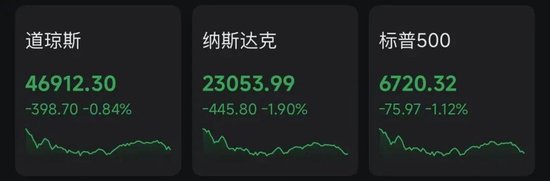
牛市来了还没上车?上天天基金APP搜索777注册即可领500元券包,优选基金10元起投!限 量发放!先到先得! 人工智能正加速美国就业市场降温,叠加AI公司寻求美国政府"担保"等误解,美股三大指数齐跌。 当地时间11月7日,纳斯达克指数下跌1.9%,标普500指数下跌1.12%,道琼斯工业平均指数下跌 0.84%。个股方面特斯拉股价下跌超3%,但随着特斯拉股东批准了首席执行官马斯克价值1万亿美元的 薪酬协议,盘后股价一度有所回升。 | 代码 | 名称 | 现价 | 涨跌 | 涨跌幅 | | --- | --- | --- | --- | --- | | DJI | 道琼斯工业平均 | 46912.30c | -398.70 | -0.84% | | IXIC | 纳斯达克指数 | 23053.99c | -445.81 | -1.90% | | SPX | 标普500 | 6720.32c | -75.97 | -1.12% | "AI担忧"加剧,三大指数集体收跌 美股大型科技股出现普跌,英伟达和特斯拉跌幅均超3%,英特尔、亚马逊、Meta跌超2%,微软跌超 1%,奈飞、苹果股价也小幅下跌。据了解,微软已经连 ...

马斯克“赢了”!特斯拉大跌
Shang Hai Zheng Quan Bao· 2025-11-07 00:40
炒股就看金麒麟分析师研报,权威,专业,及时,全面,助您挖掘潜力主题机会! 美股市场遭遇"黑色星期四"。当地时间11月6日,美股三大指数集体收跌,截至收盘,道指跌0.84%,报 46912.30点;纳指跌1.90%,报23053.99点;标普500指数跌1.12%,报6720.32点。 当地时间周四,美股三大指数集体收跌,纳指大幅下挫。截至收盘,道指跌398.70点,跌幅0.84%,报 46912.30点;纳指跌445.80点,跌幅1.90%,报23053.99点;标普500指数跌75.97点,跌幅1.12%,报 6720.32点。 个股方面,特斯拉跌逾3%。当日,特斯拉召开年度股东大会,特斯拉股东批准马斯克的1万亿美元薪酬 计划,超过75%的股东批准,支持他将公司转变为人工智能和机器人巨头的愿景。 此外,当地时间周四,包括2026年美联储议息票委、克利夫兰联储主席哈玛克,芝加哥联储主席古尔斯 比等在内的美联储官员先后发表偏"鹰派"言论,称对继续降息感到不安。 美股科技股普跌 大型科技股普跌。其中,微软连续七个交易日下跌,创2022年以来最长连跌天数;Robinhood跌近 11%,创3月份以来最差单日表现。 ...

全新产业领域,我国太空游项目即将全球首发;小鹏机器人进展超预期!马斯克赢了!1万亿美元薪酬计划获批——《投资早参》
Mei Ri Jing Ji Xin Wen· 2025-11-06 23:47
Market News - US stock indices collectively declined, with the Nasdaq down 445.81 points, a drop of 1.9%, the S&P 500 down 1.12%, and the Dow down 0.84% [1] - Major tech stocks fell, including Nvidia and Tesla down over 3%, Intel, Amazon, and Meta down over 2%, while Microsoft fell over 1% [1] - International gold prices slightly decreased, with spot gold at $3979.76 per ounce, and WTI crude oil futures down 0.29% at $59.43 per barrel [1] - European stock indices also closed lower, with Germany's DAX down 1.29%, France's CAC40 down 1.36%, and the UK's FTSE 100 down 0.42% [1] Industry Insights - The humanoid robot sector is experiencing significant developments, with XPeng announcing its new humanoid robot IRON, set for mass production by the end of 2026, featuring solid-state batteries and AI modules [2] - The humanoid robot industry is expected to enter a critical phase in 2025, driven by advancements in component performance and cost reduction, leading to a substantial increase in domestic robot shipments [2] - The 27th China International High-tech Achievements Fair will take place from November 14 to 16, showcasing the "China Space Tourism Project" and covering various sectors including AI and commercial aerospace [3] - The global space economy is projected to exceed $1 trillion by 2030, with China actively pursuing market operations in space tourism [3] - The International Electrotechnical Commission (IEC) has released the first global industrial 5G standard, marking a significant milestone for China's contributions to the digital transformation of global manufacturing [4] - The global industrial 5G market is expected to reach 345.75 billion yuan by 2025, with a projected growth rate of 41.32% from 2025 to 2032 [5]
