南钢股份

Search documents
钢铁篇:底部涅槃,曙光渐近
2025-09-22 01:00
Steel Industry Analysis Summary Industry Overview - The steel industry is experiencing a significant recovery in profit margins, with profitability reaching nearly 80% in July 2025, despite a slight recent decline. This recovery is primarily due to a larger decrease in raw material costs compared to steel prices and expectations from production control policies [1][2]. Key Points Profitability and Market Performance - As of 2025, 27 steel companies reported a profitability ratio of 58.87%, a notable improvement from the previous year when most companies faced losses [2]. - The steel sector's stock prices saw a slight increase in the first half of 2025, with a stronger performance in Q1 compared to Q2, which was weaker due to slow policy implementation and market shifts towards technology sectors [3]. Demand Trends - Demand for steel in the real estate sector is declining but at a slower rate, while manufacturing sectors (automotive, machinery, home appliances, and shipbuilding) are showing growth, effectively offsetting the downturn in real estate [1][6]. - Infrastructure demand is expected to stabilize due to increased government bond issuance and special debt issuance, with a projected year-on-year decline in demand of around 1% [9]. Sector-Specific Insights - Manufacturing investment from January to July 2025 grew by 6.2%, with low inventory levels across various sectors, indicating robust demand [10]. - The automotive sector is projected to see an 8% increase in steel demand in 2025, driven by a 12.6% increase in production from January to July [12]. - The shipbuilding industry maintains a strong demand growth of around 20%, supported by long-term orders [14][15]. Export and Pricing Dynamics - Direct exports of steel increased significantly in 2025, with total import and export volumes exceeding 70 million tons, a year-on-year increase of 1.4 million tons [16]. - Domestic steel prices remain low compared to global markets, which has stimulated export growth despite challenges from anti-dumping investigations in Vietnam and South Korea [17]. Policy and Regulatory Environment - The steel industry is undergoing regulatory changes focusing on environmental standards and energy consumption, with a requirement for ultra-low emissions by 2026 [21][22]. - The carbon emissions trading market is being tightened, which will compel companies to reduce production capacity or energy consumption [23]. Raw Material Supply and Pricing - The raw material market is showing mixed trends, with iron ore prices remaining strong while coking coal prices have seen fluctuations due to production controls [24][26]. - Future supply of iron ore is expected to be relatively loose, while coking coal prices may remain firm due to ongoing supply disruptions [27]. Investment Recommendations - Investment focus should be on high-demand sectors within manufacturing, such as high-end automotive components and nuclear power-related needs, as well as capacity optimization strategies [28]. - Key companies to watch include leading firms like Hualing, Baosteel, and Nanjing Steel, along with flexible companies like Fangda Special Steel and New Steel [30]. Conclusion - The steel industry is poised for a recovery with stable long-term demand driven by manufacturing upgrades and infrastructure investments, despite challenges in the real estate sector and regulatory pressures. The focus on environmental compliance and production efficiency will shape the competitive landscape moving forward.
反内卷下,钢铁表外产能的退出路径
Changjiang Securities· 2025-09-21 23:30
Investment Rating - The industry investment rating is Neutral, maintained [9] Core Insights - The report highlights the exit paths for off-balance steel production capacity under the "anti-involution" policy, focusing on the need for stricter regulation and the removal of illegal production capacities [5][7] - Seasonal recovery in construction demand and liquidity support have contributed to a rebound in steel prices, although the demand during the "Golden September" period is not particularly strong [4][27] - The report emphasizes the importance of regulatory measures to ensure the exit of illegal and excess steel production capacities, which is crucial for improving the supply-demand balance in the steel industry [7][28] Summary by Sections Section: Current Market Conditions - Construction demand has shown seasonal recovery, with apparent consumption of five major steel products increasing by 0.34% year-on-year and 0.55% month-on-month [4] - Daily average pig iron production has risen to 2.4102 million tons, reflecting a slight increase of 0.47 tons per day [4] - Total steel inventory has increased by 0.32% month-on-month and 7.16% year-on-year [4] Section: Regulatory Environment - Recent inspections by the Central Environmental Protection Supervision Team have focused on illegal steel production capacities in several provinces, highlighting issues such as unauthorized construction and the persistence of "rebar steel" production [5][6] - The report identifies three main forms of illegal steel production: capacity replacement schemes, production under the guise of casting and forging, and the construction of illegal rebar steel [6] Section: Future Outlook - The report anticipates a clear direction for steel production regulation, emphasizing the need to eliminate illegal capacities and enforce strict compliance with production standards [7] - It suggests that the ongoing "anti-involution" policies will enhance the supply-side contraction expectations, potentially leading to significant valuation recovery for steel companies with low price-to-book ratios [27][28]
锻造新质生产力的“金刚钻”
Xin Hua Ri Bao· 2025-09-21 21:21
Core Viewpoint - Jiangsu province is advancing the reform of the industrial worker team, which is crucial for high-quality development and aims to create a new type of labor force that matches new productivity standards [1][3]. Group 1: Industrial Worker Reform - The reform has transitioned from pilot exploration to comprehensive implementation, with over 10,000 enterprises involved and covering 7.32 million industrial workers, resulting in an increase of 651,000 high-skilled talents [3]. - Jiangsu has introduced over 60 reform policies and aims to cultivate around 200 national craftsmen, 1,000 provincial craftsmen, and 5,000 municipal craftsmen by 2035 [5]. - The province has established a dual certification system for digital technology talents, allowing 30 individuals to receive government subsidies and direct title recognition [6]. Group 2: Innovation and Technology - The "无人值守智能料斗系统" (unmanned intelligent hopper system) developed by a local team has automated bulk cargo loading at ports, significantly reducing labor costs [2]. - Jiangsu's labor unions are promoting innovation by integrating it into local and enterprise R&D systems, linking innovation outcomes to promotions and salary incentives [8]. - The province has 10,000 innovation studios, with 1.2 million participants engaging in over 5,200 activities to solve technical issues and enhance skill levels [8]. Group 3: Economic and Political Status of Workers - The new "八级工" (eight-level worker) vocational skill grading system has been established, with 252 special technicians and 26 chief technicians recognized as of August this year [9]. - Jiangsu has seen an increase in the political representation of industrial workers, with more workers becoming party members and participating in decision-making processes [9][10]. - The province is focusing on five major actions to deepen the reform and build a first-class technical workforce, enhancing the overall status of industrial workers [10].
上市苏企ESG信披加速,从“讲故事”迈向“算数据”
Xin Hua Ri Bao· 2025-09-21 21:11
Core Viewpoint - The recent updates to the ESG disclosure guidelines for listed companies in China emphasize the importance of quantifiable data in environmental reporting, particularly in areas such as pollutant emissions, energy utilization, and water resource management [1][2][3]. Group 1: ESG Disclosure Guidelines - The China Securities Regulatory Commission (CSRC) has released the second batch of guidelines for sustainable development reporting, adding specific disclosure requirements for environmental issues [1][2]. - The guidelines aim to provide practical guidance for companies facing complex environmental issues, transitioning from vague disclosures to precise governance [2][3]. - The updated guidelines include detailed examples of common risks and opportunities related to environmental topics, along with standardized calculation methods for data disclosure [2]. Group 2: Current ESG Reporting Trends - As of September 20, 2023, 256 A-share listed companies in Jiangsu have disclosed their 2024 sustainable development reports, achieving a disclosure rate of 35.96%, marking a continuous increase over three years [1]. - Jiangsu companies are shifting their approach to ESG disclosure from compliance to strategic tools, indicating a growing recognition of the importance of sustainability [1][3]. Group 3: Impact on Companies - High-quality ESG information is expected to enhance investor trust and direct long-term capital towards green enterprises, with the updated guidelines lowering the barriers for ESG disclosures [3]. - Companies like Nanjing Steel and Double Good Energy have begun to report quantifiable data on their pollutant emissions and energy usage, reflecting a shift towards data-driven ESG management [4][5]. - The manufacturing sector, which constitutes nearly 80% of Jiangsu's listed companies, faces challenges in addressing environmental issues, but the guidelines encourage proactive governance and standardized reporting [5]. Group 4: Regional Initiatives and Future Goals - Jiangsu is leveraging institutional innovation and regional practices to build a sustainable development ecosystem, with a focus on ESG value accounting and reporting [6]. - The Suzhou Industrial Park aims to establish itself as a testing ground for ESG development, targeting an ESG industry scale of over 65 billion yuan by 2025, representing a growth of over 50% from 2022 [6]. Group 5: Challenges in ESG Data Collection - Despite the push for high-quality ESG disclosures, many companies face challenges in collecting and calculating data related to pollutant emissions, energy use, and water resources, which require robust data governance and analytical capabilities [7].
短期市场聚焦冷热不均
GOLDEN SUN SECURITIES· 2025-09-21 08:55
Investment Rating - The report maintains a "Buy" rating for the steel sector, specifically recommending stocks such as Hualing Steel, Nanjing Steel, Baosteel, and New Steel [3][6][9]. Core Insights - The report emphasizes that the current market is experiencing uneven performance, with a focus on the technology sector while traditional industries face significant adjustments. The report suggests that the era of capital oversupply is establishing a foundation for a golden period in capital markets [2]. - The report highlights that the average daily pig iron production has slightly increased, and the total inventory growth has narrowed, indicating a potential improvement in market conditions [14][26]. - The apparent consumption of steel has shown a month-on-month improvement, particularly in rebar demand, which has increased significantly [43]. Summary by Sections Market Review - The CITIC Steel Index closed at 1,778.35 points, down 2.74%, underperforming the CSI 300 Index by 2.30 percentage points, ranking 25th among 30 CITIC primary sectors [1][92]. Supply and Production - The average daily pig iron production rose by 0.5 million tons to 241.1 million tons, while the production of rebar decreased slightly, and hot-rolled production saw a minor increase [14][19]. - In August 2025, crude steel production was 77.37 million tons, a year-on-year decrease of 0.7%, while steel production increased by 9.7% to 122.77 million tons [15][8]. Inventory - Total steel inventory continued to accumulate, with a weekly increase of 0.3%, but the growth rate has narrowed by 0.6 percentage points compared to the previous week [26][28]. - The social inventory of five major steel products was 11.014 million tons, up 0.6% week-on-week and 7.3% year-on-year [28]. Demand - The apparent consumption of five major steel products was 8.503 million tons, up 0.8% month-on-month but down 4.6% year-on-year, indicating a mixed demand scenario [53]. - The average weekly transaction volume of construction steel was 106,000 tons, reflecting a 3.3% increase from the previous week [44]. Raw Materials - Iron ore prices have shown a slight increase, with the Platts 62% iron ore price index at $106.6 per ton, up 0.2% week-on-week and 17.9% year-on-year [62]. - The report notes that the coal and electricity investment completion amount reached 96 billion yuan, a year-on-year increase of 52.4%, indicating a positive outlook for related sectors [8]. Prices and Profits - The comprehensive steel price index increased by 0.5% week-on-week, suggesting a potential for continued price strength as industry fundamentals improve [72]. - The current spot price for rebar in Beijing is 3,200 yuan per ton, reflecting a 0.3% increase week-on-week [73].


原料成本支撑,钢价偏强运行
Minsheng Securities· 2025-09-21 08:33
Investment Rating - The report maintains a "Buy" recommendation for several steel companies, including Hualing Steel, Baosteel, Nanjing Steel, and others, based on their projected earnings and valuation metrics [3][4]. Core Insights - The steel prices are showing a strong upward trend supported by raw material costs, with significant increases in various steel products as of September 19, 2025 [1][11]. - The overall steel profit margins have improved, with notable increases in the gross margins for rebar, hot-rolled, and cold-rolled steel [1][2]. - The report indicates a shift from inventory accumulation to inventory reduction for rebar, suggesting a recovery in demand as the industry enters its peak season [3]. Price Trends - As of September 19, 2025, the prices for key steel products in Shanghai are as follows: - Rebar (20mm HRB400) at 3280 CNY/ton, up 70 CNY/ton from the previous week - High-line (8.0mm) at 3420 CNY/ton, up 60 CNY/ton - Hot-rolled (3.0mm) at 3460 CNY/ton, up 10 CNY/ton - Cold-rolled (1.0mm) at 3830 CNY/ton, up 30 CNY/ton - Common medium plate (20mm) at 3510 CNY/ton, up 50 CNY/ton [1][11][12]. Production and Inventory - As of September 19, 2025, the total production of the five major steel products was 8.55 million tons, a decrease of 1.78 million tons week-on-week, with rebar production specifically down by 5.48 million tons to 2.0645 million tons [2]. - The total social inventory of the five major steel products increased by 63,200 tons to 11.0023 million tons, while steel mill inventory decreased by 11,400 tons [2]. Profitability - The report highlights an increase in steel profitability, with gross margins for rebar, hot-rolled, and cold-rolled steel rising by 24 CNY/ton, 28 CNY/ton, and 28 CNY/ton respectively, while electric arc furnace steel margins increased by 10 CNY/ton [1][3]. Investment Recommendations - The report recommends focusing on the following companies: - For the general steel sector: Hualing Steel, Baosteel, Nanjing Steel - For the special steel sector: Xianglou New Materials, CITIC Special Steel, Yongjin Co. - For pipe materials: Jiuli Special Materials, Youfa Group, Wujin Stainless Steel - Additionally, it suggests paying attention to high-temperature alloy companies like Fushun Special Steel [3].

迈向高质量发展新征程 南钢股份迎来上市二十五周年
Zhong Zheng Wang· 2025-09-21 07:14
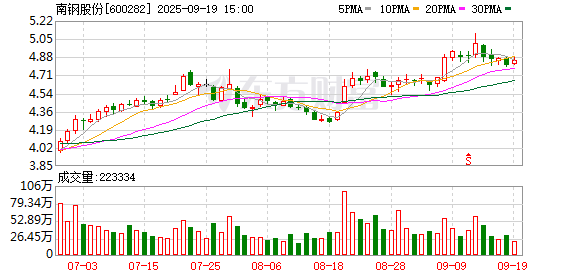
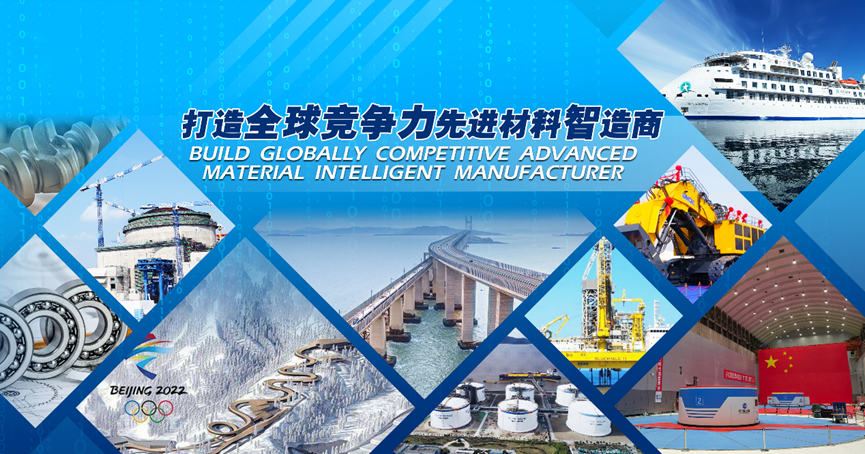
Core Viewpoint - Nanjing Steel Co., Ltd. (南钢股份) celebrates its 25th anniversary since listing, highlighting its growth into a leading producer of medium and heavy plates and special steel long products, with a cumulative stock price increase of 384% and a market capitalization of 30 billion yuan [1][3]. Group 1: Financial Performance - Since its listing, Nanjing Steel's market value has increased nearly sevenfold, reaching 30 billion yuan, and it has distributed over 13.6 billion yuan in cash dividends, representing more than 50% of cumulative net profit [1]. - The company has implemented 23 cash dividend distributions, showcasing its commitment to returning value to shareholders [1]. Group 2: Technological Innovation - Nanjing Steel invests over 3% of its revenue in R&D annually, establishing an integrated research and development system and an open high-end R&D framework [3]. - The company has achieved significant product advancements, with its advanced steel materials sales ratio increasing from 14% to 29%, and gross profit contribution from these products reaching 47% [3]. Group 3: Global Expansion - Nanjing Steel is extending its industrial chain with an overseas project for an annual production of 6.5 million tons of coke and has participated in high-profile international projects such as the Pelješac Bridge in Croatia and the Qatar offshore oil and gas field [4]. Group 4: Digital Transformation - The company is advancing its digital transformation with a focus on smart manufacturing and has developed a comprehensive smart operation center integrating data governance, industrial internet, and artificial intelligence [5]. - Nanjing Steel is collaborating with Huawei to enhance its digital capabilities and has launched the "Yuanye Steel Model" to promote intelligent manufacturing [5]. Group 5: Sustainability Initiatives - Nanjing Steel aims to be a global leader in green steel production, implementing a three-step low-carbon strategy and achieving recognition for its carbon management efforts [6][5]. - The company has received multiple green product certifications and has completed comprehensive low-emission upgrades, earning an A-level environmental performance rating in the steel industry [6]. Group 6: Strategic Development - Nanjing Steel has undertaken significant capital market operations, including the first public tender offer in China and various fundraising initiatives to support key projects [9]. - The company has restructured its internal organization to enhance efficiency and has expanded its focus to include new materials alongside steel production [9].

周报:四季度政策性限产落地仍可期,再次提示重视钢铁板块配置-20250921
Xinda Securities· 2025-09-21 05:53
Investment Rating - The investment rating for the steel industry is "Positive" [2] Core Viewpoints - The report emphasizes the importance of the steel sector in investment allocation, particularly in light of expected policy-driven production limits in the fourth quarter [1][2] - Despite current supply-demand imbalances and declining overall industry profits, the steel demand is anticipated to stabilize or slightly increase due to supportive policies in real estate, infrastructure, and manufacturing sectors [3][2] - The report suggests that the industry is likely to maintain a stable supply-demand situation, with a focus on high-margin specialty steel companies and leading enterprises with strong cost control [3][2] Supply Situation - As of September 19, the capacity utilization rate for blast furnaces among sample steel companies is 90.4%, a week-on-week increase of 0.17 percentage points [25] - The average daily pig iron production is 2.41 million tons, with a week-on-week increase of 0.47 tons and a year-on-year increase of 176,400 tons [25] - The total production of five major steel products is 7.437 million tons, a week-on-week decrease of 11,500 tons [25] Demand Situation - The consumption of five major steel products reached 8.503 million tons as of September 19, with a week-on-week increase of 70,000 tons [35] - The transaction volume of construction steel by mainstream traders is 107,000 tons, reflecting a week-on-week increase of 3.32% [35] Inventory Situation - The social inventory of five major steel products is 11.014 million tons, a week-on-week increase of 62,700 tons [43] - The factory inventory of five major steel products is 4.184 million tons, a week-on-week decrease of 1.14% [43] Price & Profit Situation - The comprehensive index for ordinary steel is 3,507.3 yuan/ton, with a week-on-week increase of 17.52 yuan/ton [49] - The profit for rebar produced in blast furnaces is 22 yuan/ton, a significant week-on-week increase of 257.14% [58] - The average cost of pig iron is 2,381 yuan/ton, with a slight week-on-week increase [58] Raw Material Prices - The spot price index for Australian iron ore (62% Fe) is 802 yuan/ton, a week-on-week increase of 6.0 yuan/ton [72] - The price of primary metallurgical coke is 1,715 yuan/ton, with a week-on-week decrease of 55.0 yuan/ton [72]

华为云肖霏:助力政企构建数据+AI双引擎,加速数智跃迁
Xin Lang Cai Jing· 2025-09-20 05:35
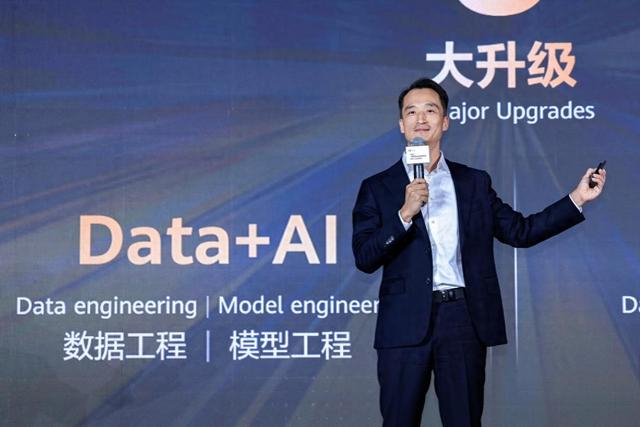
Core Insights - Huawei's Global Hybrid Cloud Integration Summit highlighted the theme of "Data + AI Dual Engine Driving Accelerated Digital Transformation for Government and Enterprises" [1] - The launch of Huawei Cloud Stack 8.6 focuses on continuous innovation in four areas: cloud foundation, data + AI, application modernization, and integrated operations [1][5] Group 1: Digital Transformation and AI Integration - The focus of enterprises has shifted from "computing power construction anxiety" to "technology application pressure" in AI integration [3] - Non-structured data utilization has increased by 60% annually over the past two years, accelerating the release of data value for intelligent upgrades [3] - The "Green Beautiful Channel" traffic model developed by Yunnan Jiaotong improved accuracy by 20% compared to general models and enhanced toll station traffic prediction accuracy by approximately 10% [3][4] Group 2: Industrial Applications of AI - AI capabilities are being applied in complex industrial processes, such as steel production, to enhance efficiency [4] - China Aluminum Corporation collaborated with Huawei to implement AI across eight business areas, achieving full-process intelligence from perception to decision-making [4] Group 3: Financial Sector Innovations - Huawei Cloud is exploring multi-Agent collaboration solutions to enhance service experience and efficiency in the financial sector [5] - The integration of various applications aims to address challenges such as system integration difficulties and long development cycles [5] Group 4: Huawei Cloud Stack 8.6 Upgrades - Huawei Cloud Stack 8.6 introduces significant enhancements in cloud foundation, data + AI capabilities, application modernization, and integrated operations [5][7] - The new version optimizes computing power usage and management, reducing model deployment time and enhancing operational efficiency [7] - Data engineering capabilities have been improved to ensure data trustworthiness and manageability during circulation [8] Group 5: Application Modernization and Development Tools - The introduction of GaussDB's three-tier pooled distributed architecture significantly boosts database performance and security [8] - CodeArts Doer enhances the entire development process, with over 6,000 developers at Postal Savings Bank utilizing it to generate over 290,000 lines of code [8] Group 6: Future Directions and Client Engagement - Huawei Cloud aims to enhance operational efficiency through AI-driven tools for knowledge Q&A, data retrieval, and fault diagnosis [9] - The company has gained the trust of over 5,500 global clients and is committed to continuous investment in cloud platform and service competitiveness [9]

高质量发展新征程 南钢股份迎上市二十五周年
Zheng Quan Shi Bao Wang· 2025-09-19 14:54
Core Viewpoint - Nanjing Steel Group (南钢股份) celebrates its 25th anniversary since its establishment and listing, highlighting its growth and commitment to innovation, sustainability, and shareholder returns [2][3]. Group 1: Company Overview - Nanjing Steel was established on March 18, 1999, and listed on September 19, 2000, becoming a leading producer of medium and heavy plates globally and a competitive player in special steel long products in China [3]. - Since its listing, the company's stock price has increased by 384%, with a market capitalization reaching 30 billion yuan, growing nearly sevenfold [3]. Group 2: Innovation and Development - The company emphasizes technological innovation, with R&D investment consistently exceeding 3% of revenue, and has developed an integrated R&D system [5]. - Nanjing Steel has achieved significant product advancements, including the 9% Ni steel for ultra-low temperature applications and ultra-high strength wear-resistant steel, recognized as national champion products [6]. Group 3: Digital Transformation - The company is undergoing a digital transformation, implementing a strategy that integrates data governance, industrial internet, and artificial intelligence [8]. - Nanjing Steel has developed a smart manufacturing and digital operation system, enhancing its operational efficiency and production management [8]. Group 4: Sustainability Initiatives - Nanjing Steel aims to be a global leader in green steel production, aligning with the "30-60" carbon goals and implementing a three-step strategy for emissions reduction [10]. - The company has received multiple green product certifications and has made significant progress in energy efficiency and environmental upgrades [10]. Group 5: Strategic Upgrades - The company has actively engaged in capital market opportunities, including public offerings and asset restructuring, to enhance its strategic capabilities [12][13]. - Nanjing Steel has adopted a value management system to ensure stable shareholder returns and effective communication with investors [13].