LG

Search documents
电子行业周报:Meta发布AI运动眼镜,建议关注AI/AR眼镜受益产业链-20250622
SINOLINK SECURITIES· 2025-06-22 12:17
Investment Rating - The report suggests a positive outlook for the AI/AR glasses industry and related supply chains, indicating a strong growth potential in the second half of the year [1][4]. Core Insights - Meta's launch of the AI glasses Oakley Meta HSTN is expected to drive deep applications in sports like skiing and cycling, with significant hardware upgrades and AI functionalities [1][5]. - The demand for AI-PCB is projected to grow significantly, driven by the increasing orders from multiple AI-PCB companies and the expansion of domestic copper-clad laminate manufacturers [1][4]. - The semiconductor industry is experiencing a recovery, with strong growth expected in the storage segment due to rising demand from cloud computing and consumer electronics [21][23]. Summary by Sections Consumer Electronics - Meta and Oakley's new AI glasses are set to enhance the application of AI in sports, with features like 8-hour battery life and 3K video resolution [1][5]. - The report anticipates a new wave of innovation in AI consumer electronics, particularly in AR glasses [5]. PCB Industry - The PCB industry is showing signs of accelerated growth, particularly in the copper-clad laminate sector, with expectations of significant quarter-on-quarter growth [7][4]. - The report highlights the positive outlook for the PCB industry, driven by demand from home appliances, automotive, and AI applications [7]. Semiconductor Industry - The storage segment is expected to see a price increase due to reduced supply and increased demand from cloud computing and consumer electronics [21][23]. - The report emphasizes the importance of domestic semiconductor equipment and materials in light of global supply chain challenges [24][28]. Key Companies - Companies like Nvidia, which are actively increasing orders for AI-related products, are expected to benefit significantly from the growing demand for AI-PCB and computing hardware [32][33]. - Domestic semiconductor equipment manufacturers are positioned to gain market share due to the ongoing trend of localization and self-sufficiency in the semiconductor supply chain [35][36].


巴斯夫、金发供应商,化工新材料“小巨人”,IPO上会通过!
Sou Hu Cai Jing· 2025-06-21 16:24
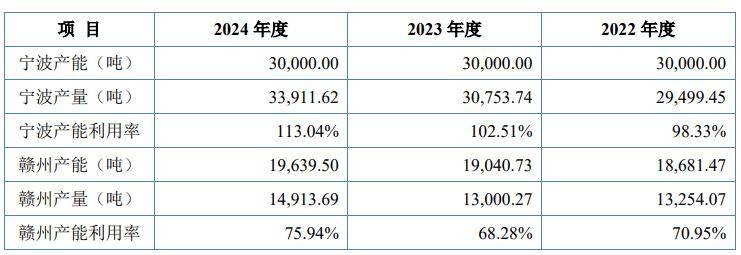
Core Viewpoint - Ningbo Nengzhiguang has successfully passed the listing committee review of the Beijing Stock Exchange, marking a significant milestone in its IPO journey, which began on June 26 of the previous year [1] Financial Performance - The company achieved revenues of 529 million, 555 million, and 569 million in 2021, 2022, and 2023 respectively, with net profits of 24.145 million, 21.864 million, and 49.807 million, showing substantial growth in 2023 [2] - For 2024, the company expects to generate 610 million in revenue with a gross margin of 17% and a net profit of 55.94 million [2] - In the first half of 2025, the company anticipates revenues of 301 million, representing a year-on-year growth of 2.61%, and a non-GAAP net profit of approximately 26.99 million, with a growth rate of 3.39% [2] IPO and Fundraising - The company plans to raise approximately 160 million for the expansion of its functional polymer materials production project, the construction of a research and development center, and working capital [2] Production Capacity and Utilization - The production capacity for Ningbo is set at 30,000 tons for 2024, with an actual output of 33,911.62 tons in 2023, resulting in a utilization rate of 113.04% [4] - The production capacity for Ganzhou is 19,639.50 tons, with an output of 14,913.69 tons in 2023, leading to a utilization rate of 75.94% [4] Product Portfolio - The company specializes in functional polymer products such as compatibilizers, toughening agents, and adhesive resins, which are widely used in modified plastics, composite materials, and high-performance films [4] - Current research and development focus includes flame-retardant toughening agents for nylon, high-performance lithium battery separators, and modified polypropylene wax [5] Client Base - The company serves notable clients including Kingfa Technology, Prit, and Zhongtian Technology, while also expanding its reach to global giants like LG and BASF [3] Market Trends - The shift from P-type to N-type solar cells and advancements in technologies like LECO are driving demand for new encapsulation materials, which presents growth opportunities for the company in the photovoltaic functional materials sector [11]


在手机上追求顶级扬声器,如今究竟还有意义吗?
3 6 Ke· 2025-06-20 12:52
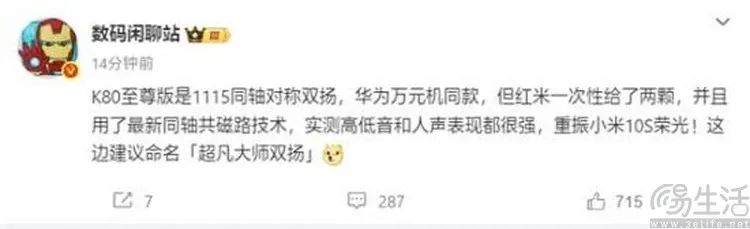
Core Viewpoint - REDMI is launching its flagship model K80 Supreme Edition, which has generated significant attention due to its high-end speaker configuration that rivals other premium brands at a lower price point [1][3]. Group 1: Product Features - The K80 Supreme Edition features two 1115 coaxial speakers, which are comparable to those found in flagship models priced at over 10,000 yuan, showcasing REDMI's strategy of offering high-end specifications at competitive prices [3]. - The introduction of high-quality audio components in smartphones has been a long-standing trend, with a historical emphasis on enhancing speaker quality dating back to the early 2000s [5][6]. Group 2: Market Trends - The smartphone industry has seen fluctuating interest in external speaker quality, with a notable decline in focus during the smart era, as manufacturers prioritized other features like camera performance and processing power [10][15]. - Despite advancements in speaker technology, the physical size of high-end speakers in smartphones has decreased due to space constraints from other components, leading to challenges in maintaining audio quality [17][19]. Group 3: Consumer Behavior - The demand for high-quality external audio in smartphones has become somewhat awkward, as even premium devices cannot match the audio quality of affordable TWS earbuds or Bluetooth speakers [22]. - The shift in consumer preferences towards personal audio experiences has diminished the appeal of using smartphone speakers in public settings, further complicating the market for high-quality smartphone audio [22].

海信何时能从全球第二成为全球第一?总裁李炜:外部环境困难的时候,我们机会更多丨《封面》
凤凰网财经· 2025-06-19 13:21
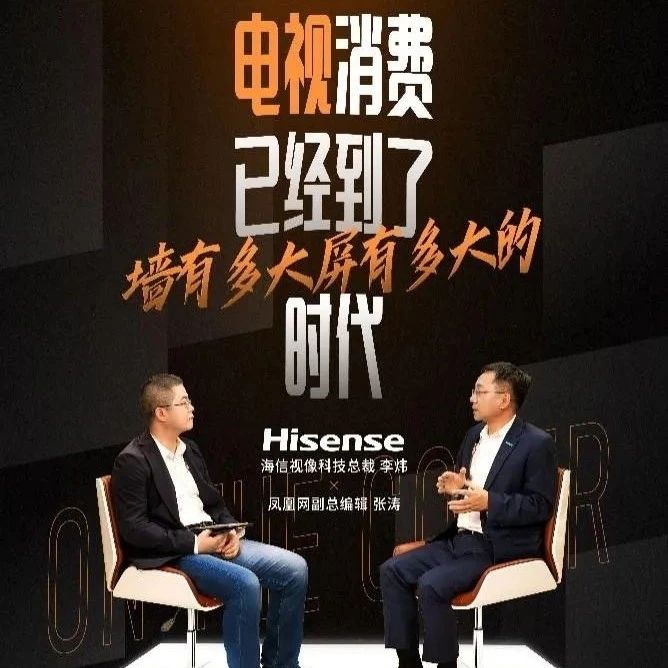
Core Viewpoint - The article emphasizes the transformation of the global display industry, highlighting Hisense's significant market presence and technological advancements, particularly in the context of major sporting events like the 2025 Club World Cup [1][2]. Group 1: Market Growth and Trends - In 2024, the global TV market is projected to reach 208 million units, with a year-on-year growth of 3.48%, driven by major sporting events [1]. - Hisense's market share in the global display sector has surpassed 30%, with the company maintaining a strong position in the 100-inch TV segment, accounting for one in every two units shipped [1][4]. - The company attributes its growth to technological differentiation, large-screen and high-end product development, and a focus on smart and green technologies [4][5]. Group 2: Consumer Behavior and Market Dynamics - Hisense challenges the notion that television is becoming obsolete, citing a 56% increase in sales of a co-branded product and a 400% surge in shipments of 100-inch TVs [2][7]. - The company asserts that consumer viewing habits have evolved, with a preference for larger screens that enhance immersive experiences [6][7]. - The display industry is entering a phase of stock competition, where the focus has shifted from technical specifications to user scenarios and ecosystem value [2][6]. Group 3: Technological Innovations - Hisense has introduced the world's first RGB-Mini LED TV, which addresses challenges in color and brightness control, showcasing its commitment to R&D [4][22]. - The company is actively exploring applications for laser display technology in various environments, including automotive and healthcare, emphasizing energy efficiency and high-quality displays [9][10][12]. - Hisense has filed 2,806 patents related to laser display technology, positioning itself as a leader in the field [22][23]. Group 4: Future Outlook and Strategic Vision - The company envisions future TVs to be larger, smarter, and more versatile, with capabilities to meet diverse user needs beyond traditional viewing [19][20]. - Hisense is committed to green manufacturing, with a goal of achieving 100% renewable energy usage in its zero-carbon factory [24][26]. - The company aims to leverage its technological advancements and market strategies to close the gap with global competitors and ultimately become the market leader [27].

全球与中国动力电池前驱体及阴极市场发展趋势及未来发展分析报告2025-2031年
Sou Hu Cai Jing· 2025-06-19 13:09
Group 1 - The report analyzes the development trends and future prospects of the global and Chinese power battery precursor and cathode market from 2025 to 2031 [1][3] - It categorizes power battery precursors and cathodes into several types, including NCA, NMC, natural graphite, synthetic graphite, and others [4][5] - The report provides sales growth trends for different product types and applications, including lithium-ion batteries, nickel-hydrogen batteries, lithium cobalt oxide batteries, lithium manganese oxide batteries, and lithium iron phosphate batteries [4][5] Group 2 - The global power battery precursor and cathode market is expected to see significant growth in capacity, production, and demand from 2020 to 2031 [2][4] - The report forecasts the supply and demand situation, production capacity, output, and utilization rates for the global market [2][4] - It also includes a detailed analysis of the market size and growth trends in major regions, including North America, Europe, China, Japan, Southeast Asia, and India [5][6] Group 3 - The report highlights the market share and sales performance of major manufacturers in the global and Chinese markets, including LG, BASF, and others [6][7] - It provides insights into the production bases, sales regions, competitors, and market positions of key players [6][7] - The analysis includes sales volume, revenue, price trends, and profit margins for these manufacturers from 2020 to 2025 [6][7] Group 4 - The report discusses the competitive landscape of the power battery precursor and cathode industry, including market concentration and competition levels [6][7] - It identifies the top manufacturers and their market shares, as well as the investment and merger activities within the industry [6][7] - The report also examines the industry chain, manufacturing processes, upstream supply conditions, and downstream customer analysis [8][9]

I Tested the Samsung S95F OLED and the LG G5 OLED and Recommend This TV
CNET· 2025-06-17 12:01
Picture Quality & Display Technology - Samsung's 2025 OLED TV, the S95F, offers approximately 30% more light output in both vivid and movie modes compared to previous models, enhancing 4K HDR movie performance with brighter brights and darker blacks [1] - Samsung's S95F features an improved anti-glare coating, effectively maintaining black levels even in well-lit environments, a significant upgrade compared to previous models and LG's G5 [1] Gaming Performance - Samsung's S95F delivers excellent gaming performance due to its high brightness and speedy panel, achieving lag times under 10 milliseconds in gaming modes [1] Design & Connectivity - Samsung's S95F utilizes the One Connect box, connected by a single cable, featuring four HDMI ports (4K 120 Hz), three USB ports, Ethernet, and a digital optical output, designed to reduce cable clutter [1] Smart TV System - Samsung's smart TV system is comparable to LG's, offering expected functionalities, while LG maintains its magic remote with mouse-like capabilities [1] Competitive Advantage - Samsung's anti-glare filter gives it a competitive edge, particularly for users who frequently watch TV in lit living rooms, minimizing reflections and distractions [1]

中国家电业在东南亚群体性崛起
Di Yi Cai Jing· 2025-06-17 09:58
Core Viewpoint - The main challenge for building factories in Southeast Asia is the lack of a well-developed local supply chain, resulting in higher overall production costs compared to domestic production in China [1][12]. Group 1: Company Strategies and Developments - Weili has invested in a factory in Thailand to mitigate trade risks and has trained 38 key personnel in Thai language to ensure efficient operations [3][4]. - Haier aims to capture a 30% market share in Southeast Asia and is focusing on building a comprehensive marketing and service network [3][4]. - Companies like Aishida, TCL, and BOE are expanding their presence in Southeast Asia, with significant investments in local production facilities [5][6]. Group 2: Market Trends and Opportunities - The trend of Chinese companies investing in Southeast Asia has evolved through three phases, from initial exploration to full-scale investment for both trade risk mitigation and local market opportunities [13][14]. - The Southeast Asian market is seen as a new growth point for Chinese brands, with a population of 670 million, which is about half of China's population [11]. - The commercial air conditioning market in Southeast Asia is projected to grow, with Vietnam, Thailand, and Indonesia showing resilience despite global economic fluctuations [9]. Group 3: Challenges and Supply Chain Issues - The primary challenge remains the underdeveloped local supply chain, which leads to higher production costs compared to China [1][12]. - Industrial land costs in Thailand have increased significantly, from 400,000 RMB per mu last year to 800,000-1,000,000 RMB this year, although overall land costs remain relatively low [11]. - Labor costs in Thailand and Indonesia are competitive, with monthly wages for workers in Thailand around 3,000 RMB and in Indonesia ranging from 1,500 to 2,300 RMB [11].


中东半导体,冉冉升起
半导体行业观察· 2025-06-14 03:09
Core Viewpoint - The article discusses the emerging semiconductor ecosystems in Egypt, Saudi Arabia, and Oman, highlighting their strategic initiatives to reduce reliance on oil and foster high-tech industries as part of their long-term economic visions [1][2]. Group 1: Egypt's Semiconductor Strategy - Egypt is developing one of the most vibrant semiconductor ecosystems in the MENA region, with efforts dating back nearly 20 years, initiated by the founding of Si-Ware Systems [4]. - The "Egypt Manufacturing Electronics" (EME) initiative, launched in 2016, has evolved into EME 2.0, focusing on positioning Egypt as a regional center for electronic and semiconductor design without the high costs of building semiconductor fabs [5]. - Egypt's strong talent pool in electronic engineering and embedded systems has attracted global companies to establish design centers, enhancing its reputation in chip design [9]. Group 2: Saudi Arabia's Ambitious Plans - Saudi Arabia aims to become a regional leader in semiconductor technology as part of its Vision 2030, with a focus on reducing oil dependency and fostering a knowledge-based economy [12]. - The Saudi Semiconductor Program (SSP) was launched in 2022 to enhance local chip design capabilities and support academic research, with an initial investment of $266 million for the National Semiconductor Center (NSH) [12][13]. - The Alat project, backed by a $100 billion budget, aims to establish Saudi Arabia as a high-tech manufacturing hub, including semiconductor production [17][18]. Group 3: Oman's Cautious Approach - Oman is entering the semiconductor industry with a focus on outsourcing semiconductor packaging and testing (OSAT) services, aiming to diversify its economy as part of its Vision 2040 [21][22]. - The establishment of a technology center by GS Microelectronics in Muscat marks a significant step in building local semiconductor capabilities, with over 100 Omani engineers receiving training [22]. - Oman is actively promoting itself as a regional hub for OSAT services, with expected investments ranging from $130 million to $140 million [23]. Group 4: Collaborative Potential - Egypt, Saudi Arabia, and Oman are pursuing different strategies in the semiconductor sector, with Egypt leveraging its talent, Saudi Arabia focusing on capital and infrastructure, and Oman emphasizing partnerships and regional positioning [29]. - The complementary strengths of these countries could lead to a more robust semiconductor ecosystem in the Middle East, requiring long-term investment and collaboration [30].
中东半导体,冉冉升起
半导体行业观察· 2025-06-14 03:05
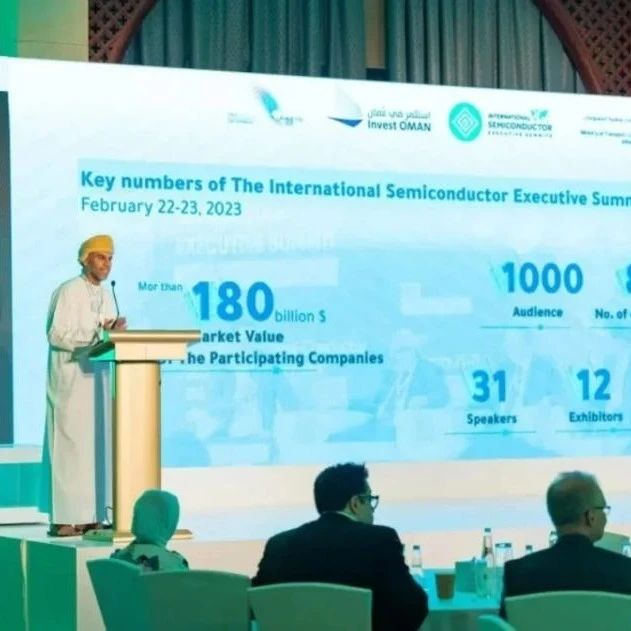
Core Viewpoint - The article discusses the emerging semiconductor ecosystems in Egypt, Saudi Arabia, and Oman, highlighting their strategic initiatives to reduce reliance on oil and foster high-tech industries as part of their long-term economic visions [2][34]. Egypt: Emerging Semiconductor Innovation and Design Hub - Egypt is developing one of the most vibrant semiconductor ecosystems in the MENA region, initiated nearly 20 years ago with the founding of Si-Ware Systems, the first fabless semiconductor company in Egypt [4][5]. - The Egyptian government launched the "Egypt Manufacturing Electronics" (EME) program in 2016, which has evolved into EME 2.0, laying the groundwork for the expansion of the electronics and semiconductor industry [5][6]. - Egypt aims to position itself as a regional center for electronic and semiconductor design, focusing on design and system integration rather than the high costs of building semiconductor fabs [6][9]. - Global tech giants have established design centers in Egypt, recognizing the strong talent pool, particularly in electronic engineering and embedded systems [9][10]. - The establishment of a regional office by the Global Semiconductor Alliance (GSA) in Cairo underscores Egypt's strategic importance in the semiconductor landscape [13]. Saudi Arabia: Building a Semiconductor Powerhouse - Saudi Arabia has committed to becoming a regional leader in semiconductor technology as part of its Vision 2030 economic transformation plan, positioning semiconductors as a key industry [14][16]. - The Saudi Semiconductor Program (SSP) was launched in March 2022 to enhance national chip design capabilities and localize semiconductor technology development and production [16][17]. - The National Semiconductor Center (NSH) is set to launch in 2024 with an initial investment of $266 million, aiming to attract at least 50 fabless semiconductor design companies by 2030 [16][17]. - The Alat project, backed by a $100 billion budget, aims to establish Saudi Arabia as a high-tech manufacturing hub, including semiconductor production [21]. - Saudi Arabia is focusing on talent development through partnerships with global universities and training programs to build local expertise in semiconductor design and manufacturing [22][23]. Oman: Cautious Entry into the Semiconductor Industry - Oman is exploring opportunities in the semiconductor industry as part of its Vision 2040 economic diversification goals, despite lacking local foundries and traditional design companies [25][26]. - The country is positioning itself as a base for outsourced semiconductor assembly and testing (OSAT) services, which require lower capital investment compared to front-end manufacturing [25][27]. - Oman has made strides by establishing a technology center with GS Microelectronics, marking a significant step in building its semiconductor design capabilities [26][27]. - The country is actively inviting international OSAT experts to invest in Oman, with projected investments ranging from $130 million to $140 million [27]. - Oman hosted the first Middle East International Semiconductor Executive Summit (ISES) in February 2023, enhancing its visibility in the semiconductor sector [29][30]. Conclusion - Egypt, Saudi Arabia, and Oman are adopting distinct approaches to semiconductor development, leveraging their unique resources and priorities [34][35]. - Egypt focuses on its existing talent pool and historical strengths in chip design, while Saudi Arabia is building from the ground up with significant investments and infrastructure [34][35]. - Oman is taking a more collaborative approach, gradually developing its capabilities in OSAT while fostering international partnerships [34][35].
海外营收占40%,韩国三星、LG是其客户,场内智能物流厂商获亿元级B2轮融资|36氪首发
36氪· 2025-06-14 01:15
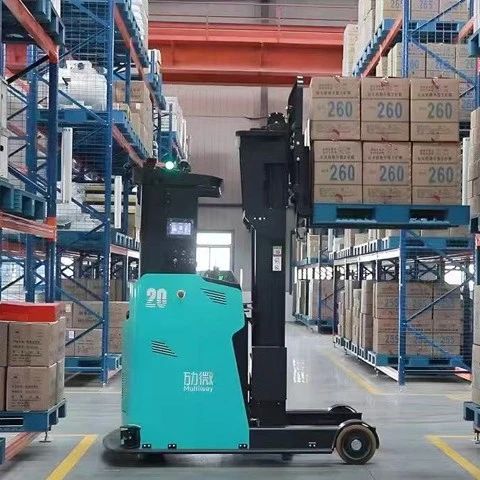
Core Viewpoint - The article highlights the rapid growth and international expansion of "Maiwei Robotics," a provider of intelligent logistics solutions, which has successfully increased its overseas revenue from less than 10% in 2022 to 40% currently, following a recent financing round of over 100 million yuan [3][13]. Company Overview - Maiwei Robotics was established in 2019 and is headquartered in Shenzhen, covering over 30 countries and regions globally. The company specializes in intelligent manufacturing and logistics solutions based on robotics and AI technology, serving key industries such as mechanical manufacturing, food and beverage, metallurgy, chemical energy, automotive manufacturing, and cold chain logistics [5][6]. Product and Technology - The company has developed a comprehensive range of over 30 mobile robot products, including unmanned forklifts, AMRs, unmanned towing vehicles, and four-way shuttles, addressing various logistics needs [8][9]. - Maiwei Robotics has achieved over 80% self-research rate for core components like laser radar and distance sensors, and has developed a full-stack self-research system for navigation, perception, control, scheduling, and safety algorithms [8][9]. - The AI "Tianyan" system and a cluster scheduling system based on reinforcement learning allow for dynamic path planning and efficient operation of multiple devices [8][9]. Market Performance - Since its commercialization began in 2021, Maiwei Robotics has signed contracts worth over 60 million yuan in its first year. The company has rapidly expanded its global footprint, with overseas revenue now constituting 40% of total revenue [13]. Investment Insights - Investors express confidence in Maiwei Robotics' potential for international growth and innovation in intelligent logistics, emphasizing the company's self-researched technology and comprehensive product matrix as key factors for its rapid rise in the industry [14].