极氪

Search documents
国新证券每日晨报-20251103
Guoxin Securities Co., Ltd· 2025-11-03 02:42
国内市场综述 低开低走 震荡回调 周五(10 月 31 日)大盘低开低走,震荡回调。截至 收盘,上证综指收于 3954.79 点,下跌 0.81%;深成 指收于 13378.21 点,下跌 1.14%;科创 50 下跌 3.13%; 创业板指下跌 2.31%,万得全 A 成交额共 23498 亿元, 较前一日略有下降。 行业方面,30 个中信一级行业有 16 个行业上涨,其 中传媒、消费者服务及医药涨幅居前,而通信、电子 及有色金属则跌幅较大。概念方面,Kimi、锂电电解 液及创新药等指数表现活跃。 海外市场综述 美股三大指数小幅收涨,亚马逊涨超 9% 周五(10 月 31 日),美国三大股指小幅收涨,道指 涨 0.09%,标普 500 指数涨 0.26%,纳指涨 0.61%。亚 马逊涨超 9%,雪佛龙涨逾 2%,领涨道指。万得美国科 技七巨头指数涨 0.69%,特斯拉涨近 4%,脸书跌近 3%。 中概股多数上涨,阿特斯太阳能涨近 16%。 新闻精要 1. 国家主席习近平在亚太经合组织第三十二次领导人 非正式会议第二阶段会议上发表讲话 2. 财政部、税务总局发布黄金有关税收政策的公告 3. 商务部新闻发言人就 ...
智驾软硬件持续迭代,robotaxi未来已来
2025-11-03 02:35
Summary of Key Points from the Conference Call Industry Overview - The conference call discusses the autonomous driving (AD) industry, focusing on various companies and their technological advancements in the sector. Key Companies and Market Share - **Momenta** holds a leading position in the third-party autonomous driving market with a market share of 55%, while **Huawei** has a 25% share [1][3]. - **DJI** excels in low-computing power chip solutions but is shifting towards mid-to-high computing power solutions due to market demand [1][5]. - **Horizon Robotics** has developed self-researched hardware-software integrated solutions, currently in mass production with Chery's models, but faces challenges in NPU computing power and algorithm upgrades [1][6]. Technological Routes and Developments - The AD industry is divided into three main technological routes: 1. **End-to-End Algorithms**: Gaining traction since Tesla's AI Day in 2021, with companies like Momenta and Tesla implementing these algorithms in production vehicles [2]. 2. **Vision Language Action (VLA) Models**: Used by companies like Li Auto and XPeng, requiring high computing power (minimum 500 TOPS) and significant resources for training [2]. 3. **World Models**: Developed by companies like Huawei and Momenta, capable of understanding and predicting environmental changes [2]. Performance and Capabilities of Key Players - **Momenta** offers two product lines: a cost-effective single Orin X solution and a high-end dual Orin X solution, showcasing strong engineering capabilities [3]. - **DJI** has strong engineering capabilities but relatively weaker algorithm capabilities, allowing it to effectively implement complex algorithms in practical scenarios [3]. - **Horizon Robotics** is in the second tier of the industry, with its HSD and G6P series solutions providing decent user experience but needing more vehicle validation [6]. Market Trends and Shifts - The market is shifting from low-computing power chips to mid-to-high computing power solutions, prompting companies like DJI to develop new chip solutions [4][5]. - The demand for **fusion perception** routes combining Lidar and other sensors is expected to grow due to regulatory requirements and the need for handling complex scenarios [12]. Challenges and Future Outlook - The differences in autonomous driving capabilities among companies are primarily determined by data, computing power, and algorithms [8][9]. - Long-term, the accumulation of data will be crucial for competitive advantage, with a critical mass of road testing data needed to trigger significant improvements [10]. - The **Robot Taxi** market is seen as a positive growth area, with profitability dependent on vehicle efficiency, cost management, and competitive pricing [18][19]. Conclusion - Companies transitioning from L2+ to L4 levels of autonomous driving have a natural advantage due to lower resource investment and existing experience in mass production [20].
新能源车市“银十”旺季成色足 多家新势力车企月交付突破4万辆
Zhong Guo Zheng Quan Bao· 2025-11-02 20:37
Core Viewpoint - The automotive market is experiencing strong sales performance in October, driven by the "Golden September and Silver October" peak season, with several new energy vehicle (NEV) manufacturers reporting record deliveries [1][2][4]. Group 1: New Energy Vehicle Manufacturers - Leap Motor achieved a monthly delivery of 70,289 vehicles in October, marking a year-on-year increase of over 84% [2]. - Xpeng Motors delivered 42,013 vehicles in October, a 76% year-on-year increase, and has entered several international markets [2]. - NIO delivered 40,397 vehicles in October, a 92.6% year-on-year increase, with significant contributions from its various brands [2]. - Xiaomi Motors also surpassed 40,000 deliveries in October, while Li Auto's deliveries decreased [3]. Group 2: Traditional Automakers - BYD reported NEV sales of 441,706 units in October, a 12% year-on-year decline, but with a month-on-month increase [4]. - SAIC Group's total vehicle sales reached 453,978 units in October, a 12.96% year-on-year increase, with NEV sales growing by 31.6% [4]. - Chery Group's NEV sales reached 110,346 units, a 54.7% year-on-year increase, marking a significant milestone [4]. - The sales of Seres' NEVs hit a record high of 51,456 units, reflecting a 42.89% year-on-year growth [4]. Group 3: Market Outlook and Trends - Experts predict that the automotive market will exceed previous production and sales expectations, with NEV sales projected to surpass 16 million units [1][6]. - The implementation of vehicle trade-in policies is expected to significantly boost market demand [1][6]. - The automotive industry is witnessing a shift towards NEVs becoming mainstream products, with projections indicating an 85% penetration rate for passenger NEVs by 2040 [6].



多家新势力车企月交付突破4万辆
Zhong Guo Zheng Quan Bao· 2025-11-02 20:16
Core Insights - The automotive market is experiencing strong sales performance in October, driven by the "Golden September and Silver October" peak season, with several companies reporting significant delivery numbers for new energy vehicles [1][2][3] Group 1: New Energy Vehicle Performance - Leap Motor achieved a record monthly delivery of 70,289 units in October, marking a year-on-year increase of over 84% [1] - XPeng Motors delivered 42,013 vehicles in October, a 76% year-on-year increase, and is expanding into international markets [2] - NIO delivered 40,397 vehicles in October, a 92.6% year-on-year increase, with significant contributions from its various brands [2] - Xiaomi Motors also surpassed 40,000 deliveries in October, while Li Auto's deliveries decreased [2] Group 2: Traditional Automakers' Performance - BYD reported 441,706 new energy vehicle sales in October, a 12% year-on-year decline, but with a month-on-month increase [3] - SAIC Group's total vehicle sales reached 453,978 units in October, a 12.96% year-on-year increase, with new energy vehicle sales up 31.6% [3] - Chery Group's October sales reached 281,161 units, with new energy vehicle sales growing by 54.7% [3] - BAIC New Energy sold 30,542 units in October, a 112% year-on-year increase [3] Group 3: Market Outlook and Trends - Experts predict that the automotive market's overall performance will exceed expectations, with new energy vehicle sales expected to surpass 16 million units [4] - The implementation of the vehicle trade-in policy is expected to significantly boost market demand [4] - The automotive industry is witnessing a shift towards new energy vehicles, with projections indicating that they will become the mainstream product in the market within the next 5-15 years [4]



新泉股份 | 2025Q3:收入同比增长 剑指全球内外饰龙头【民生汽车 崔琰团队】
汽车琰究· 2025-11-02 08:45
Core Viewpoint - The company reported a revenue of 11.41 billion yuan for the first three quarters of 2025, representing a year-on-year increase of 18.8%, while the net profit attributable to shareholders decreased by 13.1% to 620 million yuan [2] Revenue Performance - In Q3 2025, the company achieved a revenue of 3.95 billion yuan, up 14.9% year-on-year and 0.4% quarter-on-quarter, driven by significant sales increases from key clients such as Tesla (+7.4%), Geely (+52.0%), and Xiaomi (+166.0%) [3] - The net profit attributable to shareholders for Q3 2025 was 200 million yuan, down 27.1% year-on-year and 4.1% quarter-on-quarter, with a gross margin of 15.6%, reflecting a decrease of 5.7 percentage points year-on-year [3] Profitability and Cost Management - The company's net profit margin for Q3 2025 was 5.0%, a decline of 3.0 percentage points year-on-year, primarily due to significant pressure from clients [3] - The expense ratios for sales, management, R&D, and financial costs were stable, with slight variations, indicating effective cost management [3] Strategic Expansion - The company is actively expanding its client base by entering the Tesla supply chain and acquiring new clients such as Li Auto, BYD, and Great Wall Motors, driven by the growth in the new energy sector [4] - The company announced the establishment of a wholly-owned subsidiary focused on intelligent robotics, indicating a strategic move into the robotics sector [4] Globalization Strategy - The company is expanding its overseas production bases, with new facilities in Slovakia, Malaysia, and Mexico, to meet the needs of existing and potential clients [5] - The international strategy aims to enhance the company's market share in the interior and exterior automotive parts sector, leveraging cost-effectiveness and rapid response capabilities [5] Financial Projections - Revenue projections for 2025-2027 are estimated at 16.07 billion yuan, 19.31 billion yuan, and 22.97 billion yuan, respectively, with corresponding net profits of 1.03 billion yuan, 1.33 billion yuan, and 1.64 billion yuan [6] - The expected earnings per share (EPS) for 2025, 2026, and 2027 are 2.02 yuan, 2.60 yuan, and 3.22 yuan, respectively, with price-to-earnings (PE) ratios decreasing from 38 to 24 over the same period [6]


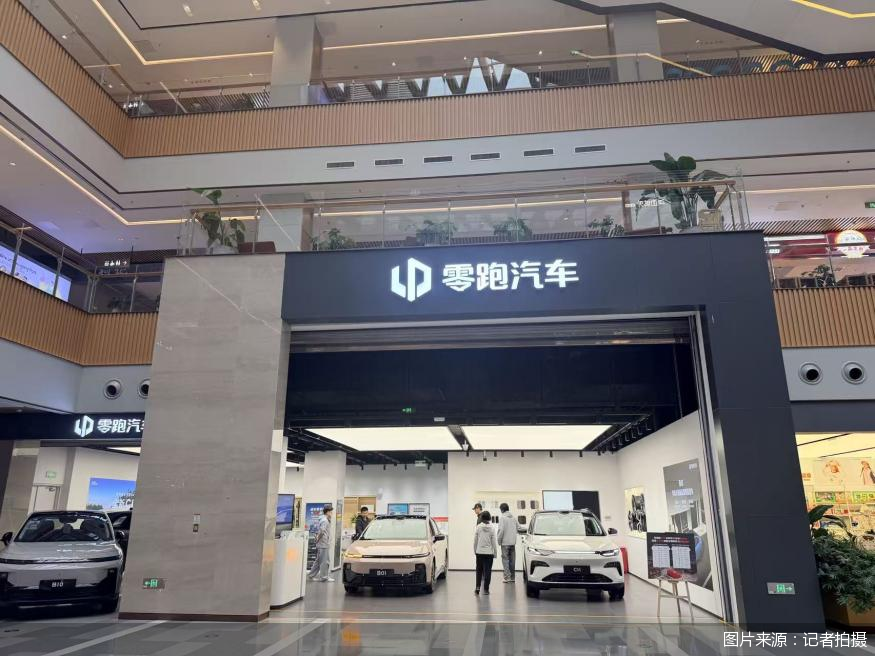
零跑登顶、蔚来破纪录,新势力市场分化加剧
Bei Jing Shang Bao· 2025-11-02 07:19
Core Insights - The new energy vehicle market in China is experiencing a significant reshaping, with leading brands achieving record deliveries while differentiation among companies intensifies [1][3] - Li Auto has faced a decline in deliveries, with a 38% year-on-year drop in October, marking five consecutive months of declining sales [2] Group 1: Leading Brands Performance - Leap Motor topped the delivery charts with over 70,000 units in October, achieving a year-on-year growth of over 84% and maintaining its position as the leading new energy vehicle brand for eight consecutive months [1] - Hongmeng Zhixing followed closely with a record delivery of 68,200 units, while XPeng and NIO delivered 42,013 and 40,397 units respectively, both surpassing 40,000 for the first time [1] - NIO is expanding its brand matrix, with the NIO brand delivering 17,143 units and the Le Dao brand surpassing it with 17,342 units in October [1] Group 2: Other Brands and Market Trends - Li Auto's deliveries fell to 31,767 units in October, a 38% year-on-year decrease, despite the CEO's optimism about the i6 model's strong sales and high order volume [2] - Traditional automakers' new energy brands also performed well, with Zeekr and Lynk & Co achieving a combined monthly sales of over 60,000 units, marking a year-on-year increase of 9.8% [2] - The market is characterized by an expanding advantage for leading brands, increased differentiation among companies, and a reshaping of the market landscape due to favorable sales conditions and policy incentives [3]
解码车企交付成绩单|零跑登顶、蔚来破纪录,新势力市场分化加剧
Bei Jing Shang Bao· 2025-11-02 07:09
Core Insights - The October delivery data from various new energy vehicle manufacturers indicates a significant divergence in performance among companies, with leading brands achieving record deliveries while others struggle [2][3][4]. Group 1: Delivery Performance - Leap Motor topped the delivery charts with over 70,000 units delivered in October, marking a year-on-year increase of over 84%, maintaining its position as the leading new energy vehicle brand for eight consecutive months [2]. - Hongmeng Zhixing followed closely with a record delivery of 68,200 units across all models in October [2]. - Xiaopeng and NIO both surpassed 40,000 units delivered, achieving historical highs with deliveries of 42,013 and 40,397 units respectively [2]. - NIO is expanding its multi-brand strategy, with the NIO brand delivering 17,143 units and the Ladao brand surpassing it with 17,342 units delivered [2]. Group 2: Declining Performance - Li Auto reported a decline in deliveries, with 31,767 units delivered in October, representing a year-on-year drop of 38% and a month-on-month decrease of 6.43% [3]. - Li Auto has faced five consecutive months of year-on-year sales declines since June, although the CEO noted strong demand for the new Li i6 model with over 70,000 orders [3]. Group 3: Traditional Automakers - Traditional automakers' new energy brands also showed strong performance, with Zeekr and Lynk & Co achieving a combined monthly sales of over 60,000 units, a year-on-year increase of 9.8% and a month-on-month increase of 20.5% [3]. - BAIC New Energy delivered over 30,000 units in October, marking a year-on-year increase of 112% and a month-on-month increase of 48.7% [3]. Group 4: Market Trends - The data indicates a trend of increasing advantages for leading brands, exacerbated differentiation among companies, and a reshaping of the market landscape [4]. - The favorable consumer environment, driven by traditional sales peaks and policy incentives, has allowed leading brands to effectively convert market demand into actual sales [4]. Group 5: Competitive Landscape - Differences in investment and outcomes in technology research, product innovation, and service enhancement among companies have led to varying product competitiveness [5]. - As the fourth quarter approaches, the product competitiveness and capacity release speed of new energy vehicle companies will be crucial in determining their annual rankings [5].
不卷性能卷配置:极氪的中场打法与利润焦虑
Tai Mei Ti A P P· 2025-11-02 06:57
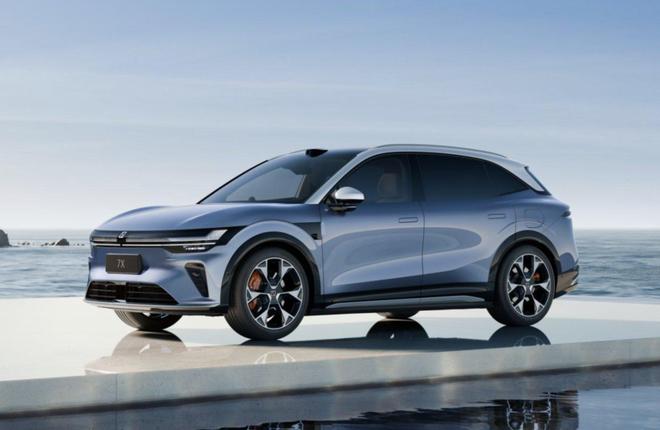
Core Insights - The launch of the refreshed Zeekr 7X represents a strategic shift in the competitive landscape of the electric SUV market, focusing on a balanced approach rather than singular performance metrics [2][3][5] - The new model is priced competitively within the 200,000 to 300,000 yuan range, directly targeting a crowded market segment with significant competition from brands like Tesla and BYD [2][5] - The emphasis on a balanced experience includes improvements in space utilization, comfort features, and a shift to standardizing high-end configurations across all models [3][4][6] Pricing and Market Positioning - The refreshed Zeekr 7X is available in three configurations, with prices set at 229,800 yuan, 249,800 yuan, and 269,800 yuan, and a promotional price of 219,800 yuan for trade-ins [2] - This pricing strategy aims to penetrate a highly competitive market segment that includes over 30 models, making it a critical battleground for sales [5][8] Product Features and Enhancements - The new model boasts a leading space utilization rate of 83.34%, with rear legroom of 1,187mm and trunk capacity expanded to 905L, catering to family-oriented consumers [3] - Significant upgrades in comfort include features like graphene heating seats, electric leg rests, and dual electric sunshades for the rear, enhancing the overall user experience [3][4] Competitive Strategy - The shift from a "single-point breakthrough" strategy to a "balanced" approach reflects changing consumer expectations, where buyers seek comprehensive quality rather than isolated standout features [5][6] - The strategy aims to avoid any significant shortcomings across key dimensions such as space, range, intelligence, and safety, positioning the Zeekr 7X as a well-rounded option in the market [5][6] Cost Management and Challenges - The balanced strategy introduces cost pressures, requiring careful management to ensure quality across multiple dimensions without compromising on any single aspect [6][9] - The differentiation in battery capacity and drive systems indicates a strategic pricing tier, with a 20,000 yuan difference between battery options, highlighting the importance of cost control [6][9] Long-term Viability - The success of the balanced strategy will depend on the company's ability to maintain high standards across R&D, supply chain, and manufacturing processes, as any weaknesses could impact product performance [9] - Ultimately, the market will determine whether this balanced approach can translate into a sustainable business model in a fiercely competitive environment [9]

要不是美国人亲口说出来,我也不敢相信,原来中国现在已经如此强大
Sou Hu Cai Jing· 2025-11-02 05:12
Core Insights - The U.S. Department of Energy's report highlights China's dominant position in the battery supply chain, acknowledging its control over key mineral processing, which is a result of years of industrial development [2][4][10] - China processes a significant portion of essential materials for electric vehicle batteries, including manganese, cobalt, graphite, lithium, and nickel, which directly impacts the global energy transition [2][4] Industry Overview - The report emphasizes the surge in global electric vehicle demand, with China having strategically acquired mining assets in Africa and South America since the 2010s to secure resource supply [4][10] - By 2025, China is projected to control a majority of cobalt mining and lead lithium resource development, marking a significant shift from previous reliance on imports [4][10] Technological Advancements - Chinese companies have improved their extraction and refining processes, achieving over 95% recovery efficiency in cobalt purification, which has lowered costs and increased production [4][10] - Automation in Chinese refining plants has doubled manganese production capacity since 2020, ensuring stable supply for electric vehicle production [6][10] Market Position - Chinese firms, such as CATL and BYD, dominate the battery production market, holding over 50% market share, significantly outpacing South Korean competitors [8][10] - CATL's production capacity has expanded from 10 GWh in 2017 to 500 GWh by 2025, while BYD's blade battery technology has improved safety and market share [8][10] Economic Impact - China's electric vehicle sales reached 5.4 million units in the first half of 2025, accounting for 47% of the domestic light vehicle market, reflecting a substantial increase from 2024 [10][12] - The country maintained its position as the world's largest electric vehicle market for ten consecutive years, with over 8 million units sold in the first nine months of 2025 [12][16] Export Dynamics - In the first nine months of 2025, China's electric vehicle exports were valued at nearly $48 billion, with significant growth in European and Asian markets [16][20] - Localized production strategies have led to a 70% localization rate for companies like BYD, contributing to competitive pricing in the global market [16][20] Recycling and Sustainability - China controls 78% of global battery recycling capacity, utilizing wet recovery technology to achieve a 90% metal extraction rate, significantly improving environmental sustainability [18][20] - The closed-loop system from mineral extraction to recycling has been enhanced through policy guidance, reducing investment return cycles to three years [18][20] Future Outlook - China aims to advance solid-state battery technology with a target energy density of 300 Wh/kg, further solidifying its leadership in the global energy transition [20] - The country's electric vehicle exports have reached 1.5 million units, representing 40% of the global market, reshaping the competitive landscape [20]


有多少年轻人,被新能源甩晕在通勤路上?
虎嗅APP· 2025-11-02 02:22
以下文章来源于三联电子厂Pro ,作者森赛 三联电子厂Pro . 有限解释车间 本文来自微信公众号: 三联电子厂Pro ,作者:森赛,题图来自:AI生成 在城市里打车,有时候不是在赶路,是在闯一个副本。 社交平台上出现了"新能源晕车互助区",里面的人互相分享经验。有人说自己以前在大巴上都能吃泡 面,现在坐电车打个快车就想下车换人生。也有人试图冷静分析,说自己不是矫情,是三半规管不太 争气,还有人直接把司机当成对手,在心里暗暗祈求大哥,稳点,别带节奏。 即使是老司机,也开始扛不住,有些人开了十几年油车,换到电车后,突然对自己产生怀疑。原来方 向盘握得再稳,也救不了那种突然被推一把的加速。更不用说下班高峰去接小孩,小孩上车第一句话 不是问吃什么,而是说想吐。 越来越多人发现,坐新能源车的快车,容易晕。尤其是那种"加一下、刹一下、再加一下"的通勤路 段,红绿灯像是专门为折磨人设计的节奏点。你坐在后排,本来想趁这十几分钟刷会手机,结果五分 钟后鼻子发酸、胃里翻浪,手机界面开始像梦里一样漂移。 图源:@Amy 有人形容那感觉:脑袋在做点头机,身体像摆在烧烤架上被翻面。车窗外城市一片文明,车窗内灵魂 已经开始躺平。以前晕 ...