美的

Search documents
港股速报|港股全天表现疲软 泡泡玛特获多家大行“买入评级”
Mei Ri Jing Ji Xin Wen· 2025-10-22 09:10
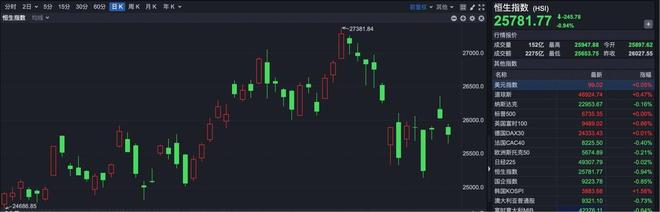
今日(10月22日),港股市场全天表现低迷。 截至收盘,恒指报收于25781.77点,下跌245.78点,跌幅0.94%。 打开百度APP畅享高清图片 恒生科技指数报收于5923.09点,下跌84.85点,跌幅1.41%。 消息面,美银重申泡泡玛特"买入"评级,预计第四季将持续推出新产品。美银证券发表研究报告指出, 泡泡玛特第三季业绩表现强劲,收入按年增长245%至250%,超出市场预期。该行重申"买入"评级,目 标价为400港元。 此外,中银国际上调泡泡玛特目标价至405.6港元,维持"买入"评级。 瑞银上调泡泡玛特目标价至435港元;摩根大通上调泡泡玛特目标价至350港元;里昂维持泡泡玛特"跑 赢大市"评级。 焦点公司方面,中铝国际(601068.SH)A股涨停,带动H股午后飙升,最终收盘大涨30%。 消息面,有媒体称,力拓考虑与中铝集团进行资产换股权交易,但截至发稿,公司方面尚无正式消息发 布。 另外,泡泡玛特(09992.HK)公布财报后,今日高开近8%,但随后涨幅收窄,最终上涨2.4%,报256.4 港元。 其他方面,盘面上,科网股全线下跌,网易跌超3%,联想跌超2%,快手、百度、阿里巴巴、哔哩哔 ...


红宝丽:公司硬泡组合聚醚主要客户包括伊莱克斯、三星、LG、美的等
Mei Ri Jing Ji Xin Wen· 2025-10-14 09:49
Core Viewpoint - The company Red Bull (002165.SZ) has disclosed its major clients in the hard foam polyether and is actively engaging with well-known domestic and international enterprises in the appliance and construction sectors [2]. Group 1: Major Clients - The primary clients for the company's hard foam polyether include renowned home appliance manufacturers such as Electrolux, Samsung, LG, Midea, Hisense, Meiling, Changhong, and CIMC [2]. - The company also serves large-scale enterprises in the cement production industry with its isopropanolamine products, indicating a diverse application range [2].

【企业风景】 透视“中国跨国100大”:制造和基建领风骚
Zheng Quan Shi Bao· 2025-10-13 18:07
Core Insights - The "Top 100 Chinese Multinational Companies" list represents China's integration into the global economy and highlights the achievements of Chinese multinational enterprises [1] - Analyzing the development and characteristics of these companies can provide valuable insights and benchmarks for other Chinese enterprises looking to expand internationally [1] Group 1: Technology Manufacturing - Technology manufacturing companies constitute over one-third of the "Top 100" list, primarily driven by private enterprises like Huawei, Lenovo, and Haier [2] - These companies aim to capture larger markets by leveraging product technology and after-sales service, with a notable increase in solar and new energy firms joining the ranks [2] - The internationalization strategies of these firms are diverse, including direct sales, cross-border mergers, and local production, allowing for flexible market entry [2] Group 2: Resource Production - Resource production companies also make up over one-third of the list, predominantly consisting of large state-owned enterprises [3] - These companies focus on energy and mineral resources, with their overseas operations being more localized and independent compared to technology manufacturers [3] - The investment and operational scale at each overseas site are significant, but the overall global integration is lower [3] Group 3: Infrastructure - Infrastructure companies account for just over 10% of the list and are primarily state-owned, providing essential support for other Chinese enterprises venturing abroad [3] - Their operations include transportation, power engineering, and urban construction, acting as international partners for technology and resource companies [3] Group 4: Service Industry - The service industry, including traditional and emerging internet services, currently represents less than 10% of the list [4] - Traditional service firms are limited in their international expansion, while internet companies are increasingly becoming a new force in internationalization, with notable entries in recent years [4] - Internet firms tend to pursue international growth through cross-border mergers and equity investments, although their overseas revenue remains low compared to their foreign assets [5] Group 5: International Logistics - International logistics companies, such as China COSCO Shipping and China International Marine Containers, are also represented on the list, highlighting their role as inherently international enterprises [5] - These firms support China's global supply chain and have significant operational capabilities, including shipping and port operations [5] Group 6: Comprehensive Holdings - Comprehensive holding companies show fluctuating rankings on the list, influenced by changes in their overseas holdings [5] - The collective representation of these multinational enterprises underscores China's image as a manufacturing powerhouse and infrastructure expert on the global stage [5]
小熊养生壶“炸”出信任裂痕,昔日92亿家电新秀李一峰“遇坎”
凤凰网财经· 2025-10-02 12:34
Core Viewpoint - The article discusses the recent safety incident involving a "high-temperature resistant" health pot from Bear Electric, which has raised significant public concern regarding product quality and safety issues. This incident is not isolated, as the company has faced multiple complaints about product quality in the past, highlighting ongoing challenges in maintaining product standards while pursuing growth in new business areas [3][10][32]. Group 1: Incident Overview - A recent explosion of a Bear Electric health pot resulted in severe burns to a one-year-old child, drawing widespread media attention [5][6]. - The company has faced multiple complaints regarding product quality, including issues with various appliances such as steamers and rice cookers [10][11]. - The company has acknowledged the incident and is investigating the cause while emphasizing that their products undergo multiple safety tests [7][10]. Group 2: Financial Performance - Bear Electric reported a revenue of 47.58 billion yuan in 2024, marking a historical high, but the year-on-year growth rate fell to 0.98%, indicating a slowdown in growth momentum [16]. - The company's net profit attributable to shareholders dropped by 35.37% to 2.88 billion yuan, the lowest in three years, reflecting increasing profitability pressure [17]. - In the first half of 2025, Bear Electric's revenue rebounded to 25.35 billion yuan, a year-on-year increase of 18.94%, with net profit rising by 27.32% to 2.05 billion yuan [17][18]. Group 3: Business Strategy and Market Trends - Bear Electric is diversifying its revenue streams, with the personal care small appliance segment experiencing a remarkable revenue increase of 415.99% in the first half of the year, although its gross margin decreased by 8.29 percentage points [21][20]. - The kitchen small appliance segment, traditionally the core business, contributed 66.02% of revenue in the first half of 2025, down from 77.33% in 2023, indicating a shift towards diversification [20]. - The overall retail sales of kitchen small appliances in China showed a decline in volume despite a 9.3% increase in retail value, suggesting a potential shrinking consumer demand in the sector [22]. Group 4: Company Background and Challenges - Bear Electric was founded by Li Yifeng in 2006, who successfully identified market opportunities and leveraged e-commerce to grow the brand rapidly [27][30]. - The company was listed on the Shenzhen Stock Exchange in 2019, becoming known as the "first stock of creative small appliances" [29]. - Despite past successes, the company now faces significant challenges in balancing growth with product quality, as evidenced by the increasing number of consumer complaints [32][33].
22亿!溢价270%!扬杰科技豪赌贝特电子
是说芯语· 2025-09-20 01:00
Core Viewpoint - Yangjie Technology plans to acquire 100% equity of Dongguan Better Electronics for 2.218 billion yuan in cash, marking a significant move in the Chinese power semiconductor industry [1][2]. Transaction Structure - The acquisition will be paid entirely in cash, with a total price of 2.218 billion yuan, representing a premium of over 270% compared to Better Electronics' net assets of 590 million yuan [5]. - Payment will be made in three phases: the first phase involves a 30% payment (665 million yuan), and the second phase involves a 70% payment of 550 million yuan to non-performance commitment parties [6]. Performance Commitment - Yangjie Technology has set strict performance targets for Better Electronics, requiring a cumulative net profit of no less than 555 million yuan from 2025 to 2027 [7]. Acquisition Motivation - The acquisition is a strategic decision based on multiple considerations, as Better Electronics' products complement Yangjie Technology's existing power device offerings [8]. - Better Electronics specializes in overcurrent and overtemperature protection components, enhancing Yangjie Technology's product matrix and enabling comprehensive solutions for customers [9][10]. Synergy Effects - There is a high customer overlap between Yangjie Technology and Better Electronics, with Better's clients including major companies in home appliances and new energy sectors, which can create significant synergy [11]. - Both companies will share R&D outcomes, enhancing Yangjie Technology's research capabilities [12]. Overseas Expansion - Both companies have extensive overseas business experience, which can lead to beneficial business complementarity [13]. - Yangjie Technology's overseas revenue reached 834 million yuan in the first half of 2025, a year-on-year increase of 34.97%, while Better Electronics has a 26.9% export ratio in 2023 [14]. About Better Electronics - Founded in 2003, Better Electronics focuses on power electronic protection components and has a 4.3% share in the global fuse market as of 2022 [15]. - The company reported a revenue of 837 million yuan and a net profit of 148 million yuan in 2024, with a compound annual growth rate of approximately 28% in revenue from 2020 to 2024 [15]. About Yangjie Technology - Established in 2000, Yangjie Technology has evolved into a representative IDM model enterprise in China's semiconductor discrete device sector, with a market value of approximately 36 billion yuan [17]. - The company achieved a revenue of 3.455 billion yuan in the first half of 2025, a year-on-year increase of 20.58% [17]. Industry Background - The A-share merger and acquisition market has become active due to policies like the new "National Nine Articles" and "Merger Six Articles," with over 1.4 trillion yuan in total transaction value in the first half of 2025 [19]. - Better Electronics' choice to be acquired follows its unsuccessful IPO attempt, reflecting a trend among companies seeking alternative growth paths [19]. Future Outlook - Yangjie Technology aims to reach a revenue of 10 billion yuan by 2027, with the acquisition of Better Electronics being a crucial step towards this goal [20]. - The merger is expected to create positive synergies in product categories, R&D, customer bases, and sales channels [20].
扬州女首富,操刀一笔并购
3 6 Ke· 2025-09-19 03:26
Group 1 - The core point of the article is the acquisition of Better Electronics by Yangjie Technology for approximately 2.218 billion yuan, highlighting the ongoing trend of mergers and acquisitions in the A-share market [1][2][3] - Yangjie Technology announced the acquisition of 100% equity of Better Electronics, which will become a wholly-owned subsidiary post-transaction [3] - Better Electronics, established in 2003, specializes in power electronic protection components with applications in automotive electronics, photovoltaics, and energy storage, and has notable clients such as Midea, Gree, and BYD [3][4] Group 2 - The acquisition is expected to create synergies between Yangjie Technology's existing over-voltage protection products and Better Electronics' offerings, aligning with the company's strategic development direction [4] - Better Electronics has experienced strong performance due to the boom in the new energy and smart home appliance sectors, projecting revenues of 837 million yuan for 2024 and 218 million yuan for Q1 2025, with net profits of 148 million yuan and 41.13 million yuan respectively [3][4] - The transaction includes performance commitments, with Better Electronics' performance guarantee stating that the net profit for the period from 2025 to 2027 will not be less than 555 million yuan [3] Group 3 - Yangjie Technology, led by Liang Qin, has transformed from a small trading company into a vertically integrated manufacturer in the semiconductor industry, with a current market value of approximately 36 billion yuan [5][6] - Liang Qin's entrepreneurial journey began in 2000, and she has successfully navigated various challenges, including the financial crisis, to expand the company's capabilities and market presence [6][7] - The company has a history of strategic acquisitions, including stakes in various semiconductor firms, and has recently entered the supply chain of Xiaomi [7][8] Group 4 - The article reflects a broader trend in the market where companies that have failed to go public are increasingly opting for mergers and acquisitions as an alternative route [9] - The surge in mergers and acquisitions is supported by favorable policies and a significant increase in the number of disclosed transactions, with over 1,500 companies announcing more than 2,000 merger-related matters in the first half of the year, totaling over 1.4 trillion yuan [10][11] - The current merger market is characterized by complexities such as valuation discrepancies and interest negotiations, emphasizing the need for flexible valuation approaches [11]
京东公布新数据:已服务95%的中国民企500强
Zhi Tong Cai Jing· 2025-09-18 09:23
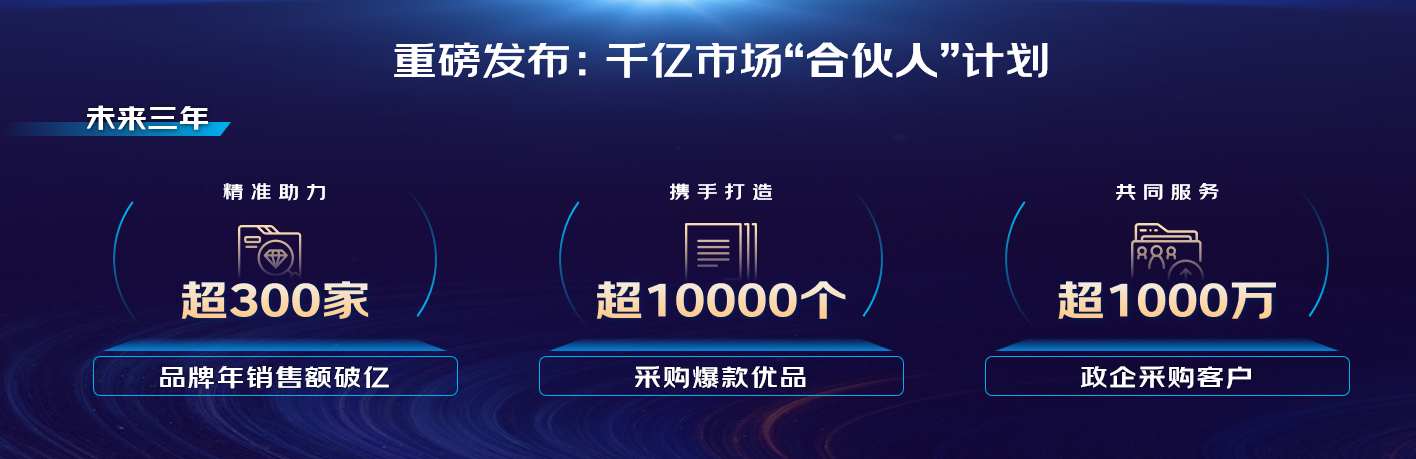
Group 1 - The core event was the "2025 JD Government and Enterprise Business Brand Partner Cooperation Conference," where JD Group launched the "Billion Market Partner Plan" aimed at helping over 300 brand partners achieve annual sales exceeding 100 million yuan within three years [1] - JD Group aims to create over 10,000 popular procurement products and serve more than 10 million government and enterprise customers through this initiative [1] - The establishment of the "Billion Brand Alliance Club" includes notable brands such as Huawei, Lenovo, and Haier, which will help accelerate market expansion for brand merchants [3] Group 2 - JD Group's CEO emphasized the profound changes in the government procurement market and the company's commitment to the principles of "experience, cost, and efficiency" to enhance operational efficiency for partners [3] - The company plans to support the rapid development of its government enterprise business through strategic, resource, and technological dimensions [3] - JD's focus on building a smart supply chain will enhance its comprehensive service system, which includes diverse product supply, intelligent procurement platforms, and nationwide logistics [4] Group 3 - The digital procurement market in China is projected to reach 21.7 trillion yuan in 2024, with a year-on-year growth of 16.2%, indicating a robust market development [4] - The digital penetration rate in procurement has increased from 5.3% in 2017 to 11.5% in 2024, showcasing the growth of digital solutions in the industry [4] - JD's government enterprise business has served over 8 million government and enterprise customers, including more than 30,000 large clients, covering over 90% of Fortune 500 companies in China [4]

扬州女首富,操刀一笔并购
投资界· 2025-09-18 08:13
Core Viewpoint - The article discusses the recent acquisition of Better Electronics by Yangjie Technology, highlighting the ongoing trend of mergers and acquisitions in the A-share market, where companies are seeking growth through strategic acquisitions rather than IPOs [5][14]. Group 1: Acquisition Details - Yangjie Technology announced the acquisition of Better Electronics for approximately 2.218 billion yuan, with Better Electronics becoming a wholly-owned subsidiary post-transaction [7]. - Better Electronics, established in 2003, specializes in power electronic protection components, serving clients like Midea, Gree, and BYD, and has shown strong performance due to growth in the new energy and smart home sectors [7][8]. - The performance commitment for Better Electronics post-acquisition includes a net profit of no less than 5.55 billion yuan from 2025 to 2027 [7]. Group 2: Company Background - Yangjie Technology, led by Liang Qin, has transformed from a small trading company into a vertically integrated manufacturer in the semiconductor industry, with a current market value of approximately 360 billion yuan [10][12]. - Liang Qin, known as the "Iron Lady," has a background in electrical technology and has been pivotal in the company's growth, including significant investments in production capabilities during economic downturns [10][11]. Group 3: Market Trends - The article notes a significant increase in merger and acquisition activities, with over 1,502 listed companies disclosing 2,000 M&A-related announcements in the first half of the year, totaling over 1.4 trillion yuan [15]. - The trend of companies opting for acquisitions instead of pursuing IPOs is becoming more common, as seen with other companies like Himalaya and Hupu, which have also turned to M&A after failed IPO attempts [14][15]. - The current M&A market is characterized by flexible valuation approaches, as traditional metrics like price-to-earnings ratios may hinder potential deals [15].

中银晨会聚焦-20250918
Bank of China Securities· 2025-09-18 01:56
Core Insights - The report emphasizes that high-end equipment, artificial intelligence, and green manufacturing will be the main lines for medium to long-term allocation, with leading state-owned enterprises and private companies with core technologies likely to benefit first [5][6][8] - The report highlights the performance of specific companies, such as Xin Feng Ming, which reported a revenue of 33.491 billion yuan in the first half of 2025, a year-on-year increase of 7.10%, and a net profit of 709 million yuan, up 17.28% [10][11] - Horizon Robotics is noted for its rapid revenue growth of 68% year-on-year in the first half of 2025, reaching 1.567 billion yuan, despite a strategic loss of 5.233 billion yuan [14][15] Company Performance Xin Feng Ming - The company achieved a total revenue of 33.491 billion yuan in the first half of 2025, with a year-on-year growth of 7.10% and a net profit of 709 million yuan, reflecting a 17.28% increase [10] - In Q2 2025, revenue reached 18.934 billion yuan, marking a 12.57% year-on-year increase and a 30.06% quarter-on-quarter increase [10][11] - The company’s PTA production capacity reached 7.7 million tons, with revenue from PTA at 4.652 billion yuan, significantly up from 1.18 billion yuan in the same period last year [11][12] Horizon Robotics - The company reported a revenue of 1.567 billion yuan in the first half of 2025, a 68% increase year-on-year, with a gross profit of 1.024 billion yuan, up 39% [14][15] - The automotive product solutions segment saw revenue growth of 250% year-on-year, reaching 778 million yuan, with a gross margin of 45.6% [15][16] - Horizon Robotics has established a strong market presence, with a 63% share of the Chinese passenger car market and a 59% penetration rate for assisted driving [14][15] Industry Trends - The report indicates that the "14th Five-Year Plan" policies have been largely absorbed by the market, while the "15th Five-Year Plan" emphasizes "artificial intelligence+" and internationalization, potentially creating new structural opportunities in the capital market [8] - The focus on digitalization, greening, and high-end manufacturing is expected to provide long-term policy support for strategic industries such as equipment manufacturing and industrial software [6][7] - The report suggests that companies with core technologies and international operational advantages will be the primary beneficiaries of upcoming policy dividends [8]
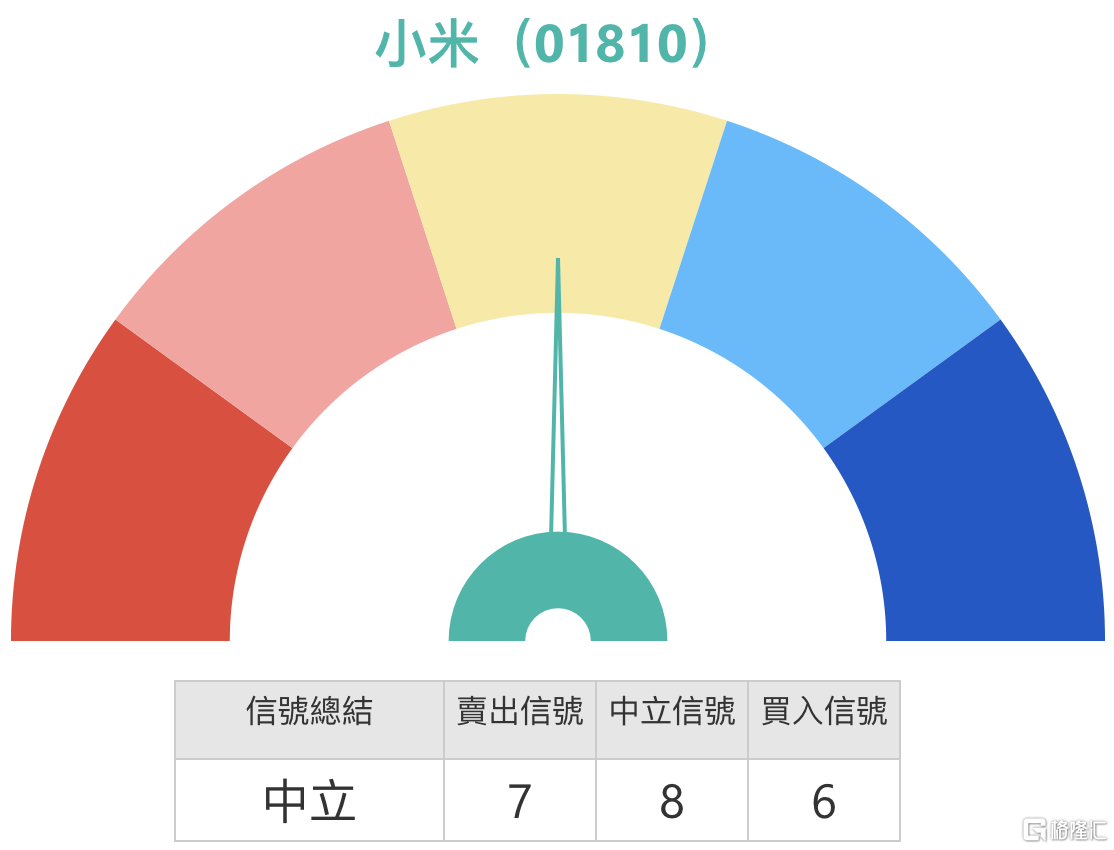
小米RSI63多頭健康;高盛看65元目標價
Ge Long Hui· 2025-09-17 11:37
Group 1 - Xiaomi Group (01810) is showing a strong technical trend, with the stock price reaching a high of 57 HKD and currently at 56.6 HKD, reflecting an increase of 0.8% [1] - The stock has broken through the upper Bollinger Band at 56.8 HKD, indicating bullish momentum [1] - Technical indicators such as RSI at 63 suggest a healthy bullish zone, while moving averages (MA10 at 55.02 HKD, MA30 at 53.57 HKD, MA60 at 55.29 HKD) are converging, indicating a search for a clear direction in the short term [1][3] Group 2 - Goldman Sachs maintains a "Buy" rating on Xiaomi, with a target price set at 65 HKD [1] - Despite the stochastic indicator showing overbought conditions, MACD and Bollinger Bands are signaling buy opportunities, supporting a bullish outlook [3] - Recent support levels are identified at 54.7 HKD and 53.1 HKD, with resistance at 57.2 HKD; a breakout above this level could target 59.7 HKD [3] Group 3 - Derivative products related to Xiaomi have performed well, with notable gains observed on September 11 when the stock rose by 2.84% [3] - Specific derivatives such as Morgan Stanley's bull certificates (53165) and UBS's bull certificates (57477) recorded increases of 21% and 23% respectively, indicating significant excess returns in a clear upward trend [3] - Investors optimistic about Xiaomi's future can consider specific call options like the Morgan Stanley call (16984) with a strike price of 60.65 HKD and a leverage of 7.8 times, or the UBS call (14816) with a strike price of 61.05 HKD and a leverage of 7.7 times [6] Group 4 - For bearish investors, options such as the Bank of China put (17904) or the Societe Generale put (17868) with strike prices around 54 HKD are recommended for short-term trading strategies [6] - In terms of bull and bear certificates, UBS's bull certificate (55351) with a redemption price of 53.5 HKD and a leverage of 15.6 times is highlighted for bullish strategies, while HSBC's bear certificate (59572) is suggested for bearish positions [8]