Agility Robotics

Search documents
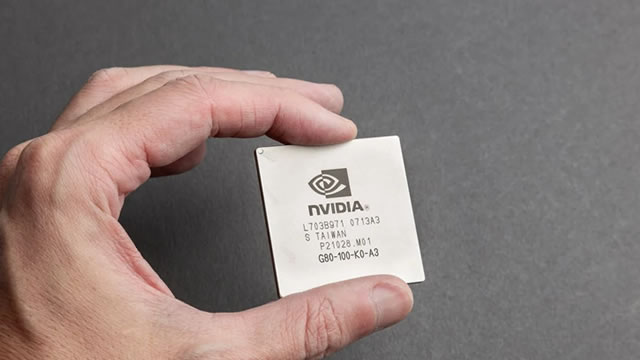
更适合“中国体质”的AI芯片、小米和宇树都冲了!英伟达Jetson Thor现已发售,2万块批发价但半年交货
AI前线· 2025-08-26 05:20
Core Viewpoint - Nvidia has launched its latest robot chip module, Jetson AGX Thor, priced at $3499, which significantly enhances performance compared to its predecessor, aimed at supporting developers in creating advanced robotic systems [2][6][12]. Product Details - The first batch of Jetson AGX Thor developer kits will ship next month, including the Jetson T5000 module, a reference board with multiple interfaces, an active cooling fan, and a power adapter [4]. - The Jetson Thor chip boasts a performance increase of 7.5 times over the previous generation, with a 3.5 times improvement in energy efficiency, 3.1 times better CPU performance, and double the memory capacity [6][8]. - The chip is designed to run generative AI models and visual models that interpret the surrounding environment, crucial for humanoid robots [6][8]. Market Position and Applications - Nvidia's Jetson Thor is being utilized by various robotics companies, including Agility Robotics, Amazon, and Boston Dynamics, enhancing their robots' capabilities [9][10]. - The chip is also applicable in various robotic fields, such as surgical assistance, delivery robots, and industrial robotic arms, providing real-time inference capabilities for complex AI models [10]. Business Growth Potential - Nvidia's robotics business currently contributes about 1% of total revenue but is experiencing rapid growth, with a 72% year-over-year increase in quarterly sales [12]. - The company views the robotics sector as a significant growth opportunity beyond its traditional AI business, with plans to invest heavily in this area [13].



售价2万5!英伟达推出机器人“最强大脑”:AI算力飙升750%配128GB大内存,宇树已经用上了
量子位· 2025-08-25 23:05
Core Insights - NVIDIA has launched the Jetson Thor, a new robotic computing platform that integrates server-level computing power into robots, achieving an AI performance of 2070 TFLOPS, which is 7.5 times higher than the previous generation Jetson Orin, with a 3.5 times improvement in energy efficiency [1][3][4]. Performance and Specifications - Jetson Thor features a massive 128GB memory configuration, unprecedented in edge computing devices [2]. - The platform is built on the Blackwell GPU architecture, supporting multiple AI models simultaneously on edge devices [6]. - The Jetson AGX Thor developer kit is priced at $3499 in the U.S. (approximately 25,000 RMB), while the T5000 module is available for $2999 for bulk purchases [8][9]. Technical Features - The Jetson Thor includes advanced specifications such as a GPU with 2560 CUDA cores and 96 fifth-generation Tensor Cores, and a CPU with 14 Arm Neoverse V3AE cores, significantly enhancing real-time control and task management capabilities [11][13]. - It supports high bandwidth with 128GB LPDDR5X memory and 273GB/s memory bandwidth, crucial for large Transformer inference and high-concurrency video encoding [13]. - The platform can achieve a response time of 200 milliseconds for the first token and generate over 25 tokens per second, enabling real-time human-robot interaction [16]. Industry Adoption - Several Chinese companies, including Unisound Medical and Youbik, are integrating Jetson Thor into their systems, highlighting its impact on robot agility, decision-making speed, and autonomy [19]. - Boston Dynamics is incorporating Jetson Thor into its Atlas humanoid robot, allowing it to utilize computing power previously only available in servers [20]. - Agility Robotics plans to use Jetson Thor as the core computing unit for its sixth-generation Digit robot, enhancing its logistics capabilities [21]. Software and Development - Jetson Thor is optimized for various AI frameworks and models, supporting NVIDIA's Isaac for simulation and development, and Holoscan for sensor workflows [14]. - The platform facilitates a continuous training-simulation-deployment cycle, ensuring ongoing upgrades to robotic capabilities even after deployment [25]. Future Outlook - NVIDIA emphasizes the need for a triad of computing systems for effective physical AI and robotics: a DGX system for training, an Omniverse platform for simulation, and the Jetson Thor as the robot's brain [23].

Nvidia's new 'robot brain' goes on sale for $3,499 as company targets robotics for growth
CNBC· 2025-08-25 15:00
Core Insights - Nvidia has launched its latest robotics chip module, the Jetson AGX Thor, priced at $3,499 for a developer kit, which is aimed at enabling the creation of robots [1] - The company views robotics as a significant growth opportunity, with overall sales tripling in the past two years, driven largely by advancements in artificial intelligence [2] Product Details - The Jetson Thor chips are based on Nvidia's Blackwell graphics processor and are reported to be 7.5 times faster than the previous generation, equipped with 128GB of memory to support large AI models [3][4] - After prototyping with the developer kit, companies can purchase production-ready Thor T5000 modules at $2,999 each for orders exceeding 1,000 units [2] Market Position - Despite the rapid growth in robotics, it currently accounts for only about 1% of Nvidia's total revenue, although the sector is expanding quickly [5] - Nvidia's combined automotive and robotics division reported $567 million in quarterly sales in May, reflecting a 72% year-over-year increase [6] Applications - The Jetson Thor chips can also be utilized in self-driving cars, particularly from Chinese manufacturers, with Nvidia's automotive chips running on a specialized operating system called Drive OS [7]
伯恩斯坦谈北美机器人市场:从形态之争走向解决方案
3 6 Ke· 2025-08-11 13:08
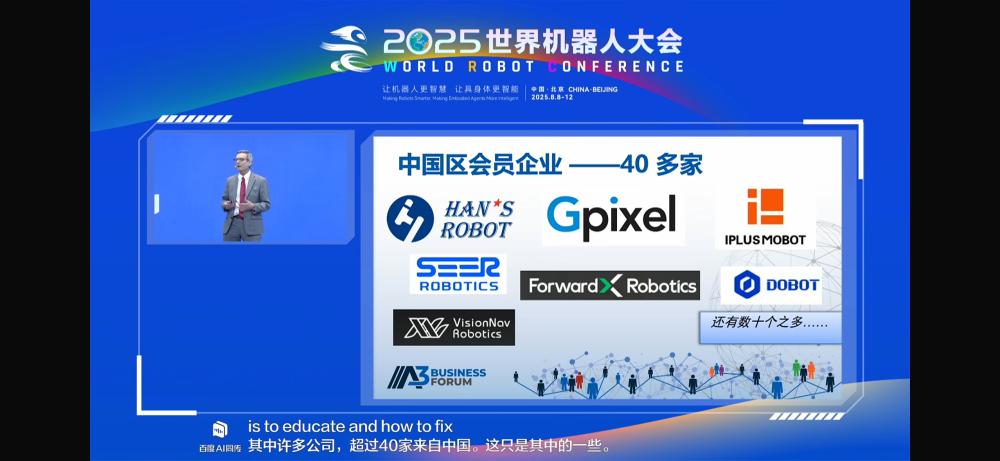
Core Insights - The North American robotics market has transitioned from a period of perceived failure to a thriving industry, with significant growth in order volumes, particularly in non-automotive sectors [1][3][5] - The rise of humanoid robots is a hot topic, but the market currently has limited examples, and the focus should remain on providing effective solutions rather than the specific type of robot [5][9] - Emerging opportunities in the North American robotics market are identified in warehousing logistics and the construction industry, driven by labor shortages and the need for automation [7][9] Market Overview - In 2022, North American robot orders increased by approximately 30% due to pandemic-driven demand, followed by a decline in 2023, with modest growth expected in 2024 and beyond [3] - The dependency on the automotive industry is decreasing, with non-automotive orders now matching or exceeding automotive orders in certain years, indicating a more diverse market [3] Emerging Technologies - Humanoid robots are currently a focal point, with over 50 companies showcasing their developments, yet the actual number in use remains minimal [5] - Companies like Agility Robotics and Figure are highlighted as examples, but there are concerns about the speed and cost-effectiveness of developing humanoid robots [5][9] New Opportunities - The warehousing logistics sector is experiencing significant growth due to e-commerce and labor shortages, with only about 5% of warehouses in the U.S. currently utilizing robotic automation, indicating substantial market potential [7] - The construction industry faces a labor shortage, with a need for approximately 439,000 new workers, and robotic solutions are being developed to enhance efficiency in tasks like scaffolding and bricklaying [7] Impact of Artificial Intelligence - Artificial intelligence is emerging as a significant influence on robotics, with potential applications that could greatly benefit society, such as accelerating medical research [9] - There is skepticism regarding the rapid development of humanoid robots and autonomous vehicles, with a consensus that the focus should remain on delivering practical solutions to customer needs [9]

2025年中期人形机器人行业投资策略报告:量产破局 链动新机
Xin Lang Cai Jing· 2025-07-11 08:33
Industry Core Viewpoints - The humanoid robot industry is at a "dawn moment" with the year of mass production beginning, driven by continuous investments from tech giants like Tesla, Huawei, and Figure AI, which are expected to accelerate industry iteration and breakthroughs [1] - The industry is at a critical juncture for technological breakthroughs and commercialization, supported by policies, increasing entrants, and AI large model empowerment, with growing market demand due to aging populations and rising labor costs [1] - The humanoid robot market is anticipated to evolve from B2B to B2C, indicating a broad future market space [1] Investment Highlights - From January 2024 to June 26, 2025, the humanoid robot index has consistently outperformed the Wind All A index, with excess returns driven by two main factors: concentrated technological breakthroughs and policy catalysts [2] - The supply side of the humanoid robot industry is rapidly flourishing, with leading overseas companies like Tesla and Figure AI advancing product iterations and commercial applications, while China emerges as the most active market for humanoid robots [2] - Domestic humanoid robot products are showcasing strong competitiveness in key features like intelligence and motion control, accelerating their mass production pace [2] Mass Production Plans - The second half of 2025 is a critical window for mass production validation, with the "Guiding Opinions on the Innovative Development of Humanoid Robots" aiming for batch production and the cultivation of 2-3 globally influential companies [3] - Companies like Tesla, Figure AI, and others plan to achieve initial mass production by 2025, with applications progressing from industrial training to B2B and eventually to household services [3] - AI large models are crucial for humanoid robots, but software development currently lags behind hardware, necessitating breakthroughs in this area [3] Demand Side - The global aging trend is intensifying, leading to a tighter labor market and increasing demand for robots to replace human labor, particularly in elder care [4] - Economic growth and rising labor costs are driving the cost of humanoid robots down, with Tesla's CEO Musk indicating that the future price of Optimus may be below $20,000 per unit [4] - The humanoid robot market is projected to reach $20 billion by 2030, indicating significant future market potential [4] Investment Recommendations - The humanoid robot industry is at a pivotal moment with mass production underway, and companies like Tesla and Huawei are expected to drive industry breakthroughs [5] - Focus on companies entering or likely to enter Tesla's supply chain as the product matures, and on Huawei's early-stage supply chain with significant potential [5] - Attention should be given to companies mastering core component technologies and achieving low-cost mass production, as well as those benefiting from the large-scale application of humanoid robots [5]

深度 | 人形机器人前瞻系列之新型减速器:摆线减速器有望成为人形机器人新的迭代方向【国信汽车】
车中旭霞· 2025-07-07 00:55
Core Viewpoint - The humanoid robot industry is transitioning from product definition to functional realization and commercialization, with a focus on the optimization and coupling of hardware and software for future iterations [2]. Group 1: Industry Development - Humanoid robots have completed the basic functionality phase, but there is still room for improvement before large-scale commercial and household applications can be realized [2]. - The future iterations will focus on hardware aspects such as high load capacity, lightweight design, high heat dissipation, low energy consumption, stability, flexibility, and cost reduction [2]. Group 2: Gearbox Technology - The current humanoid robot joint modules primarily use planetary and harmonic gearbox solutions, each with its advantages and disadvantages [78]. - Planetary gearboxes are simple and cost-effective but have high backlash that affects precision, while harmonic gearboxes offer high precision but have limitations in high-load scenarios due to material fatigue [78][94]. - The cycloidal gearbox is expected to be a new direction for humanoid robot applications, combining precision and load capacity advantages [78][95]. Group 3: Market Potential - The market for new cycloidal gearboxes in humanoid robots is projected to exceed 14 billion yuan by 2030, driven by the increasing demand for humanoid robots [6][100]. - The global market for cycloidal gearboxes, excluding humanoid robots, is expected to reach 2.36 billion USD by 2029, indicating significant growth potential in this sector [6][100]. Group 4: Competitive Landscape - The precision gearbox market is currently dominated by foreign brands, particularly Japanese companies, which hold significant market shares in harmonic and RV gearboxes [69][71]. - Domestic players are gradually increasing their market share in the harmonic gearbox segment, with companies like Lide Harmonic leading with a 25% market share [74]. - The cycloidal gearbox market has high barriers to entry due to complex design and manufacturing processes, which may favor established players with strong engineering capabilities [62][67].



UC Berkeley池宇峰: 采用3D打印技术制造 人形机器人成本不超35000元!
机器人大讲堂· 2025-07-05 04:09
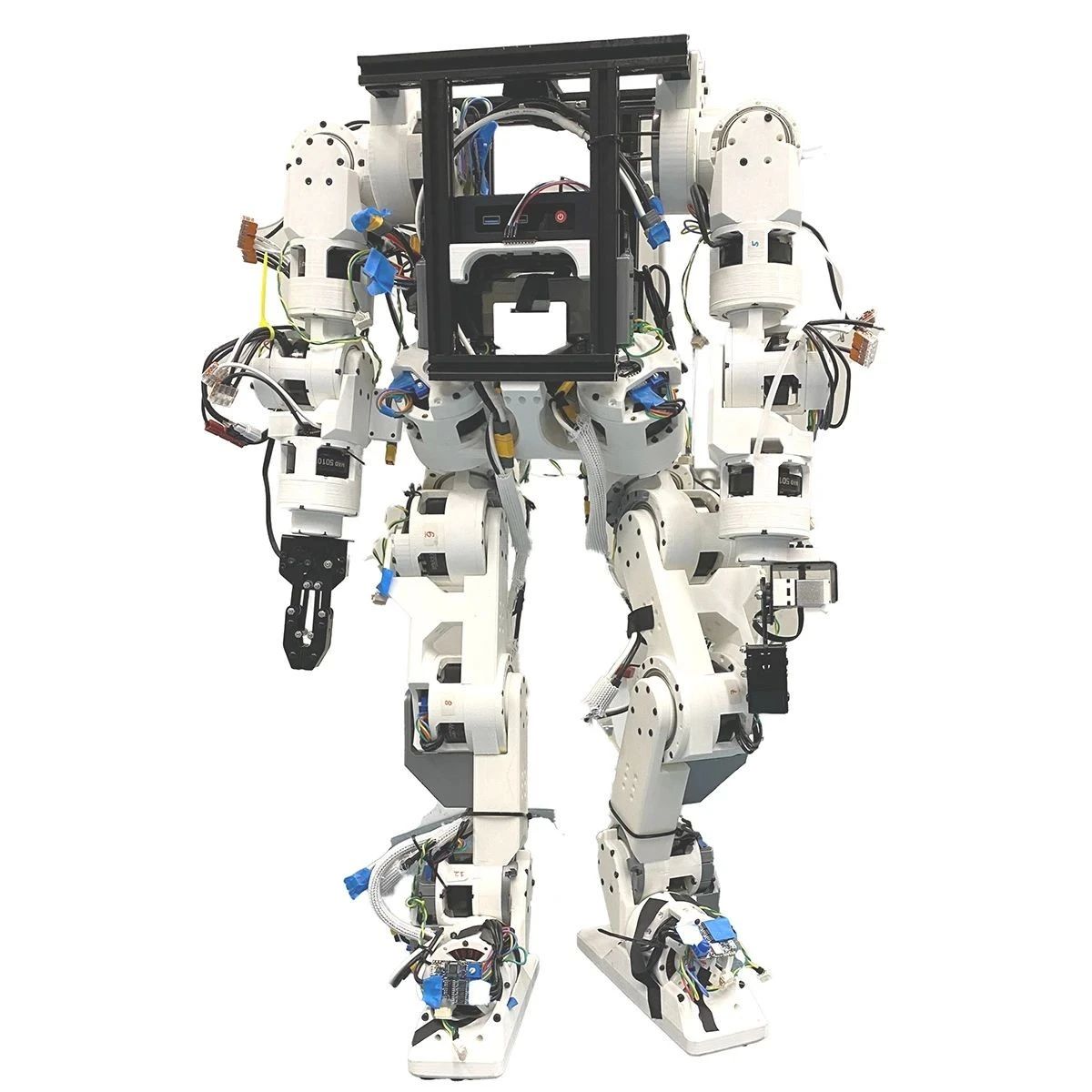
Group 1 - The main factors limiting the large-scale deployment of humanoid robots are their limited generalization capabilities and high manufacturing costs, with mainstream humanoid robots priced around 500,000 yuan, and some high-end models reaching over 1 million yuan [1] - High development costs, closed-source design architectures, and limited customization capabilities are major bottlenecks for rapid development in this field [2] - The Berkeley Humanoid Lite, developed by a team from the University of California, Berkeley, is a low-cost open-source humanoid robot that utilizes desktop 3D printing for manufacturing, with a BOM cost under $5,000, approximately 35,000 yuan [2][8] Group 2 - Current humanoid robot platforms are divided into commercial products and research prototypes, with commercial products like Agility Robotics' Digit and Fourier Intelligence's GR1 being too expensive for most research institutions and individuals [3] - Open-source hardware and software have significant potential in driving technological innovation and collaboration, allowing researchers to learn from each other and accelerate the iterative process [5] - The design of Berkeley Humanoid Lite emphasizes modularity and ease of manufacturing, with all structural components printable on standard desktop 3D printers, significantly reducing manufacturing complexity [9] Group 3 - Berkeley Humanoid Lite is designed as a medium-sized humanoid robot platform, standing at 0.8 meters tall and weighing 16 kilograms, featuring joint actuators and an integrated IMU for position sensing [10] - The robot's joint actuators utilize a 3D-printed cycloidal gearbox design, enhancing load capacity and lifespan through optimized gear parameters and manufacturing processes [12] - The robot's structure is built using aluminum extrusions for high rigidity and lightweight characteristics, with real-time monitoring of posture and motion state through the integrated IMU [14] Group 4 - The electronic system of Berkeley Humanoid Lite consists of a control computer, joint actuator controllers, an IMU, and a power management module, ensuring stable power supply and precise control [16] - Performance tests showed that the joint actuators maintained a mechanical efficiency of around 90%, indicating effective energy conversion and reduced energy loss [17] - The robot demonstrated excellent walking capabilities across various terrains, maintaining balance and adapting to slopes and steps, showcasing its dynamic balance control [20] Group 5 - Remote operation experiments validated the robot's precision and responsiveness in performing tasks like writing and object manipulation, indicating its suitability for various practical applications [21][24] - Berkeley Humanoid Lite represents an open-source, customizable, and cost-effective humanoid robot platform, significantly lowering development costs and simplifying manufacturing processes [25] - Future optimizations will focus on enhancing system stability and adaptability, further exploring the platform's potential application value [25]
人形机器人“发疯”警报:1.8米巨物安全失控,新安全设计亟待出台
机器人大讲堂· 2025-06-14 04:27
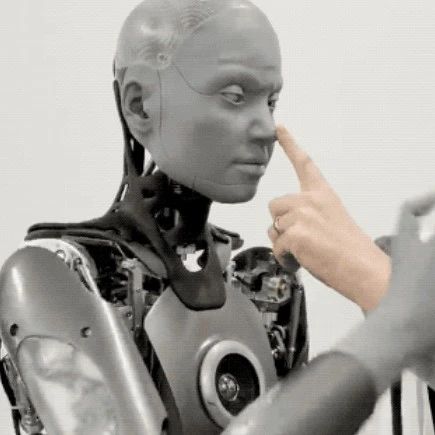
Core Viewpoint - The article highlights the inherent risks associated with humanoid robots, particularly their physical instability and safety challenges when interacting with humans in various environments [2][3][4]. Group 1: Safety Challenges - Humanoid robots like Digit face significant safety risks due to their human-like form, which can lead to physical instability and potential accidents [2]. - In the event of a technical failure, humanoid robots pose a danger not only to themselves but also to nearby humans, especially in sensitive areas where human interaction occurs [3]. - The dynamic performance of humanoid robots necessitates a reevaluation of safety strategies as they become more capable and human-like [4]. Group 2: Emotional and Psychological Risks - Beyond physical risks, humanoid robots may create psychological challenges, particularly for vulnerable groups such as the elderly and children, if they fail to provide a sense of safety [10]. - The tendency for humans to anthropomorphize robots can lead to overestimating their capabilities and underestimating their risks, creating a gap between user expectations and actual performance [12]. - The mismatch between a robot's appearance and its functionality can lead to disappointment and mistrust among users, especially in caregiving scenarios [10][12]. Group 3: Regulatory and Standardization Needs - There is a pressing need for new safety standards and protocols to govern the deployment of humanoid robots in sensitive environments like healthcare and elder care [12][16]. - Experts suggest that humanoid robots should be classified based on their capabilities and intended use rather than their human-like appearance, to better manage safety expectations [15]. - The establishment of universal safety standards is crucial for the healthy development of the humanoid robotics industry, despite the challenges in creating such standards [16][18]. Group 4: Future Directions - The article emphasizes the importance of iterative testing and gradual integration of humanoid robots into real-world environments to identify common characteristics and safety protocols [13]. - Companies are encouraged to innovate safety mechanisms, such as implementing smoother shutdown processes to prevent accidents during emergencies [15]. - The overarching goal is to create a clear and reliable safety framework that can adapt to various scenarios while ensuring public trust in humanoid robots [22].
外媒:亚马逊正在训练人形AI机器人,用来“送快递”!
Sou Hu Cai Jing· 2025-06-07 05:14
Group 1 - Amazon is accelerating its robot project, testing humanoid robots for future delivery feasibility, marking a significant step towards "last mile" delivery automation [2] - A dedicated training center has been established by Amazon for high-intensity testing of various humanoid robots to evaluate their performance in real delivery scenarios, indicating a potential major change in package delivery methods [2] - Amazon has previously tested various autonomous robots in its warehouse operations, including the humanoid robot "Digit" developed by Agility Robotics, which is designed for handling packages inside delivery vehicles [2][5] Group 2 - The testing laboratory will feature multiple robots competing, including a robot produced by Chinese company Unitree, priced at approximately $16,000, showcasing Amazon's serious evaluation of various robotic solutions before large-scale deployment [2] - The impact of this technology on employment is significant, as Amazon employs hundreds of thousands of delivery personnel globally, and while there is no clear indication of replacing human workers, the development of delivery robots suggests a trend towards deeper automation in the final delivery phase [2][3] Group 3 - Amazon's robot initiative extends beyond merely replacing delivery drivers, as evidenced by its acquisition of autonomous vehicle startup Zoox for over $1 billion in 2020, highlighting its ambition for full-process automation from warehousing to doorstep delivery [5] - Amazon's strategy involves piloting multiple robots in warehouses, reflecting a meticulous plan for automation, preferring to test various manufacturers' robots to find the best solutions for different delivery challenges [5] Group 4 - The integration of autonomous vehicles with humanoid robots represents a fundamental shift towards comprehensive automation in logistics networks, potentially revolutionizing the delivery of millions of packages daily [6] - While human delivery personnel remain a crucial part of Amazon's delivery chain, the substantial investment in robot testing signals that this transformation may occur sooner than anticipated [6] - Through Zoox, Amazon aims to develop unmanned delivery vehicles that, in conjunction with humanoid robots, could establish a fully automated delivery system from warehouses to customers' doorsteps [6]

Tesla Optimus robotics vice president Milan Kovac is leaving the company
CNBC· 2025-06-06 23:24
Core Insights - Tesla's vice president of Optimus robotics, Milan Kovac, has announced his departure from the company after an eight-year tenure, expressing gratitude towards CEO Elon Musk and optimism for Tesla's future [1][2]. Company Developments - Tesla is developing the Optimus robot with plans to begin builds on its Fremont pilot production line in 2025, aiming for broader deployment of robots in factory settings [3]. - During the 2024 annual shareholder meeting, Musk projected that humanoid robots could significantly increase Tesla's market capitalization to $25 trillion at an unspecified future date [3]. Technological Advancements - Currently, Tesla is training its Optimus systems to perform basic tasks such as picking up objects, opening doors, and throwing balls, indicating progress in the development of the robot [4]. - Competitors in the robotics space include Boston Dynamics, Agility Robotics, Apptronik, 1X, and Figure, highlighting a competitive landscape for Tesla's Optimus initiative [4].