
ABB

Search documents
圣邦股份未来增长引擎?从国产替代到全球竞争
Xin Lang Zheng Quan· 2025-04-16 08:13
Group 1 - The core viewpoint is that Shengbang Co., Ltd. is positioned to benefit from domestic substitution and global competition in the semiconductor industry, driven by policy support, supply chain security needs, and technological advancements [1][8] - The current domestic market for analog chips in China is heavily reliant on imports, with a localization rate of only 12%-30%, indicating significant room for growth [1][2] - The global analog chip market is projected to reach $82.5 billion by 2025, with China accounting for over 30% of this market, approximately $27 billion [2] Group 2 - The demand for analog chips is expected to surge due to structural upgrades in downstream sectors, including consumer electronics, new energy vehicles, and AI infrastructure [3] - Shengbang has a diverse product matrix with over 5,200 products, allowing it to quickly respond to varied market demands, particularly in the automotive and industrial automation sectors [3][4] - The company aims for a 30% revenue contribution from automotive electronics by 2025, with significant penetration into major automotive supply chains [3][4] Group 3 - Shengbang is focusing on high-end market breakthroughs and global expansion, with plans to develop RF chips and high-precision ADCs to enter medical and military markets [5] - The company is set to establish a production base in Thailand by 2025, targeting Southeast Asia and North American clients, with expectations for overseas revenue to increase from 10% to 25% [5] Group 4 - The company is enhancing its vertical integration by developing in-house testing capabilities and aims to improve gross margins through self-built high-end packaging and testing capabilities [7] - Shengbang is also investing in third-generation semiconductors, with GaN transistor drivers expected to see a 167% year-on-year revenue growth in 2024 [7] Group 5 - The growth trajectory of Shengbang is shifting from merely filling domestic gaps to achieving technological leadership, with a target self-sufficiency rate of 25% by 2025 [8] - The company's market value potential could exceed 100 billion yuan if strategic initiatives are successfully implemented, positioning it as a core player in the global analog chip industry [8]

深度|SemiAnalysis万字长文:揭秘特朗普关税新政将如何撕裂全球半导体供应链,墨西哥或成最大赢家
Z Finance· 2025-04-12 09:25
Core Viewpoint - The construction of AI infrastructure in the U.S. is at a critical scale-driven phase, requiring hundreds of billions in capital investment, but the "Liberation Day" tariff policy implemented by the Trump administration in 2025 casts a shadow over this progress, with tariffs on Chinese goods reaching as high as 145% [2][3]. Macro-Level Analysis - Rising capital costs and tightening financial conditions, including a surge in 10-year interest rates, may lead to a slowdown in AI infrastructure development, necessitating immediate government action to reach agreements with trade partners [5]. - The potential for retaliatory tariffs against large U.S. tech companies exists, but significant short-term impacts on major U.S. enterprises are unlikely due to a service trade surplus driven by tech giants [6]. Tariff Policy Details - The "Liberation Day" tariffs announced by Trump on April 2, 2025, include a 10% base tariff on all goods entering the U.S., with additional tariffs ranging from 11% to 50% on specific countries, particularly targeting China with an initial 34% tariff that escalated to 145% [7][9]. - The overall tariff on Chinese goods will reach 145%, building on a previously implemented 20% tariff [9][10]. Impact on Semiconductor and AI Hardware - GPU servers are largely exempt from tariffs, while the cost of semiconductor manufacturing equipment is expected to rise by 15%, and optical module prices may increase by 25-40% [8][10]. - The U.S. semiconductor industry faces significant challenges due to the new tariffs, which could weaken its competitive position in chip manufacturing [79][86]. Supply Chain Dynamics - Mexico is emerging as a new manufacturing hub under the USMCA framework, providing a buffer for the AI hardware supply chain, with overall data center operational costs expected to increase only slightly by 2% [2][8]. - The current tariff structure allows U.S. companies to import certain goods, including GPUs, from Mexico and Canada at 0% tariffs, creating a significant advantage for U.S. firms [21][22]. Data Center Construction Costs - Data center construction costs are anticipated to rise, but the industry is likely to absorb these impacts, with the total cost of ownership (TCO) for GPU clusters expected to increase by only 2% even if colocation costs rise by 15% [46][50]. - The majority of data center material costs are derived from cooling and electrical equipment, which are heavily reliant on global trade [45][48]. Global Trade Reactions - China has responded to the U.S. tariffs with its own retaliatory measures, raising tariffs on U.S. imports to 84% and escalating tensions between the two nations [24][25]. - The EU has taken a cautious approach, prioritizing negotiations with the U.S. while preparing emergency plans to support affected industries [26]. Future Considerations - The Trump administration's tariff exemptions for certain semiconductor products may not last long, as new targeted tariffs on chips are being considered [23]. - The semiconductor industry is under pressure to adapt to the changing trade landscape, with potential new tariffs on imports looming [79][88].

华纬科技2024年营收增长49.67%显韧性,战略布局新能源汽车及工业机器人领域启新程
Quan Jing Wang· 2025-04-11 09:53
Core Insights - Huawei Technology reported a significant increase in revenue and profit for the year 2024, with total revenue reaching 1.86 billion yuan, a year-on-year growth of 49.67%, and net profit attributable to shareholders at 226 million yuan, up 38.00% [1][2] Financial Performance - The company achieved a total revenue of 1.86 billion yuan, marking a 49.67% increase year-on-year [1] - Profit before tax was reported at 261 million yuan, reflecting a 39.81% increase compared to the previous year [1] - The net profit attributable to shareholders was 226 million yuan, which is a 38.00% increase year-on-year [1] - The company plans to distribute a cash dividend of 3 yuan for every 10 shares and to increase capital by issuing 4.8 shares for every 10 shares held, resulting in a total cash dividend payout of 55 million yuan [1] Market Position and Strategy - Huawei Technology has a market share of over 27% in the suspension spring sector, with suspension spring revenue accounting for approximately 55% of total revenue in 2024 [4] - The company is benefiting from the rise of new energy vehicles and has established long-term partnerships with leading domestic automakers while also breaking into international supply chains [3][4] - The company is focusing on expanding its global footprint with production bases in Mexico and Morocco, targeting North American and European markets [2][3] Research and Development - In 2024, the company increased its R&D investment to 90 million yuan, a growth of 45.43% year-on-year [3] - Huawei Technology holds 20 national invention patents and 179 utility model patents, showcasing its commitment to innovation [3] - The company is enhancing its product structure through material innovation and process breakthroughs to meet the demands for high-stress, fatigue-resistant, and lightweight springs [3] Future Growth Potential - The industrial robot sector is identified as a new growth area for the company, with plans to increase production capacity for robot and engineering machinery springs by 100,000 sets annually [5][6] - The company aims to leverage its core business in automotive components while exploring advancements in elastic components technology [6] - The strategy includes deepening collaborations with automotive manufacturers and expanding into non-automotive sectors [6]
威腾电气(688226):数据中心母线龙头,AIDC借势启航
GOLDEN SUN SECURITIES· 2025-04-10 11:17
Investment Rating - The report gives a "Buy" rating for the company, indicating a positive outlook for its future performance [3]. Core Insights - The company, Weiteng Electric, is a leading player in the busbar industry, focusing on power distribution, photovoltaic materials, and energy storage, with a strong emphasis on data center busbars to benefit from the growth in AI computing power [1][2][3]. - The company has established deep partnerships with international giants like ABB and GE, enhancing its market position and competitiveness [1][2]. - The integration of various information systems is expected to improve operational efficiency and support rapid response and continuous innovation [2]. Summary by Sections Company Overview - Weiteng Electric has been deeply involved in the busbar industry for 20 years, expanding its business to include power distribution equipment, photovoltaic materials, and energy storage systems [1][21]. - The company has a concentrated ownership structure, with strong management expertise and stability among its technical staff [27]. Financial Performance - The company reported a revenue of 1,636 million in 2022, with a projected increase to 3,481 million in 2024, reflecting a growth rate of 22.2% [5][29]. - The net profit attributable to the parent company is expected to be 0.95 billion in 2024, with a corresponding PE ratio of 59 [3][5]. Market Position and Growth Potential - The company is positioned to benefit from the increasing demand for data center busbars as AI applications drive higher power density requirements [2][19]. - The report highlights the potential for the busbar market to grow significantly as data centers transition to higher power demands, with Weiteng Electric being one of the few domestic suppliers poised to capture this growth [3][19]. Product Lines - The company’s main business lines include power distribution equipment, photovoltaic materials, and energy storage systems, with busbars being a core product [23][24]. - The busbar products have shown stable gross margins, while photovoltaic products have experienced more volatility due to market competition [34]. Strategic Partnerships - The establishment of a joint venture with ABB in 2024 aims to enhance the competitiveness of busbar products in China, further solidifying the company's market presence [1][18]. Future Outlook - The report anticipates that the company's net profit will grow to 2.0 billion in 2025 and 3.1 billion in 2026, indicating a strong growth trajectory supported by the increasing adoption of busbars in data centers [3][5].

全球与中国船舶电力推进系统市场现状及未来发展趋势
QYResearch· 2025-04-10 09:47
船舶电力推进系统市场规模概述 船舶电力推进系统( Electric Propulsion System in Ships )是一种利用电力驱动船舶推进器的系统,与传统机械推进系统相比,具有更高 的灵活性、能效和环保性。 国际组织环保公约、国内船舶发动机排气污染物排放限制、双碳政策要求下,绿色环保的电力推进系统已成为船舶动力升级换代的主要 方向。 根据QYResearch统计及预测,2024年全球船舶电力推进系统市场销售额达到了28.83亿美元,预计2031年将达到62.26亿美元,年复合增 长率(CAGR)为11.97%(2025-2031)。 地区层面来看,中国市场在过去几年变化较快,2024年市场规模为375.82百万美元,约占全球的13.04%,预计2031年将达到1,032.95百万 美元,届时全球占比将达到16.59%。 地区层面来说,目前欧洲地区是全球最大的市场,2024年占有43.89%的市场份额,之后是北美和中国,分别占有23.83%和13.04%。预计 未来几年,中国地区增长最快,2025-2031期间CAGR大约为16.36%。 从产品类型方面来看,吊舱推进占有重要地位,预计2031年份额 ...
全球全屋自动化智能家居解决方案市场前十强生产商排名及市场占有率
QYResearch· 2025-04-10 09:47
Core Viewpoint - The global market for whole-home automation smart home solutions is projected to reach $6.38 billion by 2030, with a compound annual growth rate (CAGR) of 6.1% from 2024 to 2030 [2]. Market Overview - The leading manufacturers in the global whole-home automation smart home solutions market include Huawei, Snap One (Control4), Lutron, Xiaomi, Schneider, Samsung SmartThings, Crestron, ABB, Nice SpA, and Google, with the top ten companies holding approximately 52.0% market share in 2022 [6]. - Large technology companies dominate the product type segment, accounting for about 40.4% of the market share [9]. - Residential buildings are the primary application area, representing approximately 92.6% of the demand [11]. Key Drivers - **Technological Advancements**: The proliferation of IoT devices and advancements in wireless communication technologies like Wi-Fi, Bluetooth, and Zigbee facilitate easier and more efficient device connectivity [15][16]. - **Safety and Monitoring Needs**: Increased awareness of home security has led to a rise in demand for smart security devices, enhancing monitoring and theft prevention capabilities [17][18]. - **Changing Lifestyles**: Modern consumers seek convenience and energy efficiency, driving the adoption of smart home technologies [19]. - **Urbanization**: The demand for high-quality living environments is increasing, making smart homes an essential part of modern housing design [20]. - **Market Competition and Product Diversity**: The entry of more manufacturers into the smart home market has diversified product offerings and reduced costs [21]. - **Government and Policy Support**: Policies promoting sustainable development and smart city initiatives are encouraging the adoption of smart home solutions [22][23]. Major Barriers - **Cost Issues**: High initial investment and installation costs for smart home devices can deter consumers from full deployment [24][25]. - **Technical Complexity**: Compatibility issues between devices from different manufacturers can pose challenges for consumers [26]. - **Security and Privacy Concerns**: Risks of data breaches and privacy issues related to smart devices can affect user acceptance [27][28]. - **Lack of Standardization**: The absence of unified standards complicates device interoperability [29][30]. - **Insufficient Market Education**: Many consumers are unaware of the benefits of smart home technologies, leading to confusion and reduced purchasing intent [31][32]. - **Dependence on Technology**: Smart home devices rely on stable internet and power supply, which can affect functionality during outages [33][34]. Industry Development Opportunities - **Technological Innovation**: Continuous advancements in IoT and AI are driving the development of smarter and more interconnected devices [37][38]. - **Growing Consumer Demand**: Increasing demand for convenience and security is propelling market growth [40][41]. - **Energy Efficiency Trends**: The focus on sustainable living encourages consumers to choose energy-efficient smart home products [42][43]. - **Market Segmentation and Personalization**: The aging population and tech-savvy younger consumers are creating new market opportunities [44][45]. - **Ecosystem Development**: Collaborations across industries can create a comprehensive smart home ecosystem [46][47]. - **Policy and Support**: Government incentives for green buildings and smart home technologies are fostering market growth [48][49]. - **Global Market Expansion**: Emerging markets in Asia-Pacific, Latin America, and Africa are rapidly increasing their demand for smart home solutions [50][51].

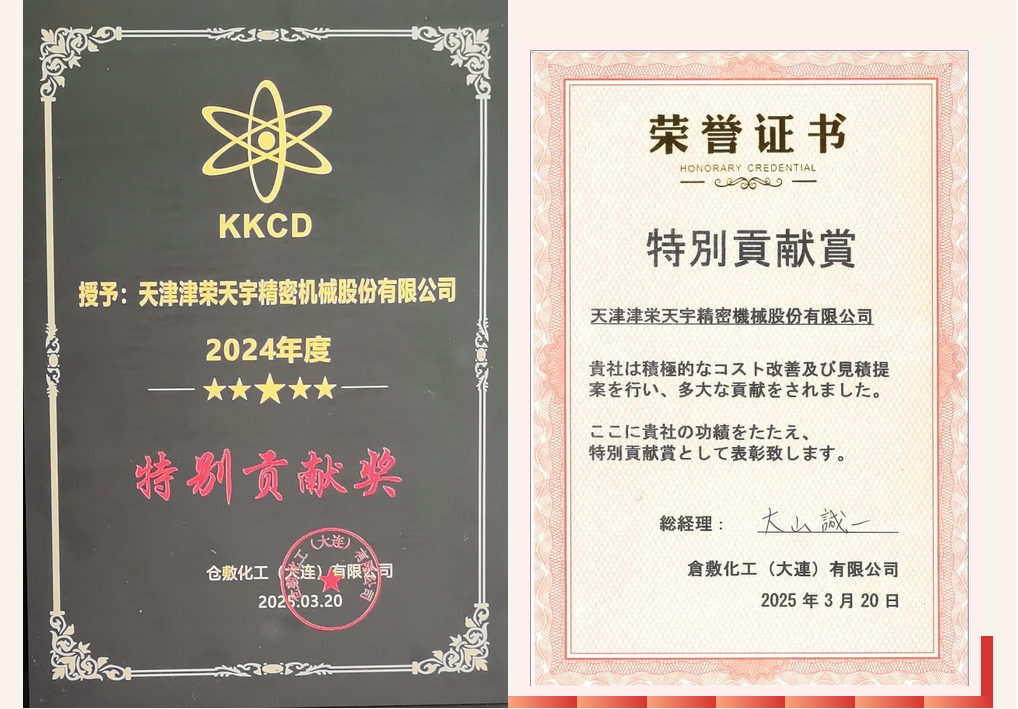
喜讯连连 津荣天宇相继荣获仓敷化工2024年度“特别贡献奖”及施耐德电气“2024年度可持续影响力奖”两项殊荣
Quan Jing Wang· 2025-04-10 07:09
Core Insights - Jinrong Tianyu (300988.SZ) has recently received two prestigious awards, the "Special Contribution Award" from Kurashiki Chemical and the "Sustainable Impact Award" from Schneider Electric, highlighting its excellence in technology innovation, quality control, and sustainable development [1][5]. Group 1: Awards and Recognition - The company was awarded the "Special Contribution Award" at the Kurashiki Chemical (Dalian) supplier conference for its outstanding technology, quality, joint research, and continuous cost optimization [1]. - The "Sustainable Impact Award" from Schneider Electric recognizes Jinrong Tianyu's achievements in deploying intelligent carbon reduction solutions and building a sustainable supply chain [5]. Group 2: Strategic Partnerships and Collaborations - Since 2017, Jinrong Tianyu has been supplying parts for Mazda shock absorbers and industrial machinery to Kurashiki Chemical, with plans to expand cooperation in aluminum die-casting and overseas operations [3]. - The company has maintained a strategic partnership with Schneider Electric for over 20 years, focusing on green supply chain development and sustainable practices [5]. Group 3: Technological Advancements and Innovations - Jinrong Tianyu has successfully implemented intelligent carbon reduction solutions and achieved green upgrades through lifecycle services, contributing to the concept of "new quality productivity" [3][6]. - The company has deployed rooftop photovoltaics, smart lighting systems, and energy storage systems, enhancing operational efficiency and reducing labor costs through an integrated Energy Management System (EMS) [6]. Group 4: Future Directions - The company emphasizes a commitment to innovation, quality, and green development, aiming to collaborate with more partners to drive high-quality industry growth and contribute to carbon neutrality goals [6].
【机器人】行业市场规模:2024年全球机器人行业市场规模超过770亿美元 服务机器人占比超50%
Qian Zhan Wang· 2025-04-07 09:28
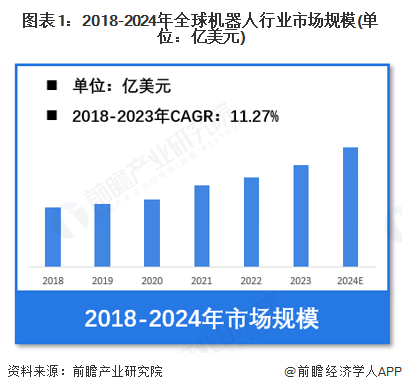
转自:前瞻产业研究院 行业主要上市公司:埃夫特(688165)、拓斯达(300607)、新松机器人(300024)、埃斯顿自动化(002747)、 诺力股份(603611)、海康机器人(HIK ROBOT)、机科股份(835579)等; 本文核心数据:全球机器人行业市场规模; 2024年全球机器人行业市场规模超过770亿美元 根据国际标准化组织(ISO),机器人的定义如下:机器人是具有两个或两个以上可编程的轴,以及一定 程度的自主能力,可在其环境内运动以执行预期的任务的执行机构。2023年全球机器人行业市场规模超 660亿美元,五年行业复合增速为11.27%。初步估算,2024年全球机器人行业市场规模超过770亿美 元。 细分产品 机器人按照用途可以分为工业机器人、服务机器人、特种机器人,根据统计2023年全球机器人市场中, 服务机器人市场占比最大超50%。 产业竞争 全球机器人行业竞争激烈,涵盖工业机器人、服务机器人、特种机器人等多个领域。主要企业包括日本 的安川电机、瑞士的ABB、德国的KUKA、美国的波士顿动力等。这些公司通过技术创新、智能化和自 动化推动行业发展,应用领域从制造业扩展至医疗、物流、农业 ...

国际AI工业+能源周报(03 31-04 06):SpaceX拟投18亿美元扩建佛州星舰设施,成功发射人类首次极地轨道载人航天任务
海通国际· 2025-04-05 07:40
Investment Rating - The report suggests a positive outlook for the aerospace and defense sectors, highlighting potential investment opportunities in companies like Howmet Aerospace, Loar Holdings, and Raytheon Technologies [6][7]. Core Insights - The AI data center sector is experiencing significant investment, with major companies like Microsoft and Meta planning to invest over $345 billion in AI infrastructure by 2025, indicating a potential bubble in the market [2][23]. - The aerospace industry is showing signs of recovery, with Airbus delivering approximately 70 aircraft in March, reflecting an 11% year-on-year increase [29]. - The defense sector is witnessing substantial contracts, such as Lockheed Martin receiving a $4.94 billion contract for precision strike missiles, indicating strong government spending in defense [35]. Summary by Sections Global Market Review - The U.S. stock market has shown a cautious sentiment, with the S&P 500 index declining over 1% recently, reflecting a risk-off attitude among investors [13]. Infrastructure - The AI data center sector is facing risks of overheating, with significant investments planned by major tech companies [23]. - The PJM Interconnection has released a reliability resource plan to ensure new power plants can connect to the grid efficiently [26]. - Poland is advised to delay the closure of coal plants to avoid a power shortage by 2030 [27]. Industrial Equipment - The price index for electric motors and generators in the U.S. has shown a year-on-year increase of 26% [20]. - China's transformer exports in early 2025 saw a significant increase of 48% year-on-year, indicating strong demand [57]. Energy - U.S. electricity prices have decreased by 35.5% recently, while the market for natural gas is showing mixed signals [5]. - The average spot price for uranium in the global market has decreased by 7.9% month-on-month [4]. Aerospace - The price index for aircraft engines and components has remained stable, with a year-on-year increase of 6.2% [31]. - The aerospace sector is actively pursuing sustainable development, facing challenges in achieving net-zero emissions [29]. Defense - The U.S. government defense spending price index has shown a year-on-year increase of 2.1% [36]. - The defense industry is experiencing a surge in contract awards, particularly in precision strike and unmanned systems [35].





美的集团2024风险透视:4091亿营收背后地缘政治风险、智能家居领域红海厮杀、内部管理效率黑洞
Xin Lang Zheng Quan· 2025-04-03 06:37
Core Viewpoint - Midea Group leads the global home appliance market with a revenue of 409.1 billion yuan and a year-on-year growth rate of 9.47%, but faces challenges from geopolitical risks, intense competition in the smart home sector, and internal management inefficiencies [1] Global Expansion - Midea's overseas revenue accounts for 41.92%, but global expansion is fraught with challenges, including competition in Southeast Asia from LG and Samsung, localization challenges in North America, and profit erosion due to exchange rate fluctuations [2] - A sudden change in tariff policies in a specific international market led to a 2.3 percentage point decline in profit margins, while exchange rate changes resulted in a profit loss of approximately 380 million yuan for Midea's overseas business [2] Intensifying Competition - The smart home sector, which contributes 66.2% of Midea's smart home revenue, is highly competitive, with rivals including Huawei, Xiaomi, Haier, and Gree [3] - Midea aims to build a differentiated advantage through a comprehensive smart home solution, but rapid technological changes and evolving user demands pose significant risks [3] - In the B2B market, Midea faces direct competition from international giants like ABB and Fanuc, highlighting gaps in technology reserves, service capabilities, and brand influence [3] Internal Management - Midea's extensive business operations reveal issues such as organizational inefficiencies, resource diversion from non-core businesses, and innovation limitations [4] - The company's main business costs increased by 8.38% year-on-year, which, although lower than the 9.44% increase in main business revenue, still raises concerns [4] - Internal data indicates that decision-making efficiency is severely impacted by lengthy approval processes, with some departments having as many as 12 approval steps [4] Strategic Solutions - To navigate these challenges, Midea is implementing three key strategies: localized deepening of its global strategy, differentiated upgrades in competition, and streamlining internal management [5] - The localization strategy involves integrating R&D, manufacturing, supply chain, sales, logistics, and after-sales service to embed the Midea brand into local markets [5] - The competitive strategy focuses on enhancing scenario-based solutions and creating technological barriers in the smart home sector and B2B business [5] - The internal management strategy aims to break down information silos through a digital transformation initiative and to concentrate resources on core business areas by divesting non-core operations [5] Future Outlook - Midea Group is positioned to navigate the turbulent waters of the global home appliance market by leveraging its strategies of localized deepening, differentiated upgrades, and streamlined focus [6] - The company must remain vigilant, continuously innovate, and prioritize user-centric approaches, technology-driven solutions, and efficiency to thrive in a competitive landscape [6]
