亚马逊

Search documents
苹果正与印度芯片制造商就iPhone部件的组装和封装进行商谈;SpaceX通知员工进入IPO前的静默期【美股盘前】
Mei Ri Jing Ji Xin Wen· 2025-12-17 12:05
④ 【华纳据称本周将拒绝派拉蒙收购要约】12月16日,据媒体援引知情人士透露,华纳兄弟探索(简称华纳)计划拒绝派拉蒙天舞上周提出的收购要 约,主要原因是对派拉蒙天舞的融资安排和其他交易条款存在担忧。华纳董事会经过审议后认为,公司与奈飞的现有协议在价值、确定性和条款方面都优 于派拉蒙天舞的提案。截至发稿,奈飞上涨1.83%。 每经记者|岳楚鹏 每经编辑|段炼 兰素英 ① 【三大期指齐涨】截至发稿,道指期货涨0.19%、标普500指数期货涨0.30%、纳指期货涨0.34%。 ② 【纳斯达克将迎来年内全球最大IPO】美东时间12月17日晚,纳斯达克交易所将迎来全球今年最大IPO Medline,股票代码"MDLN"。该IPO发行规模经 上调后,最终定价锁定在推介区间高位。具体来看,该公司将以每股29美元发行2.16亿股股票,拟融资约62.6亿美元,定价对应的公司估值约为390亿美 元。Medline现有股东涵盖黑石集团、凯雷集团及弗里德曼(Hellman & Friedman)三大私募巨头。早在2021年,这三家机构就以340亿美元联合收购 Medline多数股权,成为史上规模最大的杠杆收购之一。Medline由米 ...


中国经济的新特点与新趋势
Ping An Securities· 2025-12-17 10:30
Group 1: Global Technology Competition - The global technology competition is increasingly defined by the US-China rivalry, with China narrowing the gap in fields like semiconductors and artificial intelligence[7] - In 2025, AI-related investments contributed approximately 6.8% to the US GDP, with a notable 0.92 percentage point contribution to year-on-year GDP growth in Q2[12] - The capital expenditure of the top seven US tech companies (MAG7) reached nearly $267 billion in 2025, a 67.7% increase year-on-year, accounting for about 27% of total S&P 500 capital expenditure[9] Group 2: International Trade and Economic Confidence - In 2025, China's direct exports to the US decreased to 11.3% of total exports, down from 14.7% in 2024, indicating a shift in trade dynamics[21] - The Chinese government effectively countered US tariffs, showcasing its industrial strength and market size, with the Wind All A index rising by 22.2% in 2025[19] - China's dominance in rare earth processing, with a 58% share of global production capacity, underpins its strategic response to international trade conflicts[20] Group 3: Economic Transition and Structural Changes - The "new new three" categories—robots, artificial intelligence, and innovative drugs—are set to lead China's industrial upgrade, reflecting a shift towards high-end manufacturing[27] - By 2024, the "three new" industries accounted for about 18% of GDP, while the real estate and construction sectors' share fell from 15.3% in 2020 to 12.9%[27] - In the first ten months of 2025, China's industrial robot production increased by 28.8% year-on-year, with exports growing by 61.5%[28] Group 4: Policy and Market Dynamics - The Chinese government is focusing on "anti-involution" policies to promote rational market competition, with significant measures announced in 2025 to eliminate local protectionism[35] - Fiscal policy in 2025 emphasized "stabilizing growth" through increased central leverage, with net fiscal injections contributing 76% to new M2 growth in the first three quarters[3]
观察| 人工智能背后的会计谎言
未可知人工智能研究院· 2025-12-17 10:02
Core Viewpoint - The article argues that the AI industry is experiencing a significant accounting distortion and potential bubble, similar to past financial crises, driven by inflated valuations, unsustainable business models, and questionable accounting practices [6][10][130]. Group 1: Market Reactions and Financial Signals - Following Nvidia's earnings report, the stock plummeted, and Bitcoin's value dropped from a historical high of $126,000 to $89,000, resulting in a global cryptocurrency market loss of $420 billion in a single day [3][4]. - Nvidia's accounts receivable reached $33.4 billion, indicating a concerning increase in the time taken to collect payments, with the Days Sales Outstanding (DSO) rising to 53.3 days, compared to the historical average of 46 days [16][19]. - The inventory of Nvidia surged by 32% from $15 billion to $19.8 billion, contradicting claims of high demand and supply constraints, suggesting either overproduction or customers unable to pay [28][29]. Group 2: Accounting Practices and Profitability - Nvidia's accounting practices allow for a significant underreporting of depreciation on AI infrastructure, leading to an estimated $176 billion in inflated profits by 2028 due to a discrepancy in depreciation rates [14][15]. - The company's cash conversion rate is only 75.1%, indicating that 25% of reported profits are not translating into actual cash flow, raising concerns about the sustainability of its financial health [35][36]. - Nvidia's stock buyback strategy, amounting to $9.5 billion, raises questions about prioritizing shareholder value over operational health, especially when cash flow is constrained [38][39]. Group 3: Industry-Wide Implications - The AI sector is characterized by a cycle of financing where companies invest in each other, creating a façade of revenue without real external cash flow, leading to inflated valuations [42][47]. - Major players like Microsoft and Oracle are also implicated in similar financing structures, raising concerns about the overall health of the AI ecosystem [50][51]. - Historical parallels are drawn to past financial collapses, such as Enron and WorldCom, highlighting the risks of inflated accounting practices and unsustainable business models in the current AI landscape [68][71]. Group 4: Future Outlook and Risks - The article predicts a rapid market correction, potentially more severe than the 2008 financial crisis, driven by the interconnectedness of AI companies and their reliance on inflated valuations [91][106]. - The potential for a significant drop in AI company valuations, estimated between 50% to 70%, could trigger a chain reaction affecting the broader market, particularly in cryptocurrency [98][100]. - The article emphasizes the need for a market correction to eliminate speculative investments and allow for the emergence of sustainable business models in the AI sector [110][139].

亚马逊(AMZN.O)美股盘前上涨1.2%,有报道称亚马逊正在商谈向OpenAI投资约100亿美元。
Jin Rong Jie· 2025-12-17 09:46
本文源自:金融界AI电报 亚马逊(AMZN.O)美股盘前上涨1.2%,有报道称亚马逊正在商谈向OpenAI投资约100亿美元。 ...
暴涨755%!沐曦股份登陆科创板,科创50指数ETF(588870)收涨2.19%!国产芯片破局国际垄断,站上万亿风口
Sou Hu Cai Jing· 2025-12-17 08:27
Core Viewpoint - The A-share market saw a significant rise in the afternoon, with the STAR 50 Index ETF (588870) increasing by 2.19%, and a trading volume exceeding 74 million yuan, indicating a 17% increase in volume compared to the previous period. This reflects a trend of capital flowing into ETFs as investors seek opportunities amid market declines [1]. Group 1: ETF Performance - The STAR 50 Index ETF (588870) has experienced net inflows on 4 out of the last 5 days, with a year-to-date share growth rate of 173%, leading its peers significantly [1]. - The majority of the popular constituent stocks of the STAR 50 Index ETF closed in the green, with notable gains including Shengyi Electronics up over 13%, and Jinghe Integration up over 7% [3]. Group 2: Key Stocks and Trading Data - Key stocks within the STAR 50 Index ETF include: - Cambrian (688256) with a weight of 9.57%, up 3.27%, trading volume of 8.166 billion yuan - Haiguang Information (688041) with a weight of 7.92%, up 4.73%, trading volume of 4.2747 billion yuan - SMIC (688981) with a weight of 9.70%, up 2.34%, trading volume of 3.849 billion yuan - Shengyi Electronics (688183) with a weight of 1.17%, up 13.56%, trading volume of 3.161 billion yuan [4]. Group 3: Market Trends and Developments - The listing of Muxi Co., Ltd. on the STAR Market on December 17, with its self-developed "Chinese chip," saw its stock price surge by 755% from the issue price, reflecting high market expectations for domestic alternatives in the chip sector [5]. - Analysts highlight that the current AI computing power market is thriving, with strong demand and a clear trend towards self-sufficiency in AI chips in China, driven by supportive policies and significant growth potential [6]. - The STAR 50 Index ETF (588870) tracks the 50 largest and most liquid stocks on the STAR Market, covering sectors such as electronics, pharmaceuticals, and machinery, with a total R&D expenditure of 53.23 billion yuan, representing 7.93% of revenue, significantly higher than other market segments [6].
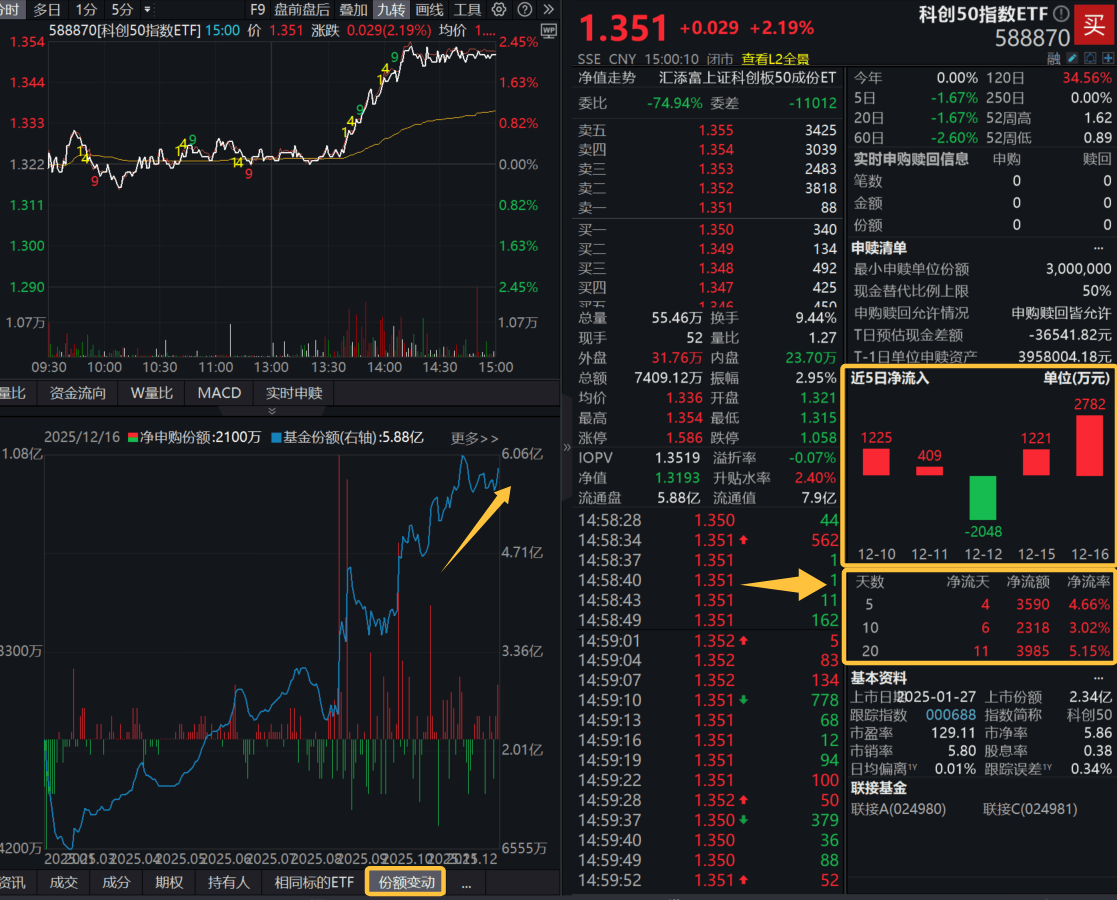
快讯:算力硬件股持续走强 联特科技、中瓷电子午后双双涨停
Xin Lang Cai Jing· 2025-12-17 06:41
Group 1: Market Performance - The A-share market's computing hardware sector experienced a strong surge, with companies like LianTe Technology and ZhongCi Electronics hitting the daily limit, and YiDong Electronics also closing at the limit. Other stocks like JuGuang Technology and YuanJie Technology rose over 10%, indicating sustained investor interest in this sector [1] Group 2: AI Competition and Demand - The global AI competition has intensified, with tech giants like OpenAI preparing to launch the latest GPT-5.2 model, while companies like Google and Amazon are increasing investments in self-developed AI chips and computing infrastructure. This heightened competition is driving urgent demand for underlying computing hardware, particularly high-speed optical modules/CPO and AI chips. Analysts believe that the investment wave centered on AI computing hardware is just beginning, with future market potential reaching trillions of dollars [2] Group 3: Technological Advancements and Supply Constraints - The optical module industry is currently undergoing a technological transition from 800G to 1.6T and even higher rates. While 800G products are being ramped up, the introduction of advanced 1.6T products is accelerating, leading to extended delivery cycles for high-end optical modules and significant supply-demand tension. This scenario benefits leading companies with technological advantages in high-speed products, such as ZhongJi XuChuang and XinYiSheng, granting them stronger pricing power and performance certainty [3] Group 4: Positive Policy and Industry Environment - Recent domestic policy developments have signaled a positive outlook for the computing industry. The convening of the High-Quality Development Conference for the Computing Industry emphasized the importance of developing the computing sector, alongside the signing of large-scale computing infrastructure cooperation projects. National initiatives, such as the establishment of a commercial aerospace office, have also indirectly boosted market enthusiasm for emerging tech sectors, enhancing investor confidence [4] Group 5: External Environment and Domestic Substitution - Reports indicate a recent easing of U.S. export policies on AI chips to China, allowing NVIDIA to sell H200 chips to the country. While this poses short-term competition for domestic AI chip manufacturers, it is generally interpreted as a stimulus for the construction and expansion of Chinese data centers, indirectly benefiting the demand for optical modules and servers. Additionally, domestic AI chip companies like Cambricon and Haiguang Information have shown strong performance in orders and earnings, indicating an acceleration in the domestic substitution process, which supports the integrity and security of the domestic computing industry chain [5]

海外及传媒年度策略:算力飞轮、多极模型生态与Agent化生产力
Huaan Securities· 2025-12-17 05:30
Group 1: Generative AI and Computing Power - The landscape of generative AI is shifting from a "single supplier" model to a "multi-architecture + multiple leading players" competition, with NVIDIA, AMD, Google, and Amazon leading the charge in AI chip development [22][23] - The AI server interconnect is evolving from board-level PCIe and copper cabling to rack-level optical interconnects and reconfigurable network architectures, enhancing data transmission capabilities [24][25] - The storage sector is entering a "super cycle" driven by HBM, GDDR, DRAM, NAND, and CXL technologies, as AI models demand increased data capacity and bandwidth [27][28][31] Group 2: AI Applications and Industry Impact - Video generation models have reached a "production-grade" stage, with companies like Google and Kuaishou leading the way in integrating AI into content creation workflows [32][33] - The advertising, gaming, and automation sectors are undergoing significant transformations due to AI, with enhanced precision in ad targeting and reduced production costs in gaming [9][10] - The publishing industry is characterized by stable demand for educational materials and low PE ratios, providing a safety net for investors [12] Group 3: Market Performance and Trends - The Nasdaq Composite Index experienced a notable recovery in the second half of 2025, driven by advancements in AI and generative models, which restored investor confidence [35][38] - The MAG 7 stocks showed significant performance differentiation, with Google and NVIDIA outperforming the market, while other major players like Tesla and Microsoft lagged behind [38]
马斯克身家破6800亿美元!特斯拉、SpaceX双线发力
Ge Long Hui· 2025-12-17 03:06
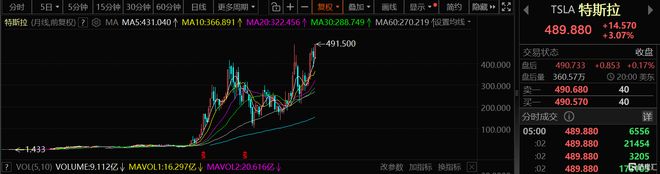
Core Viewpoint - Tesla's stock price surged over 3%, reaching a historic high, driven by news related to autonomous driving, with a total market capitalization of $1.63 trillion, rebounding approximately 70% from its March low [1] Group 1: Tesla's Performance and Market Impact - Tesla's stock closed at $489.88, reflecting a 3.07% increase [2] - The rise in Tesla's stock price is linked to the company's advancements in autonomous driving technology, which is seen as a significant step towards its goal of launching the Cybercab autonomous taxi service next year [6] - Analysts estimate Tesla's autonomous driving business could be valued at $1 trillion, with a target stock price of $600 potentially leading to a market cap of $2 trillion in the next year [6] Group 2: Elon Musk's Wealth and SpaceX Developments - Elon Musk's net worth reached $684.2 billion, making him the first person in history to surpass $600 billion [3] - Musk's wealth is significantly higher than that of the second richest person, Larry Page, by $4.32 billion [3] - SpaceX is reportedly planning to go public, aiming for a valuation of approximately $1.5 trillion, which would position Musk to potentially become the world's first trillionaire [7] - SpaceX's growth, particularly through its Starlink satellite internet service, is a key factor in its anticipated revenue of $15 billion in 2025, increasing to between $22 billion and $24 billion by 2026 [7] Group 3: Future Projections for Musk's Ventures - The year 2026 is projected to be a pivotal year for Musk's business empire, with Tesla's full autonomous driving technology potentially leading to a $2 trillion valuation and SpaceX's IPO reshaping global capital markets [9] - The simultaneous growth of Tesla and SpaceX, along with advancements in other innovative sectors, could mark Musk's transition from a disruptive innovator to a major player in global industries and capital [9]

凌晨,见证历史!
天天基金网· 2025-12-17 01:31
上天天基金APP搜索777注册即可领500元券包,优选基金10元起投!限量发放!先到先得! 美东时间12月16日,美股三大指数涨跌不一,仅纳指收涨。 市场担忧美国经济状况,投资者情绪偏谨慎。 截至收盘,道琼斯指数跌0.62%,报48114.26点;纳斯达克指数涨0.23%,报23111.46 点;标普500指数跌0.24%,报6800.26点。 美联储博官员斯蒂克表示,劳动力市场正在降温,但他预计不会出现明显放缓;多年未能实 现通胀目标可能"确实会损害"美联储的公信力;进一步降息将使货币政策接近或进入宽松区 间,从而使通胀和通胀预期面临风险。 大型科技股多数收涨,力撑纳指。 | 特斯拉(TESLA) | 489.880 | 3.07% | | --- | --- | --- | | TSLA.O | | | | 脸书(META PLATF | 657.150 | 1.49% | | META.O | | | | 英伟达(NVIDIA) | 177.720 | 0.81% | | NVDA.O | | | | 微软(MICROSOFT | 476.390 | 0.33% | | MSFT.O | | | | 苹 ...

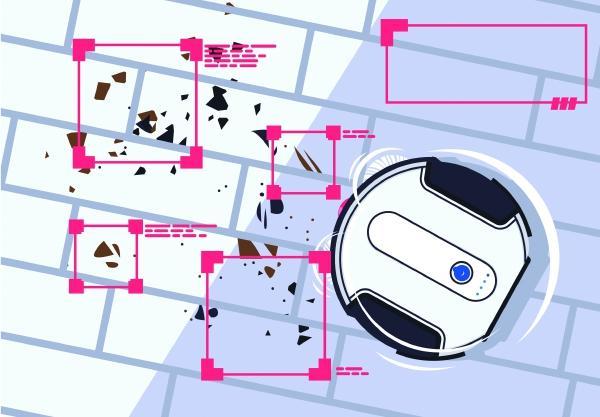
业绩亏损、资不抵债 扫地机器人鼻祖iRobot黯然退场
Bei Jing Shang Bao· 2025-12-17 01:05
Core Viewpoint - iRobot has filed for bankruptcy protection and will become a wholly-owned subsidiary of a Chinese manufacturing company, following a series of financial struggles and a significant decline in market position [1][3][8]. Financial Performance - iRobot's third-quarter revenue for 2025 was only $146 million, a 24.6% decrease compared to the same period in 2024, with a net loss of $9.9 million, contrasting with a profit of $15.1 million in the previous year [5]. - The company owes over $350 million to its main creditor, Shenzhen-based Picea, while having only $24.8 million in cash and cash equivalents [4][6]. Market Position - iRobot's market share has plummeted from over 80% in the U.S. to 7.9% globally, with significant revenue declines in key regions: 43% in Europe, the Middle East, and Africa; 18% in the U.S.; and 6% in Japan [7][9]. - The company's stock price has drastically fallen from a peak of $197.4 in 2021 to around $4.3, leading to a market capitalization drop from over $6 billion to $140 million [7]. Competitive Landscape - iRobot faces intense competition from Chinese brands like Roborock and Ecovacs, which have adopted advanced technologies such as laser navigation, while iRobot has been slow to innovate [8][9]. - The introduction of a 46% tariff on home appliances imported from Vietnam by the U.S. government is expected to increase operational costs by approximately $23 million in 2025, further straining iRobot's financial situation [9]. Historical Context - Founded in 1990, iRobot was a pioneer in consumer robotics, launching the first Roomba vacuum in 2002. However, its performance deteriorated significantly in 2022, with a 24% revenue decline and a net loss of $286.3 million [6][8].