西门子

Search documents
全球与中国射频干扰输入滤波器市场发展趋势及投资风险展望报告2025-2031年
Sou Hu Cai Jing· 2025-06-08 06:36
Market Overview - The report provides a comprehensive analysis of the global and Chinese RF interference input filter market trends and investment risks from 2025 to 2031 [1][3] - It categorizes RF interference input filters into different product types and applications, highlighting sales growth trends from 2020 to 2031 [4][5] Product Type Analysis - The market is segmented into various product types, including SAW and BAW RF filters, with projected sales growth trends for each type [4][5] - The report includes a detailed analysis of sales revenue growth (CAGR) for different product types from 2020 to 2031 [8][9] Application Analysis - Key applications for RF interference input filters include cellular devices, GPS devices, and tablets, with sales growth trends analyzed for each application [4][5] - The report forecasts sales revenue growth for these applications from 2020 to 2031 [8][9] Industry Background and Trends - The current status and historical development of the RF interference input filter industry are discussed, along with future trends [4][5] - The report outlines the supply and demand dynamics in the global RF interference input filter market from 2020 to 2031 [4][5] Regional Market Analysis - The report analyzes the production and sales trends of RF interference input filters across major regions, including North America, Europe, China, Japan, Southeast Asia, and India [5][6] - It provides insights into market share and growth rates for these regions from 2020 to 2031 [5][6] Major Manufacturers - The report identifies key manufacturers in the RF interference input filter market, detailing their production capacities, sales volumes, and revenue from 2020 to 2025 [5][6] - It includes a competitive analysis of the market concentration and the positioning of major players [5][6] Investment Opportunities - The report highlights potential investment opportunities in the RF interference input filter market, driven by technological advancements and increasing demand across various applications [4][5] - It discusses the implications of market mergers and acquisitions on the competitive landscape [5][6]


XR设备:从技术突破到医疗影像新革命,解码体内影像“数字眼” 头豹词条报告系列
Tou Bao Yan Jiu Yuan· 2025-06-06 12:33
Investment Rating - The report does not explicitly state an investment rating for the XR equipment industry Core Insights - The XR equipment industry is experiencing significant growth driven by technological advancements, policy support for domestic alternatives, and increasing demand in the healthcare sector. The market is expected to expand due to factors such as the aging population, rising cardiovascular disease rates, and the implementation of new healthcare policies [4][20][32]. Summary by Sections Industry Definition - XR equipment utilizes X-rays to obtain internal imaging information based on the differential absorption and attenuation of X-rays by various tissues. It is widely used in medical diagnostics, security, and industrial applications, with a focus on medical health in this report [5]. Industry Characteristics - The XR equipment industry is characterized by: - **Technology-Intensive and Innovation-Driven**: The industry relies heavily on technological innovation, particularly in digitalization, AI integration, and low-dose imaging technologies [10]. - **Policy-Driven and Accelerated Domestic Replacement**: Government policies are significantly influencing the market, promoting the use of domestic medical devices [12]. - **Diverse Application Scenarios and Market Segmentation**: XR equipment applications extend beyond traditional medical diagnostics to include industrial inspection and security [13]. Development History - The development of XR equipment in China has gone through three phases: initial reliance on foreign technology, a period of domestic growth supported by policy, and a current phase of technological breakthroughs and international market expansion [14]. Industry Chain Analysis - The XR equipment industry chain includes: - **Upstream**: Comprising core component manufacturing such as chips and sensors, with low domestic production rates [17]. - **Midstream**: Focused on the assembly of devices and content development, with a notable shift towards domestic production [19]. - **Downstream**: Concentrated on application promotion and sales across various sectors, with hospitals being the primary customers [29]. Market Size and Growth - The XR equipment market size is projected to grow from 11.2 billion RMB in 2019 to 14.51 billion RMB in 2024, with a compound annual growth rate (CAGR) of 5.31% [33]. The market is expected to continue expanding due to increasing healthcare demands and supportive policies [36]. Policy Overview - Key policies influencing the XR equipment industry include: - **Equipment Update Policies**: Encouraging medical institutions to upgrade their imaging equipment [41]. - **Support for Domestic Production**: Policies aimed at promoting the use of domestic medical devices [42]. Competitive Landscape - The XR equipment market is dominated by major international players like Siemens, Philips, and GE in the high-end segment, while domestic companies such as United Imaging, Mindray, and Wandong Medical are gaining traction in the mid to low-end markets [44]. The competition is characterized by a clear segmentation based on hospital tiers and equipment preferences [45]. Future Outlook - The XR equipment industry is poised for growth driven by technological advancements, policy support for domestic manufacturers, and increasing healthcare needs, particularly in the context of an aging population and rising chronic disease prevalence [40][46].



XR设备:从技术突破到医疗影像新革命,解码体内影像“数字眼”头豹词条报告系列
Tou Bao Yan Jiu Yuan· 2025-06-06 12:06
Investment Rating - The report indicates a positive investment outlook for the XR equipment industry, driven by technological advancements and policy support for domestic manufacturers [4][11][41]. Core Insights - XR devices are essential in medical diagnostics, particularly for cardiovascular diseases, and are expected to evolve towards smart, low-dose, and high-precision technologies [4][5][9]. - The market for XR devices is projected to grow significantly due to increasing demand from grassroots medical institutions and the aging population [4][31][40]. - Domestic manufacturers are gaining market share due to favorable policies promoting local production and innovation [11][19][45]. Summary by Sections Industry Overview - XR devices are widely used in medical, security, and industrial fields, with a strong emphasis on medical applications for diagnosing various diseases [5][9]. - The industry is characterized by high technological intensity and innovation, with a focus on digitalization and AI integration [9][19]. Market Dynamics - The XR equipment market is expected to grow from 112 billion RMB in 2019 to 145.1 billion RMB by 2024, with a compound annual growth rate (CAGR) of 5.31% [33]. - The demand for XR devices is driven by policies that enhance the capabilities of grassroots medical services and the increasing prevalence of cardiovascular diseases [37][40]. Competitive Landscape - The market is dominated by international brands like Siemens, Philips, and GE in the high-end segment, while domestic brands such as United Imaging and Wandong Medical are gaining traction in the mid to low-end markets [45][46]. - The competitive dynamics are influenced by the differing needs of hospitals at various levels, with tertiary hospitals favoring high-end imported devices and secondary hospitals leaning towards cost-effective domestic options [46]. Policy Impact - Government policies are significantly influencing the XR equipment market, with initiatives aimed at promoting domestic production and upgrading medical equipment in grassroots healthcare settings [11][41][42]. - The "14th Five-Year Plan" for medical equipment development aims to enhance the technological capabilities and quality of medical devices, further supporting the growth of the XR equipment industry [41][42].
防务支出提振,德股企业盈利增速要超美股了
Hua Er Jie Jian Wen· 2025-06-06 11:08
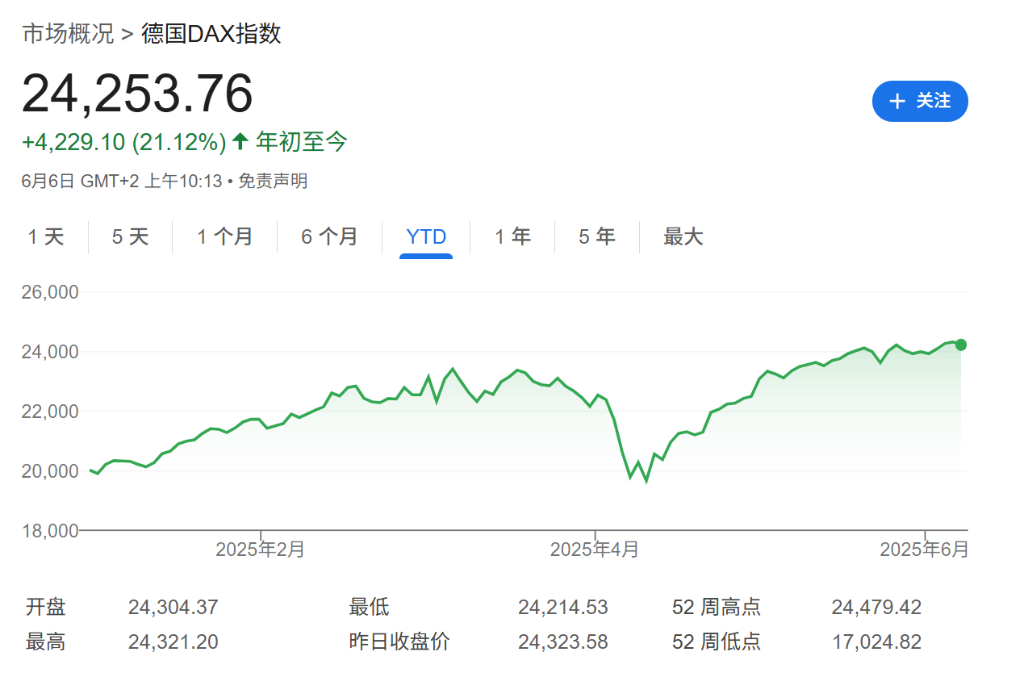
Core Viewpoint - German companies are poised for a profit surge, with DAX index component profits expected to grow by 13%-15% in the second half of 2025 and 2026, surpassing the S&P 500's 13.5% growth rate for the first time in years [1] Group 1: Profit Growth Expectations - The average profit growth for German companies in 2026 is anticipated to exceed that of the U.S., as stated by Kevin Thozet from Carmignac [2] - The DAX index has surged by 21% this year, outperforming major global indices, while the Stoxx 600 has only risen by about 9% [2] Group 2: Key Growth Drivers - The primary driver of profit growth in Germany is expected to come from defense stocks, with significant contributions from Rheinmetall AG, Airbus, and MTU Aero Engines AG, projected to account for about 20% of DAX's earnings growth in the second half of 2025 [3] - Other critical sectors include energy transition, electric vehicles, and artificial intelligence, supported by increased investments in data centers and electrification [3] Group 3: Government Initiatives - The German cabinet has approved a corporate tax relief plan worth approximately €460 billion ($530 billion), which includes a 30% tax deduction for new machinery purchases starting in July and a gradual reduction of the federal corporate tax rate from 15% to 10% by 2028 [3] - The new government under Chancellor Merz is accelerating defense and infrastructure spending, potentially contributing 1.6 percentage points to economic growth in 2026, equating to a 6% boost for DAX companies' earnings [3] Group 4: Resilience Against Tariffs - Analysts suggest that the impact of U.S. tariffs on German companies may be less severe than initially feared, with companies like SAP and Allianz less affected due to their service-oriented nature [4] - Apollo Global Management's president highlighted Germany as an excellent place for business, with a goal to grow its economy from $4 trillion to $6 trillion in the next 10 to 12 years [4] Group 5: Strategic Relevance - Germany is gaining strategic relevance as investors seek diversification from U.S. policy and fiscal risks, aided by growth-promoting reforms and industrial strength [5] - Barclays strategists noted that Germany's long-term domestic outlook is improving, with pro-growth policies and fiscal spending likely to drive investment [5]
德国ETF今年悄悄大涨3成,原因有哪些?
市值风云· 2025-06-06 10:03
Core Viewpoint - The German stock market has shown remarkable performance this year, with the Huaan Fund's German ETF (513030.SH) achieving a return of 31.7%, outperforming most domestic assets [2][3]. Group 1: ETF Performance - The German ETF has experienced a bull market for three consecutive years, with a total return of 76.5%, although it still lags behind its benchmark by 17 percentage points while significantly outperforming the CSI 300 Index [3][4]. Group 2: ETF Composition - The ETF tracks the DAX Index, which includes 40 major companies listed on the Frankfurt Stock Exchange, representing over 70% of the German stock market's market capitalization [7]. - Major holdings in the ETF include: - SAP (13.67%): Europe's largest tech company, leading in ERP software with a market cap exceeding $300 billion, focusing on AI and cloud services [8]. - Siemens (9.17%): An industrial giant with a strong presence in infrastructure and medical devices [8]. - Allianz (7.29%): The world's largest insurance group, operating in 70 countries with a market cap over $90 billion [9]. - Deutsche Telekom (6.70%): The largest telecom operator in Europe with extensive international operations [10]. - Approximately 80% of the revenue from these companies comes from international markets, with only 20% from the German domestic market, indicating a decoupling of the DAX Index performance from the local economy [11]. Group 3: Economic Factors - The German government introduced a €460 billion tax reduction plan in 2025, significantly lowering industrial users' electricity costs by 50%, which has reduced manufacturing operational costs [16]. - The European Central Bank has implemented eight consecutive interest rate cuts, maintaining a historical low yield of 2.93% on ten-year German bonds, creating a favorable financing environment for companies [18]. Group 4: Currency and Cost Advantages - The depreciation of the euro against the dollar from 1.11 in 2024 to 1.04 in mid-2025 has enhanced the price competitiveness of German exports, with machinery exports to the U.S. increasing by 9% [20]. - The reduction in industrial electricity costs has further decreased manufacturing expenses, leading to a 19% increase in net profit for BMW despite only a 4% increase in global sales [20]. Group 5: Investment Options - Domestic investors can access the German stock market through two ETFs: Huaan Fund's German ETF (513030.SH) and Jiashi Fund's German ETF (159561.SZ), with management scales of 1.35 billion and 1.64 billion respectively [21]. - Huaan's ETF has a premium of 2.12%, while Jiashi's ETF is at a discount of 0.25%, making the latter potentially safer [21]. - In terms of liquidity, Huaan's ETF has a significantly higher turnover rate of 8.8 times compared to Jiashi's 2.6 times in May [22].

企业级AI迈入黄金时代,企业该如何向AI“蝶变”?
Sou Hu Cai Jing· 2025-06-05 14:34
Group 1: Microsoft and AI Business Development - Microsoft showcased significant progress in enterprise AI at its recent all-hands meeting, highlighting a deal with Barclays Bank for 100,000 Copilot licenses, potentially worth tens of millions annually [1] - Microsoft’s Chief Commercial Officer, Judson Althoff, revealed that several major clients, including Accenture, Toyota, Volkswagen, and Siemens, have internal Copilot user bases exceeding 100,000 [1] - CEO Satya Nadella emphasized the importance of tracking actual usage rates among employees rather than just sales figures, indicating a strategic focus on the enterprise AI market [1] Group 2: Trends in Enterprise AI Applications - The value of generative AI is expected to manifest more prominently in enterprise applications, with a notable shift from consumer-focused applications to enterprise-level integration by 2025 [3] - Generative AI has vast potential across various business functions, including HR, finance, supply chain automation, IT development, and data security [3] - Industries such as finance, healthcare, legal consulting, and education are anticipated to be early adopters of mature generative AI applications [3] Group 3: AI Integration Strategies - Current enterprise AI application methods include embedded software, API calls, and building dedicated enterprise AI platforms [5] - Building a proprietary enterprise AI platform is seen as the most effective long-term strategy for companies to enhance competitiveness and differentiation [6] - Despite the potential, generative AI applications in enterprises are still in the early stages of development [6] Group 4: Challenges in Generative AI Adoption - The "hallucination" problem of large models poses a significant barrier to the adoption of generative AI in enterprise settings, where accuracy and security are paramount [7] - Current large models primarily excel in text and document processing, with limitations in areas requiring high logical reasoning and accuracy, such as specialized language and visual recognition [8] - Data security remains a critical concern for enterprises, necessitating robust measures to protect sensitive information during AI model training [8] Group 5: Data and Application Readiness - High-quality data is essential for the successful implementation of enterprise AI applications, with companies increasingly recognizing data as a vital asset [10] - The concept of data assetization is gaining traction, enabling better data sharing and application development across different business units [11] - Synthetic data is emerging as a crucial resource for training large models, especially as real-world data becomes scarce [11] Group 6: Future of Enterprise AI - The integration of AI capabilities through platformization is crucial for scaling enterprise AI applications [17] - The next decade is expected to see significant advancements in AI, with breakthroughs in addressing the hallucination issue, enhancing multimodal capabilities, and improving data security frameworks [18] - The convergence of technological innovation and industry demand is poised to usher in a golden era for enterprise AI, redefining efficiency and value creation in the business landscape [18]


“无中生有”数据产业如何成长?——解码南京玄武区数据产业生态跃迁之路
Xin Hua Cai Jing· 2025-06-05 06:58
Core Insights - The article highlights the transformation of Nanjing's Xuanwu District into a key hub for data element circulation in the Yangtze River Delta, driven by the shift from traditional growth models to a focus on data as a new production factor [1][3][4]. Group 1: Data Economy Development - Xuanwu District has embraced data as a new "land" to overcome limitations posed by land scarcity and slow growth in traditional commerce and services [3][4]. - The establishment of the Jiangsu Data Exchange and various data-related initiatives, such as the first battery digital passport innovation center and a compliance data cross-border service platform, marks significant progress in the region's data economy [1][4][5]. - The district's proactive approach to data cross-border services positions it as a leader in the national data element reform landscape, despite not being part of the initial pilot areas [4][5]. Group 2: Integration of Data and Industry - The integration of data elements with Jiangsu's manufacturing capabilities is crucial for fostering new productive forces, as evidenced by the establishment of national industry clouds in the district [5][8]. - The Xuanwu Big Model Factory has attracted numerous AI companies, facilitating collaboration between traditional manufacturing and advanced data technologies, thus driving digital transformation in the manufacturing sector [9][10]. - The district's initiatives, such as the development of a digital passport for batteries, enhance the competitiveness of local industries in international markets by ensuring traceability and compliance with new regulations [9][10]. Group 3: Institutional Innovation and Ecosystem Building - Xuanwu District is actively exploring legal frameworks and institutional innovations to support data asset rights, compliance transactions, and data security governance [13][14]. - The establishment of a data quality assessment base and a data element legal service laboratory reflects the district's commitment to creating a robust ecosystem for data transactions [13][14]. - The district's shift from a land-centric to a data-centric development model signifies a broader transformation in governance and economic strategy, emphasizing the importance of data in urban development [14][15]. Group 4: Future Prospects and Strategic Vision - The article suggests that the future of urban development will increasingly rely on the richness of data ecosystems rather than physical space, positioning Xuanwu District as a model for other cities facing similar challenges [17]. - The district's experience illustrates that data elements can serve as a catalyst for traditional industries to evolve, highlighting the need for continuous exploration and innovation in the digital economy [17].
东海证券晨会纪要-20250605
Donghai Securities· 2025-06-05 02:56
[Table_Reportdate] 2025年06月05日 [证券分析师: Table_Authors] 张季恺 S0630521110001 zjk@longone.com.cn 证券分析师: 王洋 S0630513040002 wangyang@longone.com.cn 证券分析师: 刘思佳 S0630516080002 liusj@longone.com.cn 联系人: 花雨欣 hyx@longone.com.cn [晨会纪要 Table_NewTitle] 20250605 [table_summary] 重点推荐 财经要闻 晨 会 纪 要 证券研究报告 HTTP://WWW.LONGONE.COM.CN 请务必仔细阅读正文后的所有说明和声明 ➢ 1.英伟达Q1数据中心业务成绩亮眼,美限制EDA龙头对华提供服务——电子行业周报 2025/5/26-2025/6/1 ➢ 2.关注陆家嘴论坛政策发布预期带来的市场情绪催化——非银金融行业周报(20250526- 20250601) ➢ 1.四部门组织开展人力资源服务业与制造业融合发展试点工作 ➢ 2.美国ISM服务业PMI大幅回落,跌至50荣枯线以下 ...

人工智能热潮使欧洲四大传统工业集团市值增加1500亿欧元
Shang Wu Bu Wang Zhan· 2025-06-03 14:31
Core Insights - The rapid growth of artificial intelligence is driving a surge in demand for data centers, leading to a significant increase in market capitalization for four major European industrial groups: ABB, Legrand, Schneider, and Siemens, which collectively gained over €150 billion in value, with Siemens experiencing a growth of over 60% [1] Group 1: Company Developments - Schneider is a leading power supplier in the data center sector, currently valued at €127.9 billion, and anticipates that data center orders will account for approximately 24% of its total orders by 2024 [2] - Legrand has shifted its business focus towards data centers, expecting data center orders to represent 20% of its sales by 2024, which is double the figure from 2019 [2] - ABB has transitioned its sales focus towards data centers, projecting that data center orders will constitute 15% of its electrification division's $16.4 billion orders by 2024, with electrification accounting for nearly half of ABB's $33 billion annual revenue [2] Group 2: Industry Trends - The demand for data processing is identified as a long-term trend, with Dell'Oro analysts forecasting that total capital expenditures for data centers will rise from nearly $600 billion in 2025 to over $1 trillion by 2028 [1] - The annual growth rate of data center orders for ABB from 2019 to 2023 was 24%, with an acceleration in growth over the past year due to the intensifying AI competition [2]
EDA被禁,商务部回应!
国芯网· 2025-06-03 12:41
商务部新闻发言人认为,中方按照联合声明达成的共识,取消或停了针对美"对等关税"采取的相关关税 和非关税措施。而美方出台的多项对华歧视性限制政策严重违背了两国元首1月17日通话共识,严重破 坏日内瓦经贸会谈既有共识,严重损害中方正当权益。如果美方一意孤行,中方将继续坚决采取有力措 施,维护自身正当权益。 国芯网[原:中国半导体论坛] 振兴国产半导体产业! 不拘中国、 放眼世界 ! 关注 世界半导体论坛 ↓ ↓ ↓ 6月3日消息,近日全球前三大EDA厂商新思科技、Cadence、西门子集体暂停了对中国大陆半导体公司 的产品支持与升级服务。 6月2日,中国商务部新闻发言人就中美日内瓦经贸会相关问题答记者问。其中提到,中方注意到美国近 期出台多项对华歧视性限制措施,包括发布AI芯片出口管制指南、停止对华EDA的销售、宣布撤销中 国留学生签证。 加群步骤: 第一步:扫描下方二维码,关注国芯网微信公众号。 第二步:在公众号里面回复"加群",按照提示操作即可。 5月29日,新思科技、Cadence各自在官网上披露公告,称近期收到美国政府针对EDA软件工具的对华出 口限制函。 据Cadence公告介绍,公司于5月23日收到美 ...