
中航沈飞

Search documents
国资委:中央企业有效投资进一步扩大 带动效应显著
Zhong Guo Xin Wen Wang· 2025-09-17 08:24
Core Viewpoint - The press conference highlighted the achievements of central enterprises in China during the "14th Five-Year Plan," emphasizing their solid progress in high-quality development and maintaining a stable and improving growth trajectory [1] Group 1: Stability - The foundation of stability has been continuously strengthened, with total assets of central enterprises increasing from 68.8 trillion yuan at the end of the "13th Five-Year Plan" to 91 trillion yuan by the end of 2024, and state-owned capital equity rising from 14.2 trillion yuan to 18.3 trillion yuan, with average annual growth rates of 7.3% and 6.5% respectively [2] - Operational efficiency has remained stable, with expected increases in value added and total profits during the "14th Five-Year Plan" of 40% and 50% compared to the "13th Five-Year Plan," alongside improvements in labor productivity, return on net assets, and debt-to-asset ratios [2] Group 2: Progress - Effective investment has been further expanded, with central enterprises completing a total fixed asset investment of 19 trillion yuan from 2021 to 2024, achieving an average annual growth rate of 6.3% [3] - The quality of listed companies has improved, with measures taken by the State-owned Assets Supervision and Administration Commission (SASAC) to enhance market performance, resulting in a nearly 50% increase in the market value of central enterprise-controlled listed companies to over 22 trillion yuan since the end of the "13th Five-Year Plan" [3] - Central enterprises have implemented cash dividends totaling 2.5 trillion yuan during the "14th Five-Year Plan," contributing to the stability of the capital market [3] Group 3: Quality - Central enterprises have played a crucial role in supporting the stable and healthy operation of the economy and society, supplying approximately 80% of crude oil, 70% of natural gas, and 60% of electricity [4] - They have significantly impacted the supply chain, with an average annual procurement volume exceeding 15 trillion yuan, directly benefiting around 2 million enterprises and indirectly affecting nearly 7 million [4] - Efforts to create a favorable environment for the development of upstream and downstream enterprises, including timely payments and rent reductions, have been emphasized [4]
第七届中国天津国际直升机博览会将在天津港保税区举行
Jing Ji Ri Bao· 2025-09-17 07:34
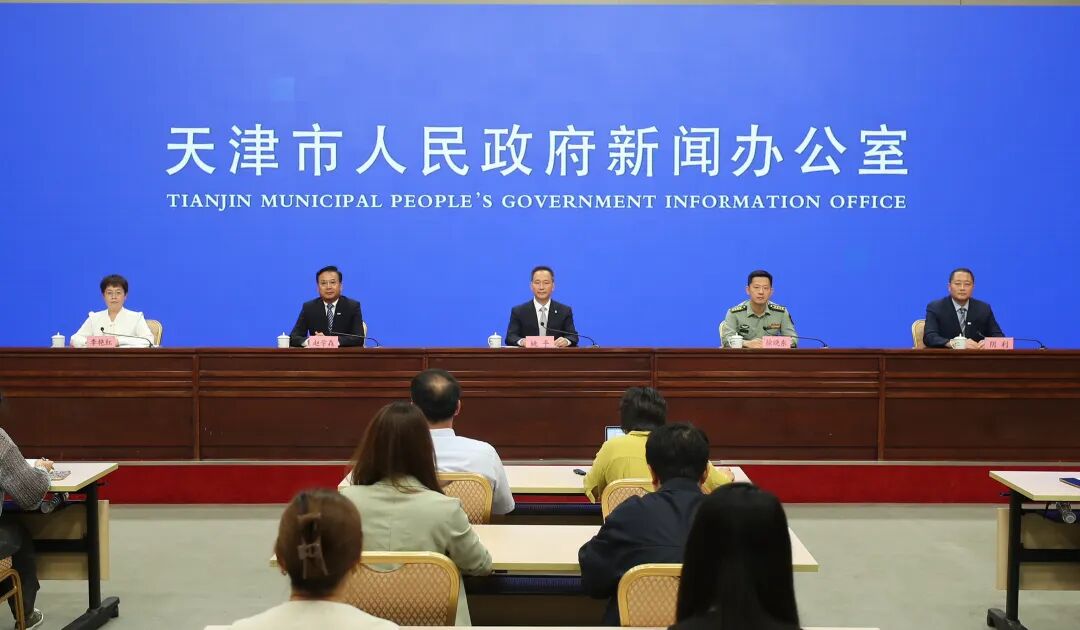
Group 1 - The 7th Tianjin International Helicopter Expo will be held from October 16 to 19, 2025, in Tianjin Binhai New Area, featuring a four-day schedule with two professional days followed by two public days [1][3] - The theme of the expo is "Open Innovation, Integrated Development, Cultivating New Quality Productivity," emphasizing internationalization, professionalism, market orientation, and socialization [1] - The expo will showcase an increased scale and variety of exhibits, inviting six major global helicopter manufacturers and suppliers, with a special area dedicated to low-altitude economy [1] Group 2 - Since its inception in 2011, the Tianjin Helicopter Expo has become the second-largest helicopter exhibition globally, supported by the Tianjin Municipal Government, China Aviation Industry Corporation, and the People's Liberation Army [3] - The Tianjin Binhai New Area is recognized as a key growth area under the Beijing-Tianjin-Hebei coordinated development strategy, enhancing the aerospace industry cluster effect, which supports the expo's upgrade and development [3]


行业军贸市场深度研究:全球百年变局激荡,我国军贸大有可为
INDUSTRIAL SECURITIES· 2025-09-16 11:07
Investment Rating - The industry investment rating is "Recommended (Maintain)" [1] Core Insights - The military trade market is significantly influenced by geopolitical factors, with advanced weaponry impacting national military capabilities and political dynamics. The U.S. and its allies dominate global military trade exports, accounting for 64.10% and 78.06% of total exports in the periods 2015-2019 and 2020-2024, respectively [2][34] - The global military trade market is characterized by high concentration, with the top ten exporting countries accounting for 89.70% of total exports from 2015-2019 and 88.60% from 2020-2024. The U.S. and France are the top two exporters in the latter period, with a combined share of 52.60% [2][34] - China's military trade share is expected to increase in the long term, aligning with its manufacturing capabilities and international influence, despite currently holding only 3.9% of the global military trade market in 2024 [2][34] Summary by Sections Military Trade Overview - Military trade, or arms trade, is a unique sector closely tied to geopolitical and military strategies, reflecting national interests and political continuity [12] - The United Nations defines military trade as the transfer of military equipment between countries, which plays a crucial role in regulating international political relations [12] Global Military Trade Landscape - According to SIPRI, global military trade has experienced stable growth, with total trade increasing from 80.82 billion TIV in 1950 to 289.38 billion TIV in 2024, reflecting a compound annual growth rate of 1.72% [30] - The military trade market has undergone three significant fluctuations since 1950, with the most recent period (2002-present) showing a recovery in trade volumes due to increased global tensions and military spending [30] Major Military Exporting Countries - The top five military exporting countries from 2015-2019 were the U.S., Russia, France, China, and Germany, with the U.S. maintaining a dominant position [34] - The military trade export figures for the U.S. rose from 503.68 billion TIV in 2015-2019 to 609.49 billion TIV in 2020-2024, marking a 21.01% increase [35] China's Military Trade Situation - China's military trade has seen fluctuations, with exports decreasing from 88.62 billion TIV in 2015-2019 to 83.85 billion TIV in 2020-2024, a decline of 5.38% [35] - The report highlights that China's military trade is expected to grow due to increasing geopolitical conflicts and the country's enhanced military capabilities [2][34]


中字头大权重领跌,国防军工ETF(512810)跌逾1%溢价频现!机构:当前国防军工板块配置价值凸显
Xin Lang Ji Jin· 2025-09-16 04:24
Core Viewpoint - The defense and military industry sector experienced fluctuations, with the defense military ETF (512810) dropping over 1% on September 16, despite strong buying interest as evidenced by a trading volume exceeding 400 million yuan and nearly 10 million yuan in new investments during the dip [1][3]. Group 1: Market Performance - The defense military ETF (512810) saw a decline of over 1% during trading, with a trading volume exceeding 400 million yuan, indicating strong buying interest [1]. - Major component stocks such as China Shipbuilding fell nearly 4%, while other significant players like AVIC Shenyang Aircraft and Aero Engine Corporation of China dropped over 1% [1]. - Conversely, stocks like Platen and Jihua Group saw gains, with increases of over 4% and 3% respectively [1]. Group 2: Industry Developments - On September 13, Malaysia's AirAsia expressed strong interest in purchasing China's C919 passenger aircraft to expand into the Southeast Asian market, capitalizing on China-ASEAN trade opportunities [3]. - The upcoming military parade on September 3, 2025, will feature a new "New Type Combat Forces" formation, showcasing advancements in drone technology and the trend of upgrading the defense industry [3]. - Northeast Securities noted that the disruptive factors in the defense military sector have been eliminated, leading to a recovery in demand and a clear long-term growth target [3]. Group 3: Investment Logic - According to Dongfang Securities, the increasing instability in the international security environment, highlighted by Japan's record defense budget and missile deployments, suggests that China's defense spending will continue to rise [3]. - The implementation of the 14th Five-Year Plan is expected to drive breakthroughs in technology innovation and equipment upgrades within the defense military industry chain [3]. - Geopolitical tensions are anticipated to sustain long-term growth in equipment demand, with new production capabilities in areas like information technology and automation expected to amplify upstream component demand [3]. - China's competitive pricing in military trade is expected to emerge as a new growth point, enhancing the investment value of the defense military sector [3].

军工行业2025年中报总结专题:基本面拐点显现,上游军工电子率先受益
Hengtai Securities· 2025-09-15 13:02
Investment Rating - The report maintains an "Outperform" rating for the military industry, indicating a positive outlook compared to the broader market [2]. Core Insights - The military industry is showing signs of a fundamental turning point, with the upstream military electronics sector being the first to benefit from the recovery [1][4]. - In the first half of 2025, the military industry saw a total revenue of CNY 254.55 billion, an increase of 9.3% year-on-year, while net profit attributable to shareholders decreased by 1.1% to CNY 15.53 billion [3][9]. - The overall gross margin for the military industry was 18.7%, up 0.6 percentage points from the previous year, while the net margin improved by 2.6 percentage points to 6.3% [13]. Summary by Relevant Sections Aerospace Equipment Sector - The aerospace equipment sector reported a revenue of CNY 108.09 billion, down 7.5% year-on-year, with a net profit of CNY 7.29 billion, a decline of 20.1% [17][18]. - The revenue drop was primarily due to significant declines in two major manufacturers, AVIC Shenyang Aircraft and Aero Engine Corporation of China, as they shifted focus to future orders [17]. Space Equipment Sector - The space equipment sector's revenue was CNY 9.22 billion, down 15.3% year-on-year, while net profit fell by 49.5% to CNY 356 million [23][24]. - The sector experienced a reduction in revenue decline compared to the previous year, indicating some stabilization [23]. Ground Armament Sector - The ground armament sector achieved a revenue of CNY 12.73 billion, a growth of 26.6% year-on-year, with a slight net profit decrease of 2.2% to CNY 444 million [25][26]. - Notable growth was seen in companies like North Navigation, which reported a revenue increase of 481.2% [25]. Marine Equipment Sector - The marine equipment sector generated CNY 55.75 billion in revenue, a 12.6% increase, with net profit soaring by 107.9% to CNY 3.74 billion [27][28]. - The growth was driven by leading shipbuilding companies benefiting from a high international ship market [28]. Military Electronics Sector - The military electronics sector reported a revenue of CNY 68.76 billion, a significant increase of 51.1% year-on-year, with a net profit of CNY 3.70 billion, up 2.2% [3][4]. - This sector was the first to benefit from the overall industry recovery, reflecting a strong demand for components [3]. Investment Recommendations - The report suggests focusing on specific sub-sectors for investment opportunities, including the aircraft and aero-engine supply chain, missile and unmanned combat systems, and military trade-related companies [4]. - Recommended ETFs include the Fortune CSI Military Leaders ETF and the Guotai CSI Military ETF [4].



航空装备板块9月15日跌0.76%,佳驰科技领跌,主力资金净流出11.48亿元
Zheng Xing Xing Ye Ri Bao· 2025-09-15 08:49
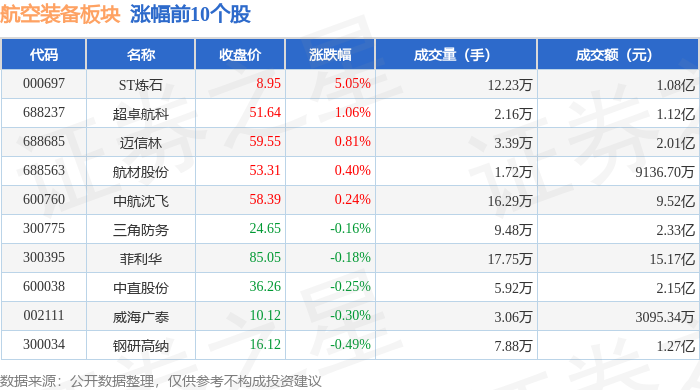
Market Overview - On September 15, the aviation equipment sector declined by 0.76%, with Jiachitech leading the drop [1] - The Shanghai Composite Index closed at 3860.5, down 0.26%, while the Shenzhen Component Index closed at 13005.77, up 0.63% [1] Stock Performance - Notable gainers included: - ST Lian Shi (code: 000697) with a closing price of 8.95, up 5.05% [1] - Chao Zhuo Hang Ke (code: 688237) with a closing price of 51.64, up 1.06% [1] - Significant decliners included: - Jiachitech (code: 688708) with a closing price of 71.29, down 4.35% [2] - Hua Qin Technology (code: 688281) with a closing price of 64.12, down 3.08% [2] Trading Volume and Capital Flow - The aviation equipment sector experienced a net outflow of 1.148 billion yuan from institutional investors, while retail investors saw a net inflow of 880 million yuan [2][3] - The trading volume for ST Lian Shi was 122,300 hands, with a transaction amount of 108 million yuan [1] Individual Stock Capital Flow - ST Lian Shi had a net inflow of 19.46 million yuan from institutional investors, while it faced a net outflow of 9.74 million yuan from speculative funds [3] - Jiachitech saw a net inflow of 5.51 million yuan from retail investors despite a net outflow of 11.41 million yuan from speculative funds [3]
行业双周报-20250915
GUOTAI HAITONG SECURITIES· 2025-09-15 08:28
Investment Rating - The report assigns an "Overweight" rating for the military industry [12][38]. Core Viewpoints - The intensification of great power competition is a long-term trend, leading to a favorable long-term outlook for the military industry. The defense strategies of the US and its allies are gradually shifting towards the Indo-Pacific region, which may escalate tensions around China. Increased defense spending is essential to ensure peace, and the military industry is expected to benefit from this trend. The goal of achieving a century of military development by 2027 is anticipated to accelerate during the 14th Five-Year Plan period [2][8]. Summary by Sections Market Review - The military sector has seen an increase, with the defense and military index rising by 2.14%, outperforming the broader market by 0.62 percentage points during the week of September 8-12. The Shanghai Composite Index rose by 1.52%, and the ChiNext Index increased by 2.10% [12][13]. - Among various military indices, the leading military stocks performed the best, with a rise of 2.29%, ranking first among ten indices [12][14]. Major News in the Military Industry - NATO announced the deployment of the "Eastern Sentinel" system to enhance defense posture, integrating military resources from Denmark, France, the UK, and Germany. Concurrently, Russia and Belarus commenced the "West-2025" joint strategic exercise, aimed at improving military coordination and operational capabilities [9][10][23][25]. - The report highlights significant domestic and international military news, including China's maritime patrols and military exercises, as well as developments in the Israeli military operations [23][24]. Investment Recommendations - Recommended stocks include: 1. Assembly: AVIC Shenyang Aircraft Company (中航沈飞), AVIC Xi'an Aircraft Industry Group (中航西飞) 2. Components: AVIC Optoelectronics (中航光电) 3. Subsystems: AVIC Onboard (中航机载), North Navigation (北方导航), Aerospace Nanhai (航天南湖) 4. Materials and Processing: Philihua (菲利华), Huayin Technology (华秦科技) [10][11].


军贸市场深度研究:全球百年变局激荡,我国军贸大有可为
Sou Hu Cai Jing· 2025-09-14 16:43
Core Viewpoint - The report emphasizes the significant role of military trade in shaping geopolitical dynamics and national security, highlighting that military equipment exports are deeply intertwined with political interests and international relations [2][4]. Group 1: Overview of Military Trade - Military trade, or arms trade, is defined as the transfer of military equipment between countries, reflecting political, military, and diplomatic strategies [19]. - The military trade market is characterized by high concentration, with the top ten exporting countries accounting for 89.70% of global military trade from 2015-2019 and 88.60% from 2020-2024 [4][38]. - The primary military trade products include aircraft, missiles, naval vessels, and specialized vehicles, with aircraft consistently representing over 40% of the market share [4][38]. Group 2: Global Military Trade Landscape - The United States and its allies dominate global military trade, accounting for 64.10% and 78.06% of exports in the periods 2015-2019 and 2020-2024, respectively [2][42]. - The top five military exporting countries from 2015-2019 were the United States, Russia, France, China, and Germany, with France surpassing Russia in the subsequent period due to a decline in Russian exports [4][38]. - The global military trade market has experienced three major fluctuations since 1950, with a compound annual growth rate of 1.72% from 80.82 billion TIV to 289.38 billion TIV [37][38]. Group 3: Military Trade Dynamics - The military trade sector is influenced by geopolitical tensions, particularly in the Asia-Pacific and Middle East regions, which are the primary importers of military equipment [4][38]. - Recent trends show a decline in Russian military exports by 63.90% due to sanctions and the ongoing conflict in Ukraine, while countries like Italy have seen significant increases in their military trade [42]. - The report indicates that military trade is not merely an economic activity but a strategic tool for nations to exert influence and maintain security balances [2][41].
王兴兴,有新职
新浪财经· 2025-09-14 08:37
Core Viewpoint - Wang Xingxing, the founder of Yushu Technology, has been nominated for a new position in the Shanghai Stock Exchange's third Technology Innovation Advisory Committee, which consists of 60 candidates, with about one-third being new faces [2][3]. Group 1: Committee Details - The Technology Innovation Advisory Committee is responsible for providing professional consultation, personnel training, and policy recommendations to the Shanghai Stock Exchange [2]. - The committee comprises 40 to 60 members who are experts and well-known entrepreneurs in the technology innovation sector, serving in a part-time capacity [3]. Group 2: Wang Xingxing's Achievements - Wang Xingxing was recently listed in Time magazine's influential figures in the AI field, categorized as a "leader" alongside notable figures like Elon Musk and Sam Altman [8]. - Yushu Technology is currently in the process of preparing for an IPO, with plans to submit an application between October and December 2023 [8]. - The company anticipates that in 2024, sales from quadruped robots, humanoid robots, and components will account for approximately 65%, 30%, and 5% of total sales, respectively [8]. Group 3: Market Valuation and Insights - Yushu Technology is reportedly seeking a company valuation of up to 50 billion RMB (approximately 7 billion USD) for its IPO, although company representatives have denied discussing such valuation internally or externally [9]. - Wang Xingxing described the current stage of embodied intelligence as a "desert" with only a few small plants, indicating significant opportunities for growth in the AI sector [9].

航空航天科技:看好行业长景气 推荐卫星运营与应用机会
Xin Lang Cai Jing· 2025-09-14 06:31
Industry Overview - The Shanghai Composite Index increased by 0.33% and the ChiNext Index rose by 4.51% during the period from September 1 to September 12, while the defense and military industry index (CITIC) fell by 9.56%, underperforming the Shanghai Composite Index by 9.89 percentage points and the ChiNext Index by 14.07 percentage points, ranking 29th out of 29 industries in terms of growth [1] Comments - The recent military parade showcased new domestic equipment, indicating a long-term positive outlook for the industry. The event highlighted advancements in mechanization, information technology, and intelligent integration in domestic equipment, suggesting that the aerospace technology sector is likely to maintain high levels of prosperity [2] - China Unicom received a satellite communication operating license, emphasizing opportunities in the operational and application segments. The issuance of this license marks a transition in the domestic satellite internet sector from infrastructure development to application implementation, indicating a growing market for key suppliers in these areas [2] Value Reassessment - The domestic aerospace and defense sector has established a systematic output and stable supply capability, yet the export ratio of core domestic enterprises remains lower than that of their overseas counterparts. The military trade market is expected to gradually open up, with internal and external demand driving industry value reassessment [3] - The year 2025 marks the conclusion of a new round of state-owned enterprise reforms, with significant restructuring plans announced by major defense groups. These reforms are anticipated to enhance asset quality and drive performance releases for related listed companies [3] Valuation and Recommendations - The company maintains its profit forecasts, target prices, and ratings. The ongoing demand for new domain and quality equipment is expected to persist, with recommendations to focus on opportunities in hypersonic, unmanned, and anti-unmanned equipment sectors, specifically suggesting companies like Chuangjiang New Materials and Aerospace Electronics [4] - The acceleration of satellite internet network deployment highlights the importance of key suppliers in satellite manufacturing and operational applications, recommending companies such as Zhenlei Technology and Aerospace Electronics [4] - The military trade sector is poised to drive industry value reassessment, with recommendations to pay attention to core enterprises like Guorui Technology and AVIC Shenyang Aircraft Corporation [4]

