
纳芯微

Search documents
AI链国产化能力日益增强,存储涨价周期明确 | 投研报告
Zhong Guo Neng Yuan Wang· 2025-10-13 02:18
Core Insights - The SW semiconductor index increased by 14.07% in September 2025, outperforming the electronics sector by 3.10 percentage points and the CSI 300 index by 10.86 percentage points [2] - The global semiconductor sales reached $64.88 billion in August 2025, showing a year-on-year growth of 21.7% and a quarter-on-quarter increase of 4.4% [4] - The domestic AI chip ecosystem is increasingly capable of localization, with several companies adapting to new models simultaneously [6] Semiconductor Index Performance - The SW semiconductor index's PE (TTM) was 118.97x as of September 30, 2025, positioned at the 91.58 percentile since 2019 [2] - Semiconductor equipment and materials led the sub-industry performance with increases of 27.82% and 14.72%, respectively [2] Fund Holdings and Market Trends - In Q2 2025, active funds had a semiconductor holding ratio of 10.1%, which is 5.6 percentage points above the semiconductor market cap ratio of 4.48% [3] - The top twenty holdings saw new additions of companies like Naxin Micro and Sierpu, while others like Fengcai Technology were replaced [3] Global Sales and Price Trends - The semiconductor sales in China reached $17.63 billion in August 2025, with a year-on-year growth of 12.4% [4] - DRAM and NAND Flash prices are expected to rise, with forecasts indicating a quarter-on-quarter increase of 8%-13% for DRAM and 5%-10% for NAND Flash in Q4 2025 [4][6] Investment Strategy - The domestic AI supply chain is strengthening, with recommendations for companies like Cambrian, Aojie Technology, and others [6] - The semiconductor industry is expected to benefit from rising storage prices and increased demand driven by AI applications [6] Capacity Growth Projections - SEMI projects a CAGR of 8.1% for China's wafer fab capacity from 2024 to 2028, surpassing the global average of 5.3% [7] - Companies such as SMIC and Hua Hong Semiconductor are highlighted as key players in the production chain [7]
关税战再起,半导体板块走向会和4月有所不同
是说芯语· 2025-10-12 02:07
芯片小韭菜 . 以下文章来源于芯片小韭菜 ,作者芯片小韭菜 专注芯片行业及公司基本面研究,不提供操作建议。 先回顾一下4月的情况,我们在长假期间,特朗普宣布对全球的对等关税,我们宣布反制,然后长假后 第一个交易日(4月7号),我们大跌。之后双方继续互相加关税,但市场已经没有反应了,4月8号在底 部震荡,4月9号直接拉起,之后一路向上。 再看板块,4月7号是普跌。 半导体板块,4月8号企稳,9号拉出大阳线。 达链果链,8号继续大跌,9号大跌以后V起来。 红利消费等:8号大涨,9号震荡。 可以说,当时关税战初期,很多资金跑去红利避险,之后则是大力资金冲进了半导体,自主可控走得最 好,当周就实现了反包。 再详细回顾一下当时的半导体各分支。 当时因为反制加税,市场的龙头板块是模拟芯片。它们有些甚至4月7号就已经低开高走收红。龙头是纳 芯微。 再看自主可控的分支,代工,中芯国际7号中等跌幅,8号小涨,9号直接大阳线反包。设备,北方华创7 号,8号小跌,9号直接大阳线反包。算力,寒武纪7号大跌,8号企稳,9号大阳线差一点反包。EDA, 华大九天,7号小跌,8号9号连续大涨。 针对很多人对过去的学习,个人认为这次的最大跌幅 ...



苏州市举行半导体与集成电路产业链工作推进会
Su Zhou Ri Bao· 2025-10-11 23:25
Core Insights - The meeting focused on advancing the semiconductor and integrated circuit industry chain, emphasizing the need for a clear direction and collaborative efforts between government and enterprises to achieve significant growth [1][2]. Group 1: Industry Development - The city plans to introduce an implementation plan for the integrated circuit industry leap action to seize opportunities in AI and new energy, aiming to enhance competitiveness across the entire industry chain [2]. - Key representatives from eight companies and institutions discussed the development of the integrated circuit sector and provided suggestions for improving the action plan [2]. Group 2: Government Initiatives - The government aims to accelerate the construction of innovation platforms and strengthen the connection within the industry chain to promote innovative development in the integrated circuit sector [2]. - There is a focus on formulating relevant policies that align with industry realities, targeting key areas, and improving incentive mechanisms to cultivate influential leading enterprises [2]. - The government intends to enhance the support of financial, talent, and platform resources for the integrated circuit industry, ensuring better service for its development [2].
西部证券晨会纪要-20251010
Western Securities· 2025-10-10 06:05
Group 1: Rare Earth Industry Policy Insights - The recent announcements from the Ministry of Commerce regarding export controls on rare earths indicate a complete management of the supply side, making significant unexpected increases in supply unlikely [6][8] - Export controls now include technologies related to rare earth extraction, refining, and recycling, aiming to prevent unauthorized foreign access to sensitive technologies [7][8] - The new regulations are expected to increase the share of secondary resource recovery in rare earth supply to 27% by 2025, marking a record high [8] Group 2: Company Dynamics - Naxin Microelectronics - Naxin Microelectronics is projected to achieve revenues of 29.76 billion, 38.44 billion, and 47.62 billion yuan from 2025 to 2027, with corresponding net profits of -0.46 billion, 1.73 billion, and 3.87 billion yuan [9][10] - The company reported a revenue of 15.24 billion yuan in the first half of 2025, a year-on-year increase of 79.49%, with a net profit of -0.78 billion yuan, reflecting a 70.59% improvement [9] - The automotive electronics sector has shown robust growth, with the company shipping 312 million automotive chips in the first half of 2025, benefiting from trends in electric and intelligent vehicles [10] Group 3: Macro Economic Insights - Economic growth momentum has slowed, prompting expectations for further macro policy easing, with GDP growth projected to fall to 4.5-5% in the third quarter [12][13] - The upcoming Central Committee meeting is anticipated to signal new policies aimed at stabilizing growth and revitalizing capital markets [13] - The U.S. export control strategies are tightening, which may impact high-tech sectors significantly, particularly in semiconductors and dual-use technologies [14] Group 4: Fixed Income Market Outlook - The convertible bond market is expected to maintain a premium rate of 30%-37% in October, with challenges in surpassing the previous high of 36.3% due to potential market volatility [20][21] - The market has shown a structural preference for technology and materials sectors, with specific recommendations for bonds related to lithium batteries and rare earths [19][20]
纳芯微10月9日获融资买入6727.16万元,融资余额8.40亿元
Xin Lang Cai Jing· 2025-10-10 01:42
10月9日,纳芯微跌0.47%,成交额5.65亿元。两融数据显示,当日纳芯微获融资买入额6727.16万元, 融资偿还4573.96万元,融资净买入2153.20万元。截至10月9日,纳芯微融资融券余额合计8.52亿元。 融资方面,纳芯微当日融资买入6727.16万元。当前融资余额8.40亿元,占流通市值的2.96%,融资余额 超过近一年90%分位水平,处于高位。 融券方面,纳芯微10月9日融券偿还1000.00股,融券卖出400.00股,按当日收盘价计算,卖出金额7.96 万元;融券余量5.90万股,融券余额1174.71万元,超过近一年90%分位水平,处于高位。 资料显示,苏州纳芯微电子股份有限公司位于江苏省苏州工业园区东荡田巷9号,香港湾仔皇后大道东 248号大新金融中心40楼,成立日期2013年5月17日,上市日期2022年4月22日,公司主营业务涉及聚焦 高性能、高可靠性模拟集成电路研发和销售。主营业务收入构成为:信号链产品38.45%,电源管理产 品34.09%,传感器产品27.11%,其他0.35%。 截至6月30日,纳芯微股东户数8026.00,较上期增加5.25%;人均流通股17758股,较 ...

电子板块2025年三季报业绩前瞻报告:AI云侧持续推动业绩快速成长,端侧需求蓄势待发
ZHESHANG SECURITIES· 2025-10-09 03:59
Investment Rating - The industry investment rating is "Positive" (maintained) [4] Core Views - The electronic sector is expected to show both year-on-year and quarter-on-quarter growth in Q3 2025, driven primarily by AI demand from cloud services and a recovery in demand for edge AI applications [1] - Domestic AI hardware is poised for growth as local cloud providers increase investments, while overseas cloud companies are optimistic about their capital expenditures for 2026 [2] - The storage sector is experiencing a supply shortage due to increased demand for HDDs and SSDs driven by AI applications, which is expected to persist [3] - The PCB segment is benefiting from seasonal demand and AI-driven upgrades, leading to potential increases in product prices and profit margins [3] - The consumer electronics chain is focused on the upcoming replacement cycle, with Apple's iPhone 17 launch expected to boost sales through improved specifications and competitive pricing [4] - The domestic semiconductor industry is seeing optimistic guidance from wafer foundries, with a continuous increase in domestic production capacity and demand from various applications [7] - The packaging and testing sector is also expected to see year-on-year growth in Q3 2025, supported by increased demand for AI chips and related hardware [8] Summary by Sections AI Hardware - Domestic AI infrastructure is recovering as local cloud providers resume server purchases, while overseas companies are optimistic about future capital expenditures [2] - The storage market is facing a significant demand gap due to the shift towards SSDs driven by AI applications [3] Consumer Electronics - The upcoming iPhone 17 launch is expected to drive sales, with improved specifications and competitive pricing strategies [4] Semiconductor Industry - Wafer foundries are projecting revenue growth, supported by increased demand from automotive electronics and networking applications [7] - The packaging and testing sector is expected to benefit from rising demand for AI-related hardware [8]
中国磁传感器,激荡三十年
半导体行业观察· 2025-10-03 01:56
Core Viewpoint - The article discusses the rapid capital operations and integration within the magnetic sensor chip industry in China, highlighting significant milestones and developments over the past 30 years, leading to a shift from fragmented small-scale operations to a more consolidated and strategic industry landscape [2][3]. Industry Development - Over the past 30 years, the magnetic sensor industry in China has evolved from relying entirely on imports to achieving over 30% of the global market share, with domestic chip localization rates exceeding 25% [3][4]. - The industry has seen a transition from small workshop-style development to a phase of deep restructuring supported by capital and strategic initiatives [3][4]. Technological Evolution - Magnetic sensors are categorized into Hall effect sensors and magnetoresistive sensors, with the latter including anisotropic magnetoresistance (AMR), giant magnetoresistance (GMR), and tunnel magnetoresistance (TMR) sensors [6][8]. - The commercialization of magnetic sensors began in the 1970s and 1980s in Western countries, with significant advancements in Hall effect sensors and the eventual emergence of AMR, GMR, and TMR technologies [8][9][10]. Market Dynamics - By the mid-1990s, foreign companies dominated the magnetic sensor core chip market, with major players like AKM, Honeywell, and TI producing various types of Hall chips [10]. - In 1995, there were only 41 domestic companies producing magnetic sensors in China, with a total output of 27.8 million units, significantly lower than Japan's production levels [17][19]. Capital Movements - Recent capital activities include the listing application of Anhui Xici Technology on the Hong Kong Stock Exchange and acquisitions such as the 100% stake in Xingan Semiconductor by Biyimi [3][4]. - The article outlines a series of mergers and acquisitions, indicating a trend towards consolidation in the magnetic sensor industry [3][4]. Key Players and Innovations - Companies like Nanjing Zhongxu Microelectronics and Shanghai Yanhua Electronics have emerged as significant players in the domestic market, focusing on various sensor technologies and applications [24][47]. - The establishment of firms such as Suzhou Naxin Microelectronics and Shanghai Xirui Technology reflects the growing innovation and competitive landscape in the magnetic sensor sector [56][52]. Future Outlook - The magnetic sensor industry is expected to continue its growth trajectory, driven by advancements in technology and increasing applications in sectors like automotive, industrial automation, and consumer electronics [43][44].

国产模拟半导体新并购!瞄准隔离芯片
是说芯语· 2025-10-01 02:15
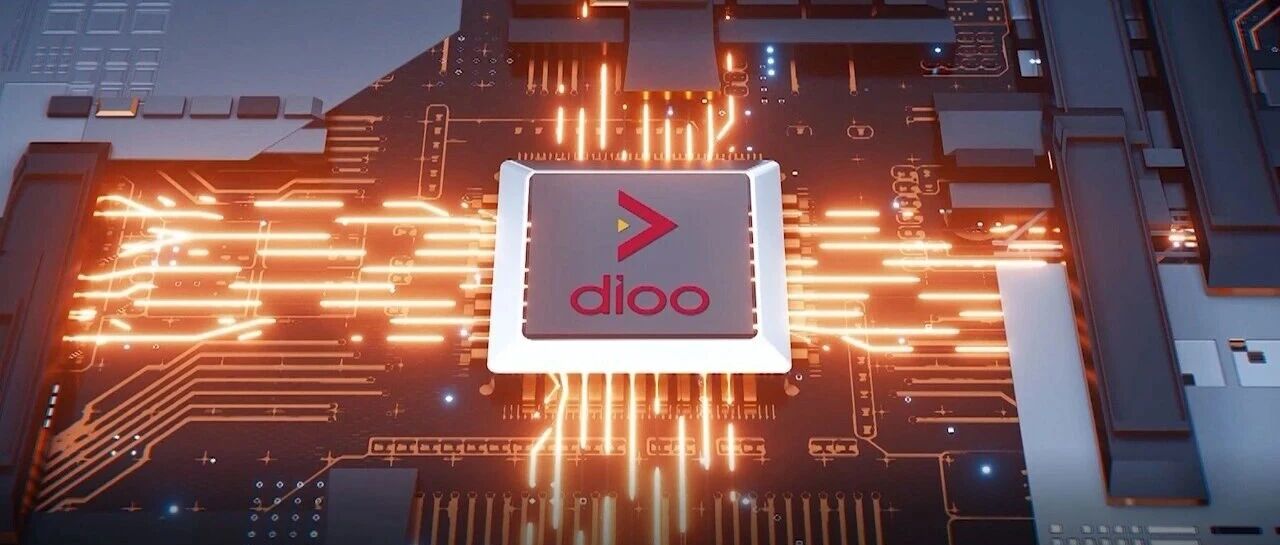
Core Viewpoint - The acquisition proposal by DiAo Micro (688381.SH) is fundamentally a strategic move to secure technology positioning in the semiconductor industry, aiming to enhance its product matrix and market competitiveness through the acquisition of Rongpai Semiconductor [1][4]. Group 1: Acquisition Details - DiAo Micro has signed a letter of intent to acquire shares from Rongpai Semiconductor's major shareholder, Dong Zhiwei, through a combination of "share issuance + cash payment" [1]. - Dong Zhiwei holds a 54.31% stake in Rongpai Semiconductor, which, if the transaction is completed, will make Rongpai a subsidiary of DiAo Micro [1]. - The transaction's financial terms, including the amount and share issuance ratio, have not yet been disclosed, but the valuation could reach several billion, considering the semiconductor industry's average acquisition valuation in 2025 [1][4]. Group 2: Market Context and Strategic Rationale - The Chinese analog chip market is projected to reach 317.58 billion in 2024, with over 80% of the market share held by foreign companies, particularly in high-end fields like isolation chips [4]. - Rongpai Semiconductor is recognized as the first domestic company to break through digital isolator technology, which significantly enhances its competitive edge in the market [4][8]. - The acquisition is seen as a necessary step for DiAo Micro to bridge the gap in automotive electronics, where its current market share is significantly lower compared to leading competitors [2][4]. Group 3: Growth Potential and Future Outlook - The isolation chip sector is expected to grow over 20% due to the rising demand from electric vehicles and energy storage [5]. - DiAo Micro's potential for profit growth post-acquisition is supported by the success of similar mergers, such as Changchuan Technology, which saw a ninefold increase in net profit after its acquisition [5]. - The acquisition aligns with national policies supporting semiconductor companies in strengthening their supply chains, indicating a favorable regulatory environment for such transactions [5]. Group 4: Company Profiles - DiAo Micro specializes in high-performance analog chip design, focusing on power management and signal chain chips, with a revenue of 306 million in the first half of 2025, reflecting a 15.11% year-on-year increase [7]. - Rongpai Semiconductor, established in 2017, focuses on high-performance analog chip design, including digital isolators and drivers, and has achieved significant breakthroughs in the isolation chip sector with its proprietary iDivider technology [8].

帝奥微并购荣湃半导体:隔离芯片能否解汽车电子饥渴?|并购一线
Tai Mei Ti A P P· 2025-09-30 11:30
Core Viewpoint - The semiconductor industry is experiencing accelerated consolidation, highlighted by the acquisition plan of DiAo Microelectronics (688381.SH) to purchase all equity or control of Rongpai Semiconductor, which will enhance its position in the automotive electronics sector and fill gaps in its product offerings [2][3]. Group 1: Acquisition Details - DiAo Microelectronics announced a suspension of trading as it plans to acquire Rongpai Semiconductor through a combination of share issuance and cash payment [2]. - The acquisition will not change the control of DiAo Microelectronics, but the valuation and other core information of the target remain undetermined, making it unclear if the transaction constitutes a major asset restructuring [2]. Group 2: Strategic Implications - The acquisition of Rongpai Semiconductor will allow DiAo Microelectronics to enter the digital isolator market, a segment it has not previously engaged in, and strengthen its layout in the high-growth automotive electronics sector [3]. - DiAo Microelectronics has historically relied on the consumer electronics market, but the industry trend is shifting towards higher-performance applications in new markets such as electric vehicles and industrial automation [3]. Group 3: Market Position and Competition - As of June 30, 2025, DiAo Microelectronics' product applications are heavily reliant on the consumer electronics market, with mobile phones accounting for 32%, industrial control and security for 28%, and other segments making up the remainder [4]. - In contrast, leading competitors like Naxin Microelectronics (688052.SH) have a significant portion of their revenue from automotive electronics, with 36.88% in 2024, highlighting a competitive gap for DiAo Microelectronics in this high-growth area [4]. Group 4: Rongpai Semiconductor Background - Rongpai Semiconductor, established in 2017, is recognized for its digital isolator technology and has aimed for an IPO since its inception, but has not provided updates on this plan [5][6]. - The company has experienced a slowdown in financing activities, with no new funding rounds reported since September 2022, despite having raised capital from notable investors [5][6].
纳芯微股价涨5.15%,银华基金旗下1只基金重仓,持有35.34万股浮盈赚取355.17万元
Xin Lang Cai Jing· 2025-09-30 03:50
Core Insights - Naxin Microelectronics experienced a 5.15% increase in stock price, reaching 205.36 CNY per share, with a trading volume of 432 million CNY and a turnover rate of 1.50%, resulting in a total market capitalization of 29.27 billion CNY [1] Company Overview - Naxin Microelectronics, established on May 17, 2013, and listed on April 22, 2022, is located in Suzhou Industrial Park, Jiangsu Province, and focuses on the research and sales of high-performance, high-reliability analog integrated circuits [1] - The company's main revenue sources are signal chain products (38.45%), power management products (34.09%), sensor products (27.11%), and other products (0.35%) [1] Fund Holdings - According to data, one fund under Yinhua Fund has a significant holding in Naxin Microelectronics, with the Kexin 100 (588190) fund holding 353,400 shares, accounting for 1.95% of the fund's net value, making it the eighth-largest holding [2] - The Kexin 100 fund, established on September 6, 2023, has a latest scale of 3.155 billion CNY and has achieved a year-to-date return of 54.75%, ranking 530 out of 4220 in its category [2] - Over the past year, the fund has returned 85.5%, ranking 413 out of 3846, and since its inception, it has returned 38.07% [2] Fund Manager Profiles - The fund managers of Kexin 100 are Ma Jun and Zhang Yichi, with Ma having a cumulative tenure of 13 years and 30 days, managing a total fund size of 33.304 billion CNY, with the best return during his tenure being 144.61% and the worst being -75.62% [3] - Zhang Yichi has a cumulative tenure of 4 years and 130 days, managing a total fund size of 7.781 billion CNY, with the best return during his tenure being 53.59% and the worst being -35.59% [3]