长安汽车

Search documents
中国—东盟自贸区3.0版升级议定书签署 推动双方合作向数字、绿色、标准等新兴领域拓展 中国与东盟经贸合作提质升级
Ren Min Ri Bao· 2026-01-19 22:27
Core Insights - China has maintained its position as ASEAN's largest trading partner for 16 consecutive years, while ASEAN has been China's largest trading partner for 5 years, with trade volume reaching 6.82 trillion RMB in the first 11 months of last year, a year-on-year increase of 8.5% [1] Economic Cooperation - The China-ASEAN Free Trade Area 3.0 upgrade protocol has been signed, marking a significant milestone in economic integration, expanding cooperation into digital, green, and standardization fields [1] - The implementation of the Regional Comprehensive Economic Partnership (RCEP) has facilitated deeper integration of regional supply chains, enhancing the trade relationship between China and ASEAN [6] Digital Economy - China and ASEAN are accelerating digital infrastructure cooperation, with projects in Malaysia and Indonesia enhancing regional computing power and digital economy collaboration [2] - The digital economy is expected to grow significantly, with cross-border e-commerce transactions between China and ASEAN maintaining over 20% annual growth, driven by digital technologies [2] Green Development - China is supporting green transformation in ASEAN through projects like large-scale solar power in Laos, which is expected to reduce coal consumption by 510,000 tons and CO2 emissions by 1.4 million tons annually [4] - The China-ASEAN Free Trade Area 3.0 is designed to facilitate green cooperation, promoting sustainable development and financial products for green projects [5] Industrial Cooperation - The China-ASEAN Free Trade Area 3.0 is expected to create a more stable environment for emerging industries, such as electric vehicles, by reducing compliance costs and enhancing local production capabilities [6] - Chinese companies are actively participating in ASEAN's industrial development, with examples like Changan Automobile establishing a new energy vehicle base in Thailand, contributing to local supply chains [6] Trade Growth - Trade in agricultural products between China and ASEAN reached $51.3 billion in the first ten months of 2025, reflecting an 8.9% year-on-year increase, facilitated by improved supply chain connectivity [7] - The establishment of a comprehensive strategic partnership between China and ASEAN marks a new historical starting point for bilateral cooperation, enhancing regional stability and prosperity [7]
透视2025中国经济年报
Shang Hai Zheng Quan Bao· 2026-01-19 18:45
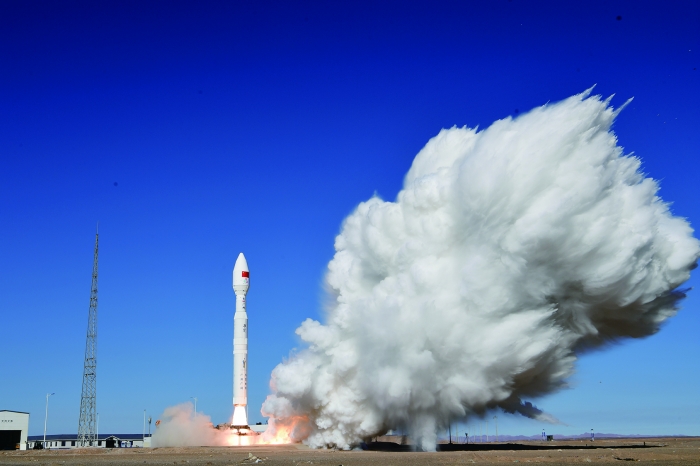
力箭一号遥九运载火箭在东风商业航天创新试验区发射升空 在2025全球工业互联网大会上拍摄的人形机器人 江苏省江都高新技术产业开发区某汽车生产企业的生产线 位于重庆市的长安汽车数智工厂总装车间拍摄的即将下线的新能源汽车 消费者在广西梧州市万秀区一家电动自行车销售门店选购电动自行车 新华社图 (上接1版) 动能向优:消费"主引擎"活力展现 从经济发展的"三驾马车"看,2025年,最终消费支出、资本形成总额、货物和服务净出口对经济增长的 贡献率分别是52.0%、15.3%和32.7%。消费仍然是经济增长的"主引擎"。 2025年,我国消费市场规模再上新台阶,全年社会消费品零售总额501202亿元,突破50万亿元大关,比 上年增长3.7%,增速较2024年进一步加快0.2个百分点。其中,服务零售保持较快增长,比重提升,展 现出较强的活力。 "随着人民生活水平提升,居民消费正从商品消费为主向商品和服务消费并重转变,服务消费潜力不断 释放。"康义表示。数据显示,2025年服务零售额比上年增长5.5%,快于商品零售额1.7个百分点,服务 零售额占整体零售额的比重也在上升。 消费品以旧换新政策加力扩围,促进相关产品销售加快增 ...

合兴股份:公司与长安汽车已建立良好合作关系
Zheng Quan Ri Bao Wang· 2026-01-19 13:40
Group 1 - The company, Hexing Co., Ltd. (605005), has established a good cooperative relationship with Changan Automobile as an automotive electronic component supplier [1] - The company does not have specific information regarding the application of its products in particular vehicle models [1] - The company will fulfill its disclosure obligations in accordance with the law if future cooperation meets the information disclosure standards [1]


重夺“汽车第一城”,西部重镇杀回来了
Mei Ri Jing Ji Xin Wen· 2026-01-19 13:10
Core Insights - The competition for the title of "Automobile Capital" in China is intensifying, with Chongqing projected to produce 2.788 million vehicles in 2025, marking a 9.7% increase and solidifying its position as the top city in vehicle production [1] - Chongqing's automotive industry is experiencing a resurgence after a decade, with significant growth in new energy vehicles (NEVs), expected to reach 1.296 million units, a 36% increase [1] - The issuance of China's first L3-level autonomous driving license to Changan Automobile signifies a historic milestone in the large-scale application of intelligent driving technology, positioning Chongqing as a leader in this field [1] Industry Overview - The automotive industry in Chongqing aims to reclaim its status as a leader, having previously reached a peak production of 3.156 million vehicles in 2016 before experiencing a decline to 1.383 million in 2019 [2] - The shift in consumer preferences towards mid-to-high-end vehicles and the rise of NEVs have been pivotal in reshaping the automotive landscape [2] - Changan Automobile's strategic pivot towards electric vehicles, including the "Shangri-La" plan to cease traditional fuel vehicle production by 2025, reflects the industry's adaptation to market demands [3] Company Developments - Changan Automobile's collaboration with Huawei and CATL has led to the launch of new high-end NEV brands, contributing to a projected total vehicle sales of 2.913 million by 2025, with NEV sales expected to reach 1.11 million, a 51.1% increase [3] - Seres, another key player, has transitioned from traditional manufacturing to NEVs, achieving significant growth and profitability, with projected NEV sales of 472,300 units in 2025, a 10.63% increase [5] - The partnerships with Huawei have been crucial for both Changan and Seres, enabling them to leverage advanced technology and market positioning in the competitive NEV sector [6][9] Competitive Landscape - The automotive industry is entering a new competitive phase, with a consensus that the NEV market will see accelerated consolidation, leading to a "淘汰赛" (elimination round) among brands [10] - Chongqing's strategic initiatives, including the development of smart connected vehicles and the establishment of a comprehensive industrial ecosystem, are aimed at enhancing its competitive edge [12] - Other cities, such as Guangzhou, are also intensifying their efforts to reclaim leadership in the automotive sector, highlighting the competitive dynamics at play [13] Challenges and Opportunities - Despite its advancements, Chongqing faces challenges in AI and core technology competitiveness, ranking 14th nationally in AI industry strength, which may hinder its long-term leadership in intelligent driving [15] - The city is focusing on addressing its weaknesses in talent acquisition and technological infrastructure to maintain its position in the evolving automotive landscape [15]

「汽车第一城」易主
36氪· 2026-01-19 10:21
Group 1 - Chongqing has regained its title as "China's Automobile Capital" after nine years, with a projected total vehicle production of 2.788 million units in 2025, representing a growth of 9.7% [2][3] - The production of new energy vehicles (NEVs) in Chongqing is expected to reach 1.296 million units, marking a significant increase of 36%, with the industrial cluster scale surpassing 800 billion yuan [2] - Historical data indicates that Chongqing held the title of "China's Automobile Capital" for three consecutive years from 2014 to 2016, but faced competition from Shenzhen, which produced 2.9353 million vehicles in 2024 [4] Group 2 - The automotive industry in Chongqing is supported by traditional brands like Changan and emerging players like Seres, which is aiming to achieve a second million-unit production target within two years [4][6] - In January 2026, the "Wenjie" model reached a milestone of 1 million units produced at the Chongqing Liangjiang New Area super factory, highlighting the growth of local manufacturing capabilities [5] - Excluding direct-controlled municipalities, Hefei is emerging as a strong competitor for the title of "Automobile Capital," with Anhui province surpassing Guangdong in total vehicle production [8]
谁是“中国汽车第一城”?
Jing Ji Guan Cha Bao· 2026-01-19 10:19
Group 1: Automotive Industry Landscape in China - The competition for the title of "China's Automotive Capital" has evolved from mere production volume to a comprehensive contest of development models and industrial ecosystems by 2025 [1][2] - Chongqing has secured the title of "China's Automotive Capital" for 2025 with an annual production of approximately 2.788 million vehicles, marking a 9.7% increase, and a significant growth in new energy vehicle (NEV) production [2][3] - The Chengdu region, while not leading in production, has achieved rapid growth through collaborations with major companies like FAW and Volkswagen, indicating a strategic shift towards leveraging existing industrial bases [2][4] Group 2: Regional Developments in the Automotive Sector - The Yangtze River Delta, particularly Hefei, has emerged as a strong player in the NEV sector, achieving the highest NEV production in the country by November 2025, with a total of 1.246 million units produced [7][8] - Hefei's growth is attributed to its "investment-driven" model, which has attracted significant projects from major automotive players, enhancing its position in the NEV market [8][9] - The Greater Bay Area, particularly Guangzhou and Shenzhen, has seen a shift in automotive production dynamics, with Shenzhen overtaking Guangzhou in 2024, while Guangzhou faces challenges in transitioning from traditional fuel vehicles to electric and smart vehicles [11][12] Group 3: Strategic Collaborations and Innovations - The collaboration between local companies like Seres and tech giants such as Huawei has been pivotal for Chongqing's automotive growth, leading to significant sales and product price increases [3][4] - Chengdu's strategy of forming partnerships with established brands like Volkswagen to create new local brands, such as the New Jetta, reflects a pragmatic approach to industrial development [4][5] - The Long Triangle region has initiated a collaborative framework to enhance the global competitiveness of its NEV sector, indicating a shift towards cooperative strategies among cities [10] Group 4: Challenges and Future Outlook - The automotive industry in China faces challenges such as the sustainability of Seres' high-end market position and the successful transition of the New Jetta brand to electric vehicles [6] - The competitive landscape is evolving, with cities needing to adapt to the changing dynamics of the automotive market, including the need for innovation and collaboration to maintain relevance [9][14] - Guangzhou's automotive sector is under pressure to balance the transition from traditional vehicles to new energy models while addressing the mismatch in its supply chain [12][14]

汽车行业跟踪报告:中欧电动车案达新共识,中国汽车出海有望迈上新台阶
Huachuang Securities· 2026-01-19 10:06
Investment Rating - The report maintains a "Recommendation" rating for the automotive industry, indicating an expected increase in the industry index exceeding the benchmark index by more than 5% in the next 3-6 months [18]. Core Insights - The recent consensus reached in the China-Europe electric vehicle case is expected to accelerate the export of Chinese automobiles to Europe, enhancing the outlook for electric vehicle exports [1][3]. - The European light vehicle market is projected to reach approximately 17 million units in 2025, with a penetration rate of new energy vehicles around 23% [2]. - The report highlights that the growth of Chinese automobile exports to Europe has been significant, with exports increasing from 1.05 million units in 2020 to a substantial rise in subsequent years, particularly in 2021-2023 [8]. Summary by Sections Industry Overview - The automotive industry consists of 240 listed companies with a total market capitalization of approximately 506.3 billion yuan and a circulating market value of about 384.7 billion yuan [4]. Market Performance - The absolute performance of the automotive sector shows an increase of 9.7% over one month, 17.2% over six months, and 30.1% over twelve months [5]. Export Dynamics - Chinese exports of automobiles to Europe accounted for about 20% of total exports, with expectations for a resurgence in growth following the implementation of new pricing commitments [3][8]. - The report notes that the growth rate of exports to Europe is anticipated to slow down in 2024-2025 due to the impact of the EU's anti-subsidy investigations, particularly affecting pure electric vehicle exports [8]. Investment Recommendations - The report suggests that the recent agreement on electric vehicle imports between China and Europe, along with favorable conditions in Canada, presents a more secure and stable opportunity for the export of Chinese electric vehicles [8]. - Recommended companies for investment include BYD, Geely Automobile, and Great Wall Motors, with additional attention suggested for Leap Motor, Changan Automobile, SAIC Motor, and Chery Automobile [8].


尹同跃放狠话:奇瑞全面对标特斯拉FSD,更要超越特斯拉【附自动驾驶行业市场分析】
Qian Zhan Wang· 2026-01-19 09:40
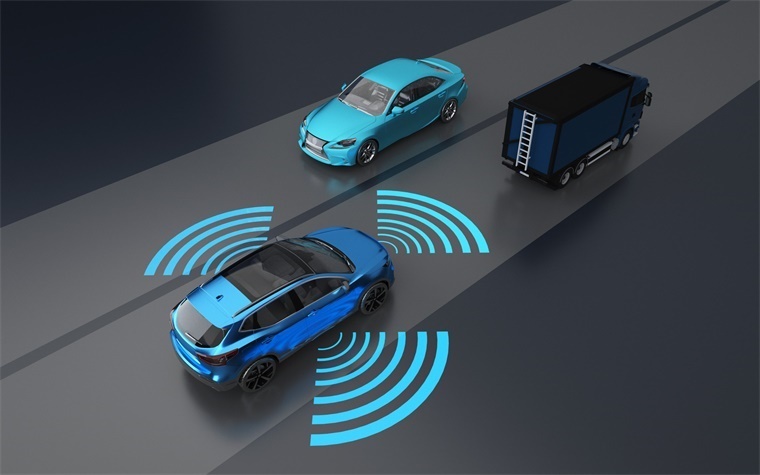
Group 1 - Chery is actively benchmarking Tesla's Full Self-Driving (FSD) system, aiming not only to match but to surpass it [2] - The company is sending personnel to the U.S. to experience Tesla's FSD and Grok model combination, identifying gaps to accelerate its progress [2] - Autonomous driving is becoming a core competitive advantage for automakers, serving as a key component of technological barriers and a driver for business model upgrades [2] Group 2 - The SAE defines six levels of autonomous driving from L0 to L5, with L5 representing full automation where the system can handle all driving tasks without human intervention [4] - Level 2 advanced driver assistance systems (ADAS) have become mainstream, with penetration rates in China's passenger car market rising from 23.5% in 2021 to 42.4% in the first half of 2023 [6] - The Ministry of Industry and Information Technology in China has granted the first L3 conditional autonomous driving vehicle licenses, marking a significant step towards clearer responsibilities and real-world applications [8] Group 3 - NVIDIA's CEO predicts that in the next decade, a significant portion of vehicles will be autonomous or highly autonomous, potentially reaching a scale of one billion vehicles, all powered by AI [8]

谁是“中国汽车第一城”?
经济观察报· 2026-01-19 09:37
Core Viewpoint - The article discusses the evolving landscape of China's automotive industry, highlighting the competition among cities and the strategic differentiation of local governments in industrial transformation [2][4]. Group 1: Chengdu-Chongqing Region - Chongqing is set to become "China's Automotive Capital" with an annual production of 2.788 million vehicles in 2025, marking a 9.7% increase, and 1.296 million of these being new energy vehicles (NEVs), which is a 36% growth [4][5]. - The success of Chongqing's automotive industry is attributed to local government support and strategic partnerships, particularly the collaboration between local company Seres and tech giant Huawei [5][6]. - Chengdu's automotive production reached 821,000 vehicles in 2025, a 26.6% increase, with NEV production soaring by 198.3% to 205,000 units [7]. Group 2: Yangtze River Delta - The Yangtze River Delta remains a stronghold for the automotive industry, contributing 28% of national production, with NEVs accounting for 34.6% of the total [11]. - Shanghai's automotive production has declined, with 1.6011 million vehicles produced in 2025, representing about 5% of national output [11]. - Hefei has emerged as a key player in NEVs, producing 1.246 million units in 2025, the highest in the country, driven by government initiatives and partnerships with major manufacturers [12][14]. Group 3: Pearl River Delta - Shenzhen has overtaken Guangzhou as "China's Automotive Capital" in 2024, with BYD producing 4.5374 million NEVs, making it the global leader in this segment [16][17]. - The shift in production statistics from "enterprise location" to "production location" has impacted Guangdong's ranking in automotive output [16]. - Guangzhou's automotive industry faces challenges in transitioning from traditional fuel vehicles to NEVs, with a significant focus on integrating advanced technologies and smart transportation systems [18][19].
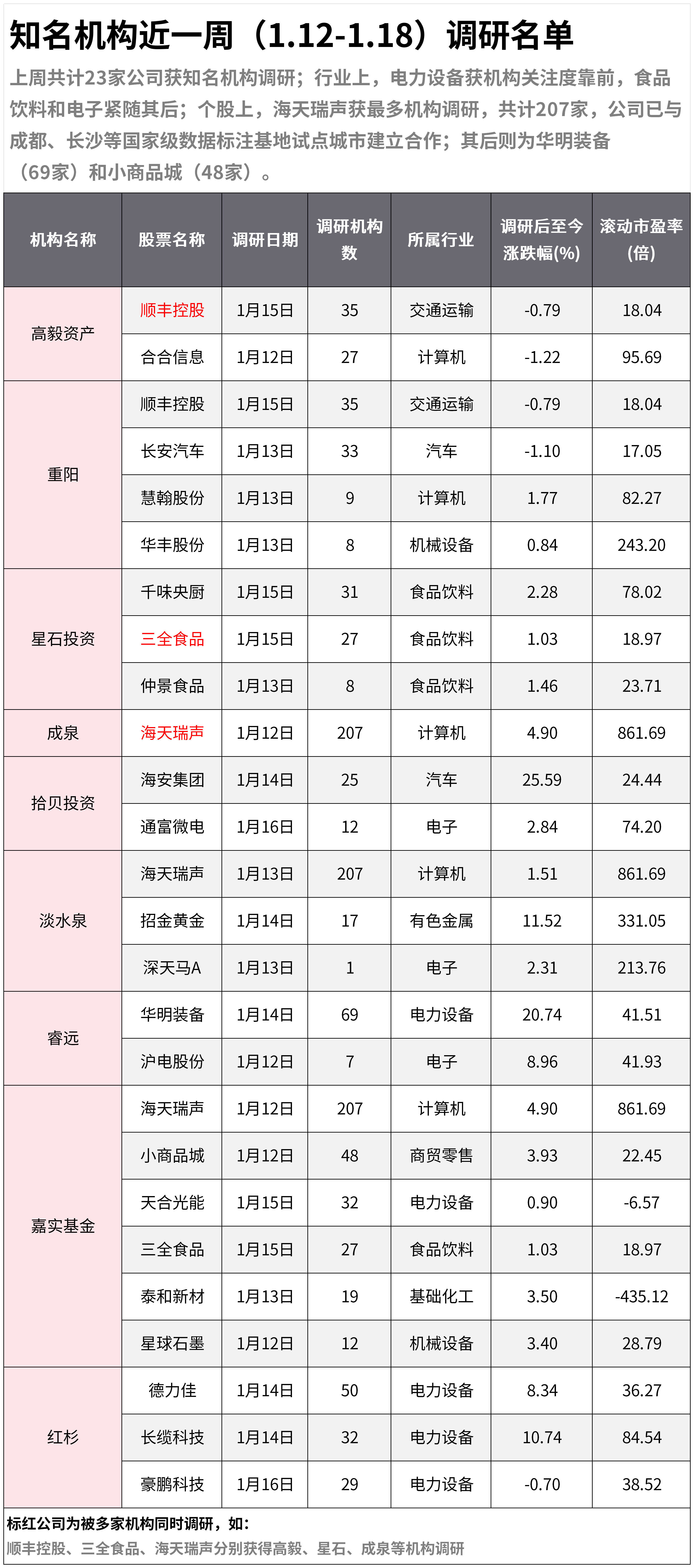
知名机构近一周(1.12-1.8)调研名单:机构扎堆这只数据标注龙头
Xuan Gu Bao· 2026-01-19 09:04
Group 1 - A total of 23 companies received attention from well-known institutions in the past week, with notable mentions in the mechanical, beverage, and electronics sectors [1] - Specific companies highlighted include SF Holding, Chang'an Automobile, and various food-related firms such as Sanquan Foods and Zhongjing Foods [2][3] - Investment firms such as Gao Yi Asset, Starstone Investment, and others have shown interest in companies like Haitan Ruisheng and Haian Group [3][4]