xAI

Search documents
商业航天为何再成市场焦点?丨每日研选
Shang Hai Zheng Quan Bao· 2026-02-04 01:09
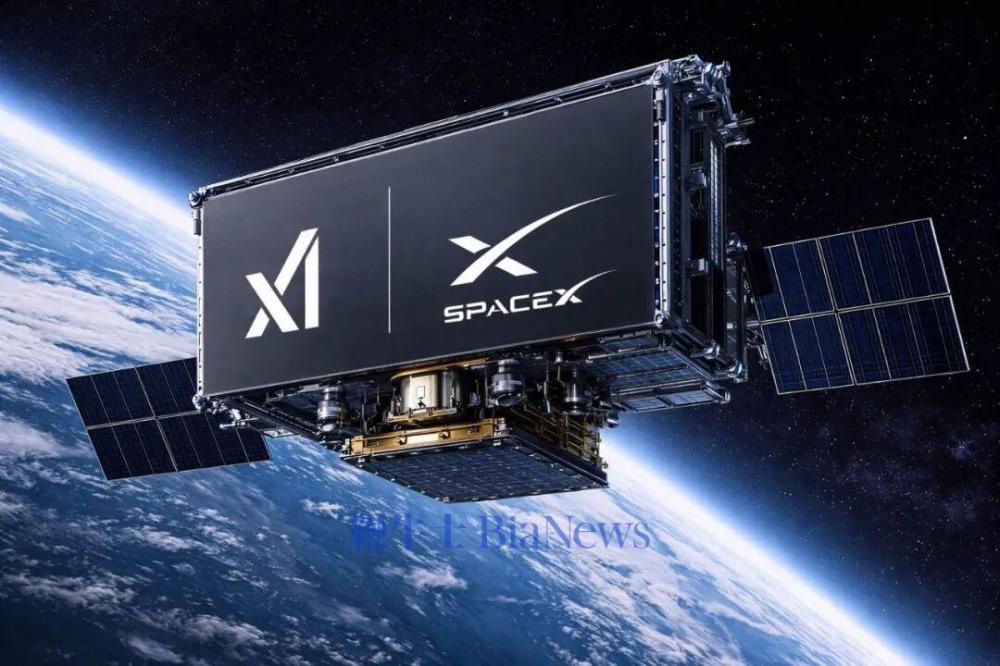
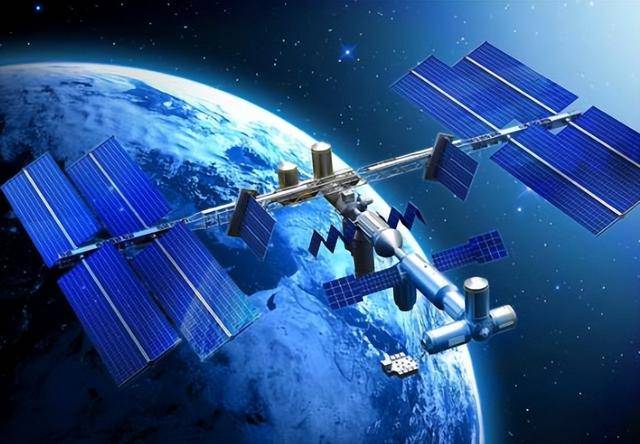
2月3日,商业航天板块再度获得市场青睐,资金净流入136亿元,居市场首位。机构认为,在AI算力需 求持续外溢、地面算力基础设施约束日益凸显的背景下,商业航天逐渐成为全球科技巨头竞逐"算力布 局"的战略高地。 近期,围绕"算力上太空"的多重重磅消息密集落地,成为商业航天板块走强的直接催化。马斯克推动 SpaceX与xAI合并,SpaceX申请部署百万颗算力卫星,以及OpenAI、Meta、微软等科技巨头同步上调 AI资本开支预期,共同强化了太空算力商业化加速落地的市场预期,商业航天需求空间再度扩容。 机构提示,可围绕"太空算力产业链"进行分层投资布局: 一是算力卫星与核心通信环节。重点关注星间激光通信、高可靠电子与信息处理系统相关标的,如铖昌 科技、航天科技等,直接受益于算力卫星对高速组网与数据处理能力的需求提升。 二是卫星制造与关键材料方向。算力卫星数量放量将显著拉动高性能材料与核心部件需求,菲利华、天 银机电等在航天材料或卫星配套领域具备技术积累的企业有望受益。 从上涨逻辑来看,AI资本开支外溢,是商业航天行情的重要催化因素。当前地面数据中心正面临能源 成本高企、用电指标受限与散热效率下降等现实瓶颈,而太空 ...

马斯克左手换右手屡试不爽,天基AI要来了
Xin Lang Ke Ji· 2026-02-04 01:07
Core Viewpoint - The acquisition of xAI by SpaceX marks a significant merger in the tech industry, creating a combined entity valued at $1.25 trillion, which is the largest merger in history, surpassing the previous record held for 25 years [2][4]. Group 1: Merger Details - The merger involves a stock exchange where xAI shareholders will receive SpaceX shares at a ratio of 0.1433, or cash at $75.46 per share for some executives [4]. - Post-merger, SpaceX's valuation will reach $1 trillion, while xAI will be valued at $250 billion, leading to a total valuation of $1.25 trillion for the merged entity [4]. - The combined company plans to conduct an IPO later this year, potentially raising $50 billion, which would set a new record for the largest IPO [5]. Group 2: Financial Context - xAI has been burning through nearly $1 billion per month, necessitating the merger to stabilize its financial situation [7][12]. - In contrast, SpaceX is projected to generate approximately $80 billion in profit by 2025, with revenues expected to reach $150-160 billion [16]. - The Starlink satellite internet service is a major revenue driver for SpaceX, contributing $10.4 billion in revenue in 2025, which is 69% of total revenue [17]. Group 3: Strategic Implications - The merger is seen as a strategic move to integrate AI capabilities with space technology, potentially leading to the development of space-based AI data centers [19][29]. - This acquisition reflects a broader trend in the AI industry where startups must align with financially stable parent companies to survive [26]. - The merger could lead to a significant shift in the space industry, intensifying competition and prompting traditional satellite manufacturers to adapt to new business models [21]. Group 4: Market Reactions - Analysts are divided on the merger's implications, with some expressing optimism about the combined entity's potential to create a comprehensive infrastructure platform [23][24]. - Others have raised concerns about the risks associated with merging high-valuation companies under Musk's leadership, suggesting it may lead to a chaotic structure [25]. - The merger is also viewed as beneficial for the X platform, reducing its reliance on advertising revenue and allowing for a more stable financial outlook [25].

马斯克亲手杀死「汽车公司」特斯拉
3 6 Ke· 2026-02-04 00:50
Core Insights - Elon Musk is reshaping his business landscape by acquiring xAI through SpaceX, aiming to create a highly integrated innovation engine with a valuation soaring to $1.25 trillion [1] - During Tesla's 2025 annual earnings call, Musk indicated that sales volume is no longer the core focus for the company, signaling a significant shift in strategy [1][2] - The automotive industry is facing a challenge to its century-old concept, as companies like Tesla, Xpeng, Li Auto, and BYD are evolving beyond traditional automotive roles [1] Group 1: Tesla's Strategic Shift - Tesla's 2025 revenue declined by 3%, marking the first annual revenue drop in the company's history, with Q4 net profit plummeting by 60% [2] - Musk announced the retirement of Model S and Model X, indicating a departure from Tesla's identity as a car manufacturer [2] - Tesla plans to invest $20 billion in 2026, primarily focusing on AI, autonomous driving, and robotics rather than new vehicle development [2][4] Group 2: Fremont Factory Transformation - The Fremont factory, previously dedicated to Model S and Model X production, is undergoing significant changes, with automotive assembly lines being replaced by Optimus robot production lines [3][7] - Tesla aims to establish a massive production base capable of producing 1 million robots annually, indicating a complete shift in business focus [3][8] - The transition reflects a broader strategy where Tesla leverages its automotive manufacturing experience to enter the robotics market [7][8] Group 3: Market Dynamics and Competition - The automotive market has become a zero-sum game, with consumers now prioritizing cost-effectiveness over novelty in electric vehicles [4] - If Tesla remains focused solely on automotive production, its price-to-earnings ratio could revert to levels comparable to traditional manufacturers like Toyota and GM, around 10 times [5] - The $20 billion investment is seen as a critical move for Tesla to escape the competitive automotive landscape and pivot towards the burgeoning embodied intelligence market [5][6] Group 4: Challenges for Chinese New Energy Vehicle Companies - Chinese new energy vehicle companies like Xpeng and Li Auto are increasingly showcasing their advancements in robotics, reflecting a growing anxiety about competition with Tesla [10][11] - These companies are adopting strategies that allow for independent financing of their robotics initiatives, creating a firewall between their automotive and robotics businesses [13] - The competition is characterized by a struggle between top-down destruction and reconstruction versus bottom-up evolution and defense [12][13] Group 5: The Future of the Automotive Industry - The automotive industry is experiencing a cognitive dissonance, with traditional manufacturers still focused on horsepower and luxury features, while advanced companies view these as basic functionalities [15] - Musk's perspective that cars are essentially robots on wheels suggests that the automotive sector is merely a stepping stone towards achieving general artificial intelligence [15][17] - The end of the Model S signifies not just the retirement of a flagship model but also the decline of the automotive company definition in the face of AI advancements [17][18]

中泰期货晨会纪要-20260204
Zhong Tai Qi Huo· 2026-02-04 00:50
交易咨询资格号: 证监许可[2012]112 晨会纪要 2026 年 2 月 4 日 联系人:王竣冬 期货从业资格:F3024685 交易咨询从业证书号:Z0013759 研究咨询电话: 0531-81678626 客服电话: 400-618-6767 公司网址: www.ztqh.com 请务必阅读正文之后的免责声明部分 [Table_QuotePic] 中泰微投研小程序 | 4 / 7 / 7 / 4 | | 卒」卒4日听刊 | | | | --- | --- | --- | --- | --- | | 趋势空头 | 農荡偏空 | 農药 | 農荡偏多 | 趋势多头 | | | に | 橡胶 | 中证1000指数期货 | | | | 红枣 | 自糖 | 燃油 | | | | 铁矿石 | 多晶硅 | 三十债 | | | | 甲醇 | 棉纱 | 十债 | | | | РУС | 尿素 | 上证50股指期货 | | | | 塑料 | 棉花 | 二债 | | | | 生猪 | 胶版印刷纸 | 沪深300股指期货 | | | | 原油 | 玉米 | 五债 | | | | 液化石油气 | 乙二醇 | 沥青 | | | ...
马斯克的大动作来了
Sou Hu Cai Jing· 2026-02-04 00:43
文︱陆弃 埃隆·马斯克再次将目光投向了太空,这一次,他把人工智能和太空探索绑在了一起。当地时间2月2 日,马斯克宣布,将自己的人工智能公司xAI并入太空探索技术公司SpaceX。表面上,这是一次企业合 并,但实际上,它是对技术边界、能源需求与未来文明可能性的深度押注。马斯克在公告中描绘的,不 只是商业布局,更像是一种宇宙级别的战略宣言:在轨道上建造数据中心,将人工智能的算力搬出地 球,从而解决地球资源的约束,同时为人类文明的扩张奠基。 合并后的新实体估值高达1.25万亿美元,计划上市筹资500亿美元。这不仅刷新了市场想象,更显示了 马斯克对于资本和技术双重布局的敏感度。他把人工智能和航天发射能力联系起来,用每小时一次、每 次200吨的星舰运输能力支撑起在轨数据中心的设想。这里涉及的不只是技术可行性,更是对能源、空 间和信息流动的重新定义。马斯克甚至引用卡尔达舍夫文明等级Ⅱ型概念,将项目目标拉到"获取恒星 系统全部能量"的宇宙尺度,这是对未来的大胆想象,也是对商业与科技边界的挑战。 同时,这一战略也暗示着资本运作与技术开发的深度融合。计划上市、估值1.5万亿美元的构想,并非 简单融资行为,而是通过资本市场的杠杆 ...
SpaceX高管透露收购xAI细节:马斯克掌舵合并后公司 确认6月IPO
Sou Hu Cai Jing· 2026-02-04 00:43
Core Insights - Elon Musk has merged SpaceX with xAI, creating the highest-valued private company in history, with a valuation of $1.25 trillion [2] - The merger combines SpaceX's rocket manufacturing capabilities, the Starlink satellite network, and xAI's data and AI models, aiming for synergistic benefits [2] - Critics argue that the merger is a financial engineering move, relying heavily on Musk's personal brand rather than rational financial logic [2] Merger Details - SpaceX will acquire xAI for $250 billion, aligning with xAI's recent valuation of $230 billion from a $20 billion funding round [3] - xAI shares will convert to SpaceX stock at a ratio of approximately 7:1, with the post-merger entity's stock priced at $527 per share [3] Financial Projections - SpaceX's private valuation has been raised to $1 trillion, driven by revenue growth from Starlink services, an increase of $200 billion from its previous valuation [5] - The merger is set to complete by March 16, with Musk at the helm of the combined entity [6] IPO Plans - SpaceX plans to go public in June, potentially raising up to $50 billion, which would make it the largest IPO in history, surpassing Saudi Aramco's $29 billion in 2019 [6] - The timing of the IPO is speculated to be influenced by astronomical events, but it may also be a strategic move to outpace competitors like OpenAI and Anthropic [6] Investor Concerns - Long-term investors express concerns that merging with the loss-making xAI could complicate or jeopardize the IPO process [7] - SpaceX will issue $250 billion in new shares to finance the acquisition, diluting existing shareholders [7] - SpaceX's annual revenue has reached $16 billion, while xAI's revenue was only a few hundred million, highlighting the disparity in financial health [7]
X @The Economist
The Economist· 2026-02-04 00:40
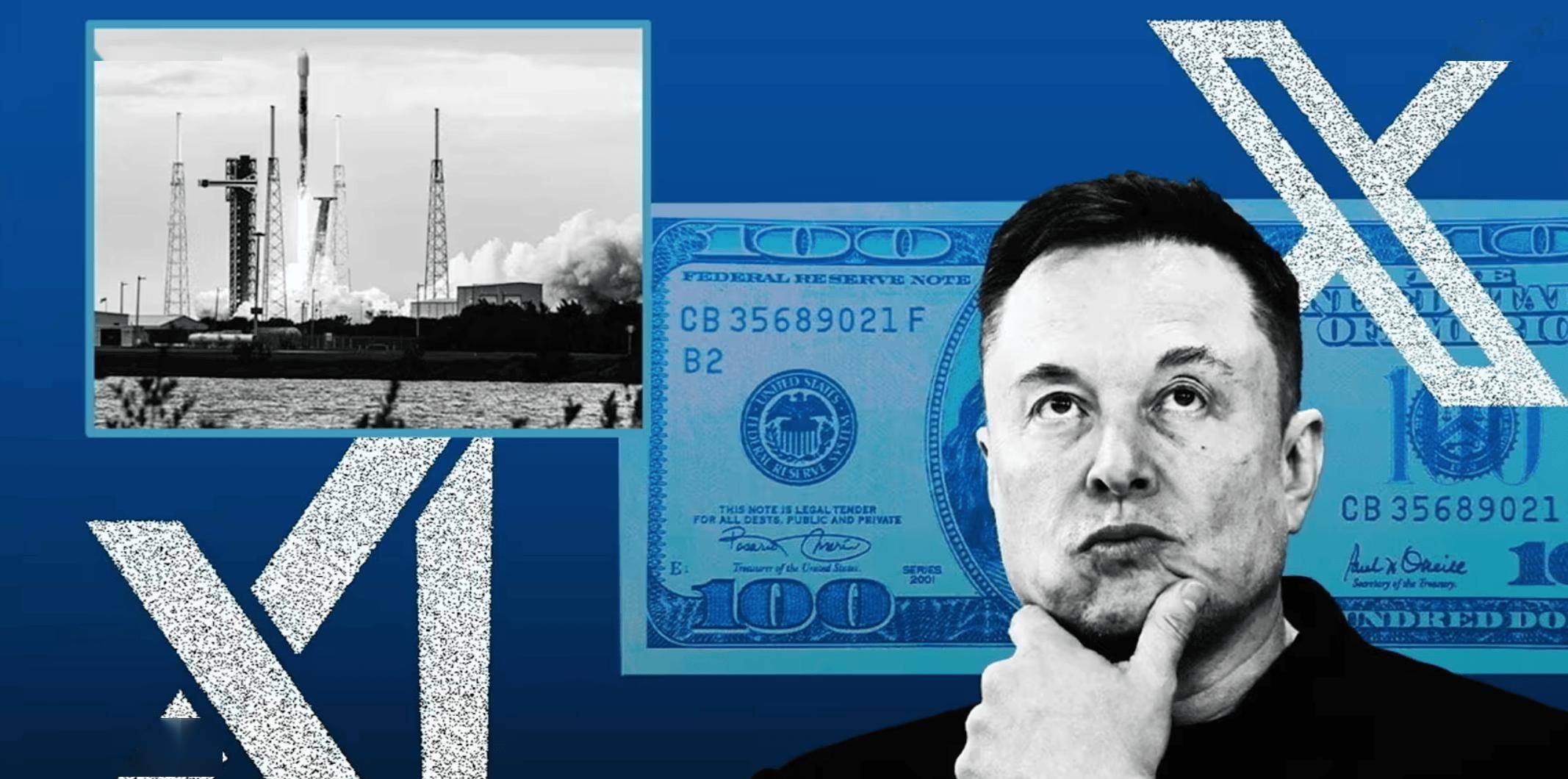
The tie-up between SpaceX and xAI brings even greater complexity to the web of deals that has been pulled together to keep capital flowing to AI labs https://t.co/N25oBf4LOa ...
SpaceX宣布将收购xAI,多地推动存量房收购工作 | 财经日日评
吴晓波频道· 2026-02-04 00:30
Group 1: US Manufacturing and Trade Developments - The US ISM Manufacturing PMI for January recorded at 52.6%, significantly above the expected 48.5%, marking a year-on-year increase of 4.7 percentage points, the fastest growth since 2022 [2] - Key sub-indices showed strong performance, with the New Orders Index at 57.1%, up nearly 10 points from the previous value of 47.7%, and the Employment Index reaching a one-year high of 48.1% [2] - The US and India reached a trade agreement reducing tariffs, with the US lowering its "reciprocal tariff" on India from 25% to 18%, while India will also reduce its tariffs on US goods, potentially increasing procurement of over $500 billion in US products [3][4] Group 2: Real Estate and Housing Market Initiatives - Shanghai has initiated a program to acquire second-hand housing for affordable rental projects, with financial support from local banks, aiming to stabilize the second-hand housing market [6] - Other cities like Hangzhou and Haikou are also implementing similar policies to support the real estate market, focusing on acquiring existing properties to convert into affordable housing [6] Group 3: Corporate Developments and Market Reactions - SpaceX announced the acquisition of AI startup xAI, with a projected valuation of $1.25 trillion, aiming to address the growing demand for computational power and energy in advanced AI systems [7] - Zhou Dasheng plans to engage in gold leasing business, allowing transactions up to 80% of its gold inventory, which is a common practice in the jewelry industry to mitigate price volatility [8][9] - The Hang Seng Tech Index briefly entered a technical bear market, dropping over 20% from its peak, influenced by market rumors regarding tax rate increases for internet companies [10][11] Group 4: Market Performance and Sentiment - On February 3, the Shanghai Composite Index and other indices saw gains, recovering from previous declines, with significant trading volume and a broad increase in stock prices across various sectors [14][15] - The market experienced volatility due to unfounded rumors affecting investor sentiment, but quickly rebounded as these rumors were debunked [15]






中原证券晨会聚焦-20260204
Zhongyuan Securities· 2026-02-04 00:21
Key Insights - The report highlights the acquisition of xAI by SpaceX, with a projected valuation of $1.25 trillion post-merger, indicating significant growth potential in the AI and aerospace sectors [5][8] - The report notes a rise in domestic fuel prices, with gasoline and diesel prices increasing by 0.16 yuan and 0.17 yuan per liter respectively, reflecting ongoing inflationary pressures in the energy sector [5][8] - The macroeconomic analysis indicates that China's GDP for 2025 reached 14,018.79 billion yuan, growing by 5.0%, with a notable contribution from the tertiary sector [13] - The report emphasizes the strong performance of the new materials sector, which outperformed the broader market indices, suggesting a growing demand for innovative materials in various industries [20][22] - The communication industry is experiencing supply constraints in key materials, particularly optical chips, which may impact growth in the optical communication market [29][31] Domestic Market Performance - The Shanghai Composite Index closed at 4,067.74, up by 1.29%, while the Shenzhen Component Index rose by 2.19% to 14,127.11, indicating a positive trend in the domestic equity market [4] - The average P/E ratios for the Shanghai Composite and ChiNext indices are 16.49 and 51.57 respectively, suggesting a favorable environment for medium to long-term investments [9][11] Industry Analysis - The report discusses the strong rebound in the photovoltaic industry, with a 15.65% increase in the photovoltaic index, driven by developments in space solar power technology [23][24] - The semiconductor market continues to grow, with global sales reaching $75.28 billion in November 2025, a 29.8% year-on-year increase, highlighting the sector's resilience [21] - The report indicates a significant increase in the agricultural communication sector, which has led the A-share market in recent weeks, reflecting robust demand in this niche [10] Investment Recommendations - The report suggests focusing on sectors such as AI, high-end manufacturing, and consumer goods, which are expected to yield substantial investment opportunities in the near future [8][9] - It recommends monitoring the performance of leading companies in the new materials and communication sectors, as they are poised for growth amid ongoing technological advancements [20][29]
火箭加AI,马斯克1.25万亿美元“太空圈地”
阿尔法工场研究院· 2026-02-04 00:08
Core Viewpoint - SpaceX is shifting its strategy from merely connecting Earth to providing computational capabilities through a proposed deployment of 1 million satellites, aiming to create a "Space AI Empire" valued at approximately $1.25 trillion, integrating AI with satellite technology [4][13][50]. Group 1: SpaceX's Strategic Shift - SpaceX has applied to deploy up to 1 million satellites, marking a fundamental shift in its strategy towards creating a computational layer around Earth [4][11]. - The acquisition of xAI is a critical component of this strategy, with SpaceX's valuation at around $1 trillion and xAI at approximately $250 billion [4][13]. - The goal is to establish a massive computational system in low Earth orbit, utilizing solar energy and enabling efficient data processing and AI model training [11][12]. Group 2: Competitive Landscape - The competition for low Earth orbit resources is intensifying, with China also applying for approximately 203,000 satellites, indicating a race for satellite frequency and orbital slots [7][8]. - The International Telecommunication Union mandates that applicants must launch their first satellite within seven years and complete deployment within 14 years, adding pressure to competitors [8][20]. - SpaceX's aggressive strategy is prompting other players, including national and private entities, to respond with their own satellite deployment plans [18][38]. Group 3: Business Model Transformation - SpaceX is transitioning from a telecommunications company charging subscription fees for satellite internet to a cloud computing service provider renting computational power, expanding its market potential from billions to trillions [23][24]. - The new model will allow SpaceX to compete directly with established cloud service providers like Amazon AWS and Microsoft Azure [25][36]. - The anticipated cost efficiency of space-based computational power could disrupt the AI industry, with projections suggesting that space will become the most cost-effective location for generating AI computational power [24][25]. Group 4: Technological and Regulatory Challenges - Significant technical challenges remain, including the development of radiation-resistant chips and high-speed inter-satellite communication systems necessary for effective space-based computing [28][29]. - Regulatory hurdles are also a concern, as SpaceX's previous applications for satellite deployments have faced scrutiny, and the new proposal for 1 million satellites will likely encounter rigorous review [29][30]. - Despite these challenges, advancements in satellite technology and launch capabilities are being pursued to facilitate the ambitious deployment plans [30][34]. Group 5: Implications for Global Technology Landscape - SpaceX's transformation could reshape the global technology landscape, particularly impacting traditional cloud computing giants that rely on terrestrial data centers [36][51]. - The emergence of a space-based computational network could redefine geopolitical dynamics in technology, as it would allow for a more distributed and less geographically constrained AI development environment [36][52]. - The competition for orbital resources is not just a commercial battle but also a strategic one, with implications for national security and technological sovereignty [9][52].