
南钢股份

Search documents
2025年我市工业投资同比增长12.1%,近日又出台若干措施——
Nan Jing Ri Bao· 2026-02-04 02:16
Core Viewpoint - Nanjing's industrial investment has increased by 12.1% year-on-year, supported by new policies aimed at enhancing industrial capacity and technological advancement [1] Group 1: Industrial Investment and Policy Support - Nanjing's industrial investment accounted for a larger share of fixed asset investment, increasing by 4.3 percentage points compared to the previous year [1] - The newly implemented policy includes 20 measures across six dimensions to support industrial enterprises in expanding capacity and ensuring project implementation [1][2] - The policy aims to facilitate technological upgrades and equipment renewal, providing financial incentives for enterprises investing over 20 million yuan in equipment [2][4] Group 2: Technological Advancements and Capacity Expansion - Nanjing South Rui Electric Co., Ltd. has invested over 2 billion yuan in expanding its intelligent electrical equipment production line, significantly increasing production capacity and overcoming key technological bottlenecks [1][3] - The expansion project includes the purchase of advanced systems and equipment, enhancing the company's ability to produce critical power control protection systems [3] - The new policy encourages enterprises to undertake key technological challenges and supports the transformation of scientific achievements into practical applications [3] Group 3: Green Transformation and Sustainable Development - The new policy emphasizes green development, promoting sustainable industrial growth and encouraging enterprises to adopt environmentally friendly practices [6][7] - Nanjing Steel's investment in a resource recycling project demonstrates the effectiveness of green transformation, contributing to the steel industry's low-carbon transition [7] - The policy aims to shift industrial expansion from mere scale growth to transformative development methods, aligning with sustainability goals [6] Group 4: Industry Cluster Development and Competitive Advantage - The policy encourages leading enterprises to act as "aggregators" for industrial development, fostering collaboration and enhancing the resilience of the entire industry chain [8][9] - Hua Tian Technology's expansion project is expected to generate over 800 million yuan in output and create more than 500 jobs, showcasing the positive impact of leading enterprises on the local economy [9] - The policy includes measures to support collaboration between leading enterprises and small to medium-sized enterprises, enhancing overall industry competitiveness [9][10]
向“新”求“质”,扎实推进高质量发展
Nan Jing Ri Bao· 2026-02-03 08:39
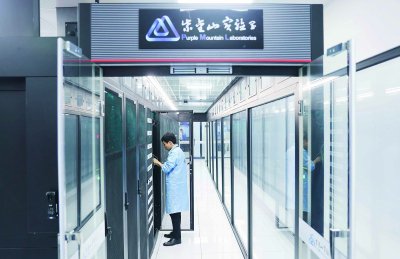
▲紫金山实验室。 南京日报/紫金山新闻记者 冯芃 摄 ▲南钢智能制造工厂。 企业供图 ▲江北新区的南京生物医药分中心技术平台工作人员在进行药物检测。该中心为高校、企业搭技术转化 桥梁,成创新企业孵化器。 通讯员 刘植花 南京日报/紫金山新闻记者 孙中元 摄 ▲南京"江翼达"低空飞行基地的无人机在为 移动中的船舶送外卖。 南京日报/紫金山新闻记者 徐琦 摄 □ 南京日报/紫金山新闻记者 江芬芬 【两会热点】 2月2日,中国人民政治协商会议江苏省第十三届委员会第四次会议在江苏大会堂隆重开幕。回望过去五 年,习近平总书记三次参加全国人代会江苏代表团审议,两次亲临江苏视察,为江苏高质量发展把脉定 向,为我们做好江苏工作提供了根本遵循和行动指南。做好当前和今后一个时期工作,要围绕深入学习 贯彻习近平总书记对江苏工作重要讲话精神这条主线,牢牢把握"在推进中国式现代化中走在前、做示 范"这一战略定位,牢牢把握"争当表率、争做示范、走在前列"这一总体要求,牢牢把握"强富美高"新 江苏现代化建设这一宏伟蓝图,牢牢把握"经济大省要挑大梁,为全国发展大局作贡献"这一重大责任, 全力推动中国式现代化江苏新实践取得新的更大突破。 南京 ...

能源与制造领跑,防御与弹性并重,国企红利ETF(159515)盘中涨0.26%
Xin Lang Cai Jing· 2026-02-03 02:44
Group 1 - The core viewpoint of the articles emphasizes the performance of high-dividend sectors, particularly state-owned enterprises, in the current market environment, with a focus on the potential for structural shifts in investment strategies towards companies with stable dividends and growth potential [1][2]. - The China Securities State-Owned Enterprises Dividend Index has shown a positive trend, with notable increases in constituent stocks such as Cai Bai Co., Ltd. rising by 10.02% and Zhonglian Heavy Industry by 4.05% as of February 3, 2026 [1]. - The report from Huatai Securities indicates that the risk appetite in January continued to decline, but high-dividend sectors, especially in oil, coal, and steel, performed better than in December, suggesting a marginal recovery in the allocation value of high-dividend stocks [1]. Group 2 - Guojin Securities suggests that the dividend strategy for 2026 should focus on structural shifts, moving from historical dividend ratios to identifying companies with fundamental resilience and potential for increased future dividends [2]. - The resource and traditional manufacturing sectors are highlighted as having the broadest benefits from dividend strategies, driven by factors such as overseas AI investments, manufacturing recovery, and resource protectionism in emerging markets [2]. - The China Securities State-Owned Enterprises Dividend ETF closely tracks the China Securities State-Owned Enterprises Dividend Index, selecting 100 listed companies with high cash dividend yields and stable dividends, reflecting the overall performance of high-dividend securities among state-owned enterprises [2][3].
大越期货锰硅早报-20260203
Da Yue Qi Huo· 2026-02-03 02:26
交易咨询业务资格:证监许可【2012】1091号 2026-02-03锰硅早报 大越期货投资咨询部 胡毓秀 从业资格证号:F03105325 投资咨询证号:Z0021337 联系方式:0575-85226759 重要提示:本报告非期货交易咨询业务项下服务,其中的观点和信息仅作参考之用,不构成对任何人的投 资建议。 我司不会因为关注、收到或阅读本报告内容而视相关人员为客户;市场有风险,投资需谨慎。 每日观点 锰硅2605: 1.基本面:从成本端来看,整体锰矿成交价格仍处于高位且整体市场暂稳,对硅锰合金价格仍有较强成本支撑;2026年内 蒙地区地方电价以及南方电价对合金的成本支撑正在验证中,预计上涨可能性较大。从供应端来看,近期北方主产区新增 硅锰炉子点火,普硅硅锰产能再增加,且前期点火矿热炉已陆续出要铁,供应压力增加。南方合金厂开工率稳定较低, 2026年广西、贵州电费优惠政策力度有待验证,大多依旧维持避峰生产,存在厂家选择暂时停产,等待1月底的电费结算 价格。当前硅锰供应宽松压力仍存。从需求端来看,河钢集团26年1月硅锰采量17000吨,对比12月采量:14700吨,数量 增加;硅锰定价5920元/吨,对比1 ...
贵金属行情持续,小金属盈利或提升
East Money Securities· 2026-02-02 09:26
Investment Rating - The report maintains an "Outperform" rating for the industry [2][12]. Core Insights - The report highlights the ongoing strength in precious metals and anticipates potential profit increases in minor metals [1]. - It emphasizes the financial attributes of copper and the impact of supply constraints on various metals, including aluminum and tungsten [4][5]. - The report notes the continued demand for gold driven by central bank purchases and the selling of U.S. government bonds by European institutions [4]. Summary by Sections Copper Sector - The report indicates a focus on the financial attributes of copper, with LME copper prices at $12,921 per ton and SHFE copper at ¥101,340 per ton, showing a week-on-week change of -0.6% and +0.6% respectively [4]. - It mentions a tightening supply of copper concentrate, with processing fees declining, which may accelerate the clearing of smelting profits [4]. Aluminum Sector - LME aluminum prices reached $3,175 per ton, while SHFE aluminum was at ¥24,290 per ton, reflecting a week-on-week increase of +0.9% and +1.5% respectively [4]. - The report notes a high operating rate of 98.3% for electrolytic aluminum and a slight increase in the operating rate of aluminum processing enterprises [4]. Precious Metals - SHFE gold prices were reported at ¥1,115.6 per gram and COMEX gold at $4,983.1 per ounce, with week-on-week increases of +8.1% and +8.3% respectively [4]. - The report highlights that the SPDR Gold ETF's net holdings increased to 1,086.5 tons, indicating stable demand from overseas investors [4]. Minor Metals - Tungsten prices rose to ¥535,000 per ton, with a week-on-week increase of +5.5% [4]. - The report also notes a tightening supply in the rare earth sector, with prices for praseodymium and dysprosium oxides showing slight declines [4]. Steel Sector - SHFE rebar and hot-rolled coil prices were reported at ¥3,142 and ¥3,305 per ton, with slight week-on-week decreases [5]. - The report mentions a significant explosion at a steel plant, which may lead to stricter safety regulations and supply constraints in the steel industry [5]. Investment Recommendations - The report suggests focusing on companies with rich copper resources, such as Zijin Mining and China Molybdenum, as well as those in the aluminum sector like China Aluminum and Nanshan Aluminum [8]. - It also recommends monitoring tungsten and rare earth companies, as well as steel firms with strong product structures [8].
做“难而正确的选择”,华为云产业智能化的“深潜”逻辑
Jing Ji Wang· 2026-02-02 07:11
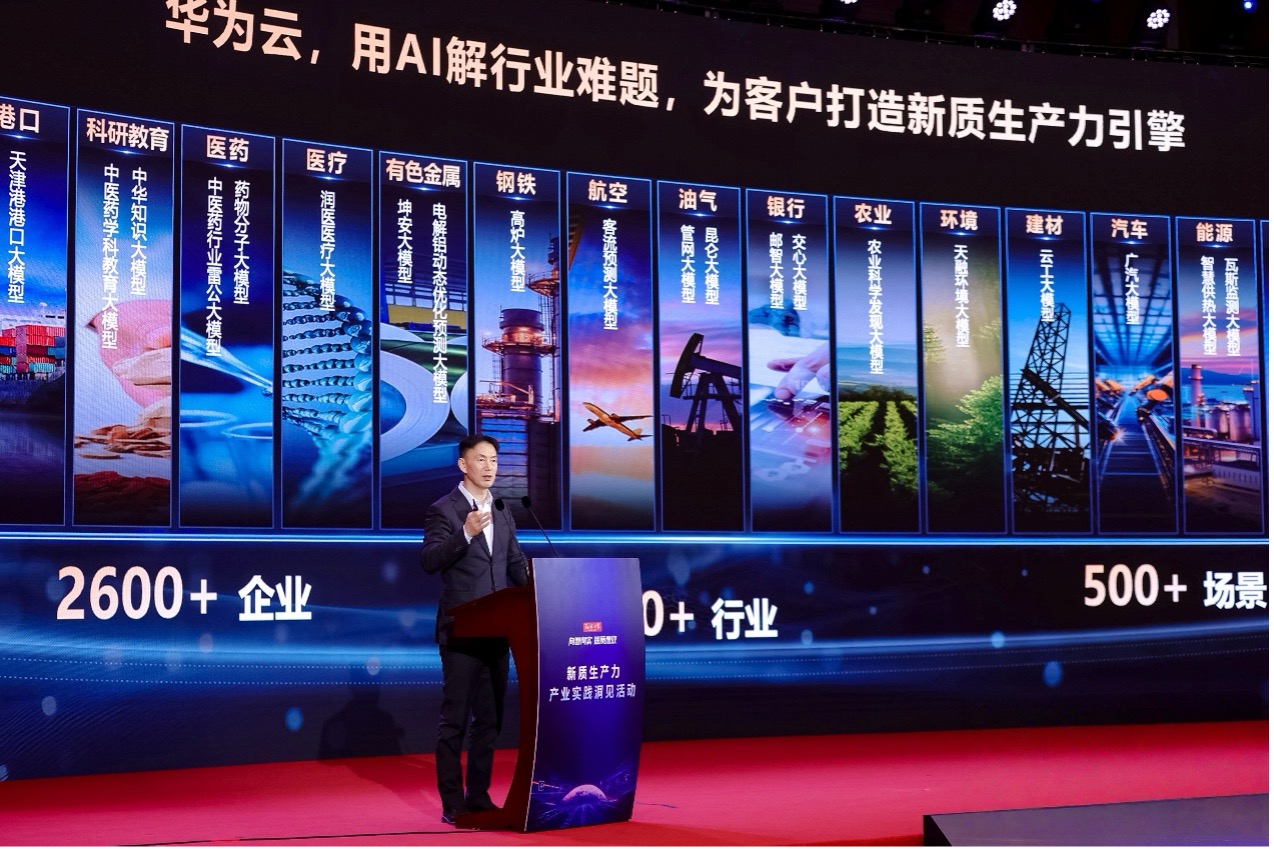
Core Insights - Artificial intelligence (AI) has transitioned from a topic of discussion to a strategic focus for industries, especially following the Chinese government's endorsement of AI integration into various sectors [1][3] - Huawei Cloud has been recognized for its AI infrastructure and industry integration, showcasing its role in transforming AI from a conceptual tool to a practical business engine [1][7] Group 1: AI Integration and Industry Transformation - AI technology is systematically reshaping various industries, with Huawei Cloud emphasizing the importance of combining computational power with industry-specific scenarios [3][7] - The collaboration between Huawei Cloud and Nanjing Steel has led to the development of the "Yuanye Steel Model," which has implemented 20 intelligent applications across four business areas, enhancing production processes [4] - In Inner Mongolia, Huawei Cloud's partnership has resulted in the world's first fleet of 100 autonomous electric mining trucks, demonstrating significant operational efficiency and safety improvements [4] Group 2: Achievements and Impact - Huawei Cloud has enabled substantial efficiency gains across multiple sectors, such as reducing inspection times from 6 hours to 20 minutes in industrial inspections, achieving over 98% accuracy in fault detection [5] - In the steel industry, AI has improved temperature prediction accuracy in blast furnaces to 80%, leading to a fuel saving of approximately 7,800 tons per furnace annually [5] - The company has developed over 30 industry-specific AI models, serving more than 500 scenarios and 2,600 enterprises across various fields, contributing to high-quality industrial development in China [9] Group 3: Strategic Approach and Future Directions - Huawei Cloud aims to tackle complex industry challenges by focusing on three key areas: understanding physical environments, managing specialized data, and ensuring effective implementation of AI solutions [8] - The company positions itself as a "technical partner," providing comprehensive AI services that include not only computational power but also development frameworks and industry solutions [8] - Looking ahead, Huawei Cloud is committed to continuous innovation in core technologies and collaborative efforts with industry partners to embed AI deeply into core business processes, thereby creating new industrial value [9]
碳中和政策深化,如何展望钢铁行业的投资机遇?
Changjiang Securities· 2026-02-02 01:05
Investment Rating - The investment rating for the steel industry is Neutral, maintained [6] Core Insights - The steel industry accounts for approximately 15% of the national carbon emissions, making it the highest carbon-emitting manufacturing sector. The implementation of low-carbon steelmaking is a significant challenge for Chinese steel companies [2][4] - The "carbon peak" target was first proposed in 2020, evolving into a policy of stabilizing crude steel production. The current deepening of carbon neutrality policies may accelerate the elimination of outdated production capacity in the steel industry [2][4] - As the Spring Festival approaches, demand and production are slowing down, leading to a low inventory and low expectation state in the steel market. The overall market is characterized by low production, low inventory, and low expectations, awaiting macro or industrial catalysts [4] Summary by Sections Section 1: Market Dynamics - Demand continues to weaken with a year-on-year decrease of 2.02% and a month-on-month decrease of 0.67% in apparent consumption of major steel products [4] - Steel production has slightly increased, with a year-on-year rise of 2.19% and a month-on-month rise of 0.48% in total steel output [4] - Total steel inventory has increased by 1.57% month-on-month and 13.05% year-on-year [4] Section 2: Policy and Regulatory Environment - The carbon intensity reduction target has been a binding indicator since the 12th Five-Year Plan, with a projected reduction of about 7.8% by the end of 2024, which is below expectations [4] - The Ministry of Ecology and Environment has released a carbon emission trading market allocation plan for the steel, cement, and aluminum industries, marking a significant step towards operationalizing carbon control policies [4] Section 3: Investment Opportunities - Short-term focus on energy-saving and carbon-reduction modifications in existing blast furnace-converter processes is a practical choice for steel companies [5] - Long-term investment opportunities may arise in electric arc furnace steelmaking and hydrogen metallurgy as the dual carbon policy deepens [5]
“十四五”我国钢铁压减产量超1亿吨
Xin Lang Cai Jing· 2026-02-01 19:21
Core Viewpoint - The steel industry in China is undergoing significant structural reforms during the "14th Five-Year Plan" period, with a focus on capacity management and production reduction exceeding 100 million tons. The "15th Five-Year Plan" will emphasize controlling new capacity, optimizing existing capacity, mergers and acquisitions, and facilitating the exit of outdated capacity [1][2]. Group 1: Capacity Management and Production - During the "14th Five-Year Plan," the steel industry has reduced production by over 100 million tons and will continue to focus on capacity governance in the "15th Five-Year Plan" [1]. - By 2025, China's crude steel production is projected to be 961 million tons, a decrease of 4.4% year-on-year, while pig iron production is expected to be 836 million tons, down 3.0% year-on-year [1]. - The industry aims to strictly control new capacity and ensure the exit of illegal and non-compliant capacity, promoting a continuous optimization of the capacity structure [1][2]. Group 2: Export and Profitability - Despite a decline in domestic consumption, steel exports are expected to reach a record high of 119 million tons in 2025, an increase of 7.5% year-on-year, with an average export price of $694 per ton, down 8.1% year-on-year [1]. - The steel industry's total revenue for key enterprises in 2025 is projected to be 6.1 trillion yuan, a decrease of 3.1% year-on-year, while total profits are expected to rise by 140% to 115.1 billion yuan [2]. - The industry is experiencing a shift towards profitability, with the main steel business achieving a profit of 44.5 billion yuan, marking a turnaround from losses [2]. Group 3: Industry Consolidation and Collaboration - The industry is accelerating mergers and acquisitions, with major companies like Baowu Steel taking the lead in self-regulating production and inventory [2]. - By 2025, the concentration of the top 10 steel companies is expected to reach 43.1%, an increase of 4.2 percentage points from 2020, indicating a trend towards greater industry consolidation [2]. - The industry is focusing on enhancing collaboration with downstream sectors such as shipbuilding, transportation, and heavy equipment to explore new markets and applications for steel products [3]. Group 4: Green Development and Regulatory Measures - The steel industry is committed to promoting green and low-carbon transformation, aiming to complete ultra-low emission modifications for surplus capacity [3]. - A dynamic public management mechanism for ultra-low emissions will be established, transitioning from energy consumption control to carbon emission control [3]. - The industry will optimize export structures and implement strict management measures for certain steel product export licenses to ensure high-quality development of export trade [3].
欲速则不达
GOLDEN SUN SECURITIES· 2026-02-01 06:51
Investment Rating - The report maintains a "Buy" rating for several key companies in the steel sector, including Hualing Steel, Nanjing Steel, Baosteel, and New Steel [8]. Core Insights - The steel industry is experiencing a slight decline in daily molten iron production, with the average dropping to 227.9 thousand tons, while steel production has seen a minor increase [13]. - Total steel inventory has expanded, with a week-on-week increase of 1.7%, indicating a growing supply in the market [23]. - Apparent consumption of steel has weakened slightly, with rebar demand decreasing by 13.4% week-on-week [39]. - Iron ore prices are trending downwards, influenced by increased shipments from Australia and Brazil, alongside rising port inventories [48]. - The current steel price index has decreased by 0.2% week-on-week, reflecting a general weakening in the market [72]. Summary by Sections 1. Supply - Daily molten iron production has decreased by 0.2 thousand tons to 227.9 thousand tons, with a slight recovery in steel production [13]. - The capacity utilization rate of 247 steel mills is at 85.5%, down 0.1 percentage points week-on-week but up 0.8 percentage points year-on-year [17]. 2. Inventory - The total inventory of five major steel products has increased by 1.7% week-on-week, with social inventory rising to 890.7 thousand tons [25]. - Rebar social inventory has increased by 7.7% week-on-week, while hot-rolled coil inventory has decreased by 1.0% [25]. 3. Demand - Apparent consumption of five major steel products has decreased by 1.0% week-on-week, with rebar consumption down by 4.9% [49]. - Weekly average transaction volume for construction steel has dropped to 67 thousand tons, a decline of 13.4% [41]. 4. Raw Materials - Iron ore prices have weakened, with the Platts 62% iron ore price index at $103.2 per ton, down 1.4% week-on-week [58]. - The total port inventory of iron ore has increased by 1.5% week-on-week, indicating a supply surplus [58]. 5. Prices and Profits - The comprehensive steel price index has decreased to 121.6, reflecting a 0.2% decline week-on-week [72]. - The current profit margins for long-process rebar and hot-rolled coils are negative, indicating cost pressures in the industry [74].


多家钢企公告预增,钢铁板块迎布局窗口
Xinda Securities· 2026-02-01 05:32
Investment Rating - The steel industry is rated as "Positive" [2] Core Insights - The steel sector has experienced a decline of 2.02% this week, underperforming the broader market, with specific segments such as special steel down by 2.31% and iron ore down by 4.67% [10][12] - Supply metrics indicate that as of January 30, the capacity utilization rate for blast furnaces among sampled steel companies is 85.5%, a slight decrease of 0.04 percentage points week-on-week [27] - Demand for the five major steel products has decreased, with a total consumption of 801.7 million tons, down by 7.78 million tons week-on-week [37] - Social inventory of the five major steel products has increased to 890.7 million tons, up by 22.27 million tons week-on-week, while factory inventory has decreased to 387.8 million tons [45] - The average price index for common steel is 3427.6 yuan/ton, reflecting a week-on-week decrease of 6.87 yuan/ton [51] - The report suggests that the recent safety incident at Baosteel may lead to temporary production cuts, providing cost and supply support for the industry [3] Supply Summary - As of January 30, the daily average pig iron production is 2.2798 million tons, with a week-on-week decrease of 0.12 million tons [27] - The capacity utilization for electric furnaces is reported at 55.7%, down by 2.23 percentage points week-on-week [27] - The total production of the five major steel products reached 722.4 million tons, an increase of 5.17 million tons week-on-week [27] Demand Summary - The consumption of the five major steel products has decreased to 801.7 million tons, a decline of 0.96% week-on-week [37] - The transaction volume for construction steel among mainstream traders is reported at 67,000 tons, down by 13.37% week-on-week [37] Inventory Summary - Social inventory of the five major steel products is at 890.7 million tons, up by 2.56% week-on-week [45] - Factory inventory has decreased to 387.8 million tons, down by 0.22% week-on-week [45] Price & Profit Summary - The common steel price index is at 3427.6 yuan/ton, down by 0.20% week-on-week [51] - The profit for rebar produced in blast furnaces is reported at 51 yuan/ton, a decrease of 16.39% week-on-week [59] - The profit for construction steel produced in electric furnaces is at -80 yuan/ton, down by 26.98% week-on-week [59] Raw Material Prices Summary - The spot price index for Australian iron ore (62% Fe) is at 793 yuan/ton, down by 12.0 yuan/ton week-on-week [76] - The price for primary metallurgical coke is reported at 1770 yuan/ton, an increase of 55.0 yuan/ton week-on-week [76]