
Momenta

Search documents
均胜电子增资智驾芯片公司新芯航途,强化智能驾驶生态布局
Feng Huang Wang Cai Jing· 2026-01-27 07:57
Core Viewpoint - The investment by Junsheng Electronics in the autonomous driving chip design company, Xinxin Hangtu, is seen as a strategic move to enhance its diversified chip cooperation ecosystem and build a long-term competitive advantage in the domestic intelligent driving chip sector [1][2]. Group 1: Investment and Strategic Positioning - Junsheng Electronics has increased its stake in Xinxin Hangtu to 2.78%, joining other industry players like Chery and SAIC as shareholders [1]. - This investment is part of Junsheng Electronics' broader strategy to establish a "chip ecosystem matrix" that includes partnerships with global technology leaders such as Qualcomm and NVIDIA, as well as domestic firms like Hezhima and Horizon [2][3]. - The newly invested Xinxin Hangtu, established in December 2023, has already secured investments from notable institutions like NIO Capital and SAIC funds, and is closely associated with the autonomous driving algorithm company Momenta [2]. Group 2: Product Development and Market Strategy - The BMC X7 chip developed by Xinxin Hangtu, which boasts a computing power of 272 TOPS, is designed for high-level urban Navigation on Autopilot (NOA) and is set to be featured in a globally launched vehicle [2]. - Junsheng Electronics aims to expand its adaptable chip platform options through this investment, allowing it to offer domain controller products based on various chip solutions tailored to different automotive clients [3]. Group 3: System Integration and Value Enhancement - In response to the trend of software-defined vehicles, Junsheng Electronics is focusing on deepening its value in high-value system integration, moving from single components to integrated domain controllers and central computing units [4]. - The company's cross-domain integrated central computing platform aims to reduce system complexity and costs by sharing computing power across multiple functional domains [4]. - This strategic shift positions Junsheng Electronics as a provider of intelligent driving solutions, enabling it to offer near "plug-and-play" solutions to automakers, thereby shortening their R&D cycles [4]. Group 4: Commercialization and Market Expansion - By 2025, Junsheng Electronics is expected to transition from the layout phase to a critical value realization phase in the intelligent driving sector, with significant commercial projects underway [5]. - The company has secured over 1 billion yuan in orders for a high-level intelligent driving domain control project with a well-known domestic brand, set for mass production in 2026 [5]. - Additionally, Junsheng Electronics has won global projects for central computing units from two leading OEMs, with a total lifecycle order value projected to reach 15 billion yuan, expected to be produced by 2027 [5]. Group 5: Global Market and Competitive Advantage - Junsheng Electronics has leveraged its long-term partnerships with international chip manufacturers to secure mass production orders for L2/L2++ level intelligent driving systems, covering tens of thousands of vehicles [6]. - The company's global engineering and supply chain capabilities are crucial for converting its ecological layout into market advantages, enabling efficient order fulfillment across various regions [6]. - Through investments like that in Xinxin Hangtu, Junsheng Electronics is building a comprehensive system capability from hardware to solutions in the high-end intelligent driving sector [6].

智能驾驶,没有中场战事只有无限战争
3 6 Ke· 2026-01-27 04:40
Core Insights - The article discusses the significant reshuffling in the Chinese advanced driving assistance market, particularly focusing on urban NOA (Navigation on Autopilot) as it approaches a critical penetration rate of over 10% by 2025, with expectations to reach 22% by 2026, leading to a market scale targeting millions of units [6][14]. Group 1: Market Dynamics - A number of players, including Maimo Zhixing and Dazhuo Intelligent, have exited the market, while Huawei, Yuanrong Qixing, and Momenta have emerged as the dominant trio, collectively holding 99% of the urban NOA market share from January to October 2025 [2][8]. - In October 2025, Yuanrong Qixing achieved the highest urban NOA installation rate, with a significant growth rate of 2.7 times compared to the average monthly installation from January to October 2025 [8][10]. Group 2: Competitive Strategies - The three leading companies have adopted different market strategies: Huawei focuses on high-end models, Momenta has a broad brand coverage, and Yuanrong Qixing targets mass-market models for data accumulation [9][10]. - Yuanrong Qixing's strategy emphasizes deep collaboration with a few key models to create "explosive" sales, resulting in significant sales increases for models like the Blue Mountain and Galaxy M9 [9][10]. Group 3: Future Projections - The competition is expected to intensify as the industry moves towards "million-unit production," with a projected annual output of 5 million high-level autonomous vehicles by 2026 [14][15]. - The article highlights the importance of data efficiency and closed-loop systems as critical competitive advantages in the evolving landscape of intelligent driving [14][15]. Group 4: Investment Trends - The investment landscape for autonomous driving has seen a significant rebound in 2025, with nearly 60 billion yuan raised, indicating a strong focus on leading and commercially viable projects [14][15].

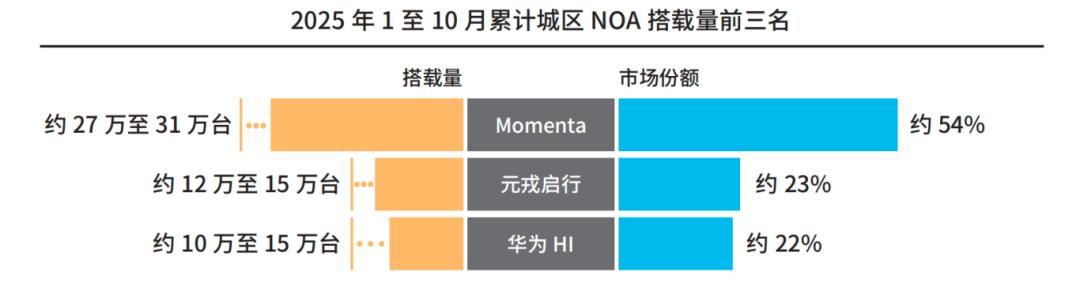
汽车业加快向质量提升转型
Jing Ji Ri Bao· 2026-01-26 22:01
Group 1: Industry Growth and Trends - By 2025, China's automotive production and sales are expected to exceed 34 million units, setting a new historical record, with the industry transitioning from "scale expansion" to "quality improvement" during the 14th Five-Year Plan period [1] - The automotive industry has shown strong resilience and vitality, with electric and intelligent vehicles accelerating integration, leading to a dominant position in the market [1] - New energy vehicles (NEVs) are projected to account for over 50% of new car sales in China by 2025, with production and sales reaching 16.626 million and 16.49 million units respectively, marking a year-on-year growth of 29% and 28.2% [1] Group 2: Technological Advancements - The Ministry of Industry and Information Technology has approved the first batch of L3-level conditional autonomous driving models, marking a significant step towards commercial application [2] - The sales of passenger vehicles equipped with city Navigation Assisted Driving (NOA) features reached 2.5373 million units from January to November 2025, with a market share of 81.1% for domestic brands [2] - NOA technology is seen as a crucial link between advanced driver assistance and fully autonomous driving, enhancing user experience and showcasing the value of intelligence [2] Group 3: Collaboration and Global Influence - Global automotive brands are increasingly collaborating with leading domestic third-party suppliers to achieve breakthroughs in intelligent driving, with companies like Mercedes-Benz and BMW implementing city NOA functions [3] - Chinese technology firms such as Huawei and Momenta are providing "Chinese solutions" for the global intelligent driving industry, attracting partnerships from renowned automotive brands worldwide [3] Group 4: Green Consumption Initiatives - The "old-for-new" policy is expected to activate green consumption, with 18.3 million vehicles being replaced from 2024 to 2025, nearly 60% of which will be NEVs [4] - The policy aims to streamline the entire lifecycle from scrapping to recycling, with an annual growth rate of 45.8% in scrapped vehicle recovery projected [4] - The implementation of subsidies for vehicle replacement and scrapping is expected to stabilize market expectations and boost automotive consumption [5] Group 5: Market Dynamics and Policy Changes - The adjustment of NEV purchase tax incentives, along with the "old-for-new" policy, is shifting the competitive landscape of the automotive market from price competition to value competition [5] - The Ministry of Industry and Information Technology and other agencies have called for a halt to disorderly price wars in the NEV sector, promoting a fair market order [6] - The automotive industry is encouraged to explore high-tech, high-profit, and high-value development models, moving away from reliance on scale and low profitability [6] Group 6: Digital Transformation and Future Directions - The automotive industry's digital transformation faces challenges such as insufficient data application and slow transformation of small and medium-sized parts manufacturers [7] - Recommendations include activating data value and promoting a dual-driven approach of "platform + scenario" to enhance data integration across the industry [7] - Emphasis is placed on technological innovation to maintain China's competitive advantage in the global NEV market, focusing on breakthroughs in solid-state batteries and efficient drive technologies [7]
2月北京站:头部智驾企业“盲盒”、天工机器人——芯之所驱 形之所塑
泽平宏观· 2026-01-26 16:05
以下文章来源于泽平宏观商学 ,作者泽平宏观商学 泽平宏观商学 . 前沿科技企业实战研学 读万卷书行万里路 014> 盲盒:头部智能驾驶企业 上午 头部智能驾驶企业 当前正处于从 L2 到 L4 自动驾驶迭代、从汽车向 通用机器人跨越的历史拐点。智驾芯片及解决方案市 场正以接近 50% 的年复合增长率奔向万亿规模。公司 凭借国产替代与技术普惠的双重红利,占据了中国智 驾市场的"半壁江山"。 在物理AI加速落地浪潮与国产替代加速的双重β 下,公司作为国产中大型算力芯片头部企业及具备软 硬一体能力的供应商,推动汽车从"功能"迈向"智 能",让机器更懂人类,让出行更安全、更自由。 天工机器人:北京人形机器人创新中心 国家战略级平台,定义全栈自主新高度 北京人形机器人创新中心于2023年11月成立,是 国内首个省级人形机器人创新中心,也是国内首家具 身智能软硬件全栈科技公司,全面覆盖人形机器人大 脑、小脑、本体与数据的研发攻关并且构建了良好的 开源生态。 目前已推出自主研发的全国产化"具身天工"系 列人形机器人和"天轶"系列轮式人形机器人,可覆 盖工业制作、特种作业、物流分拣、商业导览等多元 场景,在人形机器人半马、运 ...
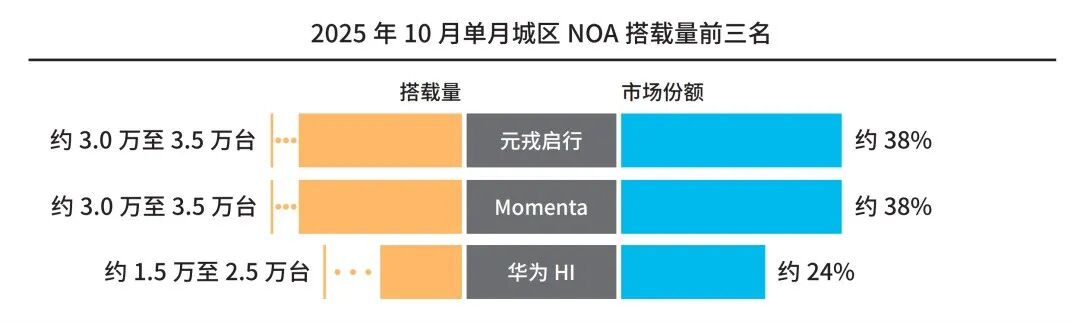
高阶智驾三强出现,元戎启行成了那匹黑马
3 6 Ke· 2026-01-26 11:46
AI浪潮席卷全球产业,端到端和VLA模型技术,也相继催动智能辅助驾驶行业实现范式变革。过去,依赖于海量人力的规则算法作业,让头部公司稳坐 高位,而许多在资源、数据或规模上处于相对劣势的创新团队只能望而却步。 但端到端和VLA等技术之下,创业公司也可以凭借精准的技术突破快速入局,成为行业的核心玩家。大模型领域有DeppSeek这样的案例,而在智能辅助 驾驶领域,元戎启行正是这样一匹黑马。 经观汽车发布的《中国智能驾驶行业趋势白皮书(2025)》显示,目前城区智能驾驶市场的头部企业主要包括华为、元戎启行和Momenta等。 其中,2025年1-10月国内第三方城区NOA市场数据显示,元戎启行的市场份额快速提升,特别是在2025年10月单月,元戎启行的市场份额达到了38%,位 居市场第一,表现出色。更值得注意的是,其增长倍数高达2.7倍。 截取自《中国智能驾驶行业趋势白皮书(2025)》 从表面上看,元戎启行的快速增长,主要得益于该公司将方案在长城、吉利、smart等品牌上的主流量产车型搭载。但深入来看,这是从技术突破到产品 体验,乃至量产交付效率等体系化能力的验证。 对竞争白热化的汽车行业来说,技术方案需要在确保 ...
智能驾驶朋友圈盘点:华为系、Momenta系、自研系三派系势不可挡
Zhong Guo Qi Che Bao Wang· 2026-01-26 10:35
Core Insights - Since 2025, multiple automotive companies have chosen to collaborate with Huawei and Momenta, although some self-research companies also partner with them, the core intelligent driving systems remain primarily self-developed [2] - The intelligent driving landscape is dominated by Huawei and Momenta, while self-research companies maintain significant market presence due to their terminal sales advantages [2] User Base Distribution - In the domestic intelligent driving market, Huawei, Momenta, and self-research companies lead in user numbers, while other factions have relatively dispersed and low user concentration [3] - From January to November 2025, Huawei's HI model achieved a deployment of 134,100 vehicles, accounting for 19.76% of third-party suppliers [3] - By the end of 2025, Huawei's QianKun intelligent driving system had accumulated over 5.42 billion kilometers of assisted driving, successfully avoiding 2.12 million potential collisions [3] - Momenta's city NOA deployment reached 414,400 vehicles, representing 61.06% of third-party suppliers during the same period [3] Market Share and Collaboration - From January 2023 to October 2024, Momenta achieved a market share of 60.1% in the city NOA third-party intelligent driving market, with 8 out of the top 10 global automotive companies collaborating with Momenta [4] - Self-research companies include BYD, Li Auto, Xiaomi, Tesla, and NIO, with BYD's "Tianshen Eye" system activated in 94.13% of its models [4][11] Technological Pathways - Huawei's intelligent driving system boasts a full-stack self-research capability, integrating chips, software algorithms, and sensors into a cohesive technology ecosystem [7] - Huawei's ADS system features a "chip-algorithm-cloud" architecture, enhancing data processing efficiency and system stability [7] - Momenta employs a data-driven innovation model, utilizing an "end-to-end large model" for scalable production, achieving significant breakthroughs in technology [10] Business Strategies - Huawei adopts a dual-track strategy of binding with leading automotive companies while expanding into the mid-to-low-end market [8] - Momenta's open cooperation strategy lowers the entry barrier for automotive companies, with over 130 models in mass production [10] Technical Route Characteristics - Different technical routes exist within the intelligent driving ecosystem, each with its advantages and disadvantages, leading to a diverse market landscape [14] - The pure vision route is cost-effective but struggles with recognizing unusual obstacles and performs poorly in extreme weather [14] - The multi-sensor fusion route, while providing precise measurements, incurs high hardware costs and complex data calibration [14] - End-to-end and modular routes reduce cumulative errors but face challenges in model interpretability and training costs [15]
城市NOA“向下走”
Zhong Guo Jing Ying Bao· 2026-01-25 03:31
Core Insights - The implementation of a 128 TOPS chip for city NOA (Navigate On Autopilot) has been successfully launched, challenging the previous consensus that a minimum of 200 TOPS was required for such technology, indicating a shift towards mainstream adoption in the market [1] - A report by the China Automotive Industry Economic and Technological Research Institute forecasts that by November 2025, the cumulative sales of passenger cars equipped with city NOA will reach 3.129 million units, with a penetration rate of 15.1%, an increase of 5.6 percentage points from 2024 [1] - The trend shows that city NOA is moving from high-end vehicles to mainstream passenger cars, with over 68.9% of city NOA-equipped vehicles priced below 300,000 yuan [1] Market Penetration - In 2024, the penetration rate of NOA in the domestic automotive market is projected to be 7.3%, with city NOA at 1.52%, indicating a significant increase in adoption within a year [3] - By November 2025, 15 out of every 100 passenger vehicles are expected to be equipped with city NOA, marking a rapid scale-up in its market presence [3] Competitive Landscape - The focus of the industry has shifted from highway NOA to city NOA, with the latter being more complex to implement [4] - Over 78.3% of city NOA-equipped vehicles sold by November 2025 are expected to be self-developed by automakers, indicating a strong market position for companies that invest in in-house technology [4] Key Players - Notable brands in the self-developed city NOA segment include Tesla, NIO, Xpeng, Li Auto, and Xiaomi, each leveraging their unique technological capabilities to enhance their offerings [5] - Approximately 21.7% of city NOA-equipped vehicles are developed in collaboration with third-party suppliers, with traditional automotive brands making up 64.4% of these partnerships [5] Supplier Dynamics - The market for third-party city NOA suppliers is dominated by Momenta and Huawei, which together account for about 80% of the market share [6] - By November 2025, Momenta is expected to have a leading position with 414,400 units, while Huawei's HI model will account for approximately 19.76% of the third-party supplier market [6] Future Outlook - The upcoming mandatory national standard for intelligent connected vehicles is expected to set a clear safety baseline and further promote the marketization of related technologies [7] - The integration of end-to-end large models is seen as a key driver for the acceleration of city NOA, enhancing safety and user experience [8] - By 2030, city NOA is projected to become a mainstream feature in advanced driver assistance and autonomous driving systems, with significant market penetration expected in the 150,000 to 200,000 yuan price range [6][9]
奇瑞、上汽、蔚来集体入股,Momenta系芯片公司成资本新宠
Jing Ji Guan Cha Wang· 2026-01-24 06:20
Core Insights - New chip design company Xinxin Hangtu has completed a new round of financing, increasing its registered capital to 18.7169 million yuan, with investors including major automotive companies and investment firms [2] - Xinxin Hangtu is closely related to Momenta, as it was independently financed from the Momenta chip project, with key personnel from Momenta involved in its operations [3] - The investment from multiple automotive companies reflects a strategy to secure long-term partnerships and competitive advantages in the chip and smart driving sectors [4] Company Overview - Xinxin Hangtu focuses on integrated circuit chip design and services, particularly in the development of autonomous driving chips [2] - The company has launched a high-performance single-core chip, BMCX7, designed for urban NOA applications, featuring a computing power of 272 TOPS [3] Industry Trends - Automotive companies are diversifying their investments in technology firms to establish stable partnerships and enhance competitiveness, as seen with the investments in Xinxin Hangtu [4] - The trend of self-research in chip development is growing, with companies like NIO and XPeng developing their own chips to gain core technology and competitive advantages [6] - The domestic chip industry is experiencing rapid growth, with a projected increase in the localization rate of smart cockpit SOCs to over 10% in 2024, up from less than 3% previously [6] Challenges - The high-end automotive chip market is still dominated by imported chips, indicating significant room for growth for domestic chips [7] - Domestic chip manufacturers face challenges in achieving self-sufficiency in supply chains and must focus on developing high-cost performance products amid rapid technological changes [7]


NOA将不再是BEV专属?
Zhong Guo Qi Che Bao Wang· 2026-01-23 06:53
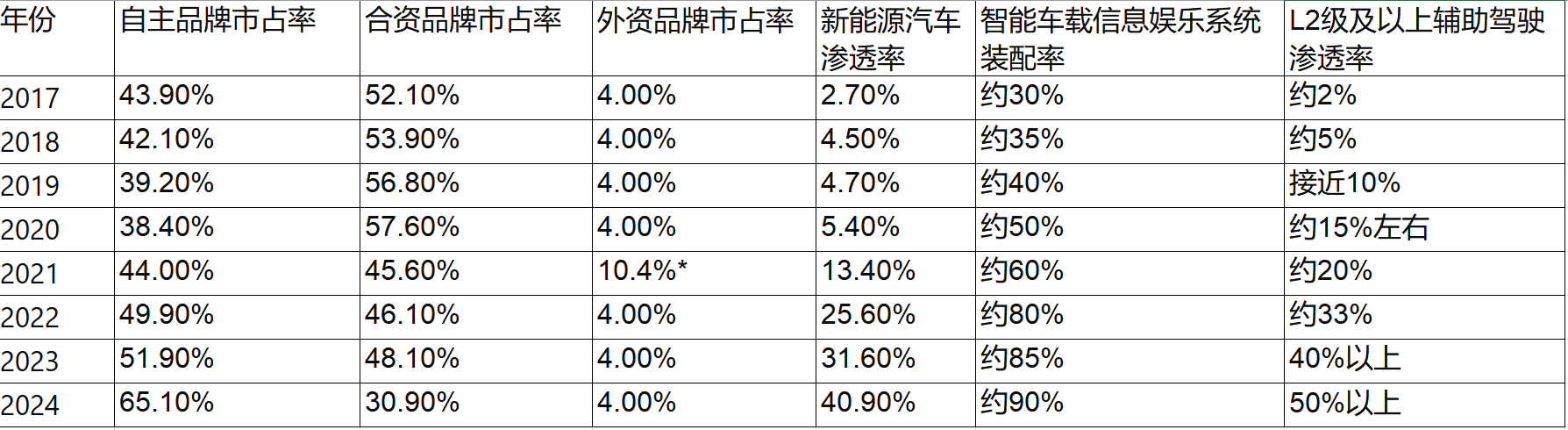
Core Insights - Goldman Sachs' report titled "2026 Outlook: Navigating Divergence" highlights 2026 as a pivotal year for the adoption of Battery Electric Vehicles (BEVs) and Navigation on Autopilot (NOA), suggesting that these technologies may develop into separate standards [1] - The report indicates a slowdown in BEV sales in Europe and the U.S., with consumers showing interest in advanced NOA but being cautious about purchasing BEVs [1][7] - In China, the integration of NOA in vehicles has led to a significant increase in sales, showcasing the advantages of BEVs in utilizing NOA, while traditional fuel vehicles are losing market share [1][5] Group 1: Market Trends - The market share of domestic brands in China has risen from 43.9% in 2017 to 51.9% in 2023, with the penetration rate of new energy vehicles increasing from 2.7% to 31.6% during the same period [3] - The report notes that the global electricity consumption of BEVs is expected to grow from 0.7% in 2024 to 2.5% by 2030, despite a stabilization in new BEV sales [7] - The competition landscape is shifting as NOA enhances the recognition and purchase intent for domestic brands, narrowing the gap with joint venture brands [5][6] Group 2: Technological Developments - Many automotive companies are focusing on applying NOA in hybrid models, although Goldman Sachs expresses skepticism about the medium-term effectiveness of this strategy [13] - The report lists various global automakers' progress in developing electronic and electrical architectures and end-to-end autonomous driving technologies, with companies like Tesla and BYD having completed their developments [14] - Traditional fuel vehicle manufacturers are exploring NOA applications in hybrid vehicles, but face challenges due to the inherent complexities of integrating NOA into their existing systems [15][16] Group 3: Future Outlook - The report suggests that by 2026, NOA may not solely rely on BEVs for growth, as traditional vehicles could also play a role in developing their own systems [19] - Concerns are raised about whether hybrid vehicles will be able to catch up with BEVs in terms of NOA capabilities, especially as BEVs are already testing Level 3 autonomous driving [19] - The future of NOA in traditional vehicles will depend on their ability to attract consumers and demonstrate value, as the market for traditional fuel vehicles remains substantial [19]
智驾行业的话语权,究竟掌握在哪些公司手中?
经济观察报· 2026-01-22 11:31
《中国智能驾驶行业趋势白皮书(2025)》认为,能够穿越 周期的幸存者,并非最早出发的,也非口号最响亮的,而是无 一例外地在技术理想与商业现实间找到了那条狭窄的平衡带, 它们普遍具备五大特征。 封图:图片资料室 曾经,智能驾驶的故事由资本狂热书写,L4的技术梦想吸引无数玩家涌入赛道。但当行业从浪漫 期行至商业化攻坚期,活下去成为所有参与者面对的最大难题。 2025年,累计交付超20万套城区NOA辅助驾驶系统的元戎启行,以一份逼近40%的月度市场份 额成绩单,揭示出行业现阶段真正的生存法则:数据是未来燃料,装车量即话语权。 从高举高打的技术公司,到深度绑定长城、吉利等主流车企的规模化供应商,元戎启行的蜕变之 路,是智能驾驶行业从技术竞赛转向数据竞争、从实验室 Demo 走向规模化交付的一个缩影。 根据《 中国智能驾驶行业趋势白皮书(2025) 》,并以元戎启行为例,外界能够看到当下行业 竞争的本质:如何在技术、数据、商业与生态之间找到平衡,成为穿越周期的最终幸存者。 活下去,需要多少车? 2019年后,智能驾驶行业的共识逐渐被重塑。资本不再为遥远的L4故事买单,投资人只问两个问 题:你拿到了多少量产订单?你的收 ...
