
通富微电

Search documents
中化岩土一分钟涨停
Shang Hai Zheng Quan Bao· 2025-10-21 02:26
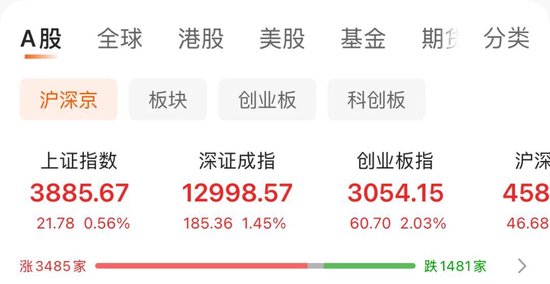
Market Overview - The three major indices opened higher, with the Shanghai Composite Index up 0.18%, the Shenzhen Component Index up 0.52%, and the ChiNext Index up 0.81% [1] - As of the report, the ChiNext Index rose by 2.03%, the Shanghai Composite Index increased by 0.56%, and the Shenzhen Component Index gained 1.45% [1] - Nearly 3,500 stocks in the market experienced gains, with sectors such as deep earth economy, oil and gas, engineering machinery, and fruit supply chain leading the increases [1] CPO Concept Stocks - The CPO concept continued its strong performance, with stocks like Huayou Ecology and Zhongfu Electric Circuit seeing significant gains [2] - Huayou Ecology recorded a 10.03% increase, while Zhongfu Electric Circuit surged by 14.43% [3] Individual Stock Highlights - Zhonghua Rock Soil (002542) hit the daily limit within a minute of opening, indicating strong market interest [4] - Contemporary Amperex Technology Co., Limited (CATL) saw its A-shares rise by 3.32% to 378.67 CNY per share, while its H-shares increased by over 5% to 556 HKD per share [6] - CATL reported a net profit of 18.55 billion CNY for Q3 2025, marking a 41.2% year-on-year increase, and revenue of 104.19 billion CNY, up 12.9% year-on-year [6][7]



苹果“引爆”eSIM手机商用,国产芯片供应企业:合作模式还待清晰|eSIM重返系列观察②
Mei Ri Jing Ji Xin Wen· 2025-10-20 15:08
Core Viewpoint - The approval of eSIM commercial trials by China's three major telecom operators marks a significant step towards the widespread adoption of eSIM technology in smartphones, with the iPhone Air leading the charge in the domestic market [1][2]. Group 1: eSIM Commercialization - China Mobile, China Unicom, and China Telecom have received approval to conduct eSIM commercial trials across all 31 provinces in China, allowing users to register for networks without a physical SIM card [1]. - The iPhone Air, set to launch on October 22, is the first smartphone in China to support only eSIM, achieving over 100 million yuan in sales within one second during pre-sales [1]. - Domestic manufacturers like Huawei and OPPO are expected to follow suit by launching their own eSIM-enabled smartphones [1]. Group 2: Supply Chain and Technology - The supply of domestic eSIM chips is still in the early stages, with companies like Unisoc and Tongfu Microelectronics being key players in the supply chain [1][3]. - Unisoc has developed eSIM chip technology that is compatible with over 400 global operators, but the final selection of domestic operators and partners remains unclear [1][6]. - The eSIM chip supply process is hindered by the need for clear operational protocols and collaboration models between telecom operators and smartphone manufacturers [6]. Group 3: Industry Development and Future Prospects - The eSIM market in China has experienced various phases, including exploration, trial, suspension, and re-initiation, with significant advancements made since 2015 [2][3]. - Companies like Huada Semiconductor and Changdian Technology are actively developing new technologies and expanding their market presence in the eSIM sector [4][5]. - The future of the eSIM market is contingent on the successful establishment of a collaborative ecosystem among industry players, as emphasized by the three major telecom operators [7].




苹果“引爆”eSIM手机商用,国产芯片供应企业:合作模式还待清晰
Mei Ri Jing Ji Xin Wen· 2025-10-20 14:24
Core Insights - The three major telecom operators in China, China Mobile, China Unicom, and China Telecom, have been approved to conduct commercial trials of eSIM technology nationwide, allowing users to register without a physical SIM card [1][2] - The launch of the iPhone Air, which exclusively supports eSIM, has generated significant market interest, with pre-sales reaching over 100 million yuan in just one second [1][3] - Domestic eSIM chip suppliers are currently in a preparatory phase, with companies like Unisoc and Tongfu Microelectronics indicating readiness but awaiting clarity on commercial partnerships and operational models [1][5] Telecom Operators' Initiatives - China Unicom has been a pioneer in eSIM technology since 2015, adapting 75 terminal types and serving millions of users in various applications [6] - China Mobile is focusing on domestic eSIM chip and operating system localization, aiming to develop more secure and functional eSIM terminals [5][6] - China Telecom is collaborating with industry partners to build an open and cooperative eSIM ecosystem, promoting innovation in terminal forms and service models [6] Chip Suppliers and Market Readiness - Unisoc has developed eSIM chip technology compatible with over 400 global operators, but the final selection of domestic partners remains uncertain [1][5] - Companies like Jiangsu Changjiang Electronics Technology and New Henghui are actively exploring eSIM market opportunities and enhancing their technological capabilities [4][5] - The eSIM market in China is still in its infancy, with previous policy support leading to a series of exploratory phases, but recent developments indicate a potential resurgence [2][3]
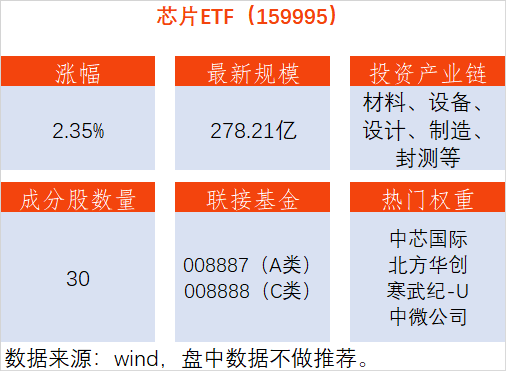
美光停供!芯片ETF(159995)上涨2.35%,士兰微涨停
Mei Ri Jing Ji Xin Wen· 2025-10-20 02:55
Group 1 - The A-share market saw a collective rise in the three major indices, with the Shanghai Composite Index increasing by 0.49%, driven by gains in sectors such as communication equipment, electronic components, and forestry, while precious metals and banking sectors experienced declines [1] - Chip technology stocks showed significant strength, with the chip ETF (159995) rising by 2.35% and notable increases in constituent stocks such as Silan Microelectronics up by 9.99%, China Resources Microelectronics up by 6.03%, and others [1] Group 2 - Micron Technology plans to cease supplying server chips to Chinese data centers, following a ban on its products in critical infrastructure in 2023, which has not allowed its business to recover [3] - Zheshang Securities views this event as a misunderstanding of market sentiment, suggesting that the impact on the market is minimal and instead indicates a worsening shortage in the storage industry, which is a positive signal for the sector [3] - The chip ETF (159995) tracks the Guozheng Chip Index, comprising 30 leading companies in the A-share chip industry across various segments, including materials, equipment, design, manufacturing, packaging, and testing [3]



2025年中国光伏接线盒行业发展阶段、产业链、市场规模、重点企业及未来趋势研判:下游需求持续增长,光伏接线盒市场前景广阔[图]
Chan Ye Xin Xi Wang· 2025-10-20 01:25
Core Insights - The photovoltaic junction box is a critical component of solar photovoltaic systems, responsible for power output and circuit protection, acting as the "control center" for current in photovoltaic modules [1][10] - The Chinese photovoltaic junction box market is projected to grow from 1.758 billion yuan in 2019 to 3.862 billion yuan in 2024, with a compound annual growth rate (CAGR) of 17.05% [1][13] - The demand for photovoltaic junction boxes is primarily driven by large solar power plant constructions, with an expected surge in demand from residential and small commercial users due to the growth of distributed photovoltaics [1][13] Industry Overview - The photovoltaic junction box industry is experiencing significant growth, with China's photovoltaic module production capacity expected to reach 1,156.5 GW and output 627.5 GW in 2024, representing year-on-year increases of 25.7% and 21.1% respectively [1][10] - The global photovoltaic junction box market is also expanding, with demand projected to rise from 418 million units in 2022 to 821 million units in 2024, reflecting a CAGR of 40.15% [11][12] Industry Development Stages - The industry has undergone multiple iterations, improving in sealing performance, size, and automation, transitioning from complex sealing ring junction boxes to more efficient encapsulated types [8][9] - The industry chain includes upstream raw materials and components, midstream manufacturing, and downstream applications primarily in the photovoltaic sector [8][9] Market Dynamics - The rapid growth of the photovoltaic industry, driven by carbon neutrality strategies and supportive policies, has led to a record increase in solar power installations, making photovoltaic junction boxes essential for system efficiency and safety [10][11] - The Chinese photovoltaic junction box market is expected to reach 4.389 billion yuan by 2025, indicating continued growth and innovation in the industry [1][13] Key Companies - Major companies in the photovoltaic junction box sector include Tongling Co., Ltd., Kuake Electronics, and Zairun New Energy, among others, with a significant presence in the Yangtze River Delta region [2][14] - These companies are increasingly focusing on technological advancements and quality certifications to compete with international players [14][16] Industry Trends - The industry is moving towards smart technology integration, enhancing monitoring and control capabilities through advanced components [17] - Efficiency improvements are being prioritized, focusing on reducing energy transmission losses and enhancing performance under high current conditions [18] - Environmental sustainability is becoming a core focus, with efforts to use eco-friendly materials and manufacturing processes [19]


金十数据全球财经早餐 | 2025年10月20日
Jin Shi Shu Ju· 2025-10-19 23:09
Group 1 - Trump signed an executive order imposing a 25% tariff on imported medium and heavy trucks, indicating a shift in trade policy [12] - The U.S. and China agreed to hold a new round of economic and trade consultations soon, reflecting ongoing trade discussions [14] - The U.S. Treasury Department purchased Argentine pesos at an unofficial exchange rate, highlighting currency market interventions [12] Group 2 - The Hang Seng Index closed down 2.48%, with significant declines in chip stocks, Apple-related stocks, and electric equipment stocks [3] - The A-share market saw all three major indices decline, with the Shanghai Composite Index down 1.95% and the Shenzhen Component Index down 3.04% [4] - The market experienced a broad sell-off, with over 4,700 stocks declining, while certain sectors like precious metals and gas saw gains [4] Group 3 - Gold prices hit a historical high of $4,379 per ounce before dropping nearly $130, closing at $4,250.93 per ounce, while silver also saw significant fluctuations [2][7] - WTI crude oil rose by 0.65% to $57.24 per barrel, and Brent crude oil increased by 0.69% to $61.26 per barrel, influenced by geopolitical developments [2][7] - Major U.S. stock indices, including the Dow Jones and S&P 500, recorded gains, with the Dow up 0.52% and the S&P 500 up 0.53% [2][7]

行业周报:科技板块回调,聚焦高景气核心资产-20251019
KAIYUAN SECURITIES· 2025-10-19 08:43
Investment Rating - The industry investment rating is "Overweight" (maintained) [1] Core Viewpoints - The report highlights that despite short-term pressures, the long-term fundamentals remain strong, particularly in high-growth sectors such as PCB, AI chips, and storage [7] - The report emphasizes the ongoing demand for storage products, indicating a potential multi-year bull market driven by strong procurement from cloud service providers [6] - The AI infrastructure is expanding globally, with significant investments in AI chips and data centers, confirming a 40% CAGR for computing chips over the next five years [5] Market Review - The domestic risk assets experienced a broad decline, with the electronic industry index dropping by 7.1% during the week of October 13-17, 2025, while consumption electronics fell by 9.3% and semiconductors by 6.7% [3][4] - In contrast, overseas assets like the Nasdaq rose by 2.1%, indicating a divergence in performance between domestic and international markets [4] Industry Updates - The consumer electronics sector is seeing a surge in new product launches, with Apple's iPhone Air set to be released soon, and global smartphone sales showing signs of recovery [5] - The storage market is experiencing a shortage, with prices for Flash Wafer increasing significantly, driven by strong demand [6] - Major companies like OpenAI and Google are making substantial investments in AI infrastructure, further solidifying the industry's growth trajectory [5][6] Investment Recommendations - The report suggests focusing on core beneficiaries in high-growth areas, including companies like SMIC, Hua Hong Semiconductor, and Cambricon [7]
沐曦集成电路IPO,核心关联公司名单
Sou Hu Cai Jing· 2025-10-19 02:20
Core Insights - The core player in the domestic high-performance GPU sector, Mu Xi Integrated Circuit (Shanghai) Co., Ltd., is set to undergo IPO review on the Sci-Tech Innovation Board on October 24, 2025 [1] - Established in September 2020, Mu Xi is recognized as a key enterprise in the high-performance general GPU field, alongside peers like Moore Threads and Birun Technology, and is designated as a national-level specialized and innovative "little giant" enterprise [1] Direct Holdings: A-share Core Beneficiaries - Supercom Communication holds the highest stake in Mu Xi at 8%, with a deep business binding; it signed a procurement contract worth 1.488 billion yuan, accounting for over 60% of Mu Xi's revenue during the same period [3] - The joint venture "Sichuan Xunxi Intelligent" launched a GPU integrated machine that secured 850 million yuan in government orders [3] - In the first half of the year, Mu Xi's related business drove a net profit increase of 155.26% year-on-year [3] - Zhongke Lanyun directly holds 0.24% of shares (854,300 shares), with potential collaborative development in edge computing scenarios between audio chip low-power technology and Mu Xi's GPU [3][4] - Chuangzhong Technology directly holds 0.2373% of shares, with audiovisual control systems deeply adapting to Mu Xi's GPU in government command centers and smart medical scenarios [4] - Kehua Data holds 854,300 shares (0.24%), with over 100 million yuan in green data center cooperation projects and a liquid cooling power supply solution achieving a PUE value below 1.15, forming a dual binding of "equity + business" [5] Indirect Holdings: Capital Layout Sharing Dividends - Zhongshan Public indirectly holds 0.57% through its subsidiary Guangfa Xinde, promoting collaboration between Mu Xi's GPU and Zhongshan Hospital, significantly reducing lung nodule identification time to 0.5 seconds [6][7] - Runtu Co., Ltd. indirectly holds 0.47% through Runtu Jinheng Fund, early positioning in the domestic GPU sector to share technology replacement dividends [8] - Youfa Group holds a combined direct and indirect stake of 0.328%, leveraging an industrial fund to amplify investment returns and deeply bind to the domestic computing power sector [9] - GCL-Poly Energy indirectly holds shares through its fund, focusing on "computing power + energy storage" collaborative scenarios to optimize energy storage scheduling efficiency using Mu Xi's computing power [9] - Guomai Culture indirectly participates through the CCTV Integrated Media Fund, promoting the application of Mu Xi's GPU in ultra-high-definition video processing and AI content generation scenarios [9] Industry Chain Collaboration: Non-shareholding but Deeply Bound - SMIC is Mu Xi's largest wafer foundry, with 12nm process mass production and 14nm process validation underway [10] - Tongfu Microelectronics is responsible for the packaging and testing of the Xi Cloud C500 series, achieving a chiplet technology yield of 99.3%, with a projected 60% revenue growth in high-end packaging by 2025 [10] - Huada Jiutian's EDA tools are entering the full domestic upgrade verification for Mu Xi, replacing overseas tools [10] - Highlan's liquid cooling solutions account for over 30% of Mu Xi's orders, with related revenue growing by 200% year-on-year in Q2 2025 [10]
趋势研判!2025年中国AI算力行业政策、产业链、市场规模、竞争格局及行业发展趋势分析:下游应用不断丰富,算力规模有望超过300EFLOPS【图】
Chan Ye Xin Xi Wang· 2025-10-19 01:15
Core Insights - Computing power is a new productive force in the digital economy era, becoming a core driving force for digital economic development and a solid foundation for supporting technological progress and industry digital transformation [5][8] - The demand for AI computing power is experiencing explosive growth due to the rapid development of AI large models, with the total computing power scale expected to reach 280 EFLOPS in 2024 and exceed 300 EFLOPS in 2025 [5][12] AI Computing Power Industry Definition and Classification - Computing power refers to the ability to perform calculations and data processing, integrating information computing power, network transmission capacity, and data storage capacity [5] - AI computing power is the computational resources and processing capabilities required to execute AI algorithms, serving as a key indicator of performance in handling AI tasks [5][3] AI Computing Power Industry Development Status - The AI computing power industry is characterized by rapid growth, with significant increases in total computing power driven by the demand from AI applications [5][12] AI Computing Power Industry Value Chain - The industry presents a clear chain from upstream core technology to midstream manufacturing and downstream service scenarios, relying on a complete chain of chips, servers, data centers, and connection components [6][10] AI Computing Power Industry Development Environment - Related Policies - The government has introduced various policies to support the development of computing power as a core productive force, including initiatives for building a national integrated big data center and high-quality development of computing infrastructure [8][10] AI Computing Power Industry Competitive Landscape - Major global competitors in the AI computing power market include Microsoft, Google, Intel, NVIDIA, AMD, and Amazon, while domestic companies like Alibaba, Baidu, Tencent, and Huawei also hold competitive positions [10][11] AI Computing Power Industry Development Trends - The industry is transitioning from rapid growth focused on scale to a more quality and efficiency-oriented growth model, with an increasing emphasis on intelligent computing power and the establishment of large-scale computing clusters [12][13]

苏州并购重组实现“1+1>2”
Su Zhou Ri Bao· 2025-10-18 00:21
Core Viewpoint - The implementation of the "Six Guidelines for Mergers and Acquisitions" has significantly stimulated the M&A market in Suzhou, supporting economic transformation and high-quality development through various strategic initiatives [1][2]. Group 1: M&A Market Activity - As of September last year, Suzhou listed companies completed 40 M&A events, with a total transaction scale reaching 25.6 billion yuan, indicating strong M&A activity in the capital market [1]. - In the first nine months of this year, 25 M&A events were completed by listed companies in Suzhou, showcasing the ongoing momentum in the M&A landscape [4]. - The establishment of local M&A funds, such as the 1.3 billion yuan fund by Dongwu Securities, has facilitated investments totaling 7.68 billion yuan, further driving M&A activities [4]. Group 2: Policy Support and Strategic Initiatives - The "Six Guidelines" encourage listed companies to utilize various payment tools for M&A, enhancing transaction flexibility and supporting technology innovation and industrial upgrades [2]. - Suzhou's action plan for 2025-2027 aims to establish a one-stop service platform for M&A, fostering the growth of key industry representatives and creating a 100 billion yuan M&A transaction scale [3]. - The establishment of the Suzhou Capital Market M&A Alliance aims to enhance collaboration among financial institutions, service providers, and listed companies, promoting a professional exchange platform [3]. Group 3: Sector-Specific M&A Trends - Over 70% of completed M&A projects in Suzhou are industry-related, reflecting a strategic focus on strengthening core businesses and supply chain integration [5]. - Private enterprises account for nearly 90% of M&A activities, highlighting the vitality of Suzhou's private economy, while state-owned enterprises focus on finance and infrastructure [5]. - M&A activities in high-tech sectors, such as semiconductors and biotechnology, represent over 70% of the total, aligning with Suzhou's goal of developing a digital economy innovation cluster [5]. Group 4: Significant M&A Cases - Four major asset restructurings have been completed, including 隆扬电子's acquisition of 德佑新材, which aims to achieve technological synergy and industry chain integration [6]. - 罗博特科's acquisition of 斐控泰克 marks a strategic shift towards the semiconductor field, enhancing its competitive position in clean energy and semiconductor equipment [7]. - 旭杰科技's acquisition of 中新旭德 will expand its business into downstream solar power operations, promoting synergy across the solar energy value chain [7]. - 华亚智能's restructuring with 冠鸿智能 allows for rapid entry into the smart equipment sector, enhancing its technical capabilities and market position [8].