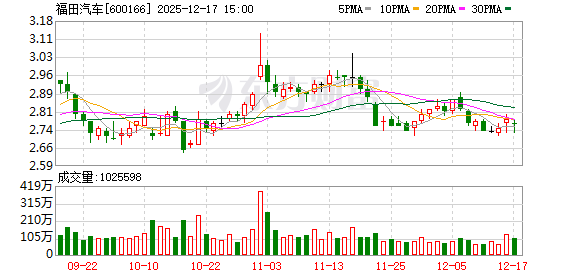
福田汽车

Search documents
福田汽车新产品发布会
Jing Ji Guan Cha Wang· 2025-12-17 16:47
Core Viewpoint - Foton Motor (600166) is set to unveil innovative products including the Kavin heavy truck, Ouhui bus, and Ouman Galaxy hybrid heavy truck at an upcoming product launch event, highlighting its leadership in the new energy sector and advancements in intelligent technology [1] Group 1 - The event will showcase Foton Motor's latest breakthroughs in new energy and intelligent technology [1] - The official pricing and exclusive policies for the Qimingxing series will be announced for the first time [1] - The company aims to present comprehensive commercial vehicle solutions covering all scenarios [1]

福田汽车:2025年1月-11月公司重卡出口约2.4万台,同比大幅增长约125%
Zheng Quan Ri Bao· 2025-12-17 14:13
Core Viewpoint - Foton Motor reported a significant increase in heavy truck exports, projecting continued growth driven by market expansion and competitive product offerings [2] Group 1: Export Performance - In the period from January to November 2025, Foton Motor's heavy truck exports reached approximately 24,000 units, representing a substantial year-on-year growth of about 125% [2] - The company's market share in heavy truck exports is approximately 7.8%, which reflects an increase of around 3.8 percentage points compared to the previous year [2] Group 2: Market Strategy - Foton Motor plans to maintain its focus on Latin America while increasing resource investment in Africa, Southeast Asia, and the Middle East [2] - The company aims to leverage its product competitiveness and localized operational strategies to achieve sales breakthroughs in these new markets [2]

【重卡11月月报】内销与出口共振,景气度持续向好
东吴汽车黄细里团队· 2025-12-17 14:11
Investment Highlights - November sales: Domestic sales met expectations, while wholesale and export exceeded expectations. November heavy truck production reached 114,000 units, with year-on-year and month-on-month growth of +84.4% and +9.8% respectively. Wholesale sales were 113,000 units, with year-on-year and month-on-month growth of +65.4% and +6.6%. Terminal sales were 77,000 units, with year-on-year and month-on-month growth of +34.3% and +9.6%. Exports reached 33,000 units, with year-on-year and month-on-month growth of +44.0% and +0.7%. Overall industry inventory increased by 420 units, with a total inventory coefficient of 1.8, indicating a reasonable level [2][14][17]. Industry Structure - In November, the performance of engineering vehicles outperformed logistics vehicles. Terminal sales of engineering vehicles were 8,500 units, with year-on-year and month-on-month growth of +41.2% and +13.1%. Logistics vehicle sales were 68,200 units, with year-on-year and month-on-month growth of +33.5% and +8.9%. The market share of engineering vehicles and logistics vehicles was 11.1% and 88.9% respectively, with engineering vehicle share increasing by 0.5 and 0.3 percentage points, while logistics vehicle share decreased by 0.5 and 0.6 percentage points [3][36]. Market Share Dynamics - In November, Foton's domestic sales share increased year-on-year, while the export shares of Jiefang and Foton rose month-on-month. The terminal sales market shares for November were 21.1% for Jiefang, 18.0% for Dongfeng, 16.9% for Heavy Truck, 11.0% for Shaanxi Heavy Truck, and 12.4% for Foton, showing changes compared to the full year of 2024 [4][16][53]. Engine Market - Weichai maintained the top market share in the engine sector. In November, the market shares for Weichai, Cummins, Xichai, Heavy Truck, and Yuchai were 17.4%, 15.6%, 14.6%, 9.2%, and 11.1% respectively. Weichai's terminal matching volume was 13,000 units, with year-on-year growth of +11.8% but a month-on-month decline of -7.1% [5][19][70]. Investment Recommendations - The company is optimistic about the market performance driven by the National IV policy. Recommendations include investing in China National Heavy Duty Truck and Weichai Power, while also paying attention to the performance improvement potential of FAW Jiefang and Foton [7][18].

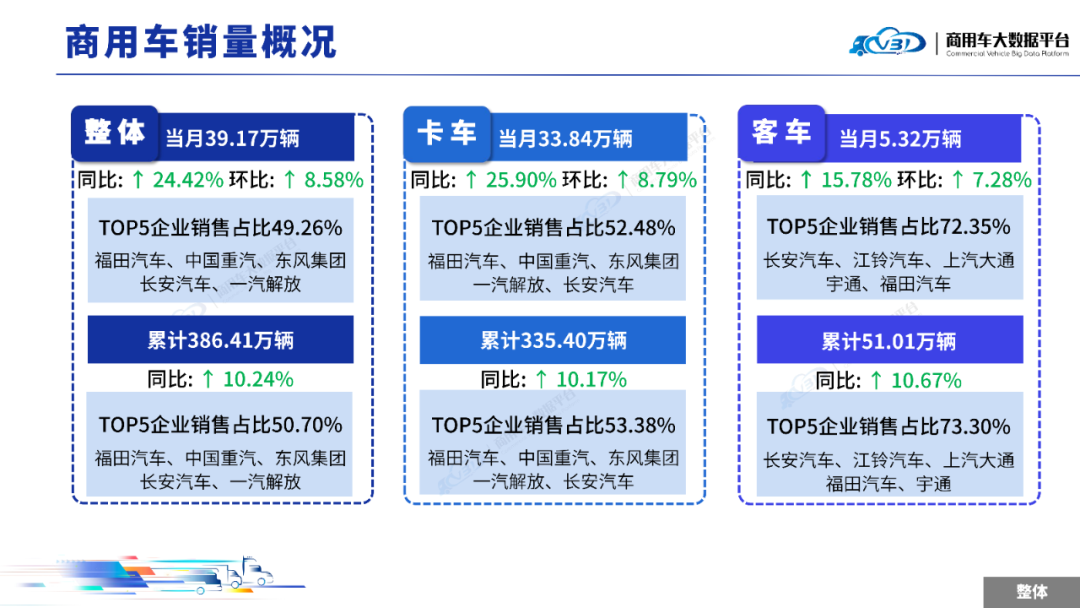
中国汽车流通协会:11月全国商用车整体销量(批发)为39.17万辆 同比增长24.42%
Zhi Tong Cai Jing· 2025-12-17 12:06
智通财经APP获悉,12月17日,中国汽车流通协会发布2025年11月全国商用车销量概况(批发)。2025年11月全国商用车整体销量(批发)为39.17万辆,同比 增长24.42%,环比增长8.58%;1-11月全国商用车累计整体销量(批发)为386.41万辆,累计同比增长10.24%。 2025年11月全国商用车整体销量(批发)为39.17万辆,同比增长24.42%,环比增长8.58%;1-11月全国商用车累计整体销量(批发)为386.41万辆,累计同比增 长10.24%。 2025年11月新能源商用车销量(批发)为10.50万辆,同比增长61.55%,环比增长18.15%;1-11月累计销量(批发)增长82.49万辆,同比增长63.11%。 连续12个月商用车销量变化趋势 销量(万辆) 环比增长率(%) 50.00 80.00 60.00 40.00 40.00 30.00 20.00 0.00 20.00 -20.00 10.00 -40.00 0.00 -60.00 202412 202501 202502 202503 202504 202505 202506 202507 202508 20250 ...




豪华车「四分天下」格局初显,中国品牌凭何跻身核心阵营?
3 6 Ke· 2025-12-17 11:59
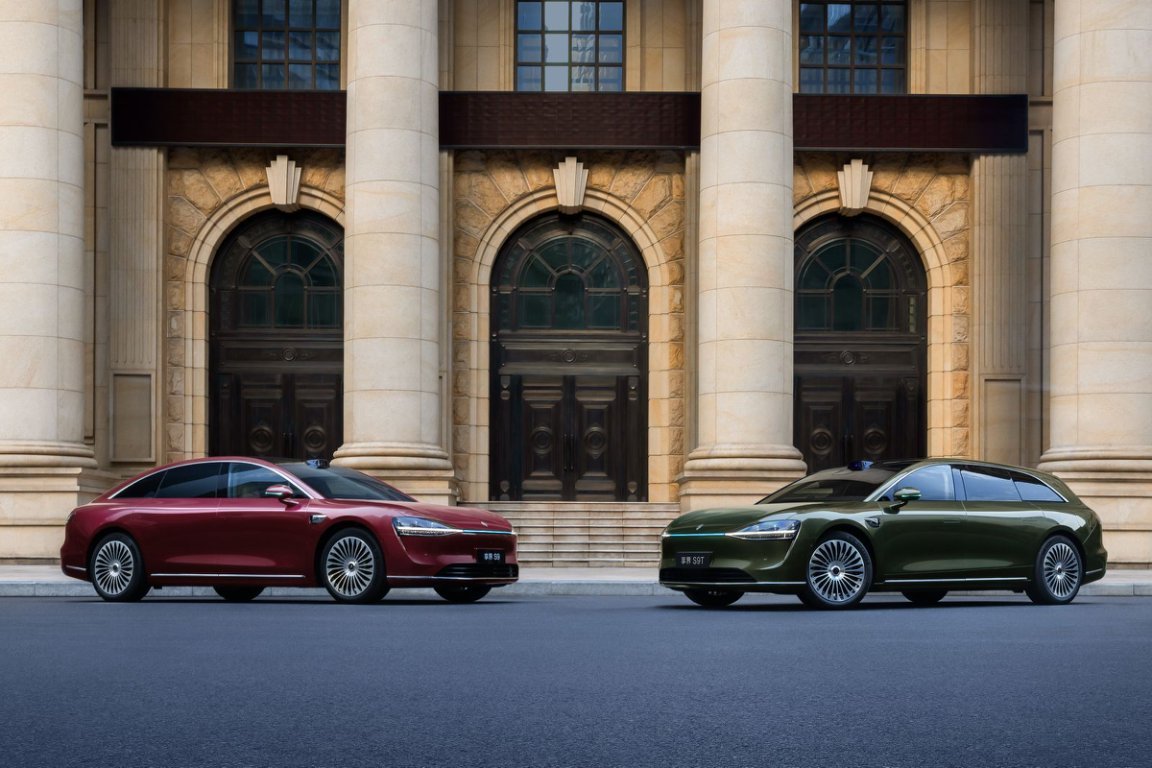
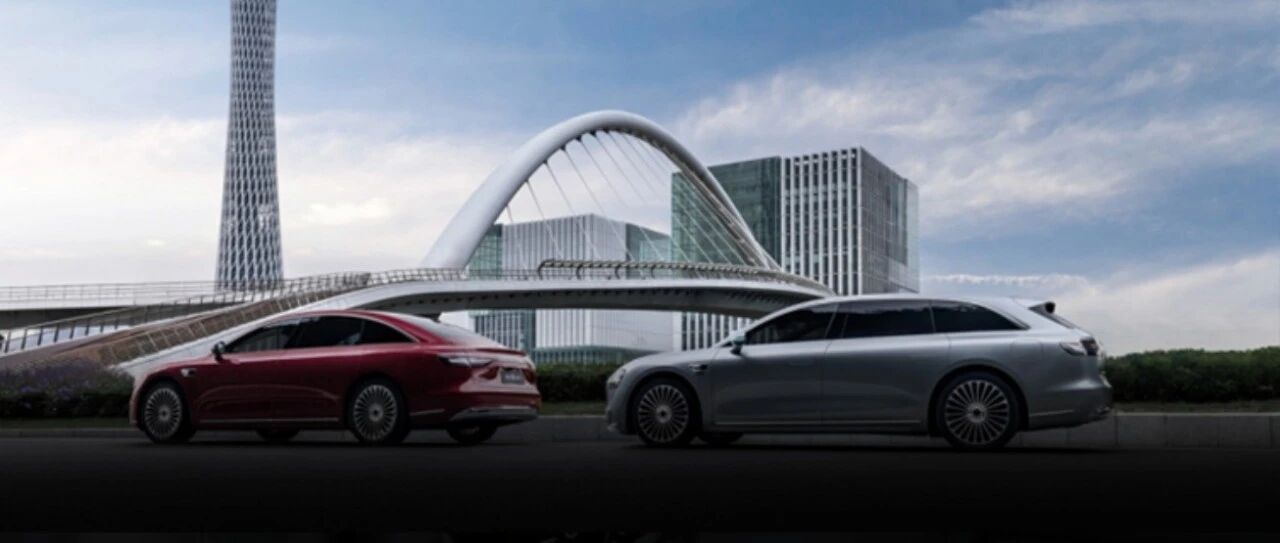
Core Insights - The luxury car market in China is undergoing a transformation where traditional brand prestige is being replaced by a focus on technology and user experience [1][6][23] - The emergence of domestic brands like Xiangjie is reshaping the definition of luxury, emphasizing value derived from advanced technology and user-centric features rather than historical brand loyalty [4][23] Industry Trends - The shift from mechanical performance to intelligent experience is evident, with entry-level cars already featuring advanced driver assistance systems, while some high-end luxury cars lag behind in technology [3][6] - The competition in the luxury electric vehicle market is intensifying, as consumers who previously owned luxury fuel vehicles are now more discerning and expect superior technology and experience [6][19] Company Performance - Xiangjie has achieved significant market success, with its S9 and S9T models topping the sales charts for mid-to-large electric vehicles priced above 300,000 yuan, indicating a shift in consumer preferences towards new luxury values [4][9] - The S9T model received over 30,000 orders within 66 days of its launch, demonstrating strong market acceptance and a departure from traditional luxury brand dominance [9][23] Technological Advancements - Xiangjie vehicles are equipped with Huawei's advanced driving assistance systems, showcasing a commitment to integrating cutting-edge technology into their offerings [13][20] - The collaboration between Xiangjie and Huawei aims to enhance the brand's technological capabilities, with plans to invest 20 billion yuan over three years to develop a comprehensive ecosystem [20][22] Consumer Insights - The new luxury consumer is less willing to pay a premium for brand heritage and more focused on authentic experiences and advanced features [4][15] - Research indicates that over 70% of Xiangjie S9 buyers are transitioning from traditional luxury brands, highlighting a significant shift in consumer behavior and expectations [15][23] Market Strategy - Xiangjie is establishing a dedicated sales and service network, with nearly 300 user centers and 600 authorized experience stores, to enhance customer engagement and service consistency [19][22] - The brand's strategy includes a focus on creating a lifestyle brand that resonates with luxury consumers, moving beyond just manufacturing vehicles to addressing broader lifestyle needs [15][23]
L3上路,妥了
36氪· 2025-12-17 11:45
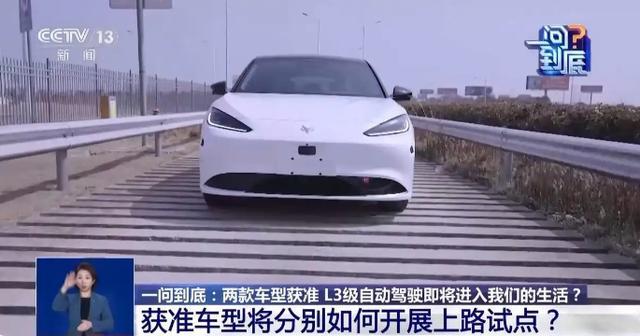
Core Viewpoint - The approval of L3-level conditional autonomous driving vehicles marks a significant step towards the commercialization of autonomous driving in China, transitioning from testing to official road use under specific conditions [8][9][10]. Group 1: Approval Details - The Ministry of Industry and Information Technology (MIIT) has approved two L3-level autonomous vehicles: Changan SC7000AAARBEV and BAIC Alpha S6, allowing them to operate under specific conditions in designated areas of Chongqing and Beijing [5][6][16]. - The Changan vehicle can achieve autonomous driving at speeds up to 50 km/h in congested traffic and on specific roads in Chongqing, while the BAIC vehicle can operate at speeds up to 80 km/h on certain highways in Beijing [17][19]. Group 2: Significance of Approval - This approval signifies the transition of autonomous vehicles into a "certified era," indicating that L3-level vehicles are now recognized for their operational capabilities under real-world conditions [8][12]. - The distinction between "product approval" and "testing licenses" is crucial, as the former indicates a higher level of regulatory recognition and the ability to operate on public roads [10][11][12]. Group 3: Future Implications - The approval is part of a gradual process that began with policy discussions in 2022, leading to the current stage where L3 and L4 vehicles can be tested under specific conditions [26][28]. - The industry anticipates a rapid increase in L3 vehicle approvals, with many companies setting 2026 as a target for widespread deployment of L3 autonomous driving technology [30][31][32].

豪华车「四分天下」格局初显,中国品牌凭何跻身核心阵营?
36氪· 2025-12-17 11:45
Core Viewpoint - The luxury car market in China is undergoing a transformation where traditional brand prestige is being replaced by a focus on intelligent experiences and user value, marking a shift from "symbolic consumption" to "meaningful consumption" [5][8][10]. Group 1: Market Dynamics - The luxury car market is now characterized by a competition driven by technological advancements, with traditional luxury brands struggling to keep up as consumers prioritize smart features over brand heritage [3][4][10]. - The sales performance of domestic brands, particularly the Xiangjie S9 and S9T, indicates a significant shift in consumer preferences, as these models topped the sales charts for mid-to-large electric vehicles priced above 300,000 yuan [4][15]. - The emergence of intelligent driving capabilities and advanced user experiences is redefining what constitutes "new luxury" in the automotive sector [18][20]. Group 2: Consumer Behavior - Consumers are increasingly unwilling to compromise on experience for brand prestige, leading to a reevaluation of luxury car value propositions [10][20]. - A significant portion of Xiangjie S9's user base consists of individuals transitioning from traditional luxury brands, highlighting a demand for enhanced experiences and emotional connections [20][33]. - The shift towards a lifestyle brand approach, where vehicles are seen as "life partners" rather than mere transportation, reflects changing consumer expectations [21][33]. Group 3: Competitive Strategy - Xiangjie has adopted a comprehensive strategy that emphasizes technological superiority, user experience, and emotional engagement, moving beyond mere product features [15][33]. - The establishment of a dedicated sales and service network, primarily composed of former dealers from traditional luxury brands, indicates a strategic shift in market positioning [25][26]. - The collaboration between Xiangjie and Huawei aims to leverage advanced technology and manufacturing expertise, enhancing the brand's competitive edge in the luxury segment [27][29][32]. Group 4: Future Outlook - The luxury car market is transitioning towards a model where competition is based on the entire ecosystem, including technology, user relationships, and service experiences [33][34]. - The successful market penetration of Xiangjie signifies a broader trend where Chinese brands are becoming key players in defining new luxury standards, moving from followers to leaders in the automotive industry [33].
车企打响L3冲刺赛
华尔街见闻· 2025-12-17 10:25
以下文章来源于Auto有范儿 ,作者柴旭晨 就在准入车型公布的同一天,华为车BU发文称极狐阿尔法S采用的是乾坤智驾ADS系统,搭载了 包含三颗激光雷达在内的34颗高性能传感器。这意味着,在华为的托举下,北汽成功入围L3智驾 赛道。 随后,小鹏、理想也先后官宣获得L3级道路测试牌照,后续分别在广州、北京两个城市开展常态 化L3级道路测试;华为的鸿蒙智行以及比亚迪则已联合深圳相关部门开启L3级有条件自动驾驶内 测。小鹏、极氪等品牌也宣布,其市售车型已经为L3级自动驾驶做好了硬件预埋。 显然,车企们已经在高阶智驾的赛道上摩拳擦掌。然而,透过宣发的喧嚣,我们看到的并非技术的 瞬间爆发,而是一场更为谨慎、克制且漫长的马拉松起跑。 根据此次工信部的发文,深蓝SL03和极狐阿尔法S这两款车型将分别在北京和重庆的路段开展L3 测试工作,且有一定的限制。 其中,深蓝SL03的准入场景目前仅限指定路段的交通拥堵环境下高速公路和城市快速路单车道 内,极狐阿尔法S的准入场景目前限定在指定的高速公路和城市快速路单车道内。测试路段主要围 绕机场快速、城市快速等相对封闭且没有行人混杂的路段展开。 Auto有范儿 . 讲述独特的汽车故事。 ...

想象一下:你坐在办公室,你的车自己出去跑网约车赚钱
Huan Qiu Wang Zi Xun· 2025-12-17 10:23
Core Viewpoint - The approval of L3 level conditional autonomous vehicles in China marks a significant step towards the commercialization of advanced driving technologies, indicating that the automotive industry is undergoing a profound transformation driven by intelligence [2][5]. Group 1: Approval and Testing of L3 Autonomous Vehicles - The Ministry of Industry and Information Technology has approved two models of L3 level autonomous vehicles for market entry, representing the first batch of such vehicles to receive road permits in China [2]. - Beijing and Guangzhou have also issued road testing licenses for L3 level autonomous vehicles, initiating regular testing on urban expressways [4]. Group 2: Understanding L3 Level Autonomous Driving - L3 level autonomous driving allows vehicles to operate independently under specific conditions, contrasting with L2 and below, where human drivers must maintain control [5][6]. - The approved L3 vehicles can operate on designated roads, with speed limits of 50 km/h in Chongqing and 80 km/h in Beijing, but they still require driver intervention in complex situations [5][6]. Group 3: Technological Requirements for L3 Level - Achieving L3 level requires significant redesign of vehicle systems, including braking, steering, and perception capabilities, which are essential for safe autonomous operation [7]. - The L3 level vehicles are equipped with multiple sensors, including LiDAR and cameras, to enhance environmental perception and decision-making capabilities [7]. Group 4: Future of Higher-Level Autonomous Driving - L4 level autonomous driving is already being tested in specific areas, with plans for broader implementation by 2025, although these vehicles still require oversight from safety personnel [8][9]. - The global landscape for autonomous driving is evolving, with approximately 50 countries allowing testing or operation of autonomous vehicles, indicating a dual-track development approach [8]. Group 5: Vision for L5 Level Autonomous Driving - L5 level autonomous driving aims for full autonomy in all driving conditions, potentially allowing vehicles to operate as independent income-generating entities, such as running ride-sharing services [10]. - Industry experts predict that by 2030, smart assisted driving will be widely adopted, paving the way for large-scale market entry of autonomous vehicles [10].
官方:“全网最低价”可能构成垄断
21世纪经济报道· 2025-12-17 08:41
刘健介绍,近年来市场监管总局已依法查处多起平台企业"二选一"垄断案件,指引总结执法经 验,提示具有市场支配地位的平台企业避免通过惩罚性或者激励性措施实施"二选一"行为。 据新华社从市场监管总局获悉,平台要求商家"全网最低价",可能构成滥用市场支配地位或者 垄断协议行为。 当日,市场监管总局举行新闻发布会,介绍民生领域反垄断执法相关情况。市场监管总局反垄 断执法一司副司长刘健介绍,近期发布的《互联网平台反垄断合规指引(征求意见稿)》提出 了8个新型垄断风险,为平台企业提供务实管用的合规指导。 例如,有的平台企业要求平台内商家销售商品价格不得高于其他竞争性平台。指引提示,平台 要求商家"全网最低价",可能构成滥用市场支配地位或者垄断协议行为。 又如,有的平台算法不公开、不透明,"算法黑箱"损害平台内商家和消费者利益。指引将实现 算法向善作为平台企业重要的合规目标,并列举"算法共谋"等风险示例,同时鼓励平台企业开 展算法筛查,构建算法垄断识别防控体系,从源头上防范垄断行为的发生。 刘健表示,平台经济具有独特的商业逻辑和行为模式,涉及多方主体利益,如何科学划定行为 边界较为复杂。监管部门要引导平台企业加强风险识别、风 ...