
优必选

Search documents
锋龙股份二次“卖壳”携手优必选,停牌前一日“精准”涨停,大量投资者质疑内幕交易,有人称已向证监会举报
Zheng Quan Shi Bao Wang· 2026-01-01 07:36
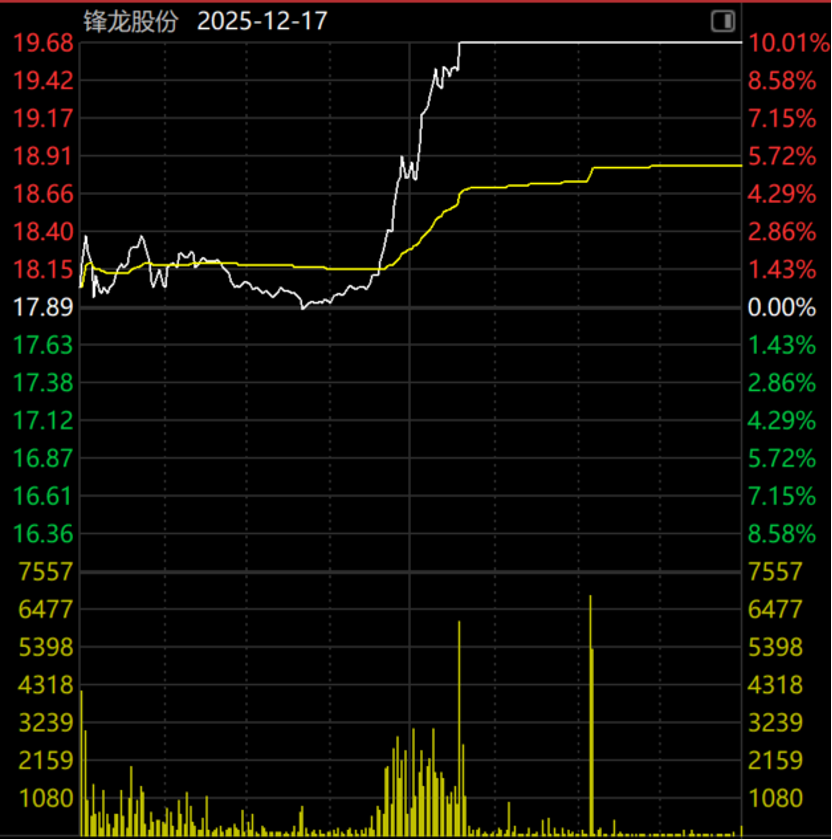
停牌前精准买入并推升股价涨停的资金,究竟是谁? 锋龙股份(002931)计划转让控股权给热门港股机器人公司优必选(09880),但停牌前一日股价离奇涨停,复牌后公司 股价已连续五个"一"字板涨停,引发市场猜测是否消息走漏、涉嫌内幕交易。记者注意到,这是锋龙股份2024年以来 第二次筹划转让控股权"卖壳"。 值得一提的是,2025年10月,锋龙股份发布《内幕信息知情人登记管理制度》。制度提到,在公司披露重大事项前, 其股票及其衍生品种交易已经发生异常波动的,公司应当向深圳证券交易所报送相关内幕信息知情人档案。公司因行 业发展或公司战略等问题执着于"卖壳"无可厚非,但是A股市场的法律红线绝不容践踏。 携手优必选停牌前一日"精准"涨停 记者注意到,锋龙股份停牌前一日股价蹊跷地由平盘附近直拉涨停,异动资金"先知先觉"的迹象比较明显。这场资本 盛宴的"入场券",似乎被某些人提前拿到了。 2025年12月17日,锋龙股份股票交易大部分时间均波澜不惊。然而就在上午临近收盘前,资金似乎收到了某种"信 号",锋龙股份股价突然直线拉升,并在午后快速、强势封死涨停板。当晚公司发布公告,宣布正在筹划控制权变更事 项,股票自次日起停牌 ...


又一家,机器人冲刺A股
财联社· 2026-01-01 05:29
以下文章来源于科创日报 ,作者张真 科创日报 . 科创圈都在关注的主流媒体,上海报业集团主管主办,《科创板日报》出品。 近日,深圳市越疆科技股份有限公司(简称"越疆")在港交所公告称, 公司董事会已议决和批准开始有关建议A股上市的相关工作。 截至目前,公 司已获A股上市辅导备案登记,辅导机构为国泰海通。 资料显示,越疆于2024年12月23日在港交所主板挂牌上市,成为港股"协作机器人第一股"。公司成立于2015年,主营业务为智能机械臂 及其他智能硬件产品的研发、生产、销售,其核心产品为六轴协作机器人,2025年上半年该产品收入9365万元,占总营收的61.2%。 从整体经营状况看,越疆于2025年上半年实现营业收入1.53亿元,较去年同期增长27.1%;净亏损达4087万元,较去年同期收窄31.8%。 对于此次A股上市计划,越疆表示,此举为推动业务发展、增强整体竞争力,并确保达成运营目标及长远发展策略。 越疆的上市计划并非孤例,近半年来,多家机器人企业寻求上市。截至目前,宇树科技IPO辅导进展状态已变更为"辅导工作完成",距离提 交招股说明书、冲击"A股人形机器人第一股"仅一步之遥。 除此之外, 数家国产头部 ...

马斯克没造出来的“猫娘”稚晖君做成了 背包大小,还能骑机器狗丨预见·科技
Sou Hu Cai Jing· 2026-01-01 02:40
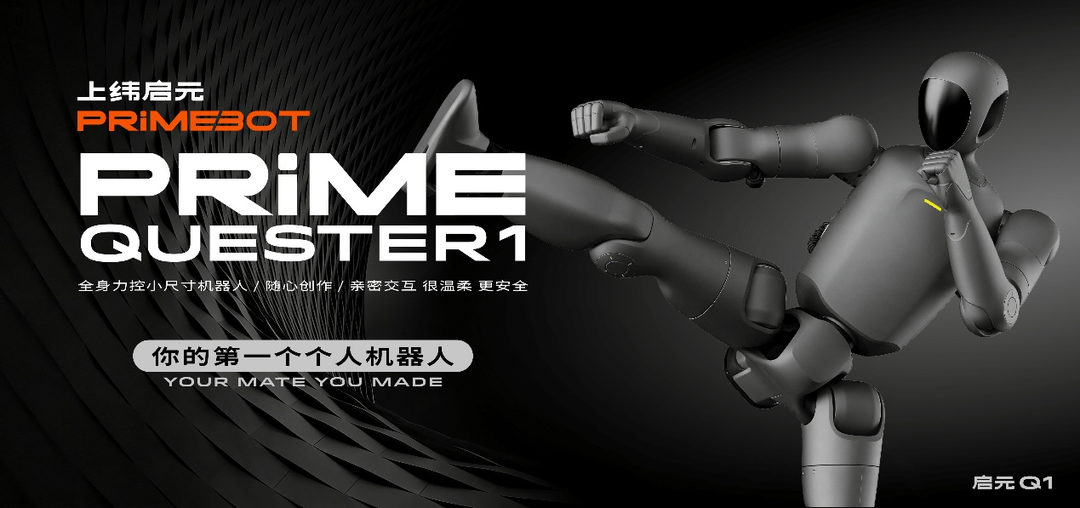
Core Insights - A new technology company, Shangwei New Materials, has announced its entry into the personal robotics sector with the launch of the "Qiyuan Q1" humanoid robot under the "Shangwei Qiyuan" brand, marking its first clear business direction in this area [1][3] Group 1: Product Development - The Qiyuan Q1 robot features breakthroughs in joint systems, overall size, and application scenarios, condensing laboratory-level humanoid robot capabilities into a backpack-sized device [3] - The design aims to create a personal robot that is ownable, usable, and creatable by individuals, aligning with the industry's pursuit of scale effects [3] Group 2: Market Context - Humanoid robots are viewed as the next potential consumer electronics product to succeed smartphones, with companies like UBTECH and others developing robots for companionship and entertainment [3] - The market for personal embodied intelligent humanoid robots is being cultivated, with Qiyuan Q1 leveraging the Zhiyuan Lingxin platform for natural language interaction and educational capabilities [3] Group 3: Industry Perspectives - The advancement of robot technology requires not only visibility but also user experience, addressing the needs of researchers, creative enthusiasts, and family users [4] - The ultimate goal for humanoid robots is to integrate into households, although significant technical challenges remain, particularly in sensors and mechanical components [4]

三度上榜!解锁南山让企业家“幸福扎根”的三重密码
Sou Hu Cai Jing· 2025-12-31 16:05
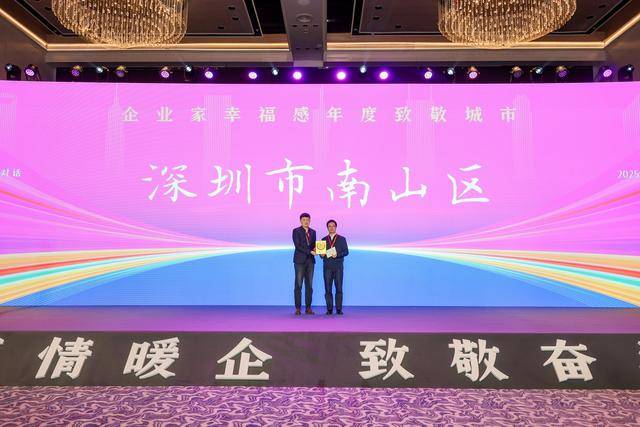
Core Viewpoint - The event held in Taicang, Jiangsu, recognized 20 cities, including Nanshan District of Shenzhen, for their contributions to enhancing entrepreneurs' happiness and business environment, marking Nanshan's third consecutive recognition [1][3]. Economic Performance - Nanshan District achieved a GDP of 742.81 billion yuan in the first three quarters of 2025, with a year-on-year growth of 5.8%, and is expected to surpass 1 trillion yuan for the year, becoming the first district in China to do so [4]. - The district hosts over 600,000 market entities and 218 listed companies, indicating a high density of businesses [3][4]. Entrepreneurial Services - Nanshan has developed a comprehensive service system for entrepreneurs, integrating online and offline services, with the "Ai Nanshan" platform offering over 2,000 services throughout the business lifecycle [4][5]. - The platform has recorded over 12.67 million visits and facilitated financing exceeding 3.68 billion yuan, with a 24-hour response time for business inquiries [5]. Community Engagement - Nanshan organizes various community events, such as the "Feather Enterprise" badminton tournament, to foster business networking and collaboration, resulting in direct solutions for 35 specific business needs and over 10 successful business matches [6][8]. Policy Support - The district's industrial policy has evolved to support businesses throughout their growth cycle, transitioning from attracting companies to nurturing their development through initiatives like the "Six Ones" action plan [9]. - The "X-Day" West Lake Roadshow has facilitated over 2,900 institutional connections, helping 17 companies secure over 530 million yuan in equity financing [10]. Investment Initiatives - The establishment of the "Guangdong-Hong Kong-Macao Greater Bay Area Venture Capital Guidance Fund" with a target size of 50.45 billion yuan aims to support hard technology sectors and align with Nanshan's innovation policies [12]. - This fund is expected to enhance the region's strategic competitiveness and provide stable capital support for early-stage technology companies [12]. Industrial Ecosystem - Nanshan's "robot valley" exemplifies a thriving industrial ecosystem, with significant collaboration among companies and research institutions, leading to remarkable achievements in the robotics sector [13][15]. - The district boasts over 1,400 AI companies, with a substantial share of the city's algorithm product registrations, highlighting its role as a hub for innovation [15]. Entrepreneurial Culture - Nanshan's commitment to fostering a supportive environment for entrepreneurs is reflected in its policies and community initiatives, creating a vibrant ecosystem that attracts and retains talent [16].
北水成交净买入34.49亿 北水全年净买入港股逾1.4万亿港元 创历史纪录新高
Zhi Tong Cai Jing· 2025-12-31 14:22
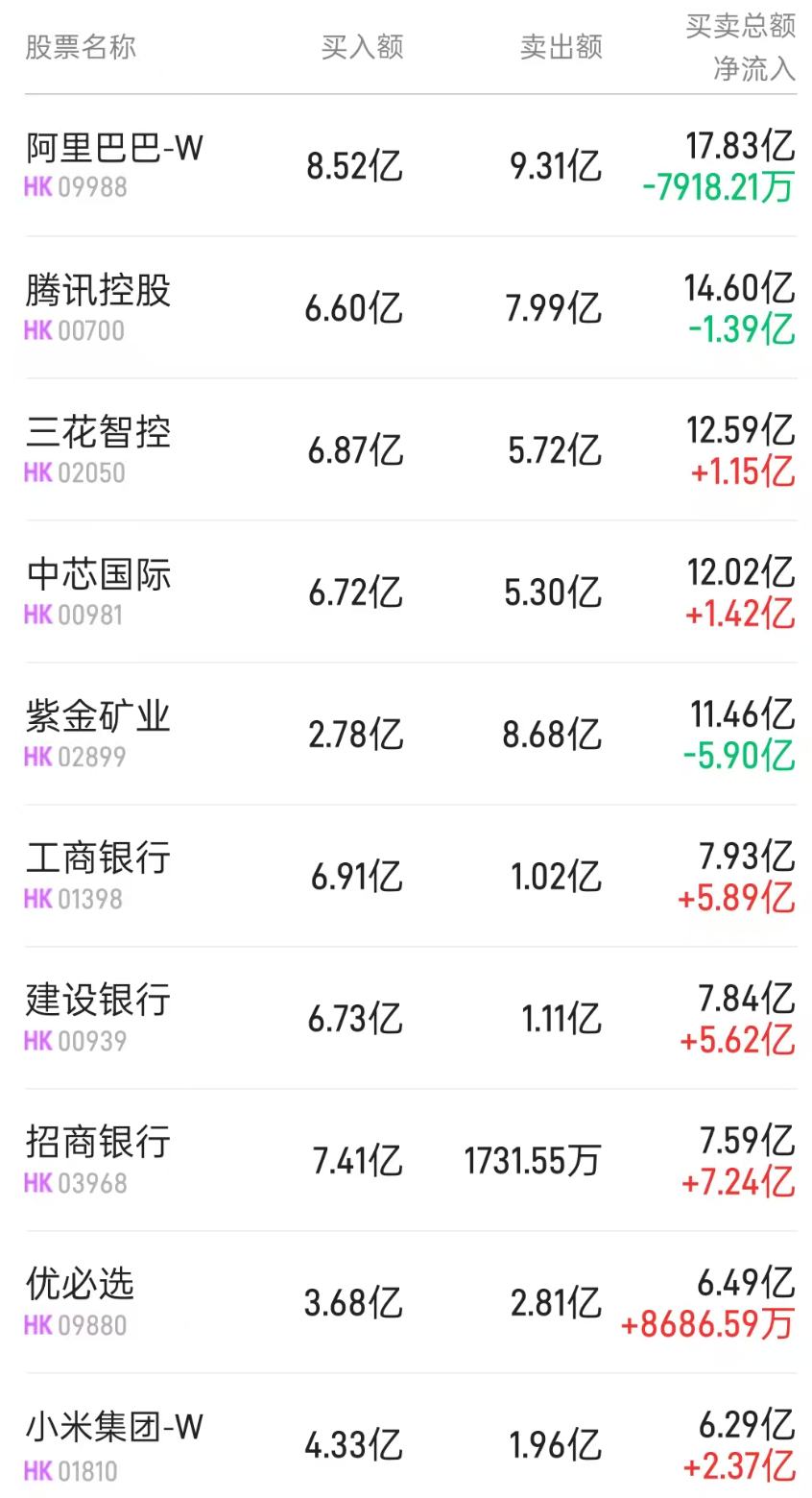
Group 1: Market Overview - On December 31, the Hong Kong stock market saw a net inflow of 34.49 billion HKD from northbound funds, with 30.97 billion HKD from the Shanghai Stock Connect and 3.51 billion HKD from the Shenzhen Stock Connect. This marks a record high net inflow of 1.41 trillion HKD for the year, significantly up from approximately 807.9 billion HKD in 2024 [2]. Group 2: Key Stocks - The most net bought stocks by northbound funds included China Merchants Bank (招商银行) with 7.24 billion HKD, Industrial and Commercial Bank of China (工商银行) with 5.88 billion HKD, and China Construction Bank (建设银行) with 5.61 billion HKD [6]. - The most net sold stocks were Zijin Mining (紫金矿业) with a net outflow of 6.82 billion HKD and Tencent (腾讯) with a net outflow of 6.46 billion HKD [7]. Group 3: Sector Performance - The banking sector is expected to benefit from a stable macro-financial environment, with projections indicating that bank interest margins may have bottomed out and risks in the real sector are easing. This is anticipated to lead to income and profit recovery in the banking industry [6]. - Semiconductor stocks, particularly SMIC (中芯国际), received significant net buying, with 3.91 billion HKD, driven by price increases in the 8-inch BCD process platform by approximately 10% [6]. Group 4: Specific Company Insights - Jiangxi Copper (江西铜业) saw a net inflow of 1.58 billion HKD, while Zijin Mining faced a net outflow of 6.82 billion HKD. The National Development and Reform Commission emphasized the need for optimizing the management of the copper smelting industry, which may impact future production levels [7]. - Xiaomi Group (小米集团) received a net inflow of 2.37 billion HKD, supported by government policies promoting consumer electronics [7].


2025年十四大事件
首席商业评论· 2025-12-31 13:49
Core Insights - The year 2025 marks a significant paradigm shift in China's and the global business landscape, transitioning from vision to industrial implementation of AI, consumption, and geopolitical changes [3][4]. Group 1: AI and Technology Developments - DeepSeek's emergence in early 2025 signifies a pivotal moment for China's AI technology sector, reducing reliance on foreign models and initiating a trend towards open-source large models [5]. - The rapid competition in the AI field has led to the emergence of numerous competitors, including Doubao, Qianwen, and Lingguang, alongside established players like Baidu and Kimi [7]. - AI has evolved from a simple chat tool to a productivity employee, marking the beginning of an era of automated decision-making [10]. Group 2: Economic and Market Trends - The low-altitude economy is projected to exceed 1.5 trillion yuan in 2025, with cities like Shenzhen and Guangzhou leading the way in eVTOL operations and drone deliveries becoming standard for logistics giants [11]. - The year 2025 is recognized as the year of humanoid robots entering factories, with significant orders surpassing 10,000 units, indicating a shift from experimental technology to industrial applications [14][16]. - Global trade dynamics are shifting, with the normalization of tariff battles between the US and Europe against Chinese electric vehicles and solar industries, prompting a move towards localized global strategies [18][20]. - The introduction of solid-state batteries in China is set to revolutionize the electric vehicle market, addressing energy storage concerns and enhancing safety [21][23]. Group 3: Consumer Behavior and Cultural Shifts - The "silver economy" is emerging as a key driver of domestic demand, with policies targeting the aging population leading to a surge in consumption in this sector [38][40]. - The rise of GLP-1 drugs is reshaping health and lifestyle industries, significantly impacting consumer habits and the broader economic landscape [41]. - The decline of speculative trends in collectible toys, such as Labubu, reflects a shift in consumer sentiment towards value-driven purchases rather than hype [42][44]. - The backlash against high-priced pre-made dishes, highlighted by public figures like Luo Yonghao, indicates a growing demand for transparency and value in branding [35][37]. Group 4: Corporate Strategies and Capital Trends - Starbucks' decision to sell part of its Chinese operations to local investors marks the end of the era where foreign brands dominated solely through globalization, necessitating a more localized approach [45][46]. - The capital landscape is shifting towards investments in sovereign AI infrastructure, with data centers becoming critical national assets [27]. Group 5: Overall Business Landscape - The events of 2025 illustrate a transition to a new business paradigm where technology, market efficiency, consumer sovereignty, and localized capital strategies are paramount [48][49][52][54].

“AI+机器人”广东造丨解码产业发展的金融力量
2 1 Shi Ji Jing Ji Bao Dao· 2025-12-31 12:00
Core Insights - The article emphasizes the synergy between finance and the AI and robotics industry in Guangdong, highlighting how investment and capital markets empower industrial development [2][3][4]. Group 1: Investment Landscape - Xie Nuo Investment is a representative of "patient capital" in Guangdong's venture capital sector, investing in various AI and robotics companies and supporting their growth [2]. - The firm has made investments in AI applications in innovative pharmaceuticals and protein structure design, as well as in AI-driven medical diagnostics and treatment [2]. - Xie Nuo Investment aims to integrate industrial resources across different stages of the value chain, focusing on technology innovation and mergers and acquisitions [2]. Group 2: Capital Market Dynamics - UBTECH, a humanoid robotics company, exemplifies the role of capital markets as a growth accelerator, having leveraged its listing in Hong Kong to enhance technology iteration and market expansion [3]. - The company raised over 3 billion HKD in its latest placement, primarily for acquisitions to boost production capabilities [3]. - UBTECH plans to strengthen its supply chain integration as a leading enterprise, targeting the delivery of 10,000 humanoid robots by 2027, supported by funds from its financing activities [3]. Group 3: Future Outlook - The article forecasts that with the deep integration of policy, capital, and ecosystem, Guangdong will continue to solidify its position as a core engine for the AI and robotics industry, injecting stronger momentum into new productive forces [4].


智通港股通活跃成交|12月31日
智通财经网· 2025-12-31 11:03
Core Insights - On December 31, 2025, Alibaba-W (09988), Tencent Holdings (00700), and Sanhua Intelligent Control (02050) ranked as the top three companies by trading volume in the Southbound Stock Connect, with trading amounts of 1.783 billion, 1.460 billion, and 1.259 billion respectively [1] - In the Shenzhen-Hong Kong Stock Connect, Tencent Holdings (00700), Alibaba-W (09988), and SMIC (00981) were the top three companies by trading volume, with amounts of 1.218 billion, 1.201 billion, and 0.767 billion respectively [1] Southbound Stock Connect Trading Activity - The top three active companies in the Southbound Stock Connect by trading amount were: - Alibaba-W (09988): 1.783 billion with a net buy of -79.182 million - Tencent Holdings (00700): 1.460 billion with a net buy of -139 million - Sanhua Intelligent Control (02050): 1.259 billion with a net buy of 115 million [2] - Other notable companies included: - SMIC (00981): 1.202 billion with a net buy of 142 million - Zijin Mining (02899): 1.146 billion with a net buy of -590 million [2] Shenzhen-Hong Kong Stock Connect Trading Activity - The top three active companies in the Shenzhen-Hong Kong Stock Connect by trading amount were: - Tencent Holdings (00700): 1.218 billion with a net buy of -508 million - Alibaba-W (09988): 1.201 billion with a net buy of 179 million - SMIC (00981): 0.767 billion with a net buy of 249 million [2] - Other notable companies included: - Sanhua Intelligent Control (02050): 0.534 billion with a net buy of 93.908 million - Huahong Semiconductor (01347): 0.475 billion with a net buy of 69.942 million [2]





再不看 又掉队了!
债券笔记· 2025-12-31 10:50
Group 1: Equity Market and Humanoid Robots - The humanoid robot sector is gaining traction due to two major signals: potential U.S. government support through a 2026 executive order and Tesla's plans to outsource production of its Optimus robot, indicating a shift from experimental to mass production [4][5][8] - The U.S. manufacturing sector faces challenges with high labor costs (average hourly wage nearing $38) and a labor shortage (over 800,000 vacancies), making humanoid robots a viable solution for labor replacement [4][5] - The U.S. government is expected to implement a combination of policies, including tax incentives for purchasing humanoid robots, funding for critical technology research, and trade barriers to protect domestic manufacturers [5][6][7] Group 2: Industry Dynamics and Investment Logic - Tesla aims to produce 1 million units of the Optimus robot by the end of 2026, with an initial target of over 100,000 units in 2026, which would mark a significant transition of humanoid robots from concept to industrial products [8] - The investment strategy should focus on suppliers of core components for humanoid robots rather than the robots themselves, similar to the historical analogy of the California Gold Rush where suppliers profited more than miners [9] - Key segments for investment include actuators and joints (over 30% of robot value), dexterous hands and sensors (critical for precision), and reducers (essential for motion accuracy), with a focus on companies integrated into Tesla's supply chain [10] Group 3: Macro and Fixed Income - The central bank has injected liquidity to alleviate year-end funding pressures, conducting a net injection of 2.532 billion yuan through reverse repos [14] - Upcoming policies for 2026 include lowering import tariffs on over 900 goods, stimulating consumption through trade-in programs for appliances and vehicles, and optimizing tax burdens for certain industries [16][17][18] - New housing policies effective January 1, 2026, will impose a 3% tax on homes sold before two years of ownership, while exempting those sold after two years, benefiting first-time homebuyers [19]


科技焕新,超越增长丨21世纪经济报道2025年终特刊
21世纪经济报道· 2025-12-31 10:32
Core Viewpoint - The article emphasizes the structural transformation of the Chinese economy, focusing on the transition from production-oriented to wealth-oriented growth, and the importance of leveraging technological innovation to drive future growth opportunities leading up to 2026 [1][4]. Group 1: Economic Transformation and Opportunities - The year 2025 is identified as a pivotal point for global restructuring, where China's strength will be reassessed across multiple dimensions including technology, trade, governance, and security [4]. - China has three major advantages for economic growth: the potential for GDP per capita to reach levels of developed countries, the new technology revolution focusing on digital and green technologies, and the benefits of a super-large market economy [6]. - The focus for 2026 will be on short-term demand expansion and risk control, while also promoting an innovation-driven growth model that emphasizes modern industrial systems and technological self-reliance [7]. Group 2: Industry Insights and Innovations - The automotive industry is at a crossroads, with a shift from a "favorable wind" era to a new phase characterized by technological competition and globalization [19]. - The Chinese manufacturing sector is expanding globally, with companies adapting to new trade rules and focusing on localizing supply chains [10]. - The rise of new industries such as robotics, artificial intelligence, and innovative pharmaceuticals is seen as a foundation for future economic growth, reflecting a systematic reassessment of growth paradigms [13]. Group 3: Financial and Market Dynamics - The capital market in China requires a significant ideological shift to better support long-term technological innovations and address mismatches in investment strategies [13]. - The banking sector is diversifying its global presence, moving from traditional markets to emerging markets along the Belt and Road Initiative, focusing on infrastructure and resource development [11]. - The trend of "investing in people" is highlighted as essential for stimulating consumer markets, moving away from a focus solely on physical investments [7].
