红旗连锁

Search documents
蜜雪冰城多地门店柠檬水断货,知情人士回应
第一财经· 2025-09-18 03:38
据农业农村部全国农产品批发市场价格系统显示,截至2025年9月,全国柠檬平均批发价为15元/公 斤,比去年9月每公斤7.84元/公斤的均价高出近一倍。 9月18日,记者从一位接近蜜雪冰城的人处了解到,近日蜜雪冰城个别地区的部分门店原料波动,源于 近期一批进口柠檬受天气影响延期到港,同时川渝柠檬已经进入采摘期,因需储存一段时间优化口感, 导致了部分区域出现供应紧张的情况,但柠檬整体储备非常充足。目前,大量进口柠檬即将到港,储存 的柠檬也经过评测满足使用标准,陆续下发门店,柠檬缺货情况将很快恢复。 该人士称,蜜雪冰城在柠檬供应链上早有深耕,通过雪王农业在安岳、潼南等主产区建立稳定合作,兼 具订单式采购与仓储能力。在今年国内柠檬价格猛涨期间,蜜雪冰城冰鲜柠檬水全国绝大部分地区的售 价仍为4元,并未涨价。 据 澎湃新闻, 近日,不少消费者在社交平台上反映,在蜜雪冰城多地多个门店买不到柠檬水。 ...


中国茶饮,「占领」华尔街
3 6 Ke· 2025-09-18 02:36
Core Insights - Chinese tea and coffee brands are rapidly expanding into international markets, particularly in Southeast Asia and Western countries, with a focus on differentiation strategies to capture market share [1][2][5] Group 1: Market Expansion - Luckin Coffee has opened multiple stores in New York, marking its entry into the competitive Western market after establishing a presence in Singapore and Malaysia [2] - As of mid-2025, Mixue Ice Cream and Tea has over 53,000 global stores, with significant growth in Southeast Asia, particularly in Indonesia and Vietnam [2][4] - Bawang Tea has also seen rapid growth, with 208 overseas stores and a quarterly GMV increase of 77.4%, indicating strong performance in various international markets [4][6] Group 2: Competitive Landscape - Chinese tea brands face intense competition from local players in Southeast Asia and established giants like Starbucks and Dunkin' in Western markets [10][12] - The pricing strategies differ significantly, with Mixue Ice Cream maintaining aggressive pricing in Southeast Asia, while Luckin Coffee has adopted a more cautious approach in the U.S. market [7][9] Group 3: Localization Strategies - Successful market entry requires brands to adapt their products to local tastes, as seen with Heytea's limited edition inspired by California and Mixue's sweeter offerings in Southeast Asia [13][15] - Supply chain management is crucial for reducing operational costs, with brands like Mixue establishing warehouses in multiple countries to ensure stable raw material supply [13][15] Group 4: Marketing and Brand Positioning - Digital marketing strategies are being employed by brands like Luckin Coffee to enhance brand visibility and consumer engagement through social media platforms [15][16] - The shift from merely selling products to offering cultural experiences is becoming a key strategy for Chinese tea brands to resonate with international consumers [16]

对话泰国首家独角兽创始人:从孤儿到30亿美元CEO的逆天改命
3 6 Ke· 2025-09-18 01:44
Group 1 - The core story revolves around the life and entrepreneurial journey of Li Fashun, the founder of Flash Express, highlighting his rise from a challenging childhood to becoming a successful entrepreneur in Thailand's logistics industry [1][2][3] - Flash Express was established in 2017 with the aim of revolutionizing the Thai logistics market by offering free pick-up services and operating 365 days a year, quickly capturing the market share [11][12] - Within four years, Flash Express achieved a valuation of $2.1 billion, delivering 700 million packages annually and employing 100,000 staff, making it Thailand's first unicorn [2][3] Group 2 - The company has expanded its business model beyond logistics to include marketing and financial services, collaborating with Chinese brands to facilitate their entry into the Thai market [3][18] - During the COVID-19 pandemic, Flash Express faced significant operational challenges, including high costs for safety measures and employee absences, leading to a temporary shutdown of a major distribution center [13][15] - After the pandemic, the company rebounded, achieving a revenue of 17 billion Thai Baht in 2021 and doubling its business volume, emphasizing the importance of corporate values and respect for employees [15][16] Group 3 - The company has adopted a unique organizational structure that maximizes cultural strengths, employing Thai nationals in local roles while utilizing Chinese expertise in technology and operations [16][17] - Flash Express has developed a comprehensive ecosystem that includes logistics, warehousing, and financial services across multiple Southeast Asian countries, positioning itself as a key player in the region [21][22] - The founder believes that the next decade will be crucial for Chinese brands expanding into Southeast Asia, aiming to incubate 100 successful brands in the region [18][19]
于东来回应“力挺西贝”后被攻击;多地蜜雪冰城柠檬断货;迪士尼等好莱坞巨头起诉MiniMax侵权;华为三款旗舰手机降价丨邦早报
创业邦· 2025-09-18 00:09
Core Viewpoint - The article discusses various significant events and developments in different industries, including technology, entertainment, and automotive, highlighting potential investment opportunities and market trends. Group 1: Technology Developments - Trump has extended the deadline for the TikTok ban to December 16, 2025, marking the fourth extension of this order [3] - Alibaba's self-developed AI chip, PPU, has been showcased, with some parameters comparable to Nvidia's H20 chip [3] - OpenAI is launching a version of ChatGPT tailored for users under 18, incorporating parental controls to enhance safety [11] - Google plans to invest £5 billion (approximately 485.06 billion yuan) in AI infrastructure and other projects in the UK over the next two years [15] - AI chip startup Groq has completed a $750 million funding round, achieving a post-money valuation of $6.9 billion [16] Group 2: Entertainment and Media - Disney, Universal Pictures, and Warner Bros. have jointly sued MiniMax for copyright infringement related to its AI product, "海螺 AI" [5] - The film "731" has achieved over 1 billion yuan in pre-sale ticket sales, marking a significant milestone for the year [20][21] Group 3: Automotive Industry - Tesla is under investigation in the U.S. for potential issues with electronic door handles affecting approximately 174,000 vehicles [10] - BMW plans to start mass production of the iX3 electric vehicle at its new factory in Hungary by the end of October 2025 [11] - The China Association of Automobile Manufacturers reported that domestic sales of new energy vehicles reached 1.171 million units in August, a year-on-year increase of 18.3% [22] Group 4: Corporate Actions and Financial News - JD.com announced a plan to implement an average salary increase of 20% for all employees by 2025 [5] - The former chairman of Borante Robotics was dismissed amid controversy over a proposed monthly salary of 2 million yuan despite company losses [7] - Multiple companies, including Haier and Carro, have recently completed significant funding rounds, indicating a robust investment climate in various sectors [16]

蜜雪冰城门店买不到柠檬水?知情人士:柠檬缺货情况将很快恢复
Xin Jing Bao· 2025-09-17 11:51
9月17日,社交媒体上多名网友发帖称,在蜜雪冰城多个门店买不到柠檬水了。 当天,新京报贝壳财经记者从一位接近蜜雪冰城的知情人士处了解到,近日蜜雪冰城个别地区的部分门 店原料波动,源于一批进口柠檬受天气影响延期到港,同时川渝柠檬已经进入采摘期,因需储存一段时 间优化口感,导致了部分区域出现供应紧张的情况,但柠檬整体储备非常充足。 记者从全国农产品批发市场价格系统查询看到,最近一年,柠檬整体价格(单一品种的全国平均价)涨 幅较大,从去年9月的7.83元/公斤上涨至今年9月的15元/公斤。 (文章来源:新京报) "目前,大量进口柠檬即将到港,储存的柠檬也经过评测满足使用标准,陆续下发门店,柠檬缺货情况 将很快恢复。"上述知情人士表示。 ...
AI驱动、出海加速!2025中国品牌百强总价值突破1.2万亿美元
Guo Ji Jin Rong Bao· 2025-09-16 14:09
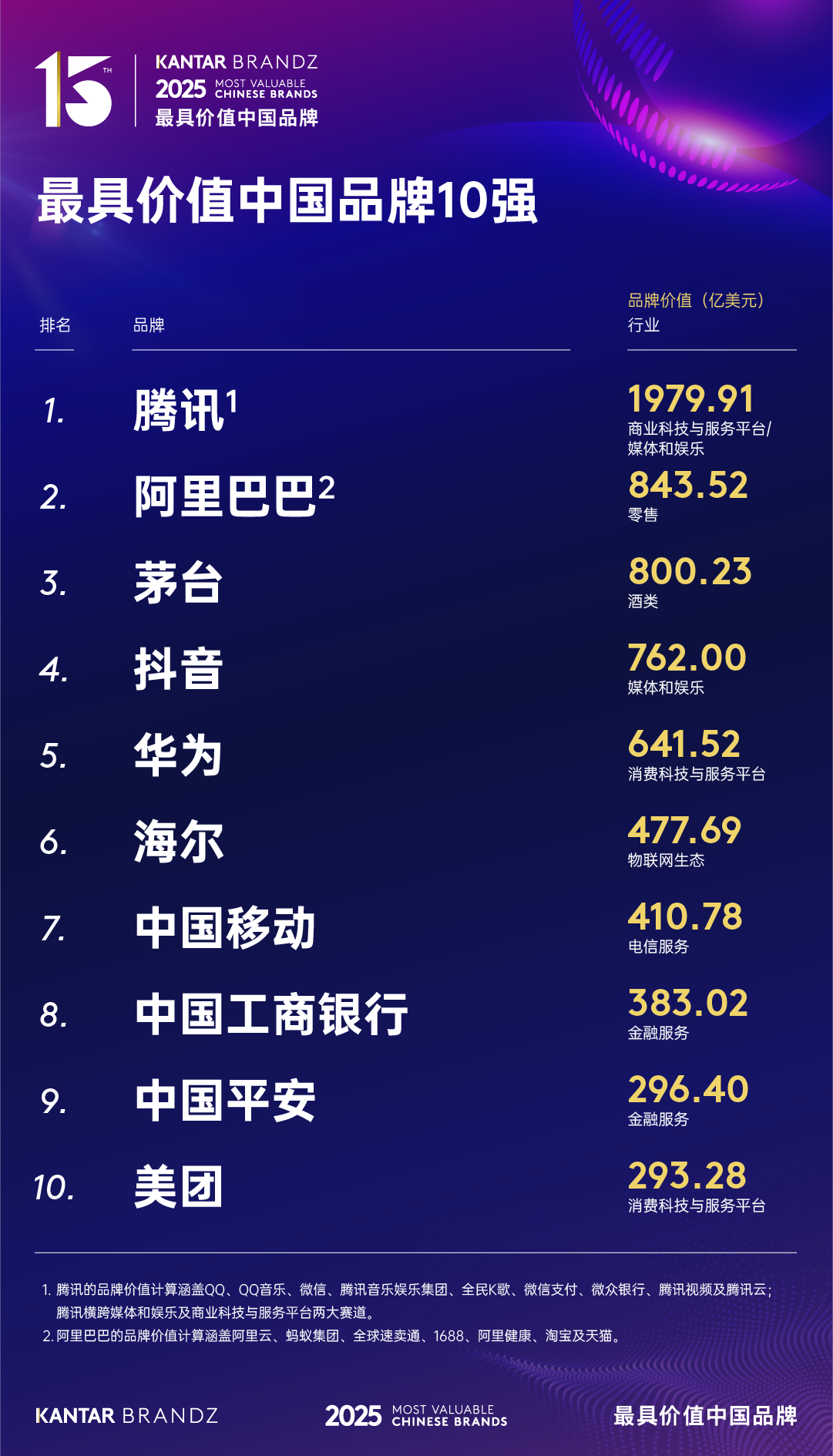
Core Insights - The total value of the 2025 BrandZ Top 100 Most Valuable Chinese Brands reached $1.21 trillion, marking a significant 25% increase from the previous year [1] - The strong recovery of Chinese brands is attributed to four main drivers: breakthroughs in artificial intelligence innovation, stable development in the financial services sector, accelerated expansion into overseas markets, and the value return of technology giants [1] Company Highlights - Tencent topped the BrandZ list with a brand value of $197.99 billion, achieving a 53% increase due to its expansion in consumer and enterprise sectors [3] - Alibaba reclaimed the second position with a brand value of $84.35 billion, growing at a rate of 23% [3] - Moutai maintained third place with a brand value of $80.02 billion, while Douyin surged 34% to $76.20 billion, securing fourth place [3] - Huawei's brand value increased by 56% to $64.15 billion, placing it fifth overall and among the top four in annual value growth [3] - Haier, ranked sixth with a brand value of $47.77 billion, strengthened its leadership in the IoT ecosystem through an enhanced ecological brand strategy [3] Emerging Brands - The BrandZ list showcased a diverse development landscape with seven new brands, including two from the fast-food sector [6] - Mixue Ice City ranked 51st with a brand value of $3.96 billion, recognized for its high-quality supply chain and affordable brand positioning [6] - Bawang Tea Ji ranked 88th with a brand value of $1.82 billion, focusing on cultural and aesthetic representation through tea [6] - Qunar, returning to the list at 78th with a brand value of $2.20 billion, improved its brand value through enhanced online service experiences [6] Growth Leaders - The average growth rate of the leading brands this year reached 67%, indicating strong development momentum among Chinese brands [7] - Xiaomi led the growth with a remarkable 154% increase, achieving a brand value of $28.15 billion through a user-centric innovation strategy [7] - BYD ranked 18th with a brand value of $17.16 billion, experiencing a 78% increase driven by advancements in smart driving technology and strategic partnerships [7] - XPeng Motors returned to the top 100 at 80th place with a brand value of $2.18 billion, bolstered by its overseas market expansion [7] Industry Trends - Chinese brands are at the forefront of artificial intelligence applications, optimizing manufacturing processes and transforming marketing strategies [8] - The integration of smart technology into daily life is becoming increasingly seamless, with innovations in smart home solutions leading the way [8]




为什么老板一定要亲自干点“脏活”
虎嗅APP· 2025-09-16 14:05
Core Viewpoint - The article emphasizes the disconnect between the narratives presented by company executives and the actual operations within their organizations, highlighting the risks for investors who may be misled by these grand narratives [6][7]. Group 1: Executive Awareness and Accountability - Many executives may not fully understand the day-to-day operations of their companies, leading to a gap between their perceptions and reality [14][15]. - The article cites the Boeing 737 MAX crisis as an example where executives were unaware of serious safety issues due to bureaucratic reporting structures [16][17]. - It argues that CEOs should engage directly with lower-level operations to maintain accountability and avoid detachment from the realities of their businesses [25]. Group 2: Investor Risks - Investors often rely on information provided by executives, which can be misleading, as they may be caught up in the same narratives as the executives [7]. - The article warns that a significant portion of corporate information is filtered through executives, making it crucial for investors to critically assess the validity of these narratives [7]. - It highlights the case of Wells Fargo's fake accounts scandal, where executives claimed ignorance of widespread misconduct, suggesting a willful ignorance of operational realities [21][22]. Group 3: Corporate Culture and Ethics - The article discusses the importance of corporate culture and the potential for unethical practices to arise when executives prioritize results over processes [20][24]. - It suggests that high-pressure sales environments can lead to unethical behavior, as seen in the Wells Fargo case, where employees felt compelled to meet unrealistic targets [23]. - The author expresses concern over CEOs who become overly idealistic and disconnected from the operational challenges faced by their companies [18][19].


都是华与华的甲方,西贝为什么没像蜜雪冰城一样逆转危机?
商业洞察· 2025-09-16 09:24
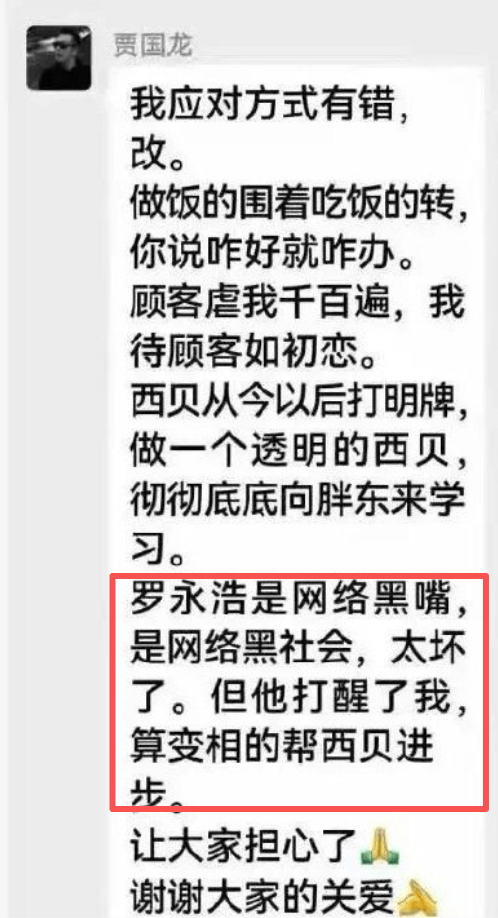
Core Viewpoint - The conflict between Xibei and Luo Yonghao has escalated into a public debate over the use of pre-prepared dishes in the restaurant industry, highlighting issues of transparency and consumer trust in food safety [4][15][20]. Summary by Sections Incident Overview - Luo Yonghao criticized Xibei for using pre-prepared dishes, which he found unappetizing and overpriced, sparking significant public discussion [6][19]. - Xibei's founder, Jia Guolong, responded by denying the use of pre-prepared dishes and threatened legal action against Luo Yonghao, which further fueled the controversy [7][10]. Company Response - Xibei announced that all kitchens would be open for public inspection and introduced a "Luo Yonghao menu" to encourage consumer engagement [7][8]. - Despite these efforts, media investigations revealed that some of Xibei's ingredients, such as frozen chicken wings and broccoli, had long shelf lives, raising consumer concerns about freshness [8][19]. Public Reaction - The public's reaction to Xibei's use of frozen ingredients was overwhelmingly negative, with many questioning the company's commitment to quality and transparency [8][19]. - Xibei's official apology and commitment to improve operations by 2025 were met with skepticism, as the brand struggled to regain consumer trust [13][15]. Industry Context - The incident reflects broader issues in the restaurant industry regarding the classification of pre-prepared dishes and the lack of clear regulations, which complicates consumer understanding of food safety [15][20]. - The contrasting public reception of Xibei and other brands like Mixue Ice City illustrates the importance of brand positioning and consumer perception in the food service sector [19][20]. Strategic Missteps - Xibei's high pricing strategy and failure to align its brand values with consumer expectations contributed to its negative reception during the crisis [20][24]. - The company's confrontational response to consumer criticism, rather than a more empathetic approach, was identified as a significant strategic error [23][24].
拉美14国网络博主河南体验飞针、点穴等中医“绝技”
Zhong Guo Xin Wen Wang· 2025-09-16 07:50
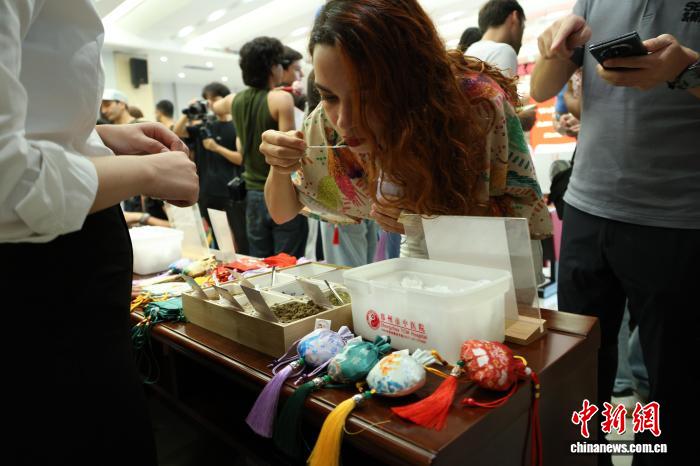
Core Viewpoint - The article highlights the experience of over 20 Latin American social media influencers who visited Henan, China, to explore traditional Chinese medicine (TCM) techniques, including acupuncture and herbal remedies, showcasing the cultural exchange and interest in TCM practices [1][2]. Group 1: Experience of Influencers - Colombian influencer Valeria Poro reported feeling significantly relaxed after experiencing TCM techniques such as point therapy [1]. - Influencers participated in various TCM practices, including making moxibustion tools and tasting medicinal cuisine and teas [1]. - Peruvian influencer Eduardo Mesa expressed amazement at the effectiveness of TCM, noting that the practitioner could identify his back issues through observation alone [1]. Group 2: DIY and Learning - Argentine influencer Javier Adel inquired about methods to dispel dampness using herbal sachets, demonstrating engagement with TCM practices [2]. - Brazilian influencers Marina Rosa and Michel Carvalho were particularly interested in the medicinal wine technique, describing the sensation as initially intimidating but ultimately comfortable [2]. - Influencers documented their experiences, including the creation of herbal sachets, and shared insights on the effects of the herbs used [2]. Group 3: Cultural Promotion - Colombian food blogger Tatan Arroyo plans to share his experiences with TCM cuisine and therapies on social media, promoting the allure of Chinese culture [4].
都是华与华的甲方,西贝为什么没像蜜雪冰城一样逆转危机?
Sou Hu Cai Jing· 2025-09-16 06:47
Core Viewpoint - The conflict between Xibei and Luo Yonghao escalated into a public dispute over food quality and consumer rights, highlighting issues in the restaurant industry regarding transparency and consumer trust [1][2][17]. Group 1: Incident Overview - Luo Yonghao criticized Xibei for using pre-prepared dishes, claiming they were overpriced and of poor quality, which sparked significant public interest and debate [2][3]. - Xibei's founder, Jia Guolong, responded by denying the use of pre-prepared dishes and threatened legal action against Luo Yonghao for damaging the company's reputation [2][3]. - In an effort to prove their commitment to transparency, Xibei announced that all kitchens would be open for public inspection and introduced a special menu for consumers to taste their dishes [2][3]. Group 2: Public Reaction and Media Coverage - Media investigations revealed that Xibei's children's meals included frozen ingredients, raising further consumer concerns about food quality and safety [3][11]. - The public's reaction was largely negative, with many questioning Xibei's practices and expressing dissatisfaction with the quality of their meals [3][11]. - Xibei's official communications included an apology and a commitment to improve, but the damage to their reputation was significant, leading to a reported drop in daily revenue by over 2 million yuan [15][17]. Group 3: Industry Implications - The incident reflects broader issues in the restaurant industry regarding the use of pre-prepared foods and the lack of clear regulations on food labeling, which can mislead consumers [14][19]. - The upcoming national standards for pre-prepared foods may provide clarity and enforce transparency in the industry, potentially reshaping consumer expectations and restaurant practices [14][19]. - The contrasting public perception of Xibei and other brands like Mixue Ice City illustrates the importance of aligning product quality with consumer expectations, especially in a price-sensitive market [15][16].