地平线

Search documents
“中国速度”走向世界
Zhong Guo Qi Che Bao Wang· 2025-06-18 01:54
Core Viewpoint - The automotive industry is undergoing a transformation towards electrification and intelligence, with "Chinese speed" becoming a benchmark for efficiency and competitiveness in product development [2][3][4]. Group 1: Industry Trends - The traditional automotive product development cycle, which used to take 3 years or more, has been significantly reduced to 12-18 months in China, reflecting a shift towards faster iteration and innovation [3][4]. - Major global automakers like Volkswagen and Nissan are adopting strategies to shorten their product development timelines, with Volkswagen aiming to reduce its new model development time from 54 months to 36 months [3][5]. - The shift towards a "fast consumer era" is prompting automotive companies to align their development processes more closely with those in the consumer electronics sector, leading to quicker product launches and iterations [3][6]. Group 2: Impact of Chinese Companies - Chinese automakers such as BYD, Chery, and Leap Motor are leveraging their rapid development capabilities to expand globally, responding quickly to local market demands [2][4]. - The competitive pressure from Chinese companies is forcing international automakers to accelerate their own product development cycles to keep pace [4][5]. - Nissan has committed to reducing its product development cycle in China to under 24 months, emphasizing the need to maintain "Chinese rhythm" in its global strategy [5][11]. Group 3: Technological Innovations - Advances in technology, including AI, big data, and cloud computing, are reshaping the automotive industry's development processes, enabling faster product iterations [6][8]. - The application of digital twin and virtual simulation technologies is significantly shortening vehicle development cycles, while modular architectures enhance efficiency [6][8]. - The integration of new technologies in electric and intelligent vehicles is allowing for more frequent product updates and iterations [6][8]. Group 4: Global Collaborations - International automakers are increasingly collaborating with Chinese companies to enhance their product development capabilities, as seen in partnerships between Volkswagen and local firms like Xpeng Motors [9][10]. - The trend of "reverse technology transfer" is emerging, where Chinese innovations are being adopted globally, with companies like Mercedes-Benz leveraging Chinese R&D for global projects [10][11]. - Chinese automotive companies are expanding overseas, establishing production bases and R&D centers in various countries, thus promoting "Chinese speed" on a global scale [12][13].




100万片才能回本!蔚小理为啥还要扎堆造芯片?
电动车公社· 2025-06-17 16:28
Core Viewpoint - The automotive industry is entering a new era of chip self-research and high computing power, driven by the need for advanced autonomous driving capabilities, particularly L3 level automation, as exemplified by companies like Xiaopeng and NIO [6][39][60]. Group 1: Chip Development and Competition - The competition for automotive computing power began around 2021, initiated by NVIDIA's Orin-X chip, which boasts a computing power of 254 TOPS, significantly surpassing Mobileye's Q5H and Tesla's HW3.0 [1][6]. - Companies like NIO have adopted multiple Orin-X chips, achieving over 1000 TOPS in computing power [3]. - The automotive computing power has fluctuated between 80 to 1000 TOPS over the past four years, but a new phase has emerged in 2023 with the introduction of self-developed chips [5][34]. Group 2: Self-Developed Chips and Industry Trends - Xiaopeng's self-developed 5nm chip, NX9031, is expected to reach 2000 TOPS with two chips in the ET9 model, while the Xiaopeng G7 features three self-developed Turing AI chips, achieving 2200 TOPS [6][39]. - The trend of automakers developing their own chips is gaining momentum, similar to Tesla's earlier journey, as companies seek to overcome the limitations of the "black box" model previously used with suppliers like Mobileye [9][30]. - The emergence of domestic chip companies like Horizon and Black Sesame Intelligence is diversifying the market, with many automakers now developing their own chips that can compete with NVIDIA's flagship products [35][38]. Group 3: The Shift to L3 Autonomous Driving - The automotive industry is approaching the L3 autonomous driving era, with Xiaopeng defining its G7 as the "world's first L3 level AI car" [39]. - The effective computing power required for L3 autonomous driving has been clarified by Xiaopeng at 2200 TOPS, indicating a significant leap from L2 systems [43][55]. - The transition to L3 involves not only technological advancements but also a shift in liability, as vehicles may be held accountable for accidents, increasing pressure on automakers to refine their technologies [56][58]. Group 4: Challenges in Chip Development - The journey of self-developing chips is fraught with challenges, including architectural issues and the risk of costly failures during the chip manufacturing process [62][64]. - Companies must also ensure that their chips meet stringent automotive safety standards, which can extend the validation period significantly [69]. - The need for large-scale production to recoup development costs is critical, with estimates suggesting that around 1 million units may be necessary for profitability [71].


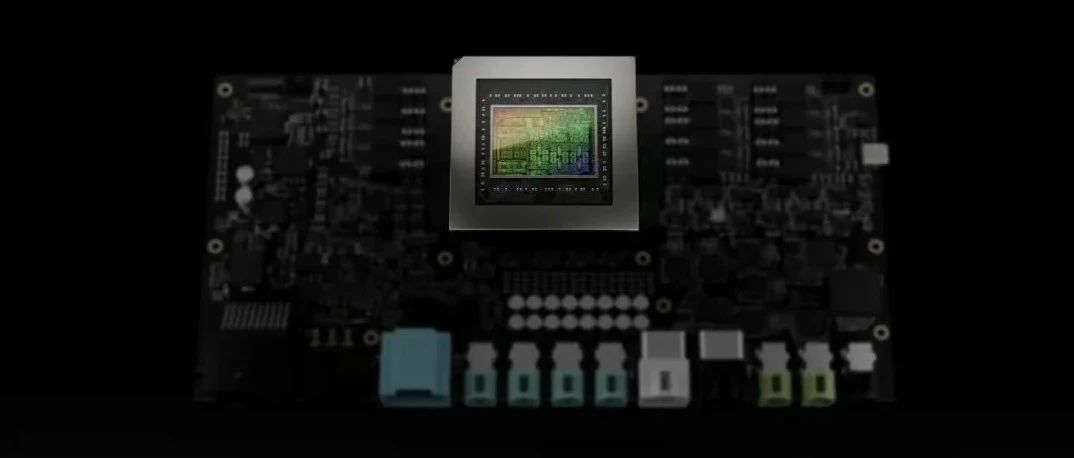
从扭秧歌到跑半马:机器人离「iPhone时刻」还有多远?
具身智能之心· 2025-06-17 12:53
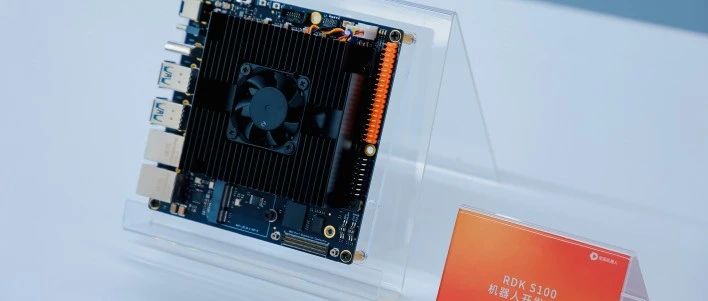
Core Insights - The article discusses the advancements and challenges in the field of embodied intelligence, highlighting the need for practical applications and the reduction of development costs in this emerging sector [3][4][18]. Group 1: Technological Developments - The competition among platform companies for embodied intelligence robots has intensified, with major players like NVIDIA, Qualcomm, and Intel launching new computing platforms [4]. - The RDK S100, developed by Diguo Robotics, has achieved significant traction with over 20 top-tier clients and 50 partners for evaluation, positioning itself as a strong alternative to NVIDIA [4][12]. - The RDK S100 features a unique "compute-control integration" design, enabling a closed-loop system for perception, decision-making, and execution in robots [8][10]. Group 2: Architectural Approaches - The article outlines two main technical paths for embodied intelligence: integrated end-to-end models and layered decision-making models, each with its own advantages and challenges [6][7]. - The "big brain and small brain" architecture proposed by Diguo Robotics aims to enhance robot performance by separating perception and control functions, which is currently not widely adopted in existing solutions [7][11]. Group 3: Market Applications - The RDK S100 is tailored for applications expected to achieve mass production in the next three years, focusing on quadrupedal robots, wheeled robots, and robotic arms, rather than humanoid robots [12][16]. - The platform has successfully demonstrated various applications, including precise control in humanoid robots and agile movements in quadrupedal robots, indicating its potential for commercial deployment in sectors like logistics and smart homes [16]. Group 4: Ecosystem and Support - Diguo Robotics is building a comprehensive ecosystem to support developers, including a ModelZoo with over 110 models and a new toolchain for rapid deployment [14][15]. - The company has initiated the "Gravity Plan," which aims to provide extensive resources and support to over 200 startups in the robotics field, fostering innovation and collaboration [18].
21辟谣|宝能汽车被清算解散?公司回应:经营正常
2 1 Shi Ji Jing Ji Bao Dao· 2025-06-17 11:07
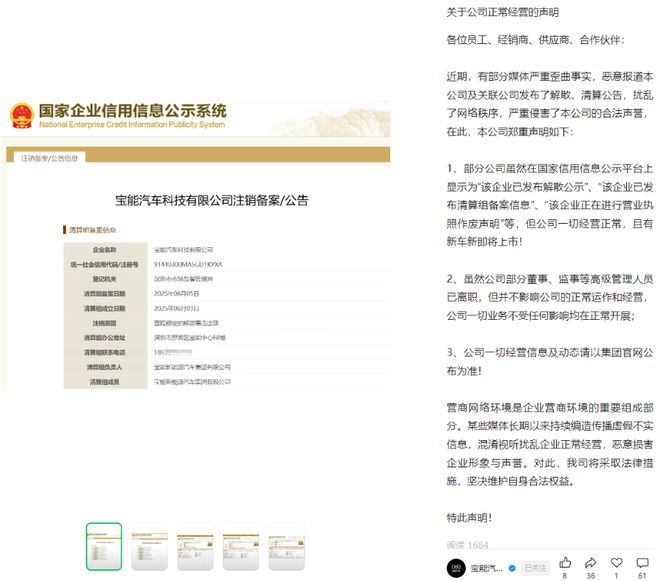
6月17日,《辟谣财知道》注意到,宝能汽车客户服务中心发布声明称,近期,有部分媒体歪曲事实, 恶意报道公司及关联公司发布了解散、清算公告,扰乱了网络秩序,侵害了公司的合法声誉。 宝能汽车表示,部分公司虽然在国家信用信息公示平台上显示为"该企业已发布解散公示"、"该企业已 发布清算组备案信息"、"该企业正在进行营业执照作废声明"等,但公司一切经营正常,且有新车即将 上市。 此外,该公司表示,虽然部分董事、监事等高级管理人员已离职,但并不影响公司的正常运作和经营, 公司一切业务不受任何影响,均在正常开展。 图片来源:宝能汽车客户服务中心 对于最新造车进展,宝能发布的月报显示,4月25日至26日,宝汽集团管理层组织项目、造型、研发、 制造、销售等40余人参观上海车展。重点参观了比亚迪、吉利、华为、大众、奔驰、宝马等整车企业, 以及博世、地平线、Momenta、鸿蒙等先进智能辅助驾驶零部件企业,重点关注了新设计、新造型、新 产品、新工艺,以及三电系统、智能驾驶、线控底盘等先进技术。 值得一提的是,尽管宝能汽车方面透露将有新车发布,但其官方微博在2023年就已停更,宝能招聘官网 上一次发布招聘信息还是在2024年8月, ...
“智驾平权”之路:安全是前提 行业格局待重塑
2 1 Shi Ji Jing Ji Bao Dao· 2025-06-16 13:45
Core Insights - Intelligent assisted driving has become a focal point in the automotive industry, with a significant push towards "equal rights" in technology access and safety standards [1][3][5] - The recent "Xiaomi incident" has raised safety concerns, prompting the introduction of mandatory national standards for L2 level assisted driving systems [1][5] - The rapid increase in the penetration rate of urban NOA (Navigation on Autopilot) reflects a shift in market dynamics, with prices for such technologies decreasing significantly [2][3] Industry Trends - The penetration rate of urban NOA in vehicles priced between 200,000 to 250,000 yuan rose from 2.1% in January 2024 to 24.7% by October 2024, driven by decreasing prices [2] - As of December 2023, vehicles equipped with urban NOA are increasingly found in the 200,000 to 300,000 yuan price range, while high-speed NOA is penetrating the 150,000 to 200,000 yuan segment [2] - The industry anticipates that 2025 will be a pivotal year for urban NOA, with expectations for it to enter the mainstream market segment priced between 150,000 to 200,000 yuan [2] Safety and Technology Concerns - There is a growing consensus that achieving "equal rights" in intelligent driving must prioritize safety, with significant disparities in safety capabilities among vehicles in the same price range [3][5] - The current configuration differences in vehicles at the same price point can lead to substantial safety performance variations, with some models having up to six times the computing power and eight more sensors than others [5] - The push for widespread adoption of advanced driving technologies must not compromise safety, as highlighted by industry experts [4][5] Market Dynamics - The competition in the intelligent driving chip sector is intensifying, with established players like NVIDIA dominating the market, making it challenging for new entrants [8][9] - The industry is witnessing a shift where intelligent driving chip manufacturers and solution providers are becoming central players, potentially overshadowing traditional Tier 1 suppliers [7][8] - The trend towards "equal rights" in intelligent driving is expected to lead to standardization, which will benefit chip manufacturers by increasing shipment volumes and enhancing cost competitiveness [8][9] Future Outlook - Industry leaders predict that within 2 to 3 years, intelligent assisted driving features will become standard in vehicles priced above 100,000 yuan, with aspirations to extend this to lower-priced models [7] - The automotive industry is expected to see a consolidation of suppliers, with a few strong players emerging as leaders while maintaining a diverse market landscape [9] - The challenge for automakers will be to differentiate their brands in a market increasingly focused on standardized intelligent driving technologies [9]
北京已完成600平方公里高级别自动驾驶示范区建设
Huan Qiu Wang Zi Xun· 2025-06-16 13:41
Group 1 - Beijing has established the world's first "vehicle-road-cloud integration" high-level autonomous driving demonstration zone, covering 600 square kilometers across the Economic Development Zone, Tongzhou District, and Shunyi District, with over 800 autonomous vehicles deployed [1][3] - The city is a leader in the autonomous driving sector, with a penetration rate of L2 level passenger cars reaching 57.3% in 2024, and key companies like Xiaomi and Li Auto have fully integrated L2 level assisted driving functions across their models [3] - Beijing has developed systemic advantages in the chip and software industries, with Horizon Robotics leading the market share in autonomous driving solutions for domestic brands in 2024, and the domesticization rate of Yushi Technology's autonomous driving domain controller reaching 84% [3] Group 2 - The next steps for Beijing include promoting a "challenge and reward" model to accelerate the development of the autonomous driving ecosystem, fostering high-growth technology innovation companies, and driving the leapfrog development of the automotive industry [3] - The city aims to extend the application of technologies in areas such as embodied intelligence, low-altitude technology, and commercial aerospace, thereby expanding the scale of development [3]
中汽协:新能源车产业链加快建立质量和可靠性创新发展体系
Xin Lang Cai Jing· 2025-06-16 11:33
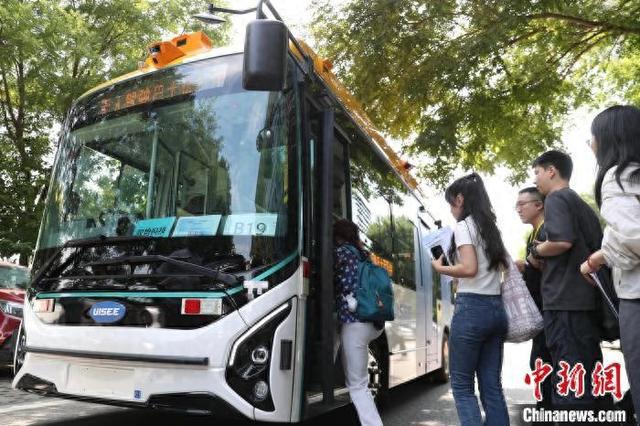
据中国汽车工业协会微信公众号6月16日消息,中汽协日前在北京组织召开中国新能源汽车质量和可靠 性提升工程建设专项工作启动会。来自中国汽车T10企业、行业主流整车企业,电池、电机、电控核心 部件企业,智能视觉、关键电子元器件企业,以及行业服务机构等单位代表和专家共计100余人参加会 议。会议强调,新能源汽车质量和可靠性提升须整体统筹、系统规划、产业链供应链协同推进实施。会 议号召,新能源汽车产业链相关方,特别是T10+整车、核心系统总成、关键元器件及组件企业和相关 单位积极行动起来,加快建立质量和可靠性创新发展体系;借鉴先进质量和可靠性经验,加强相关前沿 基础研究,为推进新能源汽车产业更高质量发展,加快我国汽车强国建设而努力奋斗。会上,与会代表 和专家针对专项工作方案,以及工作目标和任务推进等方面进行了深入研讨。来自一汽集团、东风集 团、上汽集团、长安汽车、北汽集团、广汽集团、奇瑞汽车、吉利汽车、比亚迪、长城汽车、江淮汽 车,蔚来汽车、小鹏汽车、零跑汽车,塞力斯集团、理想汽车、宇通客车、厦门金龙汽车企业,陕汽质 子、江铃汽车、庆铃汽车商用车企业,宁德时代、弗迪电池、国轩高科电池企业,以及华为、地平线、 经纬恒润 ...
“新一线”第12年:重新发现中国城市,不是说说而已 | 新刊发售
第一财经· 2025-06-16 09:10
Core Viewpoint - The article presents the "2025 New First-Tier City Charm Ranking," emphasizing the need to rediscover China's cities through a multidimensional evaluation of urban characteristics and economic potential [3][14]. Group 1: City Rankings and Evaluation - The ranking evaluates 337 cities based on five dimensions: commercial resource aggregation, urban hub characteristics, citizen activity levels, new economic competitiveness, and future adaptability [14]. - The ranking process has evolved over 12 years, incorporating various data sources, including consumer brands and economic indicators, to reflect the unique dynamics of each city [3][4]. Group 2: City Case Studies - Wuhan is highlighted for its recovery post-pandemic and its efforts to transition from a traditional automotive hub to a center for new energy and AI industries [19]. - Shenzhen is noted for its long-term commitment to improving its education sector, addressing its historical lack of higher education institutions [28]. - The small city of Chenghai is recognized for its significant role in the global toy industry, producing about 30% of the world's plastic toys, and its adaptation to changing trade dynamics [23]. Group 3: Broader Implications - The article suggests that every city has untapped potential and stories that can be rediscovered, urging a dynamic perspective on urban development [5][9][13]. - The historical context of Chinese cities is discussed, emphasizing their evolution from military and trade centers to modern economic players [11][12].

汽车行业:2025中国香港车博会调研:多款飞行汽车和右舵车型亮相,中国内地汽车供应链全球化升级
BOCOM International· 2025-06-16 06:30
Investment Rating - The report provides a "Buy" rating for several companies in the automotive sector, indicating a positive outlook for their future performance [7]. Core Insights - The 2025 Hong Kong International Automotive and Supply Chain Expo showcased multiple flying cars and right-hand drive models, highlighting the globalization upgrade of China's automotive supply chain [2][3]. - The event serves as a strategic platform for Chinese automakers to accelerate the internationalization of technology standards and adapt to right-hand drive markets [2]. - The development of low-altitude economy is being supported by regulatory initiatives in Hong Kong, which includes the establishment of a regulatory sandbox to foster innovation and commercialization [2]. - China's automotive exports are projected to reach 6.41 million units in 2024, a year-on-year increase of 23%, with a total export value of $117.4 billion [2]. - The report notes that nearly 40 automotive supply chain and technology companies participated in the expo, indicating a shift towards smart and electric vehicle exports [2]. - Leading automotive manufacturers are increasingly pursuing listings in Hong Kong to diversify risks and enhance supply chain resilience [2]. Summary by Sections Automotive Industry Overview - The report discusses the participation of major Chinese automotive manufacturers at the Hong Kong Auto Expo, including brands like BYD, Chery, and Xpeng, showcasing innovations in electric and flying vehicles [2][3]. Technological Advancements - The introduction of flying cars, such as GAC's GOVY AirCab and Xpeng's "Land Carrier," reflects the industry's push towards low-altitude transportation solutions [2][3]. Export Trends - The report highlights a significant increase in China's automotive exports, particularly in the electric vehicle segment, with 2 million units expected to be exported in 2024 [2]. Market Dynamics - The report emphasizes the trend of Chinese automotive companies listing in Hong Kong to attract international capital and optimize global production networks [2].
香江之畔 汽车之家吹响中国汽车全链条出海号角
Zhong Guo Qi Che Bao Wang· 2025-06-16 04:29
Core Viewpoint - The article highlights the transformation of Hong Kong into a strategic hub for Chinese automotive brands, showcasing their global ambitions and innovations at the recent Hong Kong International Auto and Supply Chain Expo [1][2]. Group 1: Event Overview - The 2025 International Auto and Supply Chain Expo in Hong Kong, themed "New Cars, New Journey," was organized by the China Automobile Industry Association and other institutions to showcase the latest achievements in Chinese electric vehicles, smart cars, and supply chain management [2]. - The expo featured major Chinese automotive manufacturers such as BYD, Geely, and SAIC, along with over 40 suppliers, demonstrating advancements in AI, smart cockpits, and next-generation chips [2][3]. Group 2: Automotive Industry Innovations - The CEO of Autohome, Yang Song, emphasized the rapid rise of Chinese automotive brands in the global market, leveraging AI and big data to support their internationalization efforts [3][9]. - Autohome showcased its transformation from an automotive content platform to a technology ecosystem company, highlighting its AI-driven solutions for global market penetration [5][9]. Group 3: AI and Digital Transformation - The expo featured seven core exhibition areas, with a notable interactive experience area led by Autohome, focusing on AI technology [4]. - Autohome introduced three AI technology experience zones, including an "AI Smart Assistant" that utilizes a proprietary model for personalized car purchasing decisions [5][6]. Group 4: Global Expansion Strategy - Autohome plans to integrate AI technology across the entire automotive consumption chain, connecting Chinese manufacturers with global partners to create comprehensive export solutions [8][10]. - The company announced the launch of an English version of its website and social media accounts to enhance global outreach and promote Chinese automotive brands [8][10]. Group 5: Future Outlook - Autohome aims to expand its operations to over 100 cities in China and extend its international presence across five continents, supporting domestic manufacturers in their global business endeavors [10]. - The company is committed to continuous innovation and building a collaborative automotive ecosystem to enhance the international influence of Chinese automotive brands [10].