农夫山泉

Search documents
国泰海通晨报-20260209
GUOTAI HAITONG SECURITIES· 2026-02-09 02:23
Macro Research - The recent significant drop in gold prices is primarily due to previous irrational surges, high leverage, and crowded trading conditions, which does not alter the long-term bullish trend for gold. Mid to long-term investment opportunities in gold should still be considered [2][3] Social Services Industry Research - The optimization of vacation systems, improvement in cultural tourism supply, and acceleration of local asset securitization are expected to create investment opportunities in the scenic area sector. Three main lines for investment are suggested: focus on transportation improvements, resource integration expectations, and new project launches [3][4] Cosmetics Industry Research - The cosmetics market is expected to continue steady growth in 2026, driven by product innovation and the rise of domestic brands. It is recommended to selectively invest in high-growth companies and those with recovery potential due to product and channel changes. Specific companies to consider include 若羽臣, 倍加洁, 毛戈平, 林清轩, and 上美股份 for strong fundamentals, and 贝泰妮, 珀莱雅, and others for recovery potential [6][7][8]
智通港股沽空统计|2月9日
智通财经网· 2026-02-09 00:24
Core Insights - The article highlights the top short-selling ratios and amounts for various companies, indicating significant market sentiment against these stocks [1][2]. Group 1: Top Short-Selling Ratios - Lenovo Group-R (80992) has the highest short-selling ratio at 91.38% with a short-selling amount of 52.16 thousand [2]. - Ping An Insurance-R (82318) follows with a short-selling ratio of 83.34% and a short-selling amount of 200.88 thousand [2]. - Xiaomi Group-WR (81810) has a short-selling ratio of 80.95% with a short-selling amount of 597.54 thousand [2]. Group 2: Top Short-Selling Amounts - Tencent Holdings (00700) leads in short-selling amount at 29.69 billion, with a short-selling ratio of 15.25% [2]. - Alibaba Group-W (09988) has a short-selling amount of 23.66 billion and a short-selling ratio of 19.56% [2]. - Xiaomi Group-W (01810) ranks third with a short-selling amount of 10.16 billion and a short-selling ratio of 21.54% [2]. Group 3: Top Short-Selling Deviation Values - Ping An Insurance-R (82318) has the highest deviation value at 36.33%, indicating a significant difference from its average short-selling ratio [2]. - Xiaomi Group-WR (81810) follows with a deviation value of 34.41% [2]. - China Resources Beer (00291) has a deviation value of 33.89% [2].





同样打生肖噱头,茅台为什么不如马年农夫山泉?
Sou Hu Cai Jing· 2026-02-08 11:47
Core Viewpoint - The strong rebound of Moutai has ignited the entire liquor sector, with significant price movements and market reactions indicating a potential recovery in the industry after a prolonged adjustment period [1][2][4]. Group 1: Moutai's Market Performance - Moutai's stock price surged by 8.61% on January 29, marking the highest single-day increase since February 2025, and its market capitalization returned to 1.8 trillion yuan with a trading volume exceeding 26.3 billion yuan [2]. - The stock price of Moutai has rebounded over 18% from its low, approaching a critical technical bull market position, which could influence the extent of its price increase and the nature of the rebound [4]. - The price of Moutai's 53-degree 500ml flying Moutai is psychologically anchored at 1499 yuan, and if the market price falls below this level, Moutai may implement strategies to stabilize prices [4]. Group 2: Industry Trends and Consumer Behavior - The upcoming Spring Festival is traditionally a peak consumption period for liquor, and the introduction of iMoutai has helped stabilize prices after a previous decline [1][4]. - There is a notable increase in demand for flying Moutai during the Spring Festival, but post-holiday, consumer purchasing behavior may revert to more rational levels, potentially affecting prices [4]. - The overall liquor industry is showing signs of recovery, with first-tier brands like Moutai indicating a gradual exit from the adjustment phase, which could positively impact the pricing structure across the sector [7]. Group 3: Collectible Liquor Market - The collectible value of Moutai's zodiac-themed products is under scrutiny, with some experts advising caution regarding their investment potential, as past releases have shown significant price fluctuations [5]. - The market for zodiac-themed Moutai has seen substantial price adjustments, with the latest batch experiencing a drop from 2750 yuan to 2280 yuan per bottle [4][5]. - Comparatively, other collectible products, such as the zodiac water from Nongfu Spring, have demonstrated even higher premium rates, raising questions about Moutai's relative value in the collectible market [1]. Group 4: Economic Context and Future Outlook - The liquor industry has experienced multiple adjustment cycles since 1999, with the current cycle, which began in 2022, being notably prolonged, reflecting broader economic challenges and shifts in consumer demand [8][9]. - The recovery of the liquor sector is closely tied to macroeconomic indicators, with expectations for a turning point in the industry by the second half of 2026 as inventory levels normalize [9].



食品饮料行业周报 2026年第6期:顺周期预期企稳,消费价值凸显
GUOTAI HAITONG SECURITIES· 2026-02-08 02:25
Investment Rating - The report assigns an "Accumulate" rating for the food and beverage industry [1] Core Insights - Recent policies have strengthened consumer expectations, leading to marginal improvements in consumption during the Spring Festival season. The performance of high-end liquor, particularly Moutai, has rebounded, boosting market confidence. The focus is on growth in consumer staples and the recovery of the Consumer Price Index (CPI) [3][4] Summary by Sections Investment Recommendations - The report suggests that with the stabilization of real estate expectations and positive changes in cyclical consumption, the following stocks are recommended: 1. High-end liquor with price elasticity: Guizhou Moutai, Wuliangye, Luzhou Laojiao, and potential clearance stocks: Yingjia Gongjiu, Gujing Gongjiu, Shanxi Fenjiu, Jianshiyuan, Zhenjiu Lidu, Shede Liquor, and Jinhui Liquor 2. Beverages benefiting from travel: Dongpeng Beverage, Nongfu Spring (Hong Kong), with a focus on undervalued high-dividend stocks: China Foods (Hong Kong), Master Kong Holdings (Hong Kong), and Uni-President China (Hong Kong) 3. Growth stocks in snacks and food raw materials: Recommended are Bailong Chuangyuan, Weilong Delicious (Hong Kong), Yanjinpuzi, and Ximai Foods 4. Beer recommendations include Qingdao Beer, Zhujiang Beer, and Bairun Co., with China Resources Beer (Hong Kong) 5. Seasoning and catering are expected to recover, with recommendations for Qianhe Flavor Industry, Baoli Foods, Babi Foods, Anjii Foods, Haitian Flavoring, Angel Yeast, Yili Group, New Dairy, Youran Pastoral (Hong Kong), and Modern Dairy (Hong Kong) [4][7] Liquor Sector - The high-end liquor sector is leading the market, with Moutai's sales boosting confidence. The report notes that the liquor sector has seen significant gains recently, attributed to positive data and market sentiment. Moutai's monthly active users exceeded 15.31 million in January, with over 2.12 million transactions, indicating a recovery in channel sentiment [8][9] - The report anticipates that the liquor industry is at the bottom of its cycle, with potential catalysts for stock prices from improvements in market conditions, price increases, and inventory reductions. If positive trends in price, sales, and inventory continue post-Spring Festival, further catalysts may emerge [9] Consumer Staples - The approval of D-allohexose-3-epimerase as a food additive is expected to expand the domestic market for allulose, benefiting leading companies like Bailong Chuangyuan. The report highlights the potential for growth driven by health-conscious consumption trends [10][11] - The catering supply chain is expected to recover, with the report noting that the competition in the catering industry has reached a low point, and demand is anticipated to improve. The report also mentions that Babi Foods has shown positive growth, with a revenue of 1.859 billion in 2025, up 11.22% year-on-year, and a net profit of 245 million, up 16.49% year-on-year [11]
食品饮料行业周报 2026年第6期:顺周期预期企稳,消费价值凸显-20260208
GUOTAI HAITONG SECURITIES· 2026-02-08 01:23
Investment Rating - The report assigns an "Accumulate" rating for the food and beverage industry [1] Core Insights - Recent policies have strengthened consumer expectations, leading to marginal improvements in consumption during the Spring Festival peak season. The performance of high-end liquor, particularly Moutai, has rebounded, and the stability in pricing has improved market sentiment [3][4] - The report highlights the potential for recovery in the food and beverage sector, driven by improved domestic demand and consumption patterns as the Spring Festival approaches [4][7] Summary by Sections Investment Recommendations - The report suggests focusing on high-end liquor stocks with price elasticity, recommending companies such as Guizhou Moutai, Wuliangye, and Luzhou Laojiao. It also identifies potential stocks for gradual clearance, including Yingjia Gongjiu and Gujing Gongjiu [7] - Beverage companies are expected to benefit from favorable travel conditions, with recommendations for Dongpeng Beverage and Nongfu Spring. Low valuation and high dividend stocks like China Foods and Master Kong are also highlighted [7] - For snacks and food raw materials, recommended stocks include Bailong Chuangyuan and Weilong [7] - Beer recommendations include Qingdao Beer and Zhujiang Beer, while condiment and catering sectors are expected to recover, with recommendations for Qianhe Flavor Industry and Baoli Food [7] Liquor Sector Insights - The high-end liquor sector is leading market sentiment, with Moutai's sales data boosting confidence. The report notes that Moutai's monthly active users exceeded 15.31 million, with over 2.12 million orders in January [8][9] - The liquor industry is currently at a cyclical bottom, with expectations for recovery in sales and pricing as the Spring Festival approaches. Positive trends in inventory and demand could catalyze stock prices further [9] Consumer Goods Insights - The approval of D-allohexose-3-epimerase as a food additive is expected to expand the market for this product, benefiting leading companies like Bailong Chuangyuan. The report anticipates significant growth potential for this company [10][11] - The catering supply chain is expected to recover, with companies like Baobi Food showing promising growth driven by new store formats. The report notes Baobi's revenue of 1.859 billion in 2025, a year-on-year increase of 11.22% [11]




现在的问题是,东鹏饮料到底会增长到什么时候?
晚点LatePost· 2026-02-07 11:36
Core Viewpoint - Dongpeng Beverage has successfully listed on the Hong Kong stock market, raising approximately HKD 10.14 billion with a share price of HKD 248, reflecting its strong growth potential in the energy drink market [4][5]. Market Position and Growth - Dongpeng's market share in China's energy drink sector is 40.1% by volume, with a CAGR of 28.5% over the past three years, while its main competitor, Huabin Red Bull, holds a 22.0% market share with a CAGR of only 3.9% [4][5]. - By 2025, Dongpeng's total revenue is projected to reach approximately CNY 21.4 billion, with Dongpeng Special Drink contributing CNY 16.2 billion, indicating a growth rate of about 22% [5]. Profitability and Efficiency - Despite a decrease in growth rate to 22%, Dongpeng's profitability remains strong, with a gross margin of around 44% and an increase in net margin by 1 percentage point in the first three quarters of 2025 [5][10]. - The company's sales expense leverage has been steadily increasing, indicating improved efficiency in converting sales expenses into revenue [5][10]. Competitive Landscape - Other competitors in the energy drink market, such as Dali's Lehu, Wahaha's Qili, and Huabin's Zhanma, have struggled to compete, with many experiencing stagnation or decline [7][9]. - The lack of competition is attributed to limited market size, insufficient capital investment, and weak promotional efforts from these companies [9]. Channel Strategy and Expansion - Dongpeng has a robust channel incentive structure, allowing for significant growth in its distribution network, with over 4.3 million retail outlets and more than 3,200 distributors as of Q3 2025 [14]. - The company plans to expand its retail network to 5 million outlets by 2026, focusing on regions with lower maintenance rates for sales personnel [14][15]. Future Projections - Dongpeng aims for a revenue target of CNY 27 billion to CNY 29 billion in 2026, with Dongpeng Special Drink expected to generate CNY 20 billion to CNY 21 billion [15]. - The company is also diversifying its product offerings, with new products set to launch in 2025 and 2026, which could replicate the success of its existing high-growth products [14][15]. Consumer Demographics - The demand for energy drinks is expanding beyond traditional consumers like drivers and laborers to include white-collar workers and students, driven by increased work hours and the appeal of sugar as a quick energy source [16][17].

张一鸣登顶中国首富
Xin Lang Cai Jing· 2026-02-07 08:52
Group 1 - Zhang Yiming, founder of ByteDance, tops the Forbes 2026 China Rich List with a net worth of $69.3 billion, surpassing Zhong Shanshan for the first time [2][5] - The list reflects a significant reshuffling, with many traditional industries being disrupted by the rise of internet and hard technology sectors [2][5] - The top ten includes major figures from technology, new energy, and manufacturing, indicating a shift in wealth towards hard tech [6] Group 2 - Lei Jun of Xiaomi makes a notable comeback, ranking tenth with a net worth of $30.4 billion, surpassing Jack Ma, who is now ranked eleventh with $29.6 billion [2][5] - ByteDance's investments in AI, including a $160 billion budget for AI development, are key to Zhang Yiming's wealth increase [5] - The real estate tycoons have seen a decline, with internet billionaires now making up less than 40% of the list, highlighting a trend towards AI, new energy, and high-end manufacturing [6]





消费大爆发!“老登”ETF大合集来了
Sou Hu Cai Jing· 2026-02-06 08:41
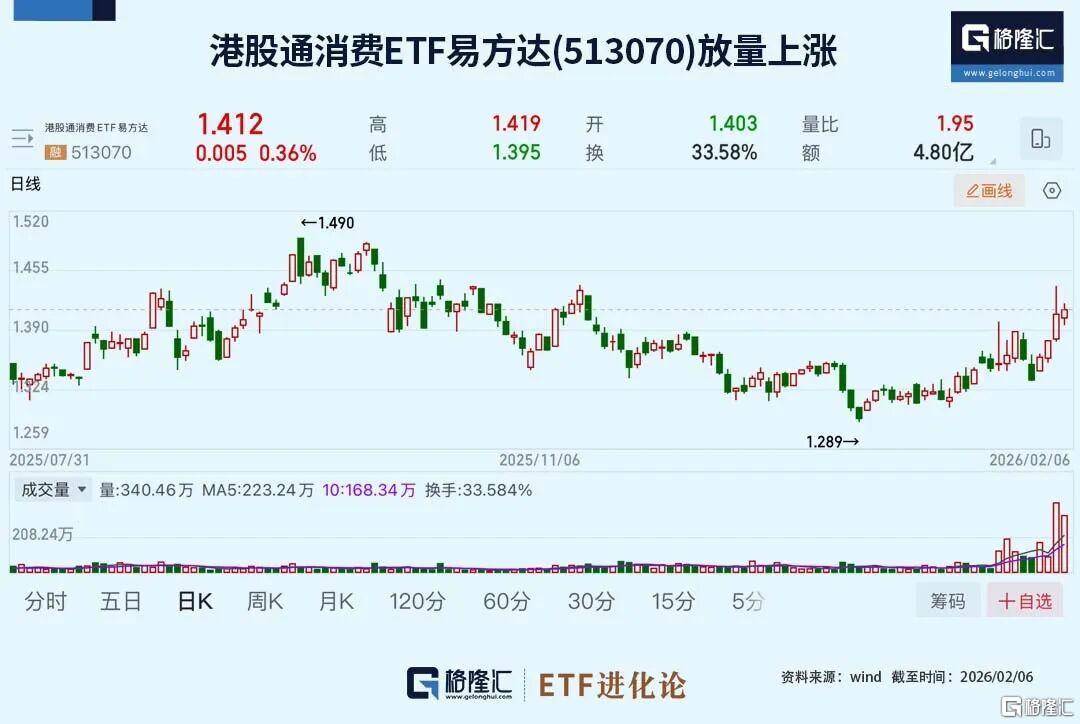
Market Trends - The global market has experienced a significant style switch since the beginning of the year, with traditional value assets, referred to as "old Deng assets," making a comeback [1] - In the US stock market, the Dow Jones index, dominated by traditional blue-chip stocks, has reached a historical high, while tech giants like Nvidia and Microsoft have shown volatility [1] - The A-share market's consumer sector has emerged from a low point, with the liquor index rising significantly, and leading companies like Kweichow Moutai seeing stock price surges of over 14% in just six trading days [1] Hong Kong and A-share Market Performance - In the Hong Kong stock market, certain consumer stocks have also shown recovery, with the tea beverage sector experiencing strong performance, including a notable rise in stocks like Gu Ming and Cha Bai Dao [1] - The Hong Kong Stock Connect consumer ETF, E Fund (513070), has seen a cumulative increase of 5.77% over the past five trading days, driven by the performance of these consumer stocks [1] Investment Opportunities - The E Fund consumer ETF has attracted a net inflow of 504 million yuan over the past ten days, bringing its total size to 1.434 billion yuan, making it the largest in its category [5] - The ETF covers a range of traditional service consumer leaders as well as growth-oriented consumer assets, with an overall PE ratio of approximately 18.25 times and a dividend yield of about 3.56% [7] Key Holdings in Consumer ETFs - The top holdings in the E Fund consumer ETF include Pop Mart (12.11% weight), Yum China (9.36%), Anta Sports (7.36%), and Nongfu Spring (6.49%) [8] - The ETF's portfolio reflects a diverse range of sectors, including entertainment, dining, sports apparel, and beverages, indicating a broad investment strategy within the consumer space [8]
2月5日港股消费(159735)遭净赎回595.65万元,位居当日跨境ETF净流出排名9/213
Xin Lang Cai Jing· 2026-02-06 02:59
来源:新浪基金∞工作室 规模方面,截止2月5日,港股消费(159735)最新份额为10.71亿份,最新规模为9.19亿元。回顾2025年 12月31日,港股消费(159735)份额为9.2亿份,规模为7.26亿元。即该基金今年以来份额增加 16.42%,规模增加26.60%。 流动性方面,截止2月5日,港股消费(159735)近20个交易日累计成交金额17.79亿元,日均成交金额 8897.32万元;今年以来,24个交易日,累计成交金额20.34亿元,日均成交金额8475.89万元。 港股消费(159735)现任基金经理为李宜璇。李宜璇自2021年5月25日管理(或拟管理)该基金,任职 期内收益-14.15%。 最新定期报告显示,银华基金(159735)重仓股包括泡泡玛特、百胜中国、安踏体育、农夫山泉、万洲 国际、海尔智家、申洲国际、美的集团、李宁、蒙牛乳业,持仓占比如下: 股票代码股票名称持仓占比持仓股数(股)持仓市值(元)09992泡泡玛特10.42%44.64万7568.02万 09987百胜中国9.09%19.83万6601.94万02020安踏体育7.76%77.46万5635.55万09633农夫 ...
减糖不减甜,吃糖没负担 看漯河“糖罐子”如何革新
He Nan Ri Bao· 2026-02-05 23:29
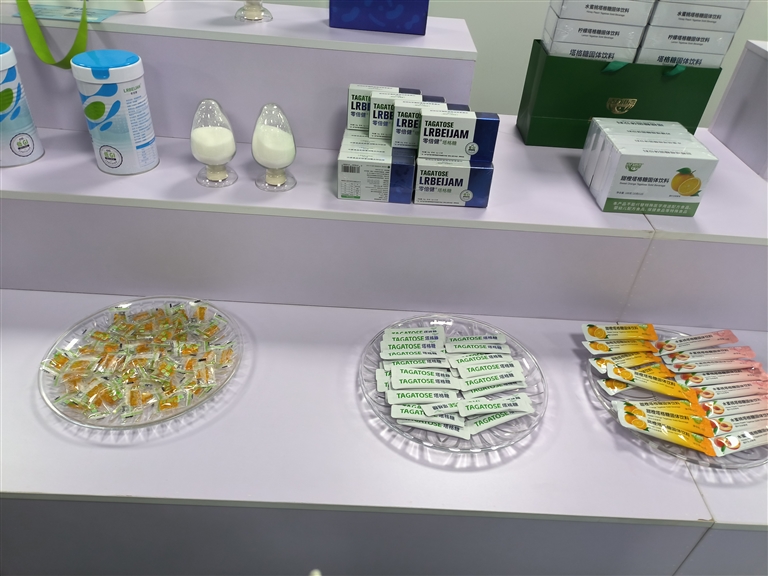
Core Insights - The article discusses the innovation in the sugar industry in Luoyang, focusing on Tagatose, a natural rare sugar that offers a sweet taste similar to sucrose but with only one-third of the calories, appealing to health-conscious consumers [3][4]. Company Developments - Henan Yihengyuan Biotechnology Co., Ltd. has developed Tagatose products and established the first fully automated production line for lactose-derived Tagatose in China, receiving the first food production license for Tagatose in the province in September 2024 [4]. - The company has successfully partnered with well-known brands such as Lebai Shi and Wudang Mountain Water, and has received positive market feedback for products like Tagatose light milk tea and AD calcium milk [5]. Industry Trends - The sugar reduction trend is gaining momentum in the food industry, with various companies in Luoyang, including Henan Zhongda Hengyuan Biotechnology Co., Ltd., producing D-Allulose, another natural rare sugar that has a sweetness level of about 70% of sucrose but only one-tenth of its calories [6]. - The food industry in Luoyang is shifting towards healthier options, with a focus on reducing sugar, salt, and oil, and promoting functional health foods as part of the "three reductions and three health" initiative [8]. Market Potential - The leisure food industry in Luoyang has a total scale of 250 billion yuan, with 207 companies generating an annual output value of 16 billion yuan, indicating significant market potential for health-oriented products [8]. - The shift towards higher quality development in the leisure food sector is driven by consumer demand for nutritious and healthy options, moving away from traditional high-sugar and high-calorie products [8].