
华润啤酒

Search documents
食品饮料行业周报 2026年第6期:顺周期预期企稳,消费价值凸显-20260208
GUOTAI HAITONG SECURITIES· 2026-02-08 01:23
Investment Rating - The report assigns an "Accumulate" rating for the food and beverage industry [1] Core Insights - Recent policies have strengthened consumer expectations, leading to marginal improvements in consumption during the Spring Festival peak season. The performance of high-end liquor, particularly Moutai, has rebounded, and the stability in pricing has improved market sentiment [3][4] - The report highlights the potential for recovery in the food and beverage sector, driven by improved domestic demand and consumption patterns as the Spring Festival approaches [4][7] Summary by Sections Investment Recommendations - The report suggests focusing on high-end liquor stocks with price elasticity, recommending companies such as Guizhou Moutai, Wuliangye, and Luzhou Laojiao. It also identifies potential stocks for gradual clearance, including Yingjia Gongjiu and Gujing Gongjiu [7] - Beverage companies are expected to benefit from favorable travel conditions, with recommendations for Dongpeng Beverage and Nongfu Spring. Low valuation and high dividend stocks like China Foods and Master Kong are also highlighted [7] - For snacks and food raw materials, recommended stocks include Bailong Chuangyuan and Weilong [7] - Beer recommendations include Qingdao Beer and Zhujiang Beer, while condiment and catering sectors are expected to recover, with recommendations for Qianhe Flavor Industry and Baoli Food [7] Liquor Sector Insights - The high-end liquor sector is leading market sentiment, with Moutai's sales data boosting confidence. The report notes that Moutai's monthly active users exceeded 15.31 million, with over 2.12 million orders in January [8][9] - The liquor industry is currently at a cyclical bottom, with expectations for recovery in sales and pricing as the Spring Festival approaches. Positive trends in inventory and demand could catalyze stock prices further [9] Consumer Goods Insights - The approval of D-allohexose-3-epimerase as a food additive is expected to expand the market for this product, benefiting leading companies like Bailong Chuangyuan. The report anticipates significant growth potential for this company [10][11] - The catering supply chain is expected to recover, with companies like Baobi Food showing promising growth driven by new store formats. The report notes Baobi's revenue of 1.859 billion in 2025, a year-on-year increase of 11.22% [11]





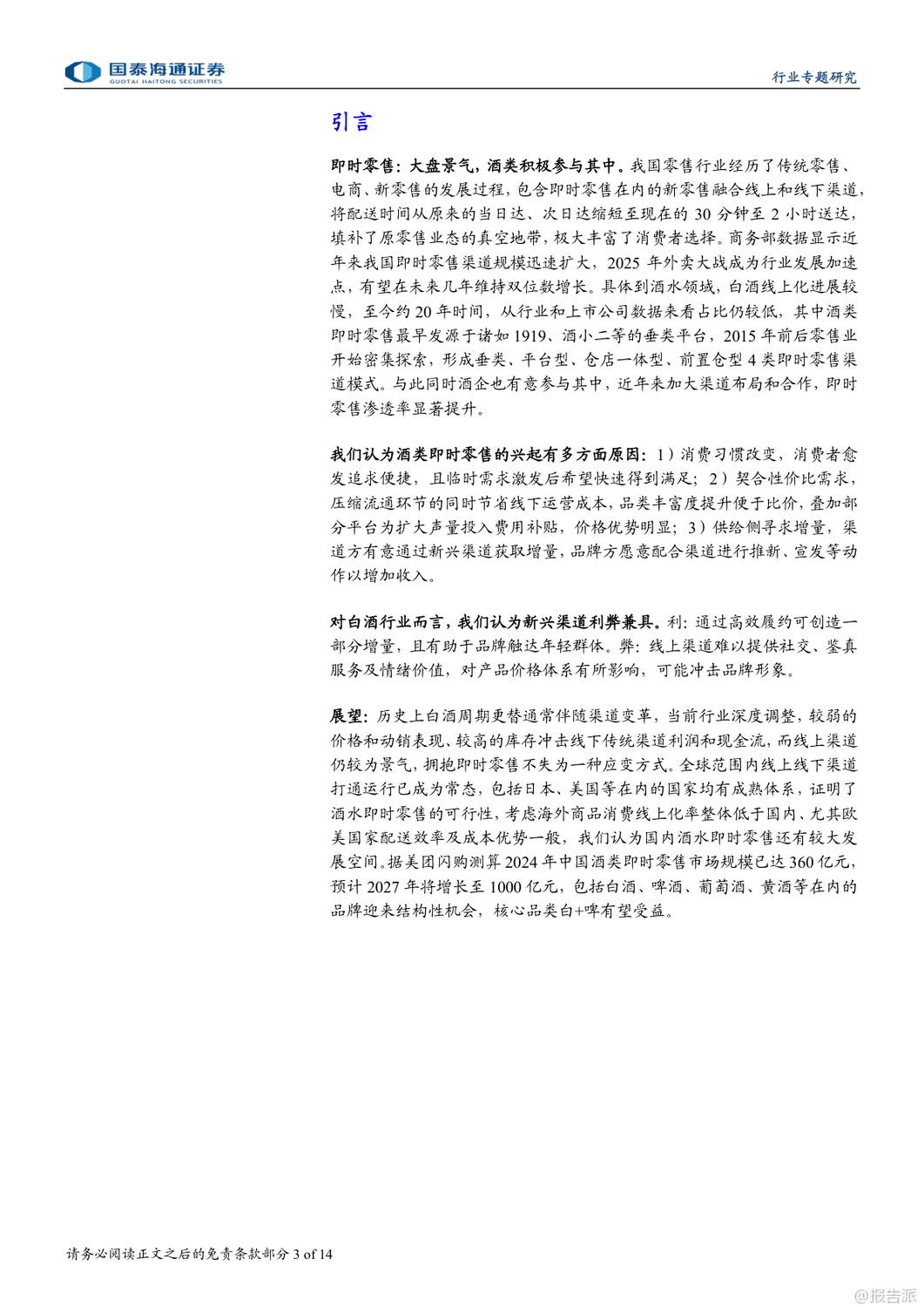
2025年白酒即时零售渠道发展报告
Sou Hu Cai Jing· 2026-02-06 10:18
Group 1 - The core viewpoint of the article is that instant retail is emerging as a new growth opportunity for the liquor industry, particularly in the context of structural adjustments in the baijiu sector, with significant market expansion expected in the coming years [1][14][20] - The instant retail market in China reached 780 billion yuan in 2024, with a year-on-year growth of 20%, and is projected to exceed 1 trillion yuan by 2025 and reach 2 trillion yuan by 2030, with a compound annual growth rate (CAGR) of approximately 17% over the next six years [1][26][20] - The liquor instant retail market, although starting later, is experiencing rapid growth, with an estimated scale of 360 billion yuan in 2024, expected to rise to 1 trillion yuan by 2027, reflecting a near double-digit CAGR [3][20] Group 2 - The rise of instant retail is driven by three main factors: changing consumer habits favoring convenience and instant gratification, significant cost advantages through reduced distribution channels, and proactive changes from suppliers seeking new growth avenues [4][19][52] - Four operational models of liquor instant retail have emerged: vertical platforms (e.g., 1919, Jiu Xiaoyi), platform-type (e.g., Meituan Flash Purchase, JD Seconds), integrated warehouse-store models (e.g., Hema, Yonghui), and front warehouse models (e.g., Dingdong Maicai, Meituan Maicai) [4][47] - Major liquor companies, including Kweichow Moutai, Wuliangye, and Luzhou Laojiao, are actively collaborating with platforms like Meituan and JD to offer rapid delivery services, indicating a strategic focus on instant retail [7][48] Group 3 - Instant retail is seen as a key channel for liquor companies to reach younger consumers, with the potential to create incremental sales through efficient fulfillment [19][56] - However, challenges exist, such as the inability of online channels to provide the social experience and authenticity associated with offline purchases, which may impact brand image and pricing structures [11][57] - The report suggests that liquor companies should carefully manage channel boundaries to avoid core products becoming mere traffic drivers and to enhance product differentiation and digital anti-counterfeiting measures [13][57] Group 4 - The overall view is that instant retail represents not only a channel transformation but also a crucial strategy for the liquor industry to adapt to cyclical adjustments and connect with a new generation of consumers [14][55] - The competition in the instant retail space will favor those who can balance efficiency with brand value, positioning themselves advantageously in the evolving market landscape [16][56]


跟隨《中銀做客》佈局內需,華潤啤酒的關鍵阻力與衍生品詳解
Ge Long Hui· 2026-02-06 06:46
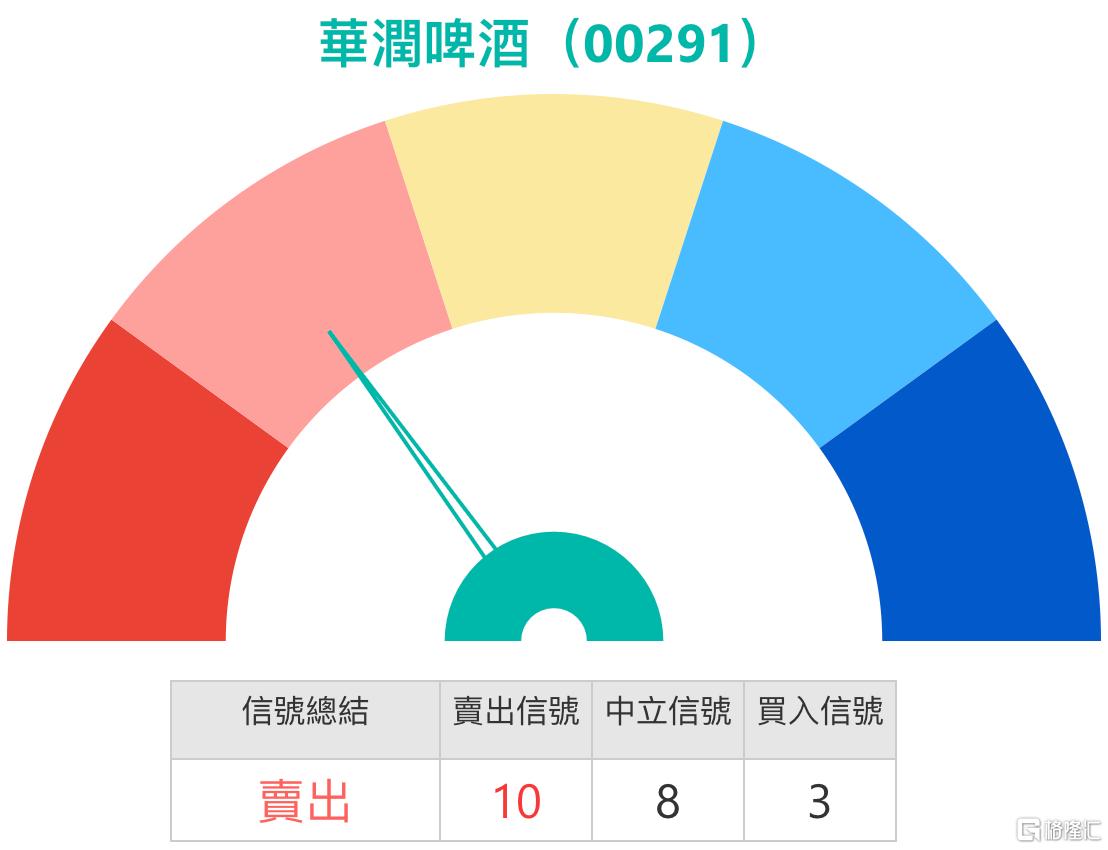
Core Viewpoint - China Resources Beer (00291.HK) has shown a strong independent performance in the Hong Kong stock market, with its stock price rising steadily since January, closing at 27.16 HKD on February 4, indicating potential upward momentum despite market volatility [1][2]. Technical Analysis - The stock price has successfully broken through the upper Bollinger Band, signaling a strong short-term upward momentum, supported by moving averages above MA10 (26.2 HKD) and MA30 (26.36 HKD) [1]. - However, several oscillators have indicated a "yellow light," with the Relative Strength Index (RSI) at 61, suggesting that buying pressure may be waning, and overbought conditions could lead to a price correction [2]. Support and Resistance Levels - Key resistance levels are identified at 28 HKD and 28.9 HKD, with a breakthrough at 28.1 HKD potentially leading to further gains [5]. - Support levels are established at 26.2 HKD and 25.5 HKD, with the latter being a significant buying zone that could maintain the upward trend if defended [6]. Market Sentiment and Strategy - The market sentiment is mixed, with some analysts suggesting a cautious approach due to the overbought indicators, advising investors to wait for more favorable conditions before engaging in derivative products [7]. - Various call options are available for investors, with differing risk-reward profiles, including a low street volume option from Bank of China and higher leverage options from HSBC and JPMorgan [8].

港股收盘 | 恒指收涨0.14% 科网股午后回暖 百胜中国绩后大涨11%
Zhi Tong Cai Jing· 2026-02-05 08:50
Market Overview - Hong Kong stocks opened lower but closed higher, with the Hang Seng Index rising by 0.14% to 26,885.24 points and a total turnover of HKD 315.11 billion [1] - Morgan Stanley noted that despite recent market volatility, effective measures to cool A-shares, a stronger USD against RMB, and long-term regulatory support for Hong Kong are expected to provide positive liquidity support for both A-shares and Hong Kong stocks [1] Blue-Chip Performance - Baidu Group-SW (09888) saw a 2.7% increase, closing at HKD 140.9, contributing 7.38 points to the Hang Seng Index. The company announced a new stock buyback plan of up to USD 5 billion, effective until December 31, 2028, and plans to adopt a dividend policy by 2026 [2] - Other blue-chip stocks included Haidilao (06862) up 4.03%, Lenovo Group (00992) up 3.67%, while Zijin Mining (601899) fell 4.76% and New Oriental-S (09901) dropped 3.13% [2] Sector Performance - Large tech stocks rebounded, with Xiaomi and Baidu both rising nearly 3%. Consumer stocks performed well, with Yum China surging over 11% post-earnings [3] - The precious metals sector saw a sharp decline, with gold and silver prices dropping significantly. The market for precious metals is expected to remain volatile due to various economic pressures [4] - The space photovoltaic concept saw a decline, with companies like Junda Co. (02865) dropping 12.35% [4][5] Chip Sector - Chip stocks faced pressure, with companies like Zhaoyi Innovation (03986) down 4.47% and Shanghai Fudan (01385) down 3.34%. The decline was influenced by AMD's significant drop of 17.31% following its earnings report [6] Company Earnings - Yum China reported total revenue of USD 11.797 billion for 2025, a 4% increase, with a net profit of USD 929 million, up 2%. The company plans to pay a dividend of 29 cents per share [7] - MGM China (02282) reported a net revenue of approximately USD 4.462 billion for the year ending December 31, 2025, a 10.92% increase [8] - Tianqi Lithium (002466) saw a significant drop of 13.33% after announcing a placement of 65.05 million new H-shares at a discount [9] - New World Development (01030) fell 13.17% after announcing a placement of 198 million shares at a discount to raise funds for future development and debt repayment [10]

平安证券(香港)港股晨报-20260205



Ping An Securities Hongkong· 2026-02-05 02:59
Market Overview - The Hong Kong stock market showed mixed performance with the Hang Seng Index closing at 23,831 points, down 145 points or 0.61% [1] - The market turnover decreased to 82.799 billion [1] - The net inflow of funds through the Hong Kong Stock Connect was 484 million, with Shanghai Stock Connect contributing 283 million and Shenzhen Stock Connect 201 million [1] Sector Performance - Energy and real estate sectors performed well, with coal-related assets rising due to supply constraints from Indonesia, leading to Yanzhou Coal Mining increasing over 10% and China Shenhua Energy rising over 5% [1] - Domestic property stocks also saw gains, with Shimao Group up over 14%, Sunac China up over 8%, Vanke up over 6%, and Yuexiu Property up over 6% [1] - Conversely, chip and tech stocks declined, with Shanghai Fudan down over 5%, Hua Hong Semiconductor down nearly 5%, and Tencent Holdings down nearly 4% [1] US Market Performance - The US stock market had mixed results, with the Dow Jones up 0.53%, while the S&P 500 and Nasdaq fell by 0.51% and 1.51% respectively [2] - Notable gainers included Amgen, which rose over 8%, and Nike, which increased by over 5% [2] - The tech sector faced challenges, with the Nasdaq China Golden Dragon Index down 1.95% and major chip stocks like AMD dropping over 17% [2] Investment Opportunities - The report emphasizes the importance of "technological self-reliance" and AI applications as key themes for future growth in the Hong Kong stock market, suggesting that leading companies in these sectors may see medium to long-term development opportunities [3] - It is recommended to focus on sectors supported by policies aimed at expanding domestic consumption, such as sports apparel and non-essential services [3] - The report highlights the continued value of Hong Kong stocks centered around Chinese assets, particularly in technology, consumer sectors, and undervalued state-owned enterprises [3] Company Highlights - ZTE Corporation (0763.HK) is noted for its comprehensive communication manufacturing capabilities, with a projected revenue of 121.299 billion for 2024, despite a slight decline [10] - The company maintains a high gross margin of 37.91% and is expected to see significant growth in its server and storage revenue, particularly in the AI computing sector [10] - Analysts predict ZTE's net profits for 2025 and 2026 to be 7.98 billion and 8.81 billion RMB respectively, indicating a relatively low valuation compared to its earnings potential [10]
新消费概念股再获市场追捧 巨子生物涨超5%
Xin Lang Cai Jing· 2026-02-05 02:29
Group 1 - The new consumption concept in Hong Kong stocks is showing active performance, with notable increases in companies such as Giant Bio (+5.54%), Mao Geping (+4.42%), Miniso (+3.92%), and Pop Mart (+3.79%) [2][3] - The State Council has issued a plan to accelerate the cultivation of new growth points in service consumption, focusing on enhancing key areas such as transportation, housekeeping, online audio-visual services, and inbound consumption [2][4] Group 2 - Pop Mart's new product series, PUCKY and Starry People, have gained significant popularity, with market estimates suggesting that the valuation of Pop Mart's IP potential is still underestimated [5] - Recent trends indicate that Pop Mart's new products are selling out on official websites and commanding high premiums on second-hand platforms, with hidden versions priced at 2-3 times and 3-6 times their original prices [5] - The cosmetics industry is projected to grow, with a retail sales increase of 6.18% year-on-year in 2023, as consumer spending stabilizes and the demand for product upgrades continues [5] Group 3 - The channel landscape is showing differentiated characteristics, with platforms like Douyin leading in sales and Tmall achieving its best growth in four years during the Double Eleven shopping festival [6] - Local brands are steadily increasing their market share, although market differentiation is intensifying, with companies like Anta, Pop Mart, and Haidilao identified as industry favorites for optional consumption [6][7] - Five major investment themes have been identified for 2026, focusing on emotional value consumption, health and wellness needs, the silver economy, emerging channel penetration, and multi-brand strategies [7]


2月4日【港股Podcast】恆指、騰訊控股、小米集團、理想汽車、華潤啤酒、李寧
Ge Long Hui· 2026-02-04 13:21
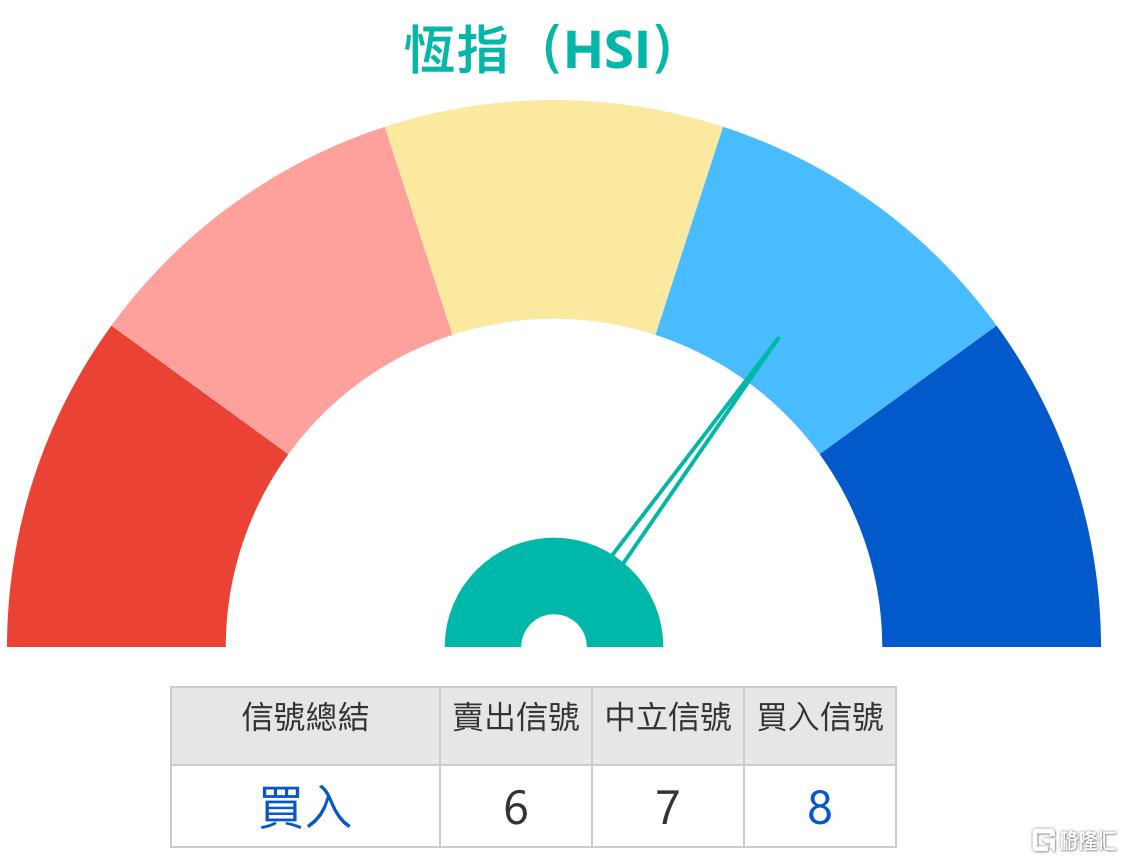
Group 1: Hang Seng Index (HSI) - Investors optimistic about the market expect the index to rebound to 27,000 points, while pessimistic investors foresee a drop to 26,500 points, indicating a short-term range between these levels [1][2] - The Hang Seng Index closed at 26,847 points, slightly below the middle line of the Bollinger Bands, but showing a slight recovery compared to the previous day [1] - The trading volume today decreased compared to the last two days of decline but remains at a higher level compared to December of the previous year [1] Group 2: Technical Analysis - The narrow trading range is identified between 26,200 points and 27,500 points, while the broader range is between 25,800 points and 27,900 points [3] - Investors are advised to select products with a buyback price slightly below 26,200 points to avoid risks associated with buyback prices too close to the market price, while maintaining leverage [3] - Current market conditions suggest a predominant "sell" signal for the Hang Seng Index [3] Group 3: Tencent Holdings (00700.HK) - Tencent's stock has shown a significant decline, breaking through key technical support levels, with a closing price of 558 HKD [7] - Investors are concerned about the risk of buyback for many Tencent bull certificates, emphasizing the importance of controlling buyback price risks [7] - Initial support levels for Tencent are at 548 HKD and 521 HKD, with a technical signal indicating a majority "buy" signal [7] Group 4: Xiaomi Group (01810.HK) - Xiaomi's stock has been underperforming, with a current support level around 33 HKD, and potential further decline to 31.3 HKD if this level is breached [13] - The increase in trading volume during the recent decline reflects weakening investor confidence [13] - Investors holding put options are seen as a reasonable strategy to hedge against risks or to gain profits [13] Group 5: Li Auto (02015.HK) - Li Auto's stock price has shown signs of recovery, with a closing price above the upper Bollinger Band, indicating positive market sentiment [20] - The technical signals are predominantly "buy," with resistance levels identified above 70 HKD [20] - If the upward trend continues, the first target is set at 72.1 HKD, with potential to test 73.9 HKD [20] Group 6: China Resources Beer (00291.HK) - China Resources Beer has shown a stable performance, closing at 27.16 HKD, and is expected to test 30 HKD in the near term [23] - The stock has broken through the upper Bollinger Band, indicating a strong upward trend [23] - Investors are advised to be patient and consider the timing of their investments, especially in options with high out-of-the-money levels [23] Group 7: Li Ning (02331.HK) - Li Ning's stock price has been rising, closing at 20.92 HKD, but with declining trading volume, indicating a potential divergence [26] - Short-term resistance levels are around 21.5 HKD, with a longer-term target of 30 HKD requiring more time to achieve [26] - Current technical signals for Li Ning are predominantly "sell," suggesting caution for investors [26]
广州:春节期间市场供给量足价稳,传统花街还将走进北京
Nan Fang Du Shi Bao· 2026-02-04 10:45
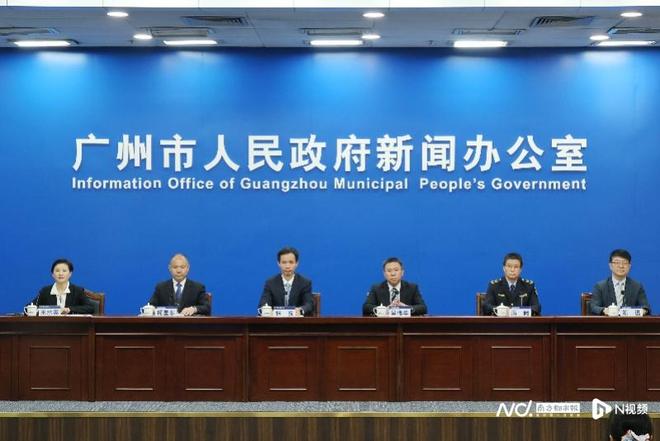
Group 1 - Guangzhou is promoting consumption during the Spring Festival with initiatives such as a trade-in program for consumer goods and a Guangdong quality product purchase campaign, covering 18 product categories with a maximum subsidy rate of 15% and distributing 50 million yuan in dining vouchers [1][5][6] - The city aims to ensure a stable supply of essential goods and maintain price stability, with over 1,000 supermarkets and 500 wholesale markets prepared to meet demand during the holiday [3][6] - The traditional flower street event will be held in Beijing from March 3 to 10, showcasing Guangzhou's floral industry and cultural heritage [6][8] Group 2 - The "Flower Street" event in Beijing will feature a recreation of Guangzhou's flower market, integrating traditional customs with modern interactive experiences, including local cuisine and technology demonstrations [8][9] - The initiative is seen as a cultural output and a way to expand the market for Guangzhou's products, allowing residents in Beijing to experience authentic Cantonese traditions [9]
预见2025:《2025年中国啤酒行业全景图谱》(附市场现状、竞争格局和发展趋势等)
Qian Zhan Wang· 2026-02-04 02:11
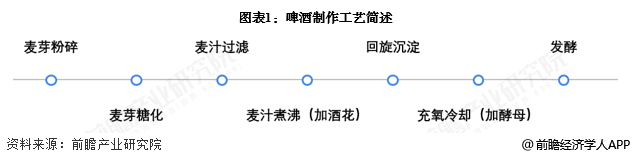
Industry Overview - The beer industry in China is defined as an alcoholic beverage made primarily from malted barley and wheat, with various classifications based on brewing techniques and yeast types [1] - The industry has a significant degree of product homogeneity due to similar brewing processes among most beer products [1] Industry Chain Analysis - The beer industry has a mature supply chain in China, with upstream suppliers providing raw materials, brewing equipment, and packaging [2][4] - Major beer producers dominate the midstream market, with the top five brands (China Resources Beer, Tsingtao Brewery, Budweiser APAC, Chongqing Brewery, and Yanjing Beer) accounting for over 90% of the market share [2][5] Industry Development History - The Chinese beer industry has evolved from foreign control in the late 19th century to a more localized production model post-1949, with significant growth following the economic reforms [7] - The industry experienced a rapid expansion from 1980 to 1994, followed by a consolidation phase from 1994 to 2005, leading to the establishment of major players [7] - Since 2017, the focus has shifted towards high-end beer production as low-end market growth has plateaued [7] Current Industry Status - Beer production in China has stabilized around 35 million kiloliters, with a slight recovery noted after a decline from 2015 to 2020 [10] - The sales revenue of the beer industry saw a significant increase in 2022, reaching 175.11 billion yuan, a 10.1% year-on-year growth [11] - The demand for high-quality beer products is rising, prompting leading companies to invest in the high-end market segment [14] Pricing Trends - The average price of beer in China has been on the rise, increasing from 14.6 yuan per liter in 2019 to an expected 17.2 yuan per liter by 2024 [15] Competitive Landscape - The beer industry in China exhibits a clear oligopolistic trend, with the top five companies dominating the market [18] - The regional concentration of beer production is high, particularly in coastal areas, with Shandong and Guangdong provinces leading in production capacity [23] Future Industry Outlook - The market size of the beer industry is projected to exceed 240 billion yuan by 2031, driven by increasing consumer demand for quality and unique beer products [24] - The industry is expected to see a rise in concentration and a shift towards high-end products, with digital marketing and innovative strategies becoming key growth drivers [28]



华创证券:春节白酒旺季临近 茅台量价均超预期
智通财经网· 2026-02-03 08:29
Core Viewpoint - The ongoing reforms at iMoutai are gradually demonstrating their effectiveness, with online consumer engagement strengthening and offline demand for regular Moutai returning to rational consumption levels, leading to a significant increase in sales velocity for Feitian Moutai compared to the same period last year [1][2] Group 1: iMoutai Reforms and Market Dynamics - The iMoutai reforms are effectively expanding the consumer base, attracting and nurturing new consumer groups, and driving high growth in distributor demand [1] - The price of regular Moutai has returned to the consumer-friendly price range of 1500 yuan, releasing substantial potential demand for business, family gatherings, and gifting [1] - The supply of high-value products has decreased, with regular Moutai filling the supply gap, leading to accelerated turnover [1][3] Group 2: Pre-Festival Demand and Sales Performance - Pre-festival demand for Feitian Moutai is heating up, with a collection progress of 33% and sufficient inventory turnover among distributors [2] - The expected additional sales volume from iMoutai is around 20%, driven by enhanced consumer reach and a slight increase in price per ton [2] Group 3: High-Value Products and Inventory Levels - The supply of high-value products is focused on inventory reduction, with low inventory levels reported [3] - The sales performance of premium and aged wines is showing positive growth, with some distributors seeking to increase their inventory from self-operated stores [3] Group 4: Regional Market Observations - There is a noticeable divergence in sales performance across different regions, with high-end brands like Feitian Moutai experiencing strong sales growth while other brands face significant declines [4] - In regions with better economic conditions and drinking culture, such as East China and Henan, sales declines are around 10%, while provinces like Shandong and Hunan report declines exceeding 10% [4] Group 5: Investment Recommendations - The investment outlook suggests focusing on Moutai and Guojiao, as the sales and pricing of Moutai have exceeded expectations, indicating a concentration of seasonal effects in leading brands [7] - For the broader market, recommendations include stable dividend-paying stocks like Guizhou Moutai and Gujing Gongjiu, while also monitoring the sales rhythm of brands like Wuliangye and Shanxi Fenjiu [7][8]