
小红书

Search documents
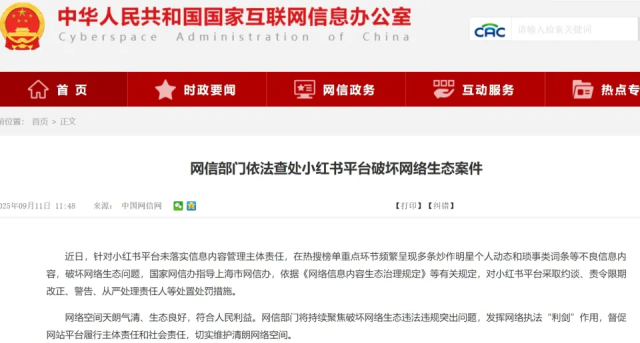
小红书、微博、快手等连续被约谈,释放了什么信号?
Xin Lang Cai Jing· 2025-09-25 03:18
Core Viewpoint - Recent discussions among major platforms like Xiaohongshu, Weibo, Kuaishou, Toutiao, and UC highlight their failure to uphold public interest and social responsibility, leading to a deteriorating online environment filled with misinformation and harmful content [1][2]. Group 1: Issues Identified - The platforms have been criticized for the prevalence of vulgar content, malicious traffic generation, and misinformation on trending topics, particularly in three areas: 1. Entertainment content dominating the trending lists, with celebrity gossip overshadowing public interest topics [2][4]. 2. Unregulated dissemination of sensitive information, leading to heightened social tensions and potential harm [4]. 3. Manipulation of information flow, where platforms control what content is visible, creating a biased information environment [5][7]. Group 2: Platform Responsibilities - The recent warnings from regulatory bodies emphasize the need for platforms to recognize their responsibilities and abandon harmful traffic-centric views to maintain a healthy online ecosystem [2][10]. - Platforms are urged to prioritize social benefits over traffic, reducing the exposure of entertainment gossip while increasing the visibility of quality content such as political news and educational resources [9][10]. Group 3: Future Directions - The call for platforms to act as builders of a healthy online ecosystem rather than destroyers is clear, with a focus on adhering to mainstream values and optimizing information recommendation mechanisms [8][10]. - The emphasis is on ensuring that trending topics reflect public interest and are free from manipulation, thereby restoring trust and integrity in online information dissemination [6][9].



热搜榜不该等同于“流量榜”
Xin Lang Cai Jing· 2025-09-25 03:18
Core Viewpoint - The recent regulatory actions by the National Cyberspace Administration of China (NCA) against social media platforms aim to address the issues of sensationalism and harmful content in trending topics, potentially reshaping the information market and restoring fairness in content dissemination [1][2][3]. Group 1: Regulatory Actions - The NCA has conducted a series of enforcement actions against multiple social media platforms, including Xiaohongshu, Weibo, Kuaishou, Toutiao, and UC, due to the presence of harmful content in their trending topic lists [1][2]. - Platforms like Xiaohongshu and Kuaishou have been penalized for frequently showcasing celebrity gossip and trivial matters, which are deemed as negative content [1][2]. - In response to the penalties, platforms have committed to forming special rectification teams to improve the management of trending topics and enhance their content review processes [2][5]. Group 2: Issues with Trending Topics - The primary reasons for the penalties include the excessive entertainment focus of trending topics and the dissemination of sensitive and harmful information [3][4]. - The pursuit of traffic by social media platforms has led to a neglect of the informational value of content, with algorithms favoring sensational topics that attract user engagement [3][4]. - There is a concern that the manipulation of trending topics for commercial gain can disrupt the online ecosystem and potentially harm societal stability [4][5]. Group 3: Recommendations for Improvement - Experts suggest that social media platforms should establish clearer management standards for trending topics, including limits on the proportion of entertainment content [5]. - There is a call for platforms to provide personalized trending lists for different user demographics, allowing for a broader representation of important social issues [5]. - The shift from prioritizing traffic to valuing content quality is seen as essential for the evolution of social media platforms towards providing valuable information services [5].
求购长鑫存储老股份额;转让持有OpenAI公司股份的基金LP份额|资情留言板第170期
3 6 Ke· 2025-09-24 14:21
Summary of Key Points Core Viewpoint The article presents a dynamic asset trading market, highlighting various opportunities for buying and selling shares in prominent companies, including OpenAI, ByteDance, and others, with specific valuations and asset sizes mentioned. New Additions - Transfer of fund LP shares holding OpenAI old shares with an expected valuation of $500 billion, asset size of approximately $30-60 million, and a 10% management fee with no carry [1] - Transfer of fund LP shares holding ByteDance old shares with an expected valuation of $340 billion, asset size of approximately $70 million, with management fees and carry [1] - Purchase request for Changxin Storage old shares with valuation to be negotiated, asset size of approximately $30 million, with conditions negotiable for LP shares [1] Additional Transfers - Transfer of old shares in Star Glory Company with an expected valuation of $9.6 billion, asset size of approximately $30 million [2] - Transfer of fund LP shares holding OpenAI shares with an expected valuation of approximately $50 billion, asset size of about $50 million, with management fees and carry [3] - Transfer of fund LP shares holding ByteDance shares with an expected valuation of $34.5 billion, requiring a one-time acceptance of $6 million [4] Purchase Requests - Purchase request for old shares in Xiaohongshu with an expected valuation of $38 billion, asset size of approximately $10 million, with negotiable terms [13] - Purchase request for old shares in ByteDance with an expected valuation of $320 billion, asset size of approximately $30-50 million [13] Asset Transfers and Increases - Transfer of LP shares holding Huo La La with valuation to be negotiated, asset size of $2 million, with no management fee and carry [16] - Transfer of LP shares holding Wo Fei Chang Kong Technology with valuation to be negotiated, asset size of approximately $60 million, with management fees and carry [16] - Transfer of LP shares holding Ai Fo Guang Tong with an expected valuation of approximately $6.6 billion, asset size of about $60 million, with management fees and carry [17]
硬件公司创始人背刺友人、反悔赠股;无人机公司老板一句话致整个部门被裁;电动牙刷品牌三倍薪资挖竞对主播丨鲸犀情报局Vol.20
雷峰网· 2025-09-24 12:07
Group 1: Drone Industry Challenges - A prominent drone company is struggling due to competition from industry giants, leading to financial instability and talent loss [1][4] - The founder expressed desperation over the company's situation, indicating a reliance on government projects for survival [1] - The company is preparing to launch a second-generation autonomous product, waiting for competitors to release their versions first [1] Group 2: Startup Controversies - A founder of an exoskeleton startup misled a CMO into helping with crowdfunding, later demanding the promised shares back [2] - The founder is accused of using unethical tactics against competitors, including spreading negative information and attempting to sabotage their funding efforts [2] Group 3: Consumer Electronics Strategic Issues - A well-known consumer electronics company faces internal strategic conflicts, with differing priorities between brand building and business growth [3] - This misalignment has resulted in high turnover among regional leaders, with many not lasting more than two years in their roles [3] Group 4: Hardware Company Dynamics - Two executives at a popular hardware company are in a delicate situation, both considering entrepreneurship while managing overlapping responsibilities [3] - The founder has a "gentleman's agreement" with one of the executives regarding their future roles, indicating potential instability within the leadership [3] Group 5: Robotics Industry Developments - A local robot company attempted to partner with an international brand but was ultimately rejected in favor of a competitor [6] - The company is now negotiating with local governments for land rather than financial support, indicating a shift in strategy [6] Group 6: Cleaning Appliance Market Insights - A Chinese cleaning brand has established a strong presence in overseas markets, offering attractive profit margins to distributors [7] - The brand benefits from a unique "zero-cost after-sales ecosystem" supported by overseas Chinese users [7] Group 7: Investment and Innovation - A co-founder of a laser engraving machine brand left due to concerns over the company's direction and family-like dynamics [8] - Post-departure, the co-founder successfully recommended a project to a major investor, resulting in a significant investment [8] Group 8: Emerging AI Products - A former product manager from vivo has left to start a new venture focused on AI fashion mirrors, securing substantial investment and preparing for a product launch [8]

小红书,接了淘宝“扔掉的生意”?
3 6 Ke· 2025-09-24 11:10
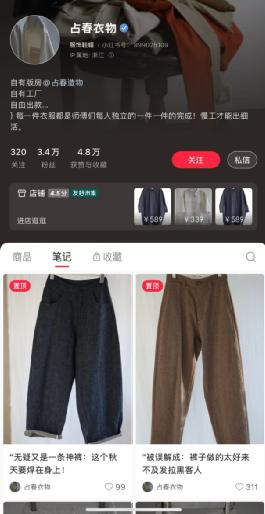
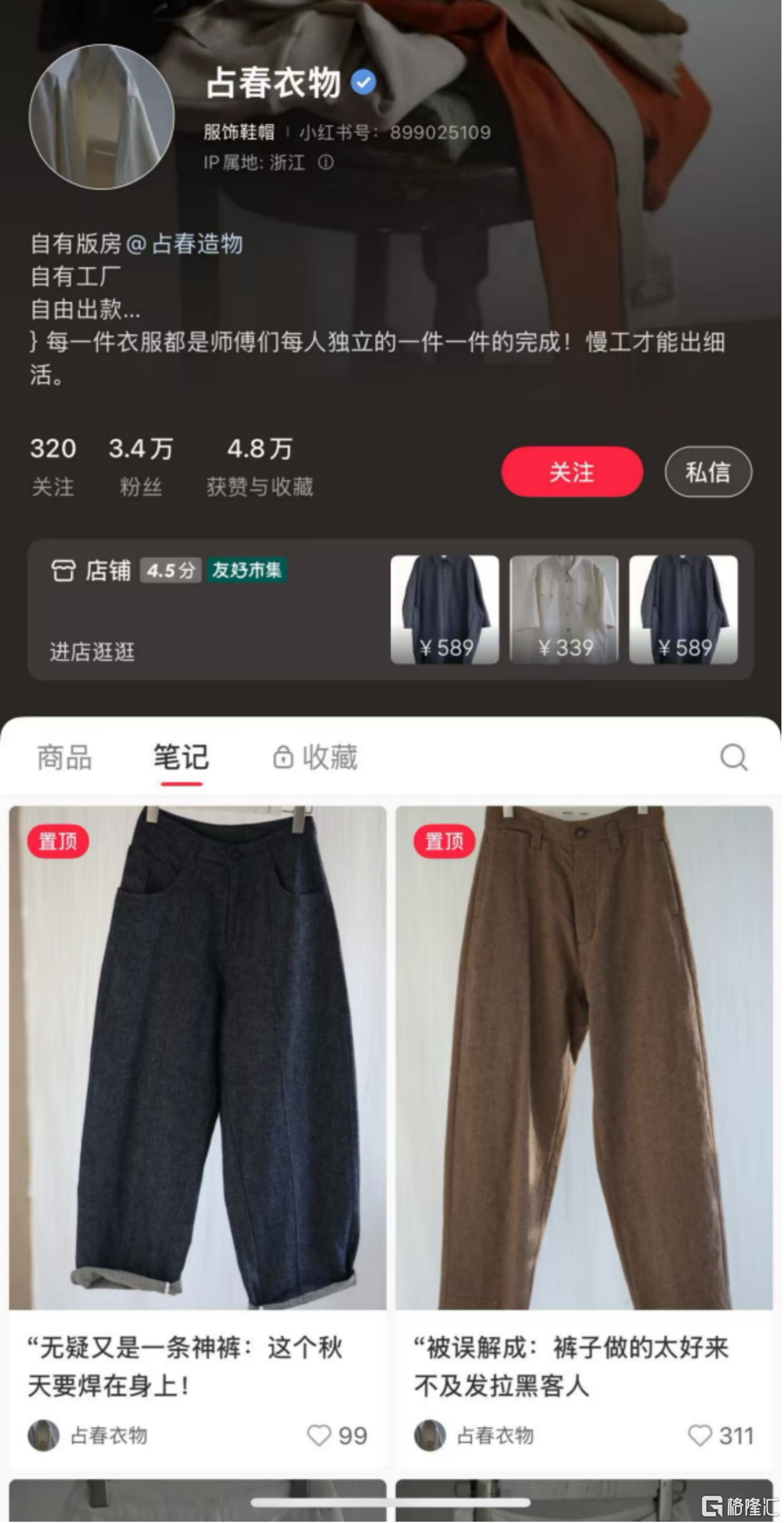
Group 1 - The core viewpoint of the article is that Xiaohongshu is making a significant push into e-commerce by launching a buyer window and offering incentives to new buyers, indicating a strategic shift towards enhancing its e-commerce business [1][2][7] - Xiaohongshu's monthly active users have surpassed 350 million, with an average daily usage time of over 74 minutes, and 170 million users seeking purchases each month [1] - The e-commerce landscape is highly competitive, with major players like JD.com and Taobao aggressively vying for market share, particularly in instant retail [3][5] Group 2 - Xiaohongshu's unique selling proposition lies in its focus on "non-standard" products, which are personalized and cater to niche demands, contrasting with the price and quality competition of other platforms [4][11][12] - The platform's user demographics are primarily female, with strong purchasing power and a preference for personalized, non-standard products [12] - However, challenges exist in the non-standard product market, including unstable demand and difficulties in after-sales service and quality assurance [13][16][17] Group 3 - The potential market for non-standard products may be limited, as evidenced by the performance of similar platforms like Etsy, which, despite being a leader in its niche, has a significantly lower GMV compared to giants like Amazon [18][20][21] - Xiaohongshu's approach to e-commerce is influenced by its desire to maintain the integrity of its community content, which emphasizes usefulness over mere commercial transactions [26][29][53] - The article suggests that while Xiaohongshu faces many opportunities in e-commerce, it also encounters substantial challenges that will require time to navigate [55]
投资人,还在投什么样的消费企业?
创业家· 2025-09-24 10:07
Core Viewpoint - Investors are focusing on consumer enterprises that can establish a strong main brand, achieve high standardization for rapid replication, and create a defensible ecosystem against imitation [1][8]. Group 1: Brand and Market Strategy - Successful consumer brands must have a standout product that breaks through the market, allowing for the incubation of smaller brands [1]. - High standardization enables rapid scaling and the establishment of a chain of stores [1]. - Companies need to think about defensibility and innovation before launching products to prevent imitation [1]. Group 2: Lessons from Japanese Brands - The success of Japanese brands in the 1980s was due to their ability to convert technology into user-perceived value, exemplified by Sony's Walkman and Uniqlo's comfortable basics [8]. - AI is reshaping consumer value by redefining product existence through algorithms, with future champions being those who integrate demand with AI effectively [8]. - Companies like Plaud and Haivivi are leveraging AI to create products that meet emotional and practical needs in the market [8]. Group 3: Consumer Market Insights - The rise of AI algorithms is creating new opportunities in consumer sectors such as food, electronics, and beauty, emphasizing the need for clear market positioning and innovative products [10]. - Companies must identify their market niche and innovate to capture new opportunities effectively [10]. Group 4: Globalization and Brand Localization - Successful globalization involves deeply integrating Chinese supply chain capabilities with local market demands, moving from simple export to localized coexistence [11]. - Building trust in overseas markets requires understanding local consumer needs and effectively communicating brand stories [11][20]. Group 5: Course Offerings and Expert Insights - The course features industry experts who will share insights on product innovation, market strategies, and the importance of data-driven decision-making in consumer goods [14][23]. - Participants will learn how to navigate cultural challenges in international markets and leverage technology for product development [19][25].


小红书能养出闲鱼吗?
虎嗅APP· 2025-09-24 09:37
Core Viewpoint - The article discusses the recent developments in the second-hand market, particularly focusing on the launch of the "Quick Sale" feature by Xiaohongshu, which allows users to sell second-hand items without the need to open a store, contrasting with the decision of Zhuanzhuan to exit the C2C second-hand trading space [4][10][15]. Group 1: Xiaohongshu's Quick Sale Feature - Xiaohongshu launched the "Quick Sale" feature on September 24, allowing personal users to trade second-hand items without opening a store, which simplifies the selling process [5][17]. - The feature is designed for personal users and not for professional second-hand sellers, with a price cap of 10,000 yuan for items [6][7]. - Despite the potential, awareness of the "Quick Sale" feature among users is low, with many users still unaware of its existence [8][9]. Group 2: Market Dynamics and User Behavior - There is a significant demand for second-hand trading on Xiaohongshu, evidenced by high engagement in related topics, but the platform has not prioritized this segment in its marketing strategy [11][23]. - Users have expressed a preference for established platforms like Xianyu for second-hand transactions due to familiarity and perceived reliability [30][31]. - Professional sellers are already attempting to leverage Xiaohongshu for second-hand sales, which could disrupt the platform's intended user experience [36][37]. Group 3: Strategic Implications for Xiaohongshu - Xiaohongshu's community-driven approach provides a unique advantage for developing a second-hand trading ecosystem, potentially allowing it to retain users and transaction volume within its platform [16][48]. - The platform's current focus on content and community over direct transactions may hinder its ability to fully capitalize on the second-hand market [41][44]. - To succeed in the second-hand market, Xiaohongshu must integrate this segment into its broader e-commerce strategy while addressing user trust and transaction efficiency [39][40].
工作动态 | 上海市援疆前指调研本市重点电商平台
Sou Hu Cai Jing· 2025-09-24 09:16
Core Insights - The Shanghai-Aid Xinjiang initiative aims to enhance collaboration with e-commerce platforms to boost product flow and cultural exchange between Shanghai and Kashgar [1][6] - The "Seek Beauty and Support Excellence" program by MeiONE has successfully promoted Kashgar's specialty products to broader markets since its launch in May 2024 [1][3] - Dingdong Maicai is leveraging a digital supply chain to efficiently introduce high-quality Xinjiang fruits to Shanghai, enhancing agricultural product circulation [4][6] - Xiaohongshu's "Little Red Village" initiative has activated a new ecosystem for agricultural, cultural, and tourism integration in Kashgar, promoting local resources and products [5][6] Group 1: MeiONE - MeiONE has initiated the "Seek Beauty and Support Excellence" program, which has expanded the market reach of Kashgar's specialty products [1][3] - The company is committed to enhancing product selection and marketing efforts in collaboration with Shanghai's aid initiatives [3] Group 2: Dingdong Maicai - Dingdong Maicai has introduced over 20 varieties of high-quality Xinjiang fruits since the 2024 Xinjiang Fruit Festival, focusing on direct sourcing and distribution [4] - The company aims to strengthen strategic cooperation with Kashgar to increase procurement and develop new product lines [4][6] Group 3: Xiaohongshu - Xiaohongshu's "Little Red Village" plan has led to the selection of seven villages in Kashgar, promoting e-commerce training and the establishment of the first "Little Red Village Supermarket" [5] - The platform seeks to enhance cultural and tourism integration in Kashgar, supporting local product promotion and community engagement [5][6] Group 4: Overall Strategy - Shanghai's e-commerce platforms are positioned as experimental fields for modern cooperation between Shanghai and Kashgar, focusing on product, resource, and cultural integration [6] - The Shanghai-Aid Xinjiang initiative emphasizes expanding the breadth and depth of cooperation to support Kashgar's industrial upgrade and rural revitalization [6]


小红书,要“有用”,还是要赚钱?
Ge Long Hui· 2025-09-24 04:32
Core Insights - Xiaohongshu has officially launched a buyer window and plans to provide benefits such as commission reductions and traffic support for new buyers, marking a significant push into e-commerce [1][2] - The platform has over 350 million monthly active users and 170 million users seeking purchases each month, indicating a strong demand for e-commerce [1][2] - Xiaohongshu's valuation has increased by 19% in the last three months, reaching $31 billion, reflecting positive market sentiment towards its e-commerce prospects [2] E-commerce Strategy - Xiaohongshu aims to differentiate itself in a competitive e-commerce landscape dominated by platforms like JD and Tmall, which focus on brand and quality, and Pinduoduo, which emphasizes price [1][2] - The platform is exploring a third path by catering to niche, personalized demands that are often overlooked by traditional e-commerce giants [2][6] - Xiaohongshu's focus on "non-standard products" aligns with its user base, which is predominantly female, has strong purchasing power, and seeks unique, personalized items [6][12] Challenges in Non-standard Products - The demand for non-standard products can be unstable, as they often provide emotional value rather than being essential needs [8][9] - Non-standard products face challenges in after-sales service and quality assurance due to their inherent variability [10][11] - The scalability of non-standard product businesses is limited, as evidenced by platforms like Etsy, which, despite being a leader in its niche, has a significantly lower GMV compared to giants like Amazon [12][13][17] Community and Content Dynamics - Xiaohongshu's unique selling proposition lies in its community-driven content, which emphasizes usefulness and relevance, contrasting with the more casual browsing experience on platforms like Douyin and Kuaishou [18][42] - The platform's user base often uses it as a search engine, seeking specific information, which poses a challenge for integrating e-commerce without disrupting the user experience [19][21] - Maintaining the balance between community content and commercial activities is crucial for Xiaohongshu, as excessive advertising could alienate users [21][22] Comparison with Other Platforms - Other content-driven platforms like Zhihu and Bilibili have struggled with e-commerce integration, highlighting the challenges faced by platforms that prioritize content over commerce [22][24][26] - Xiaohongshu's focus on being "useful" positions it closer to consumer needs compared to platforms like WeChat, which primarily serve social functions [43][44] - The potential for e-commerce on Xiaohongshu remains significant, but the path forward is fraught with challenges that require careful navigation [44]
又两起!今日头条、UC在热搜榜单呈现不良信息内容被查处
Nan Fang Du Shi Bao· 2025-09-24 02:23
Core Points - The National Internet Information Office (NIIO) has recently taken action against platforms such as Toutiao and UC for failing to manage content responsibly, leading to the dissemination of harmful information and disruption of the online ecosystem [1][2] - Other platforms like Weibo, Kuaishou, and Xiaohongshu have also faced scrutiny for similar issues, with the NIIO emphasizing the need for these platforms to fulfill their responsibilities in content management [2][3] Summary by Category Regulatory Actions - The NIIO has conducted investigations into Toutiao and UC for not fulfilling their content management responsibilities, resulting in the display of harmful information on their platforms [1] - Both platforms received penalties including warnings, orders to rectify issues, and stricter measures against responsible individuals [1] - Weibo and Kuaishou were also previously reported for similar failures, leading to similar regulatory actions [2] Platform Responses - Weibo acknowledged the criticism and has formed a special task force to address the issues related to its trending topics [2] - Kuaishou announced plans to improve its trending topics management mechanism and has established a dedicated team for ecological governance [2] - Xiaohongshu has also set up a special task force to enhance its management capabilities regarding trending topics [2] Ongoing Focus - The NIIO has reiterated its commitment to addressing significant violations that disrupt the online ecosystem and will continue to enforce regulations to ensure platforms uphold their social responsibilities [3]