
江淮汽车

Search documents
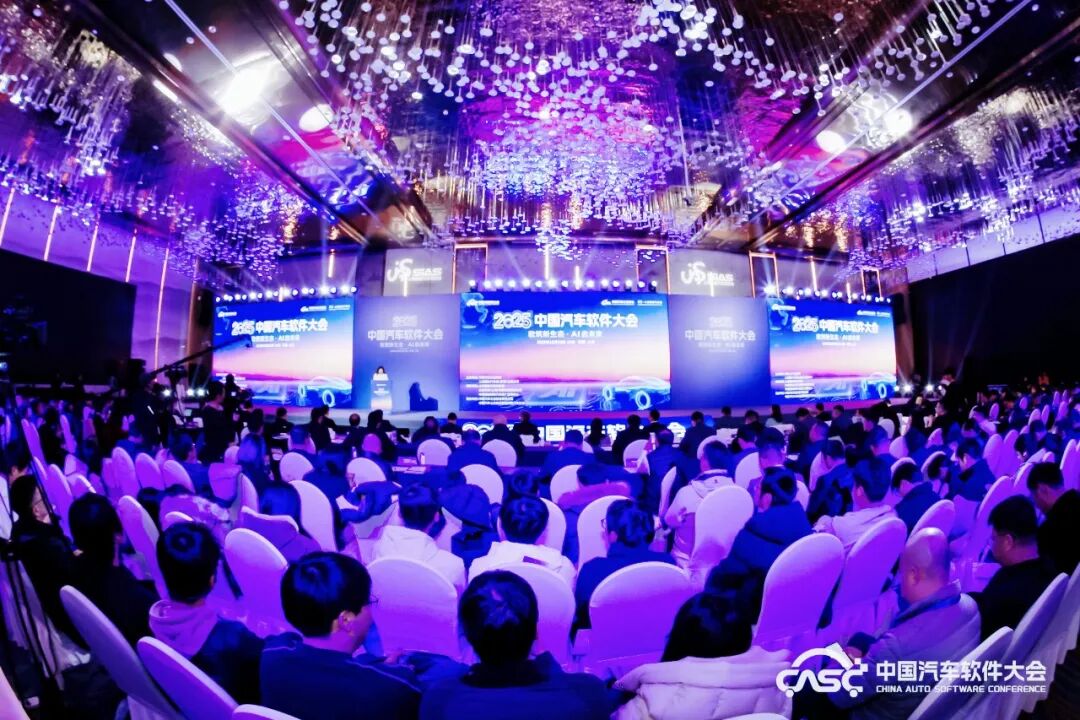
2025中国汽车软件大会共论智能汽车高质量发展
Zhong Guo Qi Che Bao Wang· 2025-12-17 01:40
Core Insights - The 2025 China Automotive Software Conference was held in Shanghai, focusing on the role of automotive software as a key driver for the intelligent and connected automotive industry, aiming for high-quality development and industry upgrades [1] Group 1: Development Trends - Automotive software is rapidly evolving towards bottom-layer autonomy, full-stack architecture, intelligent applications, open-source ecosystems, and cross-industry integration [3] - The conference emphasized the importance of strengthening foundational technology, integrating AI with new information technologies, and promoting open-source ecosystem construction [3][4] Group 2: Industry Collaboration - The Shanghai International Automotive City is collaborating with leading companies in embodied intelligence to establish a core capability open platform, supporting the integration of AI in the automotive sector [6] - A white paper on "Software-Defined Automotive Service Development" was released, outlining methodologies and tools for achieving profound changes through service-oriented software [8] Group 3: Data Security and Innovation - The construction of a trusted data space is crucial for ensuring secure data circulation and unlocking data value, with various automotive companies collaborating to innovate in automotive insurance [9] - The launch of the "Tianyuan OS Open Source Co-construction Plan" aims to enhance compatibility and reusability in autonomous driving and intelligent cockpit fields [9] Group 4: User Experience - The ICCE Alliance has established a digital key experience evaluation system to address issues like signal instability and positioning accuracy, setting a new industry benchmark for smart entry experiences [10]

东兴证券:汽车行业L3商用加速落地 有望推动智能底盘批量应用
智通财经网· 2025-12-17 01:35
Core Viewpoint - The approval of L3-level autonomous driving vehicles by the Ministry of Industry and Information Technology (MIIT) marks a significant step towards the commercialization of L3 autonomous driving in China, which is expected to accelerate the adoption of smart chassis technologies [1][2][3]. Group 1: Event Summary - The MIIT has granted conditional approval for Changan Automobile and BAIC BluePark Magna Automotive to produce L3-level autonomous vehicles, following the submission of their applications [2]. - The approval is part of the 401st batch of announcements by the MIIT, indicating a regulatory framework supporting the introduction of L3 autonomous driving products in the market [2][3]. Group 2: L3 Commercialization Impact - L3 autonomous driving allows for conditional self-driving capabilities, where the system controls vehicle movement and responds to environmental stimuli within a limited operational range, requiring driver intervention outside this range [3]. - The vehicles approved include Changan's Deep Blue model and BAIC's Arcfox Alpha S (L3 version), which features a high-performance sensor system with 34 sensors, including three LiDARs, ensuring comprehensive safety and redundancy [4]. Group 3: Smart Chassis Development - The commercialization of L3 driving is expected to drive the mass application of smart chassis technologies, including active suspension, electronic brake-by-wire (EMB), and steer-by-wire (SBW) systems [4][5]. - Active suspension systems will integrate air springs and variable damping to enhance vehicle handling and comfort, while EMB represents the future direction of braking systems, supported by mandatory national standards set to take effect in 2026 [4][5]. Group 4: Investment Strategy - The approval of L3 vehicles provides policy support for the widespread adoption of advanced autonomous driving technologies, benefiting companies that are actively investing in this sector [6]. - Key investment opportunities include automakers collaborating with Huawei, such as Seres, JAC Motors, BAIC BluePark, SAIC Group, and Changan, as well as companies in the smart chassis supply chain like Baolong Technology and Top Group [6].

福田摘冠,江淮/江铃并列,跃进暴涨1.4倍!11月轻卡销量近18万辆 | 头条
第一商用车网· 2025-12-16 15:59
Core Viewpoint - In November 2025, China's commercial vehicle sales increased by 24% year-on-year, with the truck market growing by 26%, slightly above the overall commercial vehicle market growth. The light truck segment, being the largest in the truck market, showed a mixed performance, raising questions about its competitiveness in the final month of the year [1][3][6]. Summary by Sections Overall Market Performance - In November 2025, the truck market sold 338,400 units, a month-on-month increase of 9% and a year-on-year increase of 26%. The light truck market sold 179,500 units, with a year-on-year growth of 7%, marking a "10 consecutive months increase" [3][4][6]. Light Truck Market Analysis - The light truck market's year-on-year growth of 7% in November was lower than the overall truck market's growth, indicating a recent decline in performance compared to earlier months. Cumulatively, from January to November, the light truck market grew by 6%, also lagging behind the overall truck market growth [6][28]. Historical Context - November is typically not a peak sales month for the truck market, with average sales in the last decade around 150,000 units. The 2025 November sales of 179,500 units ranked third in the last ten years, indicating a decent performance but not exceptional [8][10]. Company Performance - In November, nine companies sold over 10,000 light trucks, with Foton leading at 37,000 units, followed by Changan and Great Wall. The top five companies accounted for 56.07% of the market share [13][14][20]. - Year-to-date, Foton maintained the highest cumulative sales at 403,100 units, with a market share of 22.11%. Other notable companies included Changan, Great Wall, and Jianghuai, each exceeding 150,000 units in sales [20][21]. Growth Trends - Among the top ten companies, eight reported year-on-year sales increases in November, with Leap Motor and BYD showing significant growth rates of 142% and 70%, respectively. The overall light truck market growth was outpaced by several companies [18][19][23]. Market Share Changes - Compared to 2024, companies like Leap Motor and BYD saw notable increases in market share, while others experienced declines. The competitive landscape shifted, with Jianghuai and Changan moving up in rankings [26][28].





汽车行业:L3商用加速落地,有望推动智能底盘批量应用
Dongxing Securities· 2025-12-16 14:56
Investment Rating - The report maintains a "Positive" investment rating for the automotive industry, indicating an expectation of performance that exceeds the market benchmark by more than 5% [3][19]. Core Insights - The commercial application of L3 level conditional autonomous driving is expected to accelerate, with more vehicles equipped with L3 features likely to receive regulatory approval in the future [1][2]. - The introduction of L3 systems is anticipated to drive the mass application of intelligent chassis technologies, including active suspension, electronic brake-by-wire (EMB), and steer-by-wire (SBW) systems, which are crucial for higher levels of autonomous driving [2][9]. - The report highlights the significant advancements in hardware and software for automotive intelligence, suggesting a robust growth trajectory for companies involved in these technologies [2][9]. Summary by Sections Industry Overview - The automotive industry consists of 232 listed companies, with a total market capitalization of approximately 46,540.79 billion and a circulating market value of about 36,782.9 billion [4]. - The average price-to-earnings ratio for the industry stands at 31.78 [4]. Key Developments - The report notes that the recent approval of L3 autonomous vehicles by the Ministry of Industry and Information Technology marks a significant step towards the commercialization of advanced driving technologies in China [1][2]. - The intelligent chassis is seen as the final piece in the puzzle for L3 and higher-level autonomous driving, with a focus on the upcoming mass production of active suspension, EMB, and SBW systems [2][9]. Investment Strategy - The report suggests focusing on two main areas for investment: the complete vehicle application sector, where leading companies are establishing advantages in training data and ecosystems, and the intelligent chassis sector, which is poised for rapid growth due to regulatory support and technological advancements [2][9].
「禁止亏本卖车」,价格猫腻要藏不住了
36氪· 2025-12-16 13:35
Core Viewpoint - The automotive industry is on the brink of a significant reshuffle due to the introduction of the "Automotive Industry Pricing Behavior Compliance Guidelines," which aims to end the ongoing price war and establish clearer pricing regulations [5][10]. Group 1: Compliance Guidelines - The guidelines prohibit car manufacturers from selling vehicles below production costs and require clear pricing and delivery terms [8][16]. - Multiple car manufacturers, including BYD, Xpeng, and Changan, have expressed support for the guidelines, emphasizing the need to eliminate price fraud and unfair competition [11][13]. - The guidelines detail nine prohibited behaviors, including disguised price reductions and excessive discounts, which could lead to legal risks [16][18]. Group 2: Market Impact - The price war has severely impacted the industry's profit margins, with the overall profit rate for the automotive industry dropping to a historical low of 4.4% in 2025 [26][28]. - The average gross profit per vehicle in the automotive supply chain is only 14,000 yuan, and over 52.6% of automotive dealers are experiencing losses [28][29]. - The ongoing price war has led to a decline in consumer confidence, with a significant increase in the number of potential buyers delaying their purchases due to price fluctuations [32][34]. Group 3: Consumer Behavior - Consumers are increasingly associating vehicle prices with quality and features, with the percentage of buyers believing "you get what you pay for" rising from 13% in 2023 to 34% in 2025 [34]. - The expectation of continuous price reductions has led consumers to postpone purchases, as they believe waiting will yield better deals [35][36]. - The end of the price war is expected to lead to more rational competition in the automotive market, improving product safety and quality [36].



自动驾驶又迎催化!“华为系”智能汽车在全国多地开启L3路测
Shang Hai Zheng Quan Bao· 2025-12-16 12:33
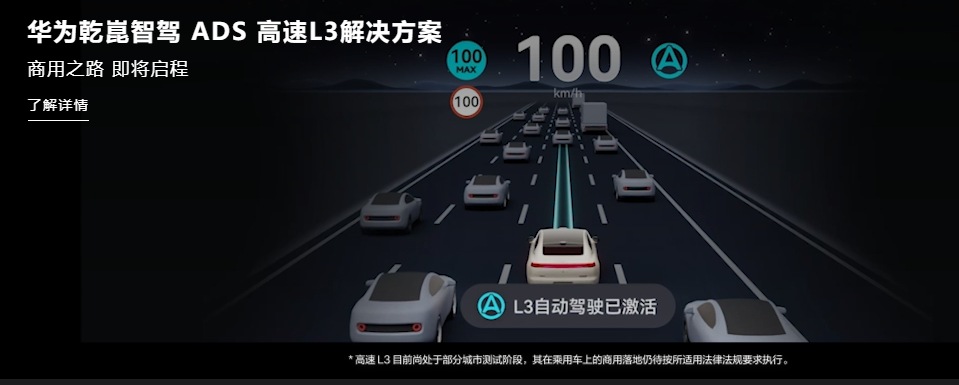
Core Insights - The commercial use of L3 conditional autonomous driving is approaching, with multiple cities in China conducting road tests for L3 vehicles, including Shenzhen, Beijing, Shanghai, Guangzhou, Hefei, Wuhan, and Chongqing [1][3][6] Group 1: L3 Autonomous Driving Testing - Huawei's subsidiary, Hongmeng Zhixing, has initiated L3 conditional autonomous driving testing in Shenzhen, focusing on real-world scenarios to validate the safety and maturity of the L3 system [3][6] - The testing involves real users, specifically Huawei employees, using self-purchased models such as the 2025 Wanjie M9 and Zun Jie S800, covering 1,000 kilometers of high-speed roads in Shenzhen [3][6] - Other brands, including Xiaopeng Motors, have also received L3 road testing licenses and are conducting regular tests in cities like Guangzhou [6][7] Group 2: Partnerships and Collaborations - As of October 2025, Huawei's "Qian Kun" has partnered with 14 automotive companies, resulting in 33 mass-produced models across various vehicle types, including electric, hybrid, and fuel vehicles [4][10] - The first two L3 autonomous driving models approved for road testing are the Changan Deep Blue SL03 and the BAIC Arcfox Alpha S (L3 version), which are designed for urban congestion and highway scenarios [7][10] - Changan Deep Blue has three models equipped with Huawei's Qian Kun intelligent driving solution, while BAIC's Arcfox Alpha S (L3 version) also utilizes this technology [10]

华为L3级自动驾驶,新消息
Shang Hai Zheng Quan Bao· 2025-12-16 11:19
Core Viewpoint - The commercial use of L3 conditional autonomous driving is approaching, with multiple companies, including Huawei, actively conducting road tests in various cities across China [1][3][4]. Group 1: L3 Autonomous Driving Testing - Huawei's subsidiary, Hongmeng Zhixing, has initiated L3 conditional autonomous driving internal testing in Shenzhen, collaborating with local transportation authorities [1][3]. - The testing involves real users, specifically Huawei employees, using self-purchased vehicles, covering 1,000 kilometers of high-speed roads in Shenzhen [3]. - Other brands, such as Xiaopeng Motors, are also conducting L3 road tests, with Xiaopeng announcing its L3 road test license in Guangzhou [7]. Group 2: Partnerships and Collaborations - As of October 2025, Huawei's QianKun has partnered with 14 automotive companies, resulting in 33 mass-produced models across various vehicle types, from electric to fuel [4][11]. - The first two L3 autonomous driving models approved for road testing by the Ministry of Industry and Information Technology are from Changan Deep Blue and BAIC Arcfox, both of which have deep collaborations with Huawei [8][11]. Group 3: Future Projections - Huawei anticipates entering the L3 and L3+ era in the coming year, with expectations to progress towards L4 by 2027 [7].
10月北美需求下滑,欧洲增幅收窄:汽车行业海外销量点评
Huachuang Securities· 2025-12-16 09:50
Investment Rating - The report maintains a "Buy" recommendation for the automotive industry [2]. Core Insights - Global light vehicle sales in October reached approximately 7.9 million units, a year-on-year increase of 2.6% and a month-on-month increase of 0.5%. However, overseas sales totaled about 4.77 million units, showing a year-on-year decline of 0.4% and a month-on-month decline of 1.5% [2]. - North American sales were 1.56 million units, down 5.0% year-on-year but up 1.1% month-on-month. European sales were approximately 1.48 million units, up 2.9% year-on-year but down 7.5% month-on-month. In contrast, Chinese sales reached 3.13 million units, up 7.6% year-on-year and 3.7% month-on-month [2]. - The report anticipates that overseas light vehicle sales will reach 55.88 million units in 2025, a year-on-year increase of 1.3%, and 56.14 million units in 2026, a year-on-year increase of 0.5% [2]. Summary by Sections 1. Industry: Sales, Exchange Rates, Freight - Global light vehicle sales data indicates a mixed performance across regions, with North America and Europe facing declines while China shows growth [2][5]. - The report highlights the impact of exchange rates and freight costs on the automotive industry, noting a downward trend in the CCFI (China Container Freight Index) [24]. 2. Market Competition - The competitive landscape is analyzed, showing the market shares of major automotive groups, including Toyota, Volkswagen, and BYD, with a focus on their performance in the global market [28][29]. - The report also discusses the dynamics of the global new energy vehicle market, emphasizing the growth of companies like BYD and Tesla [33][34]. 3. Export Situation of Automotive and Parts Companies - The report provides insights into the export performance of domestic automotive manufacturers, highlighting the monthly growth rates of narrow passenger vehicle exports [39][40]. - It lists companies with significant overseas revenue, indicating their reliance on international markets [42].



2026年汽车总投资策略
2025-12-16 03:26
Summary of Automotive Industry Conference Call Industry Overview - The automotive industry is transitioning from electrification to intelligence in 2026, marking a critical shift influenced by technological innovation, changing consumer demographics, and preferences [1][2] - The passenger vehicle market is expected to maintain sales at approximately 23 million units in 2025, with a projected decline of 3.5% to 22 million units in 2026 [1][5] Key Insights and Arguments - The investment strategy for 2026 is characterized as "breaking the old and establishing the new," shifting focus from electrification to smart vehicles [2] - New brands such as Xiaopeng, Leapmotor, Huawei, and Xiaomi are expected to emerge in the automotive market, competing with Tesla and BYD [1][7] - The penetration rate of advanced intelligent driving in electric vehicles is anticipated to double to 40% by 2026 [9][10] Market Predictions - The export performance in 2025 exceeded expectations, particularly benefiting from the Russian market, with a forecast of double-digit growth in 2026, especially in the new energy sector, which is expected to grow by around 40% [8] - The overall automotive export volume is projected to decline by 3% to approximately 20 million units in 2026, with new energy vehicle sales expected to increase by 11% [8] Investment Recommendations - In the components sector, companies with high earnings certainty and involvement in robotics or liquid cooling, such as Top Group, Yilun Co., and Junsheng Electronics, are recommended for potential strong performance in the next three years [1][6] - For passenger vehicles, Yutong Bus is highlighted for its strong global competitiveness and potential for high stock price innovation, with a market value expected to exceed 100 billion [3][14] - In the heavy truck sector, companies like Weichai Power are suggested for their export potential, while the bus and motorcycle sectors are expected to see continued growth in exports of 20% and 17%, respectively [11][12] Long-term Trends - The integration of intelligence and robotics is seen as a significant development area, with a focus on companies that demonstrate solid performance and commercial potential [25] - The L4 level autonomous driving technology is expected to gain traction in 2026, with a focus on establishing a pricing system suitable for this technology [22][23] - Companies such as BYD, Xiaopeng, and Horizon are identified as key players in the smart automotive sector, with significant growth potential [24] Additional Considerations - The passenger vehicle market is expected to face challenges due to the withdrawal of local subsidies, but companies will still prioritize sales to maintain competitiveness [5] - The heavy truck sector is undergoing a technological transformation, with a focus on electric and natural gas trucks as core growth points [11][18] - The motorcycle market is projected to remain a viable option, driven by stable demand for larger displacement motorcycles and strong export performance [16][17] This summary encapsulates the key points from the automotive industry conference call, highlighting the transition towards smart vehicles, market predictions, investment strategies, and long-term trends.


汽车早餐 | 多家车企积极响应《汽车行业价格行为合规指南(征求意见稿)》;小鹏第三个海外本地化生产项目落地马来西亚
Zhong Guo Qi Che Bao Wang· 2025-12-16 01:33
Domestic News - The National Bureau of Statistics reported that from January to November, the added value of the automotive manufacturing industry grew by 11.8% [2] - In the same period, the production of automobiles increased by 10.8%, indicating a steady growth in new consumption [2] - The retail volume of new energy vehicles in the passenger car market maintained rapid growth during this timeframe [2] Industry Developments - The State Administration for Market Regulation announced a recall of 244,500 vehicles from seven automotive manufacturers in November 2025 [3] - The "Yue Car Southbound" reservation system began accepting bookings on December 15, 2025, for travel from December 23, 2025, to January 31, 2026 [4] - Shenyang plans to strengthen its automotive and parts industry, focusing on the full industrial chain of smart connected new energy vehicles [5] - Luoyang aims to accelerate the bearing industry in relation to new energy vehicles and other emerging sectors [6] International News - Renault is shutting down its car-sharing business and slowing down the construction of its electric vehicle charging network to focus on more profitable segments [7] - Volkswagen will cease vehicle production at its Dresden plant after December 16, marking the first closure of vehicle production in Germany since its establishment [9] - Mercedes-Benz India will raise car prices by up to 2% starting January due to rising raw material and logistics costs [10] Corporate News - Multiple automotive companies, including Jiangqi Group and Seres Group, are responding positively to the "Automotive Industry Pricing Behavior Compliance Guidelines" [11] - GAC's flying car GOVY AirCab has entered the airworthiness certification stage, with mass production expected in 2026 [12] - XPeng Motors has initiated its third localized production project in Malaysia, aiming for mass production by 2026 [13] - NIO has established 500 charging and battery swap stations in Shanghai, providing over 10,000 battery swap services daily [14] - CATL and Transfar Group signed a strategic cooperation agreement to enhance collaboration in green and sustainable industry ecosystems [15] - Dong'an Power and Beijing Automotive Manufacturing Factory signed a strategic cooperation agreement to establish a joint innovation laboratory [16] - Taotao Automotive's subsidiary plans to acquire 100% of Racka brand company for $15 million, expanding its brand portfolio [17]
