长安汽车

Search documents
1月乘用车市场销量分析:开年遇冷呈短期波动 合资表现相对稳健
Zhong Guo Zhi Liang Xin Wen Wang· 2026-02-25 03:22
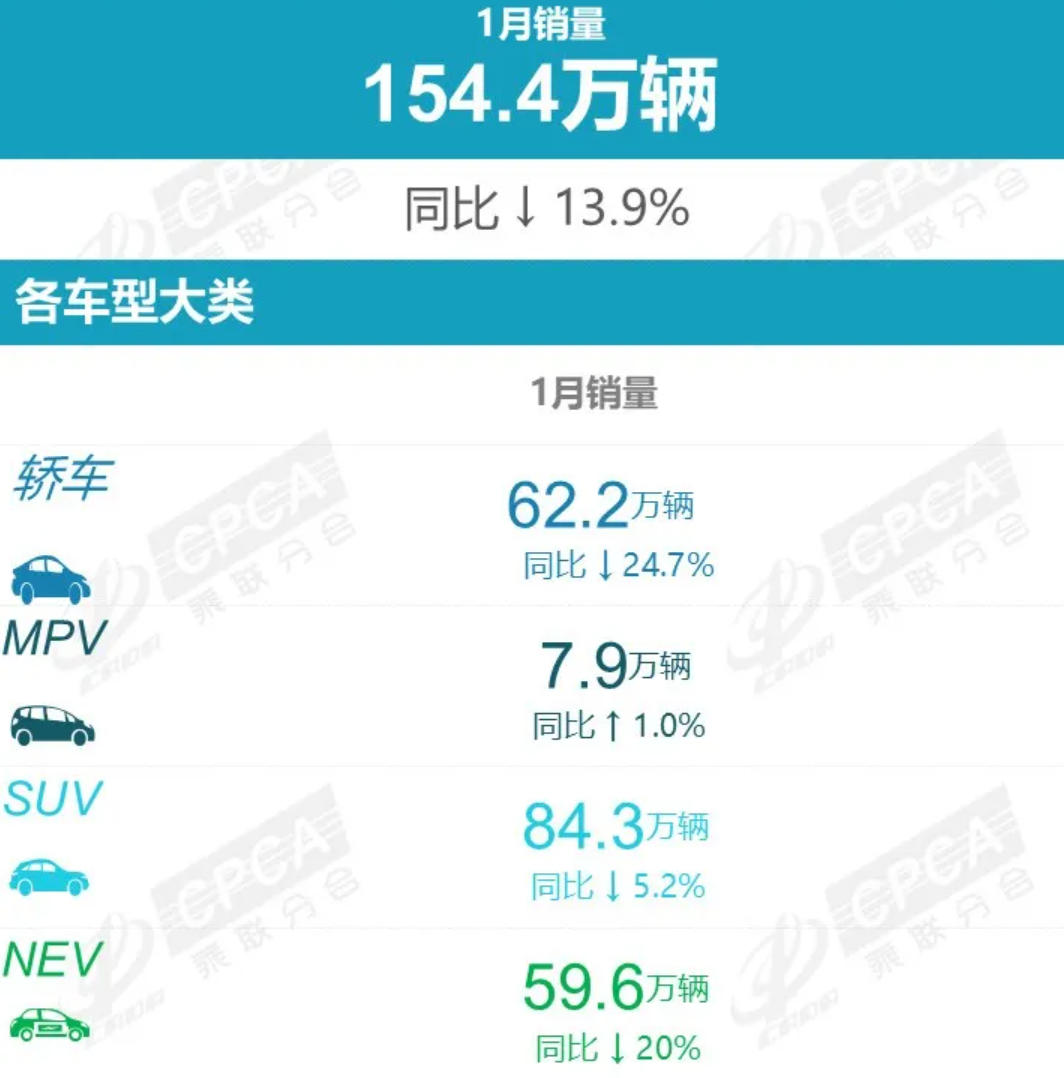
中国质量新闻网讯 在政策调整衔接与消费需求透支的双重影响下,2026年1月国内乘用车市场开局遇冷,整体销量同比出现明显下滑。根据乘联分会数据, 该月国内狭义乘用车市场零售销量达154.4万辆,同比下降13.9%。值得关注的是,尽管市场整体承压,但不同阵营、细分市场表现分化明显,合资品牌零售 表现相对稳健。 具体到细分市场,1月各领域表现差异显著,轿车市场下滑最为明显。数据显示,1月轿车销量为62.2万辆,同比大幅下降24.7%;作为乘用车市场的主力细 分领域,SUV市场虽同样面临下行压力,但表现优于轿车市场,该月销量为84.3万辆,同比下滑5.2%;1月的MPV市场依旧是各细分领域中表现较弱的板 块,销量同比小幅上涨1.0%达到7.9万辆;新能源车方面,由于购置税免税政策在2025年底结束,部分用户提前购买形成年底的消费透支现象,从而抑制1月 新能源车市场的需求,销量仅59.6万辆,同比下滑20.0%。 自主阵营承压明显 合资相对稳健 在政策等多重影响下,1月车市整体零售呈现同比下滑态势,自主品牌、合资品牌、豪华车市场均受到不同程度冲击。具体来看,自主品牌1月零售89万辆, 同比下降18%。国内零售份额为57 ...

从山城走向世界 持续提升“重庆制造”品牌影响力
Sou Hu Cai Jing· 2026-02-25 02:00
重庆市笔电、手机、摩托车、汽车出口量分别位居全国第一、第二、第三、第五位,"新三样"产品出口 增速高达73.5%,高新技术产品进出口同比增长11.6%……翻开重庆2025年制造业答卷,亮眼的成绩正 是重庆聚力"33618"现代制造业集群体系建设,推动"重庆制造"外向型发展破浪前行的生动写照。 "这不仅是贸易数字的增长,更是制造业产业能级、合作模式与全球角色的系统性升级。"重庆市经济和 信息化委员会党组成员、副主任罗莉表示,一个更具韧性、更富活力、更可持续的内陆开放新范式,正 引领"重庆制造"从山城走向世界。 夯基础:向"新"而行,锻造制造强市硬核竞争力 重庆紧扣"33618"现代制造业集群体系建设,推动产业体系整体向高端化、智能化、绿色化攀升,为"重 庆制造"出海积蓄底气与实力。 当前,"重庆制造"正加快从产品输出向体系输出转型升级。在主导产业领域,智能网联新能源汽车就是 率先突破的典型代表。在实现产能5年30倍增长的同时,长安汽车罗勇工厂投产,赛力斯印尼工厂年产 能提至10万辆,"渝车出海"进入本地化生产的新阶段。产业链核心技术亦获得国际认可,千里科技智能 驾驶系统成功引入奔驰作为战略投资者,中国汽研智能汽 ...
汽车早餐 | 春节假期新能源汽车出行创新高;高翔将任MINI美洲区副总裁;1月销量前十车企销售超196万辆档
Zhong Guo Qi Che Bao Wang· 2026-02-25 01:35
Group 1: Automotive Sales and Trends - In January 2026, the top ten automotive companies in China sold a total of 1.962 million vehicles, accounting for 83.6% of total automotive sales, with notable growth from SAIC Group, Geely Holding, Dongfeng Motor, GAC Group, and Great Wall Motors compared to the same period last year [2] - The consumption of old products in exchange for new ones has driven sales to 204.54 billion yuan, benefiting 30.53 million people, with significant demand for smart and green products, particularly during the Spring Festival [3] - During the Spring Festival holiday, electric vehicle charging reached a record high, with 6.021 million charging sessions and a total charging volume of 14,976.75 million kWh, representing a 52.01% increase in average daily charging volume compared to last year [4] Group 2: Industry Developments and Initiatives - Two national-level quality inspection centers related to the automotive industry have been approved for establishment in Zhejiang, aimed at implementing national quality inspection reforms and enhancing technological capabilities [5] - Changan Automobile is progressing with its solid-state battery project, expecting to validate the battery's integration with robots and vehicles by the third quarter of this year [10] - Li Auto has officially joined the EU-China Chamber of Commerce, aiming to collaborate with other members to promote business development and protect the rights of Chinese enterprises in Europe [11] Group 3: Technological Advancements - Black Sesame Intelligence has partnered with Guoqi Zhikong to develop a mass production solution for the Huashan A2000 chip, targeting L2+ to L3 level intelligent driving functions, with the first mass-produced models expected in 2026 [12] - XPeng Motors' CEO announced plans to achieve mass production of the world's first advanced humanoid robot by the end of this year, emphasizing a commitment to innovation in AI technology [13] - Sien Intelligent has won a project for developing autonomous cleaning vehicles for Shaanxi Automobile Group, aiming to achieve L4 level autonomous driving capabilities [15]

春节假期新能源汽车出行创新高 零跑汽车有限公司注册资本增至55.58亿元 | 汽车早参
Mei Ri Jing Ji Xin Wen· 2026-02-24 22:39
| 2026年2月25日星期三 | NO.1 春节假期新能源汽车出行创新高 2月24日,据央视新闻报道,国家能源局发布消息,通过对纳入国家充电设施监测服务平台的5.33万台 高速公路充电桩的统计分析,自腊月二十八(2月15日)至正月初七(2月23日),高速公路电动汽车充 电次数共计602.10万次,充电量达到14976.75万千瓦时,日均充电量1664.08万千瓦时,较去年春节日均 增长52.01%,创历史新高。国家税务局数据显示,春节假期机动车充电销售收入同比大幅增长 163.9%。 点评:春节假期充电市场供需两旺,核心数据印证绿色出行加速普及。国家能源局与税务总局的数据形 成呼应,高速公路日均充电量同比增长超五成,叠加充电销售收入激增163.9%,既体现出新能源汽车 保有量的持续提升,也反映出高速充电配套设施的完善成效。这一态势充分彰显了我国居民出行方式的 绿色转型,为新能源汽车产业与出行市场的高质量发展注入强劲动力。 NO.2 春节假期重点平台租车出行订单量增长51% 2月24日,据央视新闻报道,今年春节假期,新场景、新业态、新模式正在持续释放服务消费潜力。商 务大数据显示,春节假期,重点平台租车出行订 ...

自动驾驶行业更新报告:L3强标征求意见,国内智驾政策持续推进
CAITONG SECURITIES· 2026-02-24 11:09
Investment Rating - The investment rating for the automotive industry is "Positive" (maintained) [1] Core Insights - In February 2026, China began soliciting public opinions on the L3 strong standards, completing the draft of "Safety Requirements for Autonomous Driving Systems of Intelligent Connected Vehicles" on February 5, 2026. The public consultation for this and four other mandatory national standards started on February 12, 2026, and will end on April 13, 2026. This strong standard primarily targets L3 and L4 levels of autonomous driving, replacing the recommended standard GB/T 44721-2024 [4] - The proposed implementation date for the L3 strong standard is July 1, 2027. The standard includes mandatory (GB) and recommended (GB/T) classifications, with violations of the mandatory standard leading to legal consequences. The L3 strong standard has completed the drafting phase and is currently in the public consultation stage, followed by review, approval, and publication [4] - Earlier, China approved L3 vehicles for road testing, with two models from Changan and BAIC Blue Valley receiving approval for road access trials on December 15, 2025. These models will undergo the next phase of road testing, with specific requirements set by the Ministry of Industry and Information Technology [4] - Investment recommendations include: 1) Vehicle manufacturers: Jianghuai Automobile, Xpeng Motors-W; 2) Component suppliers: Bertley, Coboda, Nexperia, Horizon Robotics-W, among others. Attention is also recommended for Huayi Technology [4] Summary by Sections - **L3 Strong Standards**: The draft for L3 strong standards has been completed and is open for public consultation, with a focus on safety requirements for autonomous driving systems [4] - **Implementation Timeline**: The strong standard is set to be implemented by July 1, 2027, following a series of approval processes [4] - **Road Testing Approvals**: Two L3 models have been approved for road testing, indicating progress in the industry [4] - **Investment Opportunities**: Specific companies are recommended for investment based on the ongoing developments in autonomous driving policies [4]
全国商用车国内保险特征—2026年1月
Xin Lang Cai Jing· 2026-02-24 11:06
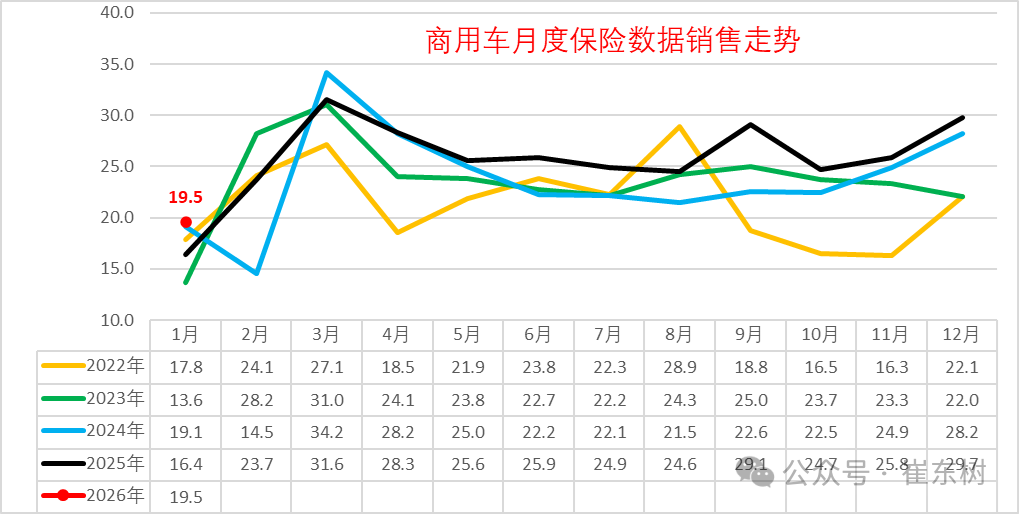
Core Insights - The domestic commercial vehicle market is expected to see strong growth in 2025, driven by the rise of new energy vehicles (NEVs) and vehicle scrapping policies [1][5] - January 2023 saw a significant increase in commercial vehicle sales, reaching 200,000 units, a 19% year-on-year increase, although down 34% month-on-month [1][5] - The penetration rate of NEVs in commercial vehicles is projected to reach 29% in 2025, up from 20% in 2024, indicating a robust growth trend [1][11] Commercial Vehicle Market Analysis - In January 2023, commercial vehicle sales reached 200,000 units, marking a 19% increase year-on-year and a new high for January in recent years [1][5] - The total commercial vehicle sales for 2025 are projected to be 3.1 million units, reflecting a 9% year-on-year growth [5][4] - The market has shown a recovery from previous years' declines, with 2023-2024 sales stabilizing around 2.85 million units [5] New Energy Commercial Vehicle Sales - The sales of new energy commercial vehicles reached 91,000 units in 2025, representing a 57% year-on-year increase [7][9] - In January 2026, new energy commercial vehicle sales are expected to hit 50,000 units, a 63% increase year-on-year [7][9] - The penetration rate of new energy vehicles in commercial vehicles is projected to be 26% in January 2026, up 7 percentage points from the previous year [11][9] New Energy Vehicle Penetration Rate - The penetration rate of new energy commercial vehicles was around 3% from 2019 to 2021, increasing to 9% in 2022 and 11% in 2023 [11] - By 2024, the penetration rate is expected to reach 20%, and 29% by 2025, indicating a strong upward trend [11][1] - In January 2026, the penetration rate for new energy vehicles in trucks is projected to be 21%, while for buses it is expected to be 54% [13][11] Market Structure and Competition - The commercial vehicle market is primarily supported by light and heavy truck manufacturers, with companies like Foton, Wuling, and Sinotruk leading in sales [14] - Heavy trucks have shown significant improvement in sales due to subsidy policies, with electric heavy trucks gaining traction [16][15] - The light truck market is also seeing strong performance, particularly in the Southwest and Northwest regions, with increasing penetration of new energy vehicles [17][18]
1月皮卡销量达近5年同期高位:长城领跑,长安比亚迪等快速崛起
Xin Lang Cai Jing· 2026-02-24 10:12
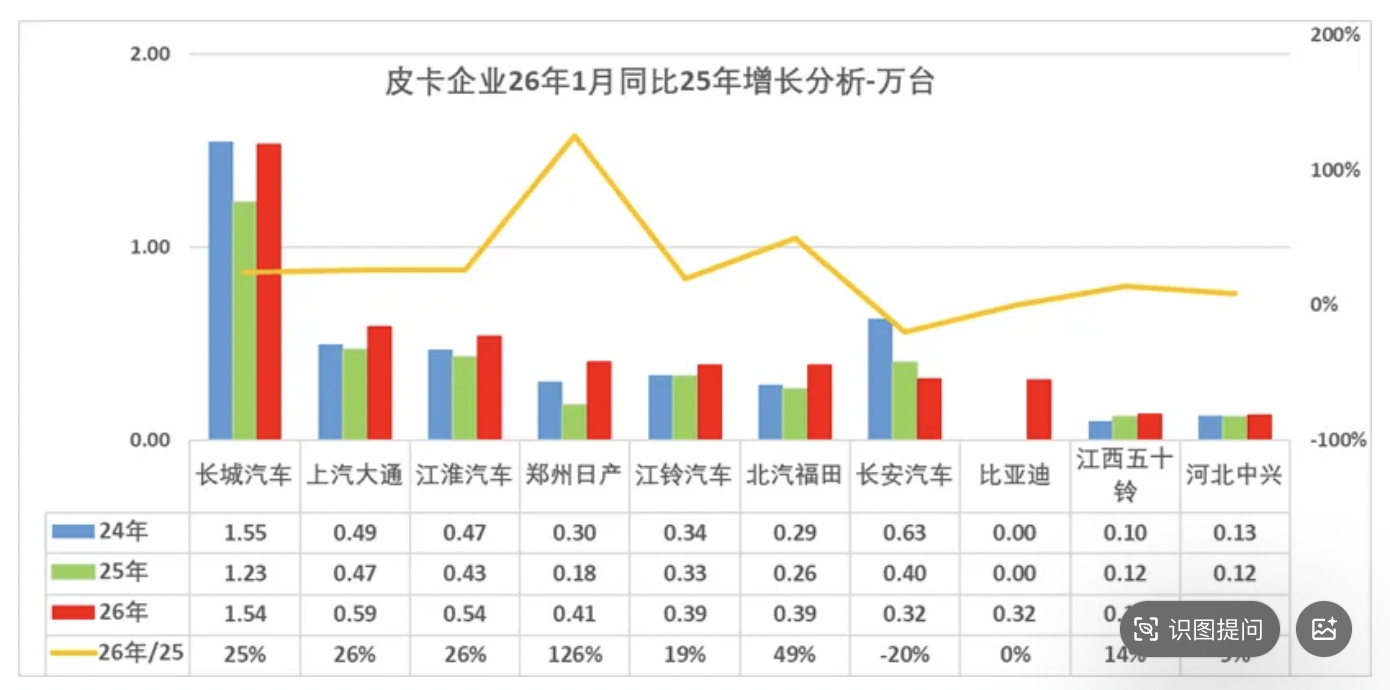
图片来源:乘联分会 就品牌各自优势销售区域而言,长城汽车在西北和西南地区份额突出,江铃汽车则在华东和长江流域表现较强,郑州日产在西北和西南地区数据亮眼,江西 五十铃在西南和东北地区的表现很强。 智通财经记者 | 宋佳楠 2月24日,智通财经从乘联分会获悉,2026年1月中国皮卡市场销售4.9万辆,同比增长22.5%,处于近5年的同期高位水平;皮卡生产为5.2万辆,同比增长 29.3%,市场呈现产销两旺态势。 具体到皮卡品牌来看,长城汽车内销以近50%的市场份额稳坐头把交椅,江铃汽车、郑州日产、江西五十铃等保持较强地位,吉利皮卡逐步进入主流行列, 国内市场竞争格局逐步升级。 图片来源:乘联分会 在海外市场,长城汽车皮卡出口历年累计仍是第一。但随着皮卡出口市场的暴增,长安汽车、比亚迪、江淮汽车、上汽大通的皮卡快速崛起,形成中间企业 挤压尾部企业销量的特征。 乘联分会提及,由于皮卡进城效果不明显,目前皮卡增量主要来自西南地区和东北市场。销量主要来自工程建筑、市政电力、农林牧渔、批发零售业原有的 领域以及高端化、乘用化、越野玩车的这类全新客户。随着农民工回乡趋势明显,带动小城市和县乡市场恢复。传统主流车企的主力车型表 ...


瞭望 | 重庆:“汽车产量第一城”的新跨越
Xin Hua She· 2026-02-24 09:14
重庆锚定"打造智能网联新能源汽车之都"的目标,不仅关注整车产量的跃升,更致力于构建高韧性的全 产业链。目前,重庆汽车零部件本地配套率已稳定在45%以上,涵盖了芯片、动力电池、数智座舱等核 心链条 文 |《瞭望》新闻周刊记者 张桂林 田金文 全年汽车产量278.8万辆,同比增长9.7%,产量居全国城市首位。其中,新能源汽车更以36%的增速冲 至年产129.6万辆,产业集群规模成功突破8000亿元…… 在刚刚过去的2025年,西部汽车制造重镇重庆交出了一份逆势跃升的答卷。靓丽数字背后,是一条以创 新驱动为引领,在质量和效率变革中聚链成势,加快迈向"智能网联新能源汽车之都"的清晰路径。 澎湃"向新之力" 十余年前,在燃油车为主导的产业格局下,重庆曾连续三年蝉联全国汽车产量冠军。随着汽车消费和产 业发展趋势演变,重庆车企竞争力面临严峻挑战,产量一度出现"断崖式"下降。 瞄准新赛道,才有望突出重围。随着国家加快推进汽车产业新能源化,以及大数据、物联网、人工智能 等新一代信息技术迅猛发展,重庆抢抓转型机遇,积极布局"智能网联新能源汽车"这一新赛道,推动产 业整体升级。尤其是一批龙头车企,正以体系化革新加速产业转型。 走进 ...
2026年中国汽车产业十大趋势:L3级商业化启航,芯片短缺潮或再现
Ju Chao Zi Xun· 2026-02-24 06:36
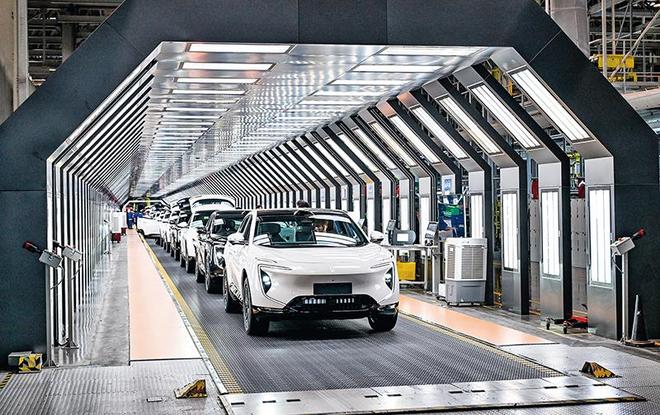
2025年,中国汽车产业在连续17年产销量稳居全球第一的基础上,再次交出了一份充满变革与挑战的答卷。行业在"电动化、智 能化"的百年浪潮中加速演进,新能源渗透率逼近50%关口,汽车出口从爆发式增长步入增速换挡期,智能驾驶技术正式叩开L3 级市场大门。 站在2026年的新起点,中国汽车产业加速从"量变"到"质变"的关键转折。新能源汽车渗透率突破50%,标志着市场主导权的切 换;L3级自动驾驶商业化破冰与Robotaxi规模化竞争开启,驱动智能出行进入新阶段;固态电池、国产芯片、人形机器人等前 沿领域,则成为技术竞争与产业延伸的核心战场。与此同时,传统豪华品牌与合资阵营面临深度重构,在电动化与智能化浪潮 中寻求本土化反攻。然而,机遇之下暗藏挑战:全球市场波动导致出口增速放缓,供应链不确定性使"缺芯"风险再度浮现,成 本与技术的平衡成为企业穿越周期的重要命题。 1、2026年预测销售新车3475万辆 2025年我国销售新车3440万辆,同比增长9.4%,产销量连续17年稳居全球第一。其中,国内销量为2730.2万辆,与2017年基本 持平,存量竞争越发激烈。根据中汽协预测,2026年中国汽车销量预计为3475万辆, ...
太猛了!16家汽车企业2026年销量目标马力全开
Zhong Guo Qi Che Bao Wang· 2026-02-24 06:11
Group 1 - In 2025, China's automobile production and sales both exceeded 34 million units, setting a new historical record [1] - The year 2026 marks the beginning of the "14th Five-Year Plan," with many automotive companies setting ambitious sales targets and clear strategies for growth [1] Group 2 - China FAW aims for a sales target of 3.546 million units in 2026, a year-on-year increase of 7.39% from 2025 [4] - Dongfeng Motor targets 3.25 million units for 2026, with over 30% year-on-year growth, focusing on new energy vehicles and exports [6] - Changan Automobile sets a goal of 3.3 million units for 2026, a 13.3% increase, with a strong emphasis on new energy vehicle sales [8] Group 3 - SAIC Motor's sales target for 2026 is projected between 4.5 million and 5 million units, reflecting a pragmatic approach [10] - BAIC Group aims for 2.2 million units in 2026, with a focus on new energy products and smart technology [12][13] - GAC Group's sales in Q4 2025 reached 537,800 units, showing a significant quarter-on-quarter increase of 25.56% [16] Group 4 - Chery aims for a sales target of 3.2 million units in 2026, a 14.03% increase from 2025, with plans to launch 17 key models [20] - BYD achieved a record of 4.602 million units in 2025 and plans to sell 1.3 million vehicles overseas in 2026, a 24.3% increase [22][23] - Geely targets 3.45 million units for 2026, a 14% increase, with a focus on new energy vehicle launches [25][26] Group 5 - Great Wall Motors sets a target of 1.8 million units for 2026, a 36% increase from 2025, supported by new technology [28][29] - Li Auto aims for 550,000 units in 2026, with a growth plan of approximately 40% [31] - NIO's sales target for 2026 is between 456,000 and 489,000 units, with plans to expand its battery swap station network [33] Group 6 - XPeng Motors targets 550,000 to 600,000 units for 2026, with a growth rate of approximately 28% to 39.7% [36] - Leap Motor aims for a sales target of 1.05 million units in 2026, a 67.5% increase, with plans to launch four new models [38] - Xiaomi Auto sets a target of 550,000 units for 2026, a 34% increase, focusing on technology development and user experience [40] Group 7 - Harmony Smart aims for over 1 million units in 2026, with plans to launch more than 10 new models [43]