
华菱钢铁

Search documents
钢铁股震荡走高 柳钢股份3天2板
news flash· 2025-07-17 02:18
钢铁股震荡走高 柳钢股份3天2板 智通财经7月17日电,钢铁股盘中震荡走高,柳钢股份反包涨停走出3天2板,盛德鑫泰、首钢股份、方 大特钢、华菱钢铁、新钢股份等跟涨。消息面上,截至7月15日收盘,A股市场共有20家钢铁企业上市 公司披露了2025年半年度业绩预告,其中有5家公司业绩预增,有5家公司预计将实现扭亏,有7家公司 预计将实现不同程度减亏。 ...

再论供给侧改革:制度优势实现供给约束破局通缩困局,掘金钢铁、有色行业投资机会
Soochow Securities· 2025-07-16 12:12
Investment Rating - The report maintains an "Overweight" rating for the steel and non-ferrous metal industries [1] Core Viewpoints - The supply-side reform in China is expected to break the deflationary cycle and create investment opportunities in the steel and non-ferrous metal sectors [1][6] - The report emphasizes the importance of "supply constraints" to manage the supply-demand balance and mitigate economic downturn risks [6][12] - The steel industry is facing severe overcapacity, with state-owned enterprises holding a significant market share, which facilitates the implementation of administrative measures to control production [6][28] Summary by Sections 1. Supply-Side Reform and Economic Management - The socialist market economy in China allows for effective macroeconomic control, contrasting with the cyclical issues faced in capitalist economies [12][13] - Historical experiences show that demand stimulus alone is insufficient to resolve deep-seated deflationary pressures [14][15] - The supply-side reform initiated in 2016 has proven successful in stabilizing prices and improving corporate profitability [21][22] 2. Steel Industry Analysis - The steel industry has been in a state of oversupply from 2007 to 2024, with crude steel production increasing from 490 million tons to 1.01 billion tons, while apparent consumption has not kept pace [28][29] - The production capacity utilization rates for rebar and wire rod are expected to decline from around 70% to 50% due to weak real estate demand [33][34] - The concentration of production among state-owned enterprises is high, with central state-owned enterprises accounting for approximately 63% of total production in 2024 [38][39] 3. Investment Recommendations - The report suggests focusing on three categories of investment targets: profit recovery, stable profit with valuation repair, and stable high-dividend stocks [51] - Specific companies recommended for profit recovery include Liugang Co., Taigang Stainless Steel, and Shandong Iron and Steel, with projected annualized PE ratios improving significantly under favorable conditions [51]


5.88亿元资金今日流出钢铁股
Zheng Quan Shi Bao Wang· 2025-07-16 09:07
Market Overview - The Shanghai Composite Index fell by 0.03% on July 16, with 14 sectors experiencing gains, led by social services and automotive sectors, which rose by 1.13% and 1.07% respectively [1] - The steel and banking sectors saw the largest declines, with steel down by 1.28% and banking down by 0.74% [1] Fund Flow Analysis - The main funds in the two markets experienced a net outflow of 14.265 billion yuan, with 12 sectors seeing net inflows [1] - The public utilities sector had the highest net inflow of 2.823 billion yuan despite a decline of 0.20%, followed by the pharmaceutical and biological sector, which rose by 0.95% with a net inflow of 2.095 billion yuan [1] Steel Industry Performance - The steel industry declined by 1.28% with a net outflow of 588 million yuan, out of 44 stocks in the sector, only 7 saw gains while 36 experienced losses [2] - Among the stocks with net inflows, Fushun Special Steel led with an inflow of 53.565 million yuan, followed by Xinxing Ductile Iron Pipes and Yongjin Co., with inflows of 13.426 million yuan and 5.454 million yuan respectively [2] Individual Stock Performance in Steel Sector - Major stocks with significant net outflows included Liugang Co. (-9.16%), Hesteel Co. (-3.41%), and Baosteel Co. (-1.48%), with net outflows of 1.162 billion yuan, 855.319 million yuan, and 751.885 million yuan respectively [3][4] - Other notable stocks with substantial outflows include Hangang Co. (-0.11%) and Maanshan Steel (-1.48%), with outflows of 719.629 million yuan and 455.659 million yuan respectively [3]
特钢概念下跌0.81%,8股主力资金净流出超3000万元
Zheng Quan Shi Bao Wang· 2025-07-16 08:58
Group 1 - The special steel concept index declined by 0.81%, ranking among the top declines in the concept sector as of July 16 [1] - Within the special steel sector, major decliners included Shengde Xintai, Anyang Iron & Steel, and Hualing Steel, while notable gainers were Wuchan Jinlun, Fushun Special Steel, and Beijing Lier, with increases of 4.72%, 2.53%, and 2.35% respectively [1] - The special steel sector experienced a net outflow of 508 million yuan from main funds today, with 28 stocks seeing net outflows, and 8 stocks with outflows exceeding 30 million yuan [2] Group 2 - The top net outflows in the special steel sector were led by Hualing Steel with a net outflow of 85.53 million yuan, followed by Baogang Co., Hangang Co., and Guangda Special Materials with outflows of 75.19 million yuan, 71.96 million yuan, and 49.04 million yuan respectively [2][3] - Conversely, the stocks with the highest net inflows included Fushun Special Steel, Wuchan Jinlun, and New Steel Casting, with net inflows of 53.57 million yuan, 17.73 million yuan, and 13.43 million yuan respectively [2][3] - The trading volume and turnover rates varied among the stocks, with Hualing Steel showing a turnover rate of 2.26% and a decline of 3.41%, while Wuchan Jinlun had a turnover rate of 12.36% with a gain of 4.72% [3]


等待新一轮政策信号前的结构性机会
2025-07-16 06:13
Summary of Conference Call Industry or Company Involved - The conference call primarily discusses the macroeconomic environment, policy signals, and various industry sectors including oil and gas, chemicals, construction materials, and transportation. Core Points and Arguments 1. **Policy Signals and Economic Outlook** - The discussion highlights the anticipation of new policy signals before identifying structural opportunities in the market. The recent easing of tariffs between the US and China is noted, although uncertainty remains regarding future negotiations [1][2][3]. 2. **Impact of Tariffs on Trade** - In April, the US collected approximately $1-2 billion in additional tariffs from China, which is insufficient to offset the fiscal risks posed by tax cuts. This indicates a potential expansion risk in the US fiscal situation [2]. 3. **Domestic Economic Conditions** - The domestic economy shows signs of slowing down, particularly in exports to the US, which have declined due to tariff tensions. There is a concern that the temporary boost in exports may not be sustainable [3][4]. 4. **Fiscal Policy and Debt Issuance** - The Chinese government has been proactive in fiscal policy, issuing a significant amount of debt to stimulate the economy. Approximately 2 trillion yuan of bonds were issued in the last quarter, with expectations for continued issuance [4][5][6]. 5. **Monetary Policy Outlook** - The potential for further monetary easing is discussed, especially as inflation indicators (CPI and PPI) are expected to decline. This could provide more room for liquidity support in the economy [7][8]. 6. **Oil and Gas Sector Analysis** - The oil and gas sector is experiencing a decline in capital expenditure, with a noted 18% drop in the previous year. Demand uncertainties, particularly due to US-China trade relations, are highlighted as a significant concern [10][11]. 7. **Construction Materials and Steel Industry** - The construction materials sector is entering a seasonal downturn, with prices under pressure. However, there are expectations for a rebound in demand as the market transitions from a slow to a peak season [24][26]. 8. **Transportation Sector Insights** - The shipping industry has seen a significant price increase, with container shipping rates doubling in the past month. However, a potential decline in demand is anticipated as the rush for shipping eases [31][32]. 9. **Investment Recommendations** - The call suggests focusing on companies with strong dividend yields and stable fundamentals, particularly in the construction materials and transportation sectors. Specific companies like China Shenhua and Shaanxi Coal are recommended for their strong dividend attributes [29][36]. Other Important but Possibly Overlooked Content 1. **Emerging Opportunities in New Materials** - Companies involved in domestic substitutes for new materials are highlighted as long-term investment opportunities [24]. 2. **Market Sentiment and Stock Performance** - The performance of small-cap stocks is noted, with fluctuations indicating a lack of strong market direction. However, some stocks have shown resilience and potential for recovery [24]. 3. **Global Economic Factors** - The call acknowledges ongoing global uncertainties, including geopolitical tensions and their potential impact on market dynamics, particularly in the commodities sector [19][20]. 4. **Sector-Specific Risks** - The chemical sector faces challenges due to demand uncertainties and potential overcapacity, which could hinder price recovery despite favorable cost conditions [11][12]. 5. **Future Monitoring of Policy Changes** - The need for ongoing observation of policy developments, particularly in fiscal and monetary areas, is emphasized as critical for future investment strategies [6][8].






钢铁行业供给侧改革的机会和可行性分析
2025-07-16 06:13
Summary of Conference Call Notes Industry Overview - The discussion primarily revolves around the **steel industry** in China, focusing on market dynamics, production constraints, and policy impacts on profitability and competition [1][4][11]. Key Points and Arguments 1. **Market Behavior Changes**: Since 2021, the steel industry has seen a significant shift in behavior, where companies are now more inclined to reduce production in response to losses rather than increasing it to capture market share [4][5]. 2. **Production Constraints**: Steel production has been capped at levels not exceeding 2020 figures, leading to a more disciplined approach among companies to manage output and costs [4][10]. 3. **Profitability Trends**: The industry has experienced a cyclical nature of profitability, with losses typically lasting around three to four months before improvements are observed [5][15]. 4. **Demand Dynamics**: The demand for steel has shown resilience, with external demand (exports) increasing from 6-7% in 2020 to approximately 11% in the previous year, indicating a robust export market [11][12]. 5. **Inventory Levels**: Current inventory levels are described as extremely low, which is contributing to upward pressure on prices as supply remains constrained [17][19]. 6. **Policy Impact**: Recent government policies aim to regulate competition and promote the exit of outdated production capacities, which is expected to stabilize the market and improve profitability [7][30]. 7. **Profit Distribution**: The distribution of profits within the supply chain has been affected, with upstream suppliers (like iron ore) seeing significant profit margins, while steel producers are beginning to recover their margins [16][24]. 8. **Investment Opportunities**: The current market conditions present opportunities for investment in the steel sector, particularly as valuations are at historical lows, suggesting potential for recovery and growth [21][22][29]. Additional Important Insights - **Cyclical Nature of the Industry**: The steel industry is characterized by cyclical fluctuations in demand and profitability, with recent trends indicating a potential recovery phase [15][20]. - **Government Regulations**: The effectiveness of government regulations and their implementation at local levels remains a critical factor for the industry's future performance [30][31]. - **Market Sentiment**: Recent price increases in steel have been attributed to market sentiment confirming a bottoming out of prices, leading to increased investor interest [25][26]. This summary encapsulates the essential insights from the conference call, highlighting the current state and future outlook of the steel industry in China.
6月数据跟踪:粗钢产量“数字”回落
GOLDEN SUN SECURITIES· 2025-07-16 05:20
Investment Rating - The report maintains a rating of "Overweight" for the steel industry [3] Core Insights - In June 2025, crude steel production decreased by 9.2% year-on-year, indicating a reduction in production intensity among steel mills, although the reliability of this data is questioned [1] - The black metal smelting and rolling processing industry reported a revenue of 31,364.5 billion yuan from January to May, down 7.0% year-on-year, while total profits turned positive at 316.9 billion yuan [1] - The report highlights strong growth in both domestic and external demand, with net steel exports increasing by 10.7% year-on-year in the first half of 2025 [2] - The report anticipates that the "anti-involution" policy may lead to a significant reduction in steel production, although the actual impact remains to be observed [1][7] Summary by Sections Production Data - In June 2025, crude steel production was 83.18 million tons, a 9.2% decrease year-on-year, with an average daily production of 2.773 million tons [5] - The production of pig iron in June was 71.91 million tons, down 4.1% year-on-year [5] - Steel production in June was 127.84 million tons, an increase of 1.8% year-on-year [5] Export and Import Data - In the first half of 2025, steel exports reached 5.512 million tons, a 10.7% increase year-on-year [2] - Steel imports in June were 470,000 tons, a decrease of 18.3% year-on-year [5] - Iron ore imports in June were 105.95 million tons, an increase of 8.5% year-on-year [5] Economic Context - The report notes that the general public budget deficit for 2025 is projected at 4%, with local government special bonds expected to reach 4.4 trillion yuan [2] - The fiscal policy is expected to play a crucial role in sustaining economic recovery, with significant investments in various sectors [2][6] Investment Recommendations - The report recommends buying shares of companies such as Hualing Steel, Nanjing Steel, Baosteel, and others, citing their undervaluation and potential for recovery [7][9] - The report emphasizes the importance of administrative measures to cut back on supply to accelerate industry profitability [7]
钢企中期盈利普遍回升!行业迎来新转机?
Sou Hu Cai Jing· 2025-07-15 12:58
Group 1 - The steel industry has shown significant improvement in profitability in the first half of the year due to falling raw material costs and cost-cutting measures [2][4][5] - Despite the overall recovery in performance, the steel sector experienced a collective pullback in stock prices on July 15, with notable declines in companies such as China Iron Titanium and Chongqing Steel [2][4] - A total of 24 A-share steel companies have released mid-year performance forecasts for 2025, with 19 reporting substantial profit improvements, including several companies achieving double or triple-digit profit growth [4][5] Group 2 - The steel industry faces challenges from a sluggish real estate market, limited infrastructure investment, and increased export pressure, leading to a significant decline in steel prices and ongoing profitability pressure [4][6] - Companies are addressing demand contraction by eliminating outdated production capacity, optimizing product structures, and enhancing product value, which has contributed to profit recovery [5][6] - The current supply-demand dynamics in the steel industry are improving, with major steel companies announcing production cuts under the "anti-involution" policy, which is expected to strengthen supply contraction [6]


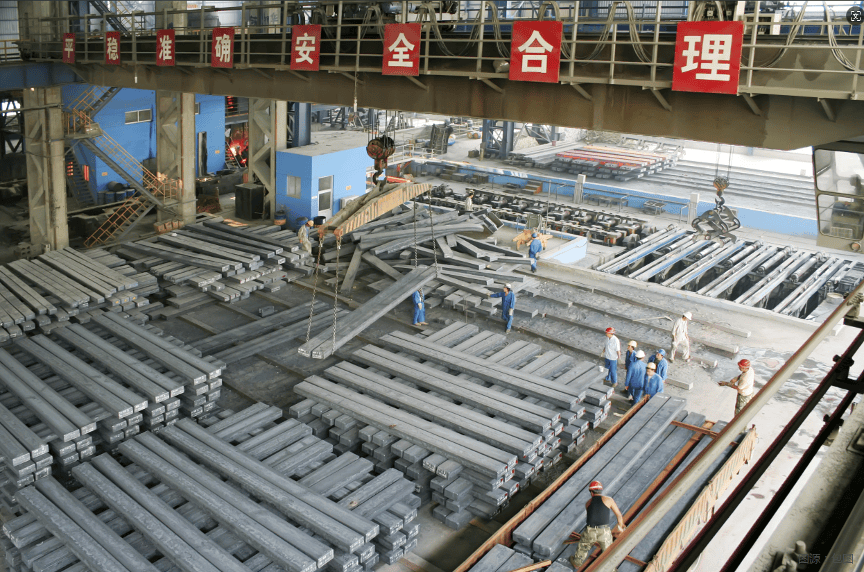
钢铁反内卷的动力和难点
Changjiang Securities· 2025-07-14 12:46
Investment Rating - The industry investment rating is Neutral, maintained [9] Core Viewpoints - The market's focus on the "anti-involution" policy is high, with steel being a key industry for this initiative due to its large scale, strong externalities, and current low profitability [2][5] - The "anti-involution" policy aims to address the supply-demand imbalance in the steel industry, which is crucial for long-term profitability stability [6][7] - The current environment shows a rapid rebound in steel prices and profitability, driven by the "anti-involution" policy and positive expectations in the real estate sector [4] Summary by Sections Market Dynamics - Steel consumption has decreased, with a year-on-year decline of 3.55% and a month-on-month decline of 1.54% [4] - Daily average rebar sales dropped to 99,300 tons, down by 750 tons per day from the previous week [4] - The average daily pig iron output fell to 2.3981 million tons, a decrease of 10,400 tons per day [4] Profitability and Pricing - The total inventory of steel has slightly decreased, with a week-on-week change of -0.02% [4] - Shanghai rebar prices increased to 3,240 CNY/ton, up by 60 CNY/ton, while hot-rolled prices rose to 3,310 CNY/ton, up by 40 CNY/ton [4] - The estimated profit per ton of rebar is 228 CNY, indicating a stable profit margin [4] Challenges in Implementation - The execution of the "anti-involution" policy is expected to be more challenging than the previous capacity reduction in 2016 due to limited demand-side stimulus [7] - The current capacity is mostly compliant, making it harder to eliminate excess capacity compared to the past [7] Investment Opportunities - The report suggests focusing on four main investment lines: 1. Companies with strong operational flexibility due to favorable supply-demand conditions [29] 2. Stocks with low price-to-book ratios that may see significant performance recovery [30] 3. Mergers and acquisitions under state-owned enterprise reforms [30] 4. High-quality processing and resource companies that are well-positioned in the market [30]
A股钢企中报预告分化,“反内卷”驱动资金博弈
Di Yi Cai Jing· 2025-07-14 11:05
Core Viewpoint - The steel industry is experiencing pressure from weak demand and high costs, leading to a focus on policy-driven capacity optimization to alleviate profitability issues [1][5]. Group 1: Market Performance - The Shenyin Wanguo Steel Index has rebounded by 11.86% since June 23, while the Wind All A Index increased by 6.53% during the same period [1]. - In July, the Shenyin Wanguo Steel Index rose by 9.31%, marking the largest monthly increase since October 2024, with 21 stocks in the steel sector rising over 10% [4]. Group 2: Company Earnings Forecasts - Eight steel companies have released their mid-year earnings forecasts, with Shougang Co. expecting a net profit of 642 to 672 million yuan, a year-on-year increase of 62.62% to 70.22% [3]. - Shandong Steel anticipates a net profit of 12.71 million yuan for the first half of the year, a year-on-year increase of 98.1 million yuan [2]. - Fushun Special Steel and Hangang Co. are expected to report losses, with Fushun projecting a loss of 260 to 300 million yuan, a year-on-year decrease of 214.06% to 231.6% [3]. Group 3: Industry Challenges - The steel industry has been in a downward cycle for four years, with approximately 30% of steel companies still reporting losses as of the latest financial reports [5]. - The demand for steel, particularly from the real estate sector, has significantly declined, with demand dropping from 377 million tons in March 2020 to 215 million tons in 2024, a decrease of 42.9% [5]. - The focus on cost reduction has become prevalent among steel companies, with raw material prices significantly impacting profitability [5]. Group 4: Policy and Structural Changes - Recent central government meetings have emphasized the need to eliminate outdated production capacity, strengthening expectations for supply contraction in the steel industry [4][6]. - The current round of "anti-involution" policies aims to optimize supply and demand dynamics, with a focus on differentiated control of production based on efficiency and environmental standards [6].


