赛力斯

Search documents
汽车行业周报(20251222-20251228):多元催化有望带动板块预期修复,建议提前布局明年机会-20251228
Huachuang Securities· 2025-12-28 11:46
Investment Rating - The report maintains a "Buy" recommendation for the automotive sector, indicating a positive outlook for the upcoming year [1]. Core Insights - The automotive sector is expected to see a recovery in market expectations driven by three potential catalysts: the implementation of subsidy policies, better-than-expected export figures in Q1 (with November exports increasing by 45%), and stronger-than-expected retail sales post-Spring Festival [1]. - Retail sales for Q4 2025 have been revised downwards due to previous expectations of demand being pulled forward, with a forecast of a 14% decline in retail sales for Q4 2025, followed by a slight growth of 0.3% in 2025 [2]. - The report highlights the performance of key automotive companies, recommending Geely and JAC Motors due to their strong product cycles and potential for significant profit increases [5]. Data Tracking - In early December, discount rates slightly decreased, with an average discount amount of 22,156 yuan, reflecting a 0.4 percentage point decrease from the previous month [4]. - In October, wholesale vehicle sales reached 2.96 million units, a year-on-year increase of 7.5%, while retail sales fell by 9.2% year-on-year [4]. - The report provides detailed sales figures for new energy vehicle manufacturers, with BYD delivering 480,186 units in November, a 5.3% year-on-year decline but an 8.7% increase from the previous month [6]. Market Performance - The automotive sector index increased by 2.66% this week, ranking 12th out of 29 sectors [9]. - The report notes that the automotive sector's performance is improving, with a significant number of stocks showing positive growth [31]. - The average price-to-earnings (PE) ratio for the automotive sector is reported at 33, indicating a relatively high valuation compared to historical averages [31].





计算机行业周报:一切仍然指向算力-20251228
SINOLINK SECURITIES· 2025-12-28 11:08
Investment Rating - The report indicates a positive outlook for the industry, suggesting a "Buy" rating based on expected growth exceeding the market by over 15% in the next 3-6 months [40]. Core Insights - The competition in large models is intensifying, with significant advancements in capabilities, particularly with Google's Gemini 3 and OpenAI's GPT-5.2, which highlight the potential economic value of large models [1][14]. - The demand for AI applications is accelerating, particularly in inference, as evidenced by the rapid increase in token usage for ByteDance's Doubao AI assistant [2][30]. - The "14th Five-Year Plan" emphasizes the development of strategic emerging industries and future industries, indicating a clear direction for investment in AI and computing infrastructure [3][35]. Summary by Sections Large Model Competition - Major models are continuously iterating, with Gemini 3 showing significant improvements in reasoning and multimodal capabilities, achieving scores of 37.5% and 45.8% in key benchmarks [11][12]. - The transition to the Blackwell architecture is expected to enhance model training capabilities significantly by 2026, indicating that the progress in model capabilities is not yet at a bottleneck [24][26]. Acceleration of AI Application - ByteDance's Doubao AI assistant has transformed mobile interaction, with daily token usage skyrocketing from 16.4 trillion to over 50 trillion in less than a year, reflecting a robust growth in inference demand [2][30]. - NVIDIA's collaboration with Groq, a startup specializing in inference technology, signifies a strategic move towards enhancing inference capabilities, with Groq's LPU architecture designed for high efficiency and low latency [31][34]. Strategic Planning and Industry Layout - The "14th Five-Year Plan" outlines support for strategic emerging industries, including aerospace, quantum technology, and AI, while promoting the construction of new infrastructure for computing power [3][35]. - The report highlights the importance of building a robust ecosystem for emerging industries, focusing on innovation and the application of new technologies [35]. Related Investment Targets - Key investment targets in computing power include companies like Cambricon, Hygon, and Semiconductor Manufacturing International Corporation, while AI agents include major players like Google, Alibaba, and Tencent [4][36]. - The report also identifies potential investments in autonomous driving and military AI sectors, with companies such as Xpeng Motors and Tsinghua Tongfang listed as notable players [5][38].




赛力斯(09927) - 海外监管公告
2025-12-28 10:02
香港交易及結算所有限公司及香港聯合交易所有限公司對本公告的內容概不負責,對其準確性 或完整性亦不發表任何聲明,並明確表示概不對因本公告全部或任何部分內容而產生或因倚賴 該等內容而引致的任何損失承擔任何責任。 Seres Group Co., Ltd. 賽力斯集團股份有限公司 (於中華人民共和國註冊成立的股份有限公司) (股份代號:9927) 海外監管公告 本公告乃根據《香港聯合交易所有限公司證券上市規則》第13.10B條而作出。 茲載列賽力斯集團股份有限公司在上海證券交易所網站刊登的《賽力斯集團股份 有限公司關於控股股東部分股份解除質押及非公開發行可交換公司債券的進展公 告》,僅供參閱。 承董事會命 賽力斯集團股份有限公司 董事長兼執行董事 張正萍先生 本公司董事会及全体董事保证本公告内容不存在任何虚假记载、误导性陈述或者 重大遗漏,并对其内容的真实性、准确性和完整性承担法律责任。 重要内容提示: 赛力斯集团股份有限公司(以下简称"公司"、"本公司")控股股东重庆 小康控股有限公司(以下简称"小康控股")及其一致行动人持有公司股份 466,594,414股(包含小康控股通过担保及信托财产专户持有的股份),占公 ...
102家企业扎堆港股上市!新经济唱主角,港交所改革藏着哪些密码
Sou Hu Cai Jing· 2025-12-28 09:18
Core Insights - The Hong Kong IPO market has seen a significant surge in 2025, with 102 companies listed and net fundraising reaching HKD 238.2 billion, more than doubling compared to the same period last year, with expectations to hit USD 36 billion for the year [1][21] Group 1: Market Performance - The average daily trading volume in the Hong Kong stock market increased to HKD 240.2 billion in the first half of the year, showing a notable rise from the previous year [7] - 75% of new stocks have either increased in price or remained stable, with 16 stocks seeing cumulative gains exceeding 100% and 27 companies experiencing subscription multiples in the thousands [7] Group 2: Sector Contributions - Key sectors driving fundraising include industrial engineering, gold and precious metals, automotive, pharmaceutical biotechnology, and software services, collectively raising over HKD 130 billion [3] - Retail and consumer IPOs have surged, becoming the most numerous this year, indicating a shift towards new consumption enterprises [3] Group 3: IPO Dynamics - 27 companies opted for privatization and delisting, while 4 voluntarily withdrew their listing applications, and 30 companies had their listing status canceled by the exchange, indicating a rapid market turnover [5] - The top ten IPOs raised a total of HKD 154.7 billion, accounting for more than half of the total annual fundraising, with major mainland companies like CATL and Zijin Mining each raising over HKD 10 billion [9] Group 4: Regulatory Changes - The Hong Kong Stock Exchange has implemented several reforms to attract companies, including the introduction of a special listing mechanism for technology companies and lowering the market cap threshold for special technology listings [11] - The exchange has also optimized the listing approval process, resulting in significant fundraising increases for biotech companies [11] Group 5: Investor Sentiment - There has been a noticeable shift in investor behavior, with more funds directed towards IPO subscriptions rather than traditional savings or insurance products, contributing to the market's vibrancy [13] - Concerns have arisen regarding the backlog of 319 listing applications and the quality of materials submitted by intermediaries, prompting regulatory scrutiny [15] Group 6: Future Outlook - Predictions indicate that the A+H share model will continue to thrive, with the return of Chinese concept stocks and special technology companies being significant contributors [19] - Potential challenges include a wave of lock-up expirations for newly listed companies, which may lead to large shareholder sell-offs, although the overall impact may be mitigated by improving macroeconomic conditions [19][22]


争抢中国富豪
投资界· 2025-12-28 08:47
Core Viewpoint - The article discusses the recent trend of wealthy Chinese individuals returning to Hong Kong from Singapore, highlighting Hong Kong's growing appeal as a financial hub and its advantages in wealth management and digital currency policies [4][6][8]. Group 1: Wealth Migration Trends - In recent years, there has been a notable shift of wealthy Chinese individuals from Singapore back to Hong Kong, with a reported 22.9% increase in high-net-worth individuals in Hong Kong compared to the same period in 2024 [4]. - The report from the Hong Kong Accounting Firm indicates that there are 17,215 high-net-worth individuals in Hong Kong, marking it as the region with the largest growth in the global wealth market [4]. Group 2: Financial Market Dynamics - Hong Kong's stock market has shown exceptional activity, with projections indicating that it will reclaim the top position in the global IPO market in 2025, raising an estimated HKD 272.1 billion and listing 100 companies, representing a year-on-year growth of 210% and 43% respectively [6]. - Notable companies such as CATL and Chery Automobile have chosen to list on the Hong Kong Stock Exchange, with CATL's IPO raising HKD 410 billion, the largest globally for the year [6]. Group 3: Digital Currency Environment - Hong Kong is positioning itself as a global innovation center for digital assets, with a supportive regulatory environment that has attracted many digital currency players back from Singapore [8]. - The Hong Kong government has released policies aimed at fostering a conducive environment for digital assets, including the "New Capital Investor Entry Scheme" which has gained attention for its flexible investment arrangements [8][9]. Group 4: Family Office Development - The family office sector in Hong Kong is rapidly growing, with assets under management reaching HKD 14.5 trillion in 2023, a 76% increase from HKD 825 billion in 2017 [11]. - Hong Kong has approximately 2,700 single-family offices managing over USD 1 trillion in assets, which is double that of Singapore, indicating a competitive advantage in the family office market [11][12]. Group 5: Regulatory Challenges in Singapore - Singapore's family office market has faced scrutiny due to allegations of money laundering and fraud, leading to increased regulatory measures that may deter some wealthy individuals from establishing offices there [14][15]. - Recent high-profile cases of fraud linked to family offices in Singapore have raised concerns about the integrity of the financial environment, prompting stricter regulations [15].
行业周报:晶圆代工厂涨价,深蓝首批L3车辆上路-20251228
KAIYUAN SECURITIES· 2025-12-28 07:44
Investment Rating - The industry investment rating is "Overweight" (maintained) [1] Core Insights - The report highlights that the semiconductor foundry price increases have alleviated market concerns regarding the demand for mature processes in 2026, primarily due to improved competitive dynamics and rising raw material costs [5][14] - The automotive sector is experiencing continued pressure on retail sales, with the first batch of L3 autonomous vehicles from Deep Blue officially registered and on the road [6][30] - In the tools sector, TTI has terminated its HART business to strengthen mid-term profitability, while SBD's divestiture of its aerospace segment is expected to significantly reduce debt and optimize leverage ratios [31][43] Summary by Sections Electronics - Semiconductor foundries have raised some production capacities, leading to a 5.4% increase in the electronics index, outperforming the Hang Seng Technology Index [5][14] - Notable stock performances include SMIC and Hua Hong Semiconductor, which rose by 9.2% and 5.5% respectively [5][14] Automotive - Retail sales in the passenger car market are under pressure, with a 19% year-on-year decline in retail volume for December 2025 compared to December 2024, although there was a 5% month-on-month increase [25][26] - The first L3 autonomous vehicles from Deep Blue were officially registered on December 26, 2025, marking a significant milestone in autonomous driving technology [30] Tools - TTI's termination of the HART business aims to enhance mid-term profitability, while SBD's sale of its aerospace business for $1.8 billion is expected to reduce debt significantly [41][43] - The divestiture is projected to create approximately $405 million to $415 million in revenue for the fiscal year 2025, with an adjusted EBITDA margin exceeding 10% [43] Investment Recommendations - In the electronics sector, companies like SMIC and Hua Hong Semiconductor are expected to benefit from the price increases in foundry services [55] - In the automotive sector, attention is drawn to companies involved in L3 autonomous driving and Robotaxi, including Xiaoma Zhixing and Horizon Robotics [55] - In the tools sector, the report recommends companies such as Techtronic Industries and泉峰控股, with beneficiaries including Juxing Technology and Greebo [55]
不造车的第五年:2025 年,车企已无法回避华为
Tai Mei Ti A P P· 2025-12-28 02:03
2025年,是华为承诺"不造车"的第五年,但几乎每一家车企都在思考如何与华为合作。 一方面,终端BG主导的鸿蒙智行"四界"拓展为"五界",另一方面车BU牵头的全新"境"系列——广汽启 境、东风奕境亮相。官方数据显示,今年前三季度,搭载华为乾崑智驾系统的车型销量达45.2万辆,市 场占有率约27.8%。与此同时,HI模式的合作伙伴不断增加。 来源:鸿蒙智行 然而,这种多线布局也伴随着必然的张力。资源的内部争夺、市场的重叠交锋、与合作方之间关于品牌 主导权的微妙博弈,都让这条双轨的前路充满张力。不仅如此,华为的生态扩张如同投入湖面的巨石, 其涟漪迫使每一位"非华派"玩家重新审视自己的生存法则,是融入生态,是另辟蹊径,还是被时代洪流 所边缘化? 不造车,但"拿下"半个车圈 要理解华为的棋局,首先要看清它设计的合作"阶梯"。这绝非简单的二选一,而是一套从浅到深、步步 为营的精巧体系。 | 对比维度 | 传统零部件供应模式 | HI 模式 | 鸿蒙智行模式("五界") | | "境" 系列赋能模式 资本合作模式 (引望持股) | | --- | --- | --- | --- | --- | --- | | 核心是位 ...
赛力斯郭锋:可持续发展是企业核心驱动力
Quan Jing Wang· 2025-12-27 07:21
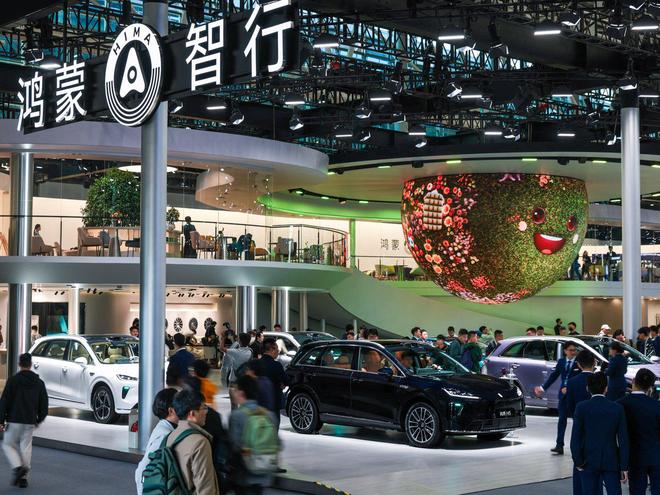
Core Insights - The conference on December 26, 2026, highlighted the growth of the automotive industry in China, emphasizing the shift towards high-quality development and sustainability [1][2] - The collaboration between Seres and Huawei has led to the rapid development of the high-end smart electric vehicle brand, AITO, which has delivered over 900,000 units, reshaping the luxury car market in China [1] Group 1: Brand Development - Seres has successfully integrated product strength, brand power, and service capability, leading to the phenomenal growth of the AITO brand [1] - The partnership with Huawei, initiated in 2021, has been pivotal in establishing AITO as a significant player in the luxury automotive sector [1] Group 2: Sustainability Initiatives - Seres has committed to a strategic goal of achieving carbon peak by 2030 and carbon neutrality in production operations by 2045, aiming for near-zero emissions across the entire value chain [2] - The company has implemented sustainable practices in its operations, including the installation of photovoltaic systems on factory rooftops and the creation of a zero-carbon smart logistics hub [2] - Seres achieved an AAA rating in the latest MSCI ESG assessment, becoming the only A-share listed automotive company to receive this honor within a year [2] Group 3: Future Outlook - Seres aims to maintain a long-term perspective and collaborate with partners to explore a sustainable development path that balances commercial competitiveness with social value creation [2]



高质量建设西部金融中心,重庆如何发力?
Xin Hua Wang· 2025-12-27 06:51
Core Viewpoint - The construction of the Western Financial Center in Chongqing is a key initiative under the Chengdu-Chongqing Economic Circle Development Plan, focusing on integrating various financial services to support high-quality development in the region [3]. Group 1: Financial Center Development - Chongqing is advancing its Western Financial Center through the "Smart Integration and Benefit" initiative, emphasizing technology finance, green finance, inclusive finance, pension finance, and digital finance [3]. - The establishment of the New Land-Sea Corridor Financial Service Alliance has expanded to 78 financial institutions, enhancing cross-border financial services across ASEAN and Central and Eastern Europe [4]. Group 2: Innovative Financial Services - Innovative financial services are enabling companies to thrive along the Belt and Road Initiative, with examples like the financing support for a car import-export company through railway bill financing [6]. - Chongqing has pioneered several financial innovations, including the first digital bill of lading financing and the first green corporate bond under the Belt and Road Initiative, showcasing its leadership in financial reform [6]. Group 3: Green Finance Initiatives - The city has introduced the first financial standards for inland shipping transformation and has signed green finance cooperation agreements, resulting in over 500 billion yuan in green financing [8]. - As of mid-2023, Chongqing's green loans and transformation loans exceeded 1 trillion yuan, with an annual growth rate of 32% over the past five years [8]. Group 4: Support for Small and Medium Enterprises - The "Credit Ease Loan" platform has enabled small and micro enterprises to secure loans without physical collateral, demonstrating a shift towards more accessible financing [9]. - Chongqing is enhancing its financial ecosystem to support the entire lifecycle of enterprises, particularly in technology sectors, with innovative loan products and risk compensation mechanisms [9]. Group 5: Capital Market Development - The successful listing of Seres on the Hong Kong Stock Exchange marks a significant achievement for Chongqing's capital market, highlighting the city's role in supporting high-quality enterprises [10]. - The region has attracted 464 financial institutions and 98 listed companies, strengthening its financial system's capacity to serve the real economy [10]. Group 6: Community Financial Services - The "Chongqing Quick Insurance" program exemplifies how financial services are being tailored to meet the needs of residents, particularly the elderly, by providing accessible healthcare coverage [11]. - The establishment of financial service networks in communities aims to enhance trust and accessibility, ensuring that financial services reach the grassroots level [12].
年末车企“兜底”购置税 新能源车市缓冲跨年
Zhong Guo Jing Ying Bao· 2025-12-26 20:31
Core Viewpoint - The impending adjustment of the new energy vehicle (NEV) purchase tax policy from full exemption to a 50% reduction starting January 1, 2026, is prompting major car manufacturers to implement strategies to stabilize sales and manage consumer expectations during this transitional period [2][3]. Group 1: Company Responses - Major car manufacturers such as GAC Group, Seres, and Xpeng Motors are introducing purchase tax "bottom line" or equivalent subsidy schemes to offset the cost changes resulting from the policy shift, aiming to maintain sales momentum and capitalize on the limited time window before the policy change [2][3]. - GAC Group has extended its purchase tax subsidy policy until the end of 2025, allowing customers who complete orders by December 31, 2025, to receive a subsidy of up to 15,000 yuan if their vehicle delivery is delayed due to company reasons [4]. - Seres and Xpeng Motors are also implementing similar subsidy strategies, with Seres offering tax subsidies for specific models and Xpeng focusing on new products to lower the transaction threshold during the policy transition [4]. Group 2: Market Dynamics - The combination of policy changes and corporate subsidies is beginning to show effects, with November's NEV retail sales reaching 1.354 million units, a year-on-year increase of 7% [5]. - Despite the positive short-term effects, the market is still in a transitional phase, with a decline in retail sales observed in early December, indicating that the demand recovery may be temporary rather than indicative of a long-term trend [5]. - The overall automotive market is expected to achieve growth beyond initial forecasts for 2025, driven by policies such as trade-in subsidies and NEV purchase tax exemptions, with production and sales figures showing significant year-on-year increases [6][7]. Group 3: Future Considerations - The shift from a policy-driven market to one reliant on endogenous growth remains a critical challenge for car manufacturers post-policy adjustment [3]. - The potential for diminishing returns from frequent subsidies raises concerns about consumer dependency on temporary discounts, which could lead to increased volatility in demand around policy changes [3]. - The automotive industry may face intensified price competition in early 2026, particularly affecting smaller manufacturers, necessitating a focus on technological and service differentiation rather than solely price competition [8].